Category Archives: Immigration

A New Public Charge Rule Could Change Your Green Card Odds Next Week

A new public charge rule green card applicants need to know about takes effect September 18, 2026. It gives USCIS officers far more discretion. Officers can now weigh an applicant’s use of public benefits when deciding whether to approve a green card. The change rescinds a 2022 regulation that had narrowed which benefits counted against applicants. It reopens a broader test, one last used before that 2022 rule took hold.

What the public charge rule green card change actually does

The Department of Homeland Security published a final rule on July 20, 2026. It rescinds the 2022 public charge regulation. The new framework becomes effective September 18, according to Mondaq. Under the new approach, USCIS officers can consider a wider range of means-tested public benefits. That list includes food stamps, Medicaid and housing vouchers. Officers will weigh these when assessing whether an adjustment-of-status applicant is likely to become a public charge.

Which benefits count, and from when

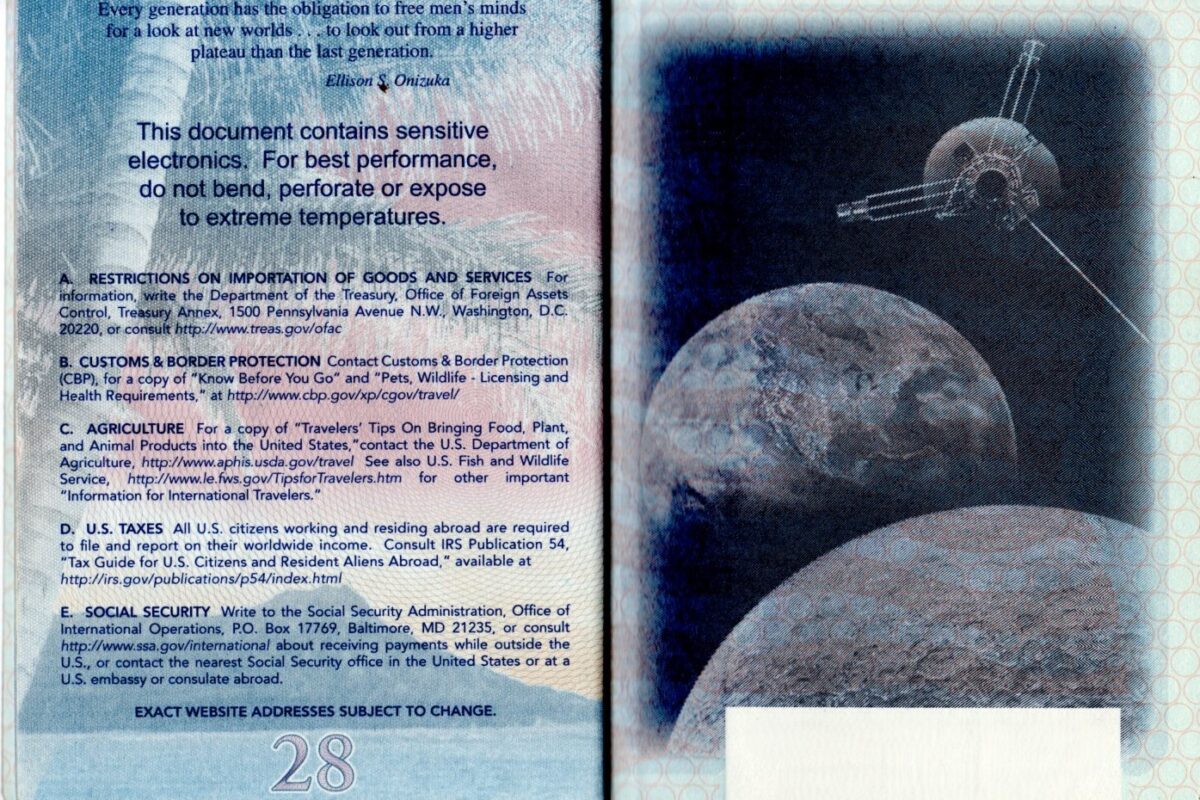
Passport pages with stamps, relevant to the new public charge rule green card standard

Timing matters here quite a bit. USCIS issued its own policy alert explaining the split. Means-tested benefits received before September 18, 2026 still get evaluated under the older, narrower standard. That standard is largely limited to cash assistance for income maintenance and long-term institutionalization at government expense. Benefits received, applied for, or approved on or after September 18 fall under the new, broader framework instead. USCIS issued updated Policy Manual guidance on August 18, 2026. That guidance helps officers apply the change consistently across cases.

The wider factors officers can now weigh

Public benefits are not the only factor here. Officers evaluating a public charge rule green card case will also weigh an applicant’s health. Family situation matters too, along with employment history, education, skills, assets and other circumstances. All of these bear on an applicant’s ability to remain financially self-sufficient over time. This approach mirrors the broader “totality of circumstances” test used before the 2022 rule narrowed the standard.

Legal aid groups have set up hotlines to field questions from applicants confused by the transition. Immigration courts and USCIS field offices are expected to see a temporary bump in processing questions as the new standard beds in, based on patterns observed after previous major public charge policy shifts.

A new form is coming too

USCIS will publish a revised edition of Form I-485. That is the Application to Register Permanent Residence or Adjust Status. The revision reflects the new rule’s requirements. Older editions of the form will not work after a certain point. Any version postmarked or submitted electronically on or after September 18 must be the current one. Applicants filing around that date need to double-check which version they are using.

USCIS has said it will offer transitional guidance for cases already in process when the rule takes effect, though the agency has not detailed exactly how pending applications filed before September 18 will be handled during the changeover period. Applicants with cases already under review should watch for further updates directly from USCIS in the coming weeks.

What green card applicants should do before the deadline

Anyone with a pending or upcoming adjustment of status application should act now. First, confirm which version of Form I-485 is current as the rule takes effect. Second, prepare for more detailed questions about financial circumstances than the 2022 standard required. Immigration attorneys are already advising clients on this. They recommend reviewing public-benefits history now, since receipt before September 18 gets treated differently than receipt afterward.

Immigration attorneys note that the change effectively restores a standard similar to the one used for decades before 2022, meaning officers and applicants alike are returning to a more familiar, if broader, framework. Advocacy groups on both sides of the immigration debate have signaled they will watch closely how consistently USCIS field offices apply the new guidance once it takes effect, since uneven application was a criticism of similar rules in the past.

FAQ: the details that matter

When does the new public charge rule green card standard take effect?
September 18, 2026.

What benefits can now count against an applicant?
USCIS can weigh a wider range of means-tested benefits. That includes food stamps, Medicaid and housing vouchers, if received on or after September 18, 2026.

Does this rule apply retroactively to benefits received earlier?
No. Benefits received before September 18, 2026 get evaluated under the narrower prior standard.

Do I need a new form to apply for a green card?
Yes. USCIS is publishing a revised Form I-485. Older editions submitted on or after September 18 will not be accepted.

What other factors will officers consider?
Health, family situation, employment history, education, skills, assets, and other financial circumstances all factor in.

Why was the 2022 rule rescinded?
DHS published a final rule on July 20, 2026 rescinding the 2022 regulation. That returns the system to a broader discretionary standard for public charge determinations.

For related immigration policy coverage, see our reporting on the elimination of Duration of Status for student visas and the September 2026 visa bulletin retrogression.

Featured image: Don Ramey Logan, CC BY 4.0, via Wikimedia Commons. In-content image: Jon Rawlinson, CC BY 2.0, via Wikimedia Commons.

The US Is Still Turning Away Flights Over Ebola — Here’s Who It Affects

CDC Ebola entry restrictions tied to the ongoing 2026 Central Africa outbreak remain in effect for travelers who have recently been in the Democratic Republic of the Congo, Uganda or South Sudan. The Centers for Disease Control and Prevention first issued the order on May 18, 2026. It has renewed the order monthly since — most recently on August 12, 2026, for a 30-day period — according to the CDC’s own order text.

The measure suspends U.S. entry for foreign nationals who were physically present in any of the three countries within the preceding 21 days. The CDC maintains guidance on assessing and managing affected travelers on its emergency guidance page.

Who the CDC Ebola Entry Restrictions Actually Cover

The order exempts U.S. citizens and nationals outright. Military personnel and U.S. government employees serving overseas are exempt too. Everyone else who has been in the DRC, Uganda or South Sudan within 21 days of a scheduled flight cannot board a commercial flight to the United States. The rule applies regardless of the traveler’s ultimate nationality, as long as they are not a U.S. citizen or national.

People already inside the United States face a different set of rules. Those who recently returned from an affected country get screening and monitoring, not an entry bar, under separate CDC guidance. The restriction targets boarding a flight to the U.S. It does not target movement within the country after arrival. Nobody who departed an affected country more than 21 days earlier needs any monitoring at all.

Airlines connecting through the region check travel history before allowing boarding. That puts the practical enforcement point at the departure gate, not on arrival in the United States. A traveler who has been in an affected country within the 21-day window should expect a turn-away at check-in, not at U.S. immigration.

Why the CDC Keeps Renewing the Ebola Entry Restrictions

The order has been renewed four times since May, in June, July and August, each for roughly a 30-day window. That reflects the CDC’s usual approach: tie the restriction’s duration to the outbreak’s active status, rather than issue it as a one-time, open-ended measure. New cases in the DRC keep the restriction alive. Expect it to keep getting extended on a similar rolling basis as long as the 2026 Central Africa Ebola epidemic continues.

This travel measure is one of several disruptions affecting international travel in recent weeks. Tamara News has also covered airline disruptions tied to the security situation around Beirut and the potential effects of a U.S. government shutdown on air travel. All three are part of a broader pattern of travel friction building heading into the fall.

What Travelers From Affected Countries Should Know

Anyone planning U.S. travel who has recently been in, or plans to visit, the DRC, Uganda or South Sudan should check the order’s current status before booking. The 21-day exposure window counts physical presence in the country. It does not depend on intent to travel onward from a third country. The State Department’s consular guidance is the authoritative source for the order’s current expiration date and any updates.

Travelers with connecting flights through the region face particular risk of confusion. A layover inside an affected country still counts as physical presence there, even if the traveler never leaves the airport. Anyone routing through Kinshasa, Entebbe or Juba on the way to the U.S. should confirm their specific itinerary against the order’s exact wording. A short layover is not automatically safe.

Travel agents and airline staff booking multi-leg itineraries through Central and East Africa have had to build this restriction into their standard screening checklists. A routing that looked routine six months ago can now trigger an automatic denial at check-in. That is why airlines have leaned on the 21-day rule so heavily in their own booking systems. Most now flag affected itineraries well before a traveler ever reaches the airport.

How Long the Ebola Restrictions Could Last

The current order, issued August 12, runs for roughly 30 days. That puts its next renewal decision around mid-September 2026. Whether the CDC extends it again depends directly on whether new Ebola cases keep appearing in the DRC. That is the same pattern driving four consecutive monthly renewals so far. Travelers with upcoming plans should check back around that mid-September window for the next update.

Airport shuttle bus amid CDC Ebola entry restrictions

Reader Questions, Answered

Which countries are covered by the CDC Ebola entry restrictions?
The Democratic Republic of the Congo, Uganda and South Sudan.

Who is exempt from the restrictions?
U.S. citizens and nationals, along with military personnel and U.S. government employees serving overseas.

How long is the exposure window that triggers the restriction?
21 days. Anyone physically present in an affected country within 21 days of a scheduled U.S.-bound flight is barred from boarding.

When was the order first issued and how often is it renewed?
First issued May 18, 2026, and renewed monthly since — in June, July and most recently August 12, 2026, for a 30-day period.

Does the restriction affect people already inside the United States?
No entry bar applies to people already in the U.S.; separate CDC guidance recommends screening and monitoring for those who recently returned from an affected country.

Featured image: “CDC fever screening station at Taoyuan Airport 20070401a.jpg” by Patrick Nosker (CC BY-SA 3.0), via Wikimedia Commons. In-content image: “Funny Shuttle Bus Between Terminals At Dulles Airport (4128589294).jpg” by paul_houle (CC BY-SA 2.0), via Wikimedia Commons.

If You Won the DV-2026 Green Card Lottery, Your Clock Runs Out This Month

The DV-2026 diversity visa deadline is September 30, 2026 — the end of the U.S. government’s 2026 fiscal year. It is a hard cutoff. The State Department will not approve any visa numbers or adjustments of status for DV-2026 selectees after midnight Eastern time that day. That is according to official State Department guidance.

Selectees in the DV-2026 program could only apply for visa issuance during fiscal year 2026. That window ran from October 1, 2025 through September 30, 2026. Once it closes, a selectee’s entry cannot be converted into a visa. It does not matter how promising their case number looked earlier in the year. There is no appeal, extension or rollover into the following year’s program.

Why the DV-2026 Diversity Visa Deadline Matters More This Year

This year’s deadline carries extra weight because of a disruption earlier in 2026. The State Department resumed issuing diversity visas on August 28, 2026. A federal court order forced that move. The order lifted a months-long suspension the Trump administration had imposed on the program. The suspension ate into months selectees would otherwise have used to complete interviews, medical exams and document processing before the fiscal year closes.

For anyone whose case was delayed by that suspension, the runway left is short. The gap between the program’s resumption and the hard deadline is now measured in weeks, not months. That makes prompt action far more urgent than in a typical DV cycle. Consular posts abroad face a compressed schedule too. Embassies would normally spread DV-2026 interviews across the full fiscal year. Now they have a fraction of that time to clear a comparable caseload. Appointment slots in the final weeks will likely be scarcer than usual, even for selectees who have done everything right on their end.

What Selectees Should Do Before the DV-2026 Diversity Visa Deadline

Applicants should confirm their case status through the State Department’s Consular Electronic Application Center right away, if they have not already. They should complete any outstanding steps next — medical examinations, document submission, or a scheduled interview — as soon as slots open up. The timeline is compressed enough that waiting even a week to start outstanding paperwork could cost someone their visa entirely.

This deadline sits alongside other fiscal year-end pressure points in the U.S. immigration system this month. Tamara News has also covered visa bulletin retrogression affecting several employment-based categories as the same fiscal year closes. It is a separate but related squeeze tied to annual numerical limits.

Immigration attorneys who work with diversity visa cases generally advise against assuming a pending interview slot will simply appear before September 30. Following up directly, and in writing, tends to surface scheduling problems early. That leaves enough time to still fix them, rather than discovering a gap only once the fiscal year has already closed.

What Happens to Unused DV-2026 Selections

Selectees who do not complete the process by September 30 lose their eligibility entirely. The diversity visa program does not carry forward unused selections into the next fiscal year’s lottery. A new DV-2027 selection process runs independently, with its own separate applicant pool. Someone whose DV-2026 case lapses would need a separate selection in a later year’s lottery to get another chance.

What DV-2026 Applicants Should Do Now

With the deadline just weeks away, selectees still waiting on interviews or document processing should treat every remaining business day as consequential. Contact the relevant U.S. embassy or consulate directly to confirm scheduling. That is the most reliable way to know where a case actually stands this close to the cutoff, rather than waiting for a status update to change on its own.

Family members counting on a DV-2026 selectee’s success face the same pressure indirectly. A spouse or child included on a winning application shares the same September 30 cutoff. If the primary applicant’s case slips past the deadline, the whole family’s chance disappears with it — not just the selectee’s own.

Selectees who already completed their interview but are waiting on a visa printing or final administrative step should not assume that part is automatic either. Processing delays inside individual consulates can still push a nearly finished case past the cutoff. Confirming exactly what step remains is worth doing, even for cases that feel almost done. A case that looks 90% finished in early September can still miss the deadline entirely if the last document never gets filed.

US green card document ahead of the DV-2026 diversity visa deadline

Quick Answers

What is the exact DV-2026 diversity visa deadline?
Midnight Eastern Daylight Time on September 30, 2026 — the end of U.S. government fiscal year 2026.

Can a DV-2026 selection be extended past the deadline?
No. The State Department will not approve visa numbers or adjustments of status for DV-2026 after the deadline, with no extension or rollover mechanism.

Why did the program pause earlier in 2026?
The Trump administration imposed a months-long suspension on diversity visa issuance, which a federal court order lifted, with issuance resuming August 28, 2026.

What should selectees do if their case is still pending?
Confirm case status through the Consular Electronic Application Center immediately and complete any outstanding interview, medical exam or document steps without delay.

Does an expired DV-2026 selection carry over to next year?
No. Selectees would need to be chosen separately in a future year’s diversity visa lottery, which operates as an independent selection process.

In-content image: “Covid-19 Greece airport (50147297063).jpg” by Mark Hodson Photos (CC BY 2.0), via Wikimedia Commons.

Related Guides

Wondering Why Your Green Card Case Has Stalled? This Policy Might Be Why

The US immigrant visa freeze that paused green card processing for nationals of 75 countries has now been in effect for more than seven months. The State Department has given no announced end date. Applicants and families still asking why their case has stalled are often running into this policy rather than routine backlog delays.

The freeze took effect January 21, 2026, a week after the State Department announced it. It applies only to immigrant visas, the category that leads to a green card, not to tourist visas or most other nonimmigrant categories.

What the US immigrant visa freeze actually covers

PBS NewsHour reported the State Department cited concerns about applicants relying on public benefits as the stated reason for the pause. The freeze reaches family members of U.S. citizens, including spouses and children abroad. It also covers immigrant workers already in the process of employer sponsorship, provided they hold a passport from one of the 75 listed countries.

US travel document representing cases affected by the US immigrant visa freeze

Photo: U.S. Citizenship and Immigration Services, public domain, via Wikimedia Commons.

Who is exempt from the freeze

The Council on Foreign Relations notes that this 75-country list is separate from, and broader than, the roughly 39-country entry travel ban. That narrower ban restricts actual admission to the United States. Countries such as Brazil, Egypt, Iraq, Jordan, and Thailand appear on the visa-freeze list without being subject to the narrower travel ban. Dual nationals holding a valid passport from a country not on the list are exempt from the freeze. That holds even if they were born in an affected country.

Travel document paperwork tied to cases affected by the US immigrant visa freeze

Photo: public domain, via Wikimedia Commons.

How families are affected in practice

Immigration attorneys report that cases already scheduled for a final immigrant visa interview before January 21 mostly proceeded on schedule. New interview scheduling for applicants from the 75 countries has largely stopped since then. Families midway through consular processing describe months of silence from the National Visa Center. There is no published mechanism for requesting a case-by-case exception outside of narrow humanitarian circumstances.

What legal challenges could change

Several immigrant advocacy organizations have signaled they are preparing lawsuits arguing the freeze exceeds the administration’s authority under existing immigration law. No court has yet issued an order blocking or narrowing the policy. Attorneys tracking the litigation say a ruling could take months. Similar immigration cases have moved through federal appeals courts at varying speeds over the past two years. Until then, families affected by the freeze have no clear timeline for when normal processing might resume.

Previous administrations have used narrower versions of visa pauses tied to specific countries during public health or security emergencies. A blanket freeze covering 75 countries at once has no direct recent precedent, according to immigration historians. Some members of Congress have introduced bills on the freeze. Those bills would require the State Department to justify it on a country-by-country basis rather than as a single blanket policy. None of those bills has advanced out of committee. Supporters of the freeze argue that a case-by-case review would defeat the administrative efficiency the policy is meant to provide.

What happens while the freeze stays in place

With no announced expiration date, immigration lawyers advise affected clients to keep their paperwork current. They also recommend continuing to pay required fees so a case does not lapse, even though processing itself has stalled. Advocacy groups have signaled possible legal challenges, though none have yet produced a court order affecting the freeze’s operation. For related coverage on other active immigration changes, see our reporting on the USCIS public charge rule update and the elimination of Duration of Status for student visas.

The public-charge rationale behind the freeze echoes similar restrictions the administration has applied to other visa categories this year. That includes tightened scrutiny of certain nonimmigrant applications. Immigration policy researchers note that public-charge related restrictions have expanded and contracted across different administrations for decades. That history makes them a frequent target of legal challenges. Families affected by the current freeze say the lack of a published review timeline is the hardest part. Even a temporary policy can permanently derail plans tied to jobs, housing, or school enrollment abroad.

Freeze FAQ: what’s still true

When did the US immigrant visa freeze start?
The freeze took effect January 21, 2026, following a State Department announcement made a week earlier.

Which visas does the freeze affect?
Only immigrant visas, the category that leads to a green card. Tourist visas and most other nonimmigrant visas are not affected.

How many countries are on the list?
75 countries, including Brazil, Egypt, Iran, Russia, and Somalia among others.

Is this the same as the travel ban?
No. The 75-country visa freeze is broader than, and separate from, the roughly 39-country entry travel ban.

Are any applicants exempt?
Dual nationals with a valid passport from a country not on the list are generally exempt, even if born in an affected country.

Is there an end date for the freeze?
No end date has been announced, and the policy remains in effect as of this writing.

Immigration attorneys say the freeze has increased demand for consultations from families trying to understand whether their specific case qualifies for an exemption. Some law firms have created dedicated intake forms just to handle the volume of questions tied to the 75-country list. Community organizations serving affected populations say they are focusing outreach on explaining the difference between the visa freeze and the separate travel ban. The two are often confused.

Sources:

The US Just Closed Routine Visa Services at 25 African Embassies — Here’s Where to Go Instead

US visa services Africa changes took effect August 1, 2026. Routine visa processing shifted away from 25 individual embassies and consulates into 20 regional hubs across the continent. The State Department says the move standardizes screening and adjudication rather than closing any diplomatic post.

Applicants in affected countries must now book appointments and pay fees at a designated regional hub rather than their home-country embassy. The change touches both nonimmigrant visas, such as tourist and student visas, and immigrant visas that lead to permanent residency.

How the US visa services Africa realignment works

According to the State Department, routine visa services in several cities have moved to a nearby regional hub. Affected posts include Abuja, Bamako, Banjul, Conakry, Freetown, Harare, Juba, Lusaka, Maputo, and roughly fifteen others. The Department frames the shift as consistent with long-standing practice elsewhere in the world. Officials say it should improve consistency in vetting standards and speed up processing at higher-volume locations.

US Embassy building in Africa affected by the US visa services Africa hub realignment

Photo: U.S. Embassy Nairobi, public domain, via Wikimedia Commons.

What applicants need to do differently

Fragomen, an immigration law firm tracking the change, notes that affected posts remain open for limited or emergency consular services. Applicants seeking a new visa must travel to the designated hub for their region to complete interviews and biometrics. That can mean additional travel time and cost for some applicants. Those in landlocked or remote countries may find their nearest hub sits in a different nation entirely.

Passport control counter illustrating the visa processing changes under US visa services Africa realignment

Photo: Manila International Airport Authority, public domain, via Wikimedia Commons.

Why the State Department made this change

Officials describe the hub model as a security and efficiency measure. It lets a smaller number of specialized consular teams handle higher visa volumes with more uniform training and oversight. That beats spreading staff thinly across dozens of smaller posts, officials argue. Critics, including some regional business groups, warn the change could slow down travel and trade-related visa applications in the short term. Applicants and travel agents still need to adjust to new booking systems and locations.

How travel and education sectors are adjusting

Study-abroad advisers say prospective students now need to budget extra weeks for visa appointments if their nearest hub sits outside their home country. Airlines serving smaller African markets report early signs of shifting booking patterns. More connecting flights now route through hub cities ahead of scheduled visa interviews. Tour operators handling group travel to the United States say they have started building the realignment into standard trip-planning timelines. They no longer treat it as a temporary disruption.

Some African governments have privately raised concerns about the realignment through diplomatic channels. That is according to immigration lawyers who work with clients in the affected countries. Officials in several capitals say they were given limited advance notice before the August 1 effective date. Business associations that rely on frequent US visa travel for trade delegations want faster options. They are lobbying for expedited appointment slots at the new hub locations. The State Department has not announced any plans for an expedited track specific to business travelers affected by the consolidation.

What happens next for applicants

The State Department has not signaled any plan to reverse the realignment. Applicants in the affected countries should expect the hub system to remain the standard going forward. Travel agents and visa service companies operating in the region are updating guidance to help clients identify their new designated hub and book appointments accordingly. For related coverage on shifting visa rules elsewhere, see our reporting on the September 2026 visa bulletin retrogression and the extended Schengen border checks.

The State Department has used regional hub models in other parts of the world for years, including in parts of the Caribbean and Central Asia. Officials argue the approach concentrates experienced staff where visa demand is highest. Immigration lawyers say the tradeoff is consistent: applicants gain more predictable processing standards but lose the convenience of a nearby post for routine paperwork. Some regional hubs have already reported longer appointment wait times as they absorb caseloads from the newly consolidated posts. The State Department has not published hub-by-hub wait time data.

Visa hub questions, answered

When did the US visa services Africa change take effect?
The realignment took effect August 1, 2026.

How many posts and hubs are involved?
Routine visa services moved from 25 individual posts into 20 regional hubs across the continent.

Does this affect immigrant and nonimmigrant visas equally?
Yes, the realignment applies to both immigrant visas, which lead to permanent residency, and nonimmigrant visas such as tourist and student visas.

Are the affected embassies closing?
No. The State Department says affected posts remain open for limited or emergency consular services, but not routine visa processing.

Will applicants need to travel further?
In many cases, yes, since some applicants must now travel to a hub located in a neighboring country to complete their visa interview.

Is the change permanent?
The State Department has given no indication it plans to reverse the realignment, so applicants should plan around it for the foreseeable future.

Visa consultants say the change has created a small but noticeable market for local agents who help applicants book hub appointments and arrange travel. Some applicants have reported confusion over which hub now serves their country, since the mapping was not always intuitive based on geography alone. The State Department has published a country-by-hub reference list to reduce that confusion going forward.

Sources: