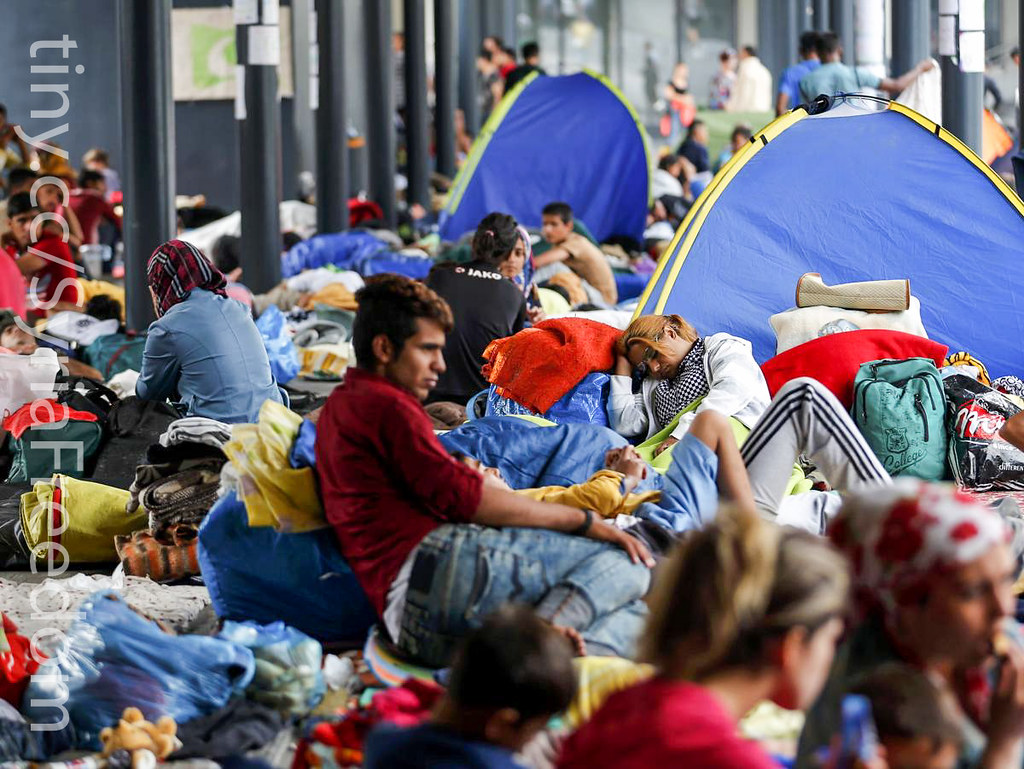
Canada will switch to a new online process for asylum claims on 3 November 2026, with the cutover at 11:59 p.m. Eastern Time on 2 November, CIC News reports. Anyone who has started a claim in the IRCC Portal but not submitted it before then will have to answer new questions.
Immigration, Refugees and Citizenship Canada (IRCC) announced the date on 1 October through updates to its pages on claiming asylum from within Canada and at the border. For in-Canada online claims, a claim started but not submitted must be completed with the new questions and old answers reviewed; a claim already submitted is unaffected. For claims made at the border, a claim not yet linked to a Portal account means re-entering personal and family details; one linked but unsubmitted needs the new questions; a submitted claim is unaffected.
Who can claim and what happens next
CIC News outlines two grounds: Convention refugee (persecution based on race, religion, politics, nationality or social group) and person in need of protection (risk of torture, cruelty or death). Eligible claims go to the Immigration and Refugee Board for a decision. People refused, or found ineligible for referral, can apply for a pre-removal risk assessment.
Work permits while you wait
Since 2022 a public policy lets referred claimants apply for an open work permit while awaiting their hearing. Per CIC News, Canada took a first step on 19 June 2026 toward making early access permanent through regulatory amendments, and on 26 March 2026 extended access to some claimants awaiting a pre-removal risk assessment. Related reading: our guide to Canada work permit processing times and the PRRA waiver for Israel and Palestine claimants.
What to do before 3 November
If you have an unsubmitted claim, submit it before the cutover to avoid extra questions, or be ready to answer them. Official guidance is on the IRCC website. If you are weighing other routes to Canada, try the visa eligibility checker.
Canada asylum process: common questions
When does the new process start?
3 November 2026, with the cutover at 11:59 p.m. ET on 2 November.
Do I have to redo a submitted claim?
No. Claims submitted in the IRCC Portal before the cutover are not affected.
Can asylum claimants work in Canada?
Referred claimants can apply for an open work permit under a policy in place since 2022, per CIC News.
What if my claim is rejected?
You may be able to apply for a pre-removal risk assessment, usually the last chance to seek protection in Canada.
The Ontario Workforce Priority Stream now awards 10 points to candidates earning $80,000 or more, up from a previous top bracket of 8 points, CIC News reports. The change took effect on 5 October 2026 and was announced publicly on 7 October.
Under the “Canadian work experience: earnings history” factor, annual earnings score as follows: $80,000 or more, 10 points (new); $70,000 to $79,999, 8; $50,000 to $69,999, 6; $30,000 to $49,999, 4; under $30,000, 0. Income comes from a Canada Revenue Agency Notice of Assessment issued within the past five years, and the change was applied automatically to affected profiles.
How the stream works
The Ontario Workforce Priority Stream (OWPS) is currently the only route for foreign nationals to seek Ontario provincial nomination for permanent residence. The province revoked all previous pathways on 30 May 2026, launched OWPS on 26 June, unveiled its ranking system on 20 July and opened intake on 4 August.
What is still to come
A second phase will add Priority Healthcare, Entrepreneur and Exceptional Talent streams, with no launch date announced. CIC News cites Ontario’s update page at ontario.ca; check it before acting. Not sure where you stand? Try our visa eligibility checker. Our earlier explainer on Canada work permit processing times may also help.
Ontario OWPS: common questions
What changed in the Ontario Workforce Priority Stream?
A new top earnings bracket: $80,000 or more now scores 10 points instead of 8.
When did it take effect?
5 October 2026, announced on 7 October.
How is income verified?
By a Canada Revenue Agency Notice of Assessment issued within the past five years.
Are other Ontario streams open?
Not yet. OWPS is the only one currently available; three more are planned without dates.
Skilled tradespeople looking to settle in Canada got a fresh batch of good news on October 1. The latest Express Entry trades draw issued 3,500 invitations to apply for permanent residence. The cutoff score for this round sat at 476 points on Canada’s Comprehensive Ranking System, the tool IRCC uses to rank every Express Entry candidate. It is the second draw this year dedicated specifically to the Trades category. It brings the total invitations issued through that category in 2026 to 6,500.
Inside the latest Express Entry trades draw
Candidates needed a few things to qualify. First, they needed to meet the minimum work experience requirements specific to the Trades category. Second, they needed a Comprehensive Ranking System score of at least 476. Third, they needed an Express Entry profile created before the draw’s cutoff timestamp. That cutoff was set at 12:47:55 UTC on October 1, 2026.
There is a wrinkle for candidates who scored exactly 476 points. Because so many people can land on the same score, IRCC uses a tie-breaking rule based on profile creation date. For applicants at exactly the cutoff score, timing mattered more. Their profile needed to exist on or before May 28, 2026, at 16:55:23 UTC. Anyone who created a profile after that moment, even with a score of 476, missed this round.
How this compares to the year’s first trades draw
This was not the first Trades-specific draw of 2026. An earlier round on April 2 issued 3,000 invitations at a slightly higher cutoff of 477 points. Combined, the two draws have now issued 6,500 invitations through the Trades category so far this year. That volume signals Canada treats skilled trades as a genuine, ongoing pathway within Express Entry, not a one-off experiment.
The Trades category is relatively new within Express Entry’s broader structure. That structure has traditionally leaned toward white-collar professions and higher-scoring candidates overall. Its continued use throughout 2026 suggests something deliberate. Canada is trying to close gaps in its skilled trades workforce through immigration, alongside its more familiar tech-and-finance-focused draws.
What this reveals about Canada’s selection priorities
Canada’s broader Express Entry strategy in 2026 has leaned toward candidates with existing Canadian connections. Provincial nominees and candidates with Canadian work experience have been prioritized across multiple draw categories this year, not just Trades. That shift makes sense from a policy standpoint. Candidates already living and working in Canada tend to integrate faster. They face fewer unknowns than applicants arriving from abroad for the first time.
For tradespeople specifically, that prioritization matters. Many skilled trades roles already follow this pattern, including electricians, welders and construction specialists. Canadian employers sponsor temporary workers in these roles, who later transition to permanent residence through exactly this kind of targeted draw. The draw’s design rewards people already embedded in that pipeline.
Why trades draws look different from other Express Entry rounds
Most Express Entry draws reward points for education, language test scores and years of skilled work experience in professional occupations. The Trades category works differently. It recognizes hands-on occupations that do not always score well under the general point system, even when Canada faces real shortages in exactly those fields. Electricians, plumbers, welders and heavy equipment operators are common examples.
That design choice reflects a practical problem Canada has flagged for years. A candidate with a strong trades background and years of hands-on experience can still score lower overall than a candidate with a university degree and less hands-on work history, simply because of how the general points system weighs education. Category-specific draws like this one exist to correct for that gap.
What’s next for Express Entry trades
Two Trades draws are now complete for 2026. Candidates in the category should watch for whether a third round lands before year-end. IRCC has not announced a fixed schedule for Trades-specific draws. Some other categories run on a more predictable cadence, but this one does not. Candidates sitting below this round’s 476 cutoff should keep building their profile. Work experience, language scores and Canadian job offers can all raise a candidate’s ranking ahead of the next invitation round.
Common questions, answered
How many invitations did the October 1 Express Entry trades draw issue? IRCC issued 3,500 invitations to apply for permanent residence, with a Comprehensive Ranking System cutoff of 476 points.
Was this the only Trades-specific draw in 2026? No. An earlier draw on April 2, 2026, issued 3,000 invitations at a 477-point cutoff. Together, the two draws have issued 6,500 invitations this year.
What is the tie-breaking rule for candidates at exactly 476 points? Those candidates needed their Express Entry profile created on or before May 28, 2026, at 16:55:23 UTC. Only then were they included in this round.
What qualifies someone for the Trades category? Candidates need to meet minimum work experience requirements specific to skilled trades occupations. They also need the required Comprehensive Ranking System score.
Does Canada prioritize candidates already living in the country? Yes. Canada’s 2026 Express Entry strategy has favored provincial nominees and candidates with existing Canadian work experience across multiple draw categories.
When will the next Trades draw happen? IRCC has not announced a fixed schedule for Trades-specific draws, so the timing of the next round remains unconfirmed.
Further sources
CIC News — Canada invites 3,500 tradespeople to apply for permanent residence. cicnews.com
Government of Canada — Express Entry rounds of invitations. canada.ca
If you are waiting on a Canadian work permit extension, there is good news. You can now see roughly how much longer that wait will last. Canada work permit processing estimates became personalized in late September 2026. Immigration, Refugees and Citizenship Canada quietly updated its processing times webpage. Instead of a single generic estimate for everyone, applicants now see a wait time tailored to their own submission date.
How the new Canada work permit processing tool works
The update lives on the same processing times page IRCC has run for years, but the mechanics changed. Applicants select “Temporary residence” as their application type. Then they choose “Work permit extension in Canada” from a dropdown menu. From there, the tool shows three things. It shows the estimated remaining wait in weeks, personalized to the applicant’s own submission date. It shows how many applicants are ahead of them in the queue. It shows the total number of people currently awaiting a decision.
People who have not yet applied can still use the tool. It will show them what their wait would look like if they submitted today. As of September 26, 2026, the page listed 202,900 applicants awaiting decisions in this category. That gives a sense of just how large the queue actually is.
Who the new estimates cover
The personalized estimates apply to three groups. In-Canada work permit holders extending an existing permit qualify. International student graduates submitting their first Post-Graduation Work Permit application qualify too. So do work permit holders who are changing the conditions attached to their existing permit.
One group is notably excluded. First-time work permit applicants applying from outside Canada do not get a personalized estimate. They still use the original “Work permit in Canada” option, which shows standard, non-personalized processing time estimates. IRCC has not explained why that group was left out of this round of updates. It may simply reflect which application streams were technically easiest to convert first.
Why this matters for applicants
A generic processing time estimate tells an applicant almost nothing useful. It averages everyone together, regardless of when they applied or how the queue has moved since. A personalized estimate is different. It tells someone whether their application is near the front of the line, or still has months to go. That is based on real queue position, not a rough average.
That distinction matters most for people making real decisions around their status. Someone whose work authorization is about to expire needs a clear answer. Is a renewal decision weeks away, or months away? An average figure that might not apply to their case is not good enough. Employers sponsoring workers face the same planning problem, and a more accurate estimate helps them plan staffing with more confidence.
Part of a wider shift at IRCC
This is not IRCC’s first move toward personalized processing estimates. The department first launched personalized processing times for citizenship and permanent residence applications back in October 2025. Extending the same approach to work permit extensions and PGWP applications a year later suggests IRCC sees real value in the tool. It may plan to expand it further to other categories over time.
The timing also lands amid broader scrutiny of Canada’s immigration processing capacity. Previous reporting this year has tracked both increases and decreases in wait times across different application streams. IRCC keeps adjusting staffing and policy in response to application volume. A personalized tool does not by itself reduce the underlying backlog. But it gives applicants a clearer, more honest picture of where they actually stand.
What IRCC watchers should track
Watch for whether IRCC extends personalized estimates to first-time applications from outside Canada. That remains the one major gap in the current rollout. Also watch the overall queue size. The 202,900 figure recorded in late September is worth tracking in the months ahead. It offers a running signal of whether Canada’s work permit backlog is growing or shrinking under current policy.
Frequently asked
What changed with Canada work permit processing estimates? IRCC updated its processing times webpage in late September 2026. It now shows personalized wait estimates based on an applicant’s own submission date, instead of one generic figure for everyone.
How do I see my personalized estimate? Select “Temporary residence” as the application type on IRCC’s processing times page. Then choose “Work permit extension in Canada” from the dropdown.
Who qualifies for a personalized estimate? Three groups qualify: in-Canada work permit holders extending their permit, international student graduates applying for their first PGWP, and work permit holders changing their permit conditions.
Who is excluded from the personalized tool? First-time work permit applicants applying from outside Canada do not qualify. They still see standard, non-personalized estimates under the original “Work permit in Canada” option.
How many people are currently in the queue? As of September 26, 2026, IRCC listed 202,900 applicants awaiting decisions in the categories covered by the new tool.
Has IRCC done this before for other application types? Yes. IRCC launched personalized processing times for citizenship and permanent residence applications back in October 2025. That came a full year before this work permit update.
Reporting sources
CIC News — Canada launches personalized processing times for work permit extensions and PGWPs. cicnews.com
Government of Canada — Check processing times. canada.ca
Canada has quietly reopened a door for a specific group of failed asylum seekers. The new Canada asylum Israel Palestine measure waives a standard 12-month wait before someone can apply for a Pre-Removal Risk Assessment. It covers nationals and former residents of Israel and Palestine. The change took effect September 29, 2026. For people facing deportation after a final negative decision, the waiver can mean the difference between removal and a fresh chance to make their case.
What the Canada asylum Israel Palestine waiver actually changes
Normally, a refused asylum claimant must wait a full year before applying for a Pre-Removal Risk Assessment, known as a PRRA. That blackout period exists to prevent repeated, duplicative applications. Canada’s immigration department has now waived it for a specific group. The waiver applies to Israeli and Palestinian nationals and former residents who received a final negative decision between September 28, 2025, and September 29, 2026.
That window is deliberate. It covers people whose claims, prior PRRAs, or Federal Court cases were rejected during roughly the past year. That period overlaps with the most intense phase of the conflict in Gaza and the wider region. Eligible people can now reapply for PRRA status as protected persons. This applies even to those refused before.
Who qualifies, and who does not
Only nationals and former residents of Israel and Palestine qualify, and only if their final negative decision fell inside that specific window. Anyone who receives a negative decision after September 29, 2026, gets no benefit from the waiver. Those applicants face the standard rules again, including the usual 12-month blackout.
Applicants who do qualify must follow instructions on the federal government’s website to submit their PRRA application. A successful PRRA grants protection to anyone who faces persecution, torture, or a risk to their life if deported. The waiver does not guarantee approval. It restores the chance to apply, for people who would otherwise have waited out the full year first.
Why Canada made this change now
The move fits a pattern. Canada has adjusted its immigration rules repeatedly since late 2023 in response to the conflict in Israel and the Palestinian territories. Earlier steps included temporary measures and work permit extensions for people from the region. This latest step targets a narrower group: people already inside Canada’s asylum system who hit a procedural wall at a difficult moment.
Immigration lawyers describe blackout-period waivers like this one as rare. Officials usually reserve them for cases where conditions in a claimant’s home region shifted significantly since their case was decided. Israeli and Palestinian nationals had their claims assessed during an active, fast-moving conflict. That argument carries real weight with immigration lawyers watching the case.
How this fits Canada’s broader response
Canada has leaned on narrow, targeted measures throughout this conflict rather than broad, open-ended policy changes. Earlier steps extended work permits for Israeli and Palestinian nationals already in Canada, without opening new pathways for people outside the country. This PRRA waiver follows the same logic. It helps a specific, already-identified group clear a specific procedural obstacle, rather than creating a new general immigration stream.
That narrow approach has both supporters and critics. Supporters say it lets Canada respond quickly to a changing situation without overhauling its asylum system. Critics argue it leaves out people facing similar risks from other conflicts, who get no equivalent waiver.
Canadian immigration lawyers note the waiver does not expand who can claim asylum in the first place. It only reopens a narrow procedural door for people already deep in the system. For a claimant staring down a removal order, that distinction matters less than the practical result: one more chance to present evidence of risk, reviewed under rules that normally would have made them wait another several months just to file.
What comes next for applicants
Canada has not released figures on how many people the waiver is expected to help. No public estimate exists yet. Immigration advocates will likely cite this measure as a precedent when they push for similar flexibility for people facing deportation to other active conflict zones. Eligible applicants should move quickly. The waiver applies only to this specific decision window, and nothing suggests Ottawa will extend it indefinitely.
A few questions answered
What does the Canada asylum Israel Palestine waiver do? It removes the standard 12-month wait before someone can apply for a Pre-Removal Risk Assessment, specifically for Israeli and Palestinian nationals and former residents.
Who is eligible for the waiver? Anyone from Israel or Palestine whose asylum claim, prior PRRA, or Federal Court case received a final negative decision between September 28, 2025, and September 29, 2026.
When did the measure take effect? September 29, 2026.
Does the waiver apply to decisions made after September 29, 2026? No. Anyone who gets a negative decision after that date faces the standard 12-month blackout period again.
What is a Pre-Removal Risk Assessment? It is a review that can grant protection to someone facing deportation, if they can show a genuine risk of persecution, torture, or danger to their life back home.
Does a successful PRRA guarantee someone can stay in Canada? Not automatically. But a successful assessment grants protected person status, which can prevent removal for applicants who prove a genuine risk.
Source material
CIC News — Canada gives second chance to asylum seekers from Israel and Palestine. cicnews.com
Government of Canada — Pre-removal risk assessment. canada.ca