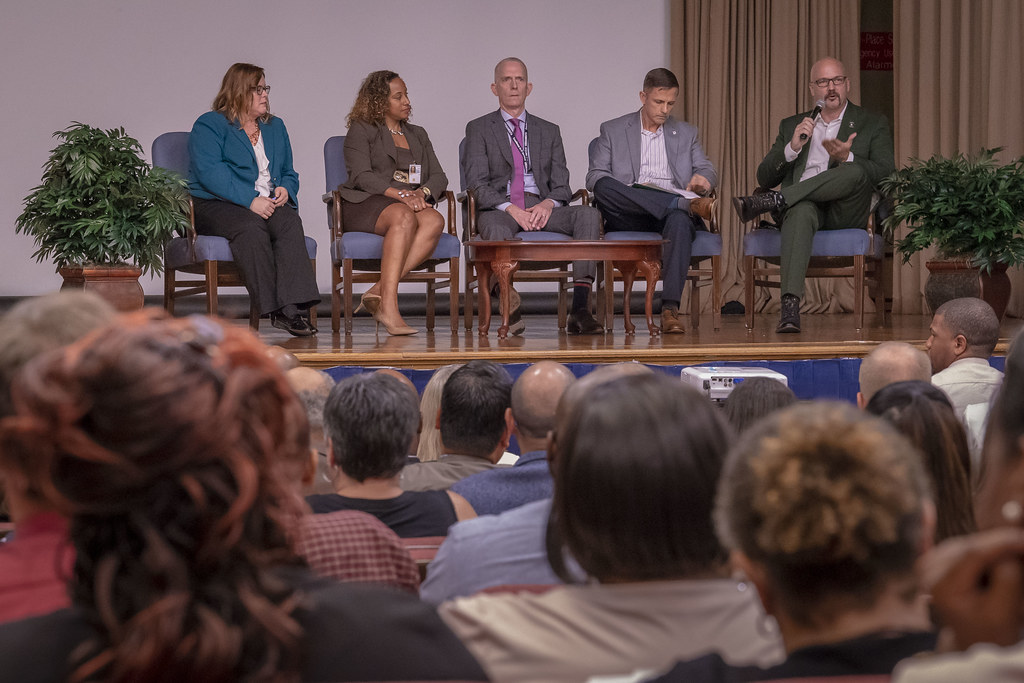
Chevening Scholarships are for people from all backgrounds who show the potential to be future leaders. To apply, you need to have a clear and realistic idea for positive change in your country and explain how a UK master’s degree will help you achieve it.
The scholarship covers all expenses for studying a master’s degree at over 150 UK universities. It also offers unique academic, professional, and cultural experiences.
Since it started in 1983, Chevening has helped over 57,000 professionals advance their careers, including more than 370 from Bangladesh. For the 2025/26 academic year, around 1,500 scholarships are available globally, showing the UK’s dedication to developing future leaders.
Sarah Cooke, the British High Commissioner to Bangladesh, said:
“If you want to drive change locally or globally, excel in your field, and inspire others, a Chevening Scholarship for a master’s degree in the UK is a great opportunity. Apply before the November 5, 2024 deadline and join an amazing global network.”
Chevening Scholarships are the UK Government’s global scholarship program, funded by the Foreign, Commonwealth and Development Office (FCDO) and partner organizations. The scholarships support one-year master’s degrees at UK universities for those with the potential to be future leaders. Since its launch in 1983, Chevening has become a prestigious international program. There are over 57,000 Chevening Alumni worldwide, forming a highly regarded global network.
Applications for Chevening Scholarships to study in the UK are open until November 5, 2024. You can apply online at chevening.org/apply and also contact us for other visa services.
In today’s globalized economy, professionals from various fields are increasingly seeking employment abroad to enhance their careers, gain international experience, and immerse themselves in different cultures. One of the most effective tools facilitating this international job hunt is the job seeker visa. Understanding the benefits and requirements of job seeker visas can open doors to global job opportunities and provide a pathway to a fulfilling career abroad.
A job seeker visa is a type of temporary visa that allows individuals to enter a country specifically to look for employment. Unlike work visas, which require a job offer before application, job seeker visas enable applicants to travel to the desired country and search for a job while residing there. This approach provides several advantages, making it an attractive travel route for many.
If you need guidance with this Visa process, reach out to us on WhatsApp: +23409116762327
Why a Job Seeker Visa is a Good Travel Route
Direct Access to Employers: Being physically present in the country allows job seekers to attend interviews, career fairs, and networking events in person, significantly increasing their chances of securing employment.
Immersion in the Local Job Market: Understanding the local job market, including its demands, culture, and practices, is easier when one is living in the country. This immersion helps job seekers tailor their applications and approach more effectively.
Flexibility: Job seeker visas offer a flexible timeframe to find suitable employment. During this period, job seekers can explore various job opportunities, industries, and locations without the immediate pressure of securing a position before arriving.
Cultural Integration: Living in the country while job hunting allows individuals to adapt to the local lifestyle, learn the language, and build a social network, which can be beneficial both personally and professionally.
Potential for Permanent Residency: In many cases, securing a job through a job seeker visa can be a stepping stone to obtaining a work visa or even permanent residency, opening the door to long-term career and life opportunities in a new country.
Countries Offering Job Seeker Visas
Here are some countries that offer job seeker visas along with their requirements:
Germany
Visa Type: Job Seeker Visa
Duration: Up to 6 months
Requirements: Bachelor’s or Master’s degree from a German or recognized foreign university, sufficient funds to cover the stay, and health insurance.
Portugal
Visa Type: Job Seeker Visa
Duration: Up to 6 months (120 days initially, extendable for another 60 days)
Requirements: Proof of financial means, travel insurance, and evidence of qualifications.
Austria
Visa Type: Job Seeker Visa
Duration: Up to 6 months
Requirements: Points-based system considering qualifications, work experience, language skills, and age. Proof of funds and health insurance are also needed.
Sweden
Visa Type: Job Seeker Visa
Duration: Up to 9 months
Requirements: Completed studies corresponding to an advanced level degree, sufficient funds to support oneself during the stay, and health insurance.
United Arab Emirates (UAE)
Visa Type: Job Seeker Visa
Duration: 3, 6, or 12 months
Requirements: Bachelor’s degree or equivalent, financial means to support the stay, and a refundable security deposit.
Finland
Visa Type: Residence Permit for Seeking Work after Graduation
Duration: Up to 1 year
Requirements: Completed degree in Finland or a research scholar position, sufficient financial resources, and health insurance.
South Africa
Visa Type: Critical Skills Work Visa
Duration: Up to 12 months
Requirements: Proof of qualifications and work experience in a critical skills area, proof of financial means, and health insurance.
New Zealand
Visa Type: Job Search Visa (part of the Silver Fern Visa category)
Duration: Up to 9 months
Requirements: Age between 20-35 years, recognized qualifications, and proof of funds. Note: The Silver Fern Visa category is currently closed and under review.
Spain
Visa Type: Job Seeker Visa
Duration: Up to 12 months
Requirements: Graduate or postgraduate degree from a recognized university within the past two years, health insurance, and sufficient funds.
Brazil
Visa Type: Job Seeker Visa
Duration: Up to 180 days
Requirements: Bachelor’s degree or higher, health insurance, proof of funds, and clean criminal record.
Conclusion
Understanding the benefits and requirements of job seeker visas not only facilitates the job search process by providing on-the-ground access to opportunities but also offers a unique chance to experience and integrate into a new culture. For professionals looking to broaden their horizons and enhance their career trajectories, this visa presents a practical and enriching pathway.
If you need guidance with this Visa process, reach out to us on WhatsApp: +23409116762327
Samsung may be about to hand part of its most important new chip contract to its biggest manufacturing rival. Reports of a deal covering Nvidia Samsung HBM chips say Samsung will use TSMC’s 3-nanometre process to produce base dies for Nvidia’s next-generation custom high-bandwidth memory. That would mark the first time Samsung has worked with TSMC at the HBM manufacturing stage.
What’s Reportedly Changing With Nvidia Samsung HBM Chips
The Seoul Economic Daily first reported the arrangement on October 18, 2026. It cited industry sources. Reuters picked up the account, according to coverage in The Star. Samsung, TSMC and Nvidia have not confirmed the report themselves. Outlets covering it call it a supply-chain report, not a confirmed three-company announcement.
Why Nvidia Wants a Common Manufacturing Process
Nvidia unveiled its NVHBM memory standard in August 2026. Unlike conventional HBM, NVHBM places Nvidia’s own custom memory controller inside the base die. That gives the base die a more central role in the chip’s design. LetsDataScience reports that Nvidia asked its three major memory suppliers to use TSMC’s process for NVHBM base dies. Those suppliers are Samsung, SK hynix and Micron. Nvidia also asked them to standardize core dies around sixth-generation DRAM. A single shared foundry process would simplify validation for Nvidia. It would also make Nvidia’s custom memory implementation more consistent across vendors.
Samsung’s Balancing Act Between Rival and Customer
Samsung reportedly accepted Nvidia’s requirements after an internal review. It still plans to keep its own in-house production for standard HBM. It will also keep making custom memory it supplies to other customers. Samsung is also weighing whether its own foundry could produce NVHBM base dies itself. That option would matter if TSMC’s manufacturing capacity turns out to be insufficient to meet demand. It’s a hedge that would let Samsung fall back on its own fabs, rather than depend entirely on a competitor for a critical part of its biggest new product line.
A Pattern That Fits Earlier Reporting
A separate TrendForce report from October 9, 2026, said Samsung was exploring a dual-track approach to custom HBM production. Samsung could make base dies in-house or route them through an external foundry, depending on the customer. That report fits an external-foundry option for Nvidia’s business specifically. It doesn’t, though, confirm the specific October 18 arrangement. Taken together, the two reports point toward Samsung increasingly treating TSMC as a manufacturing partner for its most demanding AI memory customer. The two companies still remain direct rivals in foundry services more broadly.
Samsung and TSMC’s Long Rivalry
Samsung and TSMC have competed directly in contract chip manufacturing, known as foundry services, for more than a decade. TSMC has held the largest share of that market for years, while Samsung has positioned itself as the main alternative for companies that don’t want to depend on a single supplier. That rivalry has mostly played out in the production of logic chips, the processors that do the computing. Memory chips like HBM have traditionally stayed inside each company’s own vertically integrated supply chain, with Samsung designing and manufacturing its own memory from start to finish. A move to have TSMC manufacture base dies for Samsung-branded HBM would cross that line for the first time, blending two companies that otherwise compete head-to-head for the same foundry customers. It would not be the first time a tech supply chain has produced unusual partnerships between rivals. Apple, for instance, has long bought components from Samsung even as the two companies compete directly in smartphones. Analysts following the chip sector say this kind of cross-rival manufacturing deal has grown more common as AI chip demand outpaces what any single foundry can supply alone.
What Confirmation Would Mean for the Chip Supply Chain
Confirmation of the arrangement would mark a notable crack in the usual separation between Samsung’s and TSMC’s manufacturing operations. It would also signal how much leverage Nvidia now holds over its memory suppliers as the dominant buyer of AI accelerator components. Reporting so far says little about how SK hynix and Micron plan to answer the same TSMC-process request. That leaves open whether this becomes an industry-wide standard, or stays specific to Samsung’s arrangement with Nvidia.
What is the reported Nvidia Samsung HBM chips arrangement? A report that Samsung will use TSMC’s 3-nanometre process to make base dies for Nvidia’s next-generation custom HBM memory, first reported October 18, 2026.
Has this been confirmed by the companies involved? No. Samsung, TSMC and Nvidia haven’t confirmed the report themselves, and outlets describe it as a supply-chain account rather than an official announcement.
What is NVHBM? Nvidia’s custom high-bandwidth memory standard, unveiled in August 2026, which places Nvidia’s own memory controller inside the base die.
Why would Samsung work with a rival like TSMC? To meet Nvidia’s request that its memory suppliers use a common manufacturing process for NVHBM base dies, standardizing implementation across vendors.
Will Samsung still make chips in-house? Yes — reportedly for standard HBM and custom products for other customers, while it weighs whether its own foundry could back up TSMC capacity for Nvidia specifically.
Are other memory makers affected? Nvidia reportedly made the same request to SK hynix and Micron, though neither company’s response has been reported in detail.
Gold and the dollar have been pulling in opposite directions for weeks. Monday’s trading showed why that gold price dollar strength link still drives the yellow metal’s swings more than almost anything else. Gold traded above $4,000 during Monday’s Asian session. That marked a modest recovery from near a three-month low. The US Dollar Index slipped toward 101.50-101.70 at the same time, according to FXStreet.
What’s Driving the Gold Price Dollar Strength Dynamic
A softer dollar and easing crude oil prices are lifting gold, rather than any single piece of economic data. A weaker dollar makes gold cheaper for buyers using other currencies, since gold is priced in dollars. That tends to lift demand and price together. FXStreet quotes Federal Reserve officials as signaling no urgency to raise interest rates immediately. That comment caps how far gold can run even as the dollar softens.
Why the Dollar Has Lost Ground
Two forces are pressuring the dollar this week. The first is the Fed’s own policy meeting on October 27-28. Futures price a 90.6% probability of a pause there, not a further hike. That reduces the dollar’s near-term yield advantage. The second force is geopolitics. President Trump said over the weekend that “there will not be a strike today” on Iran. That ruled out immediate action and pulled some safe-haven demand out of the dollar. Both forces have pushed the same way this week. That is part of why the dollar’s slide has looked steady rather than driven by one sharp headline.
The Risks That Could Still Flip the Trade
None of this volatility has fully disappeared. Israel holds a national election on October 27, and US midterms follow on November 3. Intelligence assessments cited by FXStreet suggest Iran could retaliate against regional sites in Israel and the UAE if strikes resume. A fresh escalation would likely reverse this week’s pattern fast. It would push the dollar back up as a safe haven. Gold would likely follow the broader risk-off move rather than rise against it.
What Traders Are Watching Next
Traders are also watching this week’s preliminary third-quarter GDP reading and the latest PCE inflation data, beyond the Fed meeting itself. Either report could shift the odds the Fed assigns to a rate increase at its December 9 meeting. Futures already price that move as close to certain. A hotter-than-expected inflation print would likely firm up the dollar and cap gold’s recovery. A softer one could extend gold’s bounce further.
Why Gold and Interest Rates Move Together
Gold pays no interest or dividend. That is why its price is especially sensitive to the returns available on safer assets like Treasury bonds. When the Fed holds or cuts rates, the opportunity cost of holding gold instead of interest-bearing assets falls. That tends to support gold prices. When the Fed raises rates or signals more hikes ahead, that opportunity cost rises instead. Gold often comes under pressure as a result. This relationship is part of why this week’s Fed meeting matters so much for gold traders, even though the decision itself is about dollar interest rates, not gold directly. The dollar link works in a similar way. Gold is priced in dollars globally, so a weaker dollar makes it cheaper for buyers using euros, yen or other currencies. That often lifts demand and price together, even when nothing about gold’s own supply or industrial use has changed. Both relationships help explain why a single week packed with a Fed decision, inflation data and Middle East headlines can move gold prices as much as any mining or jewelry news would. That is also why many professional traders track gold alongside the US Dollar Index specifically, rather than watching either market in isolation.
Where This Leaves Gold Investors
Gold remains well above $4,000 even after its pullback from recent highs. The gold price dollar strength link suggests the metal’s next move hinges more on the dollar’s path around this week’s Fed decision than on any gold-specific news. Investors holding gold as a hedge are, in effect, also betting on how this week’s rate decision and Middle East headlines play out.
Gold Price and Dollar Strength: Questions Readers Are Asking
Why did gold recover on Monday? Gold traded above $4,000 as the US Dollar Index slipped and crude oil prices eased, both of which tend to support gold.
What is the gold price dollar strength relationship? Gold is priced in dollars, so a weaker dollar makes it cheaper for holders of other currencies, often lifting its price as a result.
Why has the dollar been weakening this week? A 90.6% probability of a Fed rate pause and President Trump ruling out an immediate strike on Iran have both reduced demand for the dollar as a safe haven.
Could the dollar reverse course quickly? Yes. A fresh escalation around Israel’s October 27 election or the Middle East could quickly restore the dollar’s safe-haven appeal.
What data could move gold and the dollar this week? Preliminary third-quarter GDP and the latest PCE inflation reading, both due around the same time as the Fed’s meeting.
Is gold still near its highs? It remains above $4,000 despite pulling back from levels closer to its recent highs.
Brussels has had the power to fine AI companies for more than two months now. A second deadline is approaching that will pull far more systems under its reach. EU AI Act enforcement over general-purpose AI model providers formally began on August 2, 2026. That is when the European Commission’s AI Office became entitled to investigate and penalize non-compliant companies. A December 2 deadline for AI transparency labeling is next on the calendar.
How EU AI Act Enforcement Actually Works
The European AI Office sits inside the European Commission. It can now request information and documentation from AI companies. It can demand access to models for evaluation, and order corrective or risk-mitigation measures, according to a client alert from law firm Wilson Sonsini. In serious cases, it can order a company to restrict, withdraw or recall a model from the EU market entirely. Fines can reach the higher of €15 million or 3% of a provider’s worldwide annual turnover. For the largest AI companies, that ceiling could run into the billions.
Which Companies and Systems Are Covered
The enforcement powers apply to providers of general-purpose AI models placed on the EU market on or after August 2, 2025. Models already on the market before that date generally get until August 2, 2027 to comply. That gives incumbent providers a longer runway than newer entrants. Companies whose models carry “systemic risk” face extra obligations. Those cover model evaluation, mitigating systemic risks, reporting serious incidents, and cybersecurity. This tier is aimed squarely at the handful of AI labs whose models are large or widely deployed enough to matter at a societal scale.
The Transparency Deadline Still to Come
Separately, Article 50 of the EU AI Act set transparency obligations that also took effect on August 2, 2026. These cover chatbots, systems that generate synthetic content, deepfakes, emotion-recognition tools and biometric-categorization systems. Providers and deployers must disclose that users are interacting with AI or that content was AI-generated. For systems already on the market before August 2, 2026, the machine-readable marking requirement under Article 50(2) doesn’t bite until December 2, 2026. That deadline gives companies running older AI tools only a few more weeks to add the disclosure.
How the AI Act’s Risk Tiers Work
The AI Act organizes obligations around several risk tiers rather than treating every AI system the same way. Systems judged to pose unacceptable risk, such as government social scoring, are banned outright. High-risk systems, including many used in hiring, credit scoring and law enforcement, face the law’s strictest requirements around testing, documentation and human oversight. General-purpose AI models sit in their own tier. That’s the category now subject to AI Office enforcement, since a single model can be built into many different downstream products. Limited-risk systems, mainly the chatbots and content generators covered by the transparency rules, face lighter disclosure-only obligations. Everything else falls into a minimal-risk category with no specific obligations at all. The enforcement actions now beginning target only the general-purpose and high-risk tiers. That is why most ordinary AI-powered apps and features are not yet facing scrutiny from the AI Office. Compliance teams at major AI labs have spent much of 2026 mapping their own products against these tiers. Misclassifying a system risks the wrong set of obligations entirely.
Why This Matters Beyond Europe
The EU AI Act’s extraterritorial reach means any AI company whose models reach EU users can fall under these rules. That holds regardless of where the company is based. The AI Office’s enforcement posture has become a reference point for regulators elsewhere weighing their own AI rules, even as some companies have lobbied for a slower rollout. For now, the practical question for most providers is less about headline fines. It is more about whether their existing disclosure practices will satisfy the December marking deadline.
What Happens as More Deadlines Arrive
The AI Office hasn’t yet announced its first enforcement action under these new powers. The law firm alert notes the office’s investigative tools — document requests, model access, corrective orders — are designed to be used well before a fine is ever on the table. The real test of EU AI Act enforcement will come once the December marking deadline passes. Regulators will then start checking which companies actually complied.
When did EU AI Act enforcement begin? August 2, 2026, when the European Commission’s AI Office gained formal power to investigate and penalize providers of general-purpose AI models.
How large are the potential fines? Up to the higher of €15 million or 3% of a provider’s worldwide annual turnover.
Which companies does this apply to? Providers of general-purpose AI models placed on the EU market on or after August 2, 2025; older models have until August 2, 2027 to comply.
What’s the December 2026 deadline about? Systems placed on the market before August 2, 2026 must meet a machine-readable AI-content marking requirement by December 2, 2026.
What powers does the AI Office have short of a fine? It can request information, demand access to models for evaluation, and order corrective or risk-mitigation measures.
Can the AI Office force a model off the market? Yes, in serious cases it can order a model restricted, withdrawn or recalled from the EU market.
The State Department’s November 2026 visa bulletin advances several employment-based green card dates for most of the world. Applicants from India and China, though, face yet another month with almost no movement in their categories.
What Changed in the November 2026 Visa Bulletin
The new dates are based on visa demand reported through October 5, 2026, according to Newsweek. For most countries, Mexico and the Philippines, EB-1 remains current. EB-2’s final action date advances three months to April 1, 2025. EB-3 advances one month to June 15, 2024. EB-3 Other Workers jumps five months to June 1, 2022, for the same group of countries. That is the single largest move in this month’s bulletin.
Why India and China Barely Moved
India’s EB-2 final action date stays frozen at November 1, 2013. China’s EB-2 holds at October 1, 2021. China’s EB-1 advances a single month, to August 1, 2023, while India’s EB-1 stays put at February 1, 2023. Both countries’ EB-3 Other Worker categories edge forward by just 14 days, to January 22, 2014, according to Erickson Immigration Group. China’s EB-3 moves separately to January 22, 2022. EB-4 holds at December 15, 2022 across the board. EB-5’s unreserved category stays current for most countries, with China fixed at December 1, 2016 and India at December 1, 2023.
What This Means for H-1B Workers Waiting on Green Cards
Douglas S. Pierce, a former USCIS supervisor who retired in late 2025, told Newsweek the lack of movement is especially significant for Indian and Chinese H-1B workers. “The biggest things that stand out are the lack of movement forward on India employment preference categories,” Pierce said. He added that H-1B workers from both countries are being “profoundly impacted by the lack of movement on these numbers.” Pierce linked the bulletin’s limited progress to other changes this year, including higher H-1B filing fees and changes to the PERM labor certification program and H-4 work authorization.
Filing Dates and What USCIS Will Accept
Separate from the final action dates, the bulletin’s Dates for Filing chart sets a later, more generous cut-off. That date determines when applicants can submit paperwork. For November 2026, the EB-2 filing date sits at March 15, 2026 for most countries, including Mexico and the Philippines. For India, it’s January 15, 2015. USCIS has confirmed it will accept adjustment-of-status applications using the Dates for Filing chart for November. That gives many applicants a few extra months to file before their final action date actually arrives.
How Priority Dates and the Visa Bulletin Fit Together
The visa bulletin’s dates matter because of how the US caps green cards each year. Congress sets an annual limit for each employment-based category. Demand from countries like India and China regularly exceeds that limit, since both countries have large numbers of pending petitions. When demand outstrips supply, the State Department sets a cut-off date. Only applicants whose priority date falls before that cut-off can move forward that month. A priority date is simply the date an employer first filed a petition on the worker’s behalf. India and China send far more petitions than the per-country limits were built to handle. That is why workers from those two countries tend to wait years longer than applicants from almost anywhere else. The imbalance is structural, not the result of any single policy change. It’s the main reason the same two countries land at the back of the queue nearly every month. That is also why India and China are listed as separate columns rather than folded into the “all other countries” category used for most of the world on the same chart. Most other countries move through their categories far faster as a result, since they share a single, much larger pool of available visa numbers each year.
The Caveat Every Applicant Should Know
The State Department routinely warns that cut-off dates can move backward. That happens if demand in a category exceeds the visas available for the rest of the fiscal year. Categories can also become temporarily unavailable altogether. Reaching your priority date on the bulletin isn’t the same as approval. It only means your case becomes eligible for the next stage of processing, which can still take months depending on USCIS workload.
What is the November 2026 visa bulletin? The State Department’s monthly update on employment and family-based green card cut-off dates, released in late October 2026 based on demand through October 5.
Did India’s EB-2 category move this month? No. India’s EB-2 final action date remains at November 1, 2013.
Which category saw the biggest advance? EB-3 Other Workers for most countries and Mexico, which advanced five months to June 1, 2022.
Can applicants file paperwork before their final action date arrives? Yes, if their priority date is earlier than the Dates for Filing chart’s cut-off, which USCIS has confirmed it will accept for November 2026.
Why are H-1B workers particularly affected by this bulletin? Former USCIS supervisor Douglas Pierce says the lack of movement in India’s categories compounds other recent changes, including higher H-1B fees and PERM program restrictions.
Can a visa bulletin cut-off date move backward? Yes. The State Department can retrogress a date if demand exceeds the visas available for the rest of the fiscal year.
This is Big Tech earnings week. The numbers coming out of Redmond, Mountain View and Seattle will show whether AI spending is paying off yet. Microsoft and Alphabet report after markets close on Wednesday, October 28, 2026. Amazon follows on Thursday, October 29, according to a report carried by TokenPost.
What Wall Street Expects From Big Tech Earnings Week
Analysts polled ahead of the reports expect Microsoft to post earnings of $4.71 per share. That is on revenue of $90.63 billion for its fiscal first quarter of 2027. Alphabet is expected to report $3.03 per share on roughly $127.92 billion in revenue. Amazon’s consensus estimate is $1.96 per share on revenue of about $202 billion, based on figures reported by KuCoin News. None of the three companies has confirmed these figures. They are analyst projections, not guidance.
The AI Capex Question Hanging Over the Results
Every one of these reports will be read first for capital expenditure figures. AI infrastructure spending matters more right now than the headline revenue and profit numbers. All three companies have spent heavily this year on data centers, custom chips and cloud capacity. Investors are increasingly asking when that spending converts into proportionate revenue growth. A quarter showing spending accelerating faster than AI-related revenue would likely unsettle a market already having a rough week.
A Shaky Market Walking Into the Reports
Both benchmarks were already under pressure heading into earnings week. The Nasdaq Composite closed at 25,955.34 on Friday, October 23, down 0.21% for the session. The S&P 500 finished at 7,623.68, down 0.52%, extending its losing streak for the week. That backdrop raises the stakes for each report. A market already pricing in some disappointment can swing sharply on results that beat or miss by even a modest margin. The Federal Reserve’s own rate decision lands in the same 48-hour window, adding another variable.
Why the Timing Makes This Week Unusually Loaded
Big Tech earnings week overlaps almost exactly with the Fed’s October 27-28 policy meeting. Traders are digesting rate guidance and corporate earnings at the same time. A Fed that sounds confident alongside strong AI-driven results would reinforce the market’s current optimism. A weaker combination from either side could compound the other’s effect in either direction.
Why These Four Companies Move the Whole Market
Microsoft, Alphabet and Amazon are among the handful of companies whose combined value makes up a large share of major US indexes. That is why their results tend to move the Nasdaq and S&P 500 as a whole, not just their own share prices. Apple reports separately on Thursday alongside Amazon. It rounds out the group of companies whose AI spending decisions are shaping how the broader market reads this earnings season. A disappointing set of results from even one of them can drag down sentiment well beyond that single stock.
Why AI Capex Has Become the Market’s Main Obsession
Wall Street’s focus on capital spending wasn’t always this intense. A year ago, investors cared mostly about cloud revenue growth and advertising numbers. That shifted as Microsoft, Alphabet and Amazon each disclosed sharply higher spending commitments on AI infrastructure over the past year, pushing their combined capital expenditure plans well above where they stood going into 2026. The logic now cuts both ways. Spending that outpaces revenue growth raises questions about returns on that investment, while spending seen as falling short of expectations can be read as a company pulling back on AI, which markets have punished just as harshly. That is part of why each report this week will be parsed line by line for capex guidance, not just the headline profit and revenue figures investors used to focus on first. Analysts will also compare each company’s capex guidance against what it signaled just one quarter earlier, since the pace of change has itself become a story investors watch closely.
What to Watch Once the Reports Are Out
Beyond the headline beat-or-miss, watch each company’s forward guidance on cloud growth and AI spending plans for 2027. Microsoft’s results will also be scrutinized for anything related to its financial exposure to OpenAI. That relationship has weighed on its stock since its last earnings report. However the numbers land, the reaction is likely to ripple through the rest of the market. A small number of AI-exposed companies have driven much of the S&P 500’s recent gains.
When do Microsoft and Alphabet report earnings this week? Both report after markets close on Wednesday, October 28, 2026.
When does Amazon report? Amazon reports on Thursday, October 29, 2026.
What revenue is Microsoft expected to post? Analysts expect roughly $90.63 billion in revenue and $4.71 in earnings per share for Microsoft’s fiscal first quarter of 2027.
Why is this earnings week considered especially important? It overlaps with the Federal Reserve’s October rate decision and follows a weak week for both the Nasdaq and S&P 500, raising the stakes for any surprise.
What are investors watching for beyond revenue and profit? Capital expenditure and AI infrastructure spending figures, since these show whether AI investment is converting into proportionate revenue growth.
Has any of the three companies confirmed these estimates? No. The figures are analyst consensus projections, not guidance from Microsoft, Alphabet or Amazon.