Category Archives: Visa Updates

Spain and Italy Just Brought Back Border Checks Between Them. Here’s Why That’s Allowed

Spain Italy border checks have returned at air and sea crossings between the two countries, temporarily suspending one of the basic freedoms of the Schengen Area — travel without routine document checks — for travelers moving directly between them. Spain’s controls run from September 23 through October 7, under a series of orders published in the country’s official state gazette, while Italy’s checks extend further, from October 1 through October 16, citing concerns that include what it called “the continuing situation in the Spanish autonomous city of Ceuta.”

Both countries have framed the move as a response to irregular migration risks, potential secondary movements of migrants within the Schengen Area, and broader public order and internal security concerns, rather than any change in the two countries’ underlying relationship. As Italy’s Ministry of the Interior put it in its notification, the two nations “remain open to each other” — but travelers should still expect identity and document checks they would not normally face.

Who the Spain Italy border checks actually affect

The reinstated checks apply to all passengers on air and sea routes directly between Spain and Italy — a route normally exempt from border controls under Schengen rules, since both countries are full members of the passport-free zone. EU citizens travelling the route must still carry a valid passport or national ID card even though they aren’t normally required to present documents on intra-Schengen routes. Non-EU citizens holding a Schengen visa need a valid passport and visa, and third-country nationals with a residence permit in either country should expect their documentation checked as well.

Both governments have notified the European Commission’s Schengen registration system of the controls, a step required under EU rules whenever a member state temporarily reinstates internal border checks — confirming this is a legally sanctioned, time-limited exception rather than a unilateral breach of Schengen rules.
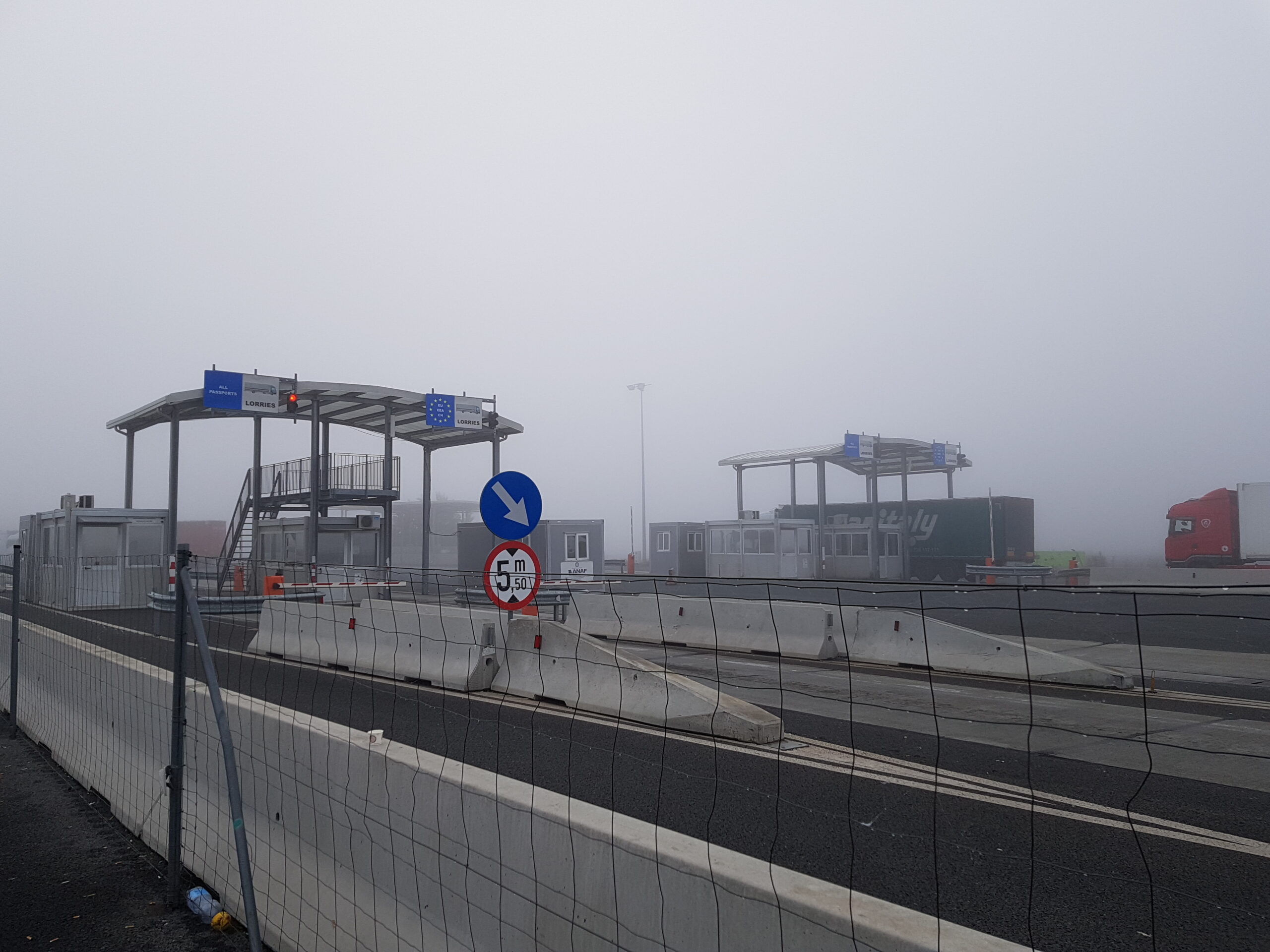
Spain Italy border checks: highway border crossing checkpoint

Why Spain and Italy can legally do this

The Schengen Borders Code allows member states to temporarily reintroduce internal border controls in response to a serious threat to public policy or internal security, provided the measure is proportionate, time-limited, and formally notified to the European Commission and other member states. Spain’s orders — tracked under reference numbers INT/846/2026, INT/932/2026, and INT/977/2026 — and Italy’s parallel notification both follow that framework, which is why the checks can be legally justified as an exception rather than treated as a breach of the Schengen Area’s core principle of free movement.

This is not the first time Schengen states have used this mechanism in 2026, and the specific reference to Ceuta — the Spanish enclave on Morocco’s coast that has repeatedly been a flashpoint for irregular crossings — signals that migration routes through North Africa remain the primary driver behind the current controls, rather than any dispute between Madrid and Rome themselves.

What travelers should actually expect

In practice, travelers on direct Spain-Italy air and sea routes during the control periods should budget extra time for identity checks that would not normally happen on an intra-Schengen trip, and should make sure they are carrying valid passport or ID documentation rather than relying on being waved through. The controls do not affect travel between either country and other Schengen states, only the direct routes between Spain and Italy specified in the respective national orders.

What happens when the controls expire

Spain’s current authorization runs through October 7 and Italy’s through October 16, after which the countries will need to either let the checks lapse and return to normal Schengen rules, or file a fresh notification to extend them if migration pressures and security concerns persist. Given how frequently member states have renewed similar temporary controls elsewhere in the Schengen Area in recent years, a further extension would not be unusual if the underlying pressures driving the current controls haven’t eased by mid-October.

Travelers’ most common questions

Why did Spain and Italy reinstate border checks?
Both countries cited concerns about irregular migration, potential secondary movements within the Schengen Area, and public order and internal security risks, with Italy specifically referencing the situation in Ceuta.

How long will the checks last?
Spain’s controls run from September 23 through October 7, 2026; Italy’s run from October 1 through October 16, 2026.

Which travelers are affected?
All passengers on direct air and sea routes between Spain and Italy, including EU citizens, Schengen visa holders, and third-country nationals with residence permits.

Is this a breach of Schengen rules?
No. The Schengen Borders Code permits temporary reinstatement of internal border checks for security reasons, provided it is proportionate, time-limited, and formally notified to the European Commission.

Does this affect travel to other Schengen countries?
No. The controls apply only to direct routes between Spain and Italy, not to travel between either country and other Schengen states.

What documents should travelers carry?
EU citizens should carry a valid passport or national ID card; non-EU travelers should carry a valid passport and, where required, a valid Schengen visa or residence permit.

More on European travel rules

For more on European travel and study routes, see our coverage of the Erasmus Mundus scholarship deadlines for 2027 and the DAAD and Chevening scholarship deadlines this October. We also previously reported on the UK’s refugee resettlement scheme.

Sources

US $750 Expedited Visa Interview Fee: Pilot Ends 31 December

The US $750 expedited visa interview fee lets some visitor-visa applicants pay for a faster appointment, and the pilot is due to end on 31 December 2026. According to immigration law firm EIG Law, the fee applies to B1/B2 applicants and is paid on top of the standard $185 application fee.

What you need to know

How the pilot works

EIG says applicants first secure a standard appointment and can then upgrade to an expedited slot, if one is available, with an interview offered within 10 business days. The pilot is limited to selected US embassies and consulates. Sources differ slightly on timing: EIG gives a 1 July start, while Khaleej Times says the programme launched in June.

What the fee does not do

EIG stresses that the fee covers interview scheduling only, not the decision. Payment does not guarantee approval, slots are limited, and missing the appointment or failing to pay means losing the slot and the fee. EIG says the document does not address refunds. The State Department is to review results by year-end to decide whether to continue, change the price or expand the scheme.

Who might use it

Consider a hypothetical Brazilian founder who needs a B1/B2 visa for a trade show in a few weeks and faces a long wait at her local consulate. The pilot may help only if her post is on the list and a slot is open. It does not change eligibility, so a weak application stays weak. Always use official State Department channels to book, and be wary of third parties selling slots.

The visa landscape is shifting on several fronts. See our coverage of the October 2026 Visa Bulletin, the public charge rule change and the diversity visa update.

What happens next

If you need an appointment before the end of the year, check your consulate’s booking page for an expedited option now. After 31 December, availability depends on the State Department’s review.

Questions about the $750 fee

Who can use the expedited option?

B1/B2 visa applicants only, at selected posts, per EIG.

How much does it cost?

$750 on top of the $185 application fee.

How fast is the interview?

Within 10 business days, subject to slot availability.

Does it guarantee a visa?

No. It affects scheduling only.

When does the pilot end?

31 December 2026, with a review to follow.

See our immigration section for further US visa updates, including the Supreme Court detention case.

The Old Green Card Test Is Back. Here’s What DHS Now Weighs

The United States has rolled back a four-year-old limit on green card reviews. It governs how immigration officers judge whether an applicant might depend on government support. The public charge rule change took effect on September 18, 2026. On that date, the Department of Homeland Security rescinded the 2022 public charge regulation. The move restores a broader test. Officers can again weigh age, health, family situation, finances, assets, liabilities, and education and skills together. They use this mix to judge whether an applicant is likely to become primarily dependent on government support. The change landed about two weeks before the start of a new government fiscal year. Its effects are still unfolding.

The Public Charge Rule Change Explained

“Public charge” has long been part of U.S. immigration law. It lets officers deny a green card or visa when they conclude an applicant will likely rely mainly on government benefits to survive. The concept dates back decades, but its practical meaning has shifted with each administration. One version took effect in 2019 with a wide list of weighable factors. Courts blocked parts of it, and a later administration withdrew it entirely in 2021. DHS then wrote a narrower rule in 2022. That rule limited which factors could count against an applicant. It leaned heavily on whether someone received specific cash assistance or long-term institutional care, and it set a higher bar for officers to deny a case on public charge grounds.

The public charge rule change undoes that narrower approach. DHS rescinded the 2022 regulation outright, not just parts of it. That detail comes from a Newsweek report on the October 2026 shift. Officers can again weigh a wider set of personal and financial factors when forming a public charge determination. They are no longer tied mainly to a short list of specific benefit programs.

DHS Regulation Rolls Back 2022 Protections

Officers can now weigh age. They can weigh health. They can look at an applicant’s family situation, finances, assets and liabilities, and education and skills. No single factor decides a case on its own. Together, these factors form a fuller picture. An officer uses that picture to judge future reliance on government support.

A green card interview now shaped by the public charge rule change

This brings the test closer to the broader 2019 standard. A court fight and a change in administration had replaced that standard with the narrower 2022 rule. The current DHS regulation keeps that 2022 version off the books entirely, effective September 18, 2026. Immigration lawyers describe the shift as a return to a wider lens, not a brand-new test, since the underlying public charge statute itself has not changed.

DHS has not released a new numeric scoring system alongside the rule change. Officers instead apply judgment across the full set of factors, case by case. That gives individual officers more discretion than the 2022 framework allowed.

Green Card Applications Now Face a Wider Review

The rule change affects most green card applications. That includes cases filed inside the United States and immigrant visa applications processed at consulates abroad. An officer reviewing a Form I-485 or a consular visa application can now ask for a fuller financial and personal picture. They can do this before approving the case.

The change lands alongside several other adjustments tied to the October 1, 2026 start of the government’s 2027 fiscal year. Annual visa number limits reset on that date. The EB-2 category’s Final Action Date for India, for example, moved to November 1, 2013. USCIS also selected the Dates for Filing chart for October 2026. That chart lets some applicants submit Form I-485 earlier than usual, ahead of their category’s Final Action Date.

Applicants are also tracking a separate narrowing of USCIS filing deadline extensions. That policy shift tightens how much extra time USCIS grants when paperwork arrives incomplete. Taken together, the fiscal year 2027 changes give applicants both new opportunities and new risks to manage in the same filing season.

Financial Criteria DHS Officers Can Weigh

Finances sit at the center of the public charge rule change. Officers can examine an applicant’s income, assets, liabilities and credit history. They can weigh these alongside the usual affidavit of support filed by a sponsor. Education and skills count too, since they relate to an applicant’s ability to support themselves over time.

Age and health remain part of the mix as well. A younger applicant in good health with marketable skills presents a different financial outlook than an older applicant with significant medical needs and few assets. Family situation matters too. An officer can consider household size and whether other family members contribute income or depend on the applicant.

DHS has not published new numeric thresholds for any of these factors. Officers weigh them together rather than applying a fixed formula. That approach gives the agency flexibility, but it also means two similar applicants could see different outcomes depending on how an individual officer weighs the same facts.

How This Changes a Green Card Interview

Applicants preparing for a green card interview should expect broader questions. An officer may ask about savings, debts, job history, education and health insurance coverage. That goes beyond the narrower set of benefit programs the 2022 rule focused on.

Thorough documentation helps. That includes recent bank statements, pay stubs, proof of health insurance, education records and a complete Form I-864 affidavit of support from a sponsor. None of this guarantees approval. Gaps in any one area now carry more weight than they did before September 18, 2026.

Immigration attorneys are advising clients to review their financial paperwork well before a scheduled interview. Officers now have more room to ask follow-up questions on any of the factors DHS restored. Applicants who update their documentation early tend to have fewer surprises at the interview itself.

The public charge rule change is one of several shifts reshaping cross-border mobility this year. Canada has tightened scrutiny in its own system too, including a parallel tightening around a work permit refusal tied to a procedural fairness letter. Scholarship timelines are shifting as well. A recent example is this year’s Chevening Scholarship timeline, released after its 2027-28 deadline results.

Public Charge Rule: What You’re Asking

What is the public charge rule change?
It is DHS’s September 18, 2026 rescission of the 2022 public charge regulation. It restores a broader set of factors officers can weigh, including age, health, family situation, finances, assets, liabilities, and education and skills, when deciding whether an applicant is likely to become primarily dependent on government support.

When did the new rule take effect?
September 18, 2026. October 2026 is the first full month processed under the restored framework.

Does the public charge rule change affect visa applications too?
Yes. It applies to green card applications filed inside the United States and to immigrant visa applications processed at U.S. consulates abroad.

What factors can officers now weigh?
Age, health, family situation, finances, assets and liabilities, and education and skills.

Is the public charge rule change connected to other October 2026 immigration changes?
Yes. It coincides with the fiscal year 2027 reset of annual visa number limits, a new EB-2 Final Action Date for India of November 1, 2013, and USCIS’s October 2026 Dates for Filing chart.

Where can applicants find official information?
The Department of Homeland Security publishes immigration policy updates on its own site.

Sources

EB-5 Investor Visa Fee More Than Doubles Before 2026 Ends

USCIS is raising the price of its EB-5 investor visa program. Starting November 30, 2026, the EB-5 visa fee increase will push the main immigrant investor petition fee from $3,675 to $7,615. That more than doubles the cost for foreign nationals seeking US permanent residency through investment. A related fee for investors who route their capital through EB-5 regional centers will rise to $7,850. USCIS has tied both increases to a broader set of fee adjustments for fiscal year 2027, the agency’s budget cycle that began October 1, 2026. The change is real but not yet in force. It lands in about eight weeks.

EB-5 Visa Fee Increase: What Changes on November 30

The EB-5 visa fee increase applies to Form I-526E. This is the petition most EB-5 investors file to request conditional permanent residency. USCIS confirmed the fee moves from $3,675 to $7,615 on November 30, 2026. That is an increase of $3,940. It works out to more than 107 percent, according to a Newsweek report on the fiscal year 2027 fee schedule.

Investors who file before the effective date pay the current, lower fee. Petitions filed on or after November 30, 2026 must include the new amount. USCIS has not announced further EB-5 fee changes for 2027 beyond this adjustment, at least not yet.

The timing matters for anyone mid-preparation. Eight weeks is enough time to finish a filing already underway. It is a tight window to start one from scratch.

The Investor Visa Program’s New Price Tag

The EB-5 investor visa program lets foreign nationals and their immediate families seek a US green card by investing in a new commercial enterprise that creates American jobs. Investors typically route that capital either directly into a project or through a USCIS-designated regional center. Full program details sit on USCIS’s EB-5 program page. The filing fee is separate from the investment itself. It covers USCIS’s cost of reviewing each petition, not the capital an investor commits to a project.

Investors discussing the EB-5 visa fee increase before signing documents

USCIS periodically adjusts fees across its programs to keep pace with processing costs. The agency is fee-funded rather than tax-funded, so petition fees cover the bulk of its operating budget. A jump of this size is unusual even by that standard. Doubling a flagship investor fee in one step signals USCIS expects its EB-5 caseload, and the work of reviewing it, to keep growing through fiscal year 2027.

For investors, the fee is a small fraction of total program cost next to the required investment itself. Even so, a near-$4,000 jump adds a real, upfront expense to the filing stage specifically.

Regional Center Fee Rises to $7,850

Most EB-5 investors route their capital through a USCIS-designated regional center rather than managing a project directly. These investors file Form I-526E referencing the regional center’s project. Under the new fee schedule, the regional center investor fee rises to $7,850. That sits slightly above the $7,615 direct petition fee.

Both fees take effect the same day, November 30, 2026. They apply to different filing paths, though. Investors already working with a regional center sponsor should confirm which fee applies to their specific petition before they file. The gap between the two fees is $235, small next to the overall increase but worth checking before submission.

Fiscal Year 2027 Changes Beyond the EB-5 Fee

The EB-5 fee increase is one part of a wider set of USCIS and State Department adjustments tied to fiscal year 2027, which began October 1, 2026. The annual reset of visa number limits let several employment-based categories reopen. The EB-2 category’s Final Action Date for India moved to November 1, 2013. The EB-1 category for India advanced from October 15, 2022 to February 1, 2023.

USCIS also selected the “Dates for Filing” chart for both family-based and employment-based categories for October 2026. That chart can let some applicants submit Form I-485 earlier, ahead of their Final Action Date. It does not shrink the underlying backlog. It simply opens an earlier filing window for people who already qualify under the numbers available.

Immigration attorney Senthurjothi called the fiscal-year reset a “meaningful opportunity” for Indian applicants. Senthurjothi also cautioned it is a “reset” rather than a reduction of the underlying visa backlog. The distinction matters. A reopened Final Action Date moves the line forward for people already waiting. It does not add new visa numbers to the pool. Tamara News covered the full category movement in its October 2026 visa bulletin report, which lays out the month’s chart changes category by category.

What Investors Should Do Before November 30

Investors who plan to file Form I-526E have roughly eight weeks before the fee more than doubles. Those close to finishing source-of-funds documentation may want to complete their filing before November 30, 2026. Doing so locks in the current $3,675 rate before it more than doubles.

USCIS fee changes do not apply retroactively. Petitions already filed keep the fee paid at submission. Applicants with cases already in the pipeline owe no difference once the new rate takes hold.

Rushing a filing purely to beat a fee deadline carries its own risk. An incomplete petition can cost more in delays than the fee increase itself. Investors should weigh readiness against the calendar rather than treat November 30 as a reason to file before their documentation is solid.

Some prospective investors are weighing EB-5 against other residency routes while they plan around the deadline. Processing timelines move on separate schedules abroad, too. Tamara News has tracked Canada’s updated processing times and recent changes to the UAE’s golden visa program for readers comparing options side by side. Anyone planning an EB-5 filing should confirm current fee amounts directly with USCIS before submitting. Fee schedules can change again in future fiscal years.

EB-5 Fee Hike FAQ

When does the EB-5 visa fee increase take effect?
The increase takes effect November 30, 2026.

How much is the new EB-5 petition fee?
The main EB-5 immigrant investor petition fee rises from $3,675 to $7,615.

What is the new EB-5 regional center investor fee?
The regional center investor fee rises to $7,850, effective the same date.

Does the fee increase apply to petitions filed before November 30, 2026?
No. The increase applies to petitions filed on or after November 30, 2026.

Is the EB-5 fee increase connected to other visa changes?
Yes. USCIS grouped it with broader fee adjustments for fiscal year 2027, alongside visa bulletin movement in categories including EB-2 and EB-1 for India.

Where can applicants confirm current EB-5 fees?
USCIS publishes current fees on its EB-5 program page.

Sources

USCIS Fees Are About to Rise — You Have Days to Beat the Deadline

U.S. Citizenship and Immigration Services is raising fees for several humanitarian-protection filings. The USCIS fee increase takes effect October 16, 2026. It covers four filings: the asylum application, parole and advance parole requests, initial work permits for asylum seekers and Temporary Protected Status recipients, and Temporary Protected Status applications. USCIS ties the new rates to inflation adjustments required under the One Big Beautiful Bill Act, known as H.R. 1. The new fees apply only to requests postmarked on or after October 16. Applicants who file sooner still pay today’s lower rates.

USCIS Fee Increase Takes Effect October 16, 2026

The USCIS fee increase touches four filings tied to humanitarian protection. These are the asylum application, the parole and advance parole request, the initial work permit filed by asylum applicants and parolees, and the Temporary Protected Status application. Each fee rises by a modest dollar amount. The increases range from $3 to $30 depending on the form. Even a small increase adds up for someone filing several forms in one case. A family that files an asylum application and a related work permit together will feel the combined increase more than a single filer would. USCIS has not announced any additional change to these four fees beyond the October 16 adjustment.

USCIS says federal law requires regular fee reviews. The agency says the new rates keep its fee schedule in line with inflation under the One Big Beautiful Bill Act. A USCIS spokesperson said the changes “ensure USCIS continues to apply the law as Congress intended while supporting the integrity and sustainability of the immigration system.” The quote comes from Newsweek’s report on the new fee schedule. USCIS describes the increases as routine upkeep. It says they are not a policy shift aimed at any one group of applicants.

Asylum Applications Cost More Starting This Month

Form I-589, the Application for Asylum and for Withholding of Removal, rises from $102 to $105. That is a $3 increase, or about 2.9%. People fleeing persecution file Form I-589 to ask the United States for protection. Many file it soon after arriving in the country. Others file it after an immigration court places their case on track for an asylum hearing.

Asylum application paperwork affected by the USCIS fee increase

The new fee applies the moment the October 16 cutoff passes. It applies no matter how long an applicant has been preparing their case. Applicants should check which version of Form I-589 applies to them. They should confirm the correct fee before mailing it. Keeping a copy of the mailing receipt helps prove the postmark date. A payment for the wrong amount can delay a case by weeks.

Work Permit and Parole Fees Also Climb

Form I-131, used to request parole or advance parole, rises from $1,020 to $1,050. That is a $30 increase, or about 2.9%. Parole lets USCIS admit someone into the country temporarily for urgent humanitarian reasons or a significant public benefit. Advance parole lets certain applicants already in the country travel abroad and return without abandoning a pending case.

The initial Employment Authorization Document, or work permit, also costs more. For asylum applicants, parolees, and Temporary Protected Status recipients, it rises from $560 to $570. That is a $10 increase, or about 1.8%. The permit lets people work legally while their case moves through a system that can take months or years. These two filings already carry some of the highest costs in the humanitarian-protection category. A small percentage increase still adds real dollars for a family filing several forms at once.

Temporary Protected Status Filing Costs Rise

Form I-821, the application for Temporary Protected Status, rises from $510 to $520. That is a $10 increase, or about 2%. TPS lets nationals of certain countries remain and work in the United States. The Department of Homeland Security designates which countries qualify. It typically cites armed conflict, a natural disaster, or another extraordinary condition back home.

TPS status is not permanent. Designated countries come up for periodic review. People covered by the program usually must re-register during specific windows. Every re-registration filed on or after October 16 carries the higher fee. Most TPS holders file an initial work permit application at the same time, which also costs more now. Immigration advocates say the combined cost falls hardest on people who already have few other paths to stable status. They say it adds a financial barrier on top of the uncertainty the program itself creates.

Who Still Has Time to File at the Old Fee

Only the postmark date decides which fee applies. A form mailed on or before October 15, 2026, pays the current, lower amount. A form postmarked October 16 or later pays the new amount. This holds even if USCIS does not receive it for several more days. The deadline now sits inside two weeks. Applicants preparing an asylum application, a parole request, a work permit, or a TPS filing have a narrow window left to mail at today’s rate.

Applicants who are close to finishing their paperwork may want to complete it now. Those who still need more time to gather documents should not rush. An incomplete or incorrect filing can cause delays that cost far more time than the fee difference itself. USCIS has not signaled any further change to these specific fees beyond October 16.

The increase arrives alongside other recent shifts in U.S. immigration processing. USCIS has also narrowed a filing deadline extension that once gave applicants more room to respond to agency requests. A federal court recently addressed a duration-of-status injunction affecting F-1 students. Neither change alters the fees described here. Both show how fast the broader U.S. filing landscape is moving this fall. Anyone with a pending case should confirm current rules before mailing anything.

USCIS Fee Increase: Your Questions Answered

When does the USCIS fee increase take effect?
The new fees apply to requests postmarked on or after October 16, 2026.

How much more will asylum applicants pay?
Form I-589 rises from $102 to $105, a $3 increase of about 2.9%.

What is the new fee for parole and advance parole requests?
Form I-131 rises from $1,020 to $1,050, a $30 increase of about 2.9%.

Did the work permit fee change for asylum seekers and TPS recipients?
Yes. The initial Employment Authorization Document fee for asylum applicants, parolees, and Temporary Protected Status recipients rises from $560 to $570, about 1.8% more.

How much does a Temporary Protected Status application cost now?
Form I-821 rises from $510 to $520, a $10 increase of about 2%.

Why is USCIS raising these fees?
USCIS says the increases are inflation-based adjustments required under the One Big Beautiful Bill Act (H.R. 1). Immigration advocates counter that the increases add financial barriers for people seeking humanitarian protection.

For more on the shifting rules around U.S. immigration filings this fall, see Tamara News’ coverage of the diversity visa pause recently lifted by the State Department.

Sources