
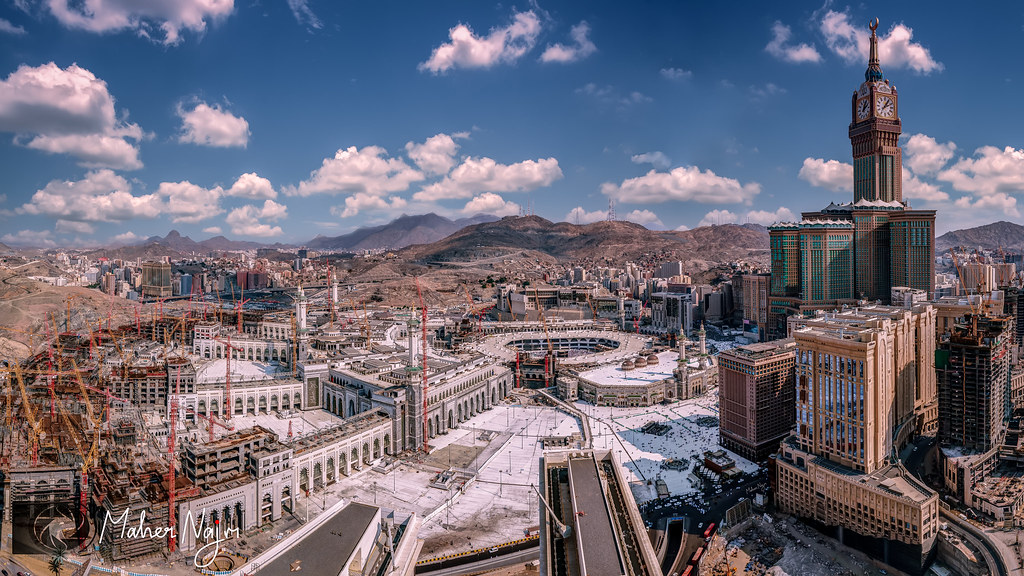
Saudi Arabia, Turkey and Pakistan have signed a trilateral security treaty committing each to treat an armed attack on any one of them as an attack on all three. The Mecca Joint Defence Agreement was signed on 7 August 2026 in the Saudi holy city by Crown Prince and Prime Minister Mohammed bin Salman, Turkish President Recep Tayyip Erdogan and Pakistani Prime Minister Shehbaz Sharif. All three governments describe the pact as defensive, aimed at no particular country, and open to others willing to join.
It is the first arrangement of its kind linking a NATO member, the world’s largest oil exporter and the only nuclear-armed Muslim-majority state.
What the Mecca Joint Defence Agreement actually says
The operative clause is short. According to statements released by the three governments and reported by the Associated Press, the pact stipulates “that any armed attack against any one of the three states shall be regarded as an attack against them all”. Pakistan’s foreign ministry said the deal was “guided by the longstanding historical ties among the three states, based on the enduring bonds of brotherhood and Islamic solidarity that unite them”, and reflected a “shared commitment to further strengthening their collective security”.
Two days after the signing, Pakistan’s foreign minister Ishaq Dar said on X that the agreement was “purely defensive in nature” and that other countries could join if they were willing to uphold its principles and settle differences peacefully. He said the collective-defence stipulation was consistent with the right of individual and collective self-defence under Article 51 of the UN Charter, and added that “the Makkah Accord does not abrogate or replace any existing bilateral or multilateral agreements between these countries, or with other countries or organizations”. His comments are set out in this Associated Press report.
Turkish foreign minister Hakan Fidan had said a day earlier that the agreement was not aimed at Iran or any other country, and a Turkish official told Reuters that it was defensive in nature, not directed at any specific actor, and open to other regional states. The treaty is rendered variously in official and press accounts as the Mecca Joint Defence Agreement, the Makkah Joint Defence Agreement and, in some Al Jazeera reporting, the Mecca Joint Deterrence Agreement.
How three very different militaries fit together

The three signatories bring markedly different assets. Turkey has NATO’s second-largest military and a domestic defence industry that has expanded quickly over the past decade. Saudi Arabia is the world’s top oil exporter, with the financial depth and regional influence that follows. Pakistan has decades of operational experience and is the only Muslim-majority country with nuclear weapons.
Ozgur Unluhisarcikli, who runs the German Marshall Fund’s South and Wider Europe office, told Al Jazeera the partners bring complementary strengths, “including Turkey’s defence-industrial capabilities, Saudi financial muscle and influence, and Pakistan’s military experience and strategic deterrent”. He was blunt about the limits: “It should be noted that this is a framework for closer strategic, military, and defence-industrial coordination among three influential regional powers and not a mutual defence pact that can be compared to NATO.”
In Islamabad, the defence analyst Abdullah Khan likewise cautioned against reading the agreement as a NATO equivalent, or as being directed against Iran.
The road from Doha to Mecca
The agreement did not appear from nowhere. Al Jazeera reports that negotiations began after the Hamas attack on Israel of 7 October 2023 and the war in Gaza that followed, then accelerated during the US and Israeli campaign against Iran that began in February 2026.
The most direct precursor was bilateral. Pakistan and Saudi Arabia signed a mutual defence agreement in September 2025, in the immediate aftermath of an Israeli strike on the Qatari capital Doha on 9 September that year. On 19 March 2026, the foreign ministers of Turkey, Pakistan and Saudi Arabia met in Riyadh during an Islamic summit and discussed what a joint security arrangement might look like.
Sharif arrived in Saudi Arabia the day before the signing, accompanied by army chief Asim Munir, and performed the Umrah pilgrimage in Mecca. Reporting from Ankara, Al Jazeera’s Resul Serdar said Turkish officials pointed to converging pressures: “Post-October 7 has changed the region dramatically… And now there is the crisis in the Strait of Hormuz and ongoing attacks on Iran, as well as Iran’s response to the regional countries.”
Reaction in Tehran and Jerusalem
Iran’s leadership issued no official statement. An Iranian member of parliament, Ebrahim Rezaei, was sharply critical on X: “Saudis must know that a paper agreement with Turkiye and Pakistan will not bring them security, just as years of one-sided dependence on the Americans did not bring them security.” He added: “Reform your policies so that you do not need to beg for security from others.”
Neither Israeli Prime Minister Benjamin Netanyahu’s office nor the Israeli foreign ministry commented on the pact. Some Israeli and American commentators have cast the deepening security ties among Turkey, Saudi Arabia, Pakistan and Egypt as the formation of a hostile Sunni bloc. Yasmine Farouk of the International Crisis Group argued in a report published on 20 July that the four states had instead reached a hard-won conclusion that “security in their neighbourhood can no longer be left at the mercy of rivalry between the US and Israel, on one side, and Iran, on the other”. Al Jazeera’s explainer on the agreement sets out the wider context.
What to watch in the months ahead
The first test is membership. The three signatories say the pact is open to any state prepared to accept its principles, and the list of plausible candidates begins with Egypt, Qatar and Azerbaijan. Each addition would change what the treaty means in practice.
The second is institutional. Reporting from Doha, Al Jazeera’s Osama bin Javaid said the deal is intended to align the three on intelligence sharing and to widen cooperation on energy, defence spending and defence manufacturing. Whether a joint command, a standing planning staff or concrete industrial projects emerge will show how much of the agreement is operational rather than declaratory.
The third test is the one nobody wants: an actual attack on a signatory. Until that happens, the clause remains untested, and the analysts quoted above are careful to say that a collective-defence sentence is not the same thing as a functioning alliance.
The knock-on effects are visible in how people and capital move. Residency routes such as the UAE golden visa for business owners have drawn steady interest, while financial screening for travellers has tightened, as our guide to proof-of-funds rules in the UK, Canada and Australia explains.
Questions readers are asking
What is the Mecca Joint Defence Agreement?
It is a trilateral security treaty signed on 7 August 2026 in Mecca by Saudi Arabia, Turkey and Pakistan. According to statements released by the three sides, it stipulates that any armed attack against any one of the three states shall be regarded as an attack against them all.
Who signed it?
Saudi Crown Prince and Prime Minister Mohammed bin Salman, Turkish President Recep Tayyip Erdogan and Pakistani Prime Minister Shehbaz Sharif, accompanied by their foreign and defence ministers.
Is it aimed at Iran?
All three governments say no. Pakistan’s foreign minister Ishaq Dar called it purely defensive in nature, Turkish foreign minister Hakan Fidan said it was not aimed at Iran or any other country, and a Turkish official told Reuters it was not directed at any specific actor.
Is this a NATO for the Muslim world?
Analysts caution against the comparison. Ozgur Unluhisarcikli of the German Marshall Fund called it a framework for closer strategic, military and defence-industrial coordination rather than a mutual defence pact comparable to NATO.
Can other countries join?
Yes. Dar said other countries could join if they were willing to uphold its principles and resolve differences through peaceful means. A Turkish official said the pact was open to other regional countries.
Does it replace existing alliances?
No. Dar wrote that the agreement does not abrogate or replace any existing bilateral or multilateral agreements between the three countries, or with other countries or organisations, and said its collective-defence clause is consistent with Article 51 of the UN Charter.
Tamara News is tracking how the new security architecture reshapes travel, trade and investment across the region. Our related coverage is linked above.