
Meet someone near you.
Live video chat with people nearby. One tap, free to start.

A single bad day at Berlin’s main airport helped trigger a continent-wide ripple of delays on September 3. It was part of a broader wave of European airport flight disruptions that hit 12 major hubs across nine countries. Roughly 2,141 flight delays and 113 cancellations were recorded that day, according to The Traveler.
Which airports were hit hardest
Berlin Brandenburg emerged as one of the worst-affected hubs. It logged 127 delays and 28 cancellations in a single day. London Gatwick reported 239 delays on its own, the highest single-airport delay count in the wave. The affected network also included Rome Fiumicino, Amsterdam Schiphol, London Heathrow, Frankfurt, Brussels, Madrid Barajas, Barcelona El Prat, Dublin, Oslo and Paris Charles de Gaulle. The impact spread well beyond any single country’s air traffic control system.

What actually caused the European airport flight disruptions
Two separate problems combined to produce this scale of disruption. Severe convective weather across parts of the continent in late August generated more than 200,000 minutes of en-route delay in a single day. That backlog took time to clear even after the storms passed. On top of that, a security incident and rescreening operation hit Berlin Brandenburg’s Terminal 1 on September 3. It created its own knock-on delays. Those delays spread across the European network, because aircraft and crews scheduled to fly onward from Berlin got held up first.
Strikes are adding a second layer of risk
Weather and one-off security incidents are not the only threats to European air travel this month. Italy has scheduled aviation strikes, including security action at Rome’s airport on September 13. A nationwide ENAV air traffic control action follows on September 30. Ground handling staff at Barcelona-El Prat have also been on an indefinite strike. That adds a layer of planned labor disruption on top of whatever weather or operational problems arise day to day.
What travelers should expect this week
Airlines flying through the 12 affected hubs have advised passengers to build in extra buffer time. That matters most for connecting travel. A cruise departure, a guided tour, or a long-distance rail booking will not wait for a delayed arrival. Runway maintenance and taxiway repair projects at several large airports have also narrowed the system’s margin for error this year. Even a moderate weather event or staffing issue can now cascade further than it might have in a less constrained network.
Travel insurers are also fielding more claims tied to missed connections this month. Brokers say the trend tracks closely with how often multi-airport disruption days like September 3 occur.
Why this keeps happening in 2026
This is not an isolated event. European air travel has absorbed a string of shocks this year: labor disputes, aging infrastructure projects, and weather events arriving more often than in past summers. Any one of these alone would be manageable. Together, they leave almost no slack in the system.
Airport operators have started warning airlines and passengers to expect more days like September 3 before the year ends. Investment in additional staffing and equipment takes years to show results. Until it does, a single bad morning at one hub will keep rippling across the wider network.
Better sharing of real-time capacity data between hubs could help catch a developing bottleneck earlier, industry analysts say, before it cascades into a multi-country delay wave like the one on September 3. Any such fix would take time to build and would not help this month’s travelers.
Passengers booking through the affected hubs in the weeks ahead should treat a tight connection as a real risk, not a remote one. An extra hour or two between flights costs little. Missing an onward connection during a disruption this size can cost a full extra day of travel.
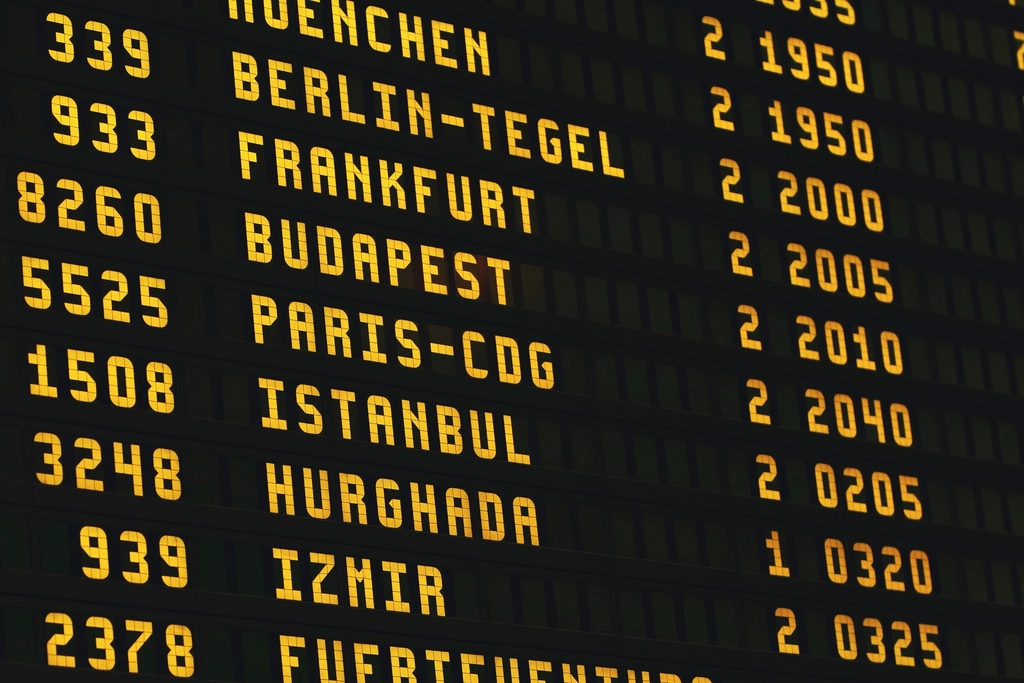
For anyone flying through the region in the next week or two, checking an airline’s app for real-time gate and delay updates remains the most reliable option. Physical departure boards can lag behind the app data by several minutes during the busiest disruption windows.
The lesson from September 3 is a simple one. A single hub having a bad morning is no longer a local problem. It is a European problem, at least until the network builds in enough spare capacity to absorb one.
What travelers are asking
How many flights were affected by the European airport flight disruptions?
Roughly 2,141 delays and 113 cancellations were recorded across 12 major airports on September 3, according to The Traveler.
Which airport was hit hardest?
Berlin Brandenburg logged 127 delays and 28 cancellations, while London Gatwick reported 239 delays, the highest single-airport count.
What caused the disruption?
A combination of lingering weather-related backlog from late August storms and a security incident at Berlin Brandenburg’s Terminal 1 on September 3.
Are strikes adding to the disruption?
Yes. Italy has aviation strikes scheduled for September 13 and September 30, and ground handling staff at Barcelona-El Prat have been striking indefinitely.
Which airports were part of the affected network?
Rome Fiumicino, Amsterdam Schiphol, London Heathrow and Gatwick, Berlin Brandenburg, Frankfurt, Brussels, Madrid Barajas, Barcelona El Prat, Dublin, Oslo and Paris Charles de Gaulle.
Sources
- The Traveler — European Aviation Crisis 2026 Snarls 2,141 Flights at Key Hubs. thetraveler.org
- Travel And Tour World — European Airports Including Barcelona and 11 Others Cancel and Delay Flights. travelandtourworld.com
Related coverage on Tamara News: extended Schengen border checks and the delayed ETIAS launch.
Verification your users actually receive.
Send one-time passcodes over WhatsApp with a single API call. Replio can generate, hash and verify the code for you.
