
Never lose a customer to a missed message
An AI agent trained on your own business, replying in seconds, in any language, on every channel your customers already use.
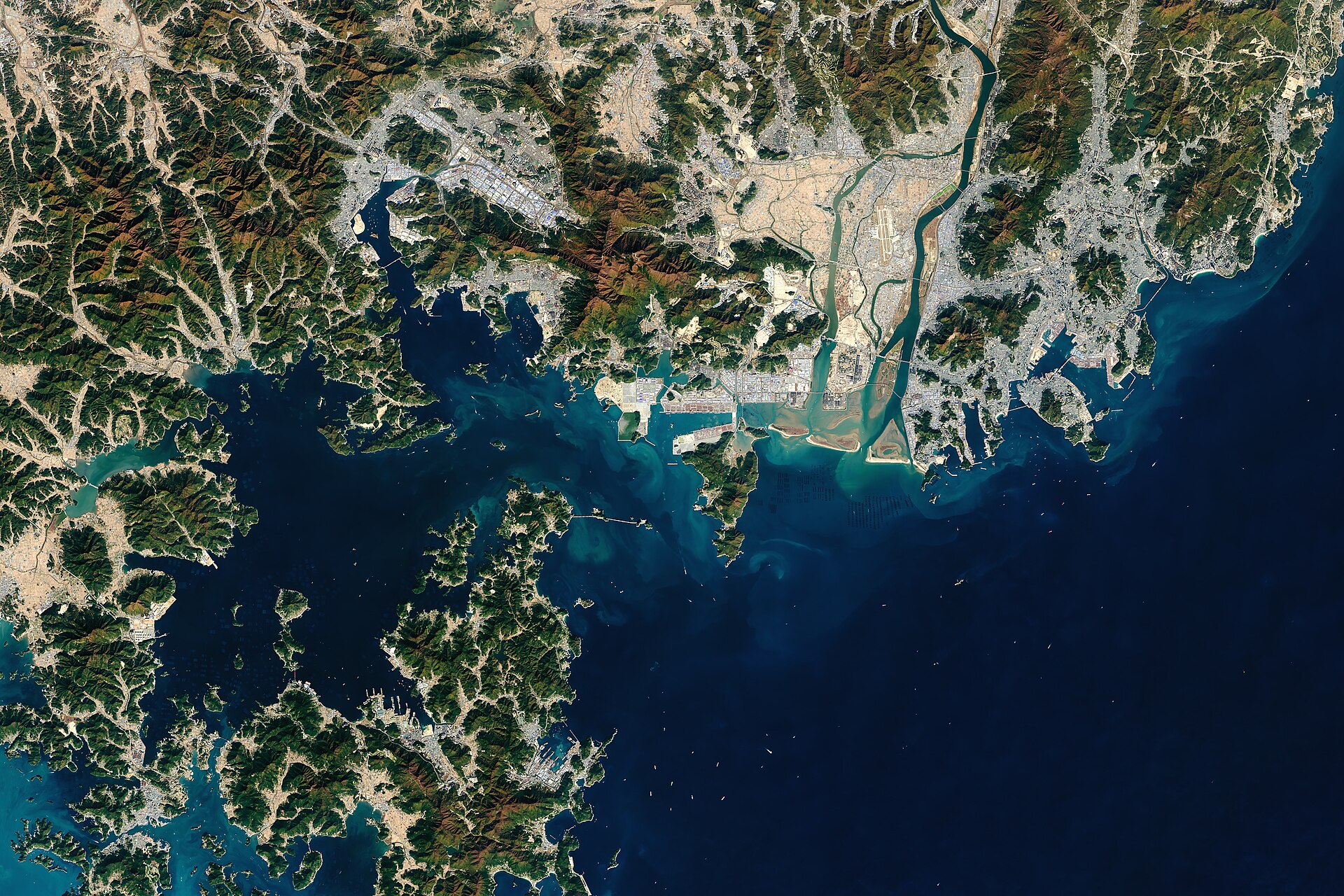
If you want to know whether the AI buildout is real, look at what leaves Busan. Record
South Korea chip exports helped push the country’s technology shipments to $59.98 billion in
August 2026. The figure comes from a joint report by the Ministry of Science and ICT and the Ministry of
Trade, Industry and Energy, released on 14 September. Information and communications technology passed 60
per cent of total exports for the first time.
Guide to this piece
What South Korea chip exports actually recorded
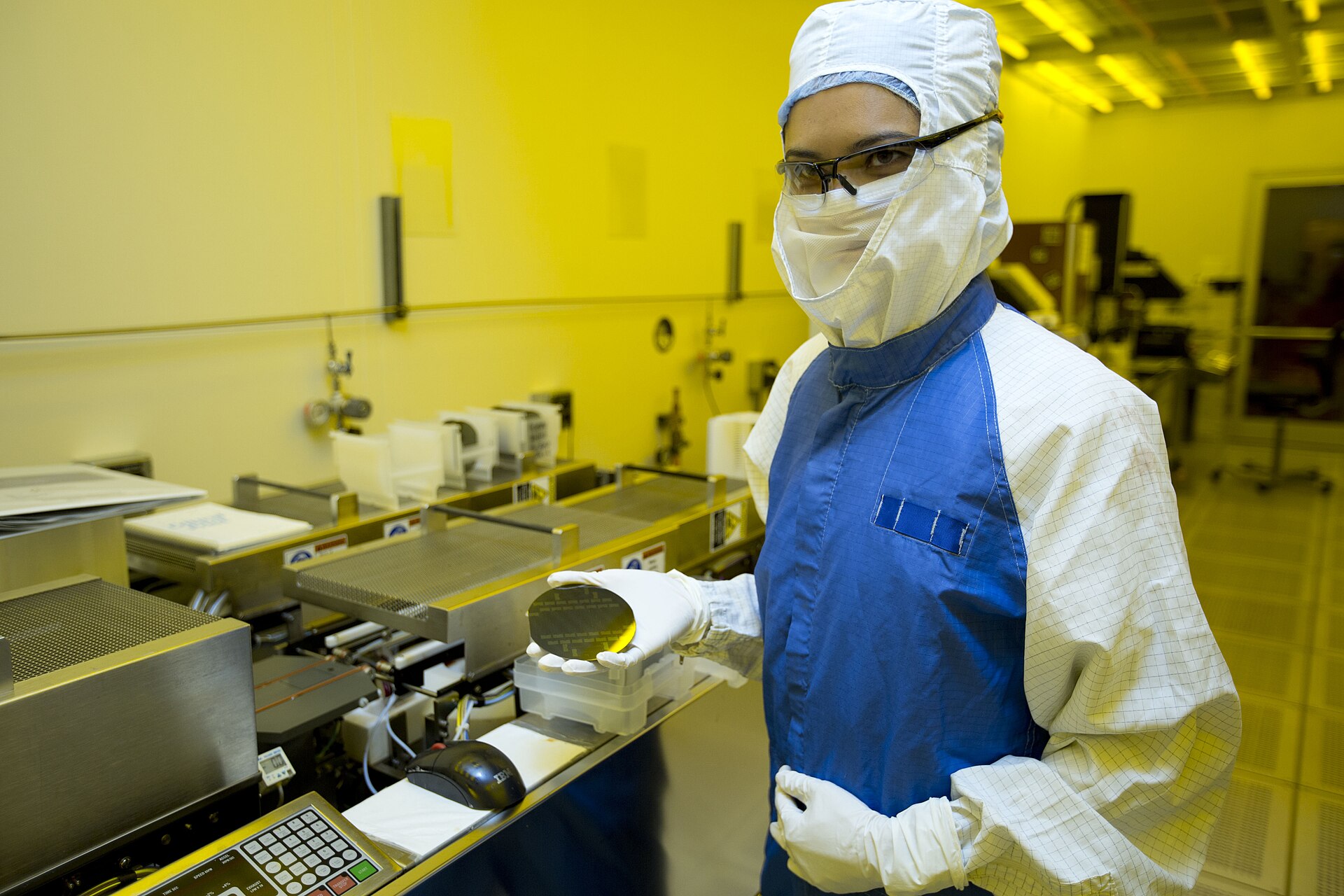
Semiconductors did most of the work. Chip shipments rose 209 per cent year on year to $46.67 billion.
Computers and communications equipment climbed 383.1 per cent to $6.4 billion.
Total ICT exports of $59.98 billion compare with $22.84 billion in August 2025, a rise of 162.6 per cent.
The sector posted a trade surplus of $41.37 billion, also a record.
Those growth rates are extraordinary by any normal reading of trade data. They come from the ministries’
own release, and they reflect both volume and price. High-bandwidth memory used in AI accelerators carries a
far higher unit value than the commodity memory that dominated earlier cycles.
Why Korea is the cleanest read on AI demand
Samsung Electronics and SK hynix supply much of the world’s advanced memory, including the high-bandwidth
memory that AI accelerators require. Without it, a GPU cannot be assembled into a working system.
That gives Korean customs data an unusual property. It measures hardware actually shipped, not hardware
announced. Capital-expenditure plans can be revised quietly. Export tonnage cannot.
Demand spread widely by destination. Shipments to the United States rose more than 300 per cent.
Exports to China and Hong Kong, Vietnam, the European Union and India all rose sharply as well.
The breadth is the useful signal. A surge to one destination can mean a single customer stockpiling.
Growth across the United States, China, Vietnam, Europe and India at once points to broad build-out rather
than one buyer’s inventory decision.
Vietnam deserves a note of its own. Much of what ships there goes for assembly and test before moving on
again. Its numbers partly measure the same demand a second time, further along the chain.
The concentration underneath the record
A sector at more than 60 per cent of national exports is a strength and an exposure at the same time.
Reporting on the release noted that stripping ICT out would leave the country running a trade deficit of
about $6.6 billion for the month.
That is the risk in one number. Korea’s external accounts now depend heavily on one demand cycle in one
industry.
The timing sharpens it. These figures landed the same week AI lab chiefs called publicly for slower
frontier-model development, and chip stocks fell across three continents. Our reports on
that slowdown call and
on the Qualcomm-Amazon AI chip
deal cover the demand side of the same market. Korea’s own policy response runs through skilled
migration too, as our piece on
China’s competing
computing plan shows for the region.
What the record changes for the rest of the market
For buyers, sustained Korean output eases the memory shortage that has constrained accelerator supply.
For competitors, it raises the bar: matching this volume takes fabs that take years to build.
For policymakers elsewhere, the data is an argument in ongoing subsidy debates. Countries funding
domestic semiconductor capacity will cite these figures in both directions — as proof the market is worth
entering, and as proof of how far ahead the incumbents already are.
Whether the numbers hold
Three things decide that. The first is whether AI capital spending continues at its current pace into
2027. The second is memory pricing, which has driven much of the value growth and can fall quickly. The
third is export-control policy, which shapes where Korean fabs can sell and what equipment they can buy.
September data, due in mid-October, is the next check. A single record month proves a peak. Two
consecutive ones start to prove a trend.
Export data questions
How large were the exports?
ICT exports reached $59.98 billion in August 2026, up 162.6 per cent from $22.84 billion a year earlier.
How much of that was semiconductors?
Chip exports were $46.67 billion, a rise of 209 per cent year on year.
Who published the figures?
The Ministry of Science and ICT with the Ministry of Trade, Industry and Energy, in a report released on 14 September 2026.
What share of total exports is ICT now?
More than 60 per cent, the first time the sector has passed that threshold.
Why do these figures matter for AI?
Samsung and SK hynix supply much of the high-bandwidth memory AI accelerators need, so Korean shipments track real hardware demand.
What is the risk in the record?
Concentration. Reporting on the release noted that without ICT, Korea would have run a monthly trade deficit of about $6.6 billion.
Citations
- The Korea Times — Korea’s ICT exports mark record high on sustained AI investments. https://www.koreatimes.co.kr/economy/20260914/koreas-ict-exports-mark-record-high-on-sustained-ai-investments
- Xinhua — S. Korea’s August ICT exports hit record high on AI boom. https://english.news.cn/20260914/c492c23ec13b454992444b2580e425d6/c.html
- Korea JoongAng Daily — South Korea ICT exports hit record high on AI-driven semiconductor demand. https://www.koreajoongangdaily.com/business/koreas-ict-exports-mark-record-high-on-sustained-ai-investments/12874053
- Seoul Economic Daily — ICT Exports Near $60 Billion as AI Boom Lifts Share Past 60%. https://en.sedaily.com/finance/2026/09/14/ict-exports-near-60-billion-as-ai-boom-lifts-share-past-60
Verification your users actually receive.
Send one-time passcodes over WhatsApp with a single API call. Replio can generate, hash and verify the code for you.