
Never lose a customer to a missed message
An AI agent trained on your own business, replying in seconds, in any language, on every channel your customers already use.
The UK refugee resettlement scheme reopened on September 29, 2026, when Home Secretary Shabana Mahmood announced that Afghan women and girls, along with Palestinian refugees, would be prioritized under a route that had been effectively suspended since 2024. Roughly one in four arrivals under the reopened scheme are expected to come from these two groups.
A Route That Quietly Closed in 2024 Reopens
The UK Resettlement Scheme offers a legal, pre-approved path for refugees to reach Britain without crossing by small boat or other unauthorized means. Its effective suspension in 2024 had drawn criticism from refugee advocacy groups, who argued it left vulnerable people with fewer safe alternatives. Mahmood’s announcement reverses that pause, though admissions will start small and grow over time rather than reopening at full scale immediately.
According to The Week’s reporting on the announcement, Home Office briefing describes initial numbers as being “in the hundreds at first, but this will grow into the low thousands as levels of illegal migration fall.”
Who Qualifies Under the UK Refugee Resettlement Scheme
The scheme specifically prioritizes Afghan women and girls, many of whom face severe restrictions under Taliban rule, and Palestinian refugees displaced by the conflict in Gaza. Government messaging has framed the route as deliberately “more generous than those who arrive by small boat or other illegal means,” an explicit attempt to make the legal pathway more attractive than dangerous Channel crossings.
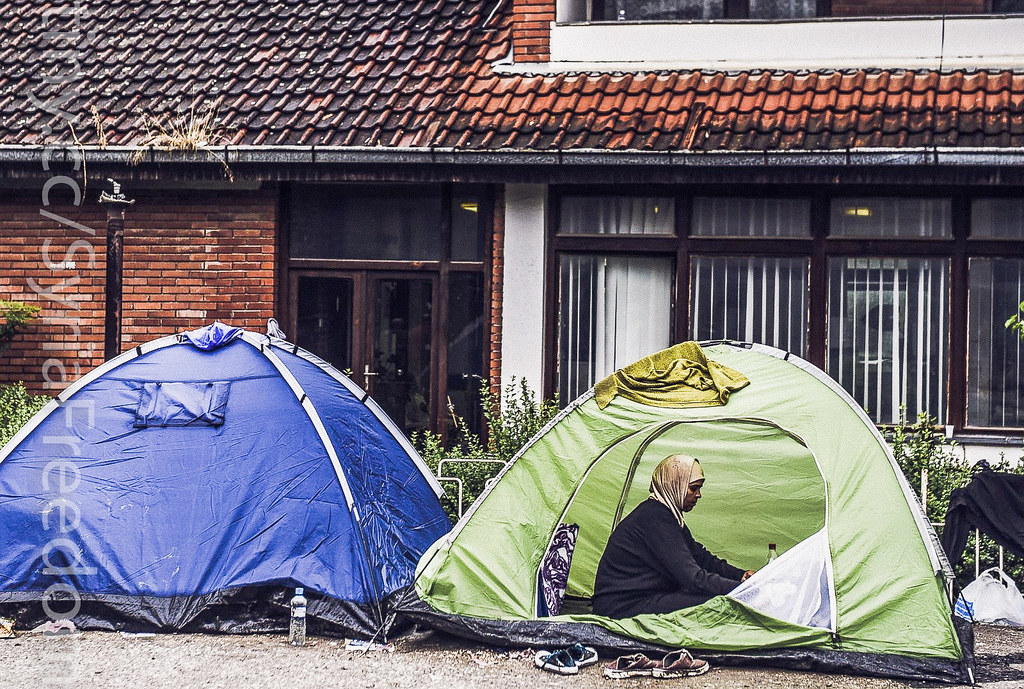
New arrivals accepted under the scheme will follow a five-year pathway to permanent settlement in the UK, giving them a clear, if lengthy, route to long-term status rather than an indefinite temporary arrangement.
The Five-Year Path to Settlement
A five-year route to settlement is consistent with several other UK humanitarian visa pathways, giving successful applicants time to build a work history, housing stability and language proficiency before applying for permanent status. It also gives the Home Office a multi-year window to monitor compliance and integration outcomes before converting temporary status into something permanent.
Mahmood has also signaled flexibility elsewhere in the UK’s migration policy, indicating a willingness to soften stricter reforms after Labour MPs pushed to exclude an estimated 185,000 foreign-born care workers from proposed restrictions, suggesting the government is recalibrating its broader approach to migration rather than tightening uniformly across every category.
Resettlement routes like this one typically involve coordination with the UN refugee agency, which helps identify and refer eligible candidates from camps and informal settlements abroad rather than processing claims from people who have already reached UK soil. That structure is precisely what officials mean when they describe it as a “safe and legal” route: applicants are vetted and selected before travel, rather than making the journey first and seeking status afterward.
Reaction From Both Sides
The Refugee Council’s Jon Featonby welcomed the move, saying “the government deserves credit for creating new safe and legal routes that will help refugees reach the UK without risking their lives.” That reaction reflects relief among advocacy groups who had pressed for the scheme’s return since its 2024 suspension.
At the same time, the announcement is likely to draw criticism from the right of British politics, particularly given that women, girls and people with disabilities, groups more likely to depend on welfare support, make up a significant share of those expected to benefit from the reopened route.
That tension, between advocacy groups pushing for more generous legal routes and critics focused on welfare costs and overall migration numbers, has defined UK asylum policy debates for years. This announcement does not resolve that tension so much as restate it in a new, narrower context focused specifically on two vulnerable groups rather than refugees broadly.
What to Watch as the Scheme Expands
The real test will be whether admissions actually scale from “hundreds” to “low thousands” as promised, and whether that growth tracks the government’s stated condition of falling illegal migration numbers. If small boat crossings do not fall as expected, the government may face pressure either to expand the legal route faster regardless, or to hold numbers down and face renewed criticism from refugee groups.
Watch also for how this reopened scheme interacts with the UK’s broader asylum backlog, since a faster legal route only reduces pressure on the overall system if it processes people quickly rather than adding a new queue alongside the existing one.
UK Resettlement Scheme: Questions Answered
Who is prioritized under the reopened scheme?
Afghan women and girls, and Palestinian refugees, who together are expected to make up about one in four arrivals.
When did the scheme reopen?
Home Secretary Shabana Mahmood announced the reopening on September 29, 2026.
How many people will the scheme admit initially?
Admissions will start in the hundreds, with the Home Office projecting growth into the low thousands over time.
What status do accepted refugees receive?
A five-year pathway toward permanent settlement in the UK.
Why was the scheme suspended in the first place?
It was effectively paused in 2024; the announcement does not detail the original reasons for the suspension.
Related Coverage on Tamara News
For more on how European governments are handling migration this year, see our coverage of the European interior ministers’ meeting on border returns and the UK’s ongoing debate over EU relations.
Sources
- The Week — Shabana Mahmood’s new legal route for refugees. https://theweek.com/politics/shabana-mahmoods-new-legal-route-for-refugees
- GB News — Shabana Mahmood to unveil ‘fast-track’ new refugee route for Afghans and Palestinians. https://www.gbnews.com/politics/shabana-mahmood-fast-track-legal-route-refugees
Verification your users actually receive.
Send one-time passcodes over WhatsApp with a single API call. Replio can generate, hash and verify the code for you.
