
Never lose a customer to a missed message
An AI agent trained on your own business, replying in seconds, in any language, on every channel your customers already use.
TSMC Q3 2026 earnings are due out today, October 15. The world’s largest contract chipmaker has already guided investors to expect roughly 37% year-over-year revenue growth at the midpoint of its forecast. TSMC’s own September monthly sales report, released ahead of the full results, showed NT$511.86 billion for the month, up 54.6% from a year earlier. That reinforces that demand tied to artificial intelligence computing has yet to show any sign of slowing.
The company’s guidance for the quarter put revenue at $44.6 billion to $45.8 billion. TSMC has already used the run-up to the earnings call to raise its outlook for the full year, now expecting 2026 revenue growth of slightly above 40%.
Why Everyone Is Watching Margins in TSMC Q3 2026 Earnings
Revenue growth alone isn’t the whole story. TSMC guided third-quarter gross margin to a range of 65% to 67%, down from 67.7% in the second quarter. Analysts have flagged margin trends as one of the most closely watched metrics on today’s call. A chipmaker can grow revenue quickly while still giving up profitability, if the mix shifts toward more capital-intensive manufacturing processes or if pricing power weakens even briefly. Investors are looking for confirmation that TSMC can keep expanding output without sacrificing much of that margin cushion.
Where the Money Is Going: 2-Nanometer and Advanced Packaging
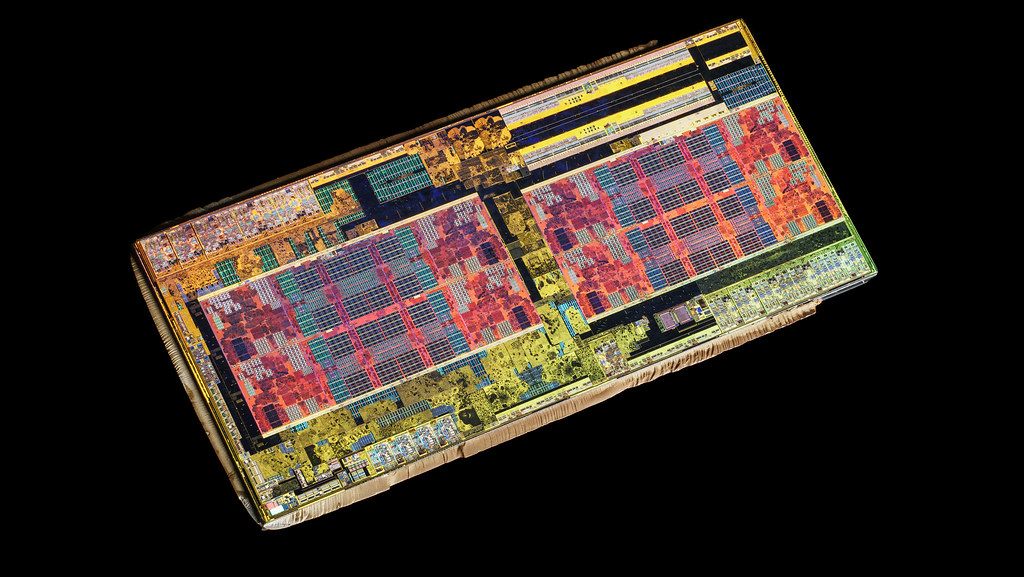
TSMC’s 2026 capital spending plan runs to $60 billion-$64 billion, with 70% to 80% of that earmarked for advanced process technologies. That spending underpins two themes analysts expect to dominate today’s call. One is the ramp of TSMC’s 2-nanometer manufacturing node, the company’s most advanced process yet. The other is continued expansion of advanced packaging capacity, the technology that lets multiple chips be combined into a single package, which has become a bottleneck for AI accelerator production industry-wide.
The AI Demand Story Behind the Numbers
TSMC doesn’t design its own AI chips, but it manufactures them for nearly every major player in the industry. That makes its results one of the clearest proxies available for the underlying strength of AI chip demand, rather than any single company’s performance. The roughly 50% revenue growth implied by TSMC’s own monthly sales data points to continued strong bookings from its largest customers. At the same time, some analysts and investors have begun openly debating whether spending on AI infrastructure across the industry has outrun near-term demand.
What to Watch When Results Land
Beyond the headline revenue and margin figures, today’s call is expected to address capital spending guidance for 2027, the pace of 2-nanometer yield improvements, and management’s read on whether customer demand signals still justify the current pace of expansion. A result in line with or above the guided range would reinforce the view that AI-driven chip demand remains a durable trend, rather than a short-term spike. A miss, however small, would likely reignite the debate over whether the broader AI infrastructure buildout is moving faster than actual usage can support. For related coverage of how that debate is playing out across the chip and AI infrastructure sector, see Tamara News’ reporting on the memory chip price shortage, Microsoft’s new in-house AI chip, and warnings that AI data center spending may be running ahead of demand.
Frequently Asked Questions About TSMC’s Earnings
When does TSMC report its Q3 2026 earnings?
TSMC’s full third-quarter 2026 results and conference call are scheduled for October 15, 2026.
How much revenue growth is TSMC expecting?
Guidance put Q3 revenue at $44.6 billion to $45.8 billion, implying about 37% year-over-year growth at the midpoint, with full-year 2026 growth now guided to slightly above 40%.
Why does TSMC’s gross margin matter so much to investors?
Margin guidance of 65% to 67% for the quarter, down from 67.7% in Q2, signals whether rapid revenue growth is coming at the cost of profitability as production mix shifts toward more advanced, capital-intensive processes.
How much is TSMC spending on new capacity in 2026?
Its 2026 capital spending plan is $60 billion to $64 billion, with 70% to 80% directed toward advanced process technologies including the 2-nanometer node.
Does TSMC’s performance tell us anything about AI chip demand generally?
Yes. Because TSMC manufactures chips for most major AI chip designers rather than competing with them directly, its results are widely used as a proxy for underlying AI infrastructure demand across the industry.
Sources
- TSMC — September 2026 Revenue Report. pr.tsmc.com/english/news/3343
- InsiderFinance — TSMC Earnings Eye Oct. 15 Report. insiderfinance.io/news/tsmc-earnings-eye-oct-15-report
Verification your users actually receive.
Send one-time passcodes over WhatsApp with a single API call. Replio can generate, hash and verify the code for you.
