
Meet someone near you.
Live video chat with people nearby. One tap, free to start.

SpaceX posted numbers this quarter that read more like an AI company’s than a rocket company’s. The SpaceX Q3 2026 earnings report, released on 20 October, showed revenue of $14.6 billion. That is up 161% from the same quarter last year, according to figures highlighted from the earnings release. The jump came only months after SpaceX completed its IPO.
SpaceX closed that IPO on 15 June 2026. Shares began trading on Nasdaq under the ticker SPCX three days earlier. The company sold just under 639 million Class A shares. That raised about $85.7 billion in net proceeds, a figure confirmed in earlier coverage of SpaceX’s public listing. Q3 is one of the company’s first full quarters reporting results as a public company, which makes this release a closely watched early signal for investors.
What drove the SpaceX Q3 2026 earnings jump
Two segments carried the quarter. Starlink, SpaceX’s connectivity business, grew revenue 69% year over year. Operating income in that segment rose 99%, driven by enterprise and government adoption alongside steady consumer subscriber growth. The second driver came from SpaceX’s newer AI business, which the company calls its “Super Intelligence” unit. That unit added $6.7 billion in incremental year-over-year revenue. SpaceX attributes that growth to cloud services agreements, its acquisition of the AI coding tool Cursor, and expanding use of its Grok and Bot AI products.
Elon Musk framed the quarter as an “inflection moment for SpaceX” in remarks accompanying the release. He cited what he called “1000x demand from AI agents” as a growth driver behind the AI segment’s rapid expansion. That is a striking claim for a company whose core business has always been rockets and satellites, not software. It signals how far SpaceX now sees its ambitions reaching beyond launch vehicles alone.
The Starship milestone buried inside the numbers
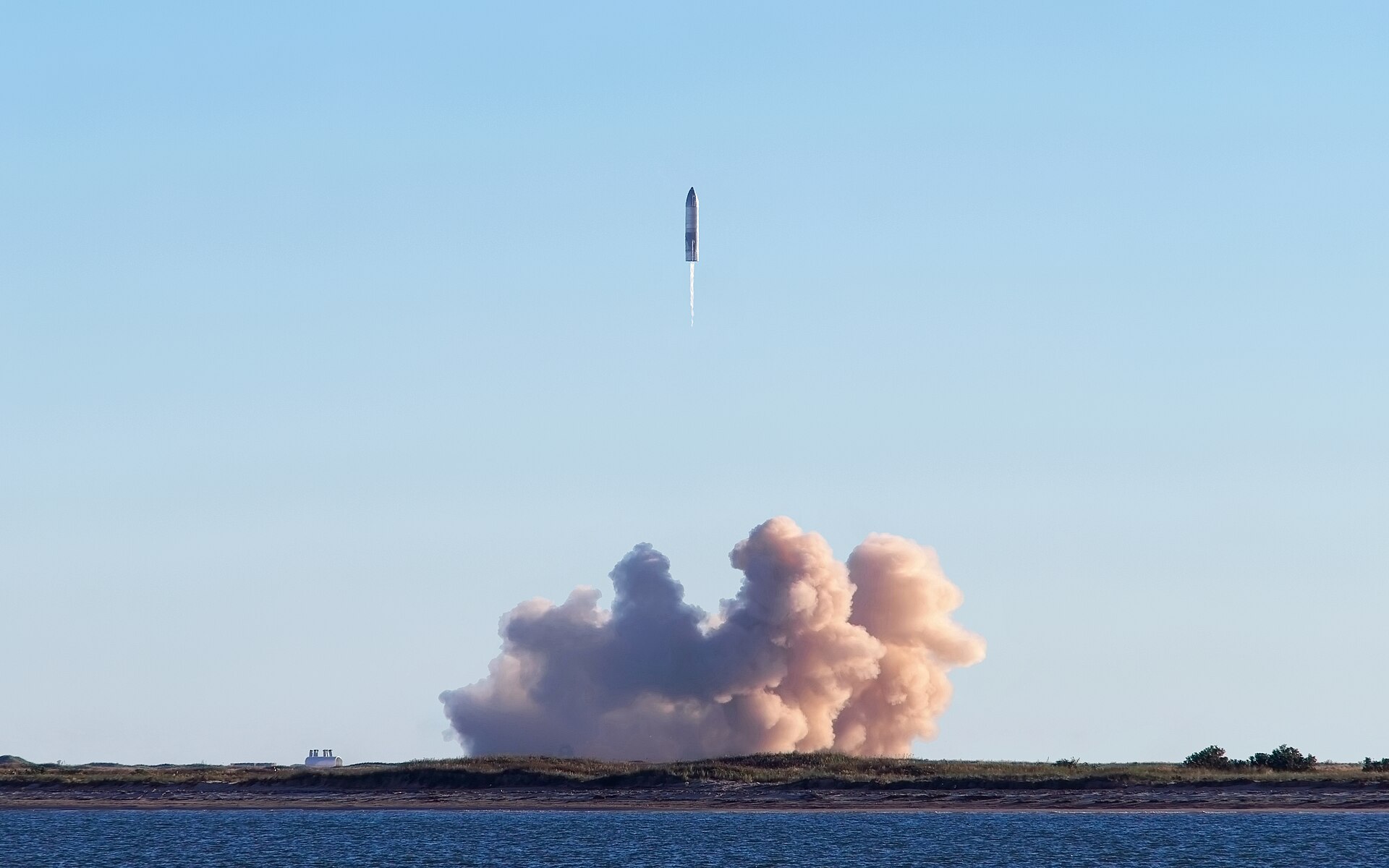
SpaceX’s first revenue-generating Starship mission delivered 26 Starlink V3 satellites during the quarter. SpaceX says that single launch added roughly 10 times the downlink capacity of a typical Falcon 9 Starlink launch. That is a meaningful shift. Starship has spent years as a test program burning cash rather than generating revenue. A successful, revenue-producing mission marks a turning point for a vehicle Musk has called critical to SpaceX’s long-term ambitions, including crewed missions beyond Earth orbit.
The earlier Q2 2026 report showed a different picture for Starship’s finances. The Space segment, which includes Starship, grew revenue 29% to $962 million that quarter. But adjusted EBITDA in that segment fell to a $205 million loss, which the company attributed to heavier Starship research and development spending. Q3’s revenue-generating flight suggests that spending is starting to translate into paying missions, not just test flights.
How SpaceX fits into a bigger AI infrastructure race
SpaceX’s AI push did not happen in isolation. Tamara News covered a major chip supply deal between Nvidia, Samsung and TSMC this same week, part of a broader scramble for AI computing capacity across the tech sector. SpaceX’s rapid AI segment growth puts it in direct competition for the same enterprise cloud customers that Microsoft, Google and Amazon are all chasing, a crowded field for a company that only went public in June. Competing there successfully would mark a genuine shift in what kind of company SpaceX becomes over the next few years. Musk’s other public company, Tesla, reported its own Q3 2026 results this same month, with a very different profit picture than SpaceX posted.
What investors are watching next
SpaceX’s next earnings report will show whether the AI segment’s growth rate holds or cools as the comparison base gets harder. Investors will also watch whether Starship keeps flying revenue missions regularly, rather than this quarter’s flight being an isolated milestone. SpaceX held $100 billion in cash and marketable securities at the end of the prior quarter. That gives it a large cushion. The company can keep investing in both rockets and AI infrastructure even if growth slows somewhere in the mix. Few companies at this stage of a business pivot have that kind of balance sheet behind them.
FAQ: SpaceX Q3 2026 earnings
How much revenue did SpaceX report for Q3 2026?
SpaceX reported $14.6 billion in revenue, up 161% year over year.
What drove SpaceX’s revenue growth this quarter?
Starlink connectivity revenue grew 69%, and SpaceX’s AI business added $6.7 billion in incremental revenue, the two biggest contributors.
When did SpaceX go public?
SpaceX closed its IPO on 15 June 2026 and began trading on Nasdaq under the ticker SPCX.
What is SpaceX’s “Super Intelligence” business?
It is SpaceX’s AI unit, which includes cloud services agreements, the Cursor coding tool acquisition, and products like Grok and Bot.
Did Starship generate revenue this quarter?
Yes. SpaceX says its first revenue-generating Starship mission delivered 26 Starlink V3 satellites during Q3 2026.
How much cash does SpaceX have on hand?
SpaceX held $100 billion in cash and marketable securities as of its prior quarterly report.
Is SpaceX’s AI business bigger than its rocket business yet?
Not based on the figures reported here. Starlink remains the larger established segment, though the AI unit’s incremental growth this quarter was substantial on its own.
Does SpaceX compete directly with Microsoft or Google in AI?
In cloud and AI services, yes, to a degree. SpaceX is a newer entrant chasing some of the same enterprise customers as larger, more established cloud providers.
Verification your users actually receive.
Send one-time passcodes over WhatsApp with a single API call. Replio can generate, hash and verify the code for you.
