
• Mon - Fri 9.00 - 19.00

Yearly Archives: 2026

Paramount Just Cleared Its Biggest Hurdle to Owning Warner Bros

The Paramount Warner Bros. Discovery merger cleared its most significant remaining obstacle on September 21, when Paramount Skydance reached a settlement with 12 state attorneys general and the Writers Guild of America, resolving the legal challenges that had threatened to delay or unwind the $111 billion acquisition. The deal is now expected to close by October 1, 2026.

What the settlement actually requires

The agreement isn’t just a legal formality — it locks Paramount into specific production commitments. Under the terms reported by CNBC and detailed further by Axios, the combined company must produce 30 films a year for its first two years post-merger, including 20 wide theatrical releases, rising to 32 films annually in years three through five. Missing those targets triggers a $30 million penalty per film. Paramount also committed to $1.5 billion in US film production investment over five years, plus additional funding earmarked for independent films and workforce training programs — provisions clearly aimed at addressing union and state concerns about job losses from combining two major studios.

Why states and the union pushed back in the first place

The settlement, described as resolving concerns “without endorsing the merger outright,” reflects the core tension regulators and unions raised from the start: combining Paramount and Warner Bros. Discovery consolidates two of Hollywood’s largest production and distribution operations under one roof, raising the risk of reduced production volume, fewer competing buyers for scripts and talent, and job cuts as overlapping units get merged. The production quotas and penalty structure are a direct answer to that risk, converting a settlement into an enforceable floor on how much work the merged studio has to keep generating.

The money behind the deal

Financing the $111 billion transaction is requiring Paramount to take on substantial additional debt. The company is raising billions more in financing specifically to fund the Warner Bros. side of the deal, on top of the debt already layered into the transaction’s original structure — a detail that valuation-focused analysts have flagged as a factor to watch once the combined company starts reporting results.

How this fits the broader wave of media consolidation

The Paramount-Warner Bros. Discovery tie-up is the largest in a run of media and entertainment deals this year, part of a broader trend of legacy studios and streaming platforms combining scale to compete against tech-backed entrants for both subscribers and advertising dollars. Analysts covering the sector have noted that the production-quota structure baked into this settlement, guaranteed film output backed by financial penalties, could become a template regulators reach for in future entertainment mergers, since it addresses the jobs argument against consolidation without blocking the deal outright.

Industry observers will also be watching how quickly the combined company integrates back-office functions, streaming platforms and distribution deals, since past megamergers in media have often taken longer than announced to deliver the cost savings and content synergies executives promised investors when the deal was first proposed.

Regulators in other jurisdictions where the combined company operates are also expected to complete their own reviews before the deal is considered fully closed everywhere, though none has signaled the kind of opposition that produced this settlement in the United States.

The remaining steps to closing

With the state and union settlement in hand, the deal’s remaining path to closing is largely administrative rather than legal. Barring a late complication, Paramount and Warner Bros. Discovery are on track to combine by October 1, 2026, after which the real test begins: whether the newly merged studio can hit its mandated 30-films-a-year pace while integrating two large content libraries, streaming platforms and production pipelines without the delays that have slowed other recent media mergers.

Questions about the deal

How much is the Paramount Warner Bros. Discovery merger worth?

The acquisition is valued at $111 billion.

What did Paramount agree to in the settlement?

Paramount settled with 12 state attorneys general and the Writers Guild of America, committing to produce 30 films annually for two years (rising to 32 in years three through five), invest $1.5 billion in US film production over five years, and pay a $30 million penalty per film if it misses production targets.

When is the Warner Bros. Discovery deal expected to close?

The deal is targeted to close by October 1, 2026.

Why did states and the Writers Guild oppose the merger?

They raised concerns that combining two major studios would reduce production volume, cut competing buyers for scripts and talent, and eliminate jobs through overlapping-unit consolidation.

How is Paramount financing the acquisition?

Paramount is raising billions of dollars in additional debt specifically to fund the Warner Bros. Discovery side of the transaction.

For more on recent megadeals reshaping their industries, see our coverage of Nvidia’s $12.9 billion Hugging Face acquisition and the $1.65 billion deal reshaping cancer treatment’s supply chain.

Long-Term US Borrowing Costs Just Hit Their Highest Level Since 2004 — Here’s Why It Matters

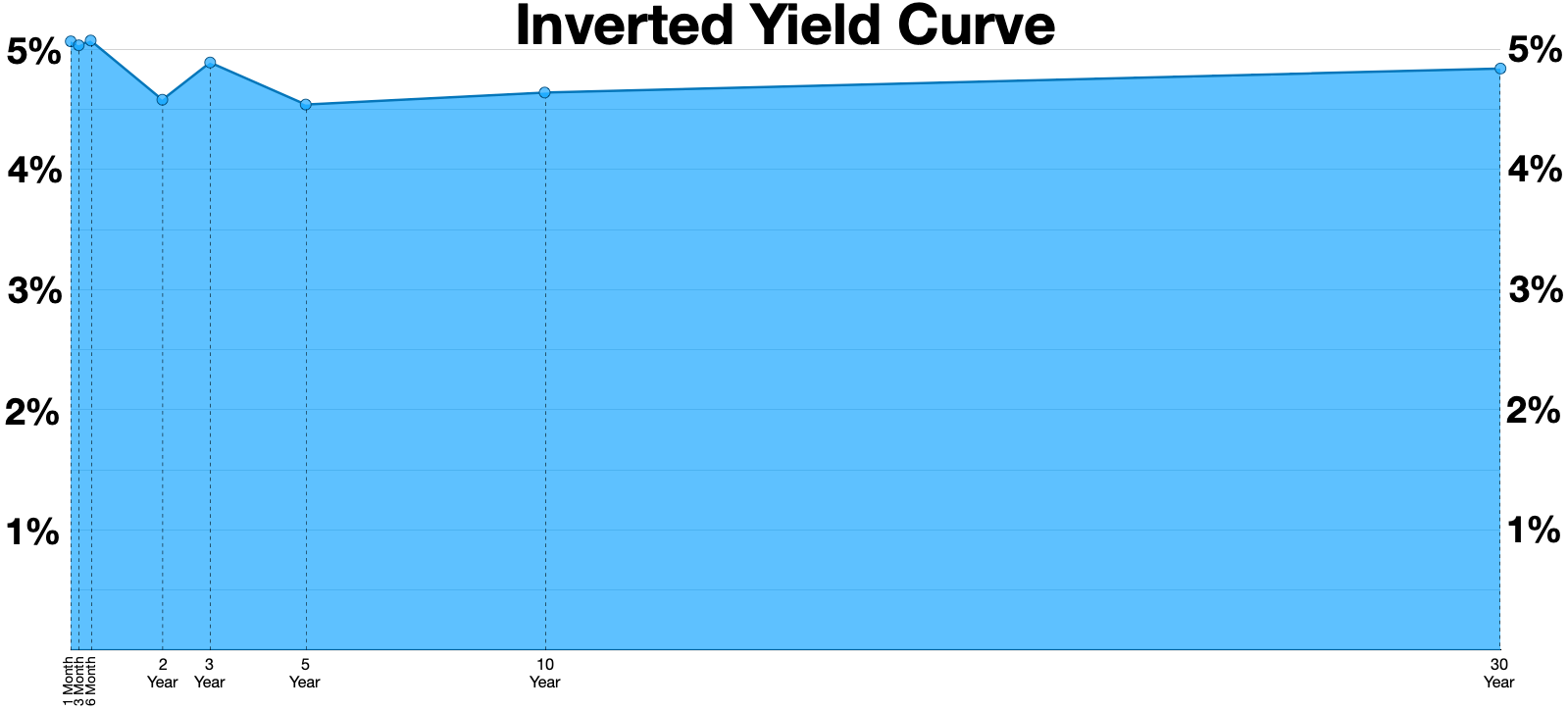
A Treasury yields bond rout pushed long-term US borrowing costs to their highest level in more than two decades. The move came on September 24, 2026. It dragged stocks lower with it. The 30-year Treasury yield climbed to 5.438%, its highest point since 2004. The 10-year yield reached 5.11%, a level last seen in 2007. The S&P 500 closed at 7,664.35, down 0.54% on the day. The Dow Jones Industrial Average fell 0.72% to 51,139.63. The Nasdaq dropped 0.83% to 26,712.98.

What is driving the Treasury yields bond rout

Analysts pointed to strong economic data, not fresh inflation fears, as the main driver. Daniela Hathorn, senior market analyst at Capital.com, said “the economy may be capable of sustaining higher real interest rates than previously assumed.” She added that S&P Global reported the strongest business activity growth in more than five years. Capacity constraints are rising too. That combination is pushing real yields higher. It is a different, arguably more durable driver than the rate scares investors have grown used to over the past two years.

The 2-year yield, more sensitive to near-term Federal Reserve policy, rose to 4.897%. That is its highest level since 2023. The move came the same week the Fed raised its benchmark rate to a 3.75%-4.00% range. Markets now appear to be pricing in a longer stretch of elevated rates, not the rapid cuts some had expected earlier in the year. Oil added to the pressure. Crude futures jumped 3.95% to $95.80 a barrel, partly on Middle East energy concerns, feeding the same inflation-adjacent anxiety pushing yields higher.

Why higher yields hit stocks

US Treasury bond documents illustrating the Treasury yields bond rout

When long-term government bonds pay more, they compete directly with equities for investor money. They also raise the discount rate used to value future corporate earnings. Both effects make stocks look relatively less attractive. Technology and other high-growth sectors depend heavily on future earnings rather than current cash flow. They tend to feel this first. That pattern showed up on September 24: the Nasdaq’s 0.83% decline outpaced the broader S&P 500’s drop.

Who feels the Treasury yields bond rout beyond Wall Street

Rising long-term yields ripple well past trading floors. Mortgage rates, corporate borrowing costs and government debt-servicing costs are all tied to the same long end of the Treasury curve. That curve just hit a two-decade high. Companies planning to refinance debt or fund large capital projects now face a materially higher cost of capital than they did a few months ago. That includes the wave of AI data center spending covered elsewhere on this site, such as AMD’s push toward a trillion-dollar valuation.

What this means for household budgets

Higher long-term yields do not stay confined to bond trading desks. Mortgage rates in the US are priced off the 10-year Treasury yield, so a move to 5.11% tends to filter through to new home loans within days. Auto loans and other consumer credit follow a similar, if less direct, path. Credit card rates are tied more closely to the Fed’s short-term benchmark, which also rose this month. Renters and first-time buyers are likely to feel this first, since even a small rise in borrowing costs changes what a monthly payment looks like on a large loan. Companies that carry variable-rate debt face the same math on a larger scale.

What comes next for markets

Whether this is a temporary repricing or the start of a longer stretch of elevated rates depends largely on the activity data Hathorn cited. A run of soft economic reports could pull yields back down quickly. A continuation of the current trend could keep pressure on equity valuations well into the fourth quarter. Investors will be watching the next round of inflation and employment data. They will also watch for further signals from the Fed, following its September rate decision covered in our report on the Fed’s rate hike to 3.75%-4.00%. For how central banks elsewhere are responding, see our report on the Swiss National Bank’s latest decision.

Treasury Yields: Quick Questions Answered

What triggered the Treasury yields bond rout on September 24?

Stronger-than-expected business activity data and rising real interest rates, not fresh inflation fears, drove the move, according to Capital.com analyst Daniela Hathorn.

How high did Treasury yields actually go?

The 30-year yield reached 5.438%, its highest since 2004, and the 10-year yield hit 5.11%, its highest since 2007.

How did stocks react to the Treasury yields bond rout?

The S&P 500 fell 0.54%, the Dow fell 0.72%, and the Nasdaq fell 0.83% on September 24, 2026.

Does this mean the Federal Reserve will raise rates again?

The article does not report new Fed commentary tied to this specific move; the rout followed the Fed’s rate decision earlier in the same week.

Why do higher Treasury yields hurt growth stocks more?

Growth stocks are valued heavily on future earnings, and higher yields raise the discount rate used to value those future profits, making them look less attractive today.

What should businesses planning to borrow watch for next?

Continued strength in economic data could keep long-term borrowing costs elevated, while weaker data could pull yields back down.

Sources

Five Envoys Went to Khartoum. Sudan’s Generals Skipped the Room

Sudan peace talks moved to Khartoum this month for the first time since the civil war began, as a five-body coalition of international envoys — the African Union, the East African bloc IGAD, the League of Arab States, the European Union and the United Nations — held three days of meetings aimed at reviving a negotiated end to the conflict. The generals directing the fighting weren’t in the room.

Who showed up, and who didn’t

The Quintet’s mission ran from Tuesday through Thursday and marked, according to reporting from the Rio Times, the first visit to Sudan by international mediators since the war started. UN Personal Envoy Pekka Haavisto met separately with army chief General Abdel Fattah al-Burhan, Prime Minister Kamil Idris, and leaders of armed movements aligned with the military. Notably, the envoys structured the talks to exclude the warring generals from formal joint sessions, instead convening a civilian-only preparatory panel — a deliberate choice meant to build a political track that doesn’t depend on the two sides sitting across from each other just yet.

Why the talks are stuck before they start

Several Sudanese political coalitions have already rejected the Quintet’s framework outright, questioning whether negotiations can produce anything while fighting continues on the ground. The deeper obstacle, per the reporting, is that the military leadership believes it is currently winning the war — a position that gives commanders little incentive to negotiate a ceasefire that would lock in the status quo rather than a battlefield victory.

The three things envoys are actually chasing

Rather than a single grand ceasefire, mediators are working three narrower tracks: establishing a prisoner-exchange framework with the International Committee of the Red Cross, bringing the rejecting opposition coalitions back into the process, and securing sustained pressure from the so-called Quad — the United States, Saudi Arabia, Egypt and the United Arab Emirates — whose backing (or lack of it) for either side has shaped the war’s trajectory since it began.

The humanitarian backdrop

The stakes behind the diplomacy are stark. Sudan’s war has produced one of the largest displacement crises anywhere in the world, with millions forced from their homes since fighting broke out, and famine conditions have been documented in parts of the country cut off from aid access. That humanitarian toll is precisely why the Quintet chose to lead with a prisoner-exchange and Red Cross framework rather than a ceasefire demand: it is a narrower ask that both sides can plausibly agree to without appearing to concede ground militarily, and it could open a channel for expanded aid delivery even if the broader war continues.

That dynamic has played out in other prolonged civil wars, where the side holding battlefield momentum has little reason to accept a truce that locks in the status quo rather than extends its gains. Mediators are, in effect, trying to change the underlying incentives facing Sudan’s military leadership rather than simply asking both sides to stop fighting, which is a slower and far less certain path than a straightforward ceasefire negotiation.

Where the process goes from here

None of the three tracks has a firm timeline. The prisoner-exchange framework is the most achievable in the near term since it doesn’t require either side to concede territory or political standing. The opposition outreach and Quad pressure campaigns are longer plays, and both depend on developments outside Sudan’s control — including how much bandwidth Washington, Riyadh, Cairo and Abu Dhabi are willing to spend on a conflict that has already produced one of the world’s largest displacement crises. Diplomats involved in the process have not set a date for a follow-up round.

Questions readers are asking

Who are the Quintet envoys in the Sudan peace talks?

The Quintet comprises representatives from the African Union, the East African bloc IGAD, the League of Arab States, the European Union and the United Nations.

Did Sudan’s warring generals attend the Khartoum talks?

No. Envoys deliberately excluded General Abdel Fattah al-Burhan and rival military leaders from formal sessions, meeting them separately instead and convening a civilian-only preparatory panel.

Why are the Sudan peace talks struggling to gain traction?

Multiple Sudanese political coalitions have rejected the framework, and the army leadership reportedly believes it is winning militarily, reducing its incentive to negotiate.

What is the Quad’s role in the Sudan conflict?

The Quad — the US, Saudi Arabia, Egypt and the UAE — is one of three pressure points envoys are working, alongside a prisoner-exchange framework with the Red Cross and outreach to rejecting opposition groups.

When did the Khartoum peace mission take place?

The Quintet’s visit ran over three days, Tuesday through Thursday, marking the first international peace mission to Sudan since the war began.

For related coverage of UN-led diplomacy this month, see Secretary-General Guterres’ final General Assembly address and the $2.45 billion Gaza reconstruction plan that still has no start date.

Five Envoys Went to Khartoum. Sudan’s Generals Skipped the Room

Sudan peace talks moved to Khartoum this month for the first time since the civil war began, as a five-body coalition of international envoys — the African Union, the East African bloc IGAD, the League of Arab States, the European Union and the United Nations — held three days of meetings aimed at reviving a negotiated end to the conflict. The generals directing the fighting weren’t in the room.

Who showed up, and who didn’t

The Quintet’s mission ran from Tuesday through Thursday and marked, according to reporting from the Rio Times, the first visit to Sudan by international mediators since the war started. UN Personal Envoy Pekka Haavisto met separately with army chief General Abdel Fattah al-Burhan, Prime Minister Kamil Idris, and leaders of armed movements aligned with the military. Notably, the envoys structured the talks to exclude the warring generals from formal joint sessions, instead convening a civilian-only preparatory panel — a deliberate choice meant to build a political track that doesn’t depend on the two sides sitting across from each other just yet.

Why the talks are stuck before they start

Several Sudanese political coalitions have already rejected the Quintet’s framework outright, questioning whether negotiations can produce anything while fighting continues on the ground. The deeper obstacle, per the reporting, is that the military leadership believes it is currently winning the war — a position that gives commanders little incentive to negotiate a ceasefire that would lock in the status quo rather than a battlefield victory.

The three things envoys are actually chasing

Rather than a single grand ceasefire, mediators are working three narrower tracks: establishing a prisoner-exchange framework with the International Committee of the Red Cross, bringing the rejecting opposition coalitions back into the process, and securing sustained pressure from the so-called Quad — the United States, Saudi Arabia, Egypt and the United Arab Emirates — whose backing (or lack of it) for either side has shaped the war’s trajectory since it began.

The humanitarian backdrop

The stakes behind the diplomacy are stark. Sudan’s war has produced one of the largest displacement crises anywhere in the world, with millions forced from their homes since fighting broke out, and famine conditions have been documented in parts of the country cut off from aid access. That humanitarian toll is precisely why the Quintet chose to lead with a prisoner-exchange and Red Cross framework rather than a ceasefire demand: it is a narrower ask that both sides can plausibly agree to without appearing to concede ground militarily, and it could open a channel for expanded aid delivery even if the broader war continues.

That dynamic has played out in other prolonged civil wars, where the side holding battlefield momentum has little reason to accept a truce that locks in the status quo rather than extends its gains. Mediators are, in effect, trying to change the underlying incentives facing Sudan’s military leadership rather than simply asking both sides to stop fighting, which is a slower and far less certain path than a straightforward ceasefire negotiation.

Where the process goes from here

None of the three tracks has a firm timeline. The prisoner-exchange framework is the most achievable in the near term since it doesn’t require either side to concede territory or political standing. The opposition outreach and Quad pressure campaigns are longer plays, and both depend on developments outside Sudan’s control — including how much bandwidth Washington, Riyadh, Cairo and Abu Dhabi are willing to spend on a conflict that has already produced one of the world’s largest displacement crises. Diplomats involved in the process have not set a date for a follow-up round.

Questions readers are asking

Who are the Quintet envoys in the Sudan peace talks?

The Quintet comprises representatives from the African Union, the East African bloc IGAD, the League of Arab States, the European Union and the United Nations.

Did Sudan’s warring generals attend the Khartoum talks?

No. Envoys deliberately excluded General Abdel Fattah al-Burhan and rival military leaders from formal sessions, meeting them separately instead and convening a civilian-only preparatory panel.

Why are the Sudan peace talks struggling to gain traction?

Multiple Sudanese political coalitions have rejected the framework, and the army leadership reportedly believes it is winning militarily, reducing its incentive to negotiate.

What is the Quad’s role in the Sudan conflict?

The Quad — the US, Saudi Arabia, Egypt and the UAE — is one of three pressure points envoys are working, alongside a prisoner-exchange framework with the Red Cross and outreach to rejecting opposition groups.

When did the Khartoum peace mission take place?

The Quintet’s visit ran over three days, Tuesday through Thursday, marking the first international peace mission to Sudan since the war began.

For related coverage of UN-led diplomacy this month, see Secretary-General Guterres’ final General Assembly address and the $2.45 billion Gaza reconstruction plan that still has no start date.

Putin’s Party Just Won a Record Duma Majority — Here’s the Catch

Russia’s 2026 election results are in: Vladimir Putin’s United Russia party won a decisive victory in the September 19-21 parliamentary vote, taking 57.86% of the party-list ballot and, with it, effective control of the 450-seat State Duma for another term. What makes this result different from the last vote is where some of those ballots were cast.

How the vote broke down

United Russia’s 57.86% share translates into 225 seats from the proportional party list, according to results reported by Al Jazeera. The party is also projected to win most of the other 225 single-mandate constituency races, giving it a commanding majority in the 450-seat chamber. Behind United Russia, the Communist Party (CPRF) took 13.84%, the Liberal Democratic Party (LDPR) 8.9%, the newer New People party 7.94%, and A Just Russia 4.95% — all four comfortably clearing the 5% threshold needed for Duma seats.

Turnout came in just below 57%, a figure election analysts will be watching for signs of shifting public engagement heading into the next presidential cycle.

The annexed-territory question

The most contested element of this election wasn’t the national tally — it was where voting happened. Russia held balloting in Donetsk, Luhansk, Kherson and Zaporizhzhia, along with Crimea, treating all five as integral Russian territory. Ukraine’s government condemned the vote in those regions as illegal, and the United Nations, along with most UN member states, does not recognize Russian sovereignty over any of the five. That gap between what Moscow counted and what the rest of the world accepts as a legitimate electorate is the core reason this result draws international pushback even as it’s uncontested domestically.

A ballot with limited options

Most candidates seen as genuinely anti-war were barred from standing, which narrowed the field before voters ever reached the polls. The Berlin-based NEST think tank, cited in the Al Jazeera report, argued that ballots for the nominally opposition CPRF, LDPR and other systemic parties may function as a form of quiet protest against the Kremlin even though none of those parties meaningfully oppose Putin’s core policies. That reading suggests the real story in this election isn’t the 57.86% headline number but the roughly 35% of the vote that went to parties positioned, on paper, as alternatives.

The fallout to watch

With its Duma majority secured, United Russia faces no near-term legislative obstacles to the Kremlin’s agenda, including continued wartime spending and sanctions-related economic policy. The bigger question is external: whether Western governments respond to the annexed-territory voting with new diplomatic or sanctions measures, and whether Ukraine’s objections gain traction at the UN. Neither is likely to change the composition of the Duma, but both will shape how isolated Moscow becomes over the coming months as related sanctions legislation, including new US measures on Russian oil buyers, continues to move through other capitals.

Common questions about the vote

What percentage of the vote did United Russia win in 2026?

United Russia won 57.86% of the party-list vote in the September 19-21, 2026 State Duma election, translating into 225 of the 450 seats from the proportional list alone.

Why is the Russia 2026 election controversial internationally?

Russia held voting in the annexed Ukrainian regions of Donetsk, Luhansk, Kherson and Zaporizhzhia, plus Crimea. Ukraine calls this illegal, and the UN and most countries don’t recognize Russian control over these territories.

What was voter turnout in the 2026 Russian election?

Turnout was just below 57%, according to official results reported by Al Jazeera.

Which parties besides United Russia won Duma seats?

The Communist Party (13.84%), the Liberal Democratic Party (8.9%), New People (7.94%) and A Just Russia (4.95%) all cleared the 5% threshold for representation.

Were opposition candidates allowed to run?

Most candidates viewed as genuinely anti-war were barred from the ballot, leaving voters to choose among United Russia and several parties that are nominally independent but do not substantively oppose Kremlin policy.

Does this election change Russia’s international standing?

Not directly — but it adds to friction with Ukraine and Western governments, who reject the legitimacy of voting held in annexed territory, layering onto existing sanctions disputes such as the new US sanctions law targeting Russian oil buyers.

For more on the diplomatic fallout, see our coverage of Ukraine’s largest drone strike on a Moscow-area refinery and Secretary-General Guterres’ final UN General Assembly address, which touched on the war’s toll heading into this vote.