
Author Archives: Francisca Samuel

Author: Francisca Samuel

Francisca Samuel is an editor at Tamara News, where she covers immigration, travel, business and technology news for readers across Africa and the Gulf.

Norway’s Prime Minister Has to Explain Himself to Parliament This Week

Norway’s parliament, the Storting, opens public hearings today into ties between Norwegian officials and the late financier Jeffrey Epstein. Prime Minister Jonas Gahr Store is among those set to testify. The Norway Epstein parliamentary hearings mark the most visible stage yet of an inquiry that began earlier this year. It followed newly released documents connected to the Epstein case that put Norwegian diplomats and politicians under scrutiny.

The Standing Committee on Scrutiny and Constitutional Affairs is running the inquiry. It is examining both the personal conduct of individual officials and how Norwegian state institutions responded once concerns about Epstein’s conduct became known.

Who testifies at the Norway Epstein parliamentary hearings

Committee adviser Kristian Haugeland confirmed a schedule for three witnesses on September 30. They are Prime Minister Jonas Gahr Store, former Foreign Minister Borge Brende, who held the post from 2013 to 2017, and former Foreign Minister Ine Eriksen Soreide. The committee scheduled a second round of testimony for October 1. Current Foreign Minister Espen Barth Eide and former Foreign Minister Anniken Huitfeldt will appear that day.

That lineup spans more than a decade of Norwegian diplomacy. Norway’s current and several recent foreign ministers will all face questions from the same committee within a two-day span.
Witness testimony setting during the Norway Epstein parliamentary hearings

How the inquiry got here

The Storting voted earlier in 2026 to establish the commission. Al Jazeera described the trigger as a “political storm” set off by Epstein-related documents naming Norwegian diplomats and their associates. Norwegian authorities separately opened a probe into a diplomat and the diplomat’s husband over alleged Epstein links, according to earlier reporting on the case.

The hearings beginning this week mark a first. The prime minister and multiple former foreign ministers will answer questions on the record in the same forum, rather than through separate written statements or isolated media interviews.

What the committee is trying to establish

The inquiry goes beyond the conduct of any individual official. It is examining whether Norwegian state institutions acted appropriately once information about Epstein’s activities became available to them. That institutional question, rather than any single allegation against a named person, is what gives the hearings their broader political weight in Norway.

What happens after this week’s testimony

The committee has not announced when it expects to conclude its work or publish findings. Parliamentary inquiries of this kind in Norway typically continue gathering testimony and documentary evidence before issuing a public report. That process can extend well beyond the initial round of hearings. Norwegian media plan to cover each day of testimony closely, given the seniority of the officials involved.

Why this inquiry is being watched beyond Norway

Epstein-related parliamentary and government inquiries have surfaced in multiple countries in recent years. Norway’s hearings add to that pattern with a notably senior set of witnesses. A sitting prime minister testifying before a parliamentary committee on this subject is uncommon. The outcome could influence how other governments handle similar questions about official conduct connected to the Epstein case.

Norway is not alone in facing renewed scrutiny over Epstein-related connections. Legislatures and government bodies in several countries have opened their own reviews in recent years, as previously sealed documents and court records tied to the case have become public. What sets Norway’s inquiry apart is the seniority of those called to testify in a single, compressed window. A sitting prime minister and four current or former foreign ministers are all appearing before the same committee within two days.

How the hearings are expected to unfold

Committee hearings of this type in Norway are typically open to the public and broadcast. That gives Norwegian voters direct access to the testimony, rather than relying solely on official summaries or media reports. Committee members are expected to question each witness on two things: their personal knowledge of any contacts with Epstein or his associates, and decisions made within their ministries at the time. The witnesses span more than a decade of Norwegian foreign policy leadership. Their answers may reveal how much information about Epstein’s conduct was shared, or not shared, across successive governments.

Answers to key questions on the Epstein hearings

What are the Norway Epstein parliamentary hearings about?

A Storting committee is holding hearings on ties between Norwegian officials and diplomats and the late Jeffrey Epstein. It is also examining how Norwegian state institutions responded once concerns about his conduct emerged.

Is Norway’s prime minister actually testifying?

Yes. Prime Minister Jonas Gahr Store will testify on September 30, alongside former Foreign Ministers Borge Brende and Ine Eriksen Soreide.

Who testifies on October 1?

Current Foreign Minister Espen Barth Eide and former Foreign Minister Anniken Huitfeldt will appear on October 1.

What triggered the inquiry?

The Storting voted to establish the commission after newly released Epstein-related documents named Norwegian diplomats and politicians. Al Jazeera described the fallout as a political storm in Norway.

Has any wrongdoing been confirmed?

No. No specific findings have come out publicly as of the start of this week’s hearings. The inquiry is still gathering testimony.

When will the inquiry conclude?

No end date has been set. Parliamentary inquiries of this scope typically continue for some time after initial hearings before a final report comes out.

Related world coverage

Reporting sources

  • Caliber.az — Norway’s prime minister to testify in parliament over Epstein case. caliber.az
  • Al Jazeera — Epstein files set off Norwegian political storm: What we know. aljazeera.com

Hurricane Polo Was the Strongest Storm Almost No One Saw Coming

Ten days ago, Hurricane Polo was a modest tropical storm off Mexico’s Pacific coast. By September 22, it had exploded into a Category 5 hurricane with sustained winds of up to 180 mph. That made it the second-strongest hurricane on record in the Eastern Pacific basin. The Hurricane Polo Mexico landfall that followed has triggered evacuations, school closures and flood watches. Those now stretch far beyond the coastline where the storm first hit.

Polo’s rapid intensification, gaining more than 100 mph in wind speed in roughly 24 hours, caught many forecasters off guard. It gave coastal communities in Baja California Sur only a short window to prepare.

The Hurricane Polo Mexico landfall, step by step

By the time Polo reached the coast, it had weakened considerably from its Category 5 peak. CBS News reported the storm made its first landfall in Baja California Sur as a strong Category 2 hurricane, with maximum sustained winds of 110 mph. It then weakened further, to Category 1 strength with 80 mph winds. Mexican authorities expected a second landfall in southern Sonora on the mainland shortly afterward.

Even at reduced strength, the storm carried enough moisture to trigger serious flooding concerns. The U.S. National Hurricane Center forecast 6 to 12 inches of rainfall across Baja California Sur. Sonora was forecast to see 4 to 6 inches, and locally up to 8 inches.

Heavy tropical rain and flooding linked to the Hurricane Polo Mexico landfall

Evacuations, shelters and school closures

Mexican authorities evacuated residents from vulnerable coastal areas, opened emergency shelters, and deployed military personnel ahead of the storm’s arrival, according to CBS News. Schools suspended classes in Acapulco as a precaution, even though the city sits well away from Polo’s direct path. That step alone shows how seriously officials treated the storm’s potential for widespread disruption.

Hurricane warnings were issued for parts of Baja California Sur and for a stretch of mainland Mexico running from Bahia Kino to Huatabampito. Tropical storm warnings covered both coasts of Baja California Sur as well as additional sections of the mainland.

A flood threat that reaches deep into the United States

Polo’s remnants are forecast to continue moving north into the southwestern United States. The National Weather Service has issued flood watches across 11 U.S. states, including Arizona, New Mexico, Utah, Colorado, Kansas, Nebraska, Iowa and Texas. Yale Climate Connections reported the flood threat extends from the Four Corners region eastward into the Central Plains. That puts more than 14 million Americans within the affected area.

That reach illustrates a pattern that has become increasingly common with Pacific hurricanes in recent years. A storm can weaken well below hurricane strength at the coast and still deliver its most dangerous impacts hundreds of miles inland. Those impacts usually take the form of flash flooding rather than wind damage.

What happens as Polo moves north

Forecasters will be watching how much of Polo’s moisture survives the journey north. They are also tracking how it interacts with existing weather patterns over the southwestern U.S. Local officials in the affected states are urging residents in flood-prone areas to monitor forecasts closely over the coming days. Low-lying and canyon terrain, where flash flooding can develop with little warning, carries the greatest risk.

Why Polo’s intensification matters beyond this storm

Polo jumped from a 45 mph tropical storm on September 21 to 150 mph winds by the next day. That kind of rapid intensification has become a growing focus for climate scientists. They are studying how warming ocean temperatures affect storm behavior. Faster intensification gives coastal communities less time to prepare, a pattern forecasters have flagged in several major storms in recent hurricane seasons.

FAQ: Hurricane Polo and travel to Mexico

Did Hurricane Polo make landfall as a Category 5 storm?

No. Polo peaked at Category 5 strength on September 22 while still offshore, then weakened before making landfall in Baja California Sur as a Category 2 storm with 110 mph winds, later dropping to Category 1 strength.

Which parts of Mexico were affected?

Baja California Sur took the first landfall, with a second landfall expected in southern Sonora on the mainland. Hurricane warnings covered Baja California Sur and the mainland coast from Bahia Kino to Huatabampito.

Which US states are under flood watches because of Polo?

The National Weather Service issued flood watches across 11 states, including Arizona, New Mexico, Utah, Colorado, Kansas, Nebraska, Iowa and Texas, as the storm’s remnants moved north.

How many people are at risk from flooding?

Yale Climate Connections reported the flood threat, stretching from the Four Corners region into the Central Plains, affects more than 14 million Americans.

Were there any casualties reported from Hurricane Polo?

As of the most recent reporting, no casualties or damage figures had been confirmed, though evacuations and shelter openings were underway in Mexico ahead of landfall.

Is it safe to travel to Los Cabos or Baja California Sur right now?

Travelers should check official advisories and airline notices before departure, since coastal areas of Baja California Sur were under direct hurricane and tropical storm warnings at the time of landfall.

More travel coverage

Sources for this report

  • CBS News — Hurricane Polo makes landfall over Mexico. See its path. cbsnews.com
  • Yale Climate Connections — After two landfalls in Mexico, Hurricane Polo’s rainmaking journey has just begun. yaleclimateconnections.org

China’s DeepSeek Just Handed Huawei a Weapon Against Nvidia

Chinese AI company DeepSeek released a set of software tools on September 30. They are designed specifically for Huawei’s Ascend AI chips, a move that strikes directly at one of Nvidia’s most durable advantages: the software ecosystem built around its hardware. The new DeepSeek Huawei chip tools include six open-source modules, according to reporting from the South China Morning Post. They are built to make Huawei’s chips easier for developers to actually use.

The centerpiece is an Ascend-compatible version of TileLang. DeepSeek originally built this programming language for high-performance computation on Nvidia hardware. It has now been adapted to run on Huawei’s chips instead.

Why the DeepSeek Huawei chip tools target software, not just chips

Nvidia’s dominance in AI computing rests as much on its CUDA software platform as on its silicon. Developers who have spent years building tools and workflows around CUDA face real friction switching to alternative hardware, even when that hardware is competitively priced or more available. DeepSeek is attempting to lower that switching cost directly by porting TileLang to Huawei’s Ascend platform. GitHub documentation describes the result as offering “native code generation, automatic scheduling, and synchronisation” for Ascend chips.

The South China Morning Post reported the release is part of a broader Chinese effort. The goal is an “independent and controllable” AI software ecosystem, reducing the country’s dependence on American technology. That effort comes at a time when U.S. export controls have restricted the sale of advanced Nvidia chips to Chinese buyers.

Technology factory floor in China building hardware for the DeepSeek Huawei chip tools push

The hardware gap DeepSeek is trying to close

DeepSeek’s chief executive, Liang Wenfeng, addressed the underlying hardware gap directly in comments reported by Digital Citizen in July. He said Huawei’s Atlas 950 SuperPoD system could functionally replace Nvidia’s GB200 and GB300 platforms for many workloads. That is true even though it currently takes roughly four Huawei accelerators to match the performance of a single Nvidia GPU. Wenfeng argued that availability matters more than raw performance when superior Nvidia chips cannot be bought in sufficient quantities due to export restrictions. He suggested Chinese firms would accept paying a 50% to 200% premium for Huawei hardware they can actually obtain.

He also estimated, in those July remarks, that Chinese AI labs remain roughly two years behind their American counterparts on model capability. The new software tools do not close that gap on their own. They are meant to help narrow it over time by making Chinese hardware more usable.

What Ascend 950 support means in practice

With direct software support now available, Huawei’s Ascend 950 accelerators become a more practical option for Chinese developers building and training AI models. That is according to the South China Morning Post’s reporting. It matters for DeepSeek’s own operations too. The company has said it currently works with computing capacity equivalent to roughly 20,000 Nvidia H100 GPUs, a fraction of the scale used by the largest U.S. labs.

What comes next for Huawei’s chip ecosystem

The open-source release does not resolve the performance gap between Huawei’s chips and Nvidia’s newest hardware. But it removes one of the practical barriers to adoption inside China. Whether other Chinese AI companies build on top of DeepSeek’s tools, rather than maintaining their own workarounds, will determine how much traction the effort gains. Continued U.S. export restrictions on advanced Nvidia chips give Chinese developers a strong incentive to make that switch work.

Why this matters outside China

For chipmakers and cloud providers outside China, a more usable Huawei ecosystem sends a signal. The current export-control strategy is accelerating the very domestic alternative U.S. policy aimed to prevent. It also gives global AI developers a second software stack to watch, one built outside the Nvidia-dominated toolchain that has underpinned most AI development to date.

What people want to know about the DeepSeek-Huawei tools

What did DeepSeek actually release?

DeepSeek open-sourced six software modules built for Huawei’s Ascend AI chips on September 30, 2026. These include an Ascend-compatible version of its TileLang programming language, according to the South China Morning Post.

Why does this challenge Nvidia?

Nvidia’s advantage comes largely from its CUDA software ecosystem, which makes its chips easier to develop for. DeepSeek’s tools aim to give Huawei’s Ascend chips a similar software layer, lowering the cost of switching away from Nvidia hardware.

Can Huawei’s chips actually match Nvidia’s performance?

Not chip-for-chip. DeepSeek CEO Liang Wenfeng said in July that it takes roughly four Huawei accelerators to match one Nvidia GPU’s performance. He argued availability matters more than raw performance given export restrictions.

Why is this happening now?

U.S. export controls have restricted Chinese access to advanced Nvidia chips. That has pushed Chinese AI companies to invest in domestic alternatives like Huawei’s Ascend platform, part of a push for what the South China Morning Post calls an “independent and controllable” AI ecosystem.

How far behind is Chinese AI development, according to DeepSeek?

Liang Wenfeng estimated in July that Chinese AI labs remain roughly two years behind U.S. counterparts on model capability. That estimate predates this week’s software release.

Related AI policy coverage

Source notes

  • South China Morning Post — China’s DeepSeek open-sources tools to help Huawei chips supplant Nvidia in AI. scmp.com
  • Digital Citizen — DeepSeek CEO says Huawei’s AI hardware can replace Nvidia racks despite lower per-GPU performance. digitalcitizen.life

OpenAI Wants an AI Agent Working for You Around the Clock

OpenAI used its 2026 DevDay conference on September 29 to introduce a product built around a simple pitch: an AI system that keeps working after you stop looking at it. The new OpenAI Dots AI agents run continuously in the background. They carry out tasks across ChatGPT, text messaging, email and Slack, with no need for a human to keep the conversation open.

The announcement, reported by Business Standard and other outlets covering DevDay, arrived alongside a second release. That release is GPT-6.1 Sol, a cheaper model aimed at coding and everyday professional tasks.

What the OpenAI Dots AI agents actually do

Dots is built on GPT-6 Astra. It comes with its own dedicated cloud computing resources and browser access, letting it interact with connected tools and services on a user’s behalf. According to Business Standard’s coverage of the launch, Dots can handle recurring work and delegated tasks. Users can set permissions that require confirmation before it takes certain actions. For now, access is limited to subscribers on OpenAI’s Pro, Business Premium and Enterprise tiers.

The always-on framing sets Dots apart from a standard chatbot session, which ends the moment a user closes the app. OpenAI’s pitch is that Dots can pick up multi-step projects and check back in on progress. It can keep working through tasks that would otherwise require a person to return and re-prompt the system repeatedly.

Data center server room powering OpenAI Dots AI agents

GPT-6.1 Sol: performance close to Astra at a fraction of the cost

GPT-6.1 Sol is positioned as the budget option in the GPT-6 family. It is built to approach the coding performance of the flagship GPT-6 Astra model while costing far less to run. Coverage from AI Weekly cited a price of roughly $2 per million input tokens, a fraction of what flagship-tier models typically cost. The model supports a 1.05 million-token context window. It can generate up to 128,000 output tokens in a single response, according to Business Standard’s report.

OpenAI also said safety testing showed improvements in five of eight production safety categories, compared with an earlier version of Sol. The company noted that cybersecurity vulnerability generation in Sol still lags behind GPT-6 Astra.

A new top-tier subscription plan

Alongside the model releases, OpenAI introduced ChatGPT Pro 500. It is a $500-per-month plan offering the highest usage allowances among its Pro tiers, plus access to a new “Ultrafast” service tier for GPT-6 Astra. OpenAI also unveiled several other tools at DevDay. These include ChatGPT Spaces, a team collaboration workspace; Living Pages, documents that update alongside a project’s progress; Codex Cloud, a browser-based coding environment; and new Agents and Decisions APIs for developers.

What Dots and Sol change starting now

For businesses already using ChatGPT’s higher-tier plans, Dots marks a shift. It moves users from prompting an assistant toward delegating standing tasks to it, provided they are comfortable with OpenAI’s permission model. For developers, GPT-6.1 Sol’s pricing makes near-frontier coding performance available at a lower-tier cost. That could pressure rival AI labs offering similarly priced mid-tier options.

Where this fits in the wider AI race

The launch lands in a week already dense with AI news, from Anthropic’s leaked IPO filing to a White House-brokered safety accord signed by OpenAI and five other AI companies. Positioning Dots as an always-on agent puts OpenAI in more direct competition with other companies building autonomous “agentic” tools. That category has become one of the most closely watched fronts in AI development over the past year. Google, Anthropic and several well-funded startups have all shipped their own agentic tools in recent months. OpenAI chose to build Dots directly into its existing ChatGPT subscription tiers, rather than launching it as a separate product. That suggests the company wants agentic features to feel like a natural upgrade, not a new purchase decision, for its largest customers.

Questions readers are asking about OpenAI’s Dots agents

What is OpenAI Dots?

Dots is an always-on AI agent introduced at OpenAI’s 2026 DevDay. It runs continuously in the background, carrying out tasks across ChatGPT, text messaging, email and Slack. It is built on the GPT-6 Astra model.

Who can use Dots right now?

Access is currently limited to subscribers on OpenAI’s ChatGPT Pro, Business Premium and Enterprise plans. That is according to Business Standard’s coverage of the DevDay announcement.

What is GPT-6.1 Sol?

GPT-6.1 Sol is a lower-cost model in the GPT-6 family aimed at coding and professional tasks. It is priced at roughly $2 per million input tokens while approaching the coding performance of the flagship GPT-6 Astra model.

How big is GPT-6.1 Sol’s context window?

The model supports a 1.05 million-token context window. It can produce up to 128,000 output tokens in a single response.

What is ChatGPT Pro 500?

It is a new $500-per-month subscription tier offering the highest usage allowances among OpenAI’s Pro plans. It also comes with access to a faster “Ultrafast” service tier for GPT-6 Astra.

Did OpenAI address safety concerns with Sol?

OpenAI said safety testing showed improvement in five of eight production safety categories, compared with an earlier Sol model. Cybersecurity vulnerability generation still trails GPT-6 Astra, the company noted.

Further reading on Tamara News

References

  • Business Standard — OpenAI DevDay 2026: Dots agent, GPT-6.1 Sol, new plans and more announced. business-standard.com
  • AI Weekly — OpenAI News Today. aiweekly.co

Wall Street Thinks Micron Is About to Prove a Point

Micron Technology reports its fiscal fourth-quarter and full-year 2026 results today. The numbers will be read as a referendum on the AI boom. Specifically, how much of that boom is reaching the companies that make the memory chips underneath it. The Micron Q4 earnings release is scheduled for September 30, 2026. It comes after a year in which memory prices and demand both climbed sharply on the back of AI infrastructure spending.

Analysts at JPMorgan have positioned Micron for what 24/7 Wall St. described as a “beat-and-raise” quarter. That means both current results and forward guidance are expected to top prior estimates.

Why this Micron Q4 earnings report matters more than usual

Micron makes DRAM and NAND memory chips, along with high-bandwidth memory used in AI accelerators. Demand for that high-bandwidth memory has surged as AI companies build out data centers. Coverage from The Motley Fool notes that available production capacity across the memory industry has effectively been presold. That is unusual for a sector that has historically moved through sharp boom-and-bust price cycles.

The scale of the underlying spending helps explain why. Data center capital spending is estimated to rise from roughly $800 billion in 2026 to $1.3 trillion in 2027. Some Wall Street estimates cited by The Motley Fool put the figure as high as $3 trillion to $4 trillion by 2030. If those projections hold even loosely, memory demand tied to AI infrastructure looks more like a structural shift. It would not be just a temporary spike.

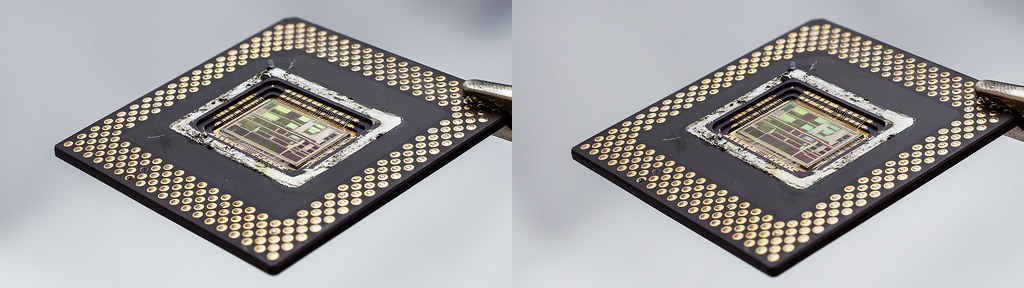
Close-up of a circuit board representing Micron Q4 earnings and memory chip demand

How the stock is priced heading into the report

Despite the bullish demand backdrop, Micron shares trade at roughly 6.8 times projected fiscal 2027 earnings. That is according to The Motley Fool’s analysis. Such a multiple would typically suggest the market expects a downturn rather than sustained growth. That gap between the stock’s valuation and the demand story is part of why today’s guidance carries extra weight. A strong outlook could force investors to reassess how durable this cycle really is.

What to watch in today’s numbers

Investors are expected to focus on several things beyond the headline revenue and earnings-per-share figures. Those include high-bandwidth memory revenue specifically, pricing trends across DRAM and NAND, and management commentary on capacity already locked in with AI chipmakers and cloud providers. Guidance for the first quarter of fiscal 2027 will matter as much as the quarter just reported.

What to watch when Micron reports

Results are due after markets close, with a call for analysts to follow. So much of Micron’s near-term capacity is already spoken for. That means the more consequential number may not be this quarter’s revenue. It may instead be management’s tone on how long the current pricing environment can hold. Investors will also listen for any sign that customers plan to pull back on committed orders.

The bigger picture for chipmakers

Micron’s results will also be read alongside other memory and equipment makers reporting around the same period, including ASML. A strong report from Micron would reinforce a broader narrative. AI infrastructure spending is flowing all the way down to component suppliers, not just to the AI labs and cloud giants at the top of the chain.

That dynamic also shapes how investors should read Micron’s results relative to its peers. South Korean rivals SK Hynix and Samsung compete directly in the high-bandwidth memory market. Any commentary Micron offers about pricing power or capacity constraints will inevitably be compared against how those competitors describe the same demand environment. A consistent message across all three companies, that capacity is effectively sold out well in advance, would carry more weight than any single company’s results alone.

How AI chipmakers and memory suppliers fit together

Memory chips do not compete directly with the AI accelerators made by companies like Nvidia and AMD. But the two categories are tightly linked. Every new generation of AI accelerator requires more high-bandwidth memory to function. That means memory suppliers benefit from the same spending cycle driving demand for the chips that do the actual AI computation. This relationship is part of why Micron’s results are often treated as a leading indicator for AI infrastructure spending more broadly, even though Micron itself does not build the processors that power large AI models.

Common questions about the Micron earnings report

When did Micron report its fiscal Q4 2026 results?

Micron scheduled its results for September 30, 2026, after markets closed. That is according to the company’s own investor announcement.

Why do analysts expect a strong quarter from Micron?

JPMorgan analysts positioned Micron for a beat-and-raise quarter. Reporting from The Motley Fool notes that available memory production capacity has effectively been presold due to AI-driven demand.

What is high-bandwidth memory and why does it matter here?

High-bandwidth memory, or HBM, is a type of memory chip used alongside AI accelerators to move data faster. Demand for HBM has been a major driver of memory chip revenue as AI infrastructure spending has grown.

Is Micron’s stock expensive right now?

According to The Motley Fool, Micron trades at about 6.8 times projected fiscal 2027 earnings. That is a relatively low multiple, suggesting the market has not fully priced in sustained AI-driven demand.

How large is data center spending expected to grow?

The Motley Fool cites estimates putting global data center capital spending at roughly $800 billion in 2026. That figure could rise to $1.3 trillion in 2027 and $3 trillion to $4 trillion by 2030.

More AI and business coverage

Sourcing

  • The Motley Fool — Sept. 30 Could Be the Start of a New Paradigm for Micron. fool.com
  • GlobeNewswire — Micron Technology to Report Fiscal Fourth Quarter Results on September 30, 2026. globenewswire.com