Nvidia Just Bought the Company Every AI Developer Uses — for $12.9 Billion

The Nvidia Hugging Face acquisition became official on September 2, 2026. Nvidia Corporation signed a definitive agreement to buy Hugging Face for $12.93 billion. It is the chipmaker’s largest deal to date. Nvidia disclosed the transaction in a filing with the U.S. Securities and Exchange Commission. Axios and TechCrunch both confirmed the terms.

The price breaks down into two parts. Roughly $11.9 billion goes to Hugging Face’s investors. Up to $1 billion is set aside for employee retention, according to Nvidia’s own disclosure. The deal is expected to close in the first half of 2027, subject to regulatory approval.

What the Nvidia Hugging Face Acquisition Actually Buys

Hugging Face is not a chip company. It is not a model developer in the way OpenAI or Anthropic are. It runs a hosting and community platform where developers publish, share and download open-source AI models, datasets and applications. More than 18 million developers, researchers and creators use the platform. It hosts over 3 million models, 500,000 datasets and 1 million applications, per Nvidia’s own figures.

Hugging Face has become something close to neutral ground for the open-source AI world. A researcher can publish a model there regardless of which chip trained it. That neutrality made the acquisition sensitive the moment it was announced.

Why Nvidia Says It Will Keep the Platform Open

Nvidia has publicly committed to keeping Hugging Face’s platform open on the same terms it operates under today. That includes letting developers upload, download and support hardware from other vendors. AMD chips and rival silicon remain welcome on the platform, at least under the terms Nvidia has stated so far. VideoCardz reported that this openness commitment was central to how Nvidia framed the deal.

The promise matters because Hugging Face’s value depends on developer trust in its neutrality. If Nvidia steers the platform toward its own chips, developers have an incentive to migrate elsewhere. That would undercut the very asset Nvidia just paid $12.93 billion for.

Skeptics of the deal point out that a public commitment is not a binding structural guarantee. Nvidia will control Hugging Face’s roadmap, funding and leadership once the deal closes. A pledge to stay open can still get reshaped over years through small product decisions that never individually look like a reversal.

The Nvidia Hugging Face Acquisition Fits a Bigger Pattern

Nvidia’s move follows a wave of AI infrastructure consolidation across 2026. Rivals have raced to lock in their own compute and platform deals. Tamara News covered Anthropic’s separate compute agreement with Nvidia earlier this week. The industry has also spent the year debating bottlenecks in AI chip interconnects that shape how fast new models train at scale. Buying Hugging Face gives Nvidia a foothold in the software layer where developers decide which hardware to target — not in chips or interconnects themselves.

Where This Leaves the AI Industry

Regulators in the U.S., EU and elsewhere are expected to scrutinize the deal. Nvidia already dominates AI chips, and Hugging Face sits at the center of model distribution. The 2027 closing timeline gives antitrust authorities significant runway to review the transaction. Competing chipmakers and cloud providers that depend on Hugging Face’s neutrality will watch closely for any sign that Nvidia hardware starts getting favored on the platform.

The extended closing window also gives rival hardware makers time to build alternatives of their own. Some developers may start looking for a hosting platform with no ownership ties to any single chipmaker at all.

AMD, Intel and a handful of cloud-only providers all have reasons to want that alternative to exist. None of them has announced one yet. Building trust at Hugging Face’s scale takes years, not months. For now, most developers have little choice but to wait and watch how Nvidia actually behaves once it owns the platform outright.

Nvidia’s own hardware business gives some hint of its incentives. The company sells GPUs, not hosting services, so its profit motive does not obviously require steering Hugging Face traffic toward its own chips. Some analysts read that as a reason for cautious optimism about the openness pledge holding up in practice.

The deal also lands at a moment when Nvidia’s market power in AI chips is already a recurring subject of antitrust discussion. A high-profile acquisition of widely used, previously independent infrastructure gives that broader debate a fresh, concrete example to point to. How regulators respond may say as much about the future of AI oversight as it does about this one deal.

Developer coding after the Nvidia Hugging Face acquisition

Frequently Asked Questions About the Nvidia Hugging Face Acquisition

How much is Nvidia paying for Hugging Face?
$12.93 billion total — about $11.9 billion to investors and up to $1 billion in employee retention payments, according to Nvidia’s SEC filing.

When was the deal announced?
Nvidia signed the definitive agreement on September 2, 2026, and confirmed it publicly on September 3.

When will the acquisition close?
Nvidia expects the deal to close in the first half of 2027, pending regulatory approval.

Will Hugging Face still support non-Nvidia hardware?
Nvidia has committed to keeping the platform open to other silicon vendors, including AMD, consistent with Hugging Face’s current practices.

How many developers use Hugging Face?
More than 18 million, hosting over 3 million models, 500,000 datasets and 1 million applications, per figures Nvidia disclosed alongside the deal.

Featured image: “2026-02-12 NVIDIA Quadro 400 HOF6313 RAW-Export.png” by PantheraLeo1359531 (CC BY-SA 4.0), via Wikimedia Commons. In-content image: “2020-05-01 the-mediocre-programmer by-David-Revoy.jpg” by David Revoy (CC BY 4.0), via Wikimedia Commons.
Anthropic Just Locked In $35 Billion of Computing Power — Nvidia Is on Both Sides of It

The Anthropic Nvidia compute deal is a six-year, $35 billion cloud-computing agreement between the AI lab and Lambda. Nvidia backs Lambda with both equity and hardware. The deal routes through a Texas data center and adds to more than $135 billion in computing contracts Anthropic has signed so far this year.

Under the arrangement, Lambda will draw computing capacity from a 700-megawatt data center campus in Nueces County, Texas. Hut 8, a company known for bitcoin mining and data center development, is building the facility.

How the Anthropic Nvidia compute deal is structured

According to Bloomberg, Nvidia will lease the Hut 8 data center directly. Lambda then pays Nvidia for access to it, and Anthropic in turn pays Lambda for the computing power it needs to train and run its models. Techxplore noted that Nvidia has invested in both companies on either side of the contract. Some analysts have questioned this structure as a form of circular financing that keeps Nvidia’s chips, capital, and revenue moving through the same small set of partners.

Computer processor chip representing the hardware behind the Anthropic Nvidia compute deal

Photo: Intel Free Press, CC BY 2.0, via Wikimedia Commons.

Why Anthropic needs this much computing power

Anthropic has signed a rapid succession of large compute contracts this year to keep pace with rivals training increasingly large models. The company spreads its computing needs across several providers rather than relying on a single cloud vendor. That approach reduces the risk that one supplier’s capacity constraints slow its model development schedule.

Graphics processing hardware similar to the chips underpinning the Anthropic Nvidia compute deal

Photo: Advanced Micro Devices, Attribution, via Wikimedia Commons.

What analysts are questioning about the arrangement

Some market analysts have flagged the layered structure of the deal. Nvidia effectively finances the buildout of a data center it will lease to a company it has invested in. That company then sells access to another company Nvidia has also invested in. Supporters argue this is simply how the AI infrastructure buildout works at scale, since few single companies can finance multi-billion-dollar data center campuses alone. Critics counter that if AI demand ever slows, the interlocking investments could concentrate risk across the same handful of players rather than spreading it.

How rival AI labs are responding

OpenAI and Google have both signed their own large multi-year compute contracts over the past year. Industry watchers describe an accelerating arms race for guaranteed chip access. Cloud providers outside the big three hyperscalers, including Lambda and CoreWeave, have used deals like this one to build credibility. AI labs that want to diversify away from a single vendor now see them as real alternatives. Some venture investors say the scale of these commitments is now a meaningful factor in how they assess an AI lab’s long-term viability.

Total spending commitments across the AI industry for computing infrastructure now run into the hundreds of billions of dollars this year alone. Several financial analysts tracking the sector compiled those figures. Some investors have started asking whether current AI revenue justifies commitments of this size. Many AI labs remain unprofitable even as they sign multi-year contracts worth tens of billions of dollars. Anthropic has not disclosed its current revenue run rate publicly. That makes it difficult for outside analysts to assess how comfortably the company can meet its growing computing obligations.

What happens next for AI compute deals

Anthropic has signaled it will likely sign additional compute agreements before year-end as it prepares to train its next generation of models. The Texas data center itself is still under construction. Practical computing capacity from this specific deal will phase in gradually rather than arriving all at once. For related coverage on the compute race, see our reporting on Salesforce’s stake gain tied to Anthropic and the AI chip interconnect bottleneck affecting the wider industry.

Data centers of this scale draw enormous amounts of electricity. A 700-megawatt campus is large enough to power a mid-sized city. Texas grid operators have flagged rising demand from data center construction as a planning challenge for the years ahead. Local officials in Nueces County say the project is expected to bring construction jobs to the area. Permanent staffing needs for a highly automated data center are typically much smaller than the construction workforce required to build it.

Questions readers are asking about the deal

How much is the Anthropic Nvidia compute deal worth?
The agreement is valued at $35 billion over six years.

Where will the computing power come from?
A 700-megawatt data center campus being built by Hut 8 in Nueces County, Texas.

What role does Nvidia play in the deal?
Nvidia leases the data center from Hut 8 and has invested in both Lambda and Anthropic, the two companies on either side of the contract.

Why are analysts calling this circular financing?
Nvidia’s capital and chips flow through companies it has invested in on both ends of the transaction. Some see that as concentrating risk rather than distributing it.

How much has Anthropic committed to compute overall this year?
This deal adds to more than $135 billion in computing contracts Anthropic has signed so far in 2026.

When will the capacity be available?
The Texas facility is still under construction, so capacity from this deal will come online gradually rather than immediately.

Energy analysts say the growing cluster of large AI data centers in Texas is drawing regulator attention. State officials are tasked with keeping the power grid stable during peak demand. Local water authorities have also asked developers to disclose cooling-system water use, since large data centers can consume significant amounts of water depending on their cooling design. Hut 8 has not yet published detailed environmental impact figures for the Nueces County campus.

Sources:

Bond Yields Just Hit a 20-Month High — And Stocks Are Paying the Price

A global markets oil surge sent bond yields to some of their highest levels in decades this week. Investors priced in fresh Middle East risk on top of expectations for central bank rate hikes. The moves hit stocks hardest in the technology sector, where chip names bore the brunt of the selling.

The trigger was Monday’s attack on two tankers in the Strait of Hormuz. It pushed oil prices higher just as traders were already bracing for a possible rate increase from the European Central Bank later this month.

How the global markets oil surge is playing out

The U.S. 10-year Treasury yield climbed to a 20-month high near 4.79%, according to NBC News. Japan’s benchmark 10-year yield crossed 3% for the first time since 1996. UK gilts rose to levels last seen during the 2008 financial crisis. Saxo Bank said renewed Middle East tension was the immediate spark, layered on top of already-elevated inflation expectations.

New York Stock Exchange trading floor pictured during the global markets oil surge

Photo: Carol M. Highsmith, public domain, via Wikimedia Commons.

Why stocks fell as yields climbed

Brent crude rose about 2% to top $92 a barrel, its highest level in roughly a week. That fed directly into inflation worries, which pushed yields higher still. Higher yields make future corporate earnings look less attractive today. That helps explain why the S&P 500 opened roughly 0.7% lower and the Nasdaq fell about 1.3%, with chip stocks absorbing the sharpest declines. Traders pointed to the combination of an oil shock and rate-hike expectations as an unusually direct one-two punch for equity valuations.

Traders at work on the exchange floor as the global markets oil surge weighed on stocks

Photo: Thomas J. O’Halloran, public domain, via Wikimedia Commons.

What central banks are watching

The European Central Bank has already flagged renewed Middle East hostilities as an upside risk to eurozone inflation. Traders are now pricing in a real chance of a September rate hike there. The Bank of England holds its next policy meeting on September 17. The Federal Reserve has held rates steady for five straight meetings. Three dissenting members pushed for a hike, keeping a September move on the table in Washington too.

How everyday borrowing costs could feel this

Mortgage lenders in several markets have already nudged fixed rates higher this week, tracking the jump in long-term government bond yields. Corporate treasurers planning new bond sales say they are watching the current spike closely. Even a temporary yield surge can add real cost to a large debt issuance. Yields could settle back down once the tanker incident fades from headlines, analysts caution. Much of this week’s borrowing-cost increase could then prove temporary rather than a lasting shift.

Market historians note that UK gilt yields have not traded this high since the depths of the 2008 financial crisis. That comparison has unsettled some fund managers exposed to long-duration bonds. Pension funds and insurers that hold large fixed-income portfolios are reassessing how much further exposure they want to carry if yields keep climbing. A rapid reversal is also possible, analysts caution. Markets have swung sharply in both directions this year whenever Middle East tensions have appeared to ease even briefly.

What happens if oil keeps climbing

If tanker incidents in the Strait of Hormuz continue, analysts expect oil prices to stay elevated or rise further. That would keep pressure on bond yields and give central banks more reason to lean hawkish. That combination tends to be difficult for growth stocks in particular, since higher borrowing costs weigh most heavily on companies valued on distant future earnings. For related coverage on the rate decisions shaping this backdrop, see our reporting on the Federal Reserve rate outlook and the Bank of England rate decision.

Analysts note that oil-driven inflation shocks and rate-hike-driven selloffs do not always move markets in the same direction. That is part of why this week’s combination has drawn extra attention from strategists. Fixed-income desks say they are watching upcoming economic data closely for signs of whether the yield spike will persist or begin to ease. A further escalation in the Gulf could extend the selloff beyond technology, equity strategists caution. Other rate-sensitive industries, such as real estate and utilities, could feel it too.

Markets FAQ: what investors are asking

What caused the global markets oil surge?
A tanker attack in the Strait of Hormuz pushed oil prices higher, compounding existing inflation worries tied to expected central bank rate hikes.

How high did bond yields rise?
The U.S. 10-year yield hit a 20-month high near 4.79%, Japan’s 10-year crossed 3% for the first time since 1996, and UK gilts hit levels last seen in 2008.

Which stocks fell the most?
Technology shares led the decline. Chip stocks took the sharpest hits as the Nasdaq fell about 1.3%.

Are central banks likely to raise rates?
Traders see a real chance of a September hike from the European Central Bank. The Federal Reserve and Bank of England have both left the door open without committing.

How high did oil prices climb?
Brent crude rose about 2% to more than $92 a barrel, its highest level in roughly a week.

Could this selloff continue?
Analysts say further tanker incidents or a confirmed rate hike could extend the selloff, since both would reinforce the same inflation and borrowing-cost pressures.

Retail investors have also felt the swings, with several popular index funds posting their worst single-day performance in weeks. Financial advisers say the current volatility is a reminder that geopolitical shocks can move markets faster than domestic economic data releases. Some brokerages reported a rise in trading volume as both institutional and individual investors repositioned portfolios in response to the yield spike.

Sources:

The FTC Says Amazon Secretly Overcharged Advertisers by $20 Billion — Here’s How

The FTC Amazon advertiser overcharging case, filed Monday in Seattle federal court, accuses the company of secretly manipulating its ad auction system. Regulators say the scheme squeezed more than $20 billion out of advertisers since 2019. The Federal Trade Commission and 22 state attorneys general brought the suit together.

The complaint says Amazon misled roughly 1.2 million advertising customers about how pricing and terms worked for its sponsored listings. More than 500,000 small and medium businesses are among those affected. Sponsored listings are the ads that appear at the top of search results across Amazon’s marketplace.

What the FTC Amazon advertiser overcharging complaint alleges

According to the FTC, Amazon changed its ad auction rules in 2019 in a way that let it quietly raise the effective price advertisers paid. The company did not disclose the change, regulators allege. CNBC reports the complaint centers on sponsored product ads, brand ads, and display ads that run alongside search results. The hidden surcharges, the FTC argues, ultimately pushed up prices that consumers paid too.

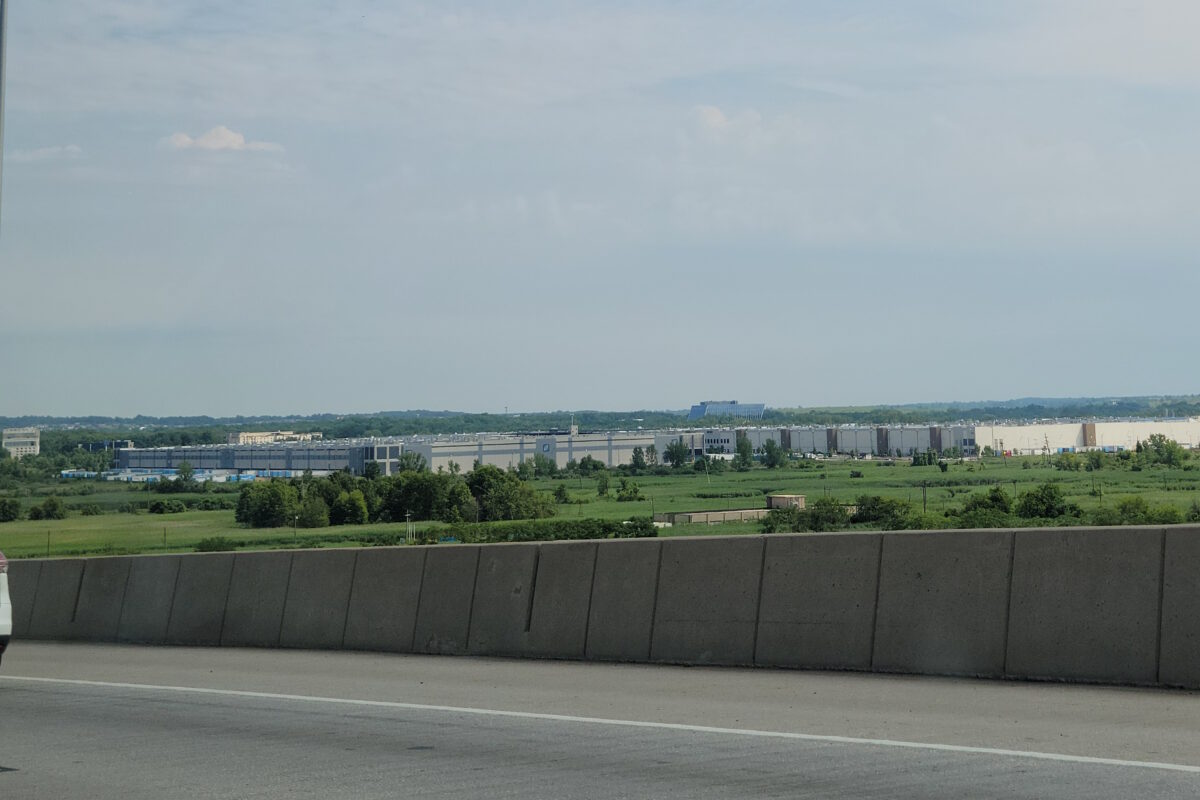
Amazon fulfillment center exterior linked to the FTC Amazon advertiser overcharging case

Amazon JFK8 fulfillment center photo: Tdorante10, CC BY-SA 4.0, via Wikimedia Commons.

How Amazon is responding

Amazon calls the lawsuit “misguided.” The company says it fundamentally misunderstands how its advertising auctions work and presents no evidence that shoppers were harmed. Amazon’s auction system prioritizes ad relevance to a shopper’s search terms before bid size, the company says, a design meant to keep prices lower for advertisers overall. Amazon also cites figures showing its auction changes saved advertisers roughly $8 billion between 2021 and 2025.

Amazon logistics warehouse building tied to the FTC Amazon advertiser overcharging lawsuit

Amazon JFK8 logistics park photo: Tdorante10, CC BY-SA 4.0, via Wikimedia Commons.

Why this case adds to Amazon’s legal exposure

The advertiser lawsuit lands on top of other pending FTC actions against Amazon. One separate case alleges the company enrolled consumers in Prime memberships without clear consent. Antitrust lawyers say a loss in the advertiser case could force changes to how Amazon structures ad pricing across its marketplace. A court order could require more transparency in how the auction sets prices. The case could also lead to civil penalties running into the billions of dollars if the FTC prevails.

How advertisers and sellers are reacting

Trade groups representing small online sellers say the case validates complaints they have raised for years about opaque ad pricing on Amazon’s platform. Some advertising agencies that manage Amazon campaigns for clients say they plan to review historical billing data to estimate their own potential exposure to the alleged surcharges. Amazon has not said whether it will offer any settlement fund to advertisers while the case proceeds through the courts.

State attorneys general have increasingly joined federal cases against large technology companies in recent years. They argue that coordinated action gives regulators more leverage than either level of government pursuing a case alone. The 22 states involved in this lawsuit span both major political parties. Legal observers say that detail signals broad, bipartisan concern about the underlying allegations rather than a partisan enforcement effort. Amazon’s outside counsel has signaled the company will contest both the federal and state claims together rather than seeking to settle with individual states separately.

What happens next in the Amazon case

Amazon is expected to file a motion to dismiss in the coming months. Discovery in a case this size typically stretches well over a year before trial. Advertisers who believe they were affected are watching closely. A favorable ruling for the FTC could open the door to private damages claims layered on top of any government penalty. For related coverage on major tech legal exposure, see our reporting on the Meta multistate settlement and the ongoing wave of tech layoffs.

This is not Amazon’s first brush with federal antitrust scrutiny. The company has faced separate government actions over its marketplace practices and subscription enrollment methods in recent years. Legal analysts say a pattern of parallel cases can add pressure on a company even when no single case is decisive. Courts and regulators sometimes reference findings from one matter when evaluating another. Amazon’s legal team has consistently argued that each case should be judged on its own facts rather than as part of a broader pattern.

Answering the obvious questions

How much did Amazon allegedly overcharge advertisers?
The FTC and state attorneys general allege Amazon extracted more than $20 billion in hidden surcharges from advertisers since 2019.

How many advertisers does the case cover?
The complaint says roughly 1.2 million advertising customers were affected, including more than 500,000 small and medium businesses.

What does Amazon say in response?
Amazon calls the lawsuit misguided and says its auction system saved advertisers billions of dollars rather than costing them money.

Who filed the lawsuit?
The Federal Trade Commission filed the case jointly with 22 state attorneys general in federal court in Seattle.

Could consumers be affected too?
The FTC argues the hidden ad surcharges fed into higher prices for shoppers. Amazon disputes that shoppers were harmed.

How long could the case take?
Cases of this size typically take well over a year to reach trial once motions and discovery are underway.

Consumer advocacy groups have welcomed the lawsuit, saying it validates years of complaints about opaque digital advertising markets generally, not just Amazon’s practices. Some economists who study online marketplaces say hidden auction mechanics are difficult for outside researchers to audit without regulatory subpoena power. That is part of why cases like this one often start with a government investigation rather than a private lawsuit.

Sources:

Two Oil Supertankers Just Got Hit in the Strait of Hormuz — Nobody Has Claimed It

A Strait of Hormuz tanker attack struck two supertankers with unidentified projectiles late Monday. It adds a fresh flashpoint to an already tense standoff between Iran and the United States over shipping rights through the waterway. No group has claimed responsibility, and Tehran has not acknowledged involvement.

The Saudi-operated very large crude carrier Sidr and the Sinokor-operated Senegal Prosperity were both hit by three projectiles each. The strikes hit vessels transiting waters roughly 17 nautical miles east of Khasab, Oman. Shipping insurers say neither vessel suffered casualties, injuries, or environmental damage, though both sustained hull damage.

What happened in the Strait of Hormuz tanker attack

Bloomberg reported that the strikes hit both vessels within a short window as they completed outbound transits of the strait. Arab News confirmed maritime security firms tracked the incident in real time. Analysts flagged it as part of a wider pattern of unclaimed attacks on commercial shipping in the corridor this year.

Oil tanker at sea representing vessels involved in the Strait of Hormuz tanker attack

Oil tanker photo: Jernej Furman, CC BY 2.0, via Wikimedia Commons.

Why responsibility remains unclear

Neither Iran nor any allied or proxy group has claimed the strikes. That fits a pattern seen throughout the current standoff. Attacks on commercial vessels tend to go unclaimed even as both sides accuse each other of destabilizing the waterway. The incident comes days after direct exchanges between Iranian and U.S. forces reopened. That followed a period when the conflict had shifted toward economic pressure rather than open strikes.

Iranian officials spoke at the Shanghai Cooperation Organisation summit in Kyrgyzstan. They said Tehran would reciprocate if Washington returns to the terms of a memorandum of understanding reached earlier this year. That would include guarantees of free navigation through Hormuz. The offer has not visibly slowed the pace of unclaimed incidents at sea.

How the shipping industry is reacting

Maritime insurers have already raised war-risk premiums for vessels transiting the strait. Several shipping lines are reviewing routing options, though no viable alternative avoids Hormuz entirely for Gulf crude exports. Brent crude rose roughly 2% in the immediate aftermath of the attack, touching its highest level in about a week. Traders priced in the risk of further disruption to a corridor that carries a large share of the world’s seaborne oil.

What the region’s governments are saying

Gulf state officials have called for restraint from all sides while stopping short of assigning blame for Monday’s strikes. Oman, whose coastal waters saw the attack, has increased naval patrols in the area. Qatar and the United Arab Emirates have both reiterated that freedom of navigation through Hormuz remains a shared regional priority regardless of who is behind individual incidents.

The Strait of Hormuz carries roughly a fifth of the world’s oil supply on any given day. That is why even a single unclaimed incident draws outsized attention from energy markets. Countries that rely heavily on Gulf oil imports, including several major Asian economies, have urged all parties to avoid further escalation. Diplomats from Gulf Cooperation Council states have offered to mediate between Washington and Tehran, though neither side has formally accepted an outside broker for the current standoff.

What happens if the attacks keep coming

Shipping security firms expect naval escorts and convoy-style transits through the strait to increase in the coming days. That mirrors responses to earlier waves of unclaimed attacks. A sustained pattern of strikes could push more insurers to raise premiums further or restrict coverage for certain routes. Those costs eventually show up in fuel and shipping prices well beyond the Gulf. For related coverage on the broader standoff, see our reporting on the direct Iran-US military exchanges and the Middle East travel advisory currently in effect.

This is not the first unclaimed strike on shipping in the strait this year. Maritime trackers say the pattern has grown more frequent since direct exchanges between Iranian and U.S. forces resumed. Vessel operators increasingly route additional security personnel aboard ships transiting the corridor. Some have begun sailing in tighter groups to reduce individual exposure. The lack of a clear culprit makes it harder for any single government to respond directly. Analysts say that ambiguity may be part of the appeal for whoever is behind the attacks.

Frequently asked: the Hormuz incident

Which ships were hit in the Strait of Hormuz tanker attack?
The Sidr, operated by Saudi Arabia’s Bahri, and the Senegal Prosperity, operated by South Korea’s Sinokor Group, were both struck by three projectiles each.

Were there any casualties?
No casualties, crew injuries, or environmental damage have been reported by either operator.

Who is responsible for the attack?
No group has claimed responsibility. Iran has not acknowledged involvement, consistent with the unclaimed pattern of recent incidents in the strait.

How has the oil market reacted?
Brent crude rose about 2% following the strikes, touching its highest level in roughly a week.

Is shipping through Hormuz still possible?
Yes. Vessels continue to transit the strait, though insurers have raised war-risk premiums and some operators are reviewing security measures.

Could this escalate further?
Officials on both sides have floated conditions for de-escalation. The pattern of unclaimed strikes has continued despite those diplomatic signals.

Naval analysts say identifying the source of these projectiles is technically difficult even with satellite tracking. Small fast boats or shore-based launchers can strike and withdraw within minutes. That technical difficulty is one reason attribution has lagged behind nearly every recent incident in the strait. Regional airlines have also adjusted some flight paths near the Gulf coast as a precaution, though commercial air traffic through the wider region continues largely as normal.

Sources: