• Mon - Fri 9.00 - 19.00

Tag Archives: earnings

How a Salesforce Anthropic Stake Gain Drove Its Best Day in Years

A Salesforce Anthropic stake gain of $2.6 billion helped push Salesforce stock up roughly 22% in a single trading session. That marks the software company’s second-best day ever, behind only August 2020. Salesforce reported second-quarter adjusted earnings of $5.90 per share against a $3.27 estimate. Revenue of $11.35 billion narrowly topped forecasts of $11.32 billion. Net income jumped 87% year over year to $3.53 billion.

Why the Salesforce Anthropic stake gain moved the stock so much

Roughly $2.53 of Salesforce’s $5.90 per-share profit came directly from investment gains, not core software sales, according to The Motley Fool. The single biggest driver was Salesforce’s stake in Anthropic, the AI company behind the Claude models. Salesforce’s strategic investment portfolio now values that stake at about $5.1 billion. Anthropic represented roughly 22% of the portfolio at the end of January. It had grown to about 45% by the end of July. Anthropic’s own funding round in May valued the AI company at $965 billion, which explains most of that jump.

Salesforce Anthropic stake gain

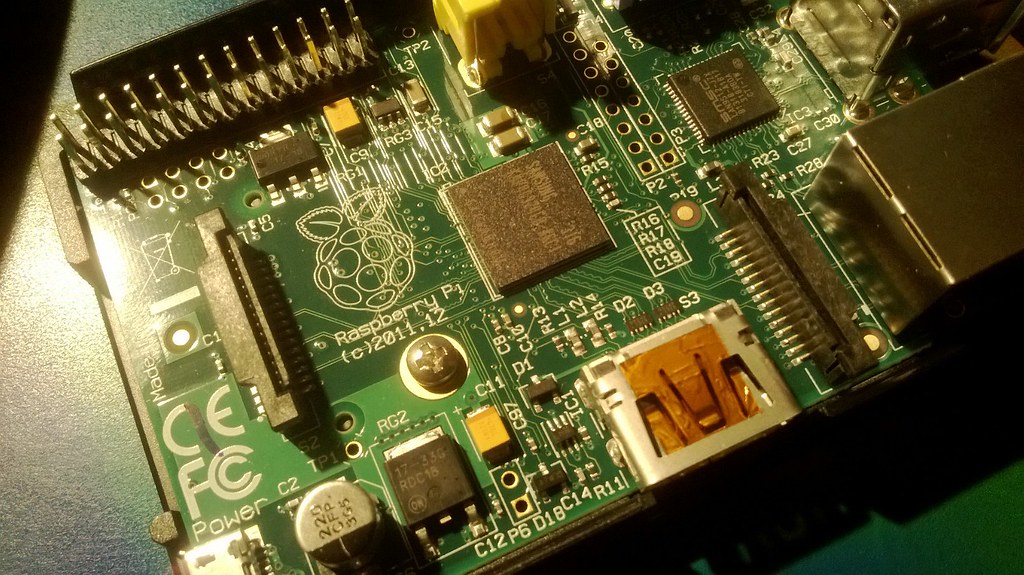
Image credit: BalticServers.com / Wikimedia Commons (CC BY-SA 3.0)

The Claudeforce partnership behind the numbers

Salesforce and Anthropic also announced Claudeforce alongside the earnings release. The plugin embeds Salesforce customer data, workflows, and business logic directly into Claude for sales teams. The product ties Salesforce’s core customer-relationship-management business to Anthropic’s AI models, going beyond the investment stake alone. That gives Salesforce a commercial reason to keep deepening the partnership, rather than simply holding the position for its paper value.

What this means for Salesforce chief executive Marc Benioff

The earnings beat and stock jump mark a turnaround moment for Benioff. He had faced skeptics questioning whether Salesforce’s AI strategy could translate into revenue, not just investment gains. CNBC’s coverage described Benioff as “getting his mojo back” as Salesforce lifted its AI-driven growth outlook alongside the results. Investors had grown impatient with software companies that talked about AI without showing it in product revenue. Here, the AI story showed up in investment returns tied to genuine AI-sector growth instead.

How rivals are reacting to the Salesforce Anthropic stake gain

Competing enterprise software vendors have spent much of the past year building their own AI partnerships. Few can point to an investment stake that has appreciated as sharply as Salesforce’s Anthropic position. Rivals with in-house AI models, rather than external stakes, do not get the same investment-gain boost on their income statements. That holds true even when their AI products perform well commercially. The distinction matters to investors trying to separate genuine AI product revenue from balance-sheet gains tied to a single portfolio holding. Several analysts flagged the mix on Salesforce’s earnings call. They see it as a reason to watch subscription growth closely next quarter, rather than count on investment gains repeating.

The tech sector’s broader earnings season has been uneven. Some companies have reported layoffs alongside AI investment, even as others post gains tied to AI partnerships. That contrast has made Salesforce’s results a reference point for whether AI spending is starting to show up as revenue across the wider software industry, rather than remaining a cost center.

What the earnings beat means for enterprise software pricing

Salesforce has been raising prices on parts of its core platform. It is bundling in AI features as it does so, a strategy several rivals are watching closely. Claudeforce could drive measurable productivity gains for sales teams. If it does, other software vendors may feel pressure to strike similar external AI partnerships rather than build everything in-house. That would mark a shift from the past two years. Most large software companies insisted on owning their AI stack end to end during that stretch. Analysts pressed Salesforce executives on pricing specifically during the earnings call. They asked whether Claudeforce would be bundled into existing subscriptions or sold as a premium add-on.

Salesforce has not yet detailed final pricing for the new integration. Executives said only that broader availability would follow a limited rollout to existing enterprise customers in the coming months.

What happens next

Salesforce’s next test will be whether Claudeforce adoption translates into subscription revenue, rather than remaining a headline-grabbing integration. Investors will also watch whether Anthropic’s valuation, and by extension Salesforce’s stake, holds up if the broader AI funding environment cools. For now, the earnings beat has bought Salesforce’s leadership team more room to keep investing in the partnership. It also buys them room to avoid answering questions about the AI strategy falling behind competitors.

Frequently Asked Questions

How much did Salesforce gain from its Anthropic stake?

Salesforce reported a $2.6 billion gain on strategic investments in its second quarter, with Anthropic as the largest single contributor to that portfolio value.

What was Salesforce's overall Q2 earnings performance?

Salesforce posted adjusted earnings of $5.90 per share against a $3.27 estimate, with revenue of $11.35 billion and net income up 87% year over year to $3.53 billion.

What is Claudeforce?

Claudeforce is a plugin announced alongside the earnings that embeds Salesforce customer data, workflows, and business logic into Anthropic’s Claude for sales teams.

How much of Salesforce's investment portfolio is Anthropic now?

Anthropic grew from about 22% of Salesforce’s strategic investment portfolio in January to about 45% by the end of July, following Anthropic’s own funding round in May.

Related Coverage

Sources

WPP Just Had Its Best Trading Day Since 1992 — Here’s What Changed

WPP shares had their best day in more than three decades after the advertising giant’s first-half results beat forecasts that had been set unusually low. The WPP shares turnaround surge saw the stock climb as much as 30% intraday. Relief drove the jump. A multi-year restructuring plan is starting to show up in the numbers, even though the underlying business is still shrinking.

Investors had priced in a grim first half. WPP delivered a smaller decline than feared. That gap between expectation and result is what set off the rally.

WPP shares turnaround surge

What triggered the WPP shares turnaround surge

WPP reported headline operating profit of £398 million for the first half of 2026. That beat the £347.2 million analysts had forecast, by more than 13%. Like-for-like revenue fell 4.7%. That was better than the roughly 6.5% drop the market expected. Reports called it WPP’s biggest daily share gain since 1992. Some coverage framed it as the largest since the company’s 1995 listing. Both descriptions point to the same thing. Expectations had sunk very low before results landed.

The second-quarter trend mattered as much as the headline numbers. Revenue decline eased to 2.8% in the second quarter. That was down sharply from a 6.7% drop in the first quarter. It gave investors a concrete signal. The rate of deterioration is slowing, not accelerating.

The turnaround plan behind the numbers

WPP’s management spent much of 2026 executing a cost-cutting and simplification plan. The goal is to streamline an agency network built through decades of acquisitions. Executives pointed to one early sign the plan is working: improving performance in the company’s media-buying operations. The company also backed its full-year 2026 guidance instead of cutting it. That is a signal to investors. Management sees the improvement as durable, not a one-quarter blip.

None of this means WPP has returned to growth. Revenue is still falling year over year. What changed is the trajectory. A shrinking business that shrinks more slowly tells a meaningfully different story than one still in free fall.

WPP is not alone in restructuring an agency network for a changed advertising market. Marketers have shifted spending toward performance channels and in-house teams over the past several years, squeezing the traditional holding-company model that WPP, along with its peers, built over decades of mergers and acquisitions. How much of WPP’s improvement comes from cutting costs versus genuinely winning back client budgets remains an open question for the second half of the year.

What it means for the wider advertising industry

WPP’s smaller-than-feared decline offers a data point for a sector under real pressure in 2026. Marketing budgets have tightened. Large language models keep disrupting traditional agency work. Rival holding companies have not yet reported comparable turnarounds. So it stays unclear whether WPP’s improvement reflects company-specific restructuring gains, or a broader stabilization in global ad spending that competitors will also report.

What comes next for WPP

The next real test arrives with WPP’s full-year 2026 results. The market will look for one thing above all. Does the second-quarter deceleration in revenue decline continue into the back half of the year? Analysts will also watch the bonus pool increases reported alongside the results. That is a sign management feels confident enough to reward staff. That confidence could translate into further moves, including portfolio simplification or additional cost actions before the fiscal year closes.

Investors will also be watching client wins and losses in the second half. Retaining major accounts while cutting costs is a harder balancing act than cost-cutting alone, since aggressive internal restructuring can sometimes drive away the very clients a turnaround plan needs to keep. Analysts covering the stock will be looking for client-retention commentary alongside the raw revenue figures when WPP next reports.

Frequently asked questions

Why did WPP shares surge in August 2026?

WPP’s stock jumped as much as 30% after first-half 2026 results beat depressed forecasts on revenue, profit and margin. Headline operating profit of £398 million topped consensus by more than 13%.

How much did WPP’s revenue actually decline?

Like-for-like revenue fell 4.7% in the first half, better than the roughly 6.5% drop analysts expected. The pace of decline eased to 2.8% in the second quarter, down from 6.7% in the first.

Is this the biggest single-day gain in WPP’s history?

Reports describe it as WPP’s biggest daily share gain since 1992. Some coverage called it the largest since its 1995 stock market listing.

What is driving the WPP shares turnaround surge?

Management credits an ongoing cost-cutting and restructuring plan. Media buying performance is improving, and the company backed its full-year 2026 guidance despite a tough advertising market.

Does this mean WPP’s business has fully recovered?

No. Revenue is still declining year over year. The surge reflects results beating a very low bar, not a return to growth.

How does WPP’s result compare to the wider advertising industry?

WPP’s smaller-than-expected decline suggests some stabilization in global ad spending after a difficult stretch. Rivals have not yet reported comparable turnarounds.

Related coverage on Tamara News

Sources

Nvidia Reports Earnings Today — Here’s the Number That Could Move the Whole Market

Nvidia reports fiscal 2027 second-quarter results after markets close today. Investors call it the most closely watched Nvidia earnings report today of the year. Wall Street expects revenue near $92.2 billion, up roughly 97% from a year earlier. Analysts forecast earnings of about $2.09 a share — nearly double what Nvidia posted in the same quarter last year. Nvidia’s own guidance, issued in May, pointed to revenue of $91 billion, plus or minus 2%. Nvidia’s chips sit at the center of the AI buildout. That’s why investors read today’s numbers as a referendum on the entire AI trade, not just one company’s quarter.

Why Nvidia earnings report today matters beyond Nvidia

Nvidia’s results ripple through chipmakers, cloud providers and other AI-linked stocks. So much of the current data-center spending boom runs through Nvidia’s GPUs. A beat or a miss today tends to move sentiment across the whole sector, not just Nvidia’s own share price.

Semiconductor chip factory floor, ahead of the Nvidia earnings report today

What analysts are forecasting

Consensus estimates point to roughly $92.2 billion in revenue, up about 97.4% year over year. Analysts expect earnings near $2.09 per share — almost double the figure Nvidia reported in the same quarter a year ago. Nvidia’s own May guidance called for revenue of $91 billion, plus or minus 2%. That means Wall Street currently expects Nvidia to land at or slightly above its own target range.

The data center number to watch

Most of Nvidia’s growth should come from its data center business. GPU demand for AI workloads has stayed strong there. Investors and analysts will watch that segment specifically today. It’s the clearest signal of whether AI infrastructure spending is still accelerating or starting to plateau. A slowdown in that single segment would carry more weight with investors than almost any other line in Nvidia’s earnings report, given how much of the company’s total revenue now flows through data center GPU sales.

How the AI capex boom shapes today’s expectations

Nvidia’s results arrive as chipmakers across the industry lean on debt markets to fund AI infrastructure buildouts. That trend has drawn growing scrutiny from analysts, who question how sustainable current spending levels really are. This backdrop explains why today’s report carries weight well beyond Nvidia’s own balance sheet. If data-center demand shows any sign of cooling, the effect would ripple through the financing assumptions behind much of the sector’s current expansion plans.

How the stock has moved around past reports

Nvidia shares have a history of sharp moves in either direction right after quarterly results. That pattern has held across multiple reports this year. It’s one reason today’s release draws attention well beyond Nvidia’s own shareholder base.

What happens after the numbers land

Nvidia expects to post results around 4:20 to 4:30 p.m. Eastern time. The report also lands one day before the Jackson Hole Economic Policy Symposium, running August 27–29. Federal Reserve officials will face close scrutiny there for hints on the September rate decision. That gives markets two connected catalysts inside the same week. Investors will parse both Nvidia’s guidance for the current quarter and any commentary on AI capital-spending trends heading into fall.

What a beat or a miss would mean for the broader market

A strong report today would likely reassure investors that AI-related capital spending still has room to run into next year. A miss, or cautious guidance for the coming quarter, could reignite debate over whether the AI buildout has outpaced actual demand. Either outcome will shape trading well beyond Nvidia’s own stock price, since many other chip and cloud companies now get measured against Nvidia’s numbers as an implicit benchmark. That is part of why traders describe today’s report as one of the most consequential single events on this quarter’s earnings calendar.

Nvidia earnings: your questions answered

When does Nvidia report earnings today?

After the market closes on Wednesday, August 26, 2026. Results typically post around 4:20 to 4:30 p.m. Eastern time.

What revenue is Wall Street expecting?

Consensus estimates point to roughly $92.2 billion, up about 97% from the same quarter a year earlier.

Why does Nvidia’s report move other stocks?

Nvidia’s GPUs underpin much of the current AI data-center buildout. That makes its results a widely watched signal for the broader AI capital-spending trend.

What guidance did Nvidia previously give for this quarter?

In its first-quarter fiscal 2027 report, Nvidia guided to revenue of $91 billion for the quarter, plus or minus 2%.

Does this report affect the Federal Reserve’s decisions?

Not directly. But it lands just before the Jackson Hole symposium, where investors will parse Fed commentary ahead of the September rate meeting.

Should investors expect the stock to move sharply?

Nvidia shares have moved significantly after several recent quarterly reports — a pattern many investors are watching for again today.

What to watch beyond the headline numbers

Beyond revenue and earnings per share, investors will scan Nvidia’s commentary for supply constraints, export-rule impacts, and demand signals from major cloud customers. Executives often use the earnings call to address questions that raw numbers can’t answer, including how export controls on chips bound for China are shaping near-term sales. Any comment on that front today would connect directly to the export-policy questions already facing the wider chip sector.

Related coverage on Tamara News