
• Mon - Fri 9.00 - 19.00

Tag Archives: Gaza

Gaza Just Got a $2.45 Billion Rebuild Plan — and No Start Date

The US-backed Board of Peace has put a price on the first step of rebuilding Gaza. On Wednesday,
23 September 2026, its governors unveiled a six-month, $2.45 billion Gaza reconstruction plan
covering 66 projects. The blueprint arrived at a meeting in New York on the sidelines of the UN General
Assembly. It came with no start date. Almost everything in it depends on steps that have not happened yet.

What the Gaza reconstruction plan contains

The first phase targets the most urgent gaps. Its 66 projects span infrastructure, education and health,
according to the Associated Press.
They are designed to support President Donald Trump’s 20-point plan to end the Israel-Hamas war.

The board framed the first phase as a down payment, not the whole bill. "The need is immense,"
it said. It estimates that repairing Gaza’s physical damage will cost about $35.2 billion over the medium
term. It adds another $71.4 billion over the next ten years.

Those figures come from the board itself. No independent audit of Gaza’s damage accompanied them.
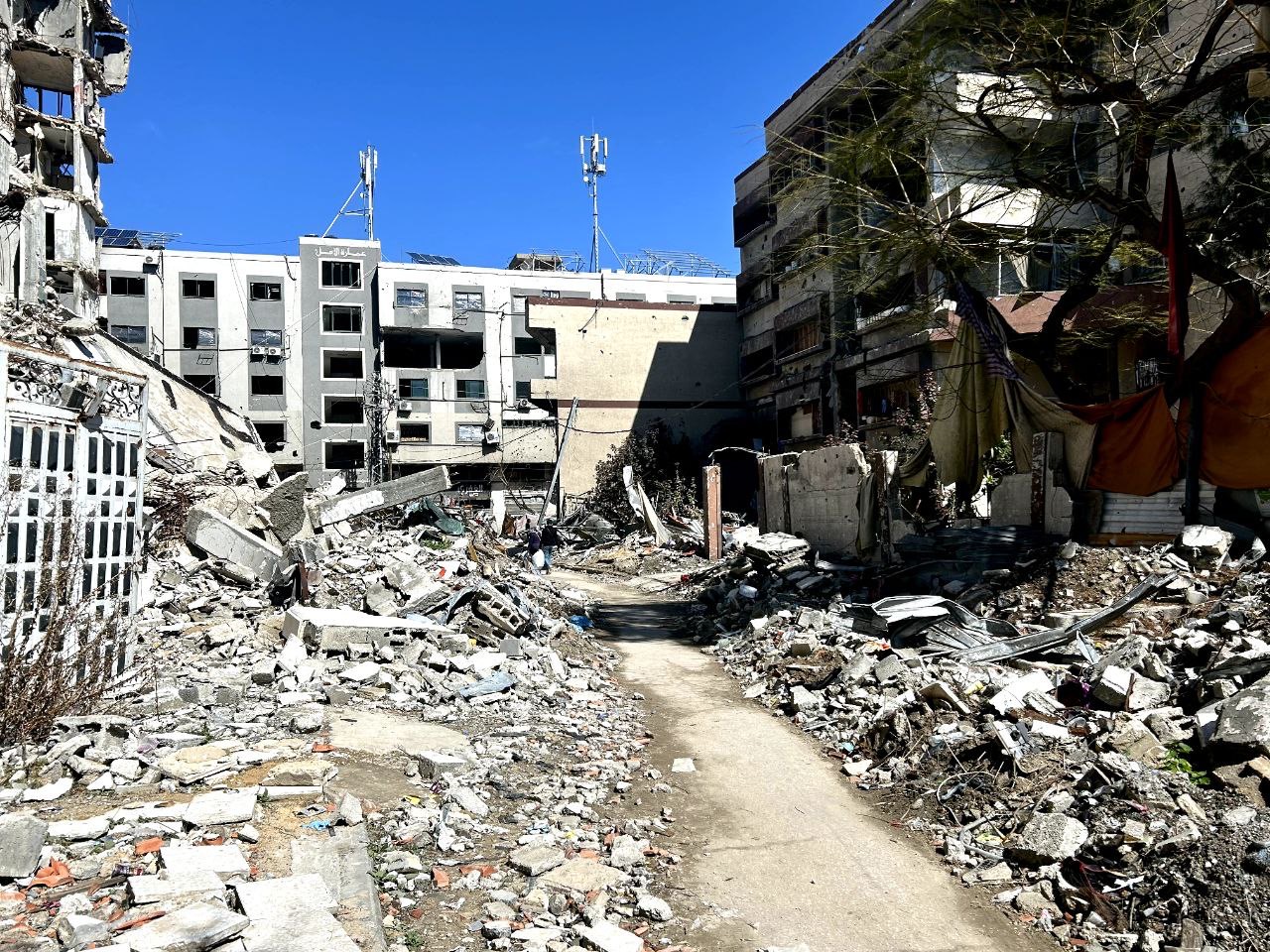
Collapsed buildings on Wehda Street, one of the sites the Gaza reconstruction plan must eventually address
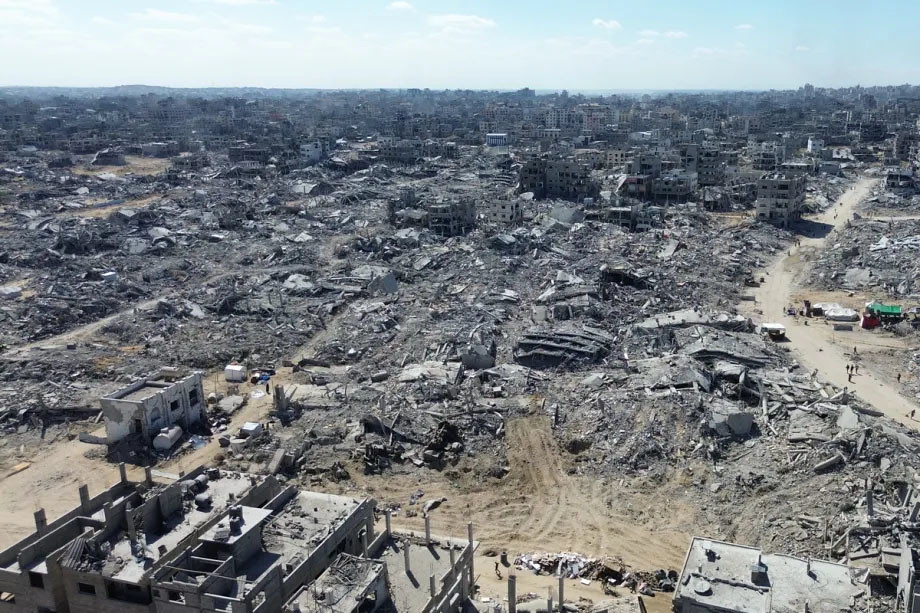
Whole streets in Gaza City remain rubble almost a year after the ceasefire began.

Why no start date came with the money

The plan hinges on disarmament. Nikolay Mladenov, the board’s high representative, has said progress
depends largely on Hamas giving up its weapons. The group has so far refused.

In July, Hamas and other Palestinian factions agreed a document setting out a disarmament process,
Al Jazeera reported.
Implementation has not followed. Mladenov was blunt about timing. "We are not bound by a calendar,"
he said. "We want to make sure that this works."

Mladenov has also pressed Israel to scale back its military operation. That pressure matters, because the
ceasefire framework rests on both sides moving at once.

How far Gaza is from reconstruction today

The ceasefire took effect on 10 October. It was meant to open the way for Israeli withdrawals, an
international peacekeeping force and a new apolitical Palestinian administration. Most of that is still
waiting.

  • The Israeli military has expanded its control and now occupies about 60% of the territory, the AP reports.
  • The international force and the new government have not entered Gaza.
  • Reconstruction has not begun.
  • Most Palestinians still live in tent camps or in the ruins of former homes.

Violence continues too. On the day the plan was unveiled, Israeli strikes killed seven Palestinians
across the enclave, according to Al Jazeera, citing local medics. Israel said one strike killed a senior
Hamas finance official. That claim comes from the Israeli prime minister’s office alone.

The scale of what the money must cover is hard to overstate. The board itself calls the need immense.
Its own estimate runs to $35.2 billion for medium-term repairs and $71.4 billion over a decade. Against
those figures, the $2.45 billion first phase is a start, not a solution. And even the first phase waits
on a political breakthrough that has not come.

The diplomatic pressure around the Gaza reconstruction plan

The plan landed in a week of sharp criticism of Israel at the General Assembly. Leaders of the United
Kingdom, France and Canada said Israeli settlement policy in the West Bank blocks a two-state solution.
UN Secretary-General António Guterres said the UN must be allowed to perform its mandates in Gaza. Our
report on Guterres’s warnings at this year’s Assembly
covers that speech in more detail.

Turkish President Recep Tayyip Erdogan, whose country signed the ceasefire, said rebuilding must start
"as soon as possible". Earlier doubts about the whole framework are set out in our analysis of
criticism of the Gaza ceasefire plan.

Three tests before any rebuilding starts

The board now has to answer harder questions than cost. Watch for three signals.

  1. A disarmament timetable. Without one, donors have little reason to release funds.
  2. Deployment of the stabilisation force. Uganda has approved sending troops. No force has yet crossed into Gaza.
  3. Building materials at the crossings. Cement, steel and machinery must enter at scale before any of the 66 projects can begin.

Regional security adds another layer of risk. Recent missile fire toward Saudi Arabia, covered in our report on the
Riyadh missile attack, shows how quickly
the wider Middle East picture can shift. For now, the $2.45 billion sits on paper.

Questions readers are asking

How much does the Gaza reconstruction plan cost?

The first phase costs about $2.45 billion and runs for six months. It covers 66 projects in infrastructure, education and health. The Board of Peace puts full physical reconstruction far higher: roughly $35.2 billion over the medium term and another $71.4 billion over ten years.

When will reconstruction start?

No start date has been set. The board’s high representative, Nikolay Mladenov, said the plan depends on Hamas disarming, and that the board is not bound by a calendar.

Who runs the Board of Peace?

The Board of Peace is the US-backed body created under President Donald Trump’s 20-point plan to end the Israel-Hamas war. Nikolay Mladenov serves as its high representative.

Has the ceasefire held?

The ceasefire that took effect on 10 October halted the heaviest fighting. Violence has not stopped. Al Jazeera reported that Israeli attacks killed seven Palestinians on the day the plan was unveiled.

Who controls Gaza on the ground?

According to the Associated Press, the Israeli military now occupies about 60% of the territory. The planned international force and the new Palestinian technocratic government have not entered Gaza.

What would unlock the money?

Three things sit on the critical path: Hamas disarmament, deployment of the international stabilisation force, and steady entry of building materials. None is in place yet.

Sources

  • Associated Press via PBS News — Trump’s Board of Peace proposes $2.45 billion blueprint to begin Gaza reconstruction. pbs.org
  • Al Jazeera — Board of Peace plans $2.4bn Gaza reconstruction as Israel kills seven. aljazeera.com

Images: featured photo by Felton Davis (public domain); in-article photo by Hla.bashbash, licensed CC BY.
NAZA Documentary Venice Prize Sparks Israeli Citizenship Row

Israel’s culture minister, Miki Zohar, said he would move to revoke the citizenship of filmmakers Yuval Abraham and Rachel Szor after their Gaza documentary took a Special Jury Prize at the Venice Film Festival. The NAZA documentary Venice prize was announced at the festival’s closing ceremony; within days the minister had called the film vile, described the award as shocking, and said the pair’s actions amounted to treason against the state.

The statement and who made it

Zohar holds the culture and sport portfolio in the Israeli government and has previously intervened in funding and platform decisions involving Israeli film. His statement, carried by Israeli and international outlets on 13 and 14 September, named both directors and framed the award as a reward for betraying the country.

Abraham is not an unknown quantity in Israeli public debate. He co-directed No Other Land, which won the Academy Award for best documentary feature, and he has been a persistent critic of Israeli policy in the occupied territories. Szor was a cinematographer on that film. The Times of Israel logged the minister’s call in its liveblog; Deadline reported the same demand from the trade side.

What the film claims

NAZA runs 80 minutes. According to the festival’s official synopsis, it examines Israel’s use of AI-assisted targeting systems during the Gaza war, including a system referred to as Lavender, and argues that those systems produced mass civilian casualties. The film received a lengthy standing ovation at its premiere, reported at around 25 minutes.

Those are the filmmakers’ and the festival’s characterisations, and they should be read as such. Israel has consistently rejected the claim that it deliberately targets civilians in Gaza and has said its targeting process includes human review. The existence of AI-assisted target generation in the Gaza campaign has been reported by Israeli and international outlets since 2024; the disputed question is what weight those systems carried in decisions and what review they received. A documentary prize does not settle that dispute, and this report does not attempt to.

Speaking to Haaretz, the directors said they intend to distribute the film inside Israel — which would move the argument from a festival in Venice to Israeli cinemas and regulators.

Whether the threat can be carried out

Probably not by the person making it. Israeli citizenship law does not give the culture ministry any role in revocation. The power sits with the interior minister, on limited statutory grounds including breach of loyalty to the state, and its use requires a court. Israeli courts have treated the provision as exceptional and have been reluctant to leave people stateless, which international law disfavours.

So the realistic reading is that the statement is political rather than procedural: a signal to a domestic audience, and pressure on distributors, broadcasters and funding bodies that do answer to the culture ministry. That second effect is the one worth watching, because it does not need a court.

A pattern, not a one-off

Ministerial responses to Israeli films that criticise the conduct of the war have become routine since No Other Land‘s Oscar, ranging from funding threats to calls for boycotts of ceremonies. Meanwhile the diplomatic environment around Israel has tightened: several Western governments have moved on trade measures tied to settlements, and the Gaza war continues to shape votes at the United Nations.

What makes this case sharper is the target. Stripping citizenship is not a funding decision or a rhetorical boycott; it is a proposal to remove a person’s legal membership of the state because of the content of a film. Even as an unenforceable demand, it sets a marker that press-freedom groups are likely to contest.

What follows: watch for whether the interior ministry says anything at all, whether Israeli distributors take the film, and whether the attorney general’s office comments on the legality of the demand. Any of those three would turn a statement into a process.

Reader questions

What is NAZA?

An 80-minute documentary about the Gaza war by Israeli filmmakers Yuval Abraham and Rachel Szor, which won a Special Jury Prize at the 2026 Venice Film Festival.

What did Israel’s culture minister say?

Miki Zohar said he would act to revoke the two directors’ Israeli citizenship, called the film vile and the award shocking, and said their conduct constituted treason.

Can a culture minister revoke citizenship in Israel?

No. Revocation runs through the interior minister on narrow statutory grounds and requires a court. The culture ministry has no role in the process.

What does the film allege?

According to the festival synopsis, it examines Israel’s use of AI-assisted targeting systems in Gaza, including one referred to as Lavender, and argues they produced mass civilian casualties. Israel rejects the claim that it deliberately targets civilians.

Have these filmmakers won awards before?

Yuval Abraham co-directed No Other Land, which won the Academy Award for best documentary feature; Rachel Szor worked on that film as a cinematographer.

Will the film be shown in Israel?

The directors have said they intend to distribute it there. Whether Israeli distributors and cinemas take it is unresolved.

Keep reading on Tamara News

The Man Running Trump’s Gaza Plan Just Turned on Israel

The Gaza ceasefire plan criticism from the official running its implementation is rare. Nikolay Mladenov briefed the UN Security Council on Wednesday. He said Israel’s continued strikes are undercutting a fragile process. He also warned that failure leaves only one alternative: another war. Mladenov is the Board of Peace’s high representative. He insisted the broader plan has not stalled.

His comments land at a delicate moment. Hamas has agreed to the plan’s central demand. That means disarmament and a handover of civilian governance. But Israeli military action has continued. It is straining a ceasefire meant to hold since last October.

Gaza ceasefire plan criticism

Mladenov’s Gaza ceasefire plan criticism, explained

Mladenov briefed the council in person. He said Trump’s 20-point plan has “moved from the negotiating table to the engineering table.” That means the framework is now in the harder phase of actual implementation. He also directly criticized Israel’s ongoing strikes. He argued they clash with a process meant to be winding down.

The criticism is notable for one reason. Mladenov’s job is to implement the US-backed framework, not referee Israeli-Palestinian tensions on his own. His willingness to publicly fault Israel says something. It shows how much strain the ceasefire is under, even months after it took hold.

Hamas disarmament and the plan’s core bargain

The plan’s trade is simple on paper. Hamas gives up its weapons. It hands administrative control of Gaza to a transitional, internationally backed authority. In exchange, Israeli military operations end and reconstruction can begin. Hamas has agreed to that bargain, per Mladenov’s briefing. That is a major concession from a group that ran Gaza for nearly two decades.

What remains unresolved is the pace of disarmament. Verification is also unresolved. So is whether Israel will scale back operations to match. Strikes have continued since October, at reduced intensity, but they are still killing Palestinians. That gap is exactly what Mladenov flagged to the council.

Verification is the hardest part of any disarmament deal. Outside monitors need a way to confirm weapons are actually surrendered, not just hidden or redistributed within Gaza. Past ceasefire and disarmament efforts in other conflicts have stalled at exactly this stage, when the political agreement is signed but the technical process of verifying compliance drags on for months. The Board of Peace has not yet detailed how it plans to verify Hamas’s disarmament on the ground.

Why Gazans still don’t feel the war has ended

For residents of Gaza, periodic strikes do not read as peace. Reporting from the territory describes a population still living with intermittent violence. Diplomats describe the framework as on track. That gap between narrative and lived experience is one of the plan’s biggest weaknesses. If Gazans conclude the ceasefire is nominal, pressure on Hamas to fully disarm weakens. The whole timeline then slips.

What happens if the plan stalls from here

Mladenov’s warning was blunt about the stakes. The alternative to the US plan succeeding is not the status quo. It is another war. That framing is meant to pressure everyone involved. Israel, Hamas, and the plan’s regional backers all face the same message: keep implementation moving, or risk losing it.

The plan’s next visible milestone should be a Security Council resolution. It would formalize the transitional governance structure and an international stabilization force for Gaza. No confirmed date has been set yet. Diplomats will watch two things in the coming weeks: whether Israeli strikes keep declining, and whether Hamas starts visible, verifiable disarmament steps.

Regional backers of the plan, including several Gulf states, have publicly welcomed the framework but have offered few specifics about their own role in funding reconstruction or contributing to a stabilization force. Their level of commitment will likely shape how quickly the plan can move from paper to practice on the ground in Gaza.

Frequently asked questions

Who criticized Israel over the Gaza ceasefire plan?

Nikolay Mladenov, the Board of Peace high representative overseeing implementation of the US-backed plan, told the UN Security Council that Israeli strikes since October’s ceasefire were undermining the process.

Has Hamas agreed to disarm under the plan?

Yes. Hamas has agreed to the plan’s key provision to disarm and hand civilian governance of Gaza to a transitional authority, according to Mladenov’s briefing.

Is the ceasefire still holding?

A ceasefire has been in effect since October, but Israeli strikes have continued at a reduced pace, and Gazans quoted in reporting say they do not feel the conflict has actually ended.

What happens if the Gaza ceasefire plan collapses?

Mladenov warned the Security Council that the alternative to the US plan succeeding is another war, framing the current diplomatic track as the only realistic route to a lasting peace.

What is the Board of Peace?

It is the oversight body created to implement President Trump’s 20-point Gaza plan, tasked with coordinating the shift from a negotiated framework to on-the-ground implementation, or what Mladenov called moving ‘from the negotiating table to the engineering table.’

Does the plan include a path to a Palestinian state?

The plan references a ‘credible pathway to a political horizon’ and a two-state solution, though officials have not published a detailed timeline for that phase.

Related coverage on Tamara News

Sources