Tag Archives: interest rates

Everyone Around Switzerland Is Raising Rates. It Just Sat Still

The Swiss National Bank left its policy rate at 0% on Thursday, 24 September 2026. The Swiss National
Bank decision
stands out because its neighbours went the other way. In its own statement, the SNB noted
that key rates were raised both in the euro area and in the US. Switzerland can afford to wait, for now,
because its inflation remains low.

What the Swiss National Bank decision kept in place

The policy rate stays at 0%. Banks’ sight deposits at the SNB earn that rate up to a threshold. Above
it, the discount remains 0.25 percentage points. The bank also repeated that it is willing to act in the
foreign exchange market as necessary. Those details come from the
SNB’s monetary policy assessment.

The SNB called its stance "appropriate" to keep inflation within the range it defines as price
stability. That range is 0% to 2%.
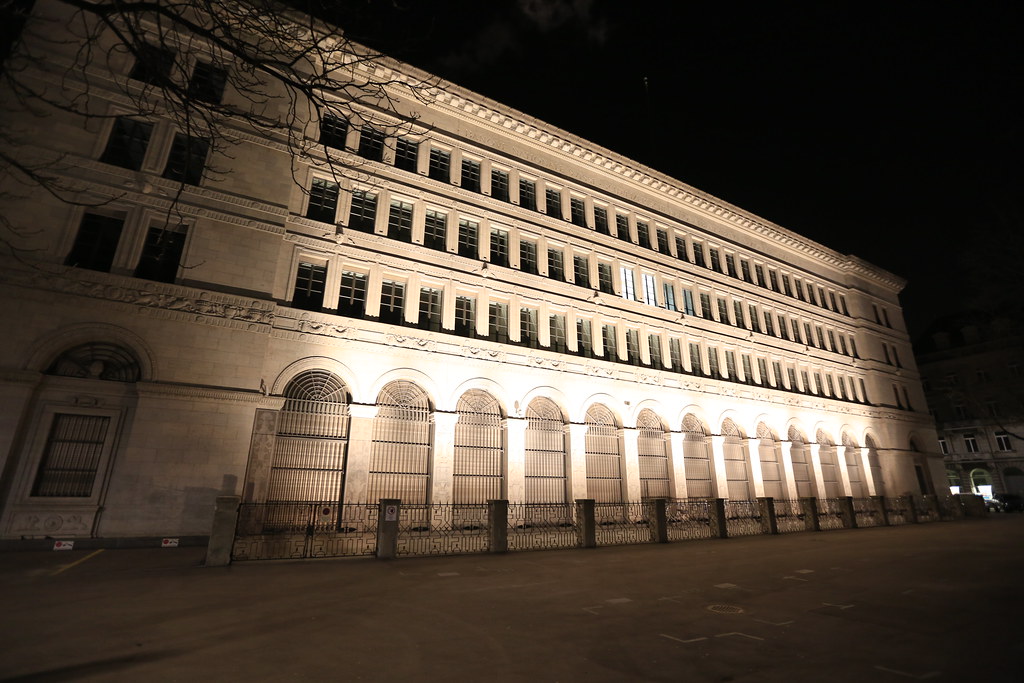
Swiss National Bank office in Zurich, one of the two seats behind the Swiss National Bank decision
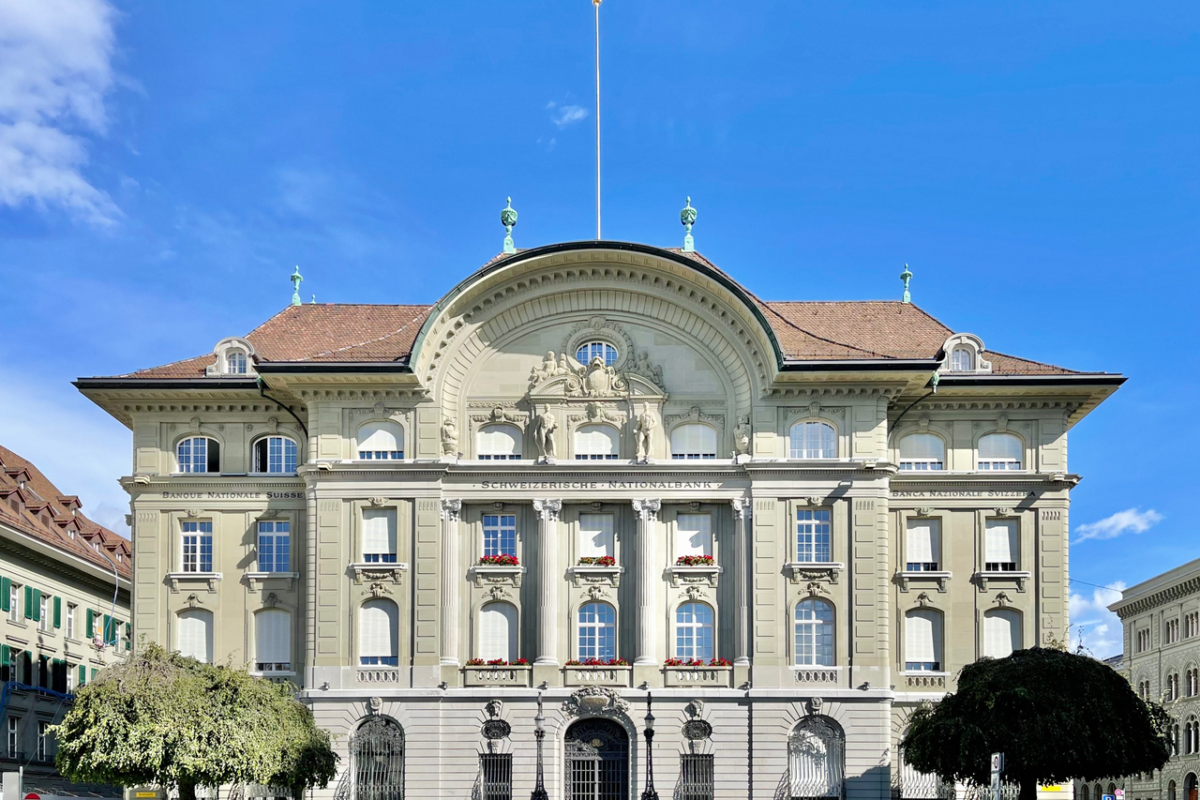
The SNB runs head offices in Bern and Zurich.

The inflation picture behind the hold

Prices are rising, just slowly. Swiss inflation climbed from 0.6% in May to 0.8% in August. Goods
inflation turned positive in August for the first time since May 2024. Higher prices for oil products
drove most of that move.

The SNB expects inflation to rise a little further in the fourth quarter. It then sees it easing
during 2027 as energy inflation fades. Its conditional forecast reads:

  • 2026: 0.7% average inflation
  • 2027: 0.8%
  • 2028: 0.8%

That path stays inside the target band throughout. It assumes the policy rate holds at 0% over the
whole horizon. The bank said the medium-term forecast edged up partly because the Swiss franc has
weakened.

Why the Swiss National Bank decision diverges from the Fed and ECB

The contrast with other big central banks is the story. The US Federal Reserve raised its target range
to 3.75%-4.00% in September, its first hike since 2023, as CNBC reported.
Our coverage of the Fed’s rate hike explains
what drove that vote. The European Central Bank also tightened, as set out in our report on the
ECB interest rate hike.

Both face inflation above their 2% goals, much of it tied to energy. Switzerland does not. Its inflation
sits well below 1%. That gives the SNB room to hold while others squeeze.

A weaker franc helps the Swiss economy in the short run. The SNB said the recent depreciation is
having a supportive effect on growth.

The global backdrop matters here. The SNB noted that key rates rose in both the euro area and the US,
while inflation in many countries stayed above target on higher energy prices. Its own base case sees
moderate global growth ahead. It also sees inflation staying elevated for some time. That external picture
shapes how long Switzerland can keep its own rate at zero.

What the SNB expects for the Swiss economy

Second-quarter GDP growth was exceptionally strong. The SNB said an unusual surge in chemicals and
pharmaceuticals overstated the underlying pace. Even without it, growth was solid and broad-based.

There are soft spots. Capacity use sat below average, especially in manufacturing. Unemployment rose
again somewhat through early summer. The bank now expects growth of 1.5% to 2% for 2026, and around 1.5%
for 2027.

Where Swiss rates go from here

The SNB flagged the Middle East as the biggest risk. If energy prices end up significantly higher,
inflation would rise and growth would slow. Trade policy and exchange rates remain further sources of
uncertainty.

For savers and borrowers in Switzerland, little changes today. Mortgage and deposit rates tied to the
policy rate should stay near current levels. For currency watchers, the key variable is the franc. A much
weaker franc would push imported inflation up and test the 0% setting. The SNB holds its assessments
quarterly, so the next scheduled decision falls in December.

Swiss rate questions, answered

What did the Swiss National Bank decide?

On 24 September 2026 the SNB left its policy rate unchanged at 0%. The discount on sight deposits above the exemption threshold also stayed at 0.25 percentage points.

Why did the SNB hold while other central banks raised rates?

Swiss inflation is still inside the SNB’s 0-2% target range. It stood at 0.8% in August. The US Federal Reserve and the European Central Bank face inflation above target, which pushed them to hike.

What is the SNB’s inflation forecast?

The conditional forecast puts average inflation at 0.7% for 2026, 0.8% for 2027 and 0.8% for 2028. It assumes the policy rate stays at 0% throughout.

Will the SNB intervene in currency markets?

The SNB said it remains willing to be active in the foreign exchange market as necessary. It did not say whether it has intervened recently.

How fast is the Swiss economy growing?

The SNB expects growth of 1.5% to 2% in 2026 and around 1.5% in 2027. It said strong second-quarter GDP partly reflected an unusual boost from chemicals and pharmaceuticals.

What is the main risk the SNB flagged?

The situation in the Middle East. The SNB warned that energy prices could turn out significantly higher than expected, which would raise inflation and curb growth.

Sources

  • Swiss National Bank — Monetary policy assessment of 24 September 2026. snb.ch
  • CNBC — Fed rate decision September 2026: Rates rise to 3.75%-4%. cnbc.com

Images: featured photo by Robbie Conceptuel (CC0); in-article photo by TravelingOtter, licensed CC BY.

Japan’s Rates Just Hit a 31-Year High — But the Yen Fell Anyway

The Bank of Japan rate hike landed on Friday, September 18, 2026, lifting the country’s benchmark borrowing cost to 1.25%. That is the highest level since 1995, a full 31-year high. The board voted 7-2 for the increase, and two members pushed to hold steady instead. Governor Kazuo Ueda said the bank will not commit to a fixed pace for future moves. He signaled further hikes could follow if inflation risks keep building. The decision lands as central banks worldwide tighten policy together, from Washington to Frankfurt.

The Bank of Japan Rate Hike Pushes Borrowing Costs to a 31-Year High

The BOJ raised its key overnight rate by 25 basis points, from 1.00% to 1.25%. The increase came three months after the bank’s last hike in June. That gap is shorter than the six-month intervals the BOJ used earlier in its tightening cycle, according to UPI. The bank has been raising rates since it ended negative interest rates and large-scale easing in March 2024. Japan’s core consumer price index, which excludes fresh food, rose 1.7% in August from a year earlier. That sits just under the BOJ’s 2% target, but policymakers worry it could overshoot.

Bank of Japan rate hike: Tokyo financial district skyline at dusk

A Divided Board: Why Two Policymakers Opposed the Rate Hike

Board members Toichiro Asada and Ayano Sato dissented from the hike. Both argued the bank should wait. Asada has said core inflation still sits below 2%, so a further tightening move looked premature to him. Prime Minister Sanae Takaichi appointed both dissenters to the board. Her government favors expansive fiscal policy, including a cut to the consumption tax on food, which sits in tension with the BOJ’s tightening path. That split vote mattered to markets. It signaled the board is not unified behind a fast tightening pace, even as Governor Ueda kept the door open to more increases.

Market Reaction to the Rate Hike: Yen, Nikkei, and Bond Yields

Higher rates usually lift a currency by drawing in yield-seeking money. This time, the yen fell instead. USD/JPY pushed back above 157 after the announcement. Traders had wanted a clearer signal on future hikes and did not get one from the 7-2 split or from Ueda’s cautious tone. The Nikkei 225 rose about 1.5% on the day, while the 10-year Japanese government bond yield eased back after climbing toward three-decade highs in recent weeks. The yen’s weakness is not new this year. It slid to nearly 164 per dollar in July, close to a 40-year low, prompting Japan to spend a record 15.4 trillion yen buying its own currency between July 30 and August 26. The United States and South Korea joined that intervention effort, a rare instance of coordinated currency support among the three economies.

A Global Rate-Hike Wave: the Fed and ECB Also Tightened

The Bank of Japan rate hike did not happen in isolation. The U.S. Federal Reserve raised its own benchmark rate by 25 basis points on September 16, its first increase since 2023. The European Central Bank moved even earlier, lifting its deposit rate by 25 basis points on September 10 to 2.50%. All three institutions point to the same pressure: oil prices climbing on the back of the conflict in the Middle East, which has pushed inflation above target across major economies. Resource-poor Japan imports nearly all its energy, so it feels that shock directly. The synchronized tightening has also kept government borrowing costs elevated worldwide, a trend visible in the recent climb in U.S. Treasury yields and in Japan’s own 10-year bond. The ECB’s September increase marked its second hike since the war began and, according to a Reuters poll, likely its last for now.

Where Japan’s Interest Rates Go From Here

Ueda gave few hints about the exact timing of the next move. “We don’t have any pre-set idea in mind such as once every three months,” he told reporters after the meeting, according to Reuters. He added that the bank would decide meeting by meeting whether underlying inflation was stabilizing near 2%. Asked whether the BOJ might deliver a bigger or back-to-back increase, he said, “There could be various possibilities. We shouldn’t rule anything out.” U.S. Treasury Secretary Scott Bessent has also pressed Tokyo to normalize policy faster and support the yen, adding external pressure to the BOJ’s own inflation math. The bank’s next policy meeting runs October 29-30, when it will publish a fresh quarterly Outlook Report with updated growth and inflation forecasts. Analysts will watch wage negotiations and oil prices closely between now and then, since both feed directly into the BOJ’s inflation outlook. Some traders also flagged that a slide toward 160 yen per dollar could invite fresh government intervention to defend the currency.

Frequently Asked Questions About the Bank of Japan Rate Hike

What did the Bank of Japan decide on September 18, 2026?
The BOJ raised its policy rate by 25 basis points to 1.25%, the highest level since 1995. The board voted 7-2 in favor of the increase.

How big was the Bank of Japan rate hike?
The hike moved the benchmark rate from 1.00% to 1.25%, a quarter-point increase. It was the BOJ’s first hike since June 2026.

Why did the yen fall after the Bank of Japan raised rates?
The yen weakened because the board’s split vote and Governor Ueda’s cautious comments suggested the BOJ is in no rush to hike again soon. A wide interest-rate gap with the United States also keeps pressure on the currency.

How does the Bank of Japan rate hike compare with the Fed and ECB?
All three central banks raised rates within days of each other in September 2026, citing inflation pressure tied to rising oil prices from the Middle East conflict. The Fed hiked on September 16 and the ECB on September 10.

Will the Bank of Japan raise rates again?
Governor Ueda has not ruled out further increases but declined to commit to a fixed schedule. The bank’s next meeting, on October 29-30, will include updated inflation forecasts.

What is Japan’s core inflation rate now?
Core consumer prices, excluding fresh food, rose 1.7% year-on-year in August 2026, just under the BOJ’s 2% target.

Sources

10-Year Treasury Yield Tops 5% for First Time Since 2007

The 10-year Treasury yield closed at roughly 5.01% on 16 September 2026, its highest level since 2007. The move came after the Federal Reserve raised its benchmark rate and signalled that at least one more increase was likely before the end of the year. Bonds sold off through the afternoon; the benchmark had traded as low as 4.94% earlier in the session.

Where the curve moved

The repricing was not confined to the long end. The 2-year note yield rose more than 7 basis points to about 4.738%, erasing an earlier decline, according to CNBC’s account of the session. Short-dated yields move most directly with policy expectations, so a jump there reflects the market accepting the Committee’s projection of further tightening rather than fading it.

The benchmark 10-year finished up about 2 basis points on the day at 5.016%. The headline number matters less than the threshold it crossed. Five per cent has been a psychological marker for two decades, and the last sustained visit was before the 2008 financial crisis.

The dollar’s best session in three months

Currency markets followed the yield. The Bloomberg Dollar Spot Index rose 0.5%, its largest single-day advance since 17 June 2026, which was the date of Chair Kevin Warsh’s first meeting in the role. Bloomberg attributed the gain to the prospect of continued tightening rather than the hike itself.

Metals moved the other way. Gold and silver both fell sharply on the session, extending a slide we covered when gold reached a six-week low. Higher real yields raise the opportunity cost of holding an asset that pays no income.

Why a 5% handle changes calculations

The 10-year is a reference rate far beyond the Treasury market. It anchors long-term mortgage pricing in several economies, sets the discount rate analysts apply to future corporate earnings, and shapes what governments pay to roll over debt. A great deal of debt issued between 2020 and 2022 was priced against yields closer to 1-2%. Refinancing that stock at 5% is a materially different exercise.

For equities, the arithmetic is blunt: a higher risk-free rate lowers the present value of distant cash flows, which weighs hardest on the longest-duration growth names. That tension runs straight into the earnings calendar we outlined in our preview of the big tech earnings week.

The policy backdrop

The Fed’s decision itself, including the unanimous vote and the projections showing 16 of 18 officials expecting another hike, is set out in our report on the September rate decision. Analysts at FXStreet described the hike as expected and the message as more hawkish — a reading consistent with a bond market that sold off on the guidance rather than the action.

The spillover beyond US markets

A US 10-year at 5% resets the global pricing floor. Sovereign borrowers who issue in dollars compete for the same capital as the Treasury, and when the risk-free benchmark rises, everything priced as a spread above it rises with it. That arithmetic falls hardest on emerging-market issuers, whose spreads tend to widen at the same moment the base rate climbs.

Currency effects compound it. A stronger dollar raises the local-currency cost of servicing dollar debt for any borrower earning revenue in something else. Importers of dollar-priced commodities face the same squeeze from the other direction.

There is also a portfolio effect that is easy to overlook. When a US government bond yields 5%, the case for holding riskier assets to reach a target return weakens considerably. Capital that flowed toward higher-yielding markets during the low-rate decade has a reason to come home, and flows of that kind tend to move faster than the fundamentals that supposedly drive them.

What to watch next

Whether 5% holds is the open question. A yield that touches a level and retreats tells you about positioning; one that settles there tells you about expectations. The next inflation release and the Treasury’s forthcoming auction sizes will both feed into that. So will any sign that the two officials who see rates staying put are gaining company. For now, the curve is priced for a Fed that is not finished.

Common questions about the move

How high did the 10-year Treasury yield go?

The 10-year Treasury yield closed at about 5.01% on 16 September 2026, its highest level since 2007. It had traded as low as 4.94% earlier in the session before the Fed decision.

Why do Treasury yields rise when the Fed raises rates?

A higher policy rate raises the return on holding cash, so investors demand more yield to hold longer-dated bonds instead. Expectations of further hikes push that repricing further out along the curve.

What happened to the 2-year yield?

The 2-year Treasury note yield rose more than 7 basis points to about 4.738%, erasing an earlier decline. Short-dated yields track policy expectations most directly.

How did the dollar react?

The Bloomberg Dollar Spot Index rose 0.5%, its biggest single-day gain since 17 June 2026. Higher yields on dollar assets tend to draw capital toward the currency.

What does a 5% 10-year yield mean for borrowers?

The 10-year is a reference point for long-term borrowing costs, including mortgages in several markets and corporate debt issuance. A sustained 5% level raises the cost of refinancing debt taken on when yields were far lower.

Is 5% unusual by historical standards?

Not historically, but it is unusual recently. The last time the 10-year sat at this level was 2007, before the financial crisis ushered in more than a decade of exceptionally low yields.

Gold Price Slides to Six-Week Low as Rate Hike Nears

The gold price has slipped to around $4,290 an ounce, its weakest level since early August, as a firmer dollar, higher Treasury yields and expectations of a US rate rise combine against the metal in the busiest central bank week of the quarter.

In this briefing

Where the price sits

Gold settled at $4,295.94 an ounce on 15 September 2026, down 0.07 per cent on the session, according to market data compiled by Trading Economics. Over the previous month the price fell about 2.7 per cent, but it remains roughly 16 per cent higher than a year earlier.

Both facts matter. A 2.7 per cent monthly decline from an elevated base is a pullback inside an uptrend, not a reversal of one. Headlines describing a slide should be read against the year-on-year gain.

Why gold is falling in an inflationary year

The intuition that gold rises with inflation is only half right. Gold competes with government debt, and the relevant comparison is the real yield — the return on a bond after inflation.

When central banks respond to an inflation shock by raising policy rates faster than inflation itself, real yields rise, and a non-yielding asset becomes more expensive to hold. Add a stronger dollar, which makes dollar-priced gold costlier for buyers using other currencies, and the direction of the past month follows. That is exactly the combination currently in place.

A dense week of decisions

The Federal Reserve’s decision falls on 16 September. Market pricing points to a 25 basis point increase to a 3.75 to 4.00 per cent target range, which would be the first US hike since 2023. That is an expectation derived from futures, not an announced outcome, and it should be treated accordingly until the statement lands. The Fed publishes the resulting rates in its H.15 selected interest rates release.

The European Central Bank follows on 17 September; our report on the ECB’s move covers the euro area picture. The Bank of Japan is expected to act on 18 September, and the Bank of Canada and Swiss National Bank both decide on 24 September, per the published 2026 decision calendar. The Bank of England met on 10 September.

Four major central banks moving inside nine days is unusual, and it concentrates currency volatility. For gold, the dollar leg of that is as important as the rates leg: a synchronised tightening cycle abroad limits how far the dollar can strengthen, which cushions the metal.

Energy is the variable underneath

None of this is happening because of demand overheating. It is happening because oil has stayed above $100 a barrel after supply disruption in the Middle East, including the shutdown of a major Saudi export pipeline. Our coverage of the East-West pipeline outage and the wider price shock sets out the supply picture.

Energy-led inflation is awkward for central banks because raising rates does not produce barrels. The tightening is aimed at stopping the shock feeding into wages and expectations, not at the shock itself — which is why the forecast dispersion among analysts on where oil goes next is unusually wide, and why rate paths beyond this month are genuinely uncertain.

How to read the next few sessions

For gold, the near-term signal is not the rate decision itself but the guidance attached to it. A hike already priced in does little; language implying further increases lifts real yields and pressures the metal further, while any hint that this is a one-off would likely put a floor under it.

The broader market read runs the same way. Equity investors have spent the month weighing the same energy-and-rates combination, as our report on the big tech earnings week and on the run-up to the Fed decision both describe.

Gold and rates, explained

What is the gold price now?

Gold settled at $4,295.94 an ounce on 15 September 2026, down 0.07 per cent on the day and around 2.7 per cent lower over the previous month.

Is gold still up year on year?

Yes. Despite the recent slide it remains roughly 16 per cent higher than a year earlier.

Why does a rate hike push gold down?

Gold pays no income. When yields on government debt rise, the opportunity cost of holding a non-yielding asset rises with them, and a stronger dollar makes gold more expensive for holders of other currencies.

Which central banks are deciding this week?

The US Federal Reserve on 16 September and the European Central Bank on 17 September, with the Bank of Japan expected to move on 18 September. The Bank of Canada and the Swiss National Bank follow on 24 September.

Is the Fed expected to cut or hike?

Market pricing points to a 25 basis point increase to a 3.75 to 4.00 per cent target range, which would be the first hike since 2023. That is an expectation, not an announced decision.

What is driving inflation in this cycle?

Energy. Crude above $100 a barrel following Middle East supply disruption has fed through to headline inflation in most large economies.

Keep reading

The ECB Just Raised Rates While the Fed Sat Still — Here’s the Gap That Opens

The European Central Bank raised interest rates on September 10, 2026. It lifted its deposit rate to 2.50% in a bid to bring persistent inflation back toward target. The ECB interest rate hike takes effect September 16. It marks a clear break from the US Federal Reserve, which has held its own rate steady through the summer even as American producer prices accelerate.

European Central Bank headquarters in Frankfurt, where the ECB interest rate hike was announced

The ECB Interest Rate Hike, By the Numbers

The Governing Council voted to raise all three key rates by 25 basis points. The deposit facility rate rises to 2.50%, the main refinancing rate to 2.65%, and the marginal lending facility to 2.90%. The changes take effect September 16, 2026, according to the ECB’s official monetary policy decision. The move marks a resumption of ECB rate hikes after a pause, according to FXStreet’s preview of the decision. Markets had widely expected the move once August’s inflation figures came in. Attention now turns to whether the bank keeps raising rates if energy costs stay elevated.

Why Inflation Still Won’t Cooperate

The bank’s own staff projections, published alongside the decision, see headline inflation averaging 3.0% in 2026. That eases to 2.5% in 2027 and 2.1% in 2028, still above the ECB’s 2% target for the entire forecast window. The monetary policy statement cited the continuing conflict in the Middle East as a persistent driver of energy costs across the eurozone. It echoes the same oil-price pressure showing up in US producer prices this month.

A Widening Gap With the Federal Reserve

The move puts the ECB on a different path from the Federal Reserve. The Fed left the federal funds rate unchanged at 3.50%–3.75% for a fifth consecutive meeting through the summer. That divergence matters for anyone holding euros or dollars. A hawkish ECB alongside a cautious Fed tends to support the euro’s exchange rate, while raising borrowing costs for eurozone governments and mortgage holders alike.

Frankfurt's financial district skyline, home to the ECB interest rate hike decision

What Happens Next for Eurozone Borrowers

Banks across the 20 eurozone countries are expected to pass the higher deposit rate through to savings accounts within weeks. Mortgage and business loan rates tied to eurozone benchmarks will climb more gradually. The ECB’s next policy meeting will show whether September’s move was a one-off adjustment or the start of a longer tightening cycle. That is especially true if Middle East-driven energy costs keep pushing inflation above target into 2027.

Who Feels the Rate Hike First

Savers are likely to notice the change before borrowers do. Banks across the eurozone tend to raise deposit rates within weeks of an ECB move, since they compete for customer deposits. Mortgage holders on variable-rate loans will see a slower, more gradual increase. Lenders typically reprice loans on a quarterly or annual cycle rather than overnight. Government borrowing costs move faster. Eurozone sovereign bond yields ticked higher within hours of the announcement, reflecting the higher rate environment bond investors now expect to persist into 2027. Southern European economies with heavier debt loads, including Italy and Spain, are watching the move closely. A sustained rise in borrowing costs would add real pressure to their national budgets. Businesses planning new investment or expansion loans face a similar calculation. A quarter-point move across the eurozone’s borrowing base adds up across large, multi-year financing packages.

Frequently Asked Questions

What did the European Central Bank decide?

On September 10, 2026, the ECB’s Governing Council raised its three key interest rates by 25 basis points. The deposit rate rises to 2.50%, the main refinancing rate to 2.65% and the marginal lending rate to 2.90%, effective September 16.

Why did the ECB raise rates instead of holding them?

The bank pointed to inflation that remains well above its 2% target. The conflict in the Middle East continues to push up energy costs across the eurozone.

How high does the ECB expect inflation to go?

New ECB staff projections see headline inflation averaging 3.0% in 2026. That eases to 2.5% in 2027 and 2.1% in 2028, still above target through the forecast horizon.

How does this compare with the US Federal Reserve?

The Fed has held its benchmark rate steady for five straight meetings. The ECB has now moved to actively raise rates, a divergence traders are watching for its effect on the euro-dollar exchange rate.

When does the new ECB rate take effect?

The new deposit, refinancing and lending rates apply from September 16, 2026, the day after the decision.

Who does a rate hike affect first?

Higher ECB rates typically raise borrowing costs for mortgages, business loans and government debt across the 20 eurozone countries. Consumer spending, and eventually inflation, tend to slow after that.

The ECB’s decision lands in the middle of a busy month for European policy. Sanctions, energy security and inflation are all competing for attention at once. The ECB’s move follows a summer of sanctions pressure on Russia tied to the war in Ukraine. See our coverage of the EU’s new Russia sanctions push after the Leipzig drone incident and the extension of existing EU sanctions. For how central banks elsewhere are responding to the same inflation pressure, read our report on the Bank of England’s September vote.

Sources