
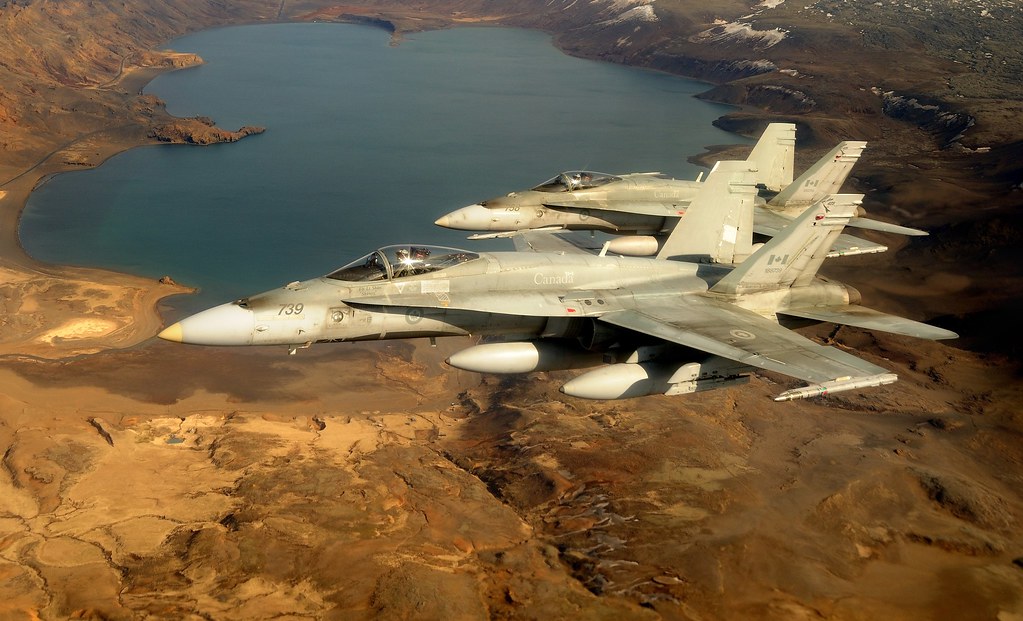
A Russian drone Romania airspace incursion turned into gunfire on the night of August 16. Radar caught the intruder at 4:44 a.m. local time. A Spanish F-18 on NATO air-policing duty shot it down about 17 minutes later, near Galați, close to the Moldovan border. NATO called this the fourth drone intercept over Romania this year. It was the first one flown by an allied jet rather than a Romanian aircraft. The incident adds one more entry to a growing list of drone incidents along NATO’s eastern edge.
Why a Russian drone Romania airspace intercept is different this time
Spain took over Romania’s NATO air-policing rotation from Britain’s Royal Air Force earlier in August. The Spanish detachment includes about 200 personnel, seven fighter jets and three helicopters. Tuesday’s shoot-down marked the first of 2026’s four intercepts flown by a rotating ally rather than a Romanian unit. NATO officials pointed to that detail as proof the alliance’s shared air-policing system works as designed.

What happened over Galați
Ground radar picked up the intrusion at 4:44 a.m. local time on August 16. The object had entered Romanian airspace from Moldova, about 24 kilometers north of Galați. Spanish controllers scrambled the F-18. The jet engaged and destroyed the drone within roughly 17 minutes of the first detection. NATO later said “the drone appears to be Russian” — language that signals likely origin, not absolute certainty.
How NATO’s rotating air-policing mission works
NATO built its air-policing system roughly two decades ago. It covers alliance members that lack a full fleet of fast jets. Larger air forces rotate detachments through for months at a time. These crews fly quick-reaction alert missions alongside host-nation pilots. Romania keeps its own fighters on alert too. But like other eastern-flank allies, Romania now leans more heavily on reinforced rotations. Russia’s full-scale invasion of Ukraine in 2022 pushed drone and missile activity much closer to NATO’s borders. Spain’s current deployment is one of several reinforcements now rotating through the region.
The pattern building across NATO’s eastern flank
This was the fourth confirmed drone intercept over Romanian territory in 2026. Ukraine has also stepped up long-range drone strikes on Russian territory this month. That timing underlines how tightly the war’s drone campaigns now overlap with NATO’s own airspace. Regional officials say stray war debris and deliberate probing both remain plausible explanations for individual incidents. They also say it isn’t always possible to tell the two apart in the moment. Each confirmed incident still gets treated individually by NATO investigators, since attributing a specific drone to a specific actor takes time and technical analysis that a same-day statement can’t capture.
What comes next for air policing in Romania
Spain’s rotation continues. NATO has given no sign that it plans to change the mission’s rules of engagement. Each new intercept adds pressure on allied governments to keep reinforcing eastern-flank air defenses. Tuesday’s incident did not trigger a formal Article 4 consultation or any wider alliance response beyond the shoot-down itself. Allied officials expect the current rotation schedule, including Spain’s deployment, to continue as planned unless a major escalation changes that calculus.
Why Galați sits on a sensitive stretch of border
Galați sits close to where Romania and Moldova share a border, not far from Ukraine’s own border region. That geography puts the area near some of the drone activity linked to the Ukraine war. NATO has not said whether it expects more incursions specifically near Galați, but the alliance has treated each confirmed intercept over Romania this year as part of the same broader pattern along its eastern flank. Tuesday’s episode stood out mainly because Spanish forces detected and destroyed the drone quickly, before it could travel further into Romanian territory.
Common questions about the Romania drone intercept
What is NATO air policing?
It is a standing NATO mission. Allied air forces rotate through member states that lack enough fighter jets of their own, providing round-the-clock radar coverage and interceptors.
Has this happened before in Romania in 2026?
Yes. NATO said the August 16 shoot-down was the fourth confirmed drone intercept over Romanian airspace this year.
Who flew the intercepting jet?
A Spanish Air Force F-18. It belongs to the detachment that took over Romania’s air-policing rotation from the UK’s Royal Air Force earlier in August.
Was anyone hurt?
No. The drone was destroyed after entering from Moldova near Galați, and no injuries were reported.
Does NATO know for certain the drone was Russian?
NATO described the drone as one that “appears to be Russian.” That phrasing signals likely origin, not confirmed certainty.
What happens if these intercepts keep happening?
NATO has not announced any change to the air-policing mission’s rules. But a repeated pattern of intercepts usually pushes allied governments to sustain or expand eastern-flank air-defense rotations.
NATO’s broader eastern-flank posture
Air policing is only one piece of NATO’s presence in the east. The alliance has steadily added rotating troops, air-defense systems and naval assets to eastern member states since Russia’s 2022 invasion of Ukraine. An intercept like Tuesday’s does not count as a direct NATO-Russia clash. NATO treats it as a defensive response to an unidentified or hostile object, since no Russian aircraft or personnel were directly involved in the incident.