
A Strait of Hormuz tanker attack struck two supertankers with unidentified projectiles late Monday. It adds a fresh flashpoint to an already tense standoff between Iran and the United States over shipping rights through the waterway. No group has claimed responsibility, and Tehran has not acknowledged involvement.
The Saudi-operated very large crude carrier Sidr and the Sinokor-operated Senegal Prosperity were both hit by three projectiles each. The strikes hit vessels transiting waters roughly 17 nautical miles east of Khasab, Oman. Shipping insurers say neither vessel suffered casualties, injuries, or environmental damage, though both sustained hull damage.
What happened in the Strait of Hormuz tanker attack
Bloomberg reported that the strikes hit both vessels within a short window as they completed outbound transits of the strait. Arab News confirmed maritime security firms tracked the incident in real time. Analysts flagged it as part of a wider pattern of unclaimed attacks on commercial shipping in the corridor this year.

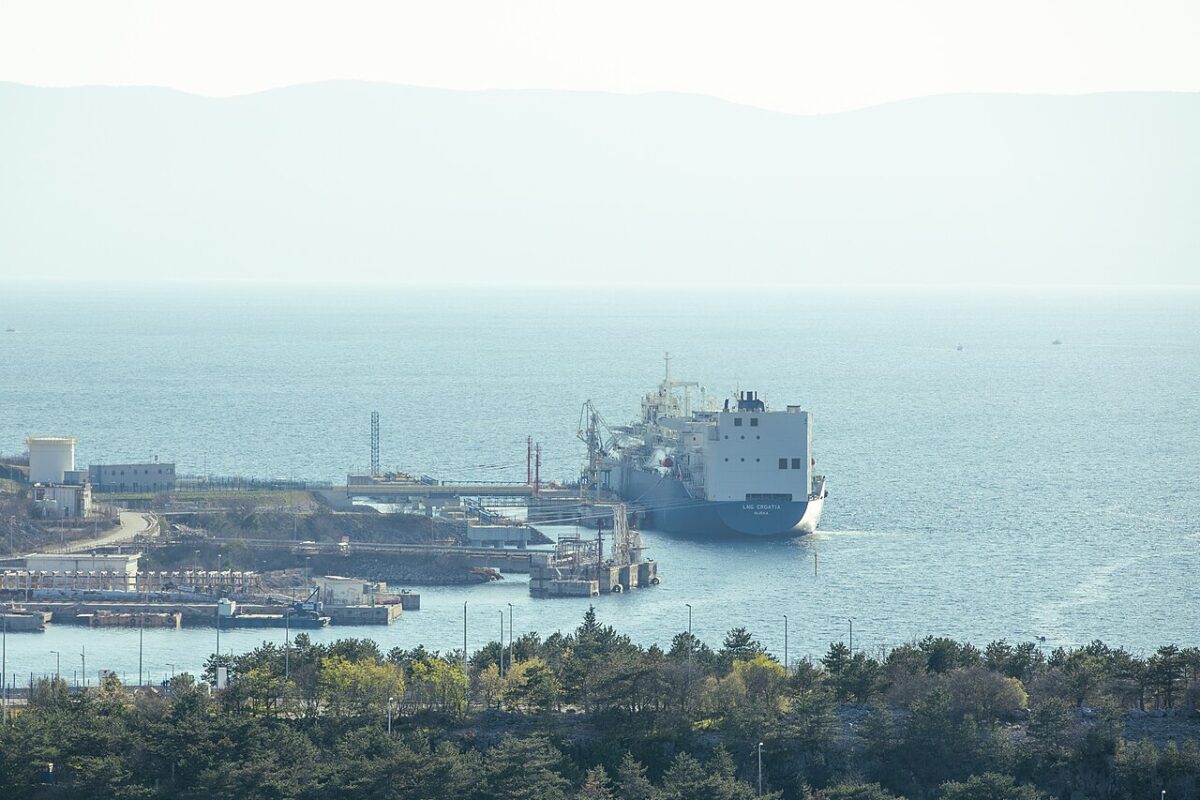
Oil tanker photo: Jernej Furman, CC BY 2.0, via Wikimedia Commons.
Why responsibility remains unclear
Neither Iran nor any allied or proxy group has claimed the strikes. That fits a pattern seen throughout the current standoff. Attacks on commercial vessels tend to go unclaimed even as both sides accuse each other of destabilizing the waterway. The incident comes days after direct exchanges between Iranian and U.S. forces reopened. That followed a period when the conflict had shifted toward economic pressure rather than open strikes.
Iranian officials spoke at the Shanghai Cooperation Organisation summit in Kyrgyzstan. They said Tehran would reciprocate if Washington returns to the terms of a memorandum of understanding reached earlier this year. That would include guarantees of free navigation through Hormuz. The offer has not visibly slowed the pace of unclaimed incidents at sea.
How the shipping industry is reacting
Maritime insurers have already raised war-risk premiums for vessels transiting the strait. Several shipping lines are reviewing routing options, though no viable alternative avoids Hormuz entirely for Gulf crude exports. Brent crude rose roughly 2% in the immediate aftermath of the attack, touching its highest level in about a week. Traders priced in the risk of further disruption to a corridor that carries a large share of the world’s seaborne oil.
What the region’s governments are saying
Gulf state officials have called for restraint from all sides while stopping short of assigning blame for Monday’s strikes. Oman, whose coastal waters saw the attack, has increased naval patrols in the area. Qatar and the United Arab Emirates have both reiterated that freedom of navigation through Hormuz remains a shared regional priority regardless of who is behind individual incidents.
The Strait of Hormuz carries roughly a fifth of the world’s oil supply on any given day. That is why even a single unclaimed incident draws outsized attention from energy markets. Countries that rely heavily on Gulf oil imports, including several major Asian economies, have urged all parties to avoid further escalation. Diplomats from Gulf Cooperation Council states have offered to mediate between Washington and Tehran, though neither side has formally accepted an outside broker for the current standoff.
What happens if the attacks keep coming
Shipping security firms expect naval escorts and convoy-style transits through the strait to increase in the coming days. That mirrors responses to earlier waves of unclaimed attacks. A sustained pattern of strikes could push more insurers to raise premiums further or restrict coverage for certain routes. Those costs eventually show up in fuel and shipping prices well beyond the Gulf. For related coverage on the broader standoff, see our reporting on the direct Iran-US military exchanges and the Middle East travel advisory currently in effect.
This is not the first unclaimed strike on shipping in the strait this year. Maritime trackers say the pattern has grown more frequent since direct exchanges between Iranian and U.S. forces resumed. Vessel operators increasingly route additional security personnel aboard ships transiting the corridor. Some have begun sailing in tighter groups to reduce individual exposure. The lack of a clear culprit makes it harder for any single government to respond directly. Analysts say that ambiguity may be part of the appeal for whoever is behind the attacks.
Frequently asked: the Hormuz incident
Which ships were hit in the Strait of Hormuz tanker attack?
The Sidr, operated by Saudi Arabia’s Bahri, and the Senegal Prosperity, operated by South Korea’s Sinokor Group, were both struck by three projectiles each.
Were there any casualties?
No casualties, crew injuries, or environmental damage have been reported by either operator.
Who is responsible for the attack?
No group has claimed responsibility. Iran has not acknowledged involvement, consistent with the unclaimed pattern of recent incidents in the strait.
How has the oil market reacted?
Brent crude rose about 2% following the strikes, touching its highest level in roughly a week.
Is shipping through Hormuz still possible?
Yes. Vessels continue to transit the strait, though insurers have raised war-risk premiums and some operators are reviewing security measures.
Could this escalate further?
Officials on both sides have floated conditions for de-escalation. The pattern of unclaimed strikes has continued despite those diplomatic signals.
Naval analysts say identifying the source of these projectiles is technically difficult even with satellite tracking. Small fast boats or shore-based launchers can strike and withdraw within minutes. That technical difficulty is one reason attribution has lagged behind nearly every recent incident in the strait. Regional airlines have also adjusted some flight paths near the Gulf coast as a precaution, though commercial air traffic through the wider region continues largely as normal.
Sources:
- Bloomberg — Hormuz Hostilities Pick Up as Two Tankers Reportedly Struck. https://www.bloomberg.com/news/articles/2026-08-31/two-oil-supertankers-hit-by-projectiles-in-hormuz-marisks-says
- Arab News — Two Tankers Struck by Unknown Projectiles in Strait of Hormuz Amid Rising Tensions. https://www.arabnews.com/middle-east/two-tankers-struck-by-unknown-projectiles-in-strait-of-hormuz-amid-rising-tensions-2656484