
The Zambia opposition crackdown has intensified in the roughly three weeks since the country’s contested presidential and parliamentary elections. A UN Human Rights Council-appointed special rapporteur issued a public statement urging Lusaka to reverse course. UN News and the Office of the High Commissioner for Human Rights both reported the warning. It describes systemic violence, mass arrests and detentions that extend beyond legally mandated limits without formal charges.
What the Zambia Opposition Crackdown Looks Like on the Ground
Security forces have arrested hundreds of opposition supporters since the election. Many were held past the timeframes Zambian law allows before charges must be filed, the UN statement said. Some detainees face what the rapporteur’s office called disproportionate or “concocted” charges. That group includes senior opposition alliance leader Brian Mundubile and his running mate Makebi Zulu, who face treason charges.
Zambian authorities have said the arrests connect to an alleged insurrection plot. Security forces reportedly seized weapons and arrested 11 people, including senior opposition figures, in a raid in the capital, Lusaka. Mundubile himself was found present at the scene, according to reporting compiled by People Daily. Tamara News has not independently verified the insurrection allegations. The government’s stated justification is reported here alongside the UN’s characterization of the crackdown as disproportionate.
The gap between the two accounts is stark. Government officials describe a security operation against an active plot. The UN’s rapporteur describes a pattern of mass detention without charge that extends well beyond anyone connected to the alleged raid. Both descriptions can be partly true at once. A genuine security concern does not, on its own, justify holding hundreds of people past legal time limits — the specific practice the rapporteur’s statement singles out.
A Pattern Beyond Individual Arrests
The rapporteur’s office also pointed to the government’s de facto cancellation of RightsCon, a summit on human rights and technology that had been expected to draw more than 5,000 attendees. Officials framed this as part of a broader pattern of closing space for civil society and independent scrutiny, not an isolated response to the election alone.
Why the Zambia Opposition Crackdown Is Drawing International Attention
UN special rapporteurs have no enforcement power. Their public statements still carry diplomatic weight, and they often precede more concrete responses from bodies like the UN Human Rights Council or individual governments considering aid conditions. The rapporteur has called for the immediate release of political detainees and protection of democratic freedoms. That framing turns the situation into a test of whether Zambia’s institutions can constrain executive power after a disputed vote.
Zambia’s situation echoes tensions playing out elsewhere on the continent this election season. Tamara News has also covered Morocco’s general election, part of a busier-than-usual African election calendar in September 2026.
What Comes Next for Zambia’s Opposition
Watch for whether the government responds to the UN rapporteur’s statement, or dismisses it as outside interference. That choice will likely shape whether the crackdown escalates or eases in the coming weeks. Mundubile and Zulu’s treason case is the one to watch most closely. How it proceeds through Zambia’s courts will be read internationally as a signal of whether due process survives a contested election, or whether it becomes a template for handling future opposition challenges. Regional bodies including the African Union and the Southern African Development Community have a track record here. Both have weighed in on post-election disputes elsewhere on the continent before. Pressure from those blocs, more than from the UN alone, has historically shifted outcomes in similar standoffs.
Neither body had issued a public statement on Zambia as of this report. Their silence so far stands in contrast to the UN rapporteur’s swift intervention. Diplomats watching the situation say regional bodies often move slower. They tend to prefer quiet pressure over public statements. That pattern could still shift if the crackdown escalates further.
Zambia’s own courts remain the most immediate venue where this plays out. Independent legal observers inside the country will be watching whether judges hearing the treason case face any political pressure of their own. A visibly fair trial process would do more to ease international concern than any diplomatic statement from Lusaka. A rushed or opaque one would likely deepen it instead, regardless of the eventual verdict. Zambia’s own bar association has historically been vocal on judicial independence issues, and its response to this specific case will be an early indicator worth watching in the weeks ahead.

A Few Common Questions
What triggered the Zambia opposition crackdown?
Zambia’s contested presidential and parliamentary elections, held roughly three weeks before the UN statement, which the opposition disputed.
Who are the main opposition figures facing charges?
Opposition alliance leader Brian Mundubile and his running mate Makebi Zulu, who face treason charges the UN rapporteur’s office described as disproportionate.
What does the Zambian government say about the arrests?
Authorities have linked the arrests to an alleged insurrection plot, saying weapons were seized and 11 people arrested in a raid in Lusaka.
What has the United Nations done in response?
A UN Human Rights Council-appointed special rapporteur issued a public statement calling for the immediate release of political detainees and an end to the crackdown.
Has any independent event been affected by the crackdown?
Yes. RightsCon, a human rights and technology summit expected to draw over 5,000 attendees, was effectively canceled by the government.
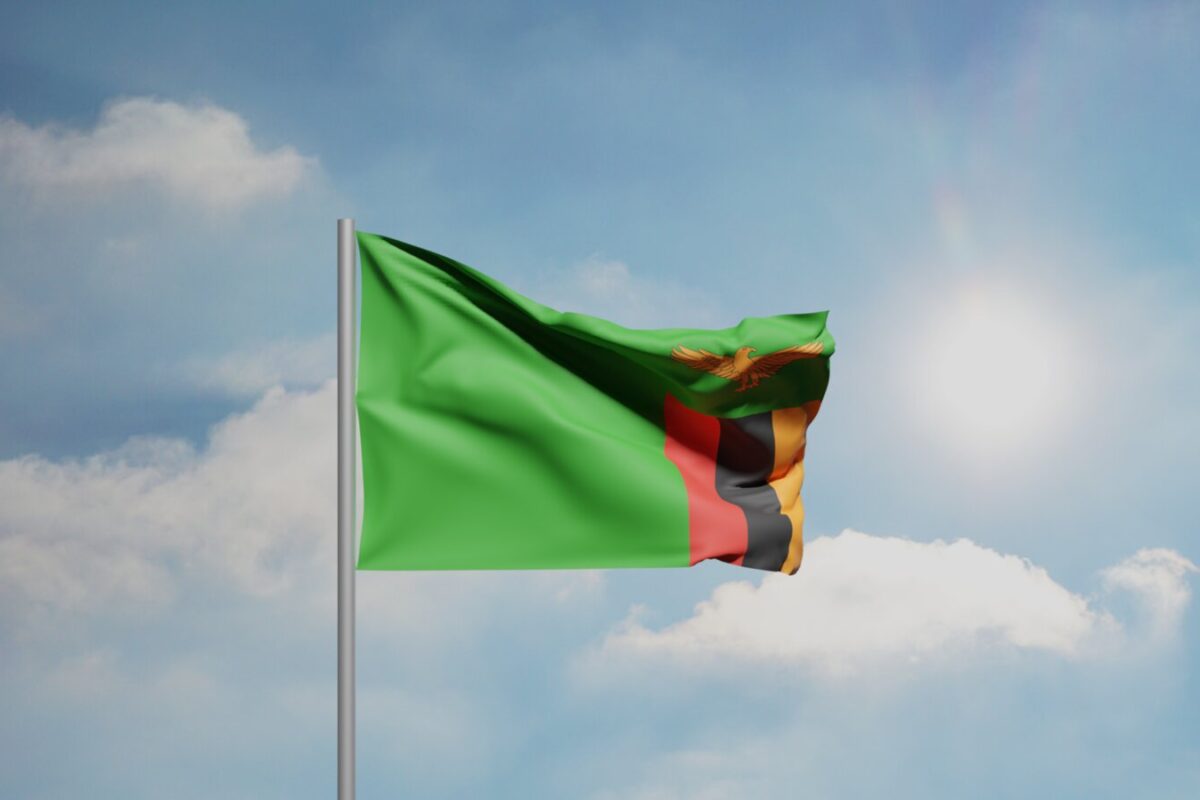
Featured image: “CGI Zambia Flag.png” by Aerra Carnicom (CC BY-SA 4.0), via Wikimedia Commons. In-content image: “UN Human Rights Council Chamber, Geneva” by U.S. Mission Geneva (CC BY 2.0), via Wikimedia Commons.