
Meet someone near you.
Live video chat with people nearby. One tap, free to start.

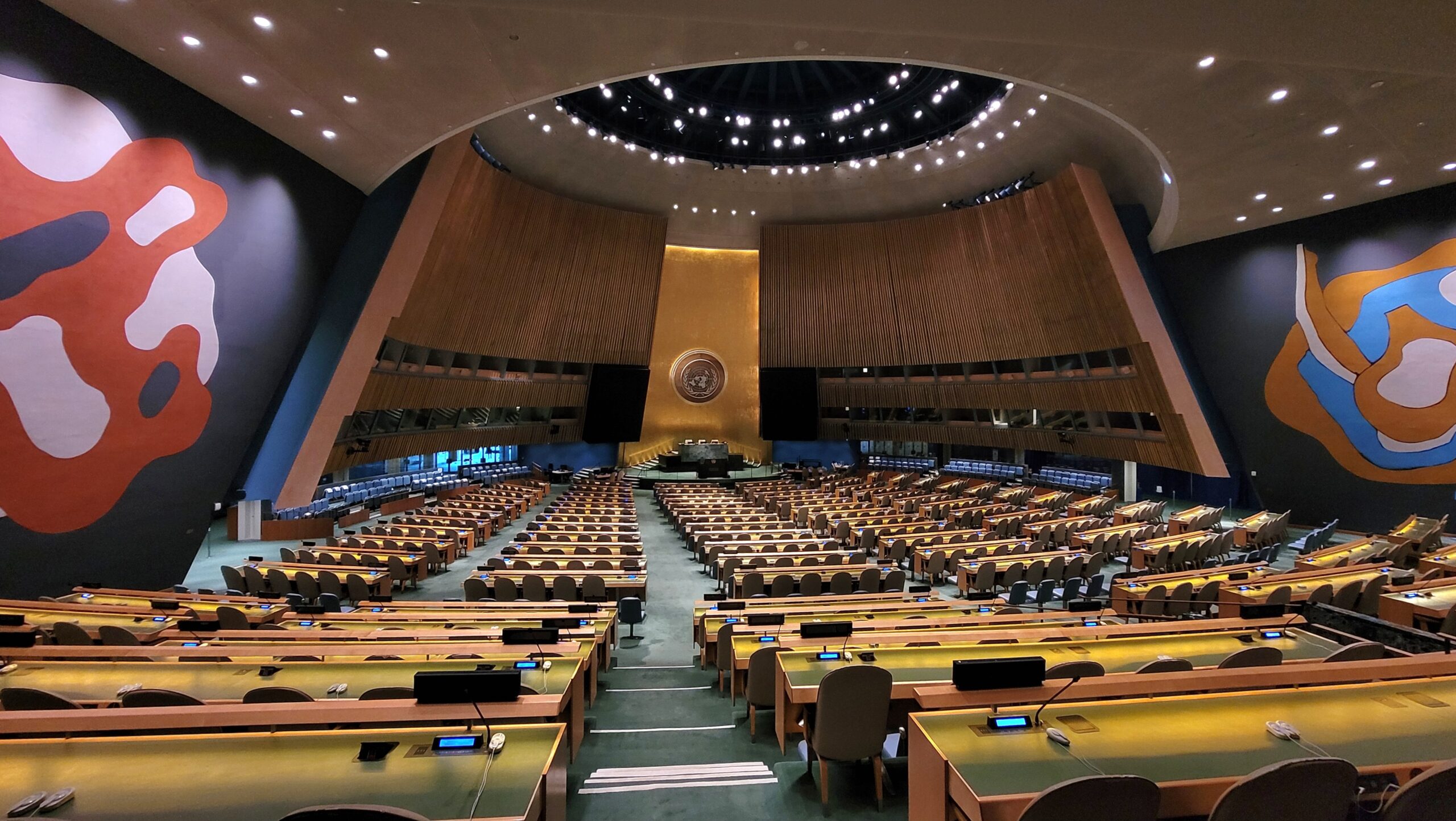
The UN General Assembly opening is set for 8 September 2026. The 81st session formally convenes at UN headquarters in New York under the presidency of Khalilur Rahman of Bangladesh. The opening itself is a procedural formality. This year’s session still arrives with an unusually heavy agenda. Renewed fighting between the United States and Iran, an intensifying Russia-Ukraine war, and elected seats on the Security Council are all converging within weeks of each other.
What actually happens at the UN General Assembly opening
The 8 September date marks the first plenary meeting of the session. The incoming president is formally installed, and the chamber sets its calendar for the months ahead. The substantive part of that calendar is High-Level Week, when heads of state and government take the podium. That general debate does not begin until 22 September and runs through 28 September. Diplomats describe the gap between the two dates as a working period. Committees quietly negotiate the resolutions and side events that will define the session’s output.

Image credit: Basil D Soufi / Wikimedia Commons (CC BY-SA 3.0)
The disputes hanging over this year’s session
Iran and the United States traded strikes as recently as 31 August. Both governments are expected to use their General Assembly floor time to stake out positions publicly. Neither side is expected to rely much on back-channel diplomacy this time. Ukraine is separately pushing allies for a General Assembly resolution. That resolution would address attacks on civilian and logistics infrastructure. The push follows a strike on an ammunition depot near Kyiv. That strike killed 38 people just over a week before the session opens. Neither dispute is expected to be resolved at the UN. Still, General Assembly floor time has historically shaped the diplomatic narrative around ongoing conflicts, even when it cannot end them.
Why the Security Council election matters this year
Member states are also finalizing results from this year’s UN Security Council election alongside the opening. That election determines which non-permanent members join the 15-seat body for the next two-year term. Newly elected members typically do not take their seats until January. The outcome still shapes which countries hold influence over Council votes on Iran, Ukraine, and other crises well before then. Incoming members begin coordinating with allies and blocs immediately after election.
What delegates will be negotiating behind closed doors
Committee staff typically draft the resolutions that member states will later vote on or reference in speeches, in the gap between the 8 September opening and the 22 September General Debate. This year, diplomats expect early committee work to focus on humanitarian access language tied to both the Iran-US confrontation and the Ukraine war. Routine budget and staffing resolutions rarely make headlines, but they determine how UN agencies operate for the following year. Several smaller member states have also signaled they will use committee sessions to push climate-finance commitments that stalled at last year’s session.
Credentialing disputes sometimes surface during this window too, when member states challenge which government delegation the Assembly recognizes as legitimate. No state has formally raised one for this session as of the opening date. Diplomats tracking the Assembly say that could still change once floor debate begins in earnest.
How the session’s outcome could ripple beyond New York
General Assembly resolutions carry no binding force the way Security Council resolutions do. They still shape how governments justify positions to their own domestic audiences. A resolution addressing strikes on civilian or logistics infrastructure would give Ukraine’s allies language to cite when announcing new aid packages, even without changing the legal situation on the ground. Any floor statement from Iranian or American officials will get parsed closely too. Diplomats will be looking for signals about whether either side is open to a renewed ceasefire after the 31 August strikes.
Smaller member states also use the crowded diplomatic calendar around the General Assembly to hold bilateral meetings that would otherwise take months to schedule. Foreign ministries typically report a spike in requested meeting slots in the two weeks surrounding the General Debate, since so many counterparts are already in New York for the session.
What happens next
Expect the opening itself to pass with little public drama. Two weeks of closed-door committee work follow before the real spectacle begins on 22 September. Heads of state confirmed to address the General Debate typically release their speaking order roughly a week in advance. That release will be the next concrete marker to watch for anyone tracking how this session addresses the Iran and Ukraine crises.
Frequently Asked Questions
When does the UN General Assembly opening take place?
The 81st session opens on 8 September 2026 with its first plenary meeting. The General Debate, where world leaders speak, runs from 22 to 28 September.
Who is presiding over this session?
Khalilur Rahman of Bangladesh is presiding over the 81st session of the UN General Assembly.
Will Iran and Ukraine be discussed at the opening itself?
The 8 September opening is procedural. Substantive debate on crises including the Iran-US strikes and the war in Ukraine is expected during the General Debate later in the month.
How does the Security Council election affect this session?
Newly elected non-permanent Security Council members do not take their seats until January, but they typically begin coordinating with allies immediately, shaping influence over Council votes well before the formal term starts.
Related Coverage
- UN Security Council election results
- Russia sanctions bill heads to a Senate vote
- Gaza ceasefire plan draws fresh criticism
Sources
- United Nations — General Assembly of the United Nations. https://www.un.org/en/ga/
- UN Foundation — Navigating the 2026 United Nations General Assembly. https://unfoundation.org/unga81/
Verification your users actually receive.
Send one-time passcodes over WhatsApp with a single API call. Replio can generate, hash and verify the code for you.
