Tag Archives: United Nations

Why This UN General Assembly Opening Carries More Weight Than Usual

The UN General Assembly opening is set for 8 September 2026. The 81st session formally convenes at UN headquarters in New York under the presidency of Khalilur Rahman of Bangladesh. The opening itself is a procedural formality. This year’s session still arrives with an unusually heavy agenda. Renewed fighting between the United States and Iran, an intensifying Russia-Ukraine war, and elected seats on the Security Council are all converging within weeks of each other.

What actually happens at the UN General Assembly opening

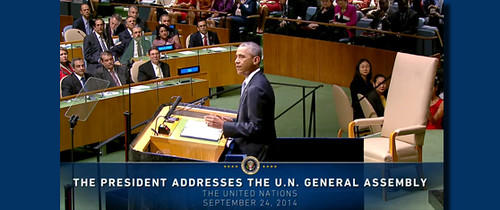
The 8 September date marks the first plenary meeting of the session. The incoming president is formally installed, and the chamber sets its calendar for the months ahead. The substantive part of that calendar is High-Level Week, when heads of state and government take the podium. That general debate does not begin until 22 September and runs through 28 September. Diplomats describe the gap between the two dates as a working period. Committees quietly negotiate the resolutions and side events that will define the session’s output.

UN General Assembly opening

Image credit: Basil D Soufi / Wikimedia Commons (CC BY-SA 3.0)

The disputes hanging over this year’s session

Iran and the United States traded strikes as recently as 31 August. Both governments are expected to use their General Assembly floor time to stake out positions publicly. Neither side is expected to rely much on back-channel diplomacy this time. Ukraine is separately pushing allies for a General Assembly resolution. That resolution would address attacks on civilian and logistics infrastructure. The push follows a strike on an ammunition depot near Kyiv. That strike killed 38 people just over a week before the session opens. Neither dispute is expected to be resolved at the UN. Still, General Assembly floor time has historically shaped the diplomatic narrative around ongoing conflicts, even when it cannot end them.

Why the Security Council election matters this year

Member states are also finalizing results from this year’s UN Security Council election alongside the opening. That election determines which non-permanent members join the 15-seat body for the next two-year term. Newly elected members typically do not take their seats until January. The outcome still shapes which countries hold influence over Council votes on Iran, Ukraine, and other crises well before then. Incoming members begin coordinating with allies and blocs immediately after election.

What delegates will be negotiating behind closed doors

Committee staff typically draft the resolutions that member states will later vote on or reference in speeches, in the gap between the 8 September opening and the 22 September General Debate. This year, diplomats expect early committee work to focus on humanitarian access language tied to both the Iran-US confrontation and the Ukraine war. Routine budget and staffing resolutions rarely make headlines, but they determine how UN agencies operate for the following year. Several smaller member states have also signaled they will use committee sessions to push climate-finance commitments that stalled at last year’s session.

Credentialing disputes sometimes surface during this window too, when member states challenge which government delegation the Assembly recognizes as legitimate. No state has formally raised one for this session as of the opening date. Diplomats tracking the Assembly say that could still change once floor debate begins in earnest.

How the session’s outcome could ripple beyond New York

General Assembly resolutions carry no binding force the way Security Council resolutions do. They still shape how governments justify positions to their own domestic audiences. A resolution addressing strikes on civilian or logistics infrastructure would give Ukraine’s allies language to cite when announcing new aid packages, even without changing the legal situation on the ground. Any floor statement from Iranian or American officials will get parsed closely too. Diplomats will be looking for signals about whether either side is open to a renewed ceasefire after the 31 August strikes.

Smaller member states also use the crowded diplomatic calendar around the General Assembly to hold bilateral meetings that would otherwise take months to schedule. Foreign ministries typically report a spike in requested meeting slots in the two weeks surrounding the General Debate, since so many counterparts are already in New York for the session.

What happens next

Expect the opening itself to pass with little public drama. Two weeks of closed-door committee work follow before the real spectacle begins on 22 September. Heads of state confirmed to address the General Debate typically release their speaking order roughly a week in advance. That release will be the next concrete marker to watch for anyone tracking how this session addresses the Iran and Ukraine crises.

Frequently Asked Questions

When does the UN General Assembly opening take place?

The 81st session opens on 8 September 2026 with its first plenary meeting. The General Debate, where world leaders speak, runs from 22 to 28 September.

Who is presiding over this session?

Khalilur Rahman of Bangladesh is presiding over the 81st session of the UN General Assembly.

Will Iran and Ukraine be discussed at the opening itself?

The 8 September opening is procedural. Substantive debate on crises including the Iran-US strikes and the war in Ukraine is expected during the General Debate later in the month.

How does the Security Council election affect this session?

Newly elected non-permanent Security Council members do not take their seats until January, but they typically begin coordinating with allies immediately, shaping influence over Council votes well before the formal term starts.

Related Coverage

Sources

This Central Asian Nation Just Won a UN Security Council Seat for the First Time Ever

Kyrgyzstan is heading to the UN Security Council for the first time in its history. It is one of five winners from the UN Security Council election held in June 2026. Their terms begin in January 2027. The vote used a secret ballot at UN headquarters. It reshapes the council’s rotating membership at a busy moment. The body faces pressure over Gaza, Ukraine, Sudan and Haiti, all at once.

Four of the five races were formalities. The fifth went to four rounds of voting. Kyrgyzstan edged out the Philippines for the Asia-Pacific seat.

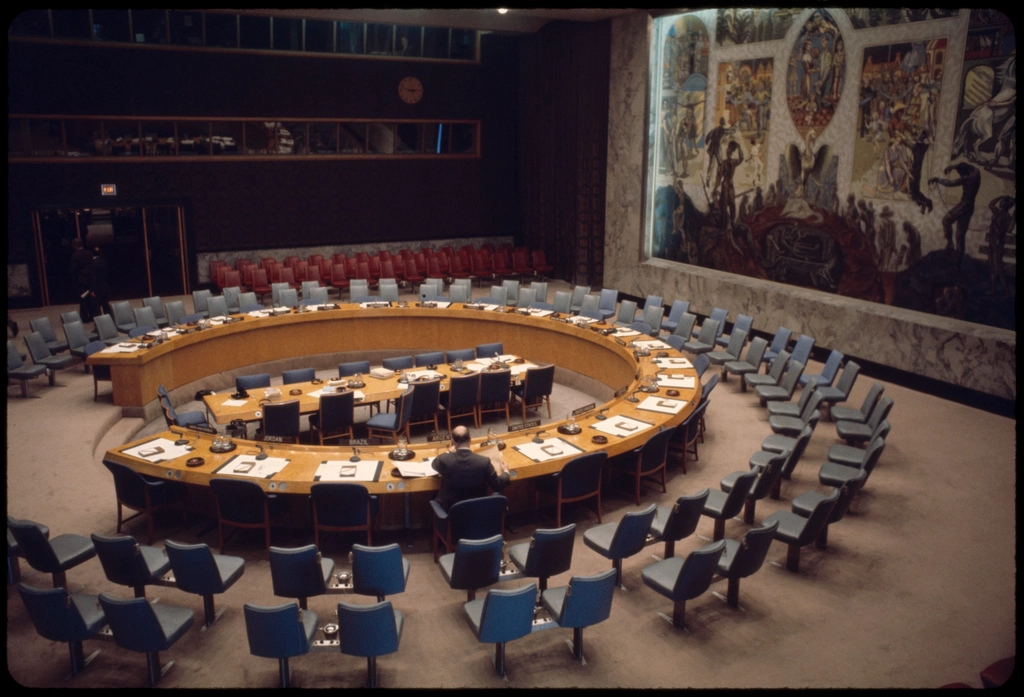
UN Security Council election

How the UN Security Council election played out

The UN General Assembly filled five non-permanent seats on June 3, 2026. Each carries a two-year mandate starting January 1, 2027. The seats are split by region. One goes to Africa. One goes to Asia-Pacific. One goes to Latin America and the Caribbean. Two go to the Western European and Others Group, known as WEOG.

The council’s composition matters well beyond ceremony. Non-permanent seats give smaller and mid-sized states a temporary voice on the body that authorizes peacekeeping missions, approves sanctions regimes, and refers cases to international courts. Regional blocs coordinate for months, sometimes years, before an election to agree on a single endorsed candidate per seat. When that coordination breaks down, as it did this year in Asia-Pacific, the result is a genuine multi-round contest rather than a formality.

Zimbabwe and Trinidad and Tobago ran unopposed for the African and Latin American/Caribbean seats. Both won comfortably in the first round. Austria and Portugal took the two WEOG seats over Germany, also in round one. The only real contest was Asia-Pacific. Kyrgyzstan needed three extra rounds of secret balloting to beat the Philippines and reach the two-thirds majority required to win.

Why Kyrgyzstan’s seat is the headline result

Kyrgyzstan has never held a Security Council seat before. That makes this a genuine milestone for Central Asian representation at the UN’s most powerful body. Small and mid-sized states often campaign for years to build support for a contested seat. The Philippines is a far larger, more internationally active state. Kyrgyzstan’s win over it reflects sustained regional lobbying, not a routine outcome.

For the Philippines, the loss means another two-year wait for a seat it has held before. Manila has been vocal on South China Sea disputes lately. It would have valued a council platform right now.

What changes on the council starting January 2027

Five incoming members will join the council: Austria, Portugal, Trinidad and Tobago, Zimbabwe and Kyrgyzstan. They sit alongside five permanent, veto-holding members: the US, UK, France, Russia and China. Five other non-permanent members are still serving the second year of their own terms. None of the incoming five hold veto power. But non-permanent members still shape which resolutions get drafted and voted on. They also chair subsidiary committees that influence sanctions enforcement and peacekeeping mandates.

Austria and Portugal add two more European voices. The council is already weighted toward Western positions on Ukraine and Russia sanctions. Zimbabwe and Trinidad and Tobago bring African and Caribbean perspectives instead. Expect them to weigh in on Haiti’s security crisis and African Union peacekeeping funding.

What to watch before the new term begins

Outgoing non-permanent members will spend the rest of 2026 finishing committee work. They will also hand over council presidencies, which rotate monthly among all fifteen members. Expect the incoming five to start shadowing council sessions in late 2026 as they prepare to take their seats. Their first full council votes will likely come within weeks of the new term starting on January 1, 2027.

The outgoing members completing their terms at the end of 2026 have spent two years working on files ranging from Ukraine sanctions enforcement to peacekeeping mandates in Africa. Handover briefings between outgoing and incoming delegations typically happen informally throughout December, giving new members a head start before they cast their first formal vote in January.

Frequently asked questions

Which countries won the 2026 UN Security Council election?

Austria, Portugal, Trinidad and Tobago, Zimbabwe and Kyrgyzstan won the five available non-permanent seats. Their term covers 2027-28, according to Security Council Report.

When do the new members take their seats?

The newly elected members begin their two-year mandates on January 1, 2027. They replace the five non-permanent members whose terms expire at the end of 2026.

Was every seat contested?

No. Trinidad and Tobago and Zimbabwe ran unopposed. Austria, Germany and Portugal contested two Western European seats, and Kyrgyzstan beat the Philippines for the Asia-Pacific seat.

How many rounds of voting did the UN Security Council election take?

Austria, Portugal, Trinidad and Tobago and Zimbabwe won in the first round on June 3. The Asia-Pacific contest between Kyrgyzstan and the Philippines needed three more rounds.

Why does Kyrgyzstan’s win matter?

It is the first time Kyrgyzstan has ever held a UN Security Council seat. That gives Central Asia direct representation on the council for the first time this cycle.

Does winning a non-permanent seat give a country veto power?

No. Only five permanent members hold veto power: the US, UK, France, Russia and China. Non-permanent members serve two-year terms without veto rights.

Related coverage on Tamara News

Sources