
Monthly Archives: September 2026

NSE IPO Price Band Set as India’s Biggest Listing Opens

India’s National Stock Exchange has fixed its NSE IPO price band at Rs 1,700 to Rs 1,785 a share, opening one of the largest share sales the Indian market has seen. Bidding runs from 17 to 21 September 2026, with anchor investors bidding a day earlier on 16 September. Allotment is expected on 22 September and the shares are proposed to list on 24 September — on the BSE, because an exchange cannot list on itself.

The numbers in one place

According to Business Standard, the offer is structured as follows:

  • Price band: Rs 1,700 to Rs 1,785 per share
  • Anchor book: 16 September 2026
  • Public bidding: 17 to 21 September 2026
  • Lot size: 8 shares
  • Minimum retail application: Rs 14,280 at the upper band
  • Allotment: expected 22 September 2026
  • Proposed listing: 24 September 2026, on the BSE

At the top of the band the issue raises roughly Rs 22,568 crore — on the order of $2.5bn — implying a valuation in the region of Rs 4.42 lakh crore. Indian business press has reported the offer as an offer for sale, meaning existing shareholders are selling down rather than the exchange raising fresh capital for itself. If that holds, none of the proceeds go to NSE’s balance sheet.

Why NSE shares will trade on a rival exchange

An exchange cannot supervise the trading of its own stock without an obvious conflict, so NSE’s shares are proposed to list on the BSE. This is not unusual — the same logic applies wherever a listed exchange operates — but it produces the slightly surreal outcome that India’s largest exchange by turnover becomes a line item on its smaller competitor’s board.

It also creates a durable oddity for traders. Price discovery for NSE happens on BSE; NSE’s own revenue depends on volumes that BSE does not capture. Anyone modelling the stock ends up modelling the health of the venue where it is not traded.

What a buyer is actually buying

Exchanges are, in business terms, toll booths. Revenue comes from transaction charges on cash and derivatives trading, listing fees, market data, index licensing and clearing. The economics are attractive when volumes are high: costs are largely fixed, so incremental volume drops through to profit at a high rate.

NSE’s position in Indian equity derivatives has been the centre of that story for years. That is the strength and the concentration risk in the same sentence: a business heavily levered to one product category, in one market, under one regulator that has repeatedly adjusted the rules for that category. Prospective investors should read the offer document rather than the headline valuation, since the composition of revenue matters more here than the multiple.

Zerodha’s IPO listing page and The Week’s dates roundup carry the mechanical details for applicants.

The risks the price band does not show

Three worth naming. First, regulatory: derivatives market structure in India has been under active review, and rule changes that dampen retail derivatives volumes hit the revenue line directly. Second, cyclicality: exchange earnings look like a utility in a rising market and like a brokerage in a falling one. Third, timing: the offer opens into a week when global markets are watching a US Federal Reserve decision, with oil recently trading above $100 a barrel. Grey-market chatter and listing-day pops are not a substitute for either of those.

There is a broader point here for readers outside India. Exchange listings are milestones for a market’s own development, not just for the company. An NSE listing puts India’s core market infrastructure under public-company disclosure for the first time, which over years produces better data for everyone analysing the market — regardless of what the shares do in the first week.

This is reporting on a share offer, not investment advice. Anyone considering an application should read the red herring prospectus and consider their own circumstances.

Questions about the offer

What is the NSE IPO price band?

Rs 1,700 to Rs 1,785 per share, with a lot size of 8 shares and a minimum retail application of Rs 14,280 at the upper end.

When does bidding open and close?

Public bidding runs 17 to 21 September 2026. Anchor investors bid on 16 September.

When is allotment and listing?

Allotment is expected on 22 September 2026, with listing proposed for 24 September 2026.

Where will NSE shares be listed?

On the BSE. An exchange does not list its own shares on itself because of the supervisory conflict that would create.

How large is the issue?

Roughly Rs 22,568 crore at the upper end of the band, implying a valuation in the region of Rs 4.42 lakh crore.

Does NSE receive the money raised?

Indian business press has reported the offer as an offer for sale by existing shareholders, which would mean proceeds go to the selling shareholders rather than to the exchange.


Related on our markets desk

Apple Just Answered the Foldable Rumors. The Bigger Change Was Inside Siri

Apple Siri Google Gemini integration became official at Apple’s September 9 event. The company confirmed it is rebuilding Siri on Google’s Gemini models. It also unveiled its first foldable iPhone. Those were the two headline moves in what Apple called its biggest device wave in years. It was also the first keynote led by new device chief John Ternus.

What the Apple Siri Google Gemini Deal Actually Covers

Apple struck a deal with Google to license Gemini models. Those models now power upgraded Apple Intelligence features and a rebuilt Siri. Building an equivalent large language model entirely in-house, on Apple’s needed timeline, wasn’t realistic. Reporting on the partnership says the arrangement lets Apple ship more capable, conversational Siri features sooner than an internal model would have allowed. Google, in turn, gains a high-profile distribution deal across hundreds of millions of iPhones. Neither company has published the full financial terms of the agreement.

Our Preview Called the Foldable Rumor Right

Apple Siri Google Gemini

Tamara News previewed this event on September 8. At that point, the foldable iPhone was still an unconfirmed rumor riding on Ternus’s first keynote as device chief. At the event itself, Apple confirmed the device. It positioned the foldable as the centerpiece of a broader hardware refresh, not a niche add-on to the standard iPhone lineup. Foldable phones have belonged to Samsung and Huawei for years. Apple’s entry is likely to intensify competition on pricing and on software built specifically for folding displays.

Why Apple Chose Partnership Over Building Its Own Model

Apple’s AI efforts drew criticism over the past two years for lagging competitors on generative features, particularly conversational assistants. Partnering with Google for Gemini is a pragmatic call. Catching up on foundation-model quality alone would have taken longer than Apple’s product cycle allowed. The move also mirrors a broader 2026 pattern: large tech companies choosing high-profile AI partnerships and acquisitions, including Nvidia’s own multibillion-dollar deals, over purely organic development.

What This Means for the Wider AI Assistant Race

A Gemini-powered Siri puts Google’s models at the center of the world’s most widely used smartphone assistant. That distribution win could matter more than any single Google-branded product. For competitors, it raises a hard question. Can Amazon’s Alexa and Microsoft’s Copilot match a partnership of this scale, or will they need similar arrangements of their own? Apple, meanwhile, keeps its hardware and interface advantages while outsourcing the model layer underneath. Other device makers are likely to study that split closely.

What Reviewers Will Test First

Early hands-on coverage typically focuses on two things with a device like this: hinge durability and how visible the fold line is on screen. Expect reviewers to bend the new iPhone repeatedly, check for screen creasing under different lighting, and compare battery life against Apple’s standard, non-folding models. On the software side, testers will likely push Siri with multi-step requests to see how the Gemini-powered version handles follow-up questions compared with the old, more scripted Siri.

How This Fits Apple’s Broader AI Strategy

Apple spent the past two years insisting its AI approach would prioritize privacy and on-device processing over cloud-dependent models. The Gemini partnership complicates that message somewhat, since it relies on a third party’s cloud-based models for Siri’s most advanced features. Apple says the partnership follows its existing privacy commitments for handling user data. The company has not published full technical detail on how requests get routed, or what Google can see on its end.

How Competitors Are Likely to Respond

Samsung and Google’s own Pixel team already ship generative AI assistants built on in-house or closely integrated models, giving them a head start on tight software-hardware coordination that Apple’s outsourced approach doesn’t offer in the same way. Amazon, meanwhile, has invested heavily in a next-generation Alexa overhaul of its own. Analysts expect at least one competitor to announce a comparable large-model partnership within the next two quarters, simply to avoid ceding ground on assistant quality.

What to Watch as the Rollout Continues

Apple has not detailed a full rollout timeline for every Gemini-powered feature. Foldable iPhone reviews and durability testing will shape early public reaction once the device reaches reviewers. This week’s Apple earnings call, part of a broader stretch of major tech reporting, is the next concrete moment. Apple is expected to use that call to address how the launch affects sales in the current quarter.

Frequently Asked Questions

Is Siri now powered by Google Gemini?
Apple confirmed at its September 9 event that it is rebuilding Siri using Google’s Gemini models, under a licensing partnership between the two companies.

Did Apple actually release a foldable iPhone?
Yes. Apple confirmed its first foldable iPhone at the same event. That ended months of speculation built around new device chief John Ternus’s debut keynote.

Why didn’t Apple build its own AI model for Siri?
Apple’s in-house AI efforts had lagged competitors on conversational features. Partnering with Google let it ship more capable Siri features on a faster timeline.

What are the financial terms of the Apple-Google deal?
Neither company has published the full financial details of the Gemini licensing arrangement.

What happens next for Apple after this announcement?
Apple reports quarterly earnings this week. Analysts expect that to be the first chance for the company to address how the launch affects current-quarter sales.

Sources

  • CNBC — Apple picks Google’s Gemini to run AI-powered Siri. cnbc.com
  • Forbes — Apple Event Kicks Off 2026-2027 Tech Season. forbes.com

The Iran Sanctions Panel Vote Facing a Russian and Chinese Veto

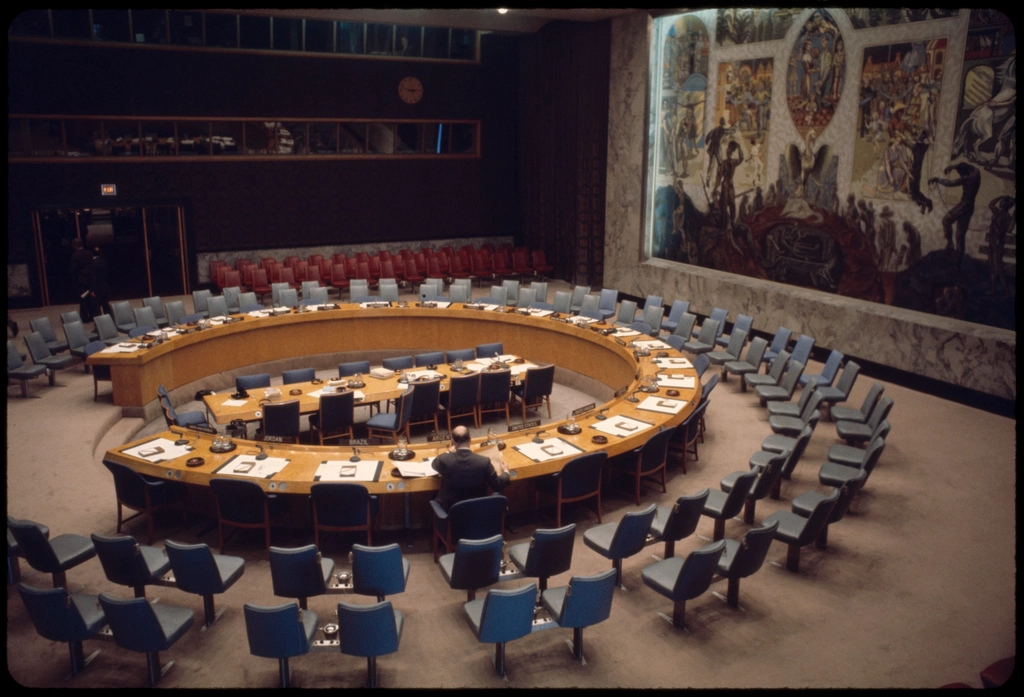
The UN Security Council is expected to hold an Iran sanctions panel vote on 17 September, according to diplomats cited by wire reporting, on whether to renew the mandate of the expert panel that monitors compliance with sanctions on Iran. The mandate expires on 26 September. France announced the vote; Russia and China have signalled they do not accept that the Council has the standing to hold it at all.

What the panel of experts actually does

A UN panel of experts is a small standing team that reports to a Security Council sanctions committee. It investigates alleged violations, tracks procurement networks and shipping, and publishes findings that member states use to justify enforcement. It has no power to punish anyone. Its value is evidentiary: without a panel, the sanctions committee is largely dependent on what individual governments choose to tell it, and those governments have interests.

That is why mandate renewals, which look procedural, matter. Letting a panel lapse does not lift sanctions. It removes the independent reporting that makes them legible.

How the Council got back to Iran sanctions

UN sanctions on Iran, including measures under resolution 1737 (2006), were reimposed on 27 September 2025 through the snapback mechanism, after findings of Iranian non-compliance with its nuclear obligations. Snapback was the enforcement device built into the 2015 nuclear agreement: it allowed a participant to restore previously lifted UN measures without a fresh Council vote that could be vetoed.

Since then the Council has been arguing about whether that reimposition was valid. At a Council session earlier this year, Russia and China challenged the legality of the snapback and the Council’s continuing role on the Iranian nuclear file. In a joint statement in March, the two governments said the Council “cannot proceed to re-establish the 1737 Committee or its Panel of Experts.”

Strip out the diplomacy and there are two incompatible positions. The Western position is that snapback was lawfully triggered, the pre-2015 sanctions architecture is back in force, and the Council therefore needs a committee and a panel to run it. The Russian and Chinese position is that the snapback was procedurally invalid, that the underlying resolution had already terminated, and that anything built on it — committee, panel, mandate renewal — has no legal basis.

Neither side can win that argument inside the Council, because the Council has no mechanism for ruling on its own competence. What it has is votes and vetoes. A renewal resolution needs nine affirmative votes and no veto from a permanent member, which is precisely the constraint in play.

The Security Council Report’s September forecast places this alongside a crowded month: continued attention to the Middle East and the effects of disruption to navigation in the Strait of Hormuz, possible meetings on Ukraine, and the 81st General Assembly’s high-level week, whose session opened on 8 September under a new Assembly president, Bangladesh’s Khalilur Rahman.

Three ways 17 September can go

The resolution is vetoed. The most widely anticipated outcome. The panel’s mandate lapses on 26 September, the sanctions committee continues on paper without independent monitoring, and enforcement shifts almost entirely to national and regional measures — US, EU and UK designations that operate outside the UN framework.

A short technical rollover passes. Councils under pressure often buy time with a brief extension that nobody treats as a precedent. It would require Russia and China to abstain rather than veto, which is a lower bar than support but still a concession on the legality argument they have been making.

The vote slips. With the mandate running to 26 September, the sponsors have a few days of slack. Postponing past high-level week is possible if they judge the numbers are not there and want to avoid a public defeat during the General Assembly.

Whichever way it goes, the practical effect on Iran’s economy in the near term is limited — the binding constraints are national sanctions and the wider regional conflict. The effect on the Council’s own authority is larger, and harder to reverse.

Common questions

When is the Iran sanctions panel vote?

Diplomats have indicated 17 September 2026, with the panel’s mandate due to expire on 26 September.

What is a panel of experts?

A small investigative team reporting to a Security Council sanctions committee. It documents violations and procurement networks but has no enforcement power of its own.

Why do Russia and China object?

They argue the 2025 snapback that reimposed the sanctions was procedurally invalid, so the committee and panel built on it have no legal basis. They stated in March that the Council cannot re-establish the 1737 Committee or its panel.

Would a veto lift sanctions on Iran?

No. It would end the UN’s independent monitoring mandate. The measures themselves, and separate US, EU and UK sanctions, would remain.

What is snapback?

A mechanism from the 2015 nuclear agreement allowing a participant to restore previously suspended UN sanctions without a new Council vote that a permanent member could veto.

How many votes does renewal need?

Nine of fifteen in favour, with no veto from any of the five permanent members.

Follow the thread

Four of the World’s Biggest Companies Report Earnings This Week. Here’s What to Watch

This is a big tech earnings week on Wall Street. Apple, Microsoft, Nvidia and Google are all scheduled to report results between September 14 and 17, 2026. Major healthcare names join them too. Johnson & Johnson, UnitedHealth, Eli Lilly, AbbVie and Pfizer all report in the same window.

Why This Big Tech Earnings Week Matters More Than Usual

Earnings calendars show 24 companies reporting on September 14 alone. Roughly 8, 9 and 10 more follow on the 15th, 16th and 17th. That density gives investors a compressed read on two things at once. One is AI-driven tech spending. The other is broader corporate health, all inside four trading days. It arrives as markets digest a mixed macro picture. Equities rose in mid-September as oil prices eased. Yet the August inflation report showed prices ticking up. That leaves traders unsure whether the Federal Reserve has room to move on rates.

What Investors Are Watching in Each Report

big tech earnings week

For Nvidia and Microsoft, the focus is AI infrastructure spending. Investors want to know if it’s still accelerating. Or if it’s starting to plateau, after a run of multibillion-dollar sector deals this year. Nvidia’s own acquisition activity is part of that run. Apple’s report lands days after its September 9 event. There, it introduced Siri rebuilt on Google’s Gemini models and its first foldable iPhone. This call is the first chance for Apple’s finance team to frame how that launch affects the current quarter. For Google, advertising trends and cloud growth remain the two numbers analysts flag first. Any commentary on the Gemini partnership with Apple will draw extra attention too.

The Market Backdrop Heading Into Results

US indices posted modest gains heading into the reporting stretch. The S&P 500 rose 0.86%. The Dow gained 0.98%. The Nasdaq added 0.96% in recent sessions, according to market data cited by CNBC. Even so, a wholesale inflation surge pushed producer prices higher earlier this month. That surge remains a live concern for how the Fed reads the economy. It’s a factor that can move tech valuations on its own. Higher-for-longer rate expectations tend to weigh more heavily on high-growth stocks than on the broader market.

Healthcare Names Add a Second Storyline

The same week’s calendar includes major healthcare reporters. Johnson & Johnson, UnitedHealth, Eli Lilly, AbbVie and Pfizer are all on the list. That gives investors a parallel read on drug pricing and insurance margins. It also shows demand for GLP-1 treatments, which have reshaped pharma valuations over the past two years. A weak healthcare print alongside strong tech numbers would be a telling divergence. So would the reverse. Either is worth watching by week’s end.

How Currency and Rate Bets Complicate the Picture

None of these reports land in a vacuum. The dollar’s moves against other major currencies matter too. So do bond yields tied to Fed rate expectations. Both shape how investors price a company’s guidance for the next quarter. A tech company that beats profit estimates can still see its stock fall. That happens if its guidance disappoints against a backdrop of rising rate expectations. Analysts describe this particular week as a test of market mood, not just of any one company’s fundamentals.

Small Earnings Surprises Can Move Markets More Than Usual

In a normal reporting week, a single company missing estimates by a small margin rarely shakes broader indices. This week is different, because so many results land in such a short window. A disappointing Nvidia print, for instance, could drag down other AI-adjacent stocks purely on sentiment, even if their own fundamentals haven’t changed. Traders are bracing for that kind of spillover effect more than usual this time around.

What Comes After This Week’s Numbers Land

Once results are in, attention shifts quickly to two things. One is the Federal Reserve’s next policy signals. The other is the European Central Bank’s own rate path. Both are more likely to move on aggregate economic data than any single earnings call. Analysts will also compare this week’s AI capital-spending commentary against deals already announced this year. That comparison should show whether spending plans are being revised up, down, or held steady heading into the final quarter of 2026. Retail investors, for their part, will be watching options market pricing for clues about how much post-earnings volatility traders expect from each of the four tech giants individually.

Frequently Asked Questions

Which major companies are reporting earnings this week?
Apple, Microsoft, Nvidia and Google all report between September 14 and 17, 2026. Johnson & Johnson, UnitedHealth, Eli Lilly, AbbVie and Pfizer report in the same window.

Why is this week’s earnings slate considered unusually dense?
Calendars show 24 companies reporting on September 14 alone. Roughly 8 to 10 more follow on each day through the 17th — a compressed window investors rarely see.

What will investors focus on in Apple’s report?
How the company frames the expected impact of its September 9 Siri and foldable iPhone launch. Analysts want to know what it means for the current quarter.

How does inflation data affect this earnings week?
A recent wholesale inflation surge has left markets unsure whether the Fed has room to cut rates. That uncertainty can move tech valuations regardless of individual results.

Are healthcare companies part of this earnings week too?
Yes. Johnson & Johnson, UnitedHealth, Eli Lilly, AbbVie and Pfizer are all reporting in the same window. That gives a parallel read on drug pricing and insurance margins.

Sources

  • Zenvesto — Stock Earnings Calendar, September 2026. zenvesto.com
  • CNBC — Stock market today, live updates. cnbc.com

NAZA Documentary Venice Prize Sparks Israeli Citizenship Row

Israel’s culture minister, Miki Zohar, said he would move to revoke the citizenship of filmmakers Yuval Abraham and Rachel Szor after their Gaza documentary took a Special Jury Prize at the Venice Film Festival. The NAZA documentary Venice prize was announced at the festival’s closing ceremony; within days the minister had called the film vile, described the award as shocking, and said the pair’s actions amounted to treason against the state.

The statement and who made it

Zohar holds the culture and sport portfolio in the Israeli government and has previously intervened in funding and platform decisions involving Israeli film. His statement, carried by Israeli and international outlets on 13 and 14 September, named both directors and framed the award as a reward for betraying the country.

Abraham is not an unknown quantity in Israeli public debate. He co-directed No Other Land, which won the Academy Award for best documentary feature, and he has been a persistent critic of Israeli policy in the occupied territories. Szor was a cinematographer on that film. The Times of Israel logged the minister’s call in its liveblog; Deadline reported the same demand from the trade side.

What the film claims

NAZA runs 80 minutes. According to the festival’s official synopsis, it examines Israel’s use of AI-assisted targeting systems during the Gaza war, including a system referred to as Lavender, and argues that those systems produced mass civilian casualties. The film received a lengthy standing ovation at its premiere, reported at around 25 minutes.

Those are the filmmakers’ and the festival’s characterisations, and they should be read as such. Israel has consistently rejected the claim that it deliberately targets civilians in Gaza and has said its targeting process includes human review. The existence of AI-assisted target generation in the Gaza campaign has been reported by Israeli and international outlets since 2024; the disputed question is what weight those systems carried in decisions and what review they received. A documentary prize does not settle that dispute, and this report does not attempt to.

Speaking to Haaretz, the directors said they intend to distribute the film inside Israel — which would move the argument from a festival in Venice to Israeli cinemas and regulators.

Whether the threat can be carried out

Probably not by the person making it. Israeli citizenship law does not give the culture ministry any role in revocation. The power sits with the interior minister, on limited statutory grounds including breach of loyalty to the state, and its use requires a court. Israeli courts have treated the provision as exceptional and have been reluctant to leave people stateless, which international law disfavours.

So the realistic reading is that the statement is political rather than procedural: a signal to a domestic audience, and pressure on distributors, broadcasters and funding bodies that do answer to the culture ministry. That second effect is the one worth watching, because it does not need a court.

A pattern, not a one-off

Ministerial responses to Israeli films that criticise the conduct of the war have become routine since No Other Land‘s Oscar, ranging from funding threats to calls for boycotts of ceremonies. Meanwhile the diplomatic environment around Israel has tightened: several Western governments have moved on trade measures tied to settlements, and the Gaza war continues to shape votes at the United Nations.

What makes this case sharper is the target. Stripping citizenship is not a funding decision or a rhetorical boycott; it is a proposal to remove a person’s legal membership of the state because of the content of a film. Even as an unenforceable demand, it sets a marker that press-freedom groups are likely to contest.

What follows: watch for whether the interior ministry says anything at all, whether Israeli distributors take the film, and whether the attorney general’s office comments on the legality of the demand. Any of those three would turn a statement into a process.

Reader questions

What is NAZA?

An 80-minute documentary about the Gaza war by Israeli filmmakers Yuval Abraham and Rachel Szor, which won a Special Jury Prize at the 2026 Venice Film Festival.

What did Israel’s culture minister say?

Miki Zohar said he would act to revoke the two directors’ Israeli citizenship, called the film vile and the award shocking, and said their conduct constituted treason.

Can a culture minister revoke citizenship in Israel?

No. Revocation runs through the interior minister on narrow statutory grounds and requires a court. The culture ministry has no role in the process.

What does the film allege?

According to the festival synopsis, it examines Israel’s use of AI-assisted targeting systems in Gaza, including one referred to as Lavender, and argues they produced mass civilian casualties. Israel rejects the claim that it deliberately targets civilians.

Have these filmmakers won awards before?

Yuval Abraham co-directed No Other Land, which won the Academy Award for best documentary feature; Rachel Szor worked on that film as a cinematographer.

Will the film be shown in Israel?

The directors have said they intend to distribute it there. Whether Israeli distributors and cinemas take it is unresolved.

Keep reading on Tamara News