
Monthly Archives: September 2026

Your WhatsApp Replies Are Still Manual. Here’s the Fix

Most businesses run WhatsApp the same way they did five years ago: someone’s phone, someone’s attention, and a growing pile of unanswered messages every time that person sleeps, drives, or has a life. It works until it doesn’t — and the moment it stops working is usually a customer who messaged at 9pm, got no reply, and bought from whoever answered first.

An AI agent on WhatsApp fixes the actual problem, not just the symptom. It doesn’t remind someone to reply faster. It replies itself, instantly, from the business’s own information, 24 hours a day, and only pulls a human in when the conversation genuinely needs one.

What an AI WhatsApp agent actually does

Connect your existing WhatsApp Business number, add what the AI should know — your services, prices, hours, policies, FAQs — and it starts answering in the same chat thread customers already use. Not a separate app. Not a new number. The same WhatsApp your customers already have you saved in.

  • It answers from your real information, not a generic script, so replies actually match what your business offers.
  • It replies in whatever language the customer writes in — useful in a market like Qatar where one thread might switch between English, Arabic and Hindi in the same day.
  • It hands off to a person the moment a conversation needs judgment — a complaint, a custom quote, anything outside the knowledge base — instead of guessing.
  • It remembers the customer across conversations, so a returning customer doesn’t have to re-explain themselves.

Why this beats the two things businesses usually try first

Hiring someone to sit on WhatsApp: a person costs a full salary to cover maybe 10 hours a day, and still goes offline nights, weekends and sick days — exactly when a lot of enquiries land. An AI agent doesn’t take a lunch break or a day off.

A generic chatbot with button menus: the old-style WhatsApp bot (“Reply 1 for Sales, 2 for Support”) frustrates anyone with a question that doesn’t fit the menu, which is most real questions. A proper AI agent reads the actual sentence a customer typed and answers it, the way a good employee would.

 Person on WhatsAppMenu-button botAI agent
Available 24/7NoYesYes
Understands free-text questionsYesNoYes
Answers from your real infoDepends on trainingNoYes
Replies in the customer’s languageIf staff speaks itRarelyYes
Hands off tricky cases to a humanN/ARarely gracefullyYes

How to set one up

The setup is closer to filling in a form than building software:

  1. Connect your WhatsApp Business number (Replio uses Meta’s own Cloud API, so it’s your number, not a rented one).
  2. Add your knowledge base — paste your FAQs, upload a PDF, or point it at your existing website and it reads the content itself.
  3. Set the tone and any rules (for example: always collect a phone number before quoting a price, or escalate refund requests to a human).
  4. Turn it on. The AI starts replying in the same chat customers already use, and a live inbox lets a team member jump into any conversation at any time.

No code, and most businesses have it answering real questions inside an afternoon.

What good looks like after a week

The change that matters isn’t just speed, it’s coverage. Every enquiry gets an instant, accurate reply — the 11pm ones, the ones in a language nobody on staff speaks well, the ones that arrive while the team is in a meeting. The ones that need a real person still reach one, just faster, because the AI has already gathered the details.

See it running on a real WhatsApp number

Replio puts this AI agent on WhatsApp, Instagram, Messenger, Telegram and your website — all from one shared knowledge base. Free 7-day trial, no card needed.

See the best AI WhatsApp agents compared →

If you’re weighing this against building your own bot or hiring extra cover, it’s worth reading how the leading options actually differ before choosing one — the gaps between a real AI agent and a menu-button bot show up fast once customers start using it. A side-by-side comparison of WhatsApp AI tools is here.
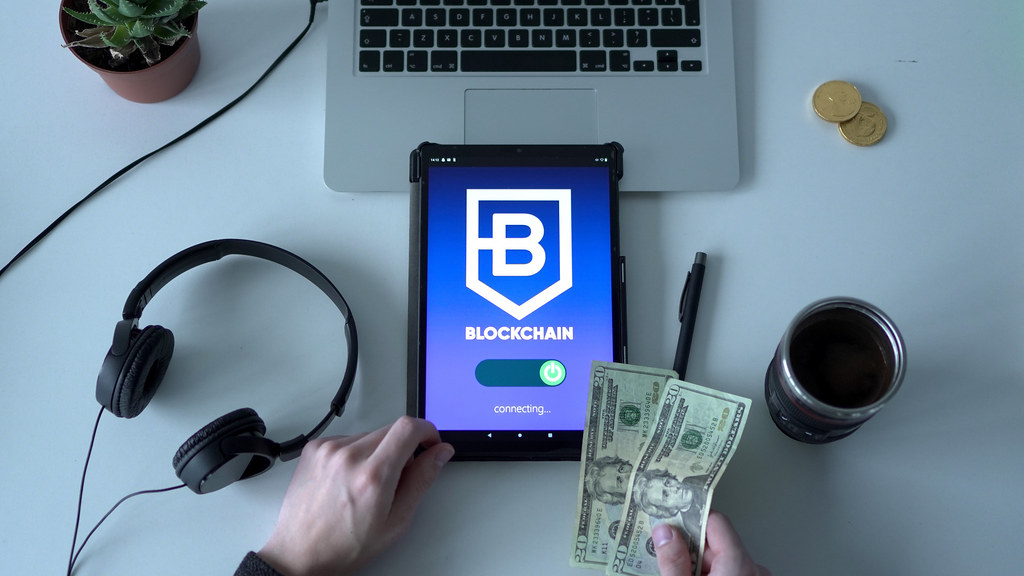
Why the Lowest BTC/PHP Price Can Still Be a Bad Trade

When traders in the Philippines search for the best BTC/PHP rate, price is usually the first thing they check — and the last thing that decides whether a trade actually goes well. Bitcoin P2P Philippines trading works differently from a centralized exchange order book. Each offer comes from an individual trader, not a company, and the details around that offer — the peso amount, the payment app, the order limits, and how fast the other side responds — often matter more than the headline rate.

How Bitcoin P2P Philippines Trading Actually Works

On a P2P platform, buyers and sellers post their own offers instead of trading against a shared order book. A seller lists a BTC/PHP rate, a payment method, and a minimum and maximum order size. A buyer picks an offer that fits, and the platform holds the seller’s Bitcoin in escrow until the buyer confirms the peso payment has landed. CoinCola’s own guide to trading BTC for PHP walks through this flow in more detail, including how disputes get resolved when a payment doesn’t show up on time.

Platforms operating this way in the Philippines are treated as money service businesses. The Bangko Sentral ng Pilipinas’ Circular No. 1108 put virtual asset service providers under BSP licensing, anti-money-laundering, and consumer-protection rules. That framework is also why P2P platforms ask for ID verification before releasing larger trades.

Bitcoin P2P Philippines trader checking a GCash payment app

Why Your PHP Amount Changes the Math

A trader’s quoted rate usually applies within a specific order-size range. Ask for a small amount and the rate on a large-volume offer may not apply. Ask for a large amount and you may need to split the trade across two or three offers to stay inside each trader’s limit. The rate you see on the top of a list is only the rate you get if your peso amount actually fits that trader’s range.

GCash or Maya: The Payment App Decides the Deal

GCash and Maya carry most retail P2P payment volume in the Philippines, and most sellers only accept one or the other — not always both. A slightly worse rate from a trader who accepts your payment app beats a better rate from one who doesn’t, because a mismatched payment method usually means the offer is unusable to you in the first place. Confirm the accepted app before you commit to an order, not after.

Order Limits and Trader Reputation Matter as Much as Price

Every trader profile carries a completion rate, an average release time, and a trade history. A new or low-volume trader offering the sharpest rate on the page can still mean a slower release, more back-and-forth in chat, or a higher chance the order gets cancelled. Established platforms use escrow specifically so the seller’s Bitcoin cannot move until the buyer’s payment is confirmed — but escrow protects your funds, not your time. Checking a trader’s completion history before opening an order is still the fastest way to avoid a stalled trade.

Timing matters too. An offer posted minutes ago from an active trader tends to move faster than an older listing from someone who hasn’t confirmed a trade in hours.

Where Bitcoin P2P Trading in the Philippines Goes From Here

BSP oversight of virtual asset platforms has been tightening rather than easing. In mid-2026, the central bank approved a memorandum barring licensed platforms from listing privacy-focused tokens and requiring a documented due-diligence process before any asset goes live for trading. A moratorium on new VASP licenses, first put in place in 2022, was still in effect as of mid-2026 with only narrow exceptions. For traders, that points toward platforms that can show active BSP licensing and clear compliance history mattering more over time, not less.

CoinCola has been expanding its own P2P user base this year, including a migration program aimed at vendors displaced by NoOnes’ shutdown — a reminder that when a P2P platform exits a market, as covered in Tamara News’ earlier report on the NoOnes shutdown, the traders and reputation histories built on it don’t automatically carry over.

Frequently Asked Questions

Is Bitcoin P2P trading legal in the Philippines?

Yes. Virtual asset service providers are regulated by the Bangko Sentral ng Pilipinas under Circular No. 1108, which covers licensing, anti-money-laundering checks, and consumer protection.

Which is better for Bitcoin P2P trades, GCash or Maya?

Neither is universally better — it depends on which payment app the specific trader you’re dealing with accepts. Check the accepted method before comparing rates.

Why did my BTC/PHP rate change when I entered my order amount?

Most offers only honor their quoted rate within a set minimum and maximum order size. An amount outside that range may require a different offer or a split trade.

What protects my money in a P2P Bitcoin trade?

Reputable platforms hold the seller’s Bitcoin in escrow until the buyer’s payment is confirmed, so the coins can’t be released before the peso payment lands.

How do I avoid a slow or cancelled P2P trade?

Check the trader’s completion rate, average release time, and how recently they were active before opening an order — not just their quoted rate.

Sources

The UK Erasmus+ Return Gets Its Immigration Rules

Buried in the UK’s latest statement of changes to the Immigration Rules is the legal machinery for something the country walked away from six years ago. The UK Erasmus+ return now has its immigration groundwork in place, with a dedicated set of visitor provisions taking effect on 8 October 2026 ahead of the UK’s association to the programme from 2027.

The changes appear in HC 584, laid before Parliament on 3 September 2026.

A new category of permitted activity

The rules gain an “Erasmus+ Activities” section in Appendix Visitor: Permitted Activities, covering four things a visitor may now do under the programme:

  • Provide or receive training at a UK organisation or educational institution, provided the role is not a permanent one, where the visitor is employed by or works with an overseas Erasmus+ participating body, or qualifies as a Youth Worker.
  • Undertake a traineeship — for visitors aged 18 or under, for up to 30 days, subject to UK Working Time Regulations.
  • Job shadowing, confined to what the rules call participative observation and not amounting to filling a permanent role.
  • Sports coaching and training assignments at UK sports organisations, on the same non-permanent basis.

The rules define each term. Job shadowing means following practitioners in their daily work to exchange practice and build partnerships. A traineeship means time in a UK enterprise to gain work experience and specific competencies. A Youth Worker is a professional or volunteer providing social or professional development learning to young people.

Under-18s undertaking a traineeship or job shadowing must provide written permission from a parent or guardian and from their home institution.

The student route changes matter more than they look

Several amendments to Appendix Student carve Erasmus+ participants out of restrictions that apply to everyone else:

  • Work placement duration limits are disapplied. A work placement on a course taken by an Erasmus+ participant at a participating sponsor is exempt from the normal duration restrictions — a substantial concession, given how tightly placement time is otherwise capped.
  • State school study becomes possible. Students are normally barred from studying at a state school or academy. Erasmus+ participants at a participating sponsor are now an exception.
  • Lower qualification levels qualify. Erasmus+ courses at Regulated Qualifications Framework level 2 or above in England, Wales and Northern Ireland, or Scottish Credit and Qualifications Framework level 5 or above in Scotland, are permitted — below the usual degree-level threshold.

Taken together these are not tidying amendments. They rebuild the flexibility that made short-cycle European mobility work.

The exchange scheme route

Erasmus+ has also been added to the list of Government Authorised Exchange schemes, for participants undertaking eligible traineeships, teaching placements and training assignments. The listed overarching sponsor is IRARA Services Ltd, and the maximum stay is 12 months as a work experience programme.

Participants on placements outside those categories are directed to alternative immigration routes.

The Government Authorised Exchange framework is the Home Office’s standard mechanism for short-term structured placements, and routing Erasmus+ through it rather than inventing a bespoke route is a deliberately low-friction choice. It also means the arrangement can be adjusted without a fresh statement of changes, since scheme entries sit in a list. Previous statements are collected on the Home Office’s statement of changes page.

What this does not do

It does not make the UK a member of Erasmus+. Association is stated to run from 2027; HC 584 builds the immigration plumbing in advance so the rules are ready when the programme is.

It also does not restore what UK students lost. These provisions govern people coming to the UK. Outbound mobility for UK students depends on the association agreement itself and on the funding attached to it, neither of which is an immigration matter.

One number worth diarising

Separately in the same statement, student maintenance requirements rise on 30 November 2026: from £1,529 to £1,570 per month for study in London, and from £1,171 to £1,203 outside it.

Applications made before that date are decided under the current figures. For a nine-month course in London the increase adds roughly £369 to the funds an applicant must evidence — small in isolation, less so stacked on rising fees.

The broader October package, which touches ten routes, is covered in our earlier analysis of HC 584.

Timing, in order

  • 8 October 2026 — Erasmus+ visitor and student provisions take effect. Applications made before this date are decided under the rules in force on 7 October.
  • 30 November 2026 — maintenance funds increase.
  • 2027 — UK association to Erasmus+ takes effect.

Questions about the Erasmus+ provisions

Is the UK rejoining Erasmus+?

Association to the programme has been agreed from 2027. HC 584 puts the supporting immigration rules in place from 8 October 2026, ahead of that.

What can an Erasmus+ visitor do in the UK?

Provide or receive training, undertake a traineeship if aged 18 or under for up to 30 days, do job shadowing limited to participative observation, and carry out sports coaching or training assignments — none amounting to a permanent role.

Do Erasmus+ students get different treatment on work placements?

Yes. Work placements on Erasmus+ courses at participating sponsors are exempt from the usual placement duration restrictions.

Can Erasmus+ participants study at UK state schools?

Yes. They are an explicit exception to the general prohibition on students studying at a state school or academy.

When do the new maintenance amounts apply?

From 30 November 2026: £1,570 per month in London and £1,203 outside London. Applications made before that date use the current figures.

Does this help UK students study in Europe?

Not directly. These rules govern inbound mobility to the UK. Outbound opportunities depend on the association agreement and its funding, which are separate from the Immigration Rules.

For European study funding that is open to applicants now, see our guides to Erasmus Mundus Joint Masters and Commonwealth Scholarships.

The New Public Charge Rule Starts September 18

From 18 September, US immigration officers regain broad discretion to decide whether a green card applicant is likely to become dependent on public benefits. The new public charge rule rescinds the 2022 regulation that had narrowed that assessment to a defined set of benefits and factors, and restores a looser “totality of the circumstances” test.

The final rule was published in the Federal Register on 20 July 2026, following a DHS announcement on 16 July.

Discretion is the substance of the change

Public charge is an old provision of US immigration law: an applicant deemed likely to become primarily dependent on government support can be refused. What shifts between administrations is not the principle but how much room the adjudicating officer has.

The 2022 rule constrained that room. It specified which benefits counted, which factors could be weighed, and how. An officer worked within defined boundaries.

The new rule removes those boundaries and returns to an individualised judgement across the totality of an applicant’s circumstances — age, health, family status, assets, resources, financial status, education and skills.

The practical effect is variability. Two applicants with similar profiles can receive different outcomes from different officers, and there is less regulatory text to point to on appeal.

More benefits enter the calculation

The rule expands what may be considered. An applicant’s application for, approval for, certification to receive, or receipt of means-tested public benefits can be weighed — including categories generally excluded under the 2022 rule, such as certain Medicaid, SNAP, CHIP, food and housing benefits.

Note the breadth of the verbs. Having applied for a benefit may be considered, whether or not it was received.

The date that determines which rule applies to you

This is the part worth getting exactly right.

The new rule applies to applications for admission made on or after 18 September 2026, and to adjustment of status applications postmarked or electronically submitted on or after 18 September 2026.

Applications submitted before that date are assessed under the 2022 framework. Receipt of means-tested benefits before 18 September will also be considered consistently with the 2022 rule — so past benefit use is not retroactively reassessed under the new standard.

For anyone with a substantially complete filing, the submission date carries real weight.

Who is and is not affected

Public charge does not apply to every immigration category. Refugees and asylees are exempt, as are several humanitarian categories and applicants for naturalisation, where the test is not part of the assessment.

It applies principally to family-based and employment-based green card applicants, and to some applicants for admission at a port of entry.

A recurring problem in previous rounds of public charge tightening was the chilling effect: eligible people, including US citizen children, dropped out of benefit programmes they were entitled to, out of fear it would affect a relative’s case. Benefits received by other household members are not automatically attributed to the applicant, and the exempt categories remain exempt. Anyone unsure of their position should get advice specific to their category rather than withdrawing from support pre-emptively.

What applicants can reasonably do

  • Check your submission date against 18 September. If your filing is nearly ready, that date decides which framework governs it.
  • Assemble evidence of financial self-sufficiency. Under a totality test, the strength of the overall picture matters more than any single element — income, assets, employment history, education, skills, health insurance.
  • Confirm whether your category is subject to the test at all before changing anything about benefit enrolment.
  • Expect less predictability. Broader discretion means outcomes vary more between officers, which is an argument for a thorough filing rather than a minimal one.

USCIS maintains guidance on public charge determinations in its newsroom.

Read alongside the wider tightening

This is not an isolated adjustment. It arrives days after the end of duration of status for student visas, and follows fee increases on employer-sponsored routes covered in our report on the H-1B extension surcharge. The consular network is also being reorganised, as we noted when USCIS opened a new overseas office.

Applicants planning multi-year pathways should assume the rules governing the later stages may not be the rules in place today.

Questions on the public charge test

When does the new public charge rule take effect?

18 September 2026. It applies to admission applications made on or after that date and adjustment of status applications postmarked or filed electronically on or after that date.

What is the main change?

USCIS officers regain broad discretion to make an individualised “totality of the circumstances” determination, rather than being limited to the defined benefits and factors set out in the 2022 rule.

Which benefits can now be considered?

Means-tested public benefits including certain Medicaid, SNAP, CHIP, food and housing benefits that were generally excluded under the 2022 rule. Applying for or being certified to receive them may also be weighed.

Will benefits I received in the past count against me?

Benefits received before 18 September 2026 will be considered consistently with the 2022 rule, not the new standard.

Does public charge apply to all green card applicants?

No. Refugees, asylees and several humanitarian categories are exempt, and it does not apply to naturalisation. It applies mainly to family-based and employment-based applicants.

Should I withdraw from benefits I currently receive?

Not without advice specific to your category. Exempt categories remain exempt, and benefits received by other household members are not automatically attributed to the applicant.

Our immigration desk is tracking each of the autumn US changes as they take effect — see the H-1B fee increase for the employment-route side.

BRICS New Delhi Declaration: What the 140 Points Actually Say

Leaders of the ten-member bloc adopted the BRICS New Delhi Declaration on 12 September, closing a summit that had looked, for two days, as though it might not produce a joint text at all. The 140-point document papers over real disagreement on the Middle East while making one concrete institutional demand: a bigger seat for India and Brazil at the United Nations.

The declaration was published in full by India’s Prime Minister’s Office under the title “Building for Resilience, Innovation, Cooperation and Sustainability”.

The Security Council line is the headline

China and Russia — both permanent members with vetoes — signed text supporting a greater role for India and Brazil at the Security Council.

Read that carefully. Supporting “a greater role” is not the same as backing new permanent seats with veto power, and no permanent member has ever ratified a reform that dilutes its own position. The wording is a diplomatic win for New Delhi and Brasília in the sense that it exists at all; it commits nobody to a vote.

Still, getting Beijing to sign anything on Indian Security Council ambitions is a shift worth noting, and it happened at a summit India hosted, alongside a Modi-Xi bilateral. Outlook India’s summary of the takeaways treats the clause as the summit’s principal deliverable for the host.

India’s incentive for hosting was largely this. A rotating summit presidency is an opportunity to put national priorities into a consensus text, and New Delhi used it on Security Council language and on the Kashmir condemnation. Whether either translates into anything is a separate question from whether they were worth extracting.

Where the bloc actually agreed

The economic sections carry the least ambiguity, because they describe work already underway:

  • Cross-border payments and local-currency settlement. Members committed to expanding trade settled in their own currencies rather than dollars.
  • Opposition to unilateral measures. The text opposes unilateral trade tariffs, secondary sanctions, and carbon border adjustment mechanisms it deems non-compliant with World Trade Organization rules.
  • Sectoral cooperation. Artificial intelligence, health, energy, food security and supply-chain resilience all get expanded frameworks.

The carbon border language is aimed squarely at the European Union’s border levy, which BRICS members have consistently characterised as protectionism dressed as climate policy. That is the bloc’s own framing, and European officials reject it.

No common currency, again

The declaration did not launch a BRICS currency. It has not launched one at any previous summit either, despite recurring speculation that it might.

What the bloc is actually building is narrower and more plausible: payment rails and bilateral local-currency arrangements that let members trade without routing through dollars. That reduces exposure to US financial leverage at the margin. It does not create a reserve currency, which would require a level of monetary and fiscal integration that members with this range of interest rates and capital controls are nowhere near.

The Middle East language, and what it cost

The hardest negotiation was over West Asia, with the UAE and Iran both inside the tent and on opposite sides of an active conflict.

The agreed text calls for an immediate ceasefire in Gaza, endorses a two-state solution along 1967 boundaries with East Jerusalem as the Palestinian capital, and supports full UN membership for Palestine. It also condemns the April terror attack in Jammu and Kashmir — a clause India pushed for.

Unanimity on that text, among members including Iran, Russia, China, the UAE, Egypt and Ethiopia, required days of drafting. It is a measure of how far the bloc will go to avoid publishing a split, and of how little the declaration therefore binds any individual member’s conduct.

What the summit tells you about BRICS

The bloc’s expansion to ten members bought it a larger share of world population and output, and cost it coherence. A group containing both Iran and the UAE, both India and China, cannot easily take positions with teeth.

What it can do — and what New Delhi delivered — is generate consensus documents that establish alternative framings of the international order: on trade rules, on sanctions, on who belongs at the top table. Those framings accumulate. They also survive contact with the fact that members disagree, because they cost nothing to sign.

The practical test is whether local-currency settlement volumes actually rise over the next year. That is measurable, unlike most of the rest.

Common questions about the declaration

Which countries are in BRICS now?

Brazil, Russia, India, China, South Africa, Egypt, Ethiopia, Indonesia, Iran and the United Arab Emirates.

Did BRICS agree to create a shared currency?

No. The declaration focuses on local-currency trade settlement and cross-border payment systems. No common currency was announced.

Does the declaration change India’s UN Security Council status?

No. It records China’s and Russia’s stated support for India and Brazil playing a greater role. Any actual change to Security Council membership requires UN Charter amendment, which permanent members can block.

What did BRICS say about tariffs?

The bloc opposed unilateral tariffs, secondary sanctions, and carbon border adjustment measures it considers inconsistent with WTO rules.

Is the declaration legally binding?

No. Summit declarations are political statements of intent. They create no enforceable obligations on signatories.

Why was the Middle East section difficult?

Because Iran and the UAE are both members and are on opposing sides of the current conflict. Reaching agreed language required extended negotiation.

Related reading on the shifting trade order: the US-Canada tariff exchange and the Trump-Xi summit in Washington.