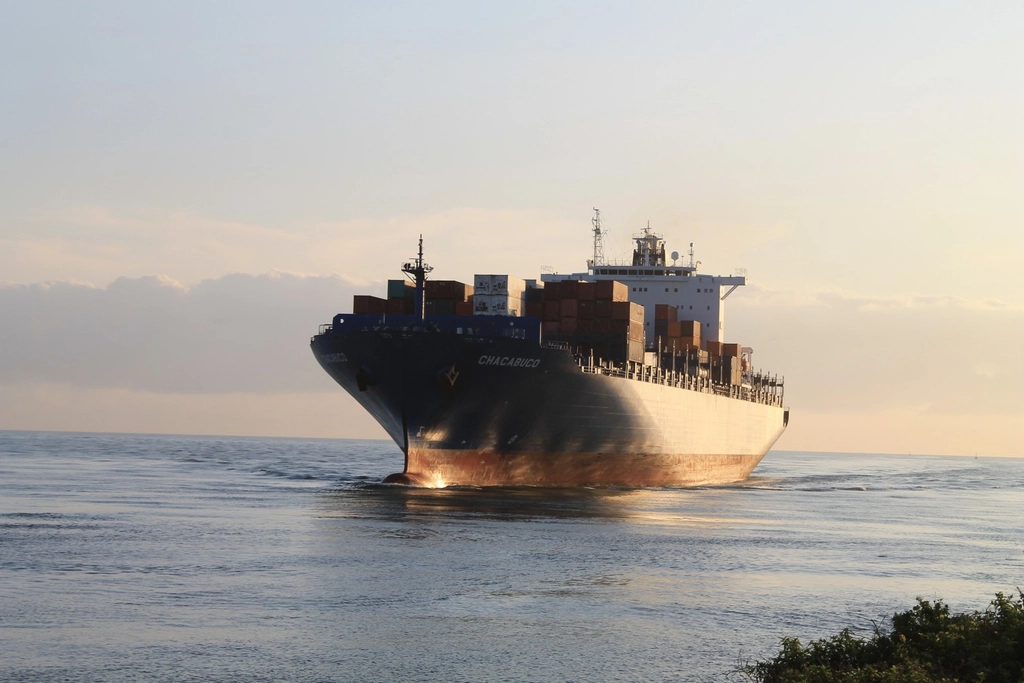

Brent crude has pushed back above $100 a barrel, and the Asia oil price shock is landing on economies that have almost no policy room left to absorb it. Japan, South Korea and India import the bulk of the crude that powers their industry. Indonesia and Thailand subsidise fuel, which converts a market price into a budget line.
Bloomberg framed it as a fresh test of the region’s resilience, arriving with inflation already running hot and both fiscal and monetary policy already tight.
Two different problems wearing the same clothes
Dearer oil hits Asian economies through two separate channels, and conflating them produces bad forecasts.
For import-dependent manufacturers — Japan, South Korea, and to a large extent India — the cost arrives as an input price. It widens the trade deficit, pressures the currency, and works through to consumer prices over one to two quarters. Central banks can respond, at the cost of growth.
For fuel subsidisers — Indonesia, Thailand and others — the cost arrives as a fiscal transfer. The government absorbs the gap between world price and pump price, so consumer inflation stays contained while the deficit widens. The pressure shows up in bond markets rather than CPI, and the political cost of removing a subsidy mid-shock is prohibitive.
Both are painful. They call for opposite responses, which is why a regional generalisation about “Asia” tends to mislead.
Why the market reaction has been calmer than the number suggests
Triple-digit oil used to reliably trigger growth scares. This time the reaction has been comparatively muted.
The reason offered by analysts is that investors read the move as a supply constraint driven by conflict rather than a demand-side energy crisis — a bounded, geopolitical premium rather than a structural repricing. Discussion of that reading appeared in market commentary following the move.
That reading holds only as long as the supply disruption stays bounded. It is worth noting the assumption explicitly, because it is doing a lot of work.
It is already in the data
This is no longer a forecast. US wholesale prices rose 0.4% in August, driven by energy — the release we covered in detail here. Elevated crude and refined product prices feed consumer indices with a lag, and Asian economies with higher energy weightings in their baskets will see it sooner than the US does.
The awkward part is the sequencing. The European Central Bank has already moved, raising rates in September, and the Federal Reserve meets on 16 September with markets leaning toward a hike, as set out in our preview. Asian central banks that follow face tightening into an oil-driven slowdown. Those that do not face currency pressure that makes imported energy still more expensive in local terms.
The subsidy arithmetic
For governments capping pump prices, the cost scales directly with both the crude price and consumption volume, and neither falls quickly.
Three imperfect options exist. Absorb the cost and widen the deficit. Pass some through and accept the inflation and the politics. Or narrow eligibility so support reaches lower-income households only — cleanest in theory, slow to implement, and dependent on transfer systems not every country has.
Most governments will default to absorbing it in the short run, which means the fiscal damage accumulates quietly and shows up later in borrowing costs.
India sits awkwardly between the two categories. It imports the large majority of its crude, which gives it the input-cost problem, and it retains politically sensitive fuel pricing, which gives it a version of the fiscal one. Japan and South Korea, by contrast, pass energy costs through more directly, so the pain appears faster in their inflation prints and more visibly in industrial margins.
Indicators worth tracking
- Currency moves against the dollar. A weakening currency multiplies the local-currency cost of crude and is the fastest transmission channel.
- Fuel subsidy announcements. Any adjustment to capped prices signals that a government has decided it can no longer absorb the gap.
- Central bank commentary on “second-round effects”. That phrase is the tell that a bank has stopped treating the shock as temporary.
Questions on the oil shock
How high has oil actually gone?
Brent traded above $107 a barrel, having crossed $100 for the first time in months. Prices closed the week more than 8% higher.
Which Asian economies are most exposed?
Japan, South Korea and India through import dependence for industry; Indonesia and Thailand through the fiscal cost of fuel subsidies. The exposure differs in kind, not just degree.
Why has the market reaction been relatively muted?
Analysts attribute it to investors reading the rise as a conflict-driven supply constraint rather than a broad energy crisis. That interpretation depends on the disruption remaining contained.
Will this force Asian central banks to raise rates?
Not automatically. Standard practice is to look through supply-driven price rises, but that is harder when inflation is already above target. Watch for language about second-round effects.
How does a fuel subsidy change the picture?
It moves the cost from consumers to the government budget. Consumer inflation stays lower, the fiscal deficit widens, and the strain appears in bond markets instead of price indices.
How quickly does crude reach consumer prices?
Typically one to two quarters for the full pass-through, though fuel and transport costs move faster. Economies with higher energy weightings in their consumer baskets see it sooner.
We are tracking the central bank response across regions — see our coverage of the ECB’s September move.