• Mon - Fri 9.00 - 19.00

Yearly Archives: 2026

Gaza’s Ceasefire Has a Body Count Now Topping 1,446 — Here’s How That Happened

A Gaza ceasefire anniversary strike killed at least six Palestinians over the weekend, including a Christian mother and daughter in Gaza City, as Israel marked the two-year anniversary of the October 7, 2023 Hamas-led attack by closing all crossings into Gaza and the West Bank. The Israeli military said it killed a Hamas official in an overnight strike on an apartment building, but gave no further detail on the civilian deaths that accompanied it.

The weekend violence is not an aberration. Since the ceasefire took effect roughly a year ago, at least 1,446 Palestinians have been killed and more than 5,060 injured, according to figures compiled after the latest strikes — a toll that sits uneasily alongside the word “ceasefire” itself.

What happened over the weekend

Israeli strikes killed at least five people on Saturday, including four women, in an apartment building attack in Gaza City. A family member, Fouad Al Najjar, said he lost his mother and grandmother in the strike, calling it “the worst day of my life.” A separate strike in Deir al-Balah on Sunday killed one person and injured ten more. The Israeli military said the Gaza City strike targeted a Hamas official, but did not address the other casualties in the building.

Israeli Defense Minister Israel Katz ordered all crossings into Gaza and the West Bank closed to mark the anniversary of the October 7 attacks, a move that compounds the humanitarian strain already facing the territory a year into a ceasefire that was supposed to have ended large-scale fighting.
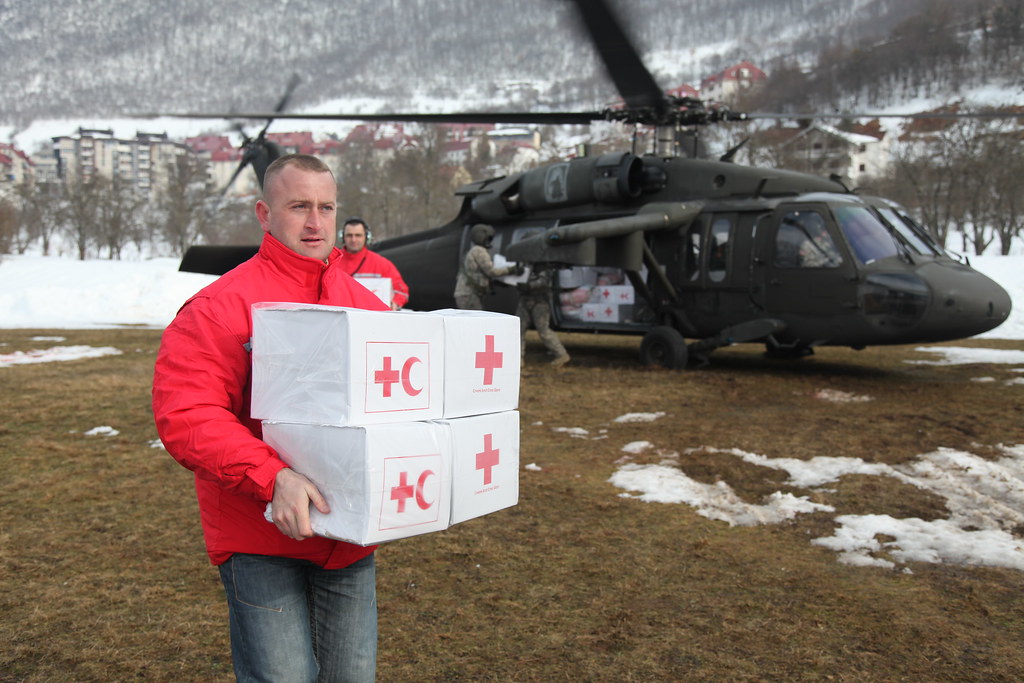
Gaza ceasefire anniversary strike: humanitarian aid being delivered

The Gaza ceasefire anniversary strike and what “ceasefire” has actually meant

The ceasefire that took hold roughly a year ago substantially reduced the scale of fighting compared with the earlier phases of the war, but it did not end Israeli strikes inside Gaza, which have continued at a steady pace against targets the military describes as Hamas operatives or infrastructure. The result is a running toll that, over twelve months, has reached 1,446 deaths — a figure that complicates any account of the ceasefire as a durable end to hostilities rather than a lower-intensity continuation of them.

Palestinian and international aid officials have repeatedly flagged the gap between the ceasefire’s formal terms and conditions on the ground, particularly around crossings and humanitarian access, which open and close depending on the security situation Israel determines on any given day.

Why the anniversary mattered this year

October 7 remains the most sensitive date on the calendar for both sides of the conflict — the anniversary of the attack that triggered the war, and now also a flashpoint within the ceasefire period itself. Israel’s decision to close all crossings on the anniversary reflects persistent security concerns even a year into the truce, while Palestinian officials and residents have pointed to the closures as evidence the ceasefire has not meaningfully changed daily conditions in Gaza.

What happens from here

Mediators involved in the original ceasefire agreement — reportedly including the United States, Qatar, and Egypt — have periodically pushed for a “next phase” intended to formalize longer-term arrangements around governance, reconstruction, and security guarantees. Those talks have moved slowly, and incidents like this weekend’s strikes tend to harden positions on both sides rather than accelerate them. Whether the anniversary becomes a turning point toward a more durable arrangement, or simply another entry in a year-long pattern of strikes inside a nominal truce, will depend largely on decisions made in the coming weeks rather than the ceasefire’s original terms.

Common questions about the current situation

How many people have died since the Gaza ceasefire began?
At least 1,446 Palestinians have been killed and more than 5,060 injured in the roughly year since the ceasefire took effect, according to tallies compiled after the latest weekend strikes.

What happened on the anniversary of October 7?
Israel closed all crossings into Gaza and the West Bank, and carried out a strike that killed a Hamas official along with several civilians in Gaza City.

Is the ceasefire still technically in effect?
Yes, in the sense that large-scale fighting has not resumed, but strikes have continued throughout the ceasefire period, raising questions about what the term means in practice.

Who confirmed the identity of the Hamas official killed?
The Israeli military said it killed a Hamas official in the overnight strike but did not release further identifying details in the initial reporting.

What role are mediators playing now?
Reports indicate the US, Qatar, and Egypt remain involved in talks aimed at a further ceasefire phase, though progress has been slow.

More on this story

See our coverage of the Palestinian legislative elections scheduled for November 28 and Canada’s asylum waiver for Israeli and Palestinian applicants. For broader sanctions context, read about the ICC’s contract termination under US sanctions threat.

Sources

The US Has Now Hit 70 Boats in the Caribbean — Four More Died This Weekend

The US military killed four more people in the latest of its Caribbean drug boat strikes over the weekend, US Southern Command said late Sunday, bringing the campaign’s total to roughly 70 strikes and at least 235 deaths since it began in September 2025. The military released video of the attack but, as with most strikes in the campaign, offered no evidence that the vessel was actually carrying narcotics.

The strike took place along established trafficking routes in the eastern Pacific and Caribbean, the areas US forces have targeted under an operation the Pentagon calls Southern Spear. It is the first confirmed strike since Nicolás Maduro’s capture earlier this year, and it suggests the campaign is continuing largely unchanged despite the removal of the Venezuelan leader the administration had cited as a central target.

What happened this weekend

US Southern Command announced the strike late Sunday, saying it had destroyed a vessel believed to be smuggling narcotics toward the United States. Four people on board were killed. The military did not name them, did not say what nationality they held, and did not release evidence — drugs, weapons, or otherwise — recovered from the wreckage. That pattern has held across most of the campaign’s strikes: officials assert the boats are trafficking vessels, but public proof is rarely produced.

Defense Secretary Pete Hegseth has overseen an expansion of the campaign’s legal and logistical footing this year, including new counter-narcotics agreements signed with Colombia, Guatemala, and Honduras in August. Those agreements sit under a broader regional security framework the administration calls the Shield of the Americas coalition, launched in March 2026.

Inside the Caribbean drug boat strikes campaign

President Trump has described the campaign as an active armed conflict with drug cartels, a framing his administration has used to justify strikes without the individualized evidence or judicial process that would normally accompany a law enforcement action against suspected traffickers. Defenders of the policy argue that cartel supply routes function as a direct threat to American lives through overdose deaths, and that military tools are justified against what they describe as narco-terrorism.

Critics, including UN human rights experts, take a different view. They have warned that strikes carried out without verifying who is on board, and without attempting interdiction or arrest first, may violate international law and could constitute extrajudicial killings. Those experts have gone further, suggesting the pattern of strikes — hitting disabled vessels, in some cases after survivors were seen in the water — could amount to crimes against humanity. The administration has rejected that characterization and has not released the legal justification underpinning individual strikes.

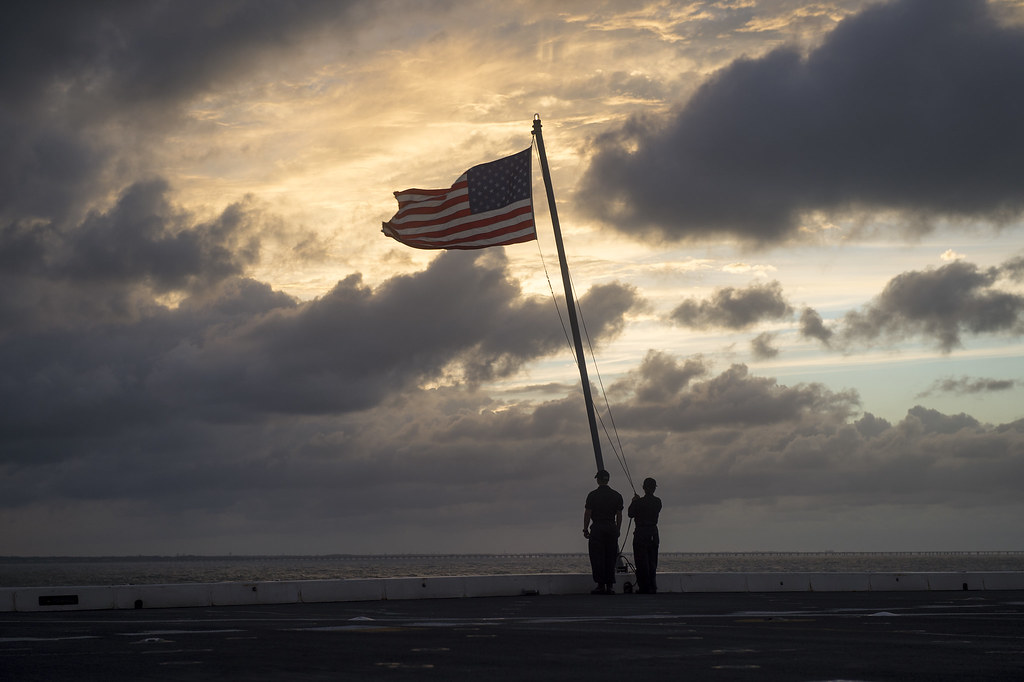
Caribbean drug boat strikes: US Navy personnel ceremony at sea

Why the Caribbean drug boat strikes have outlasted Maduro

For much of 2025 and early 2026, the campaign was publicly tied to pressure on Maduro, who the US accused of running Venezuela as a narco-state. His capture by US forces earlier this year removed that specific target, and many observers expected the pace of strikes to slow once he was in American custody facing prosecution. Instead, Sunday’s strike — the first confirmed since his capture — indicates the operation has its own institutional momentum, built on bilateral agreements, deployed assets, and a legal posture the administration shows no sign of unwinding.

That raises a harder question for the region: whether the campaign was ever primarily about Maduro, or whether it was always intended as an open-ended effort against trafficking networks that will continue regardless of who runs Venezuela’s government.

What happens next for the campaign

Congress has periodically pressed the Pentagon for the legal memos justifying individual strikes, with limited success. Legal challenges are possible but face steep hurdles, since courts have historically given the executive branch wide latitude over military operations conducted abroad against non-citizens. Regional governments that have signed on to the Shield of the Americas framework face their own domestic pressure, particularly if strikes continue killing people without public evidence of trafficking.

For now, the operational tempo — a strike roughly every few days since the campaign began — shows no sign of slowing, and SOUTHCOM has not indicated any change in rules of engagement following Maduro’s removal from the picture.

Frequently asked questions

How many people have died in the Caribbean drug boat strikes?
At least 235 people have been killed across roughly 70 strikes since the campaign began in September 2025, according to figures reported after the latest strike.

Has the US provided evidence the boats were trafficking drugs?
In most cases, no. The military has released strike footage but has not consistently published evidence — recovered narcotics, weapons, or vessel registration — tying individual boats to trafficking.

Did the strikes stop after Maduro’s capture?
No. The strike reported this weekend is the first confirmed since Maduro’s capture, indicating the campaign is continuing independent of his removal.

What is Operation Southern Spear?
It is the Pentagon’s name for the broader counter-narcotics military campaign in the Caribbean and eastern Pacific, operating alongside the Shield of the Americas regional security coalition launched in March 2026.

Is the campaign legal under international law?
That is disputed. UN human rights experts have warned the strikes may violate international law; the US administration maintains they are a legitimate response to what it calls narco-terrorism.

Which countries have signed security agreements tied to the campaign?
Colombia, Guatemala, and Honduras signed counter-narcotics agreements with the US in August 2026 as part of the broader regional framework.

Related coverage

For more on the administration’s approach to foreign sanctions and military pressure campaigns, see our coverage of Putin’s Valdai remarks on Ukraine and the ICC’s contract termination under US sanctions pressure. We also previously reported on new US sanctions on an Iran-linked network.

Sources

UCAS October 15 Deadline 2027: Oxford, Cambridge, Medicine

The UCAS 15 October deadline for 2027 entry falls in ten days: applications for Oxford, Cambridge and most medicine, dentistry and veterinary courses must reach UCAS by 18:00 UK time on 15 October 2026, per UCAS.

On this page

Who the early deadline covers

UCAS says the date applies to any 2027 entry course at the universities of Oxford and Cambridge, and to most courses in medicine, veterinary medicine/science and dentistry. It describes this as the date to guarantee equal consideration.

The rest of the calendar

On its key dates page, UCAS lists 13 January 2027 (18:00 UK time) as the equal consideration date for most undergraduate courses, 30 June 2027 as the cutoff after which applications go into Clearing, and 23 September 2027 as the final date. Applications opened on 12 May 2026.

Note for international applicants

UCAS notes that many universities continue accepting applications from international students until later in the year. That does not apply to the Oxford, Cambridge and medicine-type courses above, so check each course’s own deadline in the UCAS search tool.

Planning your five choices

UCAS allows up to five choices in total and lets you add choices with different deadlines afterwards. If you are also weighing postgraduate funding, see our guides to the Erasmus Mundus scholarships and Chevening timeline, or run your options through the visa eligibility checker.

UCAS October deadline FAQ

What time is the UCAS 15 October deadline?

18:00 UK time on 15 October 2026.

Does it apply to every course?

No. It covers Oxford and Cambridge and most courses in medicine, veterinary medicine/science and dentistry. Most other courses use 13 January 2027.

How many choices can I make?

Up to five in total, and you can add choices with different deadlines afterwards.

Can international students apply later?

Many universities accept international applications later, per UCAS, but not for the early-deadline courses.

Related: DAAD and Chevening deadlines.

South Korea Exports Hit Record $120.9 Billion on AI Chips

South Korea’s record exports in September 2026 reached $120.9 billion, up 83.5 percent from a year earlier, driven by an AI-fuelled surge in chip shipments, Al Jazeera reports. The previous monthly record was $102.25 billion, set in June.

Key points

Chips drive the jump

Chip shipments hit $60.3 billion in September, an increase of more than 260 percent, and made up nearly half of all exports. Al Jazeera notes that SK Hynix and Samsung Electronics control about 80 percent of the global high-bandwidth memory market and 60 percent of DRAM.

The year so far

Exports for January to September totalled $814.5 billion, against $709.7 billion for all of 2025. The trade surplus for the period was $49.85 billion. Nominal GDP grew 26.4 percent year on year in April to June, and the forecast for 2026 real growth is 3 percent, the strongest since 2017 outside the pandemic years, per the same report. The Kospi has risen nearly 60 percent this year.

Risks the government names

Trade Minister Kim Jeong-kwan called the result “a valuable achievement” but said global protectionism and Middle East tensions remain major variables. For the demand side, see our report on the Nvidia market value surge.

Reading the numbers

The figures come from government-reported trade data via Al Jazeera, and are concentrated in one sector. More market context is in our pieces on European stocks and bond yields and the US jobs report; broader coverage is in the Al Jazeera economy section.

South Korea exports: quick answers

How big were South Korea’s September exports?

$120.9 billion, up 83.5 percent year on year, per Al Jazeera.

What drove the record?

Chip shipments of $60.3 billion, nearly half of all exports.

What was the previous record?

$102.25 billion in June 2026.

What risks did the trade minister cite?

Global protectionism and tensions in the Middle East.

Company setup abroad? See the company formation guide.

Canada Just Invited 3,500 More Tradespeople to Apply for PR

Skilled tradespeople looking to settle in Canada got a fresh batch of good news on October 1. The latest Express Entry trades draw issued 3,500 invitations to apply for permanent residence. The cutoff score for this round sat at 476 points on Canada’s Comprehensive Ranking System, the tool IRCC uses to rank every Express Entry candidate. It is the second draw this year dedicated specifically to the Trades category. It brings the total invitations issued through that category in 2026 to 6,500.

Inside the latest Express Entry trades draw

Candidates needed a few things to qualify. First, they needed to meet the minimum work experience requirements specific to the Trades category. Second, they needed a Comprehensive Ranking System score of at least 476. Third, they needed an Express Entry profile created before the draw’s cutoff timestamp. That cutoff was set at 12:47:55 UTC on October 1, 2026.

There is a wrinkle for candidates who scored exactly 476 points. Because so many people can land on the same score, IRCC uses a tie-breaking rule based on profile creation date. For applicants at exactly the cutoff score, timing mattered more. Their profile needed to exist on or before May 28, 2026, at 16:55:23 UTC. Anyone who created a profile after that moment, even with a score of 476, missed this round.

How this compares to the year’s first trades draw

This was not the first Trades-specific draw of 2026. An earlier round on April 2 issued 3,000 invitations at a slightly higher cutoff of 477 points. Combined, the two draws have now issued 6,500 invitations through the Trades category so far this year. That volume signals Canada treats skilled trades as a genuine, ongoing pathway within Express Entry, not a one-off experiment.

A tradesperson at work featured in the Express Entry trades draw story

The Trades category is relatively new within Express Entry’s broader structure. That structure has traditionally leaned toward white-collar professions and higher-scoring candidates overall. Its continued use throughout 2026 suggests something deliberate. Canada is trying to close gaps in its skilled trades workforce through immigration, alongside its more familiar tech-and-finance-focused draws.

What this reveals about Canada’s selection priorities

Canada’s broader Express Entry strategy in 2026 has leaned toward candidates with existing Canadian connections. Provincial nominees and candidates with Canadian work experience have been prioritized across multiple draw categories this year, not just Trades. That shift makes sense from a policy standpoint. Candidates already living and working in Canada tend to integrate faster. They face fewer unknowns than applicants arriving from abroad for the first time.

For tradespeople specifically, that prioritization matters. Many skilled trades roles already follow this pattern, including electricians, welders and construction specialists. Canadian employers sponsor temporary workers in these roles, who later transition to permanent residence through exactly this kind of targeted draw. The draw’s design rewards people already embedded in that pipeline.

Why trades draws look different from other Express Entry rounds

Most Express Entry draws reward points for education, language test scores and years of skilled work experience in professional occupations. The Trades category works differently. It recognizes hands-on occupations that do not always score well under the general point system, even when Canada faces real shortages in exactly those fields. Electricians, plumbers, welders and heavy equipment operators are common examples.

That design choice reflects a practical problem Canada has flagged for years. A candidate with a strong trades background and years of hands-on experience can still score lower overall than a candidate with a university degree and less hands-on work history, simply because of how the general points system weighs education. Category-specific draws like this one exist to correct for that gap.

What’s next for Express Entry trades

Two Trades draws are now complete for 2026. Candidates in the category should watch for whether a third round lands before year-end. IRCC has not announced a fixed schedule for Trades-specific draws. Some other categories run on a more predictable cadence, but this one does not. Candidates sitting below this round’s 476 cutoff should keep building their profile. Work experience, language scores and Canadian job offers can all raise a candidate’s ranking ahead of the next invitation round.

Common questions, answered

How many invitations did the October 1 Express Entry trades draw issue?
IRCC issued 3,500 invitations to apply for permanent residence, with a Comprehensive Ranking System cutoff of 476 points.

Was this the only Trades-specific draw in 2026?
No. An earlier draw on April 2, 2026, issued 3,000 invitations at a 477-point cutoff. Together, the two draws have issued 6,500 invitations this year.

What is the tie-breaking rule for candidates at exactly 476 points?
Those candidates needed their Express Entry profile created on or before May 28, 2026, at 16:55:23 UTC. Only then were they included in this round.

What qualifies someone for the Trades category?
Candidates need to meet minimum work experience requirements specific to skilled trades occupations. They also need the required Comprehensive Ranking System score.

Does Canada prioritize candidates already living in the country?
Yes. Canada’s 2026 Express Entry strategy has favored provincial nominees and candidates with existing Canadian work experience across multiple draw categories.

When will the next Trades draw happen?
IRCC has not announced a fixed schedule for Trades-specific draws, so the timing of the next round remains unconfirmed.

Further sources

  • CIC News — Canada invites 3,500 tradespeople to apply for permanent residence. cicnews.com
  • Government of Canada — Express Entry rounds of invitations. canada.ca

For more on Canada’s immigration system, see our coverage of September’s Express Entry draw. We also covered Canada’s processing times update.