• Mon - Fri 9.00 - 19.00

Yearly Archives: 2026

Perplexity’s New AI Agent Wants to Run Your PC For You

Perplexity has brought its computer-operating AI agent to Windows. PC owners with high-end Nvidia graphics cards can now use a tool that carries out multi-step tasks, not just answers questions.

The Perplexity Windows AI agent rollout targets a specific slice of the Windows market. It requires an Nvidia GeForce RTX or RTX PRO GPU with at least 24GB of VRAM, hardware typically found in gaming and workstation PCs rather than everyday laptops.

What the agent can actually do

Rather than answering a query in a chat window, the agent operates applications on the user’s behalf. It follows instructions across multiple steps, the way a human would click through a task.

That sets it apart from Perplexity’s existing search product. It sits closer to the emerging category of ‘computer use’ AI agents that other labs have also raced to ship.

Perplexity Windows AI agent

Why the hardware requirement matters

Running an AI agent that can see and act on a screen in real time takes far more processing power than a text-based chatbot. That’s why Perplexity restricted the initial release to GPUs with substantial video memory.

That requirement limits early access to gamers, enthusiasts and professionals who already own high-end Nvidia hardware, rather than the broader Windows user base.

How this fits the wider AI agent race

Perplexity’s move follows a broader industry push toward agents that operate software directly. Several major AI labs have targeted this as the next step beyond conversational chatbots.

Apple separately opened a public beta of a rebuilt Siri, built with Google’s Gemini models, this same week. That shows how fast big tech companies are racing to ship agent-like AI features.

What happens next for the Perplexity Windows AI agent

Broader hardware support, including GPUs with less video memory, would signal that Perplexity wants to push past its current enthusiast audience.

Anyone considering the tool should weigh that it requires trusting an AI system to take real actions on their PC. That’s a step up in risk from a chatbot that only returns text.

Why Nvidia’s hardware sits at the center of this

The 24GB VRAM requirement shows how demanding these new agent tools are on graphics hardware. They often need to process screen content and run local AI models at the same time, rather than sending everything to a remote server.

That makes Nvidia’s high-end GPU lineup a gatekeeper for this new category of software. Earlier PC gaming features followed a similar pattern before becoming widely available.

Who should try it first

Owners of gaming or workstation PCs with the required Nvidia hardware are the natural early adopters. That’s especially true for anyone already comfortable granting an app broad background permissions.

Everyday laptop owners without a discrete high-end GPU will need to wait. A lighter version of the tool, if Perplexity builds one, could bring it to typical consumer hardware.

Frequently asked questions

What is Perplexity’s new Windows AI agent?

It’s an AI tool that can operate applications and carry out multi-step tasks on a Windows PC, rather than only answering questions in a chat window.

What hardware do I need to use it?

The agent currently requires an Nvidia GeForce RTX or RTX PRO graphics card with at least 24GB of VRAM, which limits it to higher-end gaming and workstation PCs.

How is this different from Perplexity’s search product?

Perplexity’s search tool answers questions using web content; this agent is designed to act on a user’s behalf inside applications, following multi-step instructions.

Are other companies building similar AI agents?

Yes. Several major AI labs and tech companies, including Apple with its rebuilt Siri, are racing to ship agents that can operate software directly rather than just chat.

Is there a risk to letting an AI agent control my PC?

Any tool that can take real actions on your computer carries more risk than a text-only chatbot, so users should understand what permissions they are granting before enabling it.

Related coverage on Tamara News

Sources

Global State of Democracy Report Puts US at 50-Year Low

The United States has recorded its lowest level of democratic performance in the 50 years the measure has existed, according to the Global State of Democracy report published this week by International IDEA. The finding sits inside a wider pattern the intergovernmental body describes as broad-based democratic decline across its 174-country index.

Story contents

The headline finding

International IDEA’s annual assessment, reported on 15 September, places US democratic performance at its lowest point since measurement began in 1975. Seema Shah, who heads the organisation’s democracy assessment team, told NPR that among countries in decline, “the clearest example, unfortunately, is the United States”.

The report’s own language on 2025 is direct. It says President Donald Trump “quickly amassed power in the executive branch and wielded it to further a narrow set of personal goals and pursue retaliation against perceived enemies”, and that the results have been far-reaching, “undermining the rule of law domestically and internationally and testing long-standing alliances and multilateral cooperation”.

That is International IDEA’s characterisation, not a neutral finding of fact, and it is worth naming as such. The organisation is an intergovernmental body with an explicit democracy-promotion mandate, and its index reflects a particular definition of democratic performance.

What the index actually measures

The Global State of Democracy indices cover 174 countries with data running back to 1975, which is what allows the 50-year comparison. This edition assesses changes between 2020 and 2025, so it captures a five-year window rather than a single year’s events.

The measure is composite. It aggregates indicators grouped around representation, rights, rule of law and participation, each built from expert assessments and observable data. A country’s score can fall without any constitutional change, because the index is tracking practice rather than statute — how elections run, whether parliaments function, what happens to journalists.

The global picture

Researchers observed the same pattern across many countries: severe drops in the scores measuring freedom of expression, freedom of the press, credible elections and effective parliament. Those four are the components most sensitive to executive pressure, which is why they tend to move together.

The reporting period covers a stretch in which several established democracies held contested elections under strain. Sweden’s recent vote, which we covered in our report on the 2026 result, is one of the tests of whether European systems absorb polarisation without institutional damage. The parallel story on the other side of the ledger is the consolidation of alternative multilateral blocs, set out in the BRICS New Delhi declaration.

How to read the claim

Three qualifications belong with the headline. First, “lowest in 50 years” is a statement about a specific index, not a universal ranking; other democracy measures use different indicators and produce different orderings. Second, the window ends in 2025, so it does not capture events in 2026. Third, a decline in performance score is not the same as a regime classification change, and International IDEA does not claim otherwise.

None of that makes the finding trivial. The value of a 50-year series is precisely that it can distinguish a bad year from a trend, and the report’s argument is that the recent movement is a trend.

Where this goes from here

The report lands days before the UN General Assembly’s high-level week, where the 81st session convenes under a theme built around restoring trust in multilateral institutions. Expect the findings to be cited in that debate, and contested in it.

The more consequential question is domestic. Indices of this kind influence risk assessments, development funding decisions and the framing used by opposition parties and civil society groups. Whether the US figure moves in the next edition will depend on the same four components that fell this time — press freedom, expression, electoral credibility and parliamentary effectiveness.

Questions readers are asking

Who publishes the Global State of Democracy report?

The International Institute for Democracy and Electoral Assistance, known as International IDEA, an intergovernmental organisation that produces the annual index.

How many countries does the index cover?

The report tracks democratic performance across 174 countries, drawing on data going back to 1975.

What period does the 2026 edition assess?

This edition focuses on changes in democratic performance between 2020 and 2025.

Which measures fell most sharply?

Researchers recorded severe drops in scores for freedom of expression, freedom of the press, credible elections and effective parliament.

Is the United States the only country in decline?

No. International IDEA describes a broad global pattern of decline; it singles out the United States as the clearest example rather than the only one.

Does a low score mean a country is no longer a democracy?

No. The index measures performance on a set of indicators over time. A fall in score signals deterioration on those measures, not a formal change of system.

Continue reading

Cloudflare Just Cut Off a Whole Class of AI Bots

Cloudflare began blocking a category of AI web crawlers by default on September 15, 2026. The change could reshape how AI companies gather training and search data from millions of websites.

The Cloudflare AI crawler block targets what Cloudflare calls ‘mixed-use’ crawlers. These are bots that scrape content for both AI model training and live AI-powered search results. The new default applies to ad-supported pages across Cloudflare’s network.

What counts as a mixed-use crawler

Cloudflare draws a line between crawlers that index pages for traditional search, and those that feed scraped content into AI systems that answer questions directly, often without sending a visitor to the original site.

Mixed-use crawlers fall into the second group. They pull content for both purposes. Cloudflare argues that undercuts the traffic and ad revenue ad-supported publishers depend on.

Cloudflare AI crawler block

Why publishers have been pushing for this

News publishers have complained for more than a year that AI search summaries answer questions using scraped articles. Readers get the answer without clicking through, so publishers lose the traffic.

Cloudflare sits in front of a large share of the web’s traffic. That gives its default settings outsized influence over what AI companies can access, without individual publishers configuring blocking rules themselves.

How AI companies are likely to respond

Site owners can still opt back in and allow mixed-use crawlers. So the change works as a new default, not an outright ban.

AI companies that need continuously refreshed web content, for training and real-time answers alike, may need direct licensing deals with publishers instead of relying on open crawling.

What happens next for the Cloudflare AI crawler block

Cloudflare has rolled out similar publisher-friendly tools gradually before, watching adoption before widening scope. Other categories of crawlers could face new defaults in the months ahead.

Publishers and AI companies alike will watch whether other infrastructure providers follow Cloudflare’s lead. That would make opting out of AI scraping the norm, rather than something publishers configure themselves.

The bigger fight over who owns web content

This change is one piece of a wider dispute between AI companies and publishers. Their content trains and feeds AI models, and that fight has already produced lawsuits and licensing deals across the news industry.

Cloudflare positioning itself as a gatekeeper gives it new leverage in that negotiation. It can shift the default terms of access without any single publisher or AI company negotiating directly.

What site owners should check now

Publishers using Cloudflare should confirm their current crawler settings. Don’t assume the new default matches what you want. Sites that previously allowed all bots may now block traffic they intended to keep.

Sites that rely on AI-driven referral traffic for any part of their audience should weigh that tradeoff before deciding whether to opt back in.

Frequently asked questions

What did Cloudflare change on September 15, 2026?

Cloudflare began blocking ‘mixed-use’ AI crawlers by default on ad-supported pages across its network, a change aimed at AI bots that scrape content for both training and live search answers.

What is a mixed-use AI crawler?

It’s a bot that scrapes website content for two purposes at once: training AI models and powering AI search tools that answer user questions directly, often without driving traffic back to the source site.

Can website owners still allow these crawlers?

Yes. The new setting is a default, not a permanent block, so site owners can opt back in and allow mixed-use crawlers if they choose to.

Why does this matter for publishers?

Publishers have argued that AI search answers built from their content reduce the traffic and ad revenue their sites depend on, since readers get answers without clicking through.

Will other companies follow Cloudflare’s approach?

It’s too early to say, but Cloudflare’s scale means its default settings already influence a large share of AI companies’ ability to crawl the open web without individual publisher agreements.

Related coverage on Tamara News

Sources

UN General Assembly High-Level Week 2026: The Full Agenda

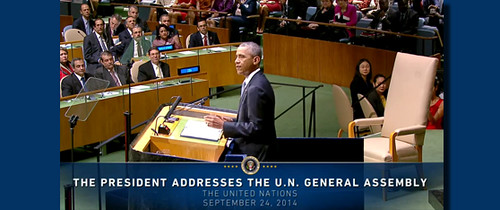
The UN General Assembly high-level week opens on 18 September 2026 and runs to 28 September, with heads of state and government gathering in New York for the 81st session under the theme “Restoring trust, managing transformation: A United Nations that delivers for all”. The calendar the UN has published is unusually front-loaded with formal outcomes rather than speeches alone.

Jump to a section

The dates that matter

The UN’s official high-level week page sets the window at 18 to 28 September. The week opens with the SDG Moment on 18 September, a three-hour session in the General Assembly Hall convened by the Secretary-General under General Assembly Resolution 74/4, which showcases national and community-level progress on the Sustainable Development Goals.

Two supporting platforms bracket the week. The SDG Media Zone, produced by the UN Department of Global Communications, runs 21 to 25 September. The Goals Lounge, convened by the Deputy Secretary-General and hosted by the UN Office for Partnerships, runs longer, from 14 to 25 September.

The General Debate

The General Debate runs 22 to 28 September in the General Assembly Hall. It is the annual meeting of heads of state and government at the opening of a session, where leaders set out national positions and priorities. Khalilur Rahman of Bangladesh presides over the 81st session.

The Secretary-General set the framing in June, returning to the Charter’s opening words. “The Charter of the United Nations begins with three simple words: ‘We the peoples,'” António Guterres said, adding that the phrase is not “we the powerful” or “we the victorious”. It is a deliberate signal ahead of a session in which several of the scheduled meetings turn on whether smaller states can get commitments from larger ones.

Climate action and the just transition

The Climate Summit on 23 September, convened by Guterres in the Trusteeship Council Chamber, is the week’s centrepiece on emissions. The UN’s own framing is notably blunt: ten years after the Paris Agreement, it says, the climate crisis has entered a new phase in which overshoot is now inevitable, even as the energy transition accelerates.

Leaders from major economies, developing and vulnerable countries, and major energy producers and consumers are being brought into the same room to set out how they will accelerate the transition, strengthen energy security and advance climate justice. The backdrop is a year of records — our report on the hottest August on record covers the temperature data leaders will be asked about.

Four high-level meetings

Beyond the debate and the climate event, four commemorative or negotiated meetings sit on the calendar.

On 23 September, a high-level meeting marks the 40th anniversary of the Declaration on the Right to Development, adopted in 1986. On 24 September, a high-level plenary addresses the existential threats posed by sea level rise, aimed at small island developing states and low-lying coastal areas.

On 25 September, the President of the General Assembly convenes a one-day meeting on pandemic prevention, preparedness and response, themed around a multilateral and intergenerational approach built on equity and solidarity. This is the one scheduled to produce a concise, action-oriented political declaration agreed by consensus through intergovernmental negotiations — the closest thing the week has to a binding output.

On 28 September, a high-level meeting marks the 25th anniversary of the Durban Declaration and Programme of Action on racial justice, followed on 29 September by the annual plenary for the International Day for the Total Elimination of Nuclear Weapons.

What to look for

Three tests are worth applying as the week runs. Whether the pandemic declaration survives consensus negotiation intact, or is thinned to language every delegation can accept. Whether the climate event produces named national commitments or restates existing pledges. And whether the sea level rise plenary moves from recognition to financing, which is the step small island states have pressed for across several sessions.

The geopolitical context is heavier than usual. Our coverage of the BRICS New Delhi declaration and of the EU’s renewal of Russia sanctions sets out the blocs that will be arguing past each other in the hall.

Where to follow it

All listed events are live-streamed on UN Web TV. Sessions in the General Assembly Hall and Trusteeship Council Chamber run on published times in New York, and the UN posts the speaker list for the General Debate as it firms up during the week.

Common questions about the session

When does the UN General Assembly high-level week run in 2026?

The UN lists high-level week as 18 to 28 September 2026, with the General Debate itself running from 22 to 28 September in the General Assembly Hall.

Who is presiding over the 81st session?

Khalilur Rahman of Bangladesh presides over the 81st session, under the theme “Restoring trust, managing transformation: A United Nations that delivers for all.”

What is the Climate Summit on 23 September?

It is a high-level event on climate action and the just transition convened by Secretary-General António Guterres, bringing together major economies, vulnerable states and large energy producers and consumers.

Is there a formal outcome document this year?

The high-level meeting on pandemic prevention, preparedness and response on 25 September is scheduled to conclude with a political declaration agreed by consensus through intergovernmental negotiation.

Where can the sessions be watched?

The UN streams the events on UN Web TV, and runs the SDG Media Zone from 21 to 25 September alongside the Goals Lounge from 14 to 25 September.

More world coverage

Bank of America Spooked Wall Street — One Analyst Says Don’t Panic

Bank of America shares slipped more than 5% on September 15, 2026. The bank issued a weaker-than-expected outlook for the third quarter.

The Bank of America forecast pointed to softer trading and lending income for the current quarter. Morgan Stanley told clients it expects a fourth-quarter rebound, and that the stock’s drop was overdone.

What the Bank of America forecast said

The bank flagged a weaker third quarter. It gave little detail on which business line is under the most pressure.

That lack of detail is part of why the reaction was sharp. Investors tend to punish vague guidance more than a specific, well-explained shortfall.

Bank of America forecast

Why Morgan Stanley says the drop is overdone

Morgan Stanley’s note argued the underlying business remains intact. It framed the third-quarter softness as a timing issue, not a structural problem.

That call matters for how other investors read the sell-off. A sharp price drop paired with a bullish analyst note can mark a buying opportunity, or simply reflect one firm’s more optimistic view.

The broader banking backdrop

Bank of America’s guidance landed the same week major central banks raised rates to fight Middle East-driven inflation. That cuts both ways for lenders.

Higher rates can widen the margin banks earn on loans. But they also raise the risk of a slowdown in borrowing and trading activity.

Investors will watch whether other major US banks flag similar softness when they report. That would point to an industry-wide pattern, not a Bank of America-specific issue.

What happens next for Bank of America

The bank’s full third-quarter results, expected in the coming weeks, will show whether the guidance was conservative or something more serious.

Until then, expect the stock to stay sensitive to any fresh commentary from bank executives or peer lenders on lending and trading conditions.

Why analyst calls like this matter to ordinary investors

One research note won’t settle the debate on its own. But it shapes how other traders and fund managers weigh the risk of holding the stock through the next earnings report.

For anyone holding shares directly, the takeaway is simple. The guidance was vague enough that the real answer only comes once the bank reports actual numbers.

What to watch when peer banks report

Other large US banks report their own results in the coming weeks. Similar commentary on softer trading or lending would suggest an industry-wide trend.

If peer banks report steady conditions instead, that would make Bank of America’s guidance look more like a company-specific issue worth closer scrutiny.

What this says about the health of consumer lending

Bank earnings guidance often serves as an early signal for the wider economy, since lenders see loan demand and repayment trends before those show up in broader data.

A vague warning from a bank this size is worth watching even if it turns out to be a false alarm, simply because of how much of the US lending market it touches.

What ordinary customers might notice

Bank of America customers are unlikely to see any immediate change from this guidance alone. Loan approval standards and account terms don’t shift based on a single earnings forecast.

The more relevant question for depositors and borrowers is how the broader rate environment evolves this month, not any one bank’s quarterly outlook.

Frequently asked questions

Why did Bank of America stock fall?

Shares dropped more than 5% on September 15, 2026, after the bank forecast a weaker third quarter than investors had expected.

Does Morgan Stanley agree with the market’s reaction?

No. Morgan Stanley told clients it expects a fourth-quarter rebound and views the stock’s reaction to the weak guidance as overdone.

What is driving the weaker Bank of America forecast?

The bank has not detailed exactly which business lines are softening, which analysts say is part of why investors reacted so sharply.

How does this relate to interest rate changes?

Higher interest rates from central banks like the ECB and a potential Fed hike can widen bank lending margins but also raise the risk of slower loan and trading activity.

When will Bank of America report actual Q3 results?

The bank’s full third-quarter results are expected in the coming weeks, which will show whether the guidance proves conservative or accurate.

Related coverage on Tamara News

Sources