• Mon - Fri 9.00 - 19.00

Yearly Archives: 2026

Cox Spectrum Rebrand Reaches Customers in Mid-September

The Cox Spectrum rebrand arrives in customers’ homes this month. Charter Communications completed its acquisition of Cox Communications on 20 August 2026, alongside a separate merger with Liberty Broadband, in a transaction valued at $34.5bn. The paperwork closed in August; the part customers notice — Spectrum branding, Spectrum pricing and Spectrum packaging replacing Cox’s — begins rolling into former Cox markets from mid-September.

What closed in August

Charter described the combined business as the leading broadband and video company in the United States, serving 37 million customers across 45 states. That figure is the company’s own, published in its completion announcement, and it counts customer relationships rather than individual services.

Two transactions closed together: the Cox acquisition and a merger with Liberty Broadband, the holding vehicle that had a large stake in Charter. Collapsing that structure simplifies the ownership chain at the same time as the operating footprint expands. Charter also filed the relevant disclosure with the SEC; the 8-K exhibit is the primary document.

The part customers see this month

For households in former Cox territories — Las Vegas, Phoenix, San Diego, Hampton Roads, Omaha, New Orleans and others — the change is a rebrand plus a repricing. Charter is moving its Spectrum products, pricing and packaging into those markets, which means the shape of the bill changes even where the underlying connection does not.

Charter has also said it will give former Cox internet customers who are not already on Cox Mobile a free year of mobile service. That is a company promotion with the usual purpose: convert broadband-only households into bundled ones, which are materially harder to churn. Treat it as a customer-acquisition offer rather than a windfall, and read the terms for what happens in month thirteen.

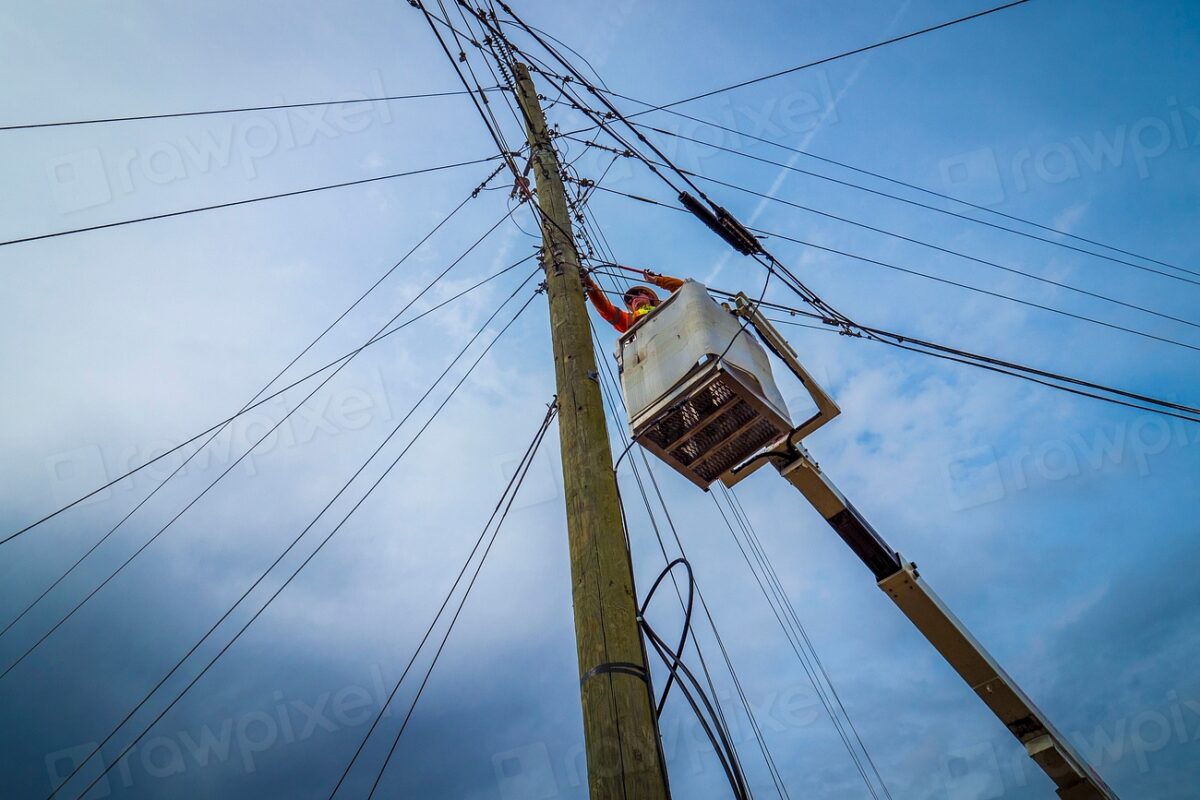
What does not change immediately: the physical network. The cable plant, the node splits and the fibre in the ground are the same assets they were in July. Service quality in a given neighbourhood is a function of that plant, not of the logo on the router.

The naming arrangement, which is genuinely odd

Within a year of closing, the parent company is due to take the Cox Communications name while continuing to operate its services under the Spectrum brand everywhere. So the acquirer adopts the target’s corporate identity and the target’s customers adopt the acquirer’s consumer brand. Variety covered the arrangement at closing.

The logic is family ownership. Cox is a long-held private family business, and preserving the name is the kind of term that gets negotiated into a deal of this size. For customers it is a distinction without a difference: the entity on the corporate filings will say Cox; the app, the bill and the truck will say Spectrum.

What a bigger cable company means for prices

Cable consolidation in the US has generally been approved on the argument that cable operators no longer compete against each other — their footprints do not overlap — so combining them does not reduce choice in any given street. That argument is technically sound and practically incomplete. Scale changes negotiating power with programmers, purchasing power for equipment, and the operator’s ability to fund fibre upgrades and mobile subsidies.

The competitive pressure that actually disciplines prices for most US households now comes from elsewhere: fibre overbuilders and fixed-wireless broadband sold by mobile carriers, which has taken meaningful share from cable over the past few years. A larger Charter is better placed to respond to that pressure — the free-mobile offer is exactly such a response — but it does not remove it.

What to watch: whether Spectrum pricing in former Cox markets lands above or below what those customers were paying, and how quickly promotional rates step up. Those two numbers will tell the story better than any merger statement.

Customer questions

Is Cox now Spectrum?

Yes for consumer-facing purposes. Charter completed the acquisition on 20 August 2026 and is rolling Spectrum branding, pricing and packaging into former Cox markets from mid-September.

How big was the deal?

$34.5bn, completed alongside a separate merger with Liberty Broadband.

How many customers does the combined company have?

Charter says 37 million customers across 45 states. That is the company’s own figure.

Will my equipment or connection change?

The physical network does not change with a rebrand. Equipment swaps happen over time as Spectrum standardises hardware, but the cable plant serving an address is the same.

What is the free mobile offer?

Charter has said former Cox internet customers not already subscribing to Cox Mobile are eligible for a free year of mobile service. It is a promotional offer; check the terms for what applies after twelve months.

Why will the parent company be called Cox?

Under the deal terms the parent adopts the Cox Communications name within a year while services continue to operate as Spectrum.

Continue with these

A Bug Rated 9.3 Out of 10 Could Let an Attacker Escape Your Virtual Machine

Broadcom patched a critical VMware Workstation Fusion flaw on September 3, 2026. It fixed an integer-overflow bug tracked as CVE-2026-59346, carrying a CVSS severity score of 9.3 out of 10. The bug could let an attacker with elevated privileges inside a virtual machine run code on the host computer itself.

How the VMware Workstation Fusion Flaw Actually Works

Security researchers call this a VM-escape vulnerability. That means malicious code can break out of the isolated virtual machine it’s running in and execute on the underlying host operating system. According to SecurityWeek’s report on the advisory, the bug is an integer-overflow issue. A specially crafted input can cause a calculation to wrap around and corrupt memory. That corruption gives an attacker code execution rights. Broadcom’s advisory, published as VMSA-2026-0007, credits the discovery to researchers who reported it through coordinated disclosure. It was not found after active exploitation.

Who Needs to Patch, and How Urgently

VMware Workstation Fusion flaw

The flaw affects VMware Workstation and Fusion versions 25H2 and 26H1. Those are the desktop virtualization products widely used by developers, IT administrators and security researchers to run guest operating systems on Mac and Windows machines. Broadcom’s fix arrived in version 26H1u1. The vulnerability requires an attacker to already have elevated privileges inside a guest VM, so it’s not remotely exploitable from the open internet on its own. That’s a modest comfort at best. Anyone who runs untrusted code, malware samples, or third-party software inside a VM often does so precisely because they assumed the host was safely isolated.

Why a 9.3 Severity Score Is Rare

CVSS reserves scores above 9.0 for flaws combining high-impact consequences with low exploit complexity. A VM-escape bug earns that rating for a simple reason. Virtualization’s entire security premise holds that whatever happens inside the VM stays inside the VM. That premise collapses completely once someone exploits the flaw. Security researchers who use VMs specifically to safely analyze malware, or test suspicious code, carry the most direct exposure here. That’s exactly the scenario the isolation boundary exists to protect against.

This Follows a Pattern of September Disclosures

The VMware patch arrived in the same week as other significant disclosures. Attackers started actively exploiting an unpatched Magento and Adobe Commerce zero-day on September 4, using it to backdoor online stores. Separately, attackers breached JetBrains’ Cadence product through an unpatched TeamCity vulnerability. Taken together, this run of disclosures reflects a busy patch cycle across enterprise software this month. It isn’t one vendor’s isolated problem — the same week saw Google patch its seventh emergency Chrome bug of the year, and Berlin’s city government confirm a ransomware breach that leaked 5.8 terabytes of files.

What Makes VM-Escape Bugs Different From Ordinary Malware Risk

Most software vulnerabilities threaten only the system they’re found on. A VM-escape flaw works differently, because it defeats a security boundary that other tools depend on. Sandboxed malware analysis, isolated test environments, and even some cloud hosting setups all lean on one assumption: a VM can’t reach its host. When that assumption fails, every control built on top of it needs a fresh check too, not just the VM software itself.

How This Compares to Past VMware Security Incidents

VMware products have faced serious vulnerabilities before, including several VM-escape bugs disclosed in prior years that prompted similar emergency patching cycles. What sets this one apart is the severity score. A 9.3 rating places CVE-2026-59346 among the more dangerous flaws Broadcom has disclosed for its desktop virtualization line specifically, as opposed to its enterprise server products, which see a higher volume of security research attention overall. Broadcom’s acquisition of VMware in 2023 also changed how these advisories get published, consolidating disclosures under the company’s broader security bulletin process rather than VMware’s older, standalone system.

What IT Teams Should Do Next

Broadcom’s guidance is straightforward. Teams should upgrade affected Workstation and Fusion installations to version 26H1u1 as soon as operationally possible. Prioritize machines that run untrusted or unverified code first. Organizations that rely on VM isolation as a security control for malware analysis or sandboxed testing should treat this patch as time-sensitive. It is not routine maintenance, given how directly the flaw undermines that isolation assumption. Security teams that maintain a patch-management dashboard should flag this advisory for cross-checking against every desktop image still running the older builds, not just servers. IT administrators managing shared lab machines, where multiple researchers rotate through the same physical hardware, face the highest practical exposure and should treat this update as a same-week priority rather than folding it into a routine monthly patch cycle.

Frequently Asked Questions

What is CVE-2026-59346?
It’s a critical integer-overflow vulnerability in VMware Workstation and Fusion that can let an attacker escape a virtual machine and run code on the host computer.

How severe is this VMware Workstation Fusion flaw?
It carries a CVSS score of 9.3 out of 10, reflecting both high potential impact and relatively low exploitation complexity once an attacker has elevated access inside a VM.

Which product versions does this flaw affect?
It affects VMware Workstation and Fusion versions 25H2 and 26H1. Broadcom’s fix arrives in version 26H1u1.

Is this exploitable remotely over the internet?
Not directly. An attacker needs elevated privileges inside a guest virtual machine first. That’s still a realistic scenario for anyone running untrusted code in a VM.

Did anyone exploit this flaw before the patch came out?
Available reporting indicates researchers disclosed it through a coordinated process, not after active exploitation. Even so, organizations should patch promptly.

Sources

  • SecurityWeek — VMware Workstation and Fusion Updates Patch Critical Vulnerability. securityweek.com
  • Security Affairs — Broadcom Patches Critical VMware Workstation and Fusion VM-Escape Vulnerabilities. securityaffairs.com

NSE IPO Price Band Set as India’s Biggest Listing Opens

India’s National Stock Exchange has fixed its NSE IPO price band at Rs 1,700 to Rs 1,785 a share, opening one of the largest share sales the Indian market has seen. Bidding runs from 17 to 21 September 2026, with anchor investors bidding a day earlier on 16 September. Allotment is expected on 22 September and the shares are proposed to list on 24 September — on the BSE, because an exchange cannot list on itself.

The numbers in one place

According to Business Standard, the offer is structured as follows:

  • Price band: Rs 1,700 to Rs 1,785 per share
  • Anchor book: 16 September 2026
  • Public bidding: 17 to 21 September 2026
  • Lot size: 8 shares
  • Minimum retail application: Rs 14,280 at the upper band
  • Allotment: expected 22 September 2026
  • Proposed listing: 24 September 2026, on the BSE

At the top of the band the issue raises roughly Rs 22,568 crore — on the order of $2.5bn — implying a valuation in the region of Rs 4.42 lakh crore. Indian business press has reported the offer as an offer for sale, meaning existing shareholders are selling down rather than the exchange raising fresh capital for itself. If that holds, none of the proceeds go to NSE’s balance sheet.

Why NSE shares will trade on a rival exchange

An exchange cannot supervise the trading of its own stock without an obvious conflict, so NSE’s shares are proposed to list on the BSE. This is not unusual — the same logic applies wherever a listed exchange operates — but it produces the slightly surreal outcome that India’s largest exchange by turnover becomes a line item on its smaller competitor’s board.

It also creates a durable oddity for traders. Price discovery for NSE happens on BSE; NSE’s own revenue depends on volumes that BSE does not capture. Anyone modelling the stock ends up modelling the health of the venue where it is not traded.

What a buyer is actually buying

Exchanges are, in business terms, toll booths. Revenue comes from transaction charges on cash and derivatives trading, listing fees, market data, index licensing and clearing. The economics are attractive when volumes are high: costs are largely fixed, so incremental volume drops through to profit at a high rate.

NSE’s position in Indian equity derivatives has been the centre of that story for years. That is the strength and the concentration risk in the same sentence: a business heavily levered to one product category, in one market, under one regulator that has repeatedly adjusted the rules for that category. Prospective investors should read the offer document rather than the headline valuation, since the composition of revenue matters more here than the multiple.

Zerodha’s IPO listing page and The Week’s dates roundup carry the mechanical details for applicants.

The risks the price band does not show

Three worth naming. First, regulatory: derivatives market structure in India has been under active review, and rule changes that dampen retail derivatives volumes hit the revenue line directly. Second, cyclicality: exchange earnings look like a utility in a rising market and like a brokerage in a falling one. Third, timing: the offer opens into a week when global markets are watching a US Federal Reserve decision, with oil recently trading above $100 a barrel. Grey-market chatter and listing-day pops are not a substitute for either of those.

There is a broader point here for readers outside India. Exchange listings are milestones for a market’s own development, not just for the company. An NSE listing puts India’s core market infrastructure under public-company disclosure for the first time, which over years produces better data for everyone analysing the market — regardless of what the shares do in the first week.

This is reporting on a share offer, not investment advice. Anyone considering an application should read the red herring prospectus and consider their own circumstances.

Questions about the offer

What is the NSE IPO price band?

Rs 1,700 to Rs 1,785 per share, with a lot size of 8 shares and a minimum retail application of Rs 14,280 at the upper end.

When does bidding open and close?

Public bidding runs 17 to 21 September 2026. Anchor investors bid on 16 September.

When is allotment and listing?

Allotment is expected on 22 September 2026, with listing proposed for 24 September 2026.

Where will NSE shares be listed?

On the BSE. An exchange does not list its own shares on itself because of the supervisory conflict that would create.

How large is the issue?

Roughly Rs 22,568 crore at the upper end of the band, implying a valuation in the region of Rs 4.42 lakh crore.

Does NSE receive the money raised?

Indian business press has reported the offer as an offer for sale by existing shareholders, which would mean proceeds go to the selling shareholders rather than to the exchange.

Related on our markets desk

Apple Just Answered the Foldable Rumors. The Bigger Change Was Inside Siri

Apple Siri Google Gemini integration became official at Apple’s September 9 event. The company confirmed it is rebuilding Siri on Google’s Gemini models. It also unveiled its first foldable iPhone. Those were the two headline moves in what Apple called its biggest device wave in years. It was also the first keynote led by new device chief John Ternus.

What the Apple Siri Google Gemini Deal Actually Covers

Apple struck a deal with Google to license Gemini models. Those models now power upgraded Apple Intelligence features and a rebuilt Siri. Building an equivalent large language model entirely in-house, on Apple’s needed timeline, wasn’t realistic. Reporting on the partnership says the arrangement lets Apple ship more capable, conversational Siri features sooner than an internal model would have allowed. Google, in turn, gains a high-profile distribution deal across hundreds of millions of iPhones. Neither company has published the full financial terms of the agreement.

Our Preview Called the Foldable Rumor Right

Apple Siri Google Gemini

Tamara News previewed this event on September 8. At that point, the foldable iPhone was still an unconfirmed rumor riding on Ternus’s first keynote as device chief. At the event itself, Apple confirmed the device. It positioned the foldable as the centerpiece of a broader hardware refresh, not a niche add-on to the standard iPhone lineup. Foldable phones have belonged to Samsung and Huawei for years. Apple’s entry is likely to intensify competition on pricing and on software built specifically for folding displays.

Why Apple Chose Partnership Over Building Its Own Model

Apple’s AI efforts drew criticism over the past two years for lagging competitors on generative features, particularly conversational assistants. Partnering with Google for Gemini is a pragmatic call. Catching up on foundation-model quality alone would have taken longer than Apple’s product cycle allowed. The move also mirrors a broader 2026 pattern: large tech companies choosing high-profile AI partnerships and acquisitions, including Nvidia’s own multibillion-dollar deals, over purely organic development.

What This Means for the Wider AI Assistant Race

A Gemini-powered Siri puts Google’s models at the center of the world’s most widely used smartphone assistant. That distribution win could matter more than any single Google-branded product. For competitors, it raises a hard question. Can Amazon’s Alexa and Microsoft’s Copilot match a partnership of this scale, or will they need similar arrangements of their own? Apple, meanwhile, keeps its hardware and interface advantages while outsourcing the model layer underneath. Other device makers are likely to study that split closely.

What Reviewers Will Test First

Early hands-on coverage typically focuses on two things with a device like this: hinge durability and how visible the fold line is on screen. Expect reviewers to bend the new iPhone repeatedly, check for screen creasing under different lighting, and compare battery life against Apple’s standard, non-folding models. On the software side, testers will likely push Siri with multi-step requests to see how the Gemini-powered version handles follow-up questions compared with the old, more scripted Siri.

How This Fits Apple’s Broader AI Strategy

Apple spent the past two years insisting its AI approach would prioritize privacy and on-device processing over cloud-dependent models. The Gemini partnership complicates that message somewhat, since it relies on a third party’s cloud-based models for Siri’s most advanced features. Apple says the partnership follows its existing privacy commitments for handling user data. The company has not published full technical detail on how requests get routed, or what Google can see on its end.

How Competitors Are Likely to Respond

Samsung and Google’s own Pixel team already ship generative AI assistants built on in-house or closely integrated models, giving them a head start on tight software-hardware coordination that Apple’s outsourced approach doesn’t offer in the same way. Amazon, meanwhile, has invested heavily in a next-generation Alexa overhaul of its own. Analysts expect at least one competitor to announce a comparable large-model partnership within the next two quarters, simply to avoid ceding ground on assistant quality.

What to Watch as the Rollout Continues

Apple has not detailed a full rollout timeline for every Gemini-powered feature. Foldable iPhone reviews and durability testing will shape early public reaction once the device reaches reviewers. This week’s Apple earnings call, part of a broader stretch of major tech reporting, is the next concrete moment. Apple is expected to use that call to address how the launch affects sales in the current quarter.

Frequently Asked Questions

Is Siri now powered by Google Gemini?
Apple confirmed at its September 9 event that it is rebuilding Siri using Google’s Gemini models, under a licensing partnership between the two companies.

Did Apple actually release a foldable iPhone?
Yes. Apple confirmed its first foldable iPhone at the same event. That ended months of speculation built around new device chief John Ternus’s debut keynote.

Why didn’t Apple build its own AI model for Siri?
Apple’s in-house AI efforts had lagged competitors on conversational features. Partnering with Google let it ship more capable Siri features on a faster timeline.

What are the financial terms of the Apple-Google deal?
Neither company has published the full financial details of the Gemini licensing arrangement.

What happens next for Apple after this announcement?
Apple reports quarterly earnings this week. Analysts expect that to be the first chance for the company to address how the launch affects current-quarter sales.

Sources

  • CNBC — Apple picks Google’s Gemini to run AI-powered Siri. cnbc.com
  • Forbes — Apple Event Kicks Off 2026-2027 Tech Season. forbes.com

The Iran Sanctions Panel Vote Facing a Russian and Chinese Veto

The UN Security Council is expected to hold an Iran sanctions panel vote on 17 September, according to diplomats cited by wire reporting, on whether to renew the mandate of the expert panel that monitors compliance with sanctions on Iran. The mandate expires on 26 September. France announced the vote; Russia and China have signalled they do not accept that the Council has the standing to hold it at all.

What the panel of experts actually does

A UN panel of experts is a small standing team that reports to a Security Council sanctions committee. It investigates alleged violations, tracks procurement networks and shipping, and publishes findings that member states use to justify enforcement. It has no power to punish anyone. Its value is evidentiary: without a panel, the sanctions committee is largely dependent on what individual governments choose to tell it, and those governments have interests.

That is why mandate renewals, which look procedural, matter. Letting a panel lapse does not lift sanctions. It removes the independent reporting that makes them legible.

How the Council got back to Iran sanctions

UN sanctions on Iran, including measures under resolution 1737 (2006), were reimposed on 27 September 2025 through the snapback mechanism, after findings of Iranian non-compliance with its nuclear obligations. Snapback was the enforcement device built into the 2015 nuclear agreement: it allowed a participant to restore previously lifted UN measures without a fresh Council vote that could be vetoed.

Since then the Council has been arguing about whether that reimposition was valid. At a Council session earlier this year, Russia and China challenged the legality of the snapback and the Council’s continuing role on the Iranian nuclear file. In a joint statement in March, the two governments said the Council “cannot proceed to re-establish the 1737 Committee or its Panel of Experts.”

Strip out the diplomacy and there are two incompatible positions. The Western position is that snapback was lawfully triggered, the pre-2015 sanctions architecture is back in force, and the Council therefore needs a committee and a panel to run it. The Russian and Chinese position is that the snapback was procedurally invalid, that the underlying resolution had already terminated, and that anything built on it — committee, panel, mandate renewal — has no legal basis.

Neither side can win that argument inside the Council, because the Council has no mechanism for ruling on its own competence. What it has is votes and vetoes. A renewal resolution needs nine affirmative votes and no veto from a permanent member, which is precisely the constraint in play.

The Security Council Report’s September forecast places this alongside a crowded month: continued attention to the Middle East and the effects of disruption to navigation in the Strait of Hormuz, possible meetings on Ukraine, and the 81st General Assembly’s high-level week, whose session opened on 8 September under a new Assembly president, Bangladesh’s Khalilur Rahman.

Three ways 17 September can go

The resolution is vetoed. The most widely anticipated outcome. The panel’s mandate lapses on 26 September, the sanctions committee continues on paper without independent monitoring, and enforcement shifts almost entirely to national and regional measures — US, EU and UK designations that operate outside the UN framework.

A short technical rollover passes. Councils under pressure often buy time with a brief extension that nobody treats as a precedent. It would require Russia and China to abstain rather than veto, which is a lower bar than support but still a concession on the legality argument they have been making.

The vote slips. With the mandate running to 26 September, the sponsors have a few days of slack. Postponing past high-level week is possible if they judge the numbers are not there and want to avoid a public defeat during the General Assembly.

Whichever way it goes, the practical effect on Iran’s economy in the near term is limited — the binding constraints are national sanctions and the wider regional conflict. The effect on the Council’s own authority is larger, and harder to reverse.

Common questions

When is the Iran sanctions panel vote?

Diplomats have indicated 17 September 2026, with the panel’s mandate due to expire on 26 September.

What is a panel of experts?

A small investigative team reporting to a Security Council sanctions committee. It documents violations and procurement networks but has no enforcement power of its own.

Why do Russia and China object?

They argue the 2025 snapback that reimposed the sanctions was procedurally invalid, so the committee and panel built on it have no legal basis. They stated in March that the Council cannot re-establish the 1737 Committee or its panel.

Would a veto lift sanctions on Iran?

No. It would end the UN’s independent monitoring mandate. The measures themselves, and separate US, EU and UK sanctions, would remain.

What is snapback?

A mechanism from the 2015 nuclear agreement allowing a participant to restore previously suspended UN sanctions without a new Council vote that a permanent member could veto.

How many votes does renewal need?

Nine of fifteen in favour, with no veto from any of the five permanent members.

Follow the thread