• Mon - Fri 9.00 - 19.00

Yearly Archives: 2026

Tesla’s Board Wants Its Lawsuits Judged in Texas. Investors Are Fighting Back

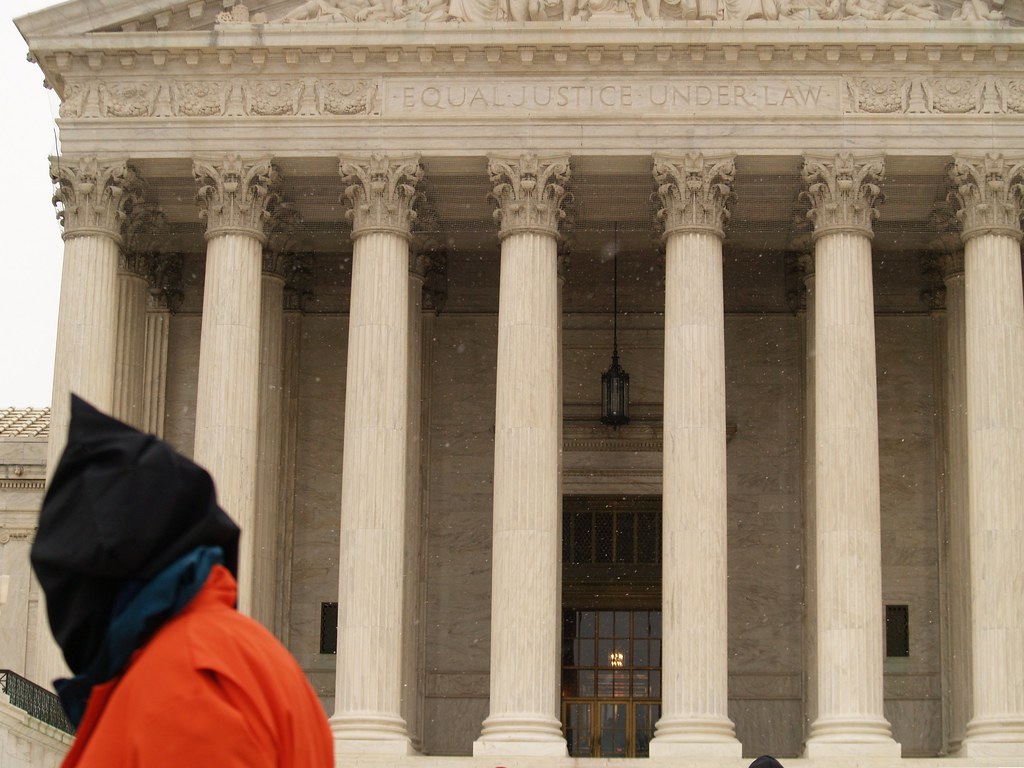
Tesla shareholders took their case to the Tesla Delaware Supreme Court on September 11. They asked the state’s top court to keep three fiduciary-duty lawsuits against the company and CEO Elon Musk in Delaware. The alternative is letting the cases move to Texas, where Tesla reincorporated in 2024.

Why the Case Landed at the Tesla Delaware Supreme Court

The dispute traces back to a Delaware Court of Chancery ruling earlier this year. That ruling sided with Tesla’s push to have the lawsuits heard in Texas instead. According to Law360’s coverage of the filing, the plaintiff-investors argue the cases belong in Delaware. Their reasoning: the alleged conduct, breaches of fiduciary duty by Tesla’s board and Musk, occurred while Tesla was still a Delaware corporation. Delaware courts also have decades of accumulated case law for interpreting those obligations. Tesla moved its corporate home to Texas in 2024, after a Delaware judge voided Musk’s 2018 pay package. Tesla and Musk publicly criticized that decision at the time.

What the Underlying Lawsuits Actually Allege

Tesla Delaware Supreme Court

The three suits accuse Tesla’s board and Musk of breaching their fiduciary duty to shareholders. The specific underlying conduct varies across the cases. Delaware’s Court of Chancery has a long history of applying heightened scrutiny to transactions involving a company’s own directors. That scrutiny runs especially high for a controlling or influential figure like Musk. Whether that same heightened-scrutiny approach would apply in a Texas court is part of what’s at stake here. Texas’s business court system is comparatively new. It remains untested on questions this specific.

Why This Is Bigger Than One Company’s Paperwork

Tesla is the most prominent company to reincorporate away from Delaware following shareholder friction. Corporate law specialists are watching this case closely. They see it as an early test of whether companies can use a change of incorporation state to functionally pick a friendlier court for pending disputes. If the Delaware Supreme Court allows the cases to move to Texas, other companies facing shareholder litigation may consider similar relocations. If it keeps the cases in Delaware, that would reinforce a different idea: a change of corporate domicile doesn’t automatically carry pending litigation to the new jurisdiction’s courts.

Where This Sits Alongside Tesla’s Other Legal Fights

The fiduciary-duty jurisdiction fight is separate from the regulatory scrutiny facing Tesla’s Cybercab robotaxi program. That scrutiny began after its Austin launch triggered a federal safety probe. Together, the two disputes show a company navigating legal and regulatory pressure on multiple fronts at once. One concerns how Tesla is governed as a company. The other concerns how its products are regulated on the road.

Why Delaware Still Matters to Corporate America

More than half of Fortune 500 companies are incorporated in Delaware, largely because of its specialized Chancery Court and its deep body of predictable case law. That predictability is exactly what Tesla’s move to Texas put in question for pending cases. A ruling against Tesla here wouldn’t just affect this one company. It would signal to every other Delaware-incorporated firm that reincorporating elsewhere doesn’t offer an escape hatch from litigation that started under the old rules.

What Legal Experts Are Saying

Corporate governance attorneys who don’t represent either side have described the case as a test of forum-shopping limits. Several have noted that Delaware’s Chancery Court rarely loses jurisdiction over cases this cleanly, given the strength of its precedent on fiduciary duty. Others point out that Texas actively courted Tesla’s move with a new business court system designed to compete for exactly this kind of corporate litigation, meaning the outcome here also tests whether that new system can attract cases as intended. A handful of smaller companies have already cited Tesla’s move as a template while weighing their own reincorporation decisions, according to legal trade publications tracking the trend.

What Happens Next in the Jurisdiction Fight

The Delaware Supreme Court has not set a public timeline for its ruling. A decision keeping the cases in Delaware would send them back to the Court of Chancery for further proceedings there. A decision upholding the move to Texas would restart much of the procedural clock in an unfamiliar court system. Either outcome is likely to get cited in future cases involving companies that reincorporate while shareholder litigation is pending. That makes this case worth tracking well beyond Tesla’s own shareholders, especially in a week already dominated by the market mood around big tech earnings.

Frequently Asked Questions

What did Tesla investors ask the Delaware Supreme Court to do?
They asked the court to keep three fiduciary-duty lawsuits against Tesla and Elon Musk in Delaware, reversing a Chancery Court ruling that would move them to Texas.

Why did Tesla move its incorporation to Texas?
Tesla reincorporated in Texas in 2024 after a Delaware judge voided Musk’s 2018 pay package, a ruling the company and Musk criticized publicly.

What do the lawsuits allege?
They accuse Tesla’s board and Musk of breaching their fiduciary duty to shareholders, drawing on conduct they say occurred while Tesla was still incorporated in Delaware.

Why does the choice of court matter so much?
Delaware has decades of case law applying heightened scrutiny to board and executive conduct; Texas’s business court system is newer and has less precedent on comparable questions.

Is this related to Tesla’s Cybercab safety probe?
No. That is a separate federal regulatory matter over Tesla’s robotaxi program; this case concerns shareholder governance claims and which state’s courts should hear them.

Sources

  • Law360 — Tesla Investors Press Del. High Court To Keep Cases In State. law360.com

Bangsamoro Parliament Election: A Region Votes for the First Time

Voters in the Bangsamoro Autonomous Region in Muslim Mindanao began casting ballots on 14 September 2026 in the region’s first parliamentary election. The Bangsamoro parliament election fills an 80-seat legislature that will replace the appointed Bangsamoro Transition Authority, the interim body that has governed the southern Philippine region since 2019. It is the last major institutional step in a peace settlement that ended decades of armed conflict, and it has taken four postponements to reach polling day.

What was actually on the ballot

The Bangsamoro Parliament has 80 members, and they do not all arrive by the same route. Forty seats are filled through party-list proportional representation, in which voters choose a party rather than a person and seats are allocated in proportion to the vote. Thirty-two seats are single-member parliamentary districts decided by first past the post. The balance are reserved seats, set aside under the Bangsamoro Organic Law for constituencies that a purely geographic map would leave out, including non-Moro indigenous communities and settler communities.

That design is unusual for the Philippines, where most elections are candidate-centred contests. Here, the party-list block is the largest single route into parliament, which pushes parties to build regional platforms rather than rely solely on local personalities. The parliament will then choose a chief minister from among its members, a parliamentary rather than presidential arrangement, and that person heads the regional government.

Al Jazeera reported that polls opened across the Muslim-majority region on Monday morning, with results expected to be tracked through the day.

Four delays and how the date finally stuck

The election was originally scheduled for May 2022. It moved to May 2025 because of the pandemic and because the region had not yet passed its own Bangsamoro Electoral Code. It then moved again, to 13 October 2025, after the Supreme Court ruled that Sulu is not part of the Bangsamoro region — a decision that left a block of seats unallocated and the district map incoherent. A further postponement followed when the court found the districting laws unconstitutional. Congress passed a reset law in March 2026 that set 14 September 2026 as the date.

Four delays is not a footnote. Each one extended the life of the Bangsamoro Transition Authority, an appointed body in which the Moro Islamic Liberation Front holds the dominant share of seats under the terms of the 2014 peace agreement. Supporters argued the extensions bought time to build institutions. Critics argued that an unelected authority governing for seven years is difficult to describe as transitional.

Why the seat maths matters

The practical question is whether the former rebel movement that runs the transition authority can convert its position into an elected mandate, or whether established provincial political families take a controlling share. Both outcomes are live. The party-list component rewards organisation and regional reach; the district component rewards local machinery, which entrenched families have had far longer to build.

There is a second question underneath it. The Bangsamoro settlement was built on a bargain: armed groups would decommission in exchange for genuine self-government. An election that produces a parliament seen as legitimate strengthens that bargain. One seen as captured, or as producing a government unable to function, weakens it. That is why analysts writing before the vote described it as a turning point rather than a routine poll.

It is worth being plain about what the election does not settle. Sulu’s exclusion from the region remains a court-decided fact with unresolved political consequences. Decommissioning of combatants and the economic package attached to the peace deal run on their own timetables.

What happens next

Counting and canvassing follow polling day, with the Commission on Elections proclaiming winners once returns are consolidated. The new parliament then convenes, elects a chief minister and speaker, and takes over from the transition authority. Expect disputes: with 32 district races decided by plurality and a party-list allocation to compute, protests and recount petitions are close to inevitable in a first-time election.

For the wider Philippines, the result feeds into national politics at a tense moment, with the country’s vice president already facing legal proceedings and the 2028 national cycle beginning to form. For the region itself, the more useful measure over the next year is mundane: whether the elected government can pass a budget, deliver services and hold together a coalition.

The Philippine Daily Inquirer’s explainer and Rappler’s live results tracker are the closest things to primary-source coverage as returns come in.

Questions readers are asking

When did the Bangsamoro parliament election take place?

Polling took place on 14 September 2026, the date fixed by a reset law passed by the Philippine Congress in March 2026 after three earlier postponements.

How many seats are in the Bangsamoro Parliament?

Eighty. Forty are party-list seats allocated by proportional representation, 32 are single-member district seats decided by first past the post, and the remainder are reserved seats for sectors including non-Moro indigenous and settler communities.

Why was the election postponed so many times?

The first delay followed the pandemic and the absence of a regional electoral code. Later delays followed Supreme Court rulings that excluded Sulu from the region and struck down the districting laws, both of which made the seat map unworkable until Congress legislated again.

Who governed the region before this vote?

The Bangsamoro Transition Authority, an appointed interim parliament in place since 2019 in which the Moro Islamic Liberation Front holds the largest share of seats under the 2014 peace agreement.

Does the parliament choose the regional leader?

Yes. The Bangsamoro system is parliamentary: members elect a chief minister from among themselves rather than voters electing a regional executive directly.

Is Sulu voting in this election?

No. The Supreme Court ruled that Sulu is not part of the Bangsamoro region, and that ruling is one of the reasons the seat map had to be redrawn.

More from our world desk

Kalimantan’s Smoke Just Set a Record No One Wanted to Break

An Indonesia wildfire emissions record was set in the first week of September 2026. Fires burning across Indonesia’s Kalimantan and Sumatra islands released more than 19.7 million metric tons of carbon dioxide between September 1 and 7. That was the highest weekly total anywhere in the world that week, according to satellite monitoring data.

How Bad the Indonesia Wildfire Emissions Record Actually Is

Indonesia’s peatland forests store enormous amounts of carbon. That carbon built up over centuries. It is why fires there produce outsized emissions compared with fires of similar size elsewhere. When peat burns, it doesn’t just release the carbon in the trees above ground. It also burns through carbon-dense soil. That soil can smoulder for weeks. A fire season can stay contained in terms of area burned. It can still produce a global emissions record in a single week.

Drought and El Niño Set the Stage

Indonesia wildfire emissions record

This year’s fires arrived during the same stretch that Copernicus recorded the joint hottest August on record globally. A strong El Niño pattern contributed to drier conditions across Southeast Asia at the same time. Dry peat ignites more easily. It also burns longer. Indonesia’s fire season typically runs from July into October. So the emissions recorded so far may not represent the season’s peak. Authorities in Jakarta have historically attributed a large share of the burning to land clearing. Palm oil and pulpwood plantations drive much of that clearing. The practice turns far more dangerous in drought years. Cleared land ignites more easily then, and fires spread faster than crews can contain.

Neighbouring Countries Feel It Before They See the Data

Smoke from Kalimantan and Sumatra routinely drifts across the Malacca Strait into Malaysia and Singapore. It has previously triggered health advisories and school closures during severe haze episodes. Regional air quality monitors typically lag the raw emissions data by days. So the full cross-border health impact of this spike may not be clear until routine monitoring catches up. Indonesia’s government has periodically deployed cloud-seeding aircraft and firefighting teams during past severe seasons. This year’s response scale had not been detailed in available reporting at the time of writing.

The Bigger Climate Feedback Loop

Wildfire emissions on this scale don’t stay a regional story for long. Carbon released from Indonesia’s peat fires adds directly to atmospheric warming. That is the same warming that produced the record August heat in the first place. Warmer, drier conditions in future years tend to make peatland fires easier to start. They also become harder to extinguish. Climate researchers describe this loop simply: heat drives fire, and fire adds heat back. They call it one of the harder feedback effects to reverse, once it takes hold in a given region.

Why This Keeps Happening in the Same Two Islands

Kalimantan and Sumatra aren’t unlucky by chance. Both islands sit on some of the world’s largest tropical peat deposits. Those deposits were drained decades ago for agriculture and plantation expansion. Drained peat dries out far faster than intact wetland. That is part of why the same two islands show up in fire-emissions data most years, not just this one. Indonesian officials have discussed peat-rewetting programs as a longer-term fix. Those efforts move slowly, though, and haven’t yet reduced emissions enough to prevent a new record this year. Environmental groups have pushed for stricter enforcement against illegal land-clearing fires for over a decade, with mixed results across different provinces. Corporate concession maps, published periodically by Indonesian ministries, sometimes conflict with satellite hotspot data, which complicates efforts to pin blame on specific companies for any single fire.

What Indonesia’s Fire Season Does From Here

The next several weeks will show whether this month’s record holds or gets overtaken. The dry season continues either way. Indonesia’s worst haze years have historically peaked in September and October. Monitoring agencies will be watching daily satellite hotspot counts closely as a result. A shift to seasonal rains typically ends the burning each year, more than firefighting alone does — the same kind of weather dependency that shaped recovery from Hawaii’s Hurricane Lowell disruption earlier this month. So the timeline for relief depends heavily on regional weather patterns. Those patterns are themselves being reshaped by the same warming trend driving this year’s records. Regional governments in Malaysia and Singapore have historically activated joint monitoring protocols with Jakarta during the worst haze weeks, a step that hadn’t been triggered as of this record-setting week.

Frequently Asked Questions

What set the Indonesia wildfire emissions record?
Fires across Kalimantan and Sumatra released more than 19.7 million metric tons of CO2 between September 1 and 7, 2026. That was the world’s highest weekly total that week.

Why do Indonesian fires produce so much carbon?
Much of the burning occurs on peatland. Peat stores dense carbon in the soil itself, so fires there release far more carbon per hectare than typical vegetation fires.

Is this connected to the global heat record in August?
Yes. Both events happened during the same drought-prone, El Niño stretch. Hotter, drier conditions make peatland fires easier to ignite and harder to control.

Do neighbouring countries feel the effects?
Historically, haze from Kalimantan and Sumatra has drifted into Malaysia and Singapore, sometimes prompting health advisories. This season’s cross-border impact wasn’t fully documented at the time of writing.

When does Indonesia’s fire season usually end?
It typically continues through October. It eases once seasonal rains return, rather than being extinguished primarily through firefighting.

Sources

  • Portal:Current events/September 2026 — Wikipedia summary of Copernicus/wildfire monitoring data. en.wikipedia.org
  • Copernicus Climate Change Service — August 2026 bulletin. climate.copernicus.eu

Earth Just Tied Its Hottest Month Ever — In Late Summer, Not Peak Summer

August 2026 was the joint hottest August on record. It matched July 2023 as the warmest month ever measured, according to the European Union’s Copernicus Climate Change Service. Global average surface air temperature hit 1.65°C above the pre-industrial baseline. That marks the first time any month has crossed 1.5°C since November 2025.

Why This Is the Hottest August on Record

Copernicus tracks global temperatures using satellite and ground data going back to 1940. It also estimates a longer record stretching to the pre-industrial era. Its September bulletin put August 2026 at 0.85°C above the 1991–2020 average for the month. Two forces drove that number. One is accumulated greenhouse gas warming. The other is a strong El Niño pattern in the Pacific. The agency said ocean heat played an outsized role. Average sea surface temperatures outside the polar regions reached 21.07°C. That broke the previous record of 20.98°C, set in 2023.

Warm Oceans Are Doing More of the Work

hottest August on record

Warmer oceans don’t just raise thermometers at the beach. They add moisture and energy to the atmosphere. That extra energy shows up as heavier rainfall in some regions and deeper drought in others. Copernicus data show western Europe faced severe drought and unusually low river flows through August. Other parts of the world saw the opposite: contrasting wet extremes. That split, drought here and flooding there, matches how scientists expect a warmer atmosphere to behave. It is not a sign the warming itself is uneven or overstated.

Wildfires and Heat Are Feeding Each Other

The record heat arrived alongside record wildfire activity elsewhere. Indonesia’s Kalimantan and Sumatra islands produced more than 19.7 million metric tons of carbon dioxide emissions in the first week of September alone. That was the world’s highest weekly total, and it added its own warming contribution back into the same system Copernicus is measuring. Extreme heat dries out vegetation and extends fire seasons. Large fires then release stored carbon, which adds to future warming. Climate scientists have flagged this feedback loop for years. Now they are watching it play out in near real time.

What the Paris Agreement Threshold Actually Means Here

Crossing 1.5°C in a single month is not the same as breaching the Paris Agreement’s long-term target. That target is measured as a multi-decade average, not a single month’s reading. Scientists at Copernicus have carefully framed August’s number as a milestone in the underlying trend. They stop short of calling it a formal treaty breach. Still, the frequency of these monthly spikes is itself notable. This is at least the second month since 2023 to hit or exceed 1.5°C. Climate researchers point to that pattern when they say the long-term average is closing in on that line faster than earlier models projected.

Heat Records Are Starting to Follow a Pattern

This is not an isolated spike. Copernicus has now logged several months since 2023 that either broke or matched a prior record, and each one has arrived alongside its own set of secondary events: droughts, floods, or fire seasons that ran longer than expected. Researchers studying the data say the pattern matters more than any single month’s number, because it shows the underlying trend accelerating rather than leveling off. That is the detail insurers, farmers, and disaster-planning agencies are now building into their own forecasts.

How This Compares With Past Heat Records

Copernicus has logged a steady string of record or near-record months since 2023, not just this one August. Each prior record drew similar attention, then faded from headlines within weeks once the next news cycle took over. Researchers caution against that pattern this time. They argue the accumulating frequency of these records, not any single month, is the number policymakers should be tracking. A single hot month is weather. A run of hot months, each breaking or matching the last, is closer to climate itself.

What to Watch Before the Next Copernicus Update

Copernicus publishes its next monthly bulletin in early October, covering September 2026. That month typically sees the El Niño-linked warming pattern persist, if it’s still active in the Pacific. Analysts will also watch whether Indonesia’s wildfire emissions keep climbing, since the fire season there usually peaks later in the dry season. Any further global temperature records this year would extend a run that began well before August, one that already includes the unusually active Pacific hurricane season disrupting travel earlier this month. So far, that run shows no clear sign of breaking on its own.

Frequently Asked Questions

Was August 2026 really the hottest month ever recorded?
It tied July 2023 as the joint hottest month in the Copernicus record, with global temperatures 1.65°C above pre-industrial levels.

Does this mean the Paris Agreement’s 1.5°C goal has already been broken?
No. The Paris target is measured as a long-term multi-decade average, not a single month, so one hot month does not constitute a breach on its own.

What role did the oceans play?
Sea surface temperatures outside the polar regions hit a record 21.07°C, adding extra heat and moisture to the atmosphere and intensifying both drought and flood extremes.

How does this connect to the Indonesia wildfires?
Extreme heat and dry conditions extend fire seasons, and this year’s Kalimantan and Sumatra fires released record weekly carbon emissions during the same period Copernicus measured the heat record.

When will the next global temperature update be published?
Copernicus typically releases its monthly bulletin in the first half of the following month, meaning September 2026 data is expected in early October.

Sources

A Cross-Border Sudan Offensive Just Flipped Two Towns in a Week

The Sudan Blue Nile escalation has entered a new phase along Sudan’s border with Ethiopia. A paramilitary-led alliance says it has seized two towns that Sudan’s army had held for months. Fighting around Kurmuk and Geissan sits in the far southeast of Blue Nile state. It intensified through late August and the first two weeks of September. Both sides have pushed reinforcements toward the front.

What’s Driving the Sudan Blue Nile Escalation

Sudan’s civil war is now in its fourth year. It has mostly pitted the Sudanese Armed Forces (SAF) against the paramilitary Rapid Support Forces (RSF). In Blue Nile, the RSF is fighting alongside a faction of the Sudan People’s Liberation Movement-North (SPLM-N). That faction carries its own decades-long grievance against Khartoum. According to reporting from Mada Masr’s Sudan Nashra briefing, the RSF-SPLM-N alliance seized Geissan and recaptured Kurmuk in a coordinated push in mid-August. That forced the army to rush reinforcements to Ed Damazin, the state capital.

Control of the two towns has changed hands more than once since then. Sudan Tribune reported that army units repelled an RSF assault near Al-Keli in late August. Days later, a separate RSF statement claimed it had regained ground in Kurmuk, according to Sudan’s Post. Neither side’s battlefield claims have been independently verified. That is typical of a war fought in remote terrain with little outside media access.

Who Actually Holds Kurmuk and Geissan Right Now

Sudan Blue Nile escalation

As of the second week of September, the picture along the Blue Nile front line stays genuinely contested. The Sudanese army says advance units of an allied Joint Force reached Ed Damazin on September 1. Their goal is joining the fight against the RSF-SPLM-N alliance. The RSF and its allies, for their part, keep claiming they hold both towns. Sudan Tribune’s dispatches describe a pattern of localized attacks and counter-attacks. Neither side holds a clean, stable front line. In this war, “captured” often means “contested” again a week later.

Civilians Are Paying for a War Neither Side Is Winning Cleanly

The human cost is the part both militaries dispute least, and civilians experience most directly. The United Nations human rights office says it documented at least 1,120 civilian deaths from drone strikes across Sudan in the first six months of 2026 alone. That figure represents about 80% of all civilian deaths its monitors recorded in that period. A UN deputy human rights chief separately condemned a sharp rise in hostilities specifically in Blue Nile state. Aid workers nearby report a familiar pattern from Sudan’s war. Families are fleeing on foot toward Ethiopia. Markets have closed. Health facilities that were already stretched now face this latest round of fighting.

Ethiopia’s Role Is Disputed, and Both Governments Know It

A recurring flashpoint is Sudan’s army accusing Ethiopia of hosting and training RSF-aligned fighters near the shared border. Sudanese officials repeated that claim as recently as September 7, according to Sudan Tribune. Ethiopia has made no public admission matching the accusation. No independent body has confirmed it either. Addis Ababa has separately hosted its own diplomatic contacts with Juba, aimed at containing border and Abyei-related tensions. Khartoum’s officials call that inconsistent with the accusation they’re making. Readers should treat the “Ethiopia is harboring RSF fighters” claim as an allegation from one side of the war. It is not an established fact.

What Happens Next Along the Front Line

Neither side holds the clear upper hand needed to end the Blue Nile fighting quickly. The Sudanese army’s Joint Force reinforcements suggest Khartoum intends to contest the area rather than concede it. The RSF-SPLM-N alliance, meanwhile, has shown it can strike across the border repeatedly. Regional mediation efforts have included talks involving Gulf states on the wider Sudan war. None have produced a Blue Nile-specific ceasefire so far. Aid agencies are watching whether displacement toward Ethiopia accelerates. That would echo the pattern already seen in Yemen’s displacement crisis earlier this month. Any UN Security Council statement on Sudan would likely follow, not precede, a clearer picture on the ground. That same dynamic shaped how the Council recently handled an unrelated seat contest, covered in our report on this year’s Security Council election.

Frequently Asked Questions

What is the Sudan Blue Nile escalation about?
It refers to intensified fighting since August 2026 between Sudan’s army and an alliance of the Rapid Support Forces and the SPLM-N faction, centered on the towns of Kurmuk and Geissan near the Ethiopian border.

Who controls Kurmuk and Geissan today?
Control is disputed. Both the Sudanese army and the RSF-SPLM-N alliance have claimed the towns at different points since mid-August, and neither claim has been independently verified.

How many civilians have died in Sudan’s war this year?
The UN human rights office documented at least 1,120 civilian deaths from drone strikes nationwide in the first six months of 2026, which it said accounted for roughly 80% of all civilian deaths it recorded.

Is Ethiopia involved in the fighting?
Sudanese officials have accused Ethiopia of hosting and training RSF-aligned fighters near the border. Ethiopia has not confirmed this, and it remains an unverified allegation.

Is this part of the broader Sudan civil war?
Yes. Blue Nile is one front in a nationwide conflict between the Sudanese army and the RSF that began in April 2023 and is now in its fourth year.

Has any ceasefire been agreed for Blue Nile?
No Blue Nile-specific ceasefire has been reported as of mid-September 2026, despite broader regional mediation efforts on the wider war.

Sources