Fed Holds at 3.50%-3.75% as September Rate Hike Stays Live

A Federal Reserve September rate hike remains firmly in play after the Federal Open Market Committee left its benchmark rate unchanged at 3.50% to 3.75% on 29 July, the fifth consecutive meeting at which it has stood pat. The decision passed on a 9-3 vote. Three policymakers dissented, each preferring an immediate quarter-point increase, and the committee’s statement pointed directly at the war in the Middle East as a source of elevated uncertainty.

The July meeting was the second chaired by Kevin Warsh, who was sworn in on 22 May 2026. Note that there was no Federal Reserve policy meeting in August; the committee’s next scheduled decision is on 16 September.

The vote, the dissents and the statement

The FOMC statement was unusually short. “The Committee decided to maintain the target range for the federal funds rate at 3-1/2 to 3-3/4 percent, in support of the Federal Reserve’s dual mandate,” it read, adding that the Fed is continuing its policy of maintaining ample reserves in the banking system.

On the economy, the committee said activity “is expanding at a solid pace despite elevated uncertainty that owes, in part, to the conflict in the Middle East”, that productivity growth and capital investment are strong, that job gains have kept pace with the workforce and that the unemployment rate has changed little.

On prices, it was direct: “Inflation remains elevated relative to the Committee’s 2 percent goal, in part reflecting supply shocks that have driven price increases in certain sectors, including energy.” The statement closed with a single sentence that markets read as a signal of intent: “The Committee will deliver price stability.”

Voting against were Beth M. Hammack of Cleveland, Neel Kashkari of Minneapolis and Lorie K. Logan of Dallas, all of whom preferred to raise the target range by a quarter of a percentage point at that meeting. Three dissents in a single direction is rare, and it is the clearest available signal that the committee’s centre of gravity has shifted towards tightening.

Why a Federal Reserve September rate hike is still live

Trading screens showing market data ahead of a possible Federal Reserve September rate hike

J.P. Morgan Wealth Management changed its base case shortly after the meeting, moving from no rate changes in 2026 to a quarter-point increase in September. Its chief investment strategist, Phil Camporeale, put it this way: “The combination of a slower-than-expected normalization of supply chains around the Strait of Hormuz and market questioning of inflation-fighting credibility after the July FOMC meeting has lowered the bar for a rate hike in September.”

The firm said on 5 August that futures pricing implied a roughly 65% chance of a September hike. It also noted that Warsh again offered limited forward guidance at his press conference, leaving markets with little to work with, and that the bond market repriced accordingly: short-term yields eased slightly after the meeting while long-term yields rose sharply, with the 30-year Treasury reaching its highest level since 2007.

The framing matters. On this reading, a September move would not be a response to an overheating economy. It would be a credibility exercise designed to keep long-run inflation expectations anchored while an external supply shock works its way through the price data.

What the inflation data shows

The most recent reading, published by the Bureau of Labor Statistics on 12 August, gives both camps something. The consumer price index rose 0.1% in July on a seasonally adjusted basis after falling 0.4% in June, and 3.4% over the 12 months to July, easing from 3.5% in the year to June. Core inflation, excluding food and energy, rose 0.2% on the month and 2.5% over the year.

Energy is where the conflict shows up. The energy index fell 1.5% in July, its second consecutive monthly decline, but was still 14.7% higher than a year earlier. Petrol prices were up 24.6% over 12 months and fuel oil up 39.1%. Airline fares, which track jet fuel with a lag, were 25.5% higher over the year. Shelter, the largest single component, rose 3.2%. The full release is available from the Bureau of Labor Statistics.

In other words, the headline rate is drifting down and core inflation is close to target, but the energy shock has not cleared. That is precisely the configuration that produces a split committee: one group sees disinflation in train, the other sees a supply shock that could re-accelerate if the Strait of Hormuz stays contested.

The data that lands before the decision

Two scheduled releases will shape the September meeting. The August consumer price index is due on Friday 11 September, four days before the committee convenes. Labour market data through August will also be in hand. J.P. Morgan Wealth Management has said that a string of cooler inflation prints, or a faster easing of energy-driven pressure, could remove the need for a credibility-focused hike altogether.

The larger variable is not economic but geopolitical. Shipping through the Gulf remains disrupted, and the pace at which supply chains around the strait normalise will do more to shape US energy prices over the autumn than anything the committee says. The firm’s strategists put crude at around $80 a barrel on 3 August and set out a scenario in which prices climb towards $120 if blockades persist and reserves cannot cushion supply, a level they described as manageable for the US economy but challenging for markets.

For households and savers, the practical effect of a single quarter-point move is modest, but the direction of travel matters for anyone borrowing, saving or moving money across borders. Documentation standards for cross-border transfers have already tightened this year, as our guides to proof-of-funds requirements in the UK, Canada and Australia and to the Noones shutdown and its effect on user funds both show.

Reader questions on the Fed decision

What did the Fed decide in July 2026?

The Federal Open Market Committee voted 9-3 on 29 July 2026 to keep the target range for the federal funds rate at 3.50% to 3.75%, the fifth consecutive meeting at which the range was left unchanged.

Who dissented, and what did they want?

Beth M. Hammack, Neel Kashkari and Lorie K. Logan voted against the decision. All three preferred to raise the target range by a quarter of a percentage point at that meeting.

When is the next Federal Reserve meeting?

The FOMC next meets on 15 and 16 September 2026, with the rate decision due on Wednesday 16 September at 2:00 p.m. Eastern time.

What is the current US inflation rate?

The Bureau of Labor Statistics reported that the consumer price index rose 0.1% in July on a seasonally adjusted basis and 3.4% over the 12 months to July, down from 3.5% in the year to June. Core inflation, excluding food and energy, was 2.5% over the year.

How is the Middle East conflict affecting the decision?

The FOMC statement said economic activity is expanding at a solid pace despite elevated uncertainty that owes, in part, to the conflict in the Middle East, and attributed part of elevated inflation to supply shocks in certain sectors including energy. Energy prices were up 14.7% over the year to July.

Who is the current Fed chair?

Kevin Warsh, who took the oath of office as chairman of the Board of Governors on 22 May 2026 and was selected unanimously by the FOMC as its chairman. July was his second meeting in the chair.

Tamara News covers central bank decisions and their effect on prices, borrowing and cross-border money. See our related business and finance reporting linked in this article.
Mecca Joint Defence Agreement Binds Saudi Arabia, Turkey, Pakistan

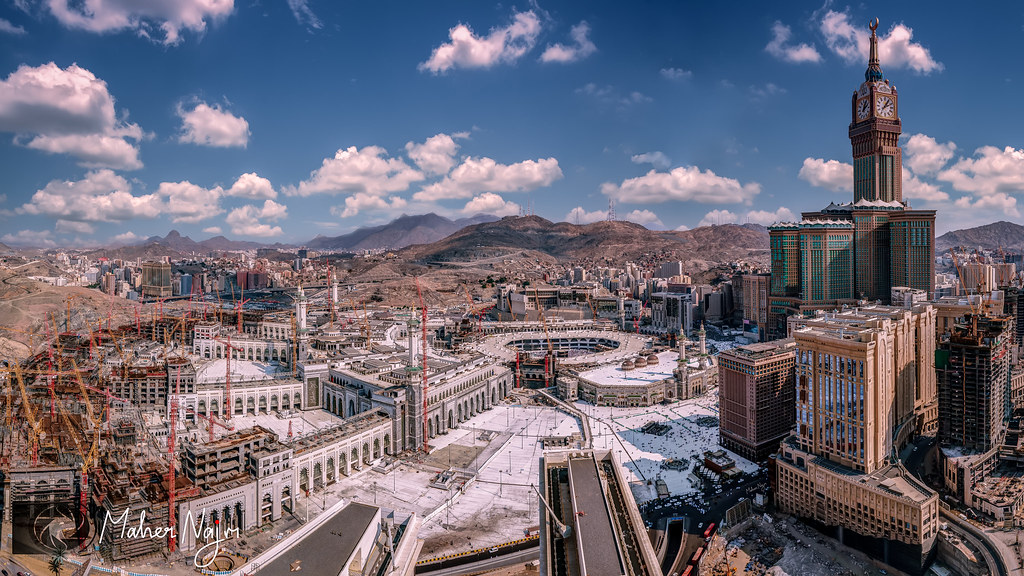
Saudi Arabia, Turkey and Pakistan have signed a trilateral security treaty committing each to treat an armed attack on any one of them as an attack on all three. The Mecca Joint Defence Agreement was signed on 7 August 2026 in the Saudi holy city by Crown Prince and Prime Minister Mohammed bin Salman, Turkish President Recep Tayyip Erdogan and Pakistani Prime Minister Shehbaz Sharif. All three governments describe the pact as defensive, aimed at no particular country, and open to others willing to join.

It is the first arrangement of its kind linking a NATO member, the world’s largest oil exporter and the only nuclear-armed Muslim-majority state.

What the Mecca Joint Defence Agreement actually says

The operative clause is short. According to statements released by the three governments and reported by the Associated Press, the pact stipulates “that any armed attack against any one of the three states shall be regarded as an attack against them all”. Pakistan’s foreign ministry said the deal was “guided by the longstanding historical ties among the three states, based on the enduring bonds of brotherhood and Islamic solidarity that unite them”, and reflected a “shared commitment to further strengthening their collective security”.

Two days after the signing, Pakistan’s foreign minister Ishaq Dar said on X that the agreement was “purely defensive in nature” and that other countries could join if they were willing to uphold its principles and settle differences peacefully. He said the collective-defence stipulation was consistent with the right of individual and collective self-defence under Article 51 of the UN Charter, and added that “the Makkah Accord does not abrogate or replace any existing bilateral or multilateral agreements between these countries, or with other countries or organizations”. His comments are set out in this Associated Press report.

Turkish foreign minister Hakan Fidan had said a day earlier that the agreement was not aimed at Iran or any other country, and a Turkish official told Reuters that it was defensive in nature, not directed at any specific actor, and open to other regional states. The treaty is rendered variously in official and press accounts as the Mecca Joint Defence Agreement, the Makkah Joint Defence Agreement and, in some Al Jazeera reporting, the Mecca Joint Deterrence Agreement.

How three very different militaries fit together

Soldiers on parade, illustrating the military commitments in the Mecca Joint Defence Agreement

The three signatories bring markedly different assets. Turkey has NATO’s second-largest military and a domestic defence industry that has expanded quickly over the past decade. Saudi Arabia is the world’s top oil exporter, with the financial depth and regional influence that follows. Pakistan has decades of operational experience and is the only Muslim-majority country with nuclear weapons.

Ozgur Unluhisarcikli, who runs the German Marshall Fund’s South and Wider Europe office, told Al Jazeera the partners bring complementary strengths, “including Turkey’s defence-industrial capabilities, Saudi financial muscle and influence, and Pakistan’s military experience and strategic deterrent”. He was blunt about the limits: “It should be noted that this is a framework for closer strategic, military, and defence-industrial coordination among three influential regional powers and not a mutual defence pact that can be compared to NATO.”

In Islamabad, the defence analyst Abdullah Khan likewise cautioned against reading the agreement as a NATO equivalent, or as being directed against Iran.

The road from Doha to Mecca

The agreement did not appear from nowhere. Al Jazeera reports that negotiations began after the Hamas attack on Israel of 7 October 2023 and the war in Gaza that followed, then accelerated during the US and Israeli campaign against Iran that began in February 2026.

The most direct precursor was bilateral. Pakistan and Saudi Arabia signed a mutual defence agreement in September 2025, in the immediate aftermath of an Israeli strike on the Qatari capital Doha on 9 September that year. On 19 March 2026, the foreign ministers of Turkey, Pakistan and Saudi Arabia met in Riyadh during an Islamic summit and discussed what a joint security arrangement might look like.

Sharif arrived in Saudi Arabia the day before the signing, accompanied by army chief Asim Munir, and performed the Umrah pilgrimage in Mecca. Reporting from Ankara, Al Jazeera’s Resul Serdar said Turkish officials pointed to converging pressures: “Post-October 7 has changed the region dramatically… And now there is the crisis in the Strait of Hormuz and ongoing attacks on Iran, as well as Iran’s response to the regional countries.”

Reaction in Tehran and Jerusalem

Iran’s leadership issued no official statement. An Iranian member of parliament, Ebrahim Rezaei, was sharply critical on X: “Saudis must know that a paper agreement with Turkiye and Pakistan will not bring them security, just as years of one-sided dependence on the Americans did not bring them security.” He added: “Reform your policies so that you do not need to beg for security from others.”

Neither Israeli Prime Minister Benjamin Netanyahu’s office nor the Israeli foreign ministry commented on the pact. Some Israeli and American commentators have cast the deepening security ties among Turkey, Saudi Arabia, Pakistan and Egypt as the formation of a hostile Sunni bloc. Yasmine Farouk of the International Crisis Group argued in a report published on 20 July that the four states had instead reached a hard-won conclusion that “security in their neighbourhood can no longer be left at the mercy of rivalry between the US and Israel, on one side, and Iran, on the other”. Al Jazeera’s explainer on the agreement sets out the wider context.

What to watch in the months ahead

The first test is membership. The three signatories say the pact is open to any state prepared to accept its principles, and the list of plausible candidates begins with Egypt, Qatar and Azerbaijan. Each addition would change what the treaty means in practice.

The second is institutional. Reporting from Doha, Al Jazeera’s Osama bin Javaid said the deal is intended to align the three on intelligence sharing and to widen cooperation on energy, defence spending and defence manufacturing. Whether a joint command, a standing planning staff or concrete industrial projects emerge will show how much of the agreement is operational rather than declaratory.

The third test is the one nobody wants: an actual attack on a signatory. Until that happens, the clause remains untested, and the analysts quoted above are careful to say that a collective-defence sentence is not the same thing as a functioning alliance.

The knock-on effects are visible in how people and capital move. Residency routes such as the UAE golden visa for business owners have drawn steady interest, while financial screening for travellers has tightened, as our guide to proof-of-funds rules in the UK, Canada and Australia explains.

Questions readers are asking

What is the Mecca Joint Defence Agreement?

It is a trilateral security treaty signed on 7 August 2026 in Mecca by Saudi Arabia, Turkey and Pakistan. According to statements released by the three sides, it stipulates that any armed attack against any one of the three states shall be regarded as an attack against them all.

Who signed it?

Saudi Crown Prince and Prime Minister Mohammed bin Salman, Turkish President Recep Tayyip Erdogan and Pakistani Prime Minister Shehbaz Sharif, accompanied by their foreign and defence ministers.

Is it aimed at Iran?

All three governments say no. Pakistan’s foreign minister Ishaq Dar called it purely defensive in nature, Turkish foreign minister Hakan Fidan said it was not aimed at Iran or any other country, and a Turkish official told Reuters it was not directed at any specific actor.

Is this a NATO for the Muslim world?

Analysts caution against the comparison. Ozgur Unluhisarcikli of the German Marshall Fund called it a framework for closer strategic, military and defence-industrial coordination rather than a mutual defence pact comparable to NATO.

Can other countries join?

Yes. Dar said other countries could join if they were willing to uphold its principles and resolve differences through peaceful means. A Turkish official said the pact was open to other regional countries.

Does it replace existing alliances?

No. Dar wrote that the agreement does not abrogate or replace any existing bilateral or multilateral agreements between the three countries, or with other countries or organisations, and said its collective-defence clause is consistent with Article 51 of the UN Charter.

Tamara News is tracking how the new security architecture reshapes travel, trade and investment across the region. Our related coverage is linked above.

UAE Halts All Iran Trade After Strait of Hormuz Tanker Attacks

The United Arab Emirates has suspended all trade with Iran, closing one of Tehran’s most important commercial channels, after the Strait of Hormuz tanker attacks that Abu Dhabi blames on Iranian forces. The Emirati foreign ministry said on 19 August that “all trade, commercial exchanges and financial transactions with Iran have been halted until further notice”. The statement followed an announcement by the UAE defence ministry that its air defences had detected two ballistic missiles fired from Iran the previous day. Iran denies launching them and has not claimed responsibility for the shipping attacks.

The rupture ends a commercial relationship that survived decades of sanctions and diplomatic estrangement, and it comes at a moment when the world’s most important oil corridor is only partly functional.

What the Strait of Hormuz tanker attacks involved

The Abu Dhabi National Oil Company, ADNOC, said two of its vessels were attacked while transiting the strait on the evening of Thursday 13 August, and that the situation was subsequently “brought under control”. No injuries were reported. In a statement issued in the early hours of the following morning, the UAE Ministry of Foreign Affairs said it “strongly condemned and denounced the hostile Iranian attack that targeted two vessels affiliated with ADNOC as they transited the Strait of Hormuz”.

It was the second such incident in under a week. On Saturday 8 August the UAE reported an attack on a separate ADNOC tanker, which it attributed to Iran’s Islamic Revolutionary Guard Corps. Iran did not comment on either episode.

ADNOC has said that 15 of its vessels have been attacked while transiting the waterway since the United States and Israel began their war on Iran in February. The Emirati foreign ministry described Iranian attempts to use the strait as a tool of economic coercion as “piracy” and a “direct threat to the stability of the region, its peoples, and the global energy supply”. Full detail on the incident is in Al Jazeera’s report on the attacks.

Why Abu Dhabi severed commercial ties with Tehran

The trade suspension was triggered by a separate incident five days later. On Tuesday 18 August, the UAE defence ministry said it had detected two ballistic missiles launched from Iran, one of which fell outside Emirati territorial waters and one inside them. In a follow-up statement the ministry said the missiles had been “targeting maritime traffic” and pledged to “resolutely confront any attempt to undermine the security of the nation or maritime navigation in the region”.

Iran’s foreign ministry rejected the accusation as “baseless”. Its spokesman, Esmaeil Baghaei, suggested the episode was a “false flag operation” and said the claim “contradicts the principle of good neighbourliness”, urging regional governments to weigh what he called the “malicious actions” of the United States and Israel.

Abu Dhabi announced the embargo the following morning, citing “escalations that undermine peace and security in the region”. It was the first missile strike aimed at the UAE since May, according to Al Jazeera, and it came a day after a 60-day window for US-Iranian talks expired without a breakthrough. In the first six weeks of the war, Iran directed more fire at the UAE than at any other Gulf state, launching more than 530 ballistic missiles, dozens of cruise missiles and more than 2,200 drones at what it described as US assets.

The commercial stakes are unusually high. Mark Kimmitt, a retired US general and former assistant secretary of state, told Al Jazeera that Dubai had quietly become Iran’s most important trading partner, ahead of both China and Turkey, supplying roughly a third of everything Iran imports each year. “In many ways, the embargo being put on by the UAE is even more significant than the embargo being put on by the United States,” he said. Dubai’s standing as a financial centre, he added, has long given Iranian entities a discreet route around international sanctions.

The UAE had already suspended direct cargo shipping with Iran in early March, days after the war began, before resuming it in late June through Dubai’s Jebel Ali Port. Companies operating in the Emirates have spent much of 2026 adjusting to shifting compliance rules; anyone weighing corporate structures there may find our guide to choosing between a UAE free zone and a mainland company a useful starting point.

The waterway at the centre of the dispute

Abu Dhabi waterfront, the trading hub at the centre of the Strait of Hormuz tanker attacks dispute

The Strait of Hormuz is the only sea route between the Gulf and the open ocean, which makes it the most consequential chokepoint in the oil trade. Iran has maintained what Al Jazeera describes as an effective blockade of the waterway and has sought to charge vessels for passage. Washington rejects that proposal outright and has imposed a counter-blockade on Iranian ports, with President Donald Trump signalling a shift towards economic rather than military pressure.

Iran has been negotiating separately with Oman over arrangements for managing the strait. In early August, Iranian officials said a framework had been reached with Muscat on a proposed shipping route, though the arrangement had not resolved the underlying dispute with Washington by the time the ADNOC vessels were hit.

Payment and settlement channels have tightened alongside the physical ones. The compliance squeeze on cross-border money movement has been felt well beyond the Gulf this year, as the shutdown of the Noones platform under EU sanctions illustrated for retail users.

Where the standoff goes from here

Three variables will determine whether the rupture hardens. The first is whether other Gulf states follow. Kimmitt told Al Jazeera he expects a “wait-and-see” approach from the UAE’s neighbours rather than immediate imitation, even if Iranian attacks continue.

The second is Tehran’s reading of the measure. Kimmitt said Iran could interpret a near-total commercial cut-off as bordering on an act of war, a framing that would raise rather than lower the risk to shipping.

The third is the Hormuz negotiation itself. If the Iran-Oman framework produces a functioning transit arrangement, pressure on shipping may ease and the political cost of the embargo falls mainly on Tehran. If it collapses, the UAE will be enforcing a trade ban while its own tankers remain exposed in the same stretch of water.

Neither government has set out a route back. The Emirati statement placed no time limit on the suspension, and Tehran’s flat denial leaves little face-saving room. For businesses with exposure on both sides, the immediate questions concern licensing, banking access and residency; our explainer on the UAE golden visa for business owners sets out how the residency side currently works.

Frequently asked questions

What are the Strait of Hormuz tanker attacks?

They are a series of missile and drone strikes on commercial shipping passing through the Strait of Hormuz. The UAE says two vessels linked to the Abu Dhabi National Oil Company were hit on the evening of 13 August 2026, days after a separate ADNOC tanker was struck on 8 August. Abu Dhabi blames Iran. Tehran has not claimed responsibility and has not commented on the incidents.

How many ADNOC ships have been attacked?

ADNOC has said 15 of its vessels have been attacked while transiting the Strait of Hormuz since the United States and Israel began their war on Iran in February 2026.

What exactly did the UAE suspend?

The UAE Ministry of Foreign Affairs said on 19 August 2026 that all trade, commercial exchanges and financial transactions with Iran had been halted until further notice. No end date was given.

Why does the trade ban matter so much to Iran?

Mark Kimmitt, a retired US general and former assistant secretary of state, told Al Jazeera that Dubai supplies roughly a third of everything Iran imports each year and has long provided a discreet route around international sanctions.

Has Iran responded to the accusations?

Yes. Iran’s foreign ministry spokesman, Esmaeil Baghaei, called the missile allegation baseless and suggested it was a false flag operation. Iran has separately declined to comment on the attacks on ADNOC vessels.

Is the Strait of Hormuz open?

Only partially. Iran has maintained an effective blockade and has sought to charge vessels for passage, while the United States has imposed a counter-blockade on Iranian ports. Iran and Oman have been negotiating a framework for shipping routes through the waterway.

Tamara News continues to follow the Gulf shipping crisis and its commercial consequences. Related coverage on regional business rules and cross-border payments is linked throughout this report.

Ireland Will Fund Your PhD — If You Apply By October

Most scholarship hunts skip Ireland entirely and head straight for the UK or Germany. That is a mistake this year. The Government of Ireland Scholarship deadline 2027 lands October 10, 2026, and it funds research master’s and PhD places at Irish universities for both EU and non-EU applicants, not just Europeans.

By the Travel Explore editorial desk. Last updated 23 August 2026.

Your Scholarship Checklist

What the Programme Actually Funds

The Government of Ireland Postgraduate Scholarship Programme is managed by Research Ireland and funded by the Department of Further and Higher Education, Research, Innovation and Science. It covers one-to-two-year research master’s degrees and three-to-four-year PhD programmes at Irish universities, and it is genuinely open to non-EU applicants, not reserved for EU citizens the way some national schemes are. This is a research scholarship, not a taught-course grant, which means your application needs a proposed research topic and, usually, a supervisor already lined up at an Irish institution before you apply.

Who Actually Qualifies

Linh, a Vietnamese engineering graduate who had only ever looked at UK and German funding, almost missed this scheme because it rarely shows up in the same scholarship roundups. Eligibility runs on the strength of the research proposal and the calibre of the intended supervisor and department, not on nationality quotas the way some regional scholarships work. Both master’s-by-research and doctoral applicants can apply, and unlike taught-programme scholarships, funding here is tied to a specific research project rather than a general field of study.

How to Actually Apply Before October 10

Identify a specific Irish university department working in your research area and contact a potential supervisor well before the deadline, since a confirmed supervisor materially strengthens an application. Draft a research proposal tailored to that department’s active work, not a generic statement of interest. Compare this route against other funded options like Erasmus Mundus’s 2027 deadlines if a taught master’s suits you better than a research degree, and once funding is confirmed, check your study-visa route with our visa eligibility checker rather than assuming the scholarship covers immigration steps automatically.

Want help finding a supervisor and shaping your research proposal before October 10? Work on it with us at https://linktr.ee/travelexpore

Before You Touch the Application

  • The deadline is October 10, 2026, for research places starting the following academic year.
  • Both EU and non-EU applicants are eligible.
  • Funding covers one-to-two-year research master’s or three-to-four-year PhD programmes.
  • A confirmed supervisor and specific research proposal are effectively required, not optional extras.

Questions About the Ireland Deadline

Is the Government of Ireland Scholarship deadline 2027 open to non-EU applicants?
Yes. It is open to both EU and non-EU applicants, unlike some national scholarship schemes that restrict eligibility by region.

Do I need a supervisor lined up before applying?
In practice, yes. A confirmed or provisional supervisor and department strengthen an application significantly, since funding is tied to a specific research project.

Does this scholarship cover taught master’s degrees?
No. It funds research master’s and PhD programmes specifically, not taught coursework degrees.

Who manages the scholarship?
Research Ireland administers the programme, funded by the Department of Further and Higher Education, Research, Innovation and Science.

More Scholarship Deadlines

Share the Deadline

  • Ireland will fund your PhD. Most applicants never check this scheme.
  • A research proposal, not your passport, decides this scholarship.
  • October 10 is the date that decides funded research in Ireland for 2027.

Get Your Research Proposal Reviewed

A strong proposal and the right supervisor decide this scholarship more than anything else. Get both reviewed at https://linktr.ee/travelexpore

Sources

  • Higher Education Authority, Government of Ireland International Education Scholarships, hea.ie, 2026 (T0 official)


Tapay copy tradingGrow your money while you plan your moveTapay auto-copies a live trading strategy to your own account — spot & futures. Start free on demo, go live when you’re ready.Start free →

The Real Price Of Proof Of Funds: UK Vs Canada Vs Australia

Three countries, three completely different answers to one question: can you actually afford to land? The proof of funds UK Canada Australia comparison catches out more applicants than almost any other checklist item, because the numbers sit worlds apart and one of the three destinations never publishes a number at all. Skip this check and an otherwise strong file can stall at the financial-capacity stage, sometimes after the visa fee has already cleared.

By the Travel Explore editorial desk. Last updated 23 August 2026.

What This Comparison Covers

The UK’s Exact Number: £1,270

Britain is the only one of the three with a single, published figure. Skilled Worker applicants need to show £1,270 held in a personal account for 28 consecutive days before applying, unless a fully A-rated sponsor certifies on the Certificate of Sponsorship that it will cover maintenance for the first month. The Home Office is specific about how the money must sit: it has to belong to the applicant or their partner, not a parent or a friend, and the 28-day window has to end no more than 31 days before the application date. Miss that window by even a few days and the whole proof resets.

Canada’s Settlement Funds Table

Bilal, a Pakistani IT specialist applying through Express Entry, assumed his Canadian job offer would cover the funds requirement until he checked the fine print. Canada scales its number to family size rather than setting one flat figure: IRCC’s 2026 table lists roughly CAD $15,263 for a single applicant, rising for each additional family member. Applicants with a valid LMIA-backed job offer are exempt, and anyone invited strictly through the Canadian Experience Class skips the requirement entirely. Everyone else under the Federal Skilled Worker or Federal Skilled Trades streams needs to show funds that are liquid, unencumbered by debt, and never borrowed.

Why Australia Has No Published Number

Australia breaks the pattern completely. Skilled visa subclasses such as 189, 190, and 491 carry no fixed dollar threshold, unlike the student visa stream, which does publish a figure near AUD $29,710 a year. Case officers instead assess whether an applicant can cover accommodation, living costs, and a reasonable job search after arrival, and they can request evidence at any point in processing even if none was submitted upfront. That ambiguity trips up applicants who assume a missing number means no requirement at all. Before assuming your file is exempt from scrutiny, run it through our visa eligibility checker rather than guessing.

Not sure which of these three tables actually applies to your file? Get it checked at https://linktr.ee/travelexpore

Before You Book a Flight

  • UK: £1,270, held 28 days, sponsor exemption possible.
  • Canada: about CAD $15,263 for a single applicant, scaling with family size.
  • Australia: no fixed figure for skilled visas, but funds can still be requested anytime.
  • All three require money that is genuinely available, not borrowed on paper.

Proof Of Funds Questions We Get Weekly

Can a family member overseas hold the money for me?
For the UK, no. Funds must belong to the applicant or their partner. Canada requires the funds to be in the applicant’s own name as well.

Does a job offer remove the funds requirement everywhere?
Not universally. Canada exempts LMIA-backed offers and CEC invitations, but a UK job offer only helps if the sponsor is A-rated and certifies maintenance on the CoS.

Why does Australia not publish a number for skilled visas?
The Department of Home Affairs assesses settlement capacity case by case rather than setting one threshold, unlike its student visa stream.

What counts as not readily available money?
Funds tied up in property, pensions, or investments that cannot be quickly converted to cash typically will not satisfy any of these three tests.

Keep Reading

Share This Comparison

  • The UK wants £1,270. Canada wants CAD $15,263. Australia won’t tell you a number at all.
  • One of these three countries can request proof of funds at any stage, with no warning.
  • Why a missing published threshold does not mean a missing financial requirement in Australia.

Get Your Number Confirmed Before You Apply

Three tables, three sets of rules, and only one of them ever changes without much notice. Have your file checked against the current figures before you submit anything at https://linktr.ee/travelexpore

Sources

  • GOV.UK, Skilled Worker visa knowledge of English and financial requirements, gov.uk, 2026 (T0 official)
  • Immigration, Refugees and Citizenship Canada, Proof of funds for Express Entry, canada.ca, 2026 (T0 official)
  • Migratio, Proof of Funds for Australian Visas, migratio.com.au, 2026 (T2, no fixed official threshold exists for skilled visas; cited for context only)

{“@context”:”https://schema.org”,”@type”:”FAQPage”,”mainEntity”:[{“@type”:”Question”,”name”:”Can a family member overseas hold the money for me?”,”acceptedAnswer”:{“@type”:”Answer”,”text”:”For the UK, no. Funds must belong to the applicant or their partner. Canada requires the funds to be in the applicant’s own name as well.”}},{“@type”:”Question”,”name”:”Does a job offer remove the funds requirement everywhere?”,”acceptedAnswer”:{“@type”:”Answer”,”text”:”Not universally. Canada exempts LMIA-backed offers and CEC invitations, but a UK job offer only helps if the sponsor is A-rated and certifies maintenance on the CoS.”}},{“@type”:”Question”,”name”:”Why does Australia not publish a number for skilled visas?”,”acceptedAnswer”:{“@type”:”Answer”,”text”:”The Department of Home Affairs assesses settlement capacity case by case rather than setting one threshold, unlike its student visa stream.”}},{“@type”:”Question”,”name”:”What counts as not readily available money?”,”acceptedAnswer”:{“@type”:”Answer”,”text”:”Funds tied up in property, pensions, or investments that cannot be quickly converted to cash typically will not satisfy any of these three tests.”}}]}


Tapay copy tradingGrow your money while you plan your moveTapay auto-copies a live trading strategy to your own account — spot & futures. Start free on demo, go live when you’re ready.Start free →