
• Mon - Fri 9.00 - 19.00

Category Archives: Scholarships

Erasmus Mundus Scholarship 2027: Deadlines and How to Apply

Applications for the Erasmus Mundus scholarship 2027 intake are opening programme by programme this autumn, and several deadlines fall between December and January. There is no central application. According to the European Commission’s Erasmus+ page, students apply directly to the institution running their chosen Joint Master’s, and each programme’s website lists its own steps, requirements and dates. That makes the next few weeks the time to build a shortlist.

In this guide

How Erasmus Mundus Joint Masters work

An Erasmus Mundus Joint Master’s is a degree delivered by a consortium of universities in several countries, so students typically study in at least two of them. The Commission says some programmes offer full scholarships to the best-ranked students worldwide, covering participation costs and contributing to travel, visa and living costs. Not every student on a programme receives one. You can read the Commission’s own announcement of the latest 87 selected projects.

What the scholarship covers

The Commission page does not state amounts. Two guides published this year, which are not official sources, give a rate of EUR 1,400 a month for up to 24 months and say that cost contributions depend on programme conditions. Scholarships Central describes this as a contribution toward eligible costs rather than a guaranteed lump sum. Treat these figures as indicative and confirm the amount on the programme page before you rely on it. Students who have previously held an Erasmus Mundus scholarship cannot receive another, according to the same guide.

Deadlines to expect

The Commission says applications usually open between October and January for courses starting the following academic year. VisaWise Travel reports that most programme deadlines for the 2027-28 intake fall between December 2026 and January 2027, many around mid-January, with a few in February or March, and that some close earlier. A second guide says the newly selected 2027 programmes were expected to open in autumn 2026 for a September 2027 start. Because no central calendar exists, the only reliable date is the one on each programme’s own page.

Who can apply

You need a bachelor’s degree or be in your final year and graduate before the master’s begins. Applicants with equivalent learning can apply if the degree-awarding country recognises it. Each programme adds its own academic, language and mobility requirements, and some ask for work experience or a research proposal. Typical documents include transcripts, a motivation letter, references, a CV and an English test score unless waived.

A practical plan

Consider a hypothetical applicant. Amina is a Pakistani graduate in public health. She lists six programmes, notes each portal’s deadline, and asks her referees for letters in October instead of December. Because the guides do not set a limit on the number of applications, she applies to several but writes a separate motivation letter for each. She also checks visa rules for each study country. If you want to compare other awards, see our reports on the Commonwealth Master’s scholarships and the Gates Cambridge scholarship. Our visa eligibility checker can help with the study-country visa side.

Erasmus Mundus questions

Is there one Erasmus Mundus application?

No. You apply directly to the institution running each Joint Master’s programme, according to the European Commission.

When are the deadlines?

They vary. One guide reports most fall between December 2026 and January 2027, but the only reliable date is on each programme’s website.

How much is the scholarship?

The Commission page gives no figure. Unofficial guides cite EUR 1,400 a month for up to 24 months, so confirm with the programme.

Who can apply?

Applicants with a bachelor’s degree, or in their final year and graduating before the master’s starts, subject to each programme’s own criteria.

Can I apply to more than one programme?

The guides we read set no universal limit, but individual programmes may have their own rules.

Does admission guarantee funding?

No. Scholarships are competitive, and admission to a programme does not guarantee one.

Sources

Germany PhD Scholarships Closing 31 October and 24 November 2026

Two Germany PhD scholarships close within five weeks of each other. The University of Erfurt accepts applications until 23:59 CET on 24 November 2026, according to its official call. A nine-month research stay run by the ABCD-Centre closes on 31 October 2026, according to a report on the programme. Both reward early preparation, and neither suits every applicant.

This guide

Erfurt: three years of funding from April 2027

The University of Erfurt says its scholarships run from 1 April 2027. Funding is €1,400 a month for three years, extendable by one further year. A family allowance of €300 applies for one child and €150 for each additional child. The scholarships support doctoral projects within the Erfurt Doctoral and Postdoctoral Programme, which is run by certified research training groups or the Max-Weber-Kolleg.

The call page does not list selection criteria or application documents. It points to the university’s announcements page and names a doctorate counselling contact. It also does not say whether international applicants are eligible, so ask the counselling office before you invest time.

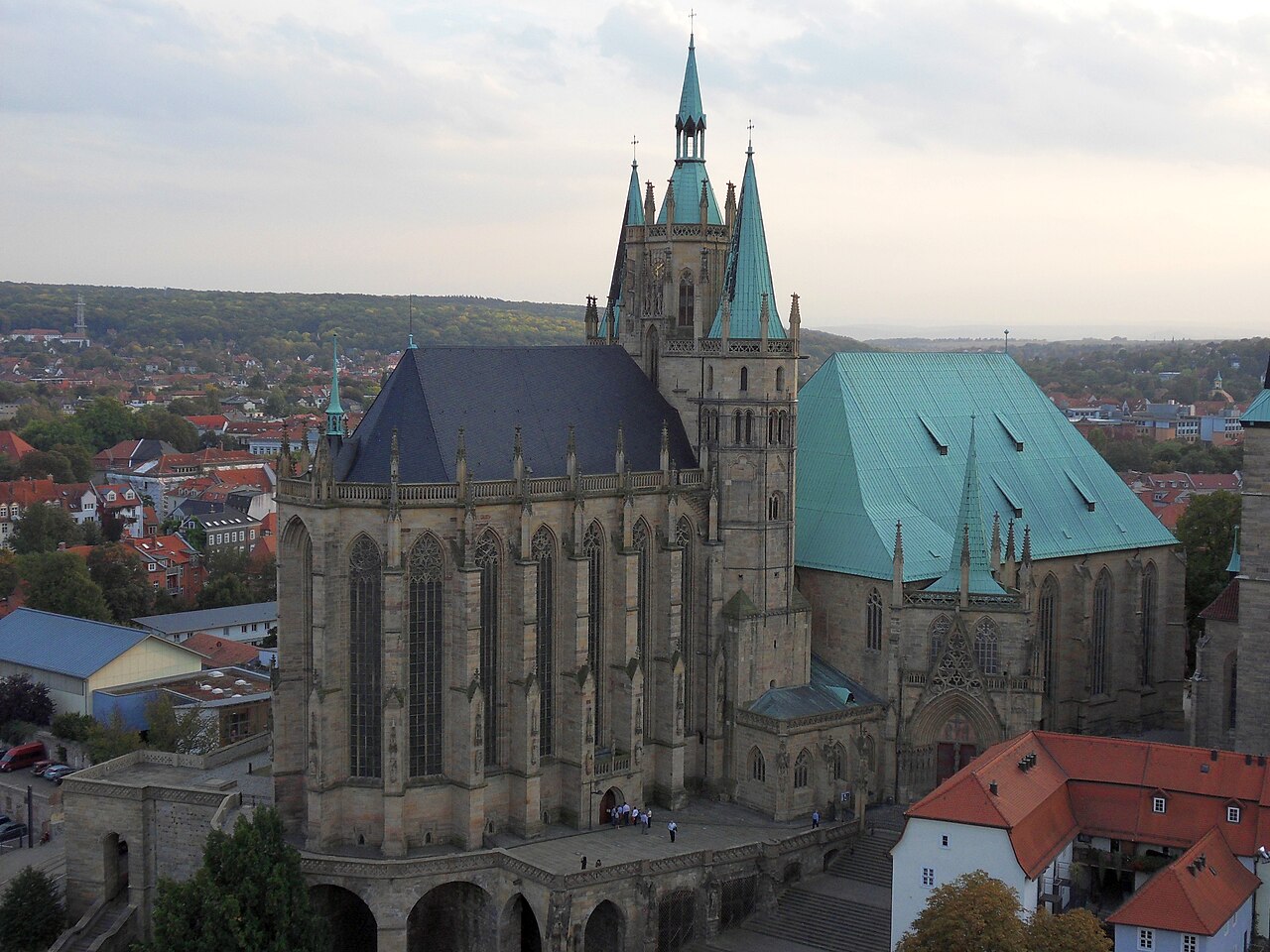
Erfurt Cathedral and St Severus' Church, in the city offering the Germany PhD scholarships
Erfurt, home of the university’s doctoral scholarship call.

The ABCD research stay: nine months, two places

The ABCD-Centre, which works on water and climate adaptation, plans to support two doctoral students, the report says. Funding is €1,200 a month for accommodation and living costs, up to €105 a month for insurance, a travel grant of up to €1,000 and up to €1,000 for research materials. Hosts are RWTH Aachen University, Technische Universität Dresden or UNU Resource Nexus.

Eligibility is narrower. Applicants must be full-time doctoral students at a university in a developing country and must have started their PhD within the last three years. The research topic must match the centre’s priorities, such as water infrastructure and urban water extremes. The article gives no official ABCD website, only a link to a document on LinkedIn’s media domain. Treat the details as unconfirmed until you find the centre’s own call.

Other German deadlines on the October calendar

A list compiled by Global South Opportunities on 8 October shows more German options. It lists IMPRS-IS PhD positions with a 15 November deadline and a University of Bremen DAAD marine biology master’s scholarship closing on 15 October. It is an aggregator, so verify each date with the provider. For UK alternatives, see our guide to the Gates Cambridge deadlines.

Which Germany PhD scholarships fit you

Consider a hypothetical doctoral student, Hamza, a Pakistani civil engineering researcher in year two of a PhD on urban flooding. If his university qualifies under the programme’s definition, the ABCD stay could suit him, because his topic matches the water priorities. A researcher in the humanities with a proposal tied to a research training group would look at Erfurt instead. Hamza is an illustration, not a real applicant.

How to prepare for Germany PhD scholarships

Start with the ABCD file, because it closes first. It asks for a single PDF with a two- to three-page motivation statement, a sample scientific paper and a CV. It also needs a support letter from your home institution, an enrolment certificate, a transcript dated within six months and a passport copy. Agree the research plan with your supervisor before you apply. For Erfurt, email the counselling office this week and request the full call. Remember that German study also involves health insurance, which the DAAD says international students must hold.

Planning the move itself? Our visa eligibility checker can help you test your options, and our note on the delayed ETIAS launch explains short-stay travel to the Schengen area.

Research priorities and the Erfurt call page

The ABCD report lists five priority areas: water infrastructure and digitalisation, ecosystem resilience, urban water extremes, unconventional water resources, and sustainable materials and buildings. Applicants should also describe how they would contribute to the centre’s outreach work. One caution on Erfurt: its page is dated September 2026 in the news item but shows a last update of 19 August 2026. The page does not explain the gap, so check the full call before you rely on the deadline.

German PhD funding FAQ

What is the Erfurt deadline?

The University of Erfurt states 24 November 2026 at 23:59 CET, with scholarships taking effect from 1 April 2027.

How much does Erfurt pay?

€1,400 a month for three years, extendable by one year, plus €300 for one child and €150 for each additional child.

Who can apply for the ABCD stay?

Per the report, full-time doctoral students at a university in a developing country who started their PhD within the last three years.

When does the ABCD call close?

31 October 2026, according to the report. Confirm it with the centre, because no official ABCD site was linked.

Is the information on this page official?

The Erfurt details come from the university’s own call. The ABCD and aggregator details are secondary, so confirm them with the providers.

Sources

Commonwealth Master’s Scholarships Close in 7 Days: Are You Eligible?

The Commonwealth Master’s Scholarships for 2027/28 close at 16:00 BST on Tuesday 20 October, according to the Commonwealth Scholarship Commission (CSC). That leaves seven days from today, 13 October 2026. The awards fund study at a UK university from September or October 2027. Candidates cannot apply directly, so the real clock is often earlier than 20 October.

On this page

Who can apply for the Commonwealth Master’s Scholarships

You must be a citizen of an eligible Commonwealth country, or hold refugee status granted by one, or be a British Protected Person. You must also live permanently in an eligible country. The CSC list includes Bangladesh, Ghana, India, Kenya, Malaysia, Nigeria, Pakistan, South Africa, Sri Lanka and Uganda, plus many small island states, which the CSC says it particularly welcomes.

You need a first degree of at least upper second-class (2:1) honours by September 2027. A lower second-class degree can work if you also hold a relevant postgraduate qualification. You must show that you cannot afford UK study without the award. The CSC does not normally fund a second master’s, and anyone who has studied at master’s level in the UK is not eligible.

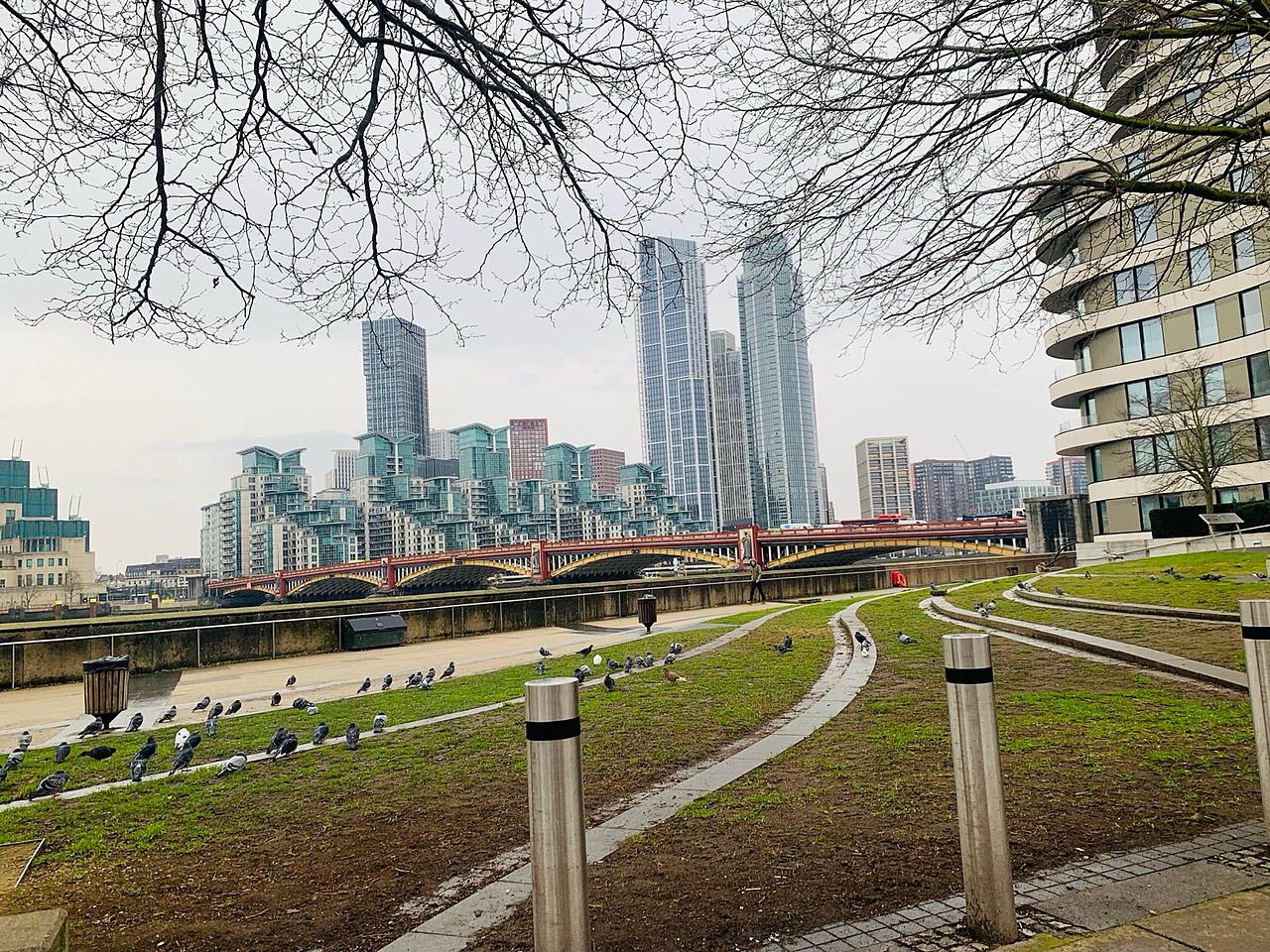
The London skyline, where many Commonwealth Master's Scholarships holders study
Many scholars study in London, where the stipend is higher.

What the award pays for

The CSC lists four main items. It pays approved airfare to the UK and back, and it pays full tuition fees by agreement with the university. The monthly stipend is £1,712, or £2,000 at universities in the London area, at current rates. A study travel grant covers study-related travel. Scholars who are widowed, divorced or single parents can also receive a partial contribution of £622 a month for a first child and £154 for the second and third children under 16. Dependants’ airfares are not covered.

Why your nominator’s date matters

This is the point most readers miss. The CSC accepts no direct applications. You apply to a nominating body, such as a national nominating agency, and each one sets its own closing date and extra criteria. The CSC says nominators must put their candidates forward by December 2026, and results are expected by July 2027.

Here is a hypothetical case. Chidi is a Nigerian doctor with a 2:1 who wants a public health master’s in Edinburgh. He sees the 20 October date and plans to apply on 19 October. His national nominator, however, closed three weeks earlier. Chidi is an illustration, not a real applicant, but the lesson is real: confirm your nominator’s date today.

Documents to upload before the deadline

Applications go through the CSC’s online system only, and there is no application fee. You upload a copy of your passport or national ID, full transcripts for all higher education, and two signed PDF references. Transcripts not in English need certified translations. The CSC says applications cannot be edited after submission, and late applications are not accepted. Ask your referees now, because two signed references often take the longest.

The week ahead: a short checklist

Start with the nominator, not the portal. Confirm the closing date and any extra rules. Next, order transcripts and translations. Then brief both referees. Finally, submit a day early to leave room for upload problems. If you miss this round, other UK and European awards close soon. Our guides cover the Chevening 2027/28 timeline and the Gates Cambridge deadlines. A scholarship listing compiled by Global South Opportunities on 8 October also shows Commonwealth PhD awards closing on 20 October.

Not sure which route fits your profile? Try our visa eligibility checker to plan the student visa step that follows an award.

Eligibility traps to check before you apply

Four details trip up strong candidates. First, the CSC prefers applicants who have already finished their undergraduate degree. Second, it does not normally fund a second master’s. Third, anyone who studied at master’s level at a UK institution is not eligible, and neither is anyone who held a Commonwealth Master’s scholarship before. Fourth, you must be free to start in the UK by September 2027. There is no age limit, so mid-career professionals can apply.

Commonwealth scholarship FAQ

When is the Commonwealth Master’s Scholarships deadline?

The CSC states 16:00 BST on Tuesday 20 October for the 2027/28 round. Your nominating body may close earlier.

Can I apply to the CSC directly?

No. You apply through a nominating body, and each sets its own closing date. The main route is a national nominating agency.

What is the monthly stipend?

The CSC lists £1,712 a month, or £2,000 for universities in the London area, at current rates.

Is there an application fee?

No. The CSC states that there is no application fee.

Can I edit my application after I submit it?

No. The CSC says applications cannot be edited after submission, and it does not accept late applications.

Sources

Auckland International Scholarship: Master’s Offer Needed by 20 Oct

The Auckland international scholarship for master’s students has a quiet deadline: you need a programme offer by 20 October 2026. The University of Auckland’s scholarship page says new international master’s students who receive a conditional or unconditional offer for Semester One or Quarter Two 2027 by that date are eligible. Eight days remain.

Timeline

Who gets the Auckland international scholarship

The award is the University of Auckland International Student Excellence Scholarship. You do not submit a separate first application. The university invites eligible students to complete a supplementary form. Eligibility depends on a master’s offer for Semester One or Quarter Two 2027, received by 20 October 2026.

Auckland international scholarship applicants study in a harbour city
Auckland’s skyline from Viaduct Basin.

The three dates that matter

Three dates run the process. First, 20 October 2026 is the deadline for your offer. Second, the university issues invitations to the supplementary application on 21 October 2026. Third, you must submit the supplementary form online by 4 November 2026.

Some third-party scholarship calendars list 21 October as the closing date. The university page shows 21 October as the invitation date and 4 November as the closing date, so trust the university.

Why the 20 October date catches people out

Most scholarships ask you to apply. This one works the other way round. The offer is your ticket in, so a late admissions decision can cost you the award even if your grades are strong. Students who applied late in the cycle should ask their faculty for a decision date today. They should also keep every email from the university, because the invitation on 21 October is the only door into the supplementary form.

The timing also affects your visa plans. A conditional offer can start the scholarship process, but a student visa needs an unconditional offer and proof of funds. Treat the scholarship as a bonus on top of your budget, not as the money that makes the plan work. Our guide to the New Zealand Post-Study Work Visa changes shows what comes after the degree.

What the scholarship is worth

The scholarship covers 25% of one year of tuition fees. It lasts one year and applies to a master’s degree at the University of Auckland. The number of awards varies, and the university offers the scholarship twice a year. Faculty or university committees make the awards on recommendation. The page does not list separate selection criteria, and the regulations PDF holds the full terms.

Consider a hypothetical Pakistani IT graduate, Hamza, who applied for a master’s in data science. Suppose a year of tuition cost NZ$40,000, a made-up figure used only for the sum. A 25% award would then be NZ$10,000. Check the real fee for your programme before you plan. If his offer arrives by 20 October, he gets an invitation the next day and has until 4 November to answer. He should read the regulations before he relies on the award, because the page says to check them. Hamza is an illustration only.

Another deadline: York University in Canada

Undergraduates planning ahead have a longer runway. York University lists the President’s International Scholarship of Excellence at C$180,000 in total, paid as C$45,000 a year for four years. The student deadline is 27 January 2027, and the nominee deadline is 4 February 2027. The award suits international high school applicants who show academic excellence, community commitment and leadership. York says the scholarship cannot combine with entrance scholarships, and applicants who qualify for both receive the higher value. See the York international scholarships page for the rules.

What to do this week

You have a short list of jobs, and each one takes less than an hour.

Start with the offer. If you applied for a 2027 master’s and have not heard back, contact the admissions team and ask about timing. Next, gather references and transcripts so you can complete the supplementary form quickly. Finally, check that your email inbox and spam folder can receive university messages on 21 October. If your offer arrives after 20 October, write to the scholarships team and ask whether you can still be considered in the next round.

The university’s wording is the final word. The page says to check the regulations and other information before relying on the details, so read the regulations PDF linked from the scholarship page. A student who meets the offer deadline but misses the 4 November form deadline loses the award for this round.

Scholarship hunters can compare other live deadlines in our guides to the Gates Cambridge scholarship deadlines and the Commonwealth master’s scholarships. Our visa eligibility checker also shows whether your profile fits a New Zealand student visa.

Auckland scholarship FAQ

Do I apply for the scholarship directly?

No separate first application exists. The university invites eligible students to complete a supplementary form.

What is the offer deadline?

You need a conditional or unconditional master’s offer for Semester One or Quarter Two 2027 by 20 October 2026.

When is the final deadline?

The supplementary form is due online by 4 November 2026, and invitations go out on 21 October 2026.

How much does it pay?

It covers 25% of one year of tuition fees, for one year of master’s study.

Does the scholarship run once a year?

The university offers it twice a year, so check the page for the next round if you miss this one.

Sources

Gates Cambridge 2027/8: First Deadline Is 14 October

Applications for the Gates Cambridge Scholarship for 2027/8 entry are open, and the first deadline is days away: US citizens resident in the USA must apply by 11:59pm UK time on Wednesday 14 October 2026, according to the Gates Cambridge timeline. Everyone else faces a Gates Cambridge scholarship deadline of either 8 December 2026 or 6 January 2027, depending on the course.

In this guide

Round 1 and Round 2

Round 1 is for US citizens resident in the USA: applications opened 11 September 2026, close 14 October 2026, with outcomes by 14 December 2026 and offers by early February 2027. Round 2 covers all other eligible applicants. Applications also opened 11 September; the deadline is Tuesday 8 December 2026 or Wednesday 6 January 2027 depending on the course, so check the University of Cambridge course directory the page points to. Round 2 outcomes come by 8 March 2027, with offers by early April and acceptance required within 72 hours.

What the scholarship is

The Gates Cambridge programme funds outstanding postgraduate students at the University of Cambridge who share a potential for social leadership. It was established in 2000 with a gift from the Gates Foundation. This page does not cover funding amounts or eligibility details, which the programme publishes separately, so confirm them on the official site.

A realistic plan for non-US applicants

Imagine a Nigerian doctor aiming for a Cambridge public health master’s. The first task is finding the course’s own deadline, because the scholarship round can depend on it. Then comes the course application itself, since the scholarship considers applicants through their departmental application. Referees, transcripts and a research or study statement usually take weeks, so working back from early December is sensible. Check our visa eligibility checker early for the student visa leg of the journey.

Key dates ahead

Panel selection for Round 1 is on 22 and 23 January 2027 and for Round 2 on 22 and 23 March 2027. For other UK deadlines see our guides to the UCAS 15 October deadline and the Commonwealth master’s scholarships.

Gates Cambridge 2027/8: questions

When is the first deadline?

14 October 2026, 11:59pm UK time, for US citizens resident in the USA.

When is the deadline for everyone else?

Either 8 December 2026 or 6 January 2027, depending on the course.

When do Round 2 applicants hear back?

By 11:59pm UK time on 8 March 2027, with offers by early April.

How long do I have to accept an offer?

72 hours from the offer, according to the timeline.

Where do I find my course deadline?

In the University of Cambridge course directory, as the Gates Cambridge timeline instructs.

Related coverage: Australia student visa reform.