Two Scholarship Deadlines, Days Apart: Chevening and DAAD in October

The DAAD scholarship deadline for most master’s and PhD awards starting in 2027 falls on 15 October 2026, according to the uni2study deadline calendar. Chevening, the UK government’s scholarship, closes sooner, at 11:00 UTC on 6 October. If you plan to apply for either, you have days, not weeks.

On this page

The DAAD scholarship deadline and how it works

The German Academic Exchange Service, known as DAAD, funds study and research in Germany. uni2study says most master’s and PhD scholarships for entry in 2027 close on 15 October 2026, and some programmes run later into October. That is a secondary source, so treat the date as a guide and check your own programme.

DAAD says on its site that you can find the various scholarship types and suitable offers in its scholarship database. Use that database to confirm the exact closing date and required documents for the award you want. See the DAAD scholarship pages.

Chevening closes first: 6 October

Chevening’s own timeline for the 2027/28 cycle is clear. Applications opened on 4 August 2026 and close on 6 October 2026 at 11:00 UTC. Late submissions are not accepted. Eligibility screening begins in October, and a reading committee reviews applications from October to January.

Shortlisted candidates are told in mid-February 2027, interviews run from March to April at British embassies, and results come in mid-June 2027. Scholars would start in the UK in September or October 2027. See the Chevening application timeline.

For more on the Chevening process, read our guide to the Chevening 2027-28 timeline.
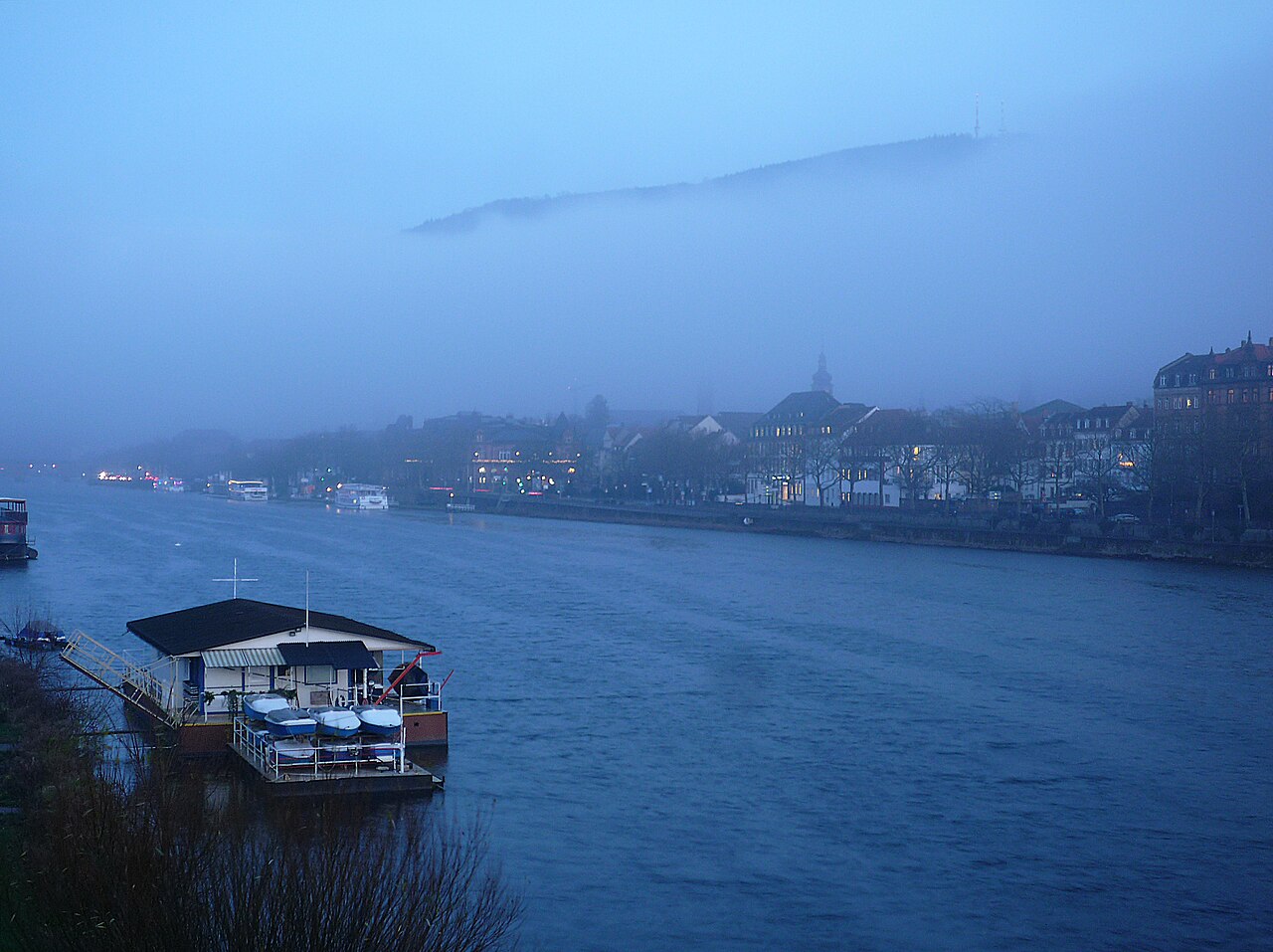
DAAD scholarship deadline - Heidelberg old town on the Neckar at dusk

A realistic plan for the next two weeks

Start with documents. Most scholarships ask for transcripts, references, a personal statement and proof of language skills. These take time to collect, and referees need notice.

To illustrate, picture a Vietnamese engineering graduate comparing a master’s in Germany with one in the UK. They would list each award’s deadline, check the language requirement, and begin with the earliest closing date. This is a hypothetical example, not a real applicant.

Do not leave submission to the last hour. Chevening says its deadline is fixed, and the same discipline applies to DAAD.

Other scholarship rounds to watch

Erasmus Mundus Joint Masters are different. uni2study notes that each consortium sets its own timeline, and deadlines run from November 2026 to February 2027. There is no single central date, so check each programme page.

Also see the Cambridge route in our guide to Gates Cambridge 2027 deadlines. If you are weighing countries and visa routes, our visa eligibility checker is a quick place to start.

Questions on the DAAD scholarship and Chevening

When is the DAAD scholarship deadline?

uni2study says most master’s and PhD scholarships for 2027 entry close on 15 October 2026. Some programmes run later. Confirm your own programme with DAAD.

When does Chevening close?

Chevening closes on 6 October 2026 at 11:00 UTC. Late submissions are not accepted.

When are Chevening results announced?

Chevening lists mid-June 2027 for results, with interviews in March and April 2027.

Are Erasmus Mundus deadlines the same?

No. Each consortium publishes its own timeline, with deadlines between November 2026 and February 2027, according to uni2study.

Where do I find DAAD scholarships?

DAAD says its scholarship database lists the scholarship types and suitable offers.

Sources

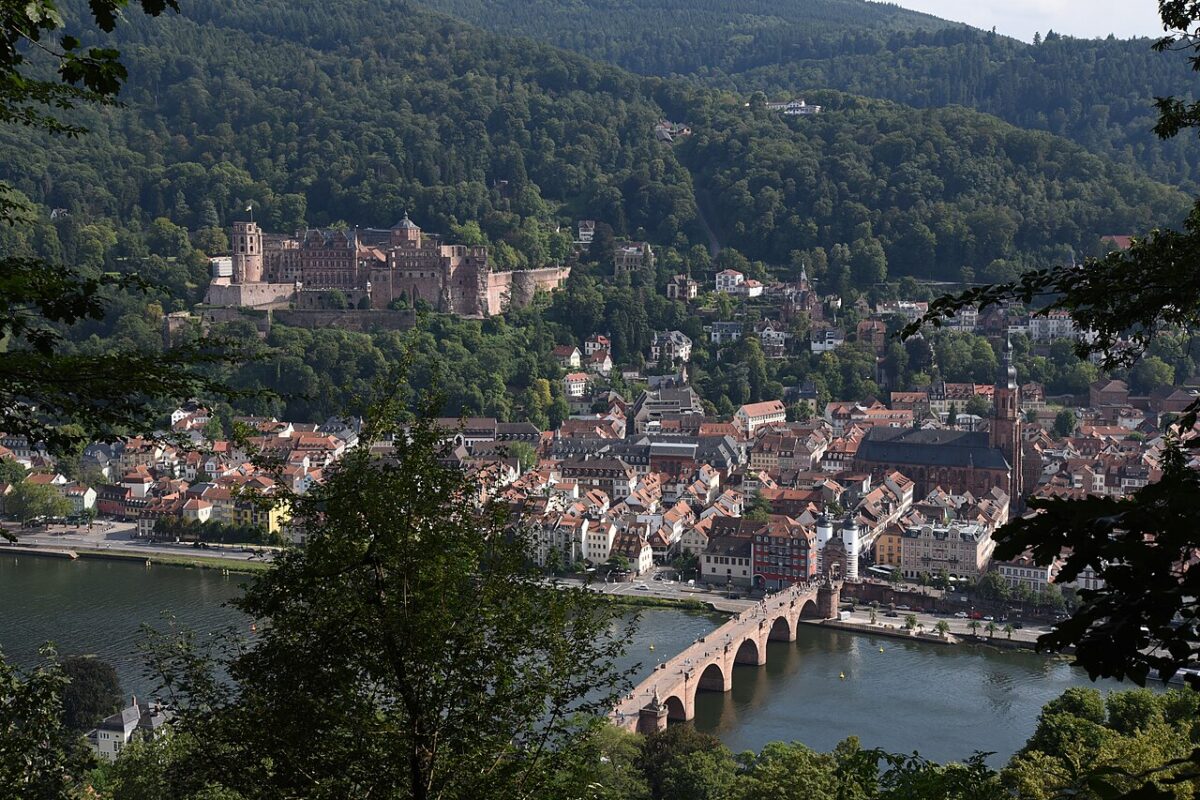
Image: Heidelberg old town, castle and Old Bridge, photo by R. J. Mathar, Wikimedia Commons, licensed CC BY-SA 4.0. Second image: evening view of Heidelberg old town and the Neckar, photo by Hartmut Schmidt Heidelberg, Wikimedia Commons, licensed CC BY-SA 4.0.


Germany’s CDU Just Posted Its Worst Result Since World War II

Germany’s Christian Democratic Union suffered its worst result in any state election since World War II on Sunday, as the far-right Alternative for Germany overtook it to become the strongest party in Mecklenburg-Vorpommern. The CDU state election defeat pushed Chancellor Friedrich Merz’s party below the 5% threshold needed to enter the state parliament at all, a result Merz himself called a “disaster.” The vote adds fresh strain to a governing coalition already under pressure from a broader far-right surge across several German states this autumn.

How the CDU state election defeat unfolded

The Mecklenburg-Vorpommern state election was held on September 20, 2026, with turnout reaching 78.1%, a high figure for a regional vote. The AfD won 38.2% of the vote and 32 seats, making it the strongest party in the state legislature for the first time. The CDU collapsed from 13% in the previous election to just 4.9%, falling under the 5% cutoff and losing every seat it held. The Social Democrats finished second with 35.5% and 29 seats, while the Greens took 5.7% and five seats and The Left won 6.5%, also for five seats.

Why the AfD surge matters beyond one state

Mecklenburg-Vorpommern was one of several German states to hold elections this September, and the pattern has been consistent: the AfD gaining ground while the CDU’s traditional base erodes. Analysts covering the vote described it as part of a wider realignment in eastern Germany, where economic anxiety and migration policy have become dominant campaign issues. A result this stark, a governing national party shut out of a state parliament entirely, is without recent precedent for the CDU.

What it means for Merz’s coalition

Merz, who leads the federal coalition government in Berlin, does not face a national election because of this result, but the symbolism is difficult to contain. A chancellor’s party being wiped out in a state legislature raises questions about his authority within his own party ahead of tougher budget and migration votes later this year. Coalition partners are watching closely for signs that CDU lawmakers grow more cautious about defending unpopular policy positions.

Where German politics goes from here

The immediate practical effect is a Mecklenburg-Vorpommern state government that will likely be negotiated between the SPD, Greens and Left, since no mainstream party will govern with the AfD. The bigger question is whether the CDU can regroup before the next round of state votes, or whether Sunday’s result marks the start of a longer decline in its eastern German strongholds. For now, Merz has said he intends to stay in his post, but the pressure inside his own party is unlikely to ease soon.

CDU state election defeat

What travelers and businesses watching Germany should note

Political instability at the state level rarely disrupts daily life immediately, but investors and multinational employers with operations in eastern Germany are watching for policy shifts around energy subsidies and labor rules that a weakened CDU may struggle to defend. Germany’s national government has not signaled any change in course, and coalition talks in Mecklenburg-Vorpommern are expected to take weeks rather than days.

How this fits Germany’s wider election calendar

Mecklenburg-Vorpommern was not an isolated data point. Berlin and Saxony-Anhalt also held state elections in the same window this September, and in each case the AfD gained ground while support for the traditional governing parties softened. Taken together, the results suggest eastern Germany’s political map is shifting faster than national polling had captured, with implications for how federal lawmakers approach migration and energy policy ahead of budget negotiations later this year. Regional analysts note that the CDU’s collapse in this particular state was unusually severe even against that broader backdrop, since the party did not simply lose ground, it lost every seat.

How other parties are responding

Leaders from the SPD, Greens and The Left have publicly ruled out any coalition involving the AfD, a position that has held across Germany’s states despite the far-right party’s growing vote share. That leaves the three parties needing to negotiate a workable governing arrangement in Mecklenburg-Vorpommern despite holding fewer combined seats than a comfortable majority would typically require. Party officials from all three have signaled they expect talks to be difficult, given how differently they have historically approached spending priorities and industrial policy in the state.

Frequently Asked Questions

What caused the CDU state election defeat in Mecklenburg-Vorpommern?

A combination of AfD gains on migration and economic messaging, and eroding CDU support in eastern Germany, produced a 4.9% result for the CDU, well below the 5% threshold needed for parliamentary seats.

Did the CDU lose all its seats?

Yes. Falling under the 5% threshold means the CDU holds zero seats in the new Mecklenburg-Vorpommern state parliament, compared with 13% and a governing role in the prior term.

Is Chancellor Merz’s national government affected directly?

Not immediately. Merz remains federal chancellor, but the result increases internal pressure on his leadership and complicates upcoming coalition negotiations in Berlin.

Who will govern Mecklenburg-Vorpommern now?

With the AfD shut out by other parties’ refusal to form a coalition with it, a government is expected to be negotiated among the SPD, Greens and The Left, who together hold a workable majority.

Is this part of a wider trend in Germany?

Yes. The AfD has posted gains across several eastern German state elections in 2026, part of a broader realignment analysts have been tracking since the party’s rise began in the mid-2010s.

Related coverage on Tamara News

For more context, see our reporting on Alberta independence referendum vote and Ukraine drone attack moscow refinery.

Sources

The German Scholarship That Rewards Work Experience

Most fully funded master’s programmes screen on grades first. The DAAD EPOS scholarship screens on grades and on work. Germany’s Development-Related Postgraduate Courses programme will not consider you without at least two years of professional experience after your first degree, which changes who realistically competes for it.

The scheme funds graduates from developing and newly industrialised countries to take a postgraduate or master’s degree at a state or state-recognised German university. In exceptional cases it funds a doctorate. It is administered by the DAAD, Germany’s academic exchange service.

Postgraduate students in a lecture hall on a DAAD EPOS scholarship course
EPOS funds postgraduate study across a wide range of disciplines.

Who the DAAD EPOS scholarship is built for

The DAAD describes a typical holder plainly. That person works for a public authority, or for a state or private company in a developing country. They plan or execute projects with a development-policy bearing, whether technological, economic or social.

Think of a Vietnamese public-health officer who has spent three years running district immunisation logistics. That profile fits the programme far better than a stronger academic record with no working history behind it. The scheme is explicitly training specialists to return home, not recruiting talent to stay.

Eligibility rests on four things. You hold a bachelor’s degree, normally from a four-year course, in a relevant subject. Your results sit in the upper third. You have at least two years of relevant professional experience after that degree, counted at the time of application. Your degrees are normally no more than six years old.

What the EPOS scholarship actually pays

Funding runs for 12 to 42 months, depending on the study programme. The monthly payment is 934 euros for graduates and 1,300 euros for doctoral candidates.

The stipend is not the whole package. The award also covers payments towards health, accident and personal liability insurance, a travel allowance unless your home country or another funder already covers it, a monthly rent subsidy, and a monthly allowance for accompanying family members. That last item matters for mid-career applicants, who are more likely to move with a partner or children.

The EPOS eligibility bar that trips most applicants

Language requirements catch people out more often than grades. For courses taught in German, you must pass DSH 2 or TestDaF 4 before the course begins. The scholarship includes a six-month preparatory German course in Germany, but you still need a current certificate showing at least B1 German at the time of application.

The DAAD is direct about why. You cannot reach DSH or TestDaF level from nothing, even with the six-month intensive course, and passing the test is a formal condition of enrolling at the university. For English-taught courses you supply IELTS or TOEFL results. The institutional TOEFL is not accepted.

Applicants from the People’s Republic of China must also submit an APS certificate. Applications must be complete and written in English or German. Incomplete files are not considered, and there is no correction round.

How the EPOS application route works, and why deadlines differ

This is the part most guides get wrong. You do not apply to the DAAD. You apply directly to the postgraduate course you want, using that course’s own procedure and its own deadline. Applications sent to the DAAD are not forwarded.

Each course sets its own application deadline. There is no single closing date for the programme, which means two courses in the same intake year can close months apart. Check the deadline on the page of every course you are targeting, and check it again close to submission.

You may apply for up to three courses. If you do, list them in priority order in the DAAD application forms and keep that order consistent across every form. Submit one motivation letter that explains why you chose those specific courses and that ranking. The DAAD warns that ignoring this can void an application, or even an award already made.

The selection sequence runs in four steps. You send complete applications to the courses. A selection committee proposes candidates for a scholarship. Proposed candidates are contacted by the DAAD and upload their full file to the DAAD Portal. The process is then finalised and candidates are informed. Keep a PDF copy of every document, because you will need to upload them again at step three.

Getting your file ready before your course closes

Work backwards from the course deadline rather than forward from today. Employment certificates and certified translations are the slowest items, and neither is under your control.

The required documents run in a set order: the signed checklist, the DAAD application for a research or study scholarship, a Europass CV in reverse chronological order with no unexplained gaps, one letter of motivation, employment certificates proving two years of relevant post-degree experience, recent language certificates, copies of higher education certificates with certified translations where needed, and a full transcript with an explanation of the grading system.

If EPOS does not fit your profile, the DAAD runs a separate general route for master’s applicants without the professional-experience requirement, which we covered in our guide to the DAAD Study Scholarship for master’s students. Applicants comparing European options should also look at Erasmus Mundus deadlines. And if you are not sure which study or work route fits your profile, our visa eligibility checker is a sensible first stop.

Questions EPOS applicants ask most

Is there one deadline for the whole programme?

No. Each postgraduate course sets its own application deadline. Check the deadline published by the specific course you are applying to.

How much professional experience do I need?

At least two years of relevant experience gained after your first degree, counted at the time of application.

Can I apply for more than one course?

Yes, up to three. List them in priority order in the DAAD forms and submit one motivation letter explaining the ranking.

Do I need German to apply?

Only for German-taught courses, which require at least B1 at application and DSH 2 or TestDaF 4 before the course starts. English-taught courses require IELTS or TOEFL instead.

Does the scholarship cover family members?

There is a monthly allowance for accompanying members of family, alongside a rent subsidy and insurance contributions.

Where do I send my application?

Directly to the postgraduate course. Applications sent to the DAAD are not forwarded to the university.

Sources

No Job Offer? Germany Still Lets You In — If You Score 6

The job-offer-first rule is no longer the only door into Germany. Since the Opportunity Card launched, skilled workers can arrive to search on the ground, and the Germany Opportunity Card points 2026 system decides who qualifies. Score six points and you get up to a year to land qualified work. As of 2026 the rules are stable, which makes this a good moment to plan.

By the Tamara News editorial desk. Last updated 24 July 2026.

On this page

How the six-point maths works

The Chancenkarte awards points across a handful of factors: your qualification, work experience, language ability, age, and any prior ties to Germany. You need a recognised university degree or vocational qualification to enter the system, plus basic German at A1 or English at B2. From there, stronger German, more experience, and being younger all add points. Salman, a Pakistani IT specialist with five years of experience and B2 English, clears six points comfortably once his degree is recognised. The shortage-occupation list expanded in 2026, adding weight for STEM, healthcare, education and skilled trades.

The money and paperwork you’ll show

Germany wants proof you can support yourself while you search, currently about 13,092 euros a year. Most applicants show this through a blocked account, though a part-time work contract can also count. The application fee is 75 euros. You will also need your qualification documents, ideally with recognition already underway through the official “anabin” database, plus health insurance for your stay. Get the recognition question settled early. It is the step that most often slows people down.

Wondering if your profile clears six points? Find out at https://wa.link/i9l1ec

From search permit to a real job

The card is a bridge, not a destination. You have up to twelve months to find qualified work, and you can work 20 hours a week meanwhile to cover costs. Once you sign a contract that matches your qualification, you switch to a residence permit for employment, or to the EU Blue Card if your salary clears its threshold. The 2026 Blue Card floor is around 50,700 euros, lower for shortage occupations. Plan the search like a job in itself. Momentum matters more than luck.

Keep these in mind

  • You need at least six points to qualify.
  • Prove roughly 13,092 euros for living costs.
  • Up to 12 months to search, extendable to two years.
  • Recognition of your degree is the key early step.

Quick questions

Do I need a job offer for the Opportunity Card?
No. You may enter to look for work if you score six points and can support yourself.

How long is the Opportunity Card valid?
Up to one year, extendable to two if you have qualified work.

Can I work during the job search?
Yes, up to 20 hours a week, plus short trial jobs.

How much money must I prove?
Around 13,092 euros a year via a blocked account or similar proof.

Related reads

Share this story

  • LinkedIn: Germany’s Opportunity Card lets skilled workers move without a job offer. Here is how the points work.
  • Twitter: No job offer? Germany’s Opportunity Card needs 6 points and proof of funds. Here’s the maths.
  • Facebook: Want to move to Germany without a job first? The Opportunity Card explained.

Make Germany your next address

The Opportunity Card rewards preparation over connections. Sort your recognition, count your points, and set aside your proof of funds before you apply. Start mapping your Germany route with our tools here: https://wa.link/i9l1ec

Sources

What You Must Earn for Germany’s EU Blue Card in 2026

The bar to qualify just moved. If Germany is your target, the number that decides your case is the EU Blue Card salary threshold, and for 2026 it sits at €50,700 gross a year for standard roles. Clear it with a graduate-level job offer and you unlock one of Europe’s fastest routes to permanent residence. Fall short and you are looking at the Opportunity Card or a standard permit instead. This is the plain-English guide to what you must earn, as of 2026, and how the card actually works.

By the Travel Explore editorial desk. Last updated 17 July 2026.

Jump to a section

The 2026 EU Blue Card salary threshold, in euros

Here is the number that decides everything. For 2026, Germany set the EU Blue Card salary threshold at €50,700 gross per year for standard occupations. The European Commission describes the card as an “EU-wide work and residence permit.” Clear that figure with a qualifying job offer and a recognised degree, and the core hurdle is met. Miss it and the Blue Card is off the table for now. The threshold is reviewed yearly, so always confirm the current figure before you sign a contract.

Not sure your offer clears the bar? Check your route at https://wa.link/i9l1ec

The lower bar for shortage jobs and new graduates

Not everyone needs the full figure. Shortage occupations, recent graduates, and IT specialists without a formal degree qualify at the reduced bar of €45,934. Consider Bilal, an IT specialist from Lahore with six years in cloud security but no university degree. That reduced threshold is his way in. Doctors, engineers, and maths or science graduates often land here too. If your field appears on the shortage list, your salary target drops and your options widen.

From job offer to Blue Card, step by step

The order is simple. Secure a job offer that meets your threshold. Get your degree recognised through the anabin database or a statement of comparability. Book a visa appointment, then apply for the Blue Card residence permit after arrival. Families can join you, and permanent residence can follow in as little as 21 months with solid German. Test your profile first with our visa eligibility checker before you commit to the move.

Quick recap

  • The 2026 EU Blue Card salary threshold is €50,700 for standard roles.
  • Shortage jobs, new grads, and degree-free IT specialists qualify at €45,934.
  • Degree recognition via anabin is a key early step.
  • Permanent residence can arrive in about 21 months with B1 German.

EU Blue Card salary threshold: your questions

What is the EU Blue Card salary threshold in Germany for 2026?

It is €50,700 gross per year for standard roles, or €45,934 for shortage occupations and new graduates.

Can IT specialists without a degree get a Blue Card?

Yes. With relevant experience they can qualify under the reduced salary threshold.

How fast can Blue Card holders get permanent residence?

As little as 21 months with B1 German, or 27 months without it.

Is the Blue Card the same as the Opportunity Card?

No. The Blue Card needs a job offer first; the Opportunity Card lets you search for work in Germany.

Keep reading

Pass it on

  • LinkedIn: Germany raised its EU Blue Card salary bar for 2026. Here is exactly what you must earn to qualify.
  • Twitter: EU Blue Card 2026: €50,700 standard, €45,934 for shortage jobs and new grads. Save this if Germany is the plan.
  • Facebook: Thinking Germany? The 2026 Blue Card salary numbers are here. Check where you stand.

Map your route to Germany

The Blue Card rewards skills and salary with speed to settlement. Know your threshold, fix your paperwork, and map your move today at https://wa.link/i9l1ec

Sources

1 2 3 … 7