
Category Archives: Scholarships

You Have Until 6 October to Land a Fully Funded Stanford Degree

If a fully funded graduate degree at Stanford is on your list, the clock is short. The
Knight-Hennessy Scholars deadline to join the 2027 cohort falls at 1:00pm Pacific Time on
6 October 2026. That is under two weeks away, and the application is not one you can rush at the last hour.

The Knight-Hennessy Scholars deadline, precisely

The application closes at 1:00pm Pacific Time on 6 October 2026, according to the
program’s official deadlines page.
The date is the same for every applicant, whatever Stanford degree you pursue. Convert it to your own time
zone and treat the earlier moment as your true cut-off, not midnight.

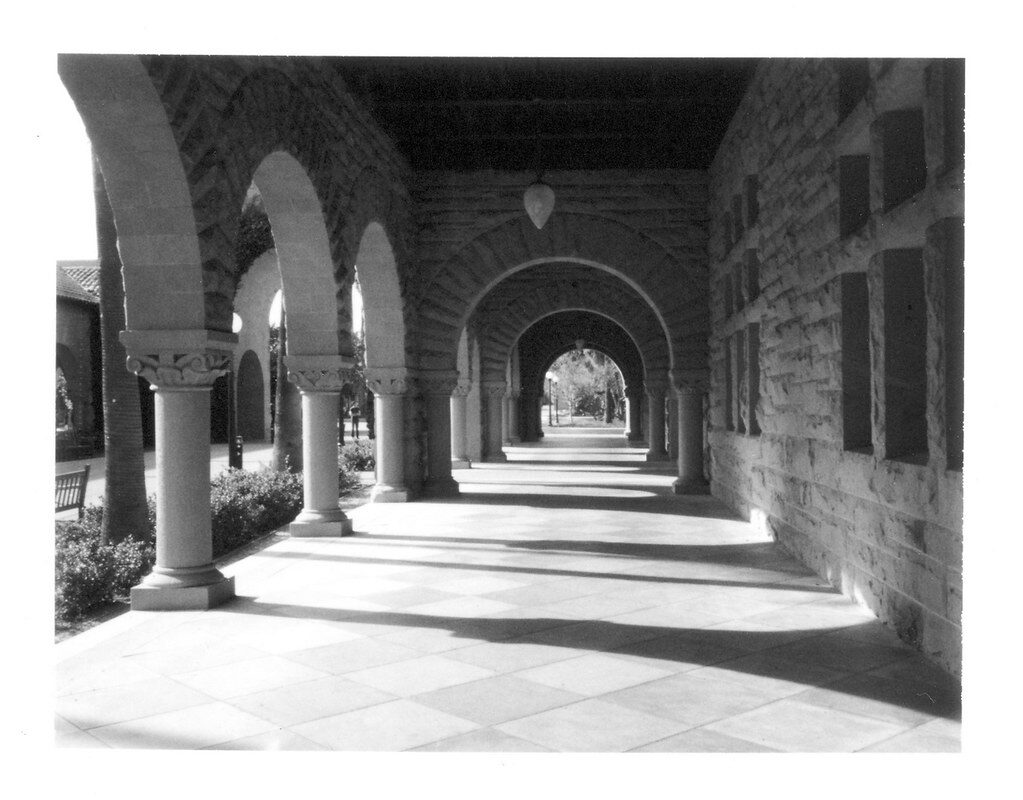
Sandstone arcade at Stanford, the campus behind the Knight-Hennessy Scholars deadline
Knight-Hennessy scholars pursue any full-time graduate degree at Stanford.

What the award actually covers

Knight-Hennessy funds up to three years of any graduate degree at Stanford. According to the
program’s funding page,
each of the first three years includes:

  • A fellowship applied directly to tuition and associated fees
  • A stipend for living and academic expenses
  • A travel stipend for one annual economy round-trip to Stanford
  • A one-time relocation stipend for newly enrolling scholars

For degrees that run longer than three years, such as a PhD or MD, the degree program funds the
remaining years under its own standard commitment. The stipend is taxable, and the program does not
reimburse taxes, so budget for that.

The scale of the award is what sets it apart. Knight-Hennessy is one of the largest fully funded
graduate fellowships in the world, and it is open across every discipline Stanford teaches. There are no
quotas by field or world region. That breadth is rare. Most large scholarships tie you to one subject or
one degree; this one follows you into whatever full-time Stanford graduate program admits you.

Who is eligible for the Knight-Hennessy Scholars deadline

The program encourages applicants from every country and sets no quotas by discipline or world region.
Two baseline rules apply. First, you must also apply to, be admitted to, and enrol in a full-time Stanford
graduate program. Second, you must have earned your first bachelor’s degree in January 2020 or later.
Applicants who served in the military get two extra years of eligibility.

This is the crucial catch: Knight-Hennessy and Stanford graduate admission are two separate
applications. Your degree program deadline may fall before or after 6 October, and it varies by program.
Confirm it directly with the department.

What to do before the deadline closes

With under two weeks left, work backwards from 6 October.

  1. Lock your recommenders today. Two letters take the longest and are outside your control.
  2. Draft the essays and short answers. The program wants evidence of independence of thought, purposeful leadership and a civic mindset.
  3. Confirm your Stanford program deadline. Missing that application makes you ineligible for Knight-Hennessy, even with a perfect scholarship submission.
  4. Check transcripts and test scores. Order anything that ships slowly now.

If Stanford is one of several targets, keep other funded routes open. Our guides to the
Chevening scholarship deadline
and the DAAD EPOS scholarship
cover fully funded options in the UK and Germany with their own autumn timelines.

Working back from 6 October

The single most common way strong candidates fail is treating the two applications as one. They are not.
Knight-Hennessy closes on 6 October; your Stanford degree program has its own deadline, which for some
programs is the earlier of its own date or 1 December 2026. Map both dates now. Then protect the recommender
timeline, because a late letter can sink an otherwise excellent file. If you cannot finish a competitive
application by 6 October, it is usually better to aim for next year’s cycle than to submit a rushed one.

Common questions about applying

When is the Knight-Hennessy Scholars deadline?

The application to join the 2027 cohort closes at 1:00pm Pacific Time on 6 October 2026. The deadline is the same for all applicants regardless of degree program.

What does the scholarship cover?

Full funding for up to three years of any Stanford graduate degree: a fellowship covering tuition and fees, a living stipend, a travel stipend, and a one-time relocation stipend for new scholars.

Who can apply?

Citizens and residents of any country. You must also apply to and be admitted to a full-time Stanford graduate program, and you must have earned your first bachelor’s degree in January 2020 or later.

Do I need to apply to Stanford separately?

Yes. Knight-Hennessy is separate from Stanford graduate admission. You submit two applications, and the graduate program deadline can differ from the 6 October Knight-Hennessy date.

Does it cover PhD or MD programs longer than three years?

Knight-Hennessy funds up to three years. For longer programs such as a PhD or MD, the degree program covers the remaining years under its own standard funding commitment.

Can I defer a Knight-Hennessy offer?

No. The program does not defer scholar offers. If selected and unable to enrol, you must reapply for the year you intend to start.

Sources

Featured image: Stanford campus arcade, photo by DanWri, licensed CC BY.

You Have Until 6 October to Win a Fully Funded UK Master’s

The Chevening scholarship deadline for the 2027-28 cycle is 6 October 2026 at 11:00
UTC. That is a little over two weeks away, and it is a hard cut-off: the online system closes and does not
reopen for late submissions. If you have been meaning to start an application for a fully funded UK
master’s, this is the point at which meaning to start stops being enough.

The Chevening scholarship deadline, precisely

The closing time is 11:00 UTC on 6 October 2026, not midnight. That trips people up every year. Convert
it to your own time zone now and write it down. In Delhi that is 16:30. In Lagos it is 12:00. In Manila it
is 19:00. In Bogota it is 06:00 the same morning.

Chevening states plainly that you will not be able to access the online application system after the
deadline passes. There is no grace window and no appeal on the basis of a slow connection.

University library reading room ahead of the Chevening scholarship deadline
Chevening funds a one-year taught master’s at a UK university.

What the award actually covers

Chevening is the UK government’s international scholarship programme, funded by the Foreign,
Commonwealth and Development Office together with partner organisations. It supports a one-year taught
master’s degree at a UK university. Chevening’s own materials describe the award as covering tuition, a
living stipend and travel costs. Check the figures on the official site rather than on aggregator blogs,
because they are reviewed each cycle.

Eligibility is country-specific. The programme runs separate country pages with their own criteria and
work-experience requirements. Confirm yours before you invest a weekend in essays.

Two conditions catch people out every cycle. Chevening expects a set amount of qualifying work
experience, and it counts that experience in hours rather than in job titles. It also requires scholars to
return to their home country for a period after the degree. Neither condition is hidden, but both are
easier to check now than to discover at interview.

What to do before the Chevening scholarship deadline

You select three eligible UK master’s courses in the application. You do not need offers from them yet.
What you do need is four essays that answer the questions asked, rather than the questions you wish had
been asked.

Work the order that follows the assessment, not the form. Take a Vietnamese civil servant applying for a
public policy master’s. Her strongest material is a specific reform she worked on, what stalled, and what
she would do with UK training. That belongs in the leadership and career plan essays. Her networking essay
should not list conferences. It should show that she builds working relationships which outlast a
project.

The common failure is abstraction. Reading committees see thousands of essays about passion for
development. They see far fewer that name a problem, a decision and a result. Specific beats impressive
almost every time.

What happens after you submit

Applications are screened for eligibility and then read by independent reading committees from roughly
mid-October 2026 into January 2027. Interviews follow for shortlisted candidates. References sit on their
own later deadline, so a referee who has not replied by 6 October has not sunk your application. Confirm
the current reference date on
Chevening’s application timeline page,
which is the authoritative version.

Working back from 6 October

Two weeks is enough if you sequence it. Spend the first few days confirming eligibility on your country
page and picking your three courses. Draft all four essays in one sitting, badly, then cut. Give your
referees notice this week even though their deadline falls later. Submit at least 48 hours early, because
traffic peaks in the final hours.

Keep your own copy of everything you submit. If you apply again in a future cycle, last year’s essays
give you a starting point and a record of what you claimed. Reapplying is allowed, and many successful
scholars get in on a second attempt.

If the UK is one of several options you are weighing, our coverage of
the UK immigration rule changes landing between now and December
is worth ten minutes, and
the most recent Canadian Express Entry draw
gives you a comparison point. Students eyeing the United States should also read
what changed in the public charge test this month.

Chevening scholarship deadline FAQs

When exactly does the Chevening scholarship deadline fall?

6 October 2026 at 11:00 UTC. The online application system closes at that moment and does not reopen.

Can I still start an application now?

Yes. Applications for the 2027-28 cycle are open and you can begin one today, but you should work backwards from the closing time rather than the closing date.

Do my referees have to submit before the deadline?

No. References sit on a later, separate deadline. Check the current dates on Chevening’s own application timeline page before you rely on that.

How many universities do I choose?

Chevening asks applicants to select three eligible UK master’s courses. You do not need offers from them at the application stage.

When will I hear back?

Applications are screened for eligibility and reviewed by independent reading committees from around mid-October 2026 into January 2027, with interviews after that.

Who funds Chevening?

It is the UK government’s international scholarship programme, funded by the Foreign, Commonwealth and Development Office and partner organisations.

Sources

The German Scholarship That Rewards Work Experience

Most fully funded master’s programmes screen on grades first. The DAAD EPOS scholarship screens on grades and on work. Germany’s Development-Related Postgraduate Courses programme will not consider you without at least two years of professional experience after your first degree, which changes who realistically competes for it.

The scheme funds graduates from developing and newly industrialised countries to take a postgraduate or master’s degree at a state or state-recognised German university. In exceptional cases it funds a doctorate. It is administered by the DAAD, Germany’s academic exchange service.

Postgraduate students in a lecture hall on a DAAD EPOS scholarship course
EPOS funds postgraduate study across a wide range of disciplines.

Who the DAAD EPOS scholarship is built for

The DAAD describes a typical holder plainly. That person works for a public authority, or for a state or private company in a developing country. They plan or execute projects with a development-policy bearing, whether technological, economic or social.

Think of a Vietnamese public-health officer who has spent three years running district immunisation logistics. That profile fits the programme far better than a stronger academic record with no working history behind it. The scheme is explicitly training specialists to return home, not recruiting talent to stay.

Eligibility rests on four things. You hold a bachelor’s degree, normally from a four-year course, in a relevant subject. Your results sit in the upper third. You have at least two years of relevant professional experience after that degree, counted at the time of application. Your degrees are normally no more than six years old.

What the EPOS scholarship actually pays

Funding runs for 12 to 42 months, depending on the study programme. The monthly payment is 934 euros for graduates and 1,300 euros for doctoral candidates.

The stipend is not the whole package. The award also covers payments towards health, accident and personal liability insurance, a travel allowance unless your home country or another funder already covers it, a monthly rent subsidy, and a monthly allowance for accompanying family members. That last item matters for mid-career applicants, who are more likely to move with a partner or children.

The EPOS eligibility bar that trips most applicants

Language requirements catch people out more often than grades. For courses taught in German, you must pass DSH 2 or TestDaF 4 before the course begins. The scholarship includes a six-month preparatory German course in Germany, but you still need a current certificate showing at least B1 German at the time of application.

The DAAD is direct about why. You cannot reach DSH or TestDaF level from nothing, even with the six-month intensive course, and passing the test is a formal condition of enrolling at the university. For English-taught courses you supply IELTS or TOEFL results. The institutional TOEFL is not accepted.

Applicants from the People’s Republic of China must also submit an APS certificate. Applications must be complete and written in English or German. Incomplete files are not considered, and there is no correction round.

How the EPOS application route works, and why deadlines differ

This is the part most guides get wrong. You do not apply to the DAAD. You apply directly to the postgraduate course you want, using that course’s own procedure and its own deadline. Applications sent to the DAAD are not forwarded.

Each course sets its own application deadline. There is no single closing date for the programme, which means two courses in the same intake year can close months apart. Check the deadline on the page of every course you are targeting, and check it again close to submission.

You may apply for up to three courses. If you do, list them in priority order in the DAAD application forms and keep that order consistent across every form. Submit one motivation letter that explains why you chose those specific courses and that ranking. The DAAD warns that ignoring this can void an application, or even an award already made.

The selection sequence runs in four steps. You send complete applications to the courses. A selection committee proposes candidates for a scholarship. Proposed candidates are contacted by the DAAD and upload their full file to the DAAD Portal. The process is then finalised and candidates are informed. Keep a PDF copy of every document, because you will need to upload them again at step three.

Getting your file ready before your course closes

Work backwards from the course deadline rather than forward from today. Employment certificates and certified translations are the slowest items, and neither is under your control.

The required documents run in a set order: the signed checklist, the DAAD application for a research or study scholarship, a Europass CV in reverse chronological order with no unexplained gaps, one letter of motivation, employment certificates proving two years of relevant post-degree experience, recent language certificates, copies of higher education certificates with certified translations where needed, and a full transcript with an explanation of the grading system.

If EPOS does not fit your profile, the DAAD runs a separate general route for master’s applicants without the professional-experience requirement, which we covered in our guide to the DAAD Study Scholarship for master’s students. Applicants comparing European options should also look at Erasmus Mundus deadlines. And if you are not sure which study or work route fits your profile, our visa eligibility checker is a sensible first stop.

Questions EPOS applicants ask most

Is there one deadline for the whole programme?

No. Each postgraduate course sets its own application deadline. Check the deadline published by the specific course you are applying to.

How much professional experience do I need?

At least two years of relevant experience gained after your first degree, counted at the time of application.

Can I apply for more than one course?

Yes, up to three. List them in priority order in the DAAD forms and submit one motivation letter explaining the ranking.

Do I need German to apply?

Only for German-taught courses, which require at least B1 at application and DSH 2 or TestDaF 4 before the course starts. English-taught courses require IELTS or TOEFL instead.

Does the scholarship cover family members?

There is a monthly allowance for accompanying members of family, alongside a rent subsidy and insurance contributions.

Where do I send my application?

Directly to the postgraduate course. Applications sent to the DAAD are not forwarded to the university.

Sources

The Chevening Window Opens in August — Be Ready, Not Rushed

Chevening is not won in October. It is won now. The Chevening Scholarship 2027 application opens in early August and closes on 6 October 2026, and the strongest candidates are already drafting essays and lining up referees. This fully funded route to a one-year UK master’s rewards preparation, not last-minute panic.

By the Tamara News editorial desk. Last updated 24 July 2026.

On this page

What Chevening actually funds

Chevening is the UK government’s flagship scholarship, and it is generous. It covers full tuition for an eligible one-year master’s, a monthly living stipend, economy flights to and from the United Kingdom, and a set of arrival and departure allowances. In return it looks for future leaders. The programme values what it calls “leadership and networking” potential, so your professional trajectory matters as much as your grades. You also commit to returning home for at least two years after the course, a condition that shapes how you should frame your career plan.

The timeline that decides your odds

Mark three dates. Applications open in early August 2026. The portal closes on 6 October 2026 at 11:00 UTC. And if you are shortlisted, you must hold at least one unconditional UK university offer by 8 July 2027. Ada, a Nigerian doctor planning a master’s in public health, treats August as writing month and September as review month, leaving October free for a calm final check. That rhythm beats the scramble most applicants fall into. The deadline does not move. Neither should your prep.

Want a second pair of eyes on your study-abroad plan? Start at https://wa.link/i9l1ec

Where strong applications are built

Four essays carry the application: leadership, networking, your study choice, and your career plan. Each needs a concrete story, not a list of adjectives. Pick three UK courses that clearly connect to your goals, and explain why the United Kingdom specifically. Line up two referees early and brief them on what each essay claims, so their words reinforce yours. Keep evidence of your work experience handy, because the eligibility check is strict. Weak applications read like a CV. Strong ones read like a plan.

Before you hit submit

  • Applications open August, close 6 October 2026.
  • Four essays: leadership, networking, study, career.
  • Around two years of work experience is expected.
  • You return home for two years after the course.

Common questions

When does the Chevening 2027 application open and close?
It opens in early August 2026 and closes on 6 October 2026 at 11:00 UTC, with no extensions.

How much work experience do I need?
Most applicants need about two years, roughly 2,800 hours, though the exact rule depends on your country.

What does the scholarship cover?
Tuition for a one-year UK master’s, a monthly living stipend, and return flights.

Do I need a UK offer before applying?
No. You apply first, then must hold an unconditional UK offer by 8 July 2027.

Related reads

Share this story

  • LinkedIn: The Chevening 2027 window opens in August. Preparation beats panic every time.
  • Twitter: Chevening 2027 closes 6 Oct 2026. Fully funded UK master’s. Start now.
  • Facebook: Dreaming of a UK master’s? Chevening 2027 applications open in August.

Turn a UK degree into your next chapter

A funded master’s can reset a career, but only if the application is ready before the rush. Build your essays, choose your courses, and brief your referees this month. Get organised with our study-abroad tools here: https://wa.link/i9l1ec

Sources


Tapay copy tradingGrow your money while you plan your moveTapay auto-copies a live trading strategy to your own account — spot & futures. Start free on demo, go live when you’re ready.Start free →

Ireland Will Fund Your PhD — If You Apply By October

Most scholarship hunts skip Ireland entirely and head straight for the UK or Germany. That is a mistake this year. The Government of Ireland Scholarship deadline 2027 lands October 10, 2026, and it funds research master’s and PhD places at Irish universities for both EU and non-EU applicants, not just Europeans.

By the Tamara News editorial desk. Last updated 23 August 2026.

Your Scholarship Checklist

What the Programme Actually Funds

The Government of Ireland Postgraduate Scholarship Programme is managed by Research Ireland and funded by the Department of Further and Higher Education, Research, Innovation and Science. It covers one-to-two-year research master’s degrees and three-to-four-year PhD programmes at Irish universities, and it is genuinely open to non-EU applicants, not reserved for EU citizens the way some national schemes are. This is a research scholarship, not a taught-course grant, which means your application needs a proposed research topic and, usually, a supervisor already lined up at an Irish institution before you apply.

Who Actually Qualifies

Linh, a Vietnamese engineering graduate who had only ever looked at UK and German funding, almost missed this scheme because it rarely shows up in the same scholarship roundups. Eligibility runs on the strength of the research proposal and the calibre of the intended supervisor and department, not on nationality quotas the way some regional scholarships work. Both master’s-by-research and doctoral applicants can apply, and unlike taught-programme scholarships, funding here is tied to a specific research project rather than a general field of study.

How to Actually Apply Before October 10

Identify a specific Irish university department working in your research area and contact a potential supervisor well before the deadline, since a confirmed supervisor materially strengthens an application. Draft a research proposal tailored to that department’s active work, not a generic statement of interest. Compare this route against other funded options like Erasmus Mundus’s 2027 deadlines if a taught master’s suits you better than a research degree, and once funding is confirmed, check your study-visa route with our visa eligibility checker rather than assuming the scholarship covers immigration steps automatically.

Want help finding a supervisor and shaping your research proposal before October 10? Work on it with us at https://wa.link/i9l1ec

Before You Touch the Application

  • The deadline is October 10, 2026, for research places starting the following academic year.
  • Both EU and non-EU applicants are eligible.
  • Funding covers one-to-two-year research master’s or three-to-four-year PhD programmes.
  • A confirmed supervisor and specific research proposal are effectively required, not optional extras.

Questions About the Ireland Deadline

Is the Government of Ireland Scholarship deadline 2027 open to non-EU applicants?
Yes. It is open to both EU and non-EU applicants, unlike some national scholarship schemes that restrict eligibility by region.

Do I need a supervisor lined up before applying?
In practice, yes. A confirmed or provisional supervisor and department strengthen an application significantly, since funding is tied to a specific research project.

Does this scholarship cover taught master’s degrees?
No. It funds research master’s and PhD programmes specifically, not taught coursework degrees.

Who manages the scholarship?
Research Ireland administers the programme, funded by the Department of Further and Higher Education, Research, Innovation and Science.

More Scholarship Deadlines

Share the Deadline

  • Ireland will fund your PhD. Most applicants never check this scheme.
  • A research proposal, not your passport, decides this scholarship.
  • October 10 is the date that decides funded research in Ireland for 2027.

Get Your Research Proposal Reviewed

A strong proposal and the right supervisor decide this scholarship more than anything else. Get both reviewed at https://wa.link/i9l1ec

Sources

  • Higher Education Authority, Government of Ireland International Education Scholarships, hea.ie, 2026 (T0 official)

Tapay copy tradingGrow your money while you plan your moveTapay auto-copies a live trading strategy to your own account — spot & futures. Start free on demo, go live when you’re ready.Start free →