Author Archives: Francisca Samuel

Author: Francisca Samuel

Francisca Samuel is an editor at Tamara News, where she covers immigration, travel, business and technology news for readers across Africa and the Gulf.

Four Numbers This Week Could Decide Where Stocks Go Next

Markets face a dense stretch of numbers between September 28 and October 2, 2026. The week ahead economic data lineup includes an inflation report the Federal Reserve watches closely. It also includes a jobs report due Friday, and earnings from two closely watched companies. Any one of these could move stocks, depending on how far it strays from expectations.

Here is what is scheduled, why it matters, and what a surprise in either direction could mean for the days ahead.

Tuesday: an early read on jobs and confidence

JOLTS job openings data and the Conference Board’s Consumer Confidence Index arrive on Tuesday, September 29. Both offer an early signal on labor conditions and household sentiment ahead of Friday’s bigger jobs report. Neither typically moves markets as much as the payrolls number. Still, a sharp move in either can shift expectations for the rest of the week.

Wednesday: the week ahead economic data centerpiece

Wednesday brings the ADP employment report and the Personal Consumption Expenditures price index, known as the PCE. The PCE is the Federal Reserve’s preferred inflation gauge. It currently sits at 3.3% year over year, well above the Fed’s 2% target. A hotter-than-expected reading could push interest-rate expectations higher and pressure growth stocks. A cooler number could ease those worries.

Micron also reports earnings Wednesday. Investors will watch its data center and high-bandwidth memory business closely. That segment has become a proxy for demand in AI chips more broadly, as tracked by TradingView’s earnings calendar.
US Capitol dome, representing the policy backdrop for this week's week ahead economic data

Thursday and Friday: manufacturing, claims, and the jobs report

The ISM Manufacturing PMI and weekly jobless claims land on Thursday, October 1. Both give a read on industrial strength and layoff trends. Nike also reports earnings that day, a number often treated as a gauge of consumer spending resilience.

Friday, October 2, brings the week’s biggest release: the September jobs report. August’s reading showed 162,000 jobs added and a 4.1% unemployment rate. Economists will compare September’s number against that baseline to judge whether the labor market is cooling or holding steady.

Why this week ahead economic data matters for the Fed

The Federal Reserve raised its benchmark rate to a range of 3.75% to 4.00% earlier in September. That was its first hike of this size since 2023, according to CNBC. Inflation and jobs data released this week will shape expectations for the Fed’s next move. Policymakers weigh both sides of their mandate: price stability and employment.

A jobs report that beats expectations, paired with sticky inflation, would make further tightening more likely. A weak jobs number could shift the conversation toward when the Fed might ease instead.

What to watch once the data lands

Traders will react first to Wednesday’s PCE print and Friday’s payrolls number. Those two carry the most weight for Fed policy. Micron and Nike’s results will matter more for their own sectors than for the broader market. Expect volatility to pick up as each release lands, then settle once traders have digested the numbers.

What people want to know this week

What is the most important economic report this week?

The September jobs report on Friday, October 2, typically draws the most attention, alongside the PCE inflation report on Wednesday, September 30.

Why does the PCE matter so much to markets?

The PCE price index is the Federal Reserve’s preferred inflation gauge. It currently runs at 3.3% year over year, above the Fed’s 2% target, so any surprise in either direction can shift rate expectations.

Which companies report earnings this week?

Micron reports Wednesday, October 1, with results seen as a signal for AI chip and memory demand. Nike reports Thursday, viewed as a gauge of consumer spending.

What was August’s jobs report?

August showed 162,000 jobs added and a 4.1% unemployment rate. That is the baseline economists will compare September’s report against.

Where does the Fed’s interest rate stand right now?

The Federal Reserve raised its benchmark rate to a range of 3.75% to 4.00% in mid-September 2026, its first hike of that size since 2023.

More markets coverage from Tamara News

For more markets coverage, see our reports on the S&P 500’s record highs, the recent Treasury yields bond rout, and last week’s stock market weekly gains.

800,000 Came to See Pope Leo. Seven Came for a Private Reason.

Pope Leo XIV spent four days in France, from September 25 to 28, 2026. His trip took him from a massive open-air Mass in Paris to the sanctuary at Lourdes. The Pope Leo Lourdes visit combined enormous public crowds with one deliberately quiet moment. That moment was a private meeting with seven survivors of clergy sexual abuse.

The Vatican estimated roughly 800,000 people attended the outdoor Mass at Paris’s Place de la Concorde, according to Euronews. That turnout beat the roughly 600,000 who had pre-registered. It ranks among the largest crowds of Leo’s papacy so far.

What happened during the Pope Leo Lourdes visit

After Paris, Leo traveled to Lourdes, the Catholic pilgrimage site in southern France tied to reported 19th-century apparitions of the Virgin Mary. He arrived on Saturday evening and prayed at the Grotto of the Apparitions. This was the fifth international trip of his papacy. Earlier trips touched on artificial intelligence, peace, and European unity.

His itinerary also included Metz and Saint-Denis. In Metz, he delivered an English-language address titled “To the roots of Europe for Peace and Unity.” He met civil authorities, young people, and local clergy at several stops. He also visited a UNESCO headquarters event in Paris.

A private meeting that drew public attention

Leo met privately with seven survivors of sexual abuse by priests and other Catholic personnel during the trip, according to a separate Vatican News briefing. The Vatican did not publicize details of the conversation. Critics have said for years that the Church has not done enough to address abuse within its ranks. The meeting drew attention precisely because it stayed private, not staged for cameras.

Ornate church interior with an altar, evoking the sanctuary setting of the Pope Leo Lourdes visit

Leo also spoke out against assisted dying

While in Lourdes, Leo criticized assisted dying, a policy debate active in French politics. He did not offer a detailed policy proposal in the remarks reported so far. His comments align with longstanding Catholic teaching against euthanasia. Previous popes have taken the same position.

What happens next for Pope Leo’s papacy

Leo has not announced his next international trip. His France visit adds to a travel record that already spans several continents in under two years as pope. Vatican watchers will look for one thing next. Will the private abuse survivor meeting lead to any policy announcement? Past papal meetings with survivors have sometimes preceded new Church guidelines.

Questions readers are asking

How many people attended Pope Leo’s Paris Mass?

The Vatican estimated about 800,000 people attended the outdoor Mass at Place de la Concorde, more than the roughly 600,000 who had pre-registered.

Why did Pope Leo visit Lourdes?

Lourdes is a major Catholic pilgrimage site in southern France. The Pope Leo Lourdes visit was part of a four-day trip that also included Paris, Metz, and Saint-Denis.

Did Pope Leo meet with abuse survivors?

Yes. He met privately with seven survivors of sexual abuse by priests and other Catholic personnel during the trip. The Vatican has not released details of what was discussed.

What did Pope Leo say about assisted dying?

He criticized assisted dying while in Lourdes, a topic under active debate in French politics, without laying out a detailed policy position in the remarks reported so far.

What other cities did Pope Leo visit in France?

Besides Paris and Lourdes, his itinerary included Metz, where he gave an English-language address on European peace and unity, and Saint-Denis.

Keep reading on Tamara News

For more world news, see our coverage of Netanyahu’s UN Assembly speech, the White House press access ruling, and the Falklands sovereignty dispute.

She Was Evicted at 87. Now Madrid Won’t Stop Protesting.

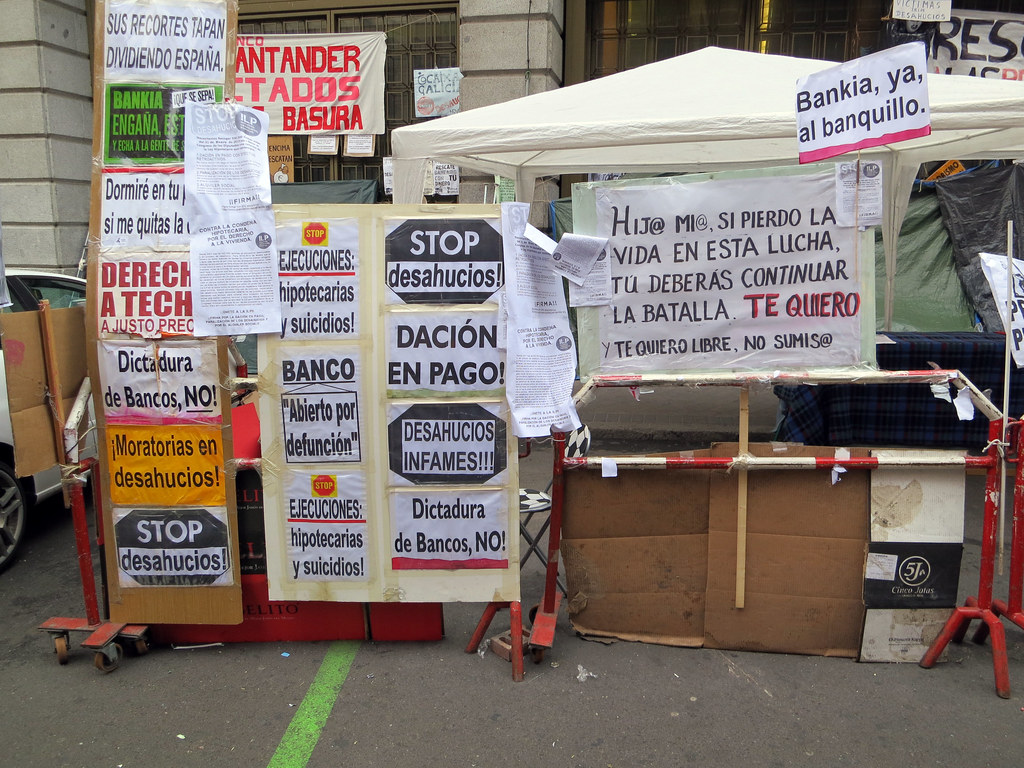
Tens of thousands of people marched through Madrid over the weekend. They were protesting the eviction of an 87-year-old woman from the apartment she had lived in for 70 years. The Madrid housing crisis protests that followed have become one of Spain’s largest housing demonstrations in years, and they have pushed the government to promise new rules within days.

Court officials carried Maria del Carmen Abascal out of her Retiro-neighborhood apartment on a stretcher on September 23, 2026. Supporters had tried to block the eviction. Her rent had risen from 500 euros a month to 2,650 euros. An investment fund had bought the building in 2018, according to US News.

How the Madrid housing crisis protests grew

Marchers filled central Madrid on Saturday. Many then camped overnight at Puerta del Sol, a historic plaza in the city center. More protesters joined on Sunday. Reporting from NBC News described a crowd that spanned generations, from students to retirees, camped out with handmade signs.

Demonstrators are demanding three specific changes. They want indefinite rental contracts instead of short-term leases. They want stronger measures against fraud in the rental market. They want a ban on evictions when no alternative housing is available.

The numbers behind Spain’s housing crunch

The Bank of Spain estimates the country is short roughly 550,000 homes. Madrid, Barcelona, and Valencia face the sharpest shortfalls. Spain also ranks near the bottom of OECD countries for subsidized public rental housing, at under 2% of the total. The EU average is about 8%.

Investment funds have bought up buildings across Spanish cities in recent years. Rents have climbed well beyond what many pensioners and lower-income tenants can afford. That is true even as Spain’s overall economy has grown strongly.

Modern apartment building with balconies, the kind of housing at the center of the Madrid housing crisis protests

What the government has promised

Prime Minister Pedro Sanchez responded directly to the protests. “The government is working around the clock to bring a Royal Decree on housing next Tuesday,” he said. US News cited the remark in its report. His Socialist-led government plans to unveil new measures at its weekly cabinet meeting.

The government has not published the decree yet. Its exact contents will stay unknown until the cabinet meets and releases the text.

What happens after the Royal Decree

The immediate test is whether Sanchez’s government delivers concrete rent and eviction rules, not just a promise. Tenant groups have said they will keep pressure on lawmakers until legislation is passed, not merely announced. A decree alone does not guarantee new protections become law; Spain’s parliament would likely need to approve lasting changes.

Watch for the specific text of the Royal Decree, and for how landlords and investment funds respond once it appears.

Common questions about the protests

Why are people protesting in Madrid right now?

The Madrid housing crisis protests began after court officials evicted 87-year-old Maria del Carmen Abascal on a stretcher from the home she had lived in for 70 years, after her rent nearly quintupled.

How many people have joined the protests?

Tens of thousands marched through central Madrid over the weekend, with demonstrators camping overnight at Puerta del Sol plaza.

What is driving Spain’s housing shortage?

The Bank of Spain estimates a shortfall of about 550,000 homes, worsened by low levels of subsidized public rental housing and rising rents in cities like Madrid, Barcelona, and Valencia.

What has the Spanish government promised?

Prime Minister Pedro Sanchez said his government would bring a Royal Decree on housing to the following Tuesday’s cabinet meeting, though its exact contents have not been published.

What are protesters asking for specifically?

Demonstrators want indefinite rental contracts, stronger fraud protections for tenants, and a ban on evictions when no alternative housing is available.

More world news from Tamara News

For more international news, see our coverage of the Falklands sovereignty dispute, the stalled Sudan peace talks, and EBRD’s Africa growth outlook.

Trump Offered China US Weapons. There’s Just One Problem.

President Trump asked Chinese President Xi Jinping if he wanted to buy American weapons. The exchange happened during Xi’s visit to the United States last week. US Ambassador to China David Perdue described it in a Fox News interview. The Trump arms offer China story broke on September 28, 2026. It raises an immediate legal problem: China has been under a US arms embargo since 1989.

“President Trump continues to say, ‘Hey, we sell arms to other people around the world,'” Perdue said. “He actually asked President Xi if he would like to buy some, at one point.” Perdue did not say how Xi responded. The White House has not given its own account of the remark.

What Ambassador Perdue actually said

Perdue’s comments were reported by Euronews and The Hill. They came days after Xi’s trip to Washington. That trip was framed around trade talks. Photos of the two leaders together were taken on September 25, 2026. Trump later called the summit “one of Friendship, Strength, and Success,” Perdue said.

Perdue’s remarks were meant to defend the administration’s China policy. They were not a criticism of it. He argued that Trump has sold Taiwan “50% more arms” than any other president since 1979. Those figures come from Perdue himself. They have not been checked against Pentagon arms-sale data.

Why a Trump arms offer China would break US law

The United States has barred arms sales to China since June 1989. Congress and the White House imposed the embargo after the Tiananmen Square crackdown. Every administration since has kept it in place, Republican and Democratic alike. It covers weapons, defense articles, and related technology. Lifting it would require an act of Congress. No lawmaker has seriously proposed that.

That legal reality is why Perdue’s account reads like a passing remark. It does not look like a real negotiating position. Nothing in the public record shows China formally asked for US weapons. No official has described a concrete deal under discussion.

The Taiwan question hangs over the Trump arms offer China episode

The bigger worry for Taiwan is not that Washington might arm Beijing. It is that Trump has floated Taiwan arms packages as a bargaining chip before. Washington approved an $11.1 billion arms sale to Taiwan in December 2025. Perdue cited that package as proof the administration has not gone soft on Taipei. Still, analysts who track cross-strait tensions have flagged a risk. Treating Taiwan’s defense needs as leverage, even in passing, can send Beijing an unwelcome signal.

Great Wall of China winding through hills, evoking the Trump arms offer China standoff

What happens next

No legislative or executive action has followed Perdue’s remarks so far. Congress would need to act before any arms sale to China could move forward. There is no sign that process has begun. Trade talks between Washington and Beijing continue on a separate track. Those cover tariffs and technology exports, not weapons.

Watch for two things. First, whether the White House confirms or walks back Perdue’s account. Second, whether Taiwan’s government responds in public. Taipei has stayed quiet so far. A formal reaction would mark a shift in tone.

Frequently asked questions

Did Trump actually offer to sell weapons to China?

According to US Ambassador David Perdue, Trump asked Xi Jinping if he wanted to buy American weapons during Xi’s September 2026 visit. The White House has not confirmed or denied the account on its own.

Is it legal for the US to sell arms to China?

No. A US arms embargo on China has been in place since 1989, after the Tiananmen Square crackdown. Congress would have to lift that embargo before any sale could proceed.

What does this mean for Taiwan?

Nothing has changed in US arms sales to Taiwan so far. Washington approved an $11.1 billion package in December 2025. Analysts worry that Trump has floated Taiwan arms deals as leverage with Beijing, not that Taiwan’s support is ending.

When did Xi Jinping visit the United States?

Xi’s visit and meetings with Trump took place around September 25, 2026, based on photos and reporting from that week.

Has China responded to the reported offer?

No official Chinese statement has addressed Perdue’s comments as of this writing.

Related coverage on Tamara News

For more on the broader US-China relationship, see our coverage of the Trump-Xi trade summit, the Nvidia chip export loophole to China, and the Venezuela envoy’s Washington visit.

Brazil Just Killed the Passport Drop-Off Line for Some Visa Applicants

Brazil’s new Brazil electronic visa system took effect September 1, 2026. It ends the need for eligible applicants to physically drop off or collect their passports at a consulate when applying for a temporary visa. Applicants now upload documents through Brazil’s Integrated Consular System and receive their visa electronically by email. The change aims to cut the administrative steps and travel time consulate visits used to require.

Brazil electronic visa system delivers approvals to a traveler's smartphone

What the Brazil electronic visa system actually changes

Under the previous process, applicants for Brazilian temporary visas generally had to submit their passport in person at a consulate. They then waited for processing and returned later to collect it once the visa was issued or mailed back. The new system removes that physical handoff for eligible applicants. Applicants submit documents digitally through the Integrated Consular System instead. Once officials approve the application, the visa arrives as an electronic document by email, rather than a stamp or sticker placed in the physical passport.

Which visa types are covered

The digital process covers several temporary visa categories: temporary work visas, family reunion visas, digital nomad visas, and other approved categories. Eligibility is limited to nationals of countries that already qualify for Brazil’s visitor visa exemption. That means the streamlined process is not universal. It applies to a defined set of applicant nationalities that Brazil has determined pose lower administrative risk for remote processing.

What stays the same for applicants

Brazil’s underlying approval requirements have not changed. Applicants still need to meet the same eligibility criteria and provide the same supporting documentation as before. Only the submission and delivery method moved online. Post-arrival registration with Brazil’s Federal Police remains a required step for those who need it. Employment authorization processes for work-visa holders continue under the same rules as before. Applicants approved under the new system should print their electronic visa before traveling. They should carry both a digital and a printed copy when they arrive, since border officials will need to verify the document on entry.

Why Brazil is making the shift now

The move fits a broader global pattern: countries are digitizing visa and travel-document processes to cut both applicant burden and consular workload. Removing the in-person passport drop-off step cuts down on the logistical barriers facing applicants who live far from a consulate. It also reduces the physical handling and mailing consulates previously managed for every temporary visa application. Brazil is actively courting remote workers through its digital nomad visa category. A faster, less demanding application process gives it a competitive edge, in a market where several countries now offer similar remote-work visa options.

What happens next for applicants

Applicants should confirm their nationality qualifies under Brazil’s visitor visa exemption rules before assuming they can use the new digital process, since it does not apply universally. Those planning travel to Brazil under a temporary work, family reunion or digital nomad visa should check Brazil’s Integrated Consular System directly for the current document checklist. Digitized systems like this one are typically refined in the months after launch. Consulates work through early cases first.

Frequently asked questions

When did the Brazil electronic visa system take effect?

The new digital process began on September 1, 2026, eliminating the need to physically submit or collect a passport at a consulate for eligible temporary visa applications.

Which visa categories does it cover?

Temporary work visas, family reunion visas, digital nomad visas, and other approved temporary visa categories.

Who is eligible to use the digital process?

Nationals of countries that already qualify for Brazil’s visitor visa exemption rules.

Do applicants still need to meet the same requirements?

Yes. Brazil kept eligibility criteria and required documentation unchanged; only the submission and delivery method moved online.

Do applicants need a printed copy of the visa?

Yes. Applicants should print their electronic visa and carry both digital and printed copies when traveling.

Does this change post-arrival requirements?

No. Registration with Brazil’s Federal Police and employment authorization steps for work-visa holders remain the same as before.

How this fits Brazil’s wider visa strategy

Brazil has been steadily expanding its appeal to remote workers and skilled migrants over the past several years. It introduced its digital nomad visa category and has periodically expanded the list of nationalities eligible for visa-free entry as a visitor. Digitizing the temporary visa application process is a logical next step in that strategy. A cumbersome paper-based consular process can genuinely deter remote workers. Many are comparing Brazil against a growing list of countries with similar programs and fewer bureaucratic steps. Immigration lawyers who track the digital nomad visa market say processing speed and administrative simplicity have become real differentiators between competing countries, not just the income requirements a program sets.

More on global visa processing changes

For more on how visa processing is changing worldwide, see our coverage of the September 2026 visa bulletin’s family-based updates and Canada’s revised work permit processing times.

Sources