
Barcelona Airport Strike Disrupts Spain’s Summer Travel Peak

Travelers moving through two of Spain’s busiest airports have faced weeks of cancellations and delays as labor disputes disrupt peak summer operations. The Barcelona airport strike disruption began August 4, 2026, when nearly 1,200 ground-handling staff at Barcelona–El Prat Airport walked out indefinitely, while a parallel strike planned at Palma de Mallorca was called off at the last minute after workers reached a deal.

What’s behind the Barcelona airport strike disruption

Barcelona airport strike disruption

All 1,179 Groundforce staff at Barcelona airport went on indefinite strike over unresolved disputes on staffing levels, excessive overtime, rest periods, safety training and basic occupational health measures, according to AirHelp. Spanish officials estimated the strike could affect roughly 11,600 flight movements and around 2 million passengers at Barcelona alone through the end of September if it continues at that scale.

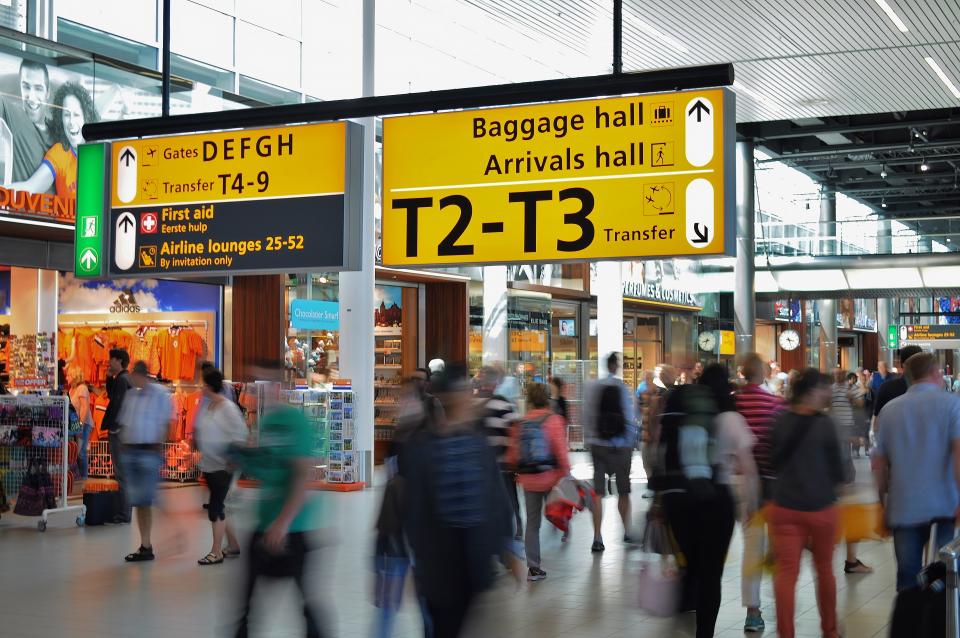
By mid-August, between 150 and 170 flights had already been cancelled since the walkout began, with around 3,000 pieces of luggage left stranded at the airport, according to reporting from FTNNews. Eighteen flights were cancelled on August 13 alone, with Lufthansa Group carriers among the hardest hit.

Why Palma’s strike was called off but Barcelona’s wasn’t

Swissport, the ground handler at Palma de Mallorca, reached an agreement covering all of its workers’ demands just before the planned August 4 walkout, averting disruption there. Barcelona’s Groundforce dispute has proven harder to resolve, with talks over staffing and working conditions dragging on for months without a breakthrough, leaving the strike open-ended rather than tied to a fixed end date.

What it means for travelers this month

Passengers flying through Barcelona should expect continued disruption risk through the rest of the summer travel peak, and airlines have been rebooking affected passengers where possible. EU passenger rights rules still apply during ground-handling strikes, though compensation eligibility can depend on whether an airline or a third-party contractor is deemed responsible for a specific cancellation. Travelers with connections through Barcelona should build in extra buffer time and monitor their airline’s advisories directly.

The disruption adds to a summer already marked by strained travel logistics across Europe, from earlier walkouts in Germany to staffing shortages at other major hubs. Travelers weighing costs for an international move, not just a holiday, may find it useful to compare how upfront requirements differ by destination, as we outlined in our breakdown of proof-of-funds requirements across the UK, Canada and Australia, since flight disruption is often just one of several logistical hurdles international travelers face this year.

What travelers should expect next

Talks between Groundforce and unions are ongoing, but neither side has signaled an imminent resolution. Spanish transport authorities have faced pressure to intervene given the scale of passenger disruption during peak season, though any mediated settlement would still need union ratification. Until an agreement is reached, airlines operating out of Barcelona are expected to keep adjusting schedules to manage ground-handling capacity. Some carriers have already begun shifting connecting traffic through alternative Spanish airports where possible, though capacity constraints limit how much rerouting can realistically absorb during the peak weeks of late August and early September. Travelers with visa or entry-document appointments tied to a Barcelona connection should also build in extra buffer time, a lesson that applies broadly to the kind of bureaucratic timelines we’ve covered in our reporting on the Netherlands’ single permit processing delays, where missed connections have similarly compounded existing administrative backlogs.

Travel advisers are also flagging the broader pattern of European staffing disputes as a planning consideration for anyone booking trips into the autumn, not just this summer. With similar disputes having already flared at hubs in Germany earlier this year, industry groups are pushing for longer-term reforms to ground-handling contracts across the EU aviation sector, though any regulatory response is unlikely to arrive before the current disputes are resolved.

Barcelona airport strike: frequently asked questions

When did the Barcelona airport strike disruption begin?
The indefinite strike by Groundforce staff at Barcelona–El Prat Airport began on August 4, 2026.

How many passengers could be affected?
Spanish officials estimated around 2 million passengers and 11,600 flight movements could be affected at Barcelona through the end of September.

Was Palma de Mallorca affected too?
A parallel strike at Palma was called off after Swissport reached an agreement with workers just before the planned August 4 walkout.

What are the workers striking over?
Disputes center on staffing levels, excessive overtime, rest periods, safety training and occupational health measures.

How many flights have been cancelled so far?
Between 150 and 170 flights had been cancelled at Barcelona by mid-August since the strike began.

Are affected passengers entitled to compensation?
EU passenger rights rules still apply, but eligibility can depend on whether the airline or a ground-handling contractor is deemed responsible for a given cancellation.

Earn Big, Keep More: Europe’s Expat Tax Breaks Compared

The passive-income tax holiday is fading. The talent tax breaks are not. If you are a skilled professional or founder choosing a European base, the difference between countries can be tens of thousands of euros a year. Three regimes dominate the conversation: the Dutch 30% ruling, Spain’s Beckham Law, and Portugal’s IFICI. This is your plain-language guide to expat tax breaks in Europe as of 2026, what each one offers, and where the fine print bites. No jargon, just the numbers that move your decision.

By the Tamara News editorial desk. Last updated 6 July 2026. This is general information, not tax advice.

In this article

Why these expat tax breaks exist

Countries compete for skilled people the same way companies compete for staff. Special tax regimes are the bait. They let qualifying newcomers keep more of their income for a set number of years, offsetting the cost and hassle of relocating. The catch is that each regime targets a different profile. Some reward high earners with a flat rate. Some exempt foreign income. Some are open only to specific professions. Read them as tools, not trophies. The best expat tax breaks for a software founder may be useless to a retiree, and the reverse is just as true.

The Dutch 30% ruling, now heading to 27%

The Netherlands lets eligible incoming employees receive part of their salary tax-free. For 2025 and 2026 that share stays at 30%. From 1 January 2027 it drops to 27%, and the salary norm rises to €50,436. Employees who received the ruling before 2024 keep the full 30% and partial non-resident status until the end of 2026, a transition cushion for early movers. It is generous but employment-based, so you need a qualifying job and salary. If the Netherlands is on your shortlist, timing your start date around these thresholds genuinely matters.

Spain’s Beckham Law and Portugal’s IFICI

Spain’s Beckham Law is the crowd favourite for high earners. It applies a flat 24% on employment income up to €600,000, exempts most foreign income, and carries no minimum salary requirement, covering employees, remote workers, directors and startup founders. Portugal’s successor to the old NHR is IFICI, sometimes called NHR 2.0, offering a flat 20% rate for up to ten years but limited to innovation and qualified roles. Consider Mateo, a fintech founder from Mexico deciding between Madrid and Lisbon. If his income is high and mostly foreign, Spain’s exemption often wins. If his work fits Portugal’s innovation criteria, the 20% rate and longer horizon can pull ahead.

Thinking about where to base yourself? Check which visa you qualify for before you weigh the tax.

The quick comparison

  • Netherlands: 30% tax-free share in 2026, falling to 27% in 2027. Needs a qualifying job.
  • Spain: flat 24% up to €600,000, foreign income largely exempt, no minimum salary.
  • Portugal IFICI: flat 20% for up to 10 years, limited to innovation and qualified roles.
  • Match the regime to your income shape and profession, not the headline rate.

Tax questions, answered

Is the Dutch 30% ruling ending? It is shrinking, not ending. It stays 30% through 2026 and becomes 27% from 2027, with a higher salary norm.

Who benefits most from Spain’s Beckham Law? High earners with significant foreign income, thanks to the flat 24% band and the foreign-income exemption.

Did Portugal scrap NHR? The original NHR closed to new entrants. Its successor, IFICI, targets innovation and qualified professions at a flat 20%.

Can I combine a visa with these tax breaks? Yes. The visa gives you the right to live and work; the tax regime is a separate application once you qualify as a resident.

Related reads

Share this story

  • LinkedIn: Netherlands, Spain or Portugal? Here’s how Europe’s three big expat tax breaks actually compare in 2026.
  • Twitter: Dutch 30% ruling vs Spain’s 24% Beckham Law vs Portugal’s 20% IFICI. Which keeps more of your income?
  • Facebook: Moving to Europe for work? The country you pick changes your tax bill. Compare the big three here.

Choose your base with eyes open

Tax breaks are powerful, but they reward planning, not wishful thinking. Match the regime to how you actually earn, confirm the current rules with a local adviser, and you can keep far more of what you make. For help lining up the visa behind the move, start here: https://wa.link/i9l1ec

Sources


on”:3,”name”:”IELTS, PTE or Duolingo? The English Test That Fits Your Visa”,”item”:”https://tamaranews.com/2026/07/05/ielts-vs-pte-vs-duolingo-english-test-visas-2026/“}]}
Tapay copy tradingGrow your money while you plan your moveTapay auto-copies a live trading strategy to your own account — spot & futures. Start free on demo, go live when you’re ready.Start free →

Five Ways Movers Get Spain’s Nomad Visa Wrong

Myth: any freelancer with a laptop and some savings can grab Spain’s nomad visa. Reality: the refusals pile up on small, avoidable errors. The Spain Digital Nomad Visa mistakes that sink applications are rarely dramatic. They are a wrong income figure, a client based in the wrong country, or an insurance policy that does not fully cover you. In 2026 the income bar sits near €2,850 a month, and a fraud crackdown means officers read files closely. Get five details right and this becomes one of Europe’s most livable remote-work routes.

By the Travel Explore editorial desk. Last updated 3 July 2026.

What you will find here

The Spain Digital Nomad Visa mistakes that start with income

Mistake one is guessing the threshold. For 2026 the single-applicant floor is about €2,850 a month, roughly €34,188 a year, tied to 200 percent of Spain’s minimum wage. Mistake two is forgetting dependents cost more, adding around 75 percent of the base for the first and 25 percent for each extra. Show steady, documented income, not a good month cherry-picked from a bad year. Bank statements, contracts and invoices should tell one clean story. A number that wobbles invites a refusal.

The client mix trap

Mistake three catches founders and freelancers hardest. Your work must serve clients or an employer based abroad. The Spanish consulate states you must work for companies “established outside Spain”, and no more than 20 percent of your income may come from Spanish sources. Rafael, a SaaS founder from São Paulo, nearly filed with a big Madrid client on his books. That single invoice could have breached the 20 percent cap. He rebalanced first. If employed, you also need at least three months with that company before applying, so timing your move matters as much as your income.

Paperwork that quietly fails

Mistake four is thin insurance. You need full private health cover valid in Spain, not a travel policy with gaps. Mistake five is skipping the qualification test. You must show a relevant degree or at least three years of experience in your field. Add a clean criminal record certificate, properly legalised, and you remove the last common trip hazard. File neat and complete. Officers reward clarity and punish loose ends, especially now that fake contracts are under scrutiny.

Not sure Spain fits your setup? Weigh it against other nomad routes at https://wa.link/i9l1ec.

Before you file

  • Budget for roughly €2,850 a month, more with dependents.
  • Keep Spanish-sourced income under 20 percent of the total.
  • Carry full private health insurance valid in Spain.
  • Prove a relevant degree or three years of experience, plus a clean record.

Straight answers to five worries

What income do I need for Spain’s Digital Nomad Visa in 2026?

About €2,850 a month for a single applicant, with higher figures if you bring dependents.

Can I have Spanish clients?

Yes, but they can make up no more than 20 percent of your income. The rest must come from outside Spain.

How long can I stay?

Up to one year when applying from a consulate abroad, or up to three years applying from inside Spain, renewable toward long-term residency.

Is the visa getting stricter?

Scrutiny has risen in 2026 with a fraud crackdown on fake contracts, so accurate, well-evidenced files matter more than ever.

Related reads

Share this story

  • LinkedIn: Spain’s nomad visa is generous, but five small mistakes quietly sink applications. Here is how to file clean in 2026.
  • Twitter: Spain nomad visa in 2026: keep Spanish income under 20%, hit €2,850 a month, carry real health cover. Avoid the refusals.
  • Facebook: Dreaming of working remotely from Spain? Dodge these five common visa mistakes before you apply.

File it right the first time

Spain still welcomes remote workers, but the visa rewards precision. Nail your income proof, fix your client mix, and insure yourself properly before you submit. Compare Spain with other routes and start planning today at https://wa.link/i9l1ec.

Sources


Tapay copy tradingGrow your money while you plan your moveTapay auto-copies a live trading strategy to your own account — spot & futures. Start free on demo, go live when you’re ready.Start free →

Earn In Dollars, Pay 24% In Spain — The Quiet Visa Hack Africans Are Using

The Spain Digital Nomad Visa (DNV) 2026 is one of the most accessible EU residence routes for African remote workers earning hard-currency income. Combined with the Beckham Law tax regime — which can hold tax at a flat 24% for the first six years for qualifying applicants — Spain has become the most pragmatic European destination for Lagos-based software developers, Nairobi-based product designers, Cape Town-based growth marketers, and Cairo-based consultants who already earn from foreign clients. This step-by-step guide walks through the income threshold, the document stack, the consular filing options for African applicants, and the Beckham Law election to avoid the most expensive Spanish tax surprise.

Find your section

Who qualifies and what the DNV actually grants

The Spain DNV is available to non-EU nationals who are either remote employees of a non-Spanish company or freelancers with multiple non-Spanish clients. The visa grants an initial three-year residence permit (renewable for two-year increments up to five years total), unrestricted travel within the Schengen Area, and access to the Spanish public health and social security system once enrolled. After five years of continuous residence under DNV, you become eligible for long-term EU residence; after 10 years, Spanish citizenship.

You cannot earn more than 20% of your income from Spanish clients or sources. You cannot have been a tax resident in Spain in the five years prior to the application. Both rules are non-negotiable.

The 2026 income threshold and how to prove it

The 2026 DNV income requirement is 200% of the Spanish minimum wage (SMI), which for 2026 sits at approximately €2,762 per month or €33,144 annually for the principal applicant. Add 75% for a spouse (~€2,072/mo) and 25% per dependent child (~€690/mo per child). So a family of four needs to evidence around €5,400 gross monthly income.

Evidence options that work for African applicants: 6-12 months of bank statements showing recurring foreign-currency deposits, your employment contract (in English or with sworn translation), client invoices and contracts for freelancers, and tax filings from your home country. Crypto-only income generally does not qualify — Spanish consulates want bank-statement evidence.

Reading this and unsure where your file sits? Travel Explore reviews real cases every day — start at https://wa.link/i9l1ec

Document stack for African applicants

The 2026 standard document stack includes: valid passport with at least 12 months remaining; completed national visa application form; employment contract or freelance client agreements showing more than 3 months of pre-existing relationship; bank statements (last 6 months minimum); proof of qualifications (university degree or 3+ years of relevant work experience); criminal record certificate from every country you have lived in for the past 5 years (apostilled and sworn-translated to Spanish); private health insurance with full coverage in Spain and no co-payments; proof of address in Spain (rental agreement or hotel booking for initial period); and the consular fee receipt.

The single most common refusal reason for African DNV applicants is a criminal record certificate that is older than 90 days at the time of consular filing. Time the request to coincide with your appointment date.

Filing from your African consulate

You can file the DNV from any Spanish consulate or honorary consulate where you are legally resident. For African applicants, the active filing posts are Madrid-Pretoria (Southern Africa), Madrid-Abuja and Madrid-Lagos (Nigeria), Madrid-Nairobi (East Africa), Madrid-Rabat and Madrid-Casablanca (Morocco), Madrid-Dakar (West Africa), Madrid-Cairo (Egypt) and Madrid-Algiers (Algeria). Consular processing typically takes 20-30 business days for complete DNV files; complex freelance cases can take 6-8 weeks.

Alternative: you can enter Spain on a Schengen tourist visa and apply for an in-country DNV residence permit within 90 days of arrival through the Unidad de Grandes Empresas (UGE-CE). This in-country route is faster (often 20 working days) and increasingly popular with African applicants who have a Schengen-valid passport stamp.

The Beckham Law election: 24% flat tax for 6 years

The Beckham Law (Ley Beckham) is the special tax regime that holds your Spanish income tax at a flat 24% (up to €600,000 of annual Spanish-source income) for up to six tax years, instead of the standard progressive rate that climbs above 45%. DNV holders are explicitly allowed to elect into the Beckham regime via Form 149 within six months of registering as a Spanish tax resident.

Two crucial conditions: you must not have been a Spanish tax resident in the previous five years; and Beckham generally taxes only Spanish-source income at 24% — foreign-source income (your remote employer’s salary paid abroad) is generally excluded from Spanish tax under the regime for the period. The combination of DNV + Beckham is what makes Spain meaningfully more attractive than Portugal D8 after the NHR was phased out.

Bring your draft application to us before submission — https://wa.link/i9l1ec

Decision points

  • 2026 income threshold: ~€2,762/month for the principal applicant.
  • Maximum 20% income from Spanish sources; cannot have been Spanish tax resident in past 5 years.
  • Criminal record certificate must be issued within 90 days of consular filing.
  • In-country filing via UGE-CE is often faster than consular filing.
  • Elect Beckham Law within 6 months of Spanish tax residence registration.

Frequently asked questions

Q: Can I work for a Nigerian or Kenyan employer on a Spain DNV?
Yes — the DNV is built precisely for remote employees of non-Spanish companies including African employers.

Q: Does the Spain DNV require Spanish language proof?
No language requirement for the initial DNV. Spanish is required at A2 for long-term residence after 5 years and B1 for citizenship after 10.

Q: How long does it take to renew the DNV?
Renewal applications are filed 60 days before expiry and processed in 1-3 months. Most renewals are approved if income and tax compliance are maintained.

Q: Can my children attend Spanish public schools on a DNV?
Yes — your dependent children have full access to Spanish public schools and the public health system.

Q: Will I get Spanish citizenship after the DNV?
You may apply for Spanish citizenship after 10 years of continuous lawful residence (2 years for nationals of Ibero-American countries — not most African states).

Related reads

Share this story

LinkedIn: Spain DNV + Beckham Law = the most pragmatic European route for African remote workers earning foreign-currency income.
Twitter: Spain Digital Nomad Visa 2026: €2,762/mo income, Beckham Law flat 24% tax, 5-year EU residence path. African remote workers, this is your route.
Facebook: Barcelona on your bank statements? If you earn from foreign clients, Spain’s Digital Nomad Visa is the route African remote workers are quietly winning on.

Convert this plan into action

From Lagos to Nairobi, the families who succeed are the ones who plan early. Begin your case at https://wa.link/i9l1ec.

Sources

  • Spanish Ministry of Inclusion / SEPE — Digital Nomad Visa official guidance (T0, ongoing)
  • Get Golden Visa — Portugal D8 Digital Nomad Visa 2026 (T2, 2026)
  • Idealista — Portugal D8 Digital Nomad Visa 2026 (T1, 2026-03-31)

Further reading

Spain Digital Nomad Visa 2026: Updated Requirements for African Remote Workers

Spain has quietly become the most attractive destination for African remote workers in Europe. The Spain Digital Nomad Visa 2026 — introduced under the Startup Law in late 2023 — lets non-EU nationals live in Spain while continuing to earn from clients or employers based outside the country. The income threshold is reachable, the tax regime under the Beckham Law is generous, and family members join under the same application. For a Lagos-based software engineer billing US clients, this is the single cleanest move to European residence on a dollar income.

Spain Digital Nomad Visa 2026 in one snapshot

Three pillars: (1) you work for a non-Spanish employer or non-Spanish clients, (2) you earn at least 200% of the Spanish minimum wage (around €2,762/month gross in 2026), and (3) you carry comprehensive private health insurance for the duration of the visa. The initial visa is one year if applied from outside Spain or three years if applied as a residence card from inside Spain on a tourist visa. Renewals extend in two-year blocks, totalling up to five years before permanent residence eligibility.

The Spanish Ministry of Foreign Affairs publishes the full requirements at exteriores.gob.es.

The €2,762 income threshold and how to evidence it

Income evidence is where most African applicants over-prepare and still get refused. The consulate wants three things: (a) employment contract or services agreement at least 3 months old, (b) 90 days of bank statements showing the income hitting an account, and (c) a tax registration or sworn statement that the income comes from outside Spain. A Ghanaian remote worker earning USD 4,500/month gross from a US client clears the threshold comfortably, but only if the contract specifies remote work and the client is registered for at least 12 months.

For family applications, add €1,036 per dependant per month. So a family of three (applicant plus spouse plus child) needs €2,762 + 75% €2,072 (spouse) + 25% €691 (child) = roughly €4,800 monthly gross.

Beckham Law: paying 24% flat tax instead of 47%

The Beckham Law applies a flat 24% rate on Spanish-source income up to €600,000 for the first six years, instead of Spain’s progressive rates that top out at 47%. Digital Nomad Visa holders are explicitly eligible. You must apply for the Beckham regime within 6 months of registering with Spanish social security. The catch: under Beckham, foreign-source income is exempt but worldwide reporting still applies. A South African or Nigerian remote worker with a US client pays 24% on Spanish-source slice only; the bulk stays outside the Beckham tax base. Agencia Tributaria publishes the official Beckham forms.

Want a personalised eligibility check before you spend on visa fees? https://wa.link/i9l1ec

Step-by-step application from Lagos, Accra or Nairobi

Step one: apostille and translate your university degree, criminal record, marriage certificate. Step two: book a BLS Spain appointment at the Spanish consulate. Step three: prepare your dossier — contract, bank statements, insurance certificate, income tax filing from your home country. Step four: submit at consulate and pay the €73 fee. Step five: wait 20-30 working days for the decision. Step six: collect your visa, fly to Spain, apply for a TIE residence card within 30 days of arrival.

A Kenyan UX designer remote-working for a Berlin agency is perfectly placed: contract evidence is rock solid, income is well above threshold, and the consulate in Nairobi is processing files inside 18 working days in 2026. The Travel Explore Spain visa services page has the document checklist.

  • Non-Spanish employer or client base
  • Minimum income of €2,762/month gross (200% of SMI)
  • Private health insurance valid Spain-wide
  • Apostilled university degree and criminal record
  • Beckham Law application within 6 months of arrival

Frequently asked questions about Spain Digital Nomad Visa 2026

Can I keep my employer outside Spain on the Spain Digital Nomad Visa 2026?

Yes. That is the entire point. The visa is explicitly designed for non-Spanish employers and clients. Less than 20% of your income may come from Spanish-based clients.

Does Spain count for the Schengen 90/180 rule?

No. Holding the Spain Digital Nomad Visa 2026 lets you live in Spain indefinitely and travel anywhere in the Schengen area without the 90/180 limit.

Can my family join?

Yes. Spouses (or de facto partners with 12 months of registered cohabitation) and dependent children apply under the same file with no separate visa.

Can I switch from a tourist visa to a Digital Nomad residence card?

Yes. Filing from inside Spain on a Schengen tourist entry gives you a three-year initial card rather than a one-year visa.

Does the Digital Nomad Visa lead to Spanish citizenship?

Yes, after 10 years of legal residence (or 2 years for nationals of Ibero-American countries, which does not apply to most African applicants).

What to remember

  • Spain Digital Nomad Visa 2026 needs €2,762/month gross and a non-Spanish employer
  • Beckham Law caps Spanish income tax at 24% for six years
  • Family members join on the same application without separate visas
  • Apply from inside Spain on a tourist entry for a three-year residence card on first issue
  • Permanent residence after five years and citizenship after ten on the Spain Digital Nomad Visa 2026 timeline

Start your Spain Digital Nomad Visa 2026 journey

If you’d rather not navigate this alone, Travel Explore handles it end-to-end: https://wa.link/i9l1ec

Related reads on Travel Explore

Share this story

  • Spain will give you a 5-year residence card for a remote dollar paycheck
  • Beckham Law cuts your Spanish tax from 47% to 24%. Here is the math
  • The income threshold is just €2,762. African remote workers, this is your move