• Mon - Fri 9.00 - 19.00

Author Archives: Francisca Samuel

Author: Francisca Samuel

Francisca Samuel is an editor at Tamara News, where she covers immigration, travel, business and technology news for readers across Africa and the Gulf.

Trump Wants an ‘AI Force.’ He Hasn’t Said Who’s Flying It.

President Trump used a Saturday Truth Social post to announce two things at once: a new “AI Force,” modeled on the Space Force he created in his first term, and plans to name an AI czar to oversee it. The Trump AI czar announcement came on September 19, with Trump adding that “only High I.Q. individuals need apply” for the role.

No name, timeline or budget accompanied the post. The announcement came days after AI researchers renewed public warnings that advanced systems could become difficult to control, a debate Trump has previously dismissed as overblown.

The post was short. The implications were not. A single paragraph on social media now sits at the center of a debate over how the US government will treat the fastest-moving technology of the decade.

The short version: Trump posted the plan on September 19. It creates an “AI Force” modeled on Space Force. An AI czar will lead it. Trump has not named anyone yet. Trump still calls AI fears a hoax. He says enforcement will target “BAD” actors.

What Trump Actually Announced

The post described an “AI Force” without detailing its legal authority, funding source or relationship to existing agencies that already touch AI policy, including the Commerce Department’s semiconductor export controls and the President’s Council of Advisors on Science and Technology. Trump said an AI czar would come “in the near future” to take point on the effort.

Trump cited no bill. No agency memo followed. Reporters asked for detail. The White House had little more to add. That silence is itself part of the story.

The Contradiction at the Center of the Announcement

Trump has repeatedly called fears about AI risk a “hoax,” a position he has held publicly for months. Yet this announcement followed renewed warnings from AI researchers about the technology moving faster than oversight can keep up with. Trump appeared to partially acknowledge this tension, saying his administration would go after “BAD” actors using existing criminal and civil justice tools rather than new AI-specific regulation.

Who Held This Role Before

Venture capitalist David Sacks previously served as Trump’s AI and cryptocurrency czar before stepping down in March 2026 after reaching the time limit allowed for a special government employee. Sacks now chairs the President’s Council of Advisors on Science and Technology, meaning any new AI czar would be working alongside, not replacing, an official already positioned at the center of the administration’s tech policy.

That overlap raises a practical question the announcement did not address: whether an AI czar reporting through a new AI Force structure would have authority over, alongside, or beneath the existing science and technology advisory council Sacks now leads.

How the Trump AI Czar Announcement Landed With Researchers

The timing struck many observers as notable. Researchers across multiple AI labs had spent the preceding week publicly renewing warnings about the pace of frontier AI development outstripping safety testing, a debate that has grown louder throughout 2026. Trump’s announcement arrived days later, framed not as a response to those warnings but as a parallel initiative focused on enforcement against bad actors rather than restrictions on model development itself.

That framing puts the administration’s position somewhere between the AI industry’s largest labs, several of which have called for more structured oversight, and skeptics in Congress who have resisted new AI-specific regulatory bodies. Where the proposed AI Force ultimately lands on that spectrum will depend heavily on who is named to lead it.

What We Still Don’t Know

The announcement left the most consequential questions open: what authority the AI Force would actually have, how it would be funded, whether it requires congressional action, and who Trump will name to lead it. Until those details arrive, the announcement functions more as a signal of intent than a concrete policy shift.

Congressional committees with jurisdiction over technology policy have not yet indicated whether they were consulted before the announcement or whether hearings on the proposal are planned.

The numbers at a glance: Announcement date: September 19. Platform used: Truth Social. Model cited: Space Force. Named leader: none yet. Previous AI czar: David Sacks. Sacks stepped down: March 2026.

What People Are Asking About the AI Force

What is Trump’s proposed “AI Force”?
A new body Trump says will be modeled on the Space Force to oversee artificial intelligence, announced without further structural detail.

When was the Trump AI czar announcement made?
September 19, 2026, via a post on Truth Social.

Who is expected to be named AI czar?
Trump has not named a candidate. He said an announcement would come “in the near future.”

Who held a similar role before?
David Sacks served as AI and cryptocurrency czar until March 2026, when he reached his time limit as a special government employee.

Does this mean new AI regulation is coming?
Not necessarily. Trump indicated the administration would pursue “BAD” AI actors through existing criminal and civil law rather than new AI-specific rules.

Recommended Reading

Sources

  • NBC News — Trump Says He’s Creating an AI Force and Appointing a Czar Amid Concerns Over the Rapidly Developing Tech. nbcnews.com
  • CNN — Trump Vows to Create ‘AI Force’ and Appoint Czar Amid Calls for Oversight. cnn.com
  • Al Jazeera — Trump Says He Will Create ‘AI Force’ With New ‘AI Czar’. aljazeera.com
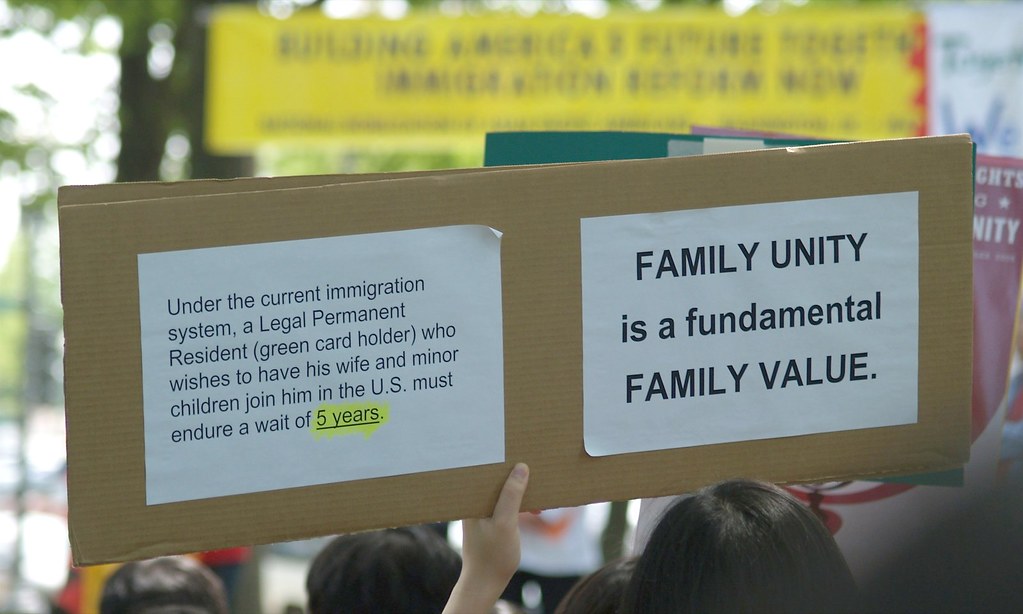
Your Green Card Priority Date Could Freeze in the Next 10 Days

The State Department’s September 2026 Visa Bulletin held cutoff dates steady from August, but it came with a warning attached. Employment-based visa retrogression could hit several categories before the fiscal year closes on September 30. High demand is pushing some annual limits toward their ceiling.

The categories most exposed are EB-1 and EB-2 for applicants born in India, along with EB-5 Unreserved. India’s EB-2 category has already become unavailable at points this fiscal year after its prorated limit was reached, a preview of what could happen more broadly in the final days of September.

This is bureaucratic language for a simple fact. The line moved backward, or stopped. Applicants near the front felt it first. Those further back barely noticed. That gap is the whole story here.

The short version: The fiscal year ends September 30. EB-1 India, EB-2 and EB-5 Unreserved are at risk. September cutoff dates held steady from August. India’s EB-2 has already gone unavailable once. New numbers open October 1. Check your priority date now.

What Retrogression Actually Means

A visa category “retrogresses” when the government pulls its cutoff date backward because more people applied than there is annual visa capacity to cover. A category can also become “unavailable,” which pauses new visa issuance in that category entirely until the next fiscal year opens on October 1. Both outcomes leave applicants who were close to their priority date waiting longer than expected.

Why India’s Categories Are Under the Most Pressure

Demand for employment-based green cards from India has outpaced the per-country limits built into US immigration law for years, creating long-standing backlogs. Each fiscal year’s final weeks tend to be when the State Department has the least room to maneuver, since annual number limits are fixed and cannot be exceeded regardless of demand.

What the September Bulletin Actually Says

Cutoff dates across employment-based and family-based categories generally held steady from August to September 2026, with no forward movement but also no retrogression announced in the bulletin itself. The warning is about what could still happen in the final days of the fiscal year if demand continues at its current pace, not something that has already occurred bulletin-wide.

Read the fine print carefully. A steady bulletin is not a guarantee. It is a snapshot. Snapshots change fast in September. Ask your attorney before you assume anything.

The State Department publishes two sets of dates each month: a “final action” chart that governs when a visa can actually be issued, and a “dates for filing” chart that governs when an application can be submitted. Applicants sometimes confuse the two, and immigration attorneys note that a category remaining open on the filing chart does not guarantee the final action chart will not still tighten before September 30.

Why Employment-Based Visa Retrogression Keeps Recurring in September

This is not the first time the government has flagged year-end pressure on employment categories, and it is unlikely to be the last. Annual visa number limits are fixed by statute, while application volume fluctuates based on economic conditions, processing backlogs and employer sponsorship trends that shift from year to year. When those two lines cross late in a fiscal year, the State Department has only one lever available: slow down or pause issuance until the count resets on October 1.

What Applicants Can Do Now

Applicants with pending cases in the affected categories should confirm their priority dates are current before taking any action that depends on visa availability, such as scheduling a final interview or filing to adjust status. Immigration attorneys generally advise against assuming a category will remain available through September 30 in a year when the government has already flagged possible retrogression.

Employers sponsoring foreign workers in the affected categories should also build extra lead time into any planning tied to a specific priority date, since a category that retrogresses can take months to recover once the new fiscal year’s allocation opens.

The numbers at a glance: Fiscal year ends: September 30. Categories flagged: EB-1 India, EB-2, EB-5 Unreserved. September movement: none from August. New numbers open: October 1. Bulletin issued by: US State Department.

Visa Bulletin Questions, Answered

What does “unavailable” mean on the visa bulletin?
It means no more visas can be issued in that category until the new fiscal year begins on October 1.

Which categories are most at risk this year?
EB-1 India, EB-2, and EB-5 Unreserved, according to the State Department’s own guidance.

Did the September bulletin already show retrogression?
No. Cutoff dates held steady from August, but the department warned further movement could come before September 30.

Why does India face more pressure than other countries?
Per-country limits combined with high application volume from India have created backlogs that are worse than in most other countries.

When does the pressure typically ease?
At the start of the new fiscal year on October 1, when annual visa number limits reset.

More Context

Sources

  • Gibney — September 2026 Visa Bulletin Released. gibney.com
  • Murthy Law Firm — September 2026 Visa Bulletin. murthy.com
  • RJ Immigration Law — September 2026 Visa Bulletin: Key Updates, Trends & What to Expect. rjimmigrationlaw.com

A Bug Called Plugin4Shell Could Hand Your AI Coding Agent’s Keys to a Stranger

Security researchers disclosed a flaw this week that lets an attacker hijack a popular AI coding assistant without the user clicking anything at all. The Plugin4Shell vulnerability disclosed by researchers at the security startup Air affects four of the most widely used AI coding agents: Claude Code, OpenAI Codex, GitHub Copilot and Gemini CLI.

The bug breaks SHA pinning, the mechanism developers rely on to lock an installed plugin to a specific, reviewed version of its code. A malicious plugin update can swap in attacker-controlled code that runs automatically, without requiring the user to approve or reinstall anything.

The short version: Plugin4Shell needs zero clicks to work. It breaks SHA-pinning protections. The flaw affects four major coding agents. Anthropic and OpenAI patched Claude Code and Codex. Google will not fix Gemini CLI. Microsoft had no fix at disclosure.

How the Plugin4Shell Vulnerability Works

AI coding agents commonly support plugins that extend their functionality, similar to browser extensions. Developers typically pin a plugin to a specific version using its SHA hash, expecting that hash to guarantee the code cannot silently change. Plugin4Shell defeats that guarantee, letting an update slip through even when the pinned hash appears to match.

Researchers describe it as a first-of-its-kind AI supply-chain attack. Because these plugins often inherit the same permissions as the developer running the agent, a successful exploit can reach local source code, cloud credentials, SSH keys, internal repositories, production systems and other secrets.

No phishing email is needed here. No fake login page either. The plugin update itself is the attack. That is what makes it dangerous. Most security training does not cover this scenario at all.

Who’s Patched, Who Isn’t

Anthropic fixed the issue in Claude Code version 2.1.179. OpenAI patched Codex in version 0.146.0. Google is deprecating Gemini CLI and will not release a fix, instead advising users to migrate to its replacement, Antigravity. Microsoft had not issued a fix for GitHub Copilot at the time of disclosure, though GitHub noted that its platform separately blocks SHA-like branch and tag names, which limits one avenue of the attack.

Why This Matters Beyond Individual Developers

AI coding agents are increasingly embedded in company workflows, often running with broad access to internal systems to be useful. A vulnerability that requires zero clicks to exploit removes the human judgment that normally catches a suspicious download or unfamiliar prompt. Security teams are treating this less as a single bug and more as a warning about how much trust has been extended to AI coding tools without commensurate scrutiny of their plugin ecosystems.

Researchers at Air called it a first-of-its-kind AI supply-chain attack because it targets the trust relationship between a developer and their tools rather than a specific application. That distinction matters: traditional supply-chain attacks compromise a package or library, while this one compromises the update mechanism developers assumed was locking their plugins in place.

Why the Plugin4Shell Vulnerability Disclosed This Week Caught Vendors Off Guard

Four unrelated companies, each with its own security review process, shipped agents carrying the same underlying flaw. That suggests the SHA-pinning assumption Plugin4Shell defeats was treated as settled, trusted infrastructure across the industry rather than something any individual vendor had reason to re-examine. Researchers say this kind of shared blind spot is common in fast-moving software categories, where competitors converge on similar architectural patterns without cross-checking each other’s security assumptions.

What Developers Should Do Now

Anyone running Claude Code or Codex should confirm they are on the patched versions immediately. Gemini CLI users should plan a migration to Antigravity rather than waiting for a fix that Google has said will not come. Copilot users should watch for an official Microsoft patch and, in the meantime, review which plugins their agents have installed and what permissions those plugins carry.

Security teams managing multiple developers should also audit which AI coding tools are in use across their organization, since shadow adoption of these agents outside official IT channels makes a coordinated patch rollout harder to enforce.

The numbers at a glance: Tools affected: four. Clicks required to exploit: zero. Claude Code fix: version 2.1.179. Codex fix: version 0.146.0. Gemini CLI fix: none planned. Copilot fix: pending as of disclosure.

Plugin4Shell: Common Questions

What is Plugin4Shell?
A zero-click vulnerability that lets a malicious plugin update run attacker-controlled code inside AI coding agents by defeating SHA-pinning protections.

Which tools are affected?
Claude Code, OpenAI Codex, GitHub Copilot and Gemini CLI.

Has it been fixed?
Claude Code and Codex are patched. Gemini CLI will not receive a fix and is being deprecated. Copilot had no fix issued as of disclosure.

Does exploiting it require any user action?
No. That is what makes it a zero-click vulnerability — no click, approval or reinstall is needed.

What data is at risk?
Local source code, cloud credentials, SSH keys, internal repositories, production systems and other secrets the plugin’s host process can access.

Elsewhere on Tamara News

Sources

  • The Register — AI Coding Agents’ 0-Click RCE Flaw Could Hand Attackers Keys to the Kingdom. theregister.com
  • Help Net Security — Zero-Click RCE Vulnerability Hit Four Major AI Coding Agents, Two Remain Unpatched. helpnetsecurity.com
  • Air Security — Plugin4Shell: Zero-Click RCE Vulnerability Found in Top 4 Coding Agents. air.security

Africa’s Biggest-Ever IPO Just Opened, and It Drew Big Money in Its First Hour

Africa’s largest-ever share sale opened on September 14, and demand arrived almost immediately. The Dangote refinery IPO is offering 4.1 billion shares in Dangote Petroleum Refinery and Petrochemicals FZE at 525 naira, roughly $0.40, each. Within the first hour of trading, subscription value reportedly reached around 1.5 trillion naira.

The offering runs from September 14 to October 13 on Nigeria’s main stock exchange. If fully subscribed, it would raise 2.15 trillion naira, about $1.6 billion, and that figure could climb toward $2.1 billion if the offer is oversubscribed and Dangote exercises a greenshoe option to issue additional shares.

The short version: The IPO opened September 14. It closes October 13. 4.1 billion shares are on offer. The target raise is $1.6 billion. Demand hit ₦1.5 trillion in hour one. Proceeds fund a capacity expansion.

What the Dangote Refinery IPO Is Actually Selling

The shares being offered sit in the entity that operates Africa’s largest oil refinery, built by billionaire Aliko Dangote. Nigeria’s Securities and Exchange Commission approved the sale on September 4, clearing the way for what is being described locally as a “people’s IPO” aimed at broadening domestic share ownership in one of the country’s most significant industrial assets.

The regulator’s approval cleared the way for trading to open ten days later. That is a tight turnaround for a deal this size. It signals the government wants this listing to succeed. A stumble here would sting Nigeria’s broader market ambitions.

Why This Is Nigeria’s Biggest IPO

At a targeted raise of $1.6 billion, this is the largest initial public offering ever attempted on the Nigerian Exchange. The scale reflects both the size of the refinery itself and the ambition behind it. The facility already ranks among the largest single-train refineries in the world, and its influence on Nigeria’s fuel imports and pricing has been significant since it began full operations.

What the IPO Money Will Fund

Proceeds are earmarked for a planned expansion that would double the refinery’s processing capacity to 1.4 million barrels per day. That expansion would extend Dangote’s reach into export markets and further reduce Nigeria’s reliance on imported refined fuel, a dependency that has weighed on the country’s currency and trade balance for years. Nigeria has spent billions importing fuel for decades. That spending drained foreign reserves every year. A larger refinery flips that equation, at least in part, by keeping more of that money at home.

The refinery already ranks among the largest single-train facilities anywhere in the world, and doubling its capacity would push it further up that list. Industry analysts say the expansion could reshape fuel trade flows across West Africa, where several neighboring countries currently rely on imported refined products rather than domestic refining capacity of their own.

Why This IPO Carries Weight Beyond Nigeria

Africa’s capital markets have historically struggled to attract IPOs of this scale, with many large African companies choosing to list on exchanges in London or New York instead. A successful, oversubscribed listing on the Nigerian Exchange would be read as a signal that African markets can absorb billion-dollar offerings without routing them abroad. That signal matters for other large private companies across the continent weighing where to eventually go public. A strong close in October, when the offer window ends, would be the clearest test yet of whether that shift is actually underway.

What Investors Are Watching

The strong first-hour demand suggests appetite among both domestic and international investors, though the six-week subscription window means the final outcome will not be clear until mid-October. Analysts are watching whether retail investor participation, a stated goal of the “people’s IPO” framing, materializes at scale or whether institutional investors end up dominating the book. Retail-heavy ownership tends to keep a stock more stable over time. Institution-heavy ownership can swing faster on sentiment. Either outcome will shape how the shares trade once they list.

The greenshoe option is another detail worth tracking. If demand significantly outstrips the base offering, Dangote can issue additional shares to capture that extra appetite, pushing the total raised closer to $2.1 billion rather than the base $1.6 billion target. Whether that extra demand materializes should become clear well before the window closes in mid-October.

The numbers at a glance: Offer opened: September 14. Offer closes: October 13. Shares on offer: 4.1 billion. Share price: 525 naira. Base target: $1.6 billion. Upside with greenshoe: about $2.1 billion.

Investor Questions About the Dangote IPO

How many shares are being offered?
4.1 billion shares at 525 naira (about $0.40) each.

How much could the IPO raise?
Up to 2.15 trillion naira (about $1.6 billion), or roughly $2.1 billion with the greenshoe option.

When does the offer close?
October 13, 2026.

What will the money be used for?
Doubling the refinery’s processing capacity to 1.4 million barrels per day.

Who approved the IPO?
Nigeria’s Securities and Exchange Commission, which cleared the sale on September 4.

Other Stories Worth Your Time

Sources

  • Bloomberg — Dangote Seeks to Raise $1.6 Billion in Nigeria’s Biggest IPO. bloomberg.com
  • CNBC Africa — Billionaire Dangote Launches Oil Refinery ‘People’s IPO’, Africa’s Biggest. cnbcafrica.com
  • UrbanGeekz — Dangote Refinery Launches Africa’s Largest-Ever IPO. urbangeekz.com

USCIS Will Now Reject Your Visa Paperwork Over One Missed Date

USCIS began rejecting an old, familiar form this week. Starting September 15, the agency requires the USCIS new form editions of Form I-539 and Form I-765, and it is giving applicants no grace period. File with the previous version, even by mistake, and the filing is bounced back.

The change affects two of the most commonly filed forms in the US immigration system. Form I-539 covers applications to extend or change nonimmigrant status. Form I-765 covers applications for employment authorization. Together they are used by students, exchange visitors and many other visa holders every month.

The short version: USCIS updated I-539 and I-765 on September 15. There is no grace period this time. Old editions are rejected on sight. The new edition date reads 09/15/26. F-1 and J-1 filers are affected most. Always download a fresh copy before filing.

What Changed on September 15

USCIS published revised editions of both forms dated 09/15/26. The new I-539 edition replaces the 08/28/24 version. The new I-765 edition replaces the 08/21/25 version. Anyone filing on or after September 15 must use the current edition or risk rejection.

Unlike many past USCIS form updates, there is no transition window here. Previous revisions often came with a grace period of 30 to 90 days that let applicants use either edition. This time, the cutoff arrived immediately, with no warning window at all.

Why USCIS Moved Without a Grace Period

The revised forms align with a final rule establishing a fixed time period of admission and a new extension of stay procedure for F and J nonimmigrant students, exchange visitors and representatives of foreign information media. Because the forms needed to match the substance of that rule, USCIS treated the update as a hard cutover rather than a phased rollout.

Who Is Most at Risk of a Rejected Filing

Anyone who downloaded a form months ago and kept it saved locally is the most exposed group. Immigration attorneys are warning clients not to reuse a previously downloaded PDF, since the outdated version will not be visually obvious to someone who has not checked the edition date printed on the form itself. A rejected filing can also mean losing a filing date that mattered for maintaining status.

Students on F-1 visas applying for Optional Practical Training and exchange visitors on J-1 status extending their programs are among the largest groups affected, simply because of how often they file these two forms relative to other visa categories.

How the USCIS New Form Editions Fit Into a Bigger Rule Change

The form update is not happening in isolation. It follows a final rule that reshapes how the US admits F and J nonimmigrant students, exchange visitors and foreign media representatives, moving away from the old open-ended “duration of status” model toward a fixed admission period. Because that rule changed what information USCIS needs to process an extension or status change, the agency updated the underlying forms to match, rather than layering a fix on top of forms that no longer captured the right data.

Where This Leaves Applicants

Anyone filing I-539 or I-765 from this point forward should download a fresh copy directly from the USCIS website rather than relying on a saved file, a printed copy, or a version linked from a third-party site that may not have been updated. Checking the edition date in the bottom corner of the form takes a few seconds and avoids a rejection that could otherwise cost weeks. Immigration attorneys recommend building this check into any filing checklist going forward, since USCIS has shown it is willing to enforce a hard cutover without warning applicants individually.

Attorneys also suggest printing a fresh copy right before mailing, not weeks in advance. Forms saved to a computer can quietly go stale. A downloaded PDF does not update itself. Treat the USCIS website as the only trusted source on filing day.

The numbers at a glance: Effective date: September 15. Grace period: none. New I-539 edition: 09/15/26. New I-765 edition: 09/15/26. Old I-539 replaced: 08/28/24. Old I-765 replaced: 08/21/25.

Frequently Asked Questions on the Form Change

Which forms changed?
Form I-539 (Application to Extend/Change Nonimmigrant Status) and Form I-765 (Application for Employment Authorization).

Is there a grace period for the old versions?
No. USCIS is rejecting filings on or after September 15 that use an earlier edition.

What edition date should I look for?
The 09/15/26 edition on both forms.

Why did USCIS make this change?
To align the forms with a new rule on fixed admission periods and extension of stay procedures for F and J nonimmigrants and foreign media representatives.

What happens if I file the old version by accident?
USCIS will reject the filing, which can delay your case and, in some situations, affect your maintained status.

Also on Tamara News

Sources

  • USCIS — USCIS to Publish New Editions of Form I-539 and Form I-765; Older Editions Will Be Rejected Starting Sept. 15. uscis.gov
  • RJ Immigration Law — USCIS Updates Forms I-539 and I-765: New Editions Required Starting September 15, 2026. rjimmigrationlaw.com
  • Ellis — New Form I-765 and I-539 Editions Take Effect Sept. 15, 2026: No Grace Period. ellis.com