• Mon - Fri 9.00 - 19.00

Author Archives: Francisca Samuel

Author: Francisca Samuel

Francisca Samuel is an editor at Tamara News, where she covers immigration, travel, business and technology news for readers across Africa and the Gulf.

Lululemon Just Cut Its Forecast for the Second Time This Year

Lululemon cuts full-year forecast guidance for the second time this year. The move deepens concerns about the athletic-wear retailer’s turnaround, just as a new chief executive settles into the job.

The company’s second-quarter results showed revenue declining 4% to $2.4 billion. Comparable sales fell 9% from the same period last year. Shares dropped 18% on the news, extending a rough stretch for a brand that once defined premium athletic wear.

Shoppers browse a retail mall as Lululemon cuts full-year forecast again

Why Lululemon Cuts Full-Year Forecast a Second Time

Lululemon had already trimmed guidance once earlier in 2026. This second cut reflects weaker demand and pricing pressure. The company had hoped a product refresh would offset both. It did not.

Executives pointed to softer North American traffic and heavier promotional activity across the category. Both weighed on the quarter. That combination has squeezed margins across the sector, not just at Lululemon.

The Numbers Behind the Guidance Cut

For fiscal 2026, Lululemon now targets full-year revenue of $10.35 billion to $10.5 billion. That implies a 5% to 7% contraction versus last year. It sits well below the $11 billion to $11.15 billion range the company had previously projected. Earnings guidance fell alongside it, to $9.48 to $9.73 per share, down from an earlier $10.95 to $11.15.

The gap between the two guidance ranges is wide enough that some analysts now question the company’s internal forecasting process, not just its product strategy. Missing a full-year target by roughly $600 million in one fiscal year suggests demand shifted faster than planning could absorb.

A New CEO Walks Into a Turnaround Fight

Incoming chief executive Heidi O’Neill, a Nike veteran, started the role on September 8. She arrived just as the company delivered its weakest guidance of the year. Her mandate centers on reversing the sales slide without further eroding the brand’s premium positioning. That balance has proven difficult for legacy athletic-wear retailers in a crowded, price-sensitive market.

How Investors and Analysts Reacted

The 18% single-day stock drop reflected investor frustration with a second consecutive downgrade, more than surprise at any single number. Analysts have flagged declining comparable sales as the more troubling signal. It points to weakening demand among existing customers, not just softer new-store growth.

How Lululemon Got Here

Lululemon spent much of the past decade as the standout growth story in athletic apparel. It expanded well beyond its yoga-wear roots into a broader lifestyle brand with a loyal, high-spending customer base. That momentum slipped over the past two years as larger rivals launched competing lines at lower prices. That squeezed the premium positioning that once let Lululemon charge more without losing customers.

Company leadership has acknowledged internally that its product pipeline moved too slowly to respond. Closing that gap is O’Neill’s specific mandate.

Competitors Are Closing the Gap Fast

Lululemon built its early lead on a small handful of signature products, like its original leggings line. Rivals have spent the past three years copying that playbook. Alo Yoga, Vuori and several fast-fashion athletic brands now offer similar fabrics at lower price points. Each has taken visible market share in North America over the past two years.

Industry analysts say Lululemon’s brand still commands loyalty among its core customers. But that loyalty has not been enough to offset a broader slowdown in discretionary apparel spending. Shoppers trading down to cheaper alternatives has hit premium athletic wear across the board, not just Lululemon specifically.

Store Footprint and International Growth

Lululemon has leaned on international expansion, particularly in China, to offset North American softness in recent years. That strategy delivered strong results through 2024 and early 2025. Growth in Chinese consumer spending on premium apparel has since cooled, narrowing one of the company’s most reliable growth levers.

The company has not announced store closures tied to this guidance cut. But executives have signaled a slower pace of new store openings in North America through the rest of fiscal 2026, redirecting capital toward product development instead.

What Lululemon Needs to Prove From Here

O’Neill’s early priorities include stabilizing North American comparable sales and defending margins against markdown pressure. Investors will watch the next earnings report closely for any sign the September cut marks a floor, not another step down.

Whether international markets can grow fast enough to offset North American softness remains an open question heading into the next earnings call. So is how quickly O’Neill’s team can refresh the product lineup without repeating this year’s missteps.

Fast Answers on Lululemon’s Guidance Cut

Why did Lululemon cut its full-year forecast?

Second-quarter revenue fell 4% to $2.4 billion and comparable sales dropped 9%, prompting the company to lower guidance for the second time in 2026.

How much did the stock fall?

Shares dropped 18% following the announcement.

What is the new full-year guidance?

Lululemon now targets $10.35 billion to $10.5 billion in revenue, down from an earlier forecast of $11 billion to $11.15 billion.

Who is running the company now?

Incoming CEO Heidi O’Neill, a Nike veteran, started the role on September 8, 2026.

Is this the first forecast cut this year?

No, it is the second reduction to Lululemon’s full-year outlook in 2026.

Sources

More business coverage on Tamara News: Broadcom smashed earnings, so why did investors sell the stock? and gold’s slide to a six-week low.


France’s Wine Harvest Just Hit a 70-Year Low — Here’s Why

France is heading for its smallest wine harvest in 70 years. The France wine production crisis now unfolding is reshaping an industry. That industry has already shed businesses at triple the normal rate over the past six years.

The country’s agriculture ministry expects winemakers to produce under 34 million hectolitres in 2026. That figure sits 6% below 2025’s already-weak harvest. It is 17% under the recent five-year average, per government estimates reported this week.

Wine barrels in a French cellar amid the France wine production crisis

How Bad the France Wine Production Crisis Has Gotten

This is the third straight year of reduced French wine output. That run has compounded financial pressure on growers already working thin margins. Industry data shows wine-sector business failures tripled between 2019 and 2025. Officials warn 2026 risks matching that pace.

The decline arrives at an awkward commercial moment too. A smaller harvest leaves French producers with less volume for export. That coincides with the government’s push to shrink the sector’s footprint. It runs its shrinking effort through a vine-removal program. Growers’ associations say the combination makes the coming year unusually hard to plan around.

Heat and Drought Behind the Shrinking Harvest

A record-breaking summer of intense heat and severe drought decimated yields. The damage hit France’s key growing regions hardest. It was not evenly spread, though. Areas with more temperate climates took some of the hardest hits this time. Those areas historically buffered French wine against extreme weather.

Champagne and the Loire Valley Are Taking the Hardest Hit

The Loire Valley and Champagne emerged as the regions suffering most. That is per the agriculture ministry’s own assessment. Both depend on cooler growing conditions that this year’s heat undermined. Growers in both regions face some of the steepest year-on-year declines in the country.

That pattern breaks from expectations a decade ago. Back then, warmer southern regions seemed most exposed to climate stress. Instead, vineyards built around narrower temperature windows are proving more fragile. That shift is forcing growers across multiple regions to rethink old assumptions about which sites are climate-resilient.

Paris Steps In With Emergency Money

The French government announced an emergency aid plan worth more than €1 billion, or $1.15 billion. It targets farmers and winegrowers hit by the heatwaves. Separately, a vine-removal program pays growers €4,000 per hectare to permanently uproot vines. Around 4% of France’s vineyards are being pulled up nationwide this year. That effort aims to right-size an oversupplied, shrinking market.

The Wider Squeeze on European Agriculture

France is not alone. Growers across southern and western Europe have reported similar heat and drought stress this year. But France’s scale makes its decline especially visible. It is the world’s second-largest wine producer by volume. Wine merchants are already bracing for tighter supply and higher prices on French labels heading into 2027. Champagne stands out, since its limited growing area leaves little room to offset a bad harvest.

Some producers are lobbying Brussels for EU-wide climate adaptation funding. They would rather not rely solely on national aid packages. They argue a problem this widespread needs a response bigger than any single government can offer.

Export Markets Are Watching Closely

French wine exporters sell heavily into the United States, the United Kingdom and China. Buyers in all three markets have started asking suppliers about 2026 allocation early. A tighter harvest usually means exporters ship less overall. It also means they prioritize their higher-margin labels first. Smaller négociants without long-standing contracts could find themselves squeezed out of some markets entirely next year.

Trade groups are urging producers to lock in export contracts now, before final harvest numbers are confirmed. Doing so, they say, would avoid a scramble for allocation once buyers see just how tight 2026 supply really is.

What This Means for the Next Vintage

Experts tracking the sector note that Spain has adapted more successfully to the same climate pressures. That comparison is fueling debate inside France. Growers are asking whether they need to shift varietals or growing techniques, rather than simply wait for better weather. With a third straight down year now confirmed, industry watchers expect the vine-removal program to expand, not wind down, in 2027.

For now, French officials are framing the crisis as a turning point rather than a one-off bad year. How the sector adapts over the next two harvests will likely shape French wine policy for the rest of the decade.

Consumers may not feel the squeeze right away. Larger producers typically hold reserve stock that can cushion a single bad harvest. A third straight weak year leaves less of that buffer to draw on, though, which is part of why growers and officials alike are treating 2026 as more than an isolated setback.

Questions About France’s Wine Crisis, Answered

How bad is the France wine production crisis this year?

France’s agriculture ministry expects under 34 million hectolitres in 2026, a 6% drop from 2025 and 17% below the recent five-year average.

What is causing the shortfall?

A record-breaking summer of intense heat and severe drought hit yields hardest in the Loire Valley and Champagne.

Is this the first bad year in a row?

No. 2026 marks the third consecutive year of reduced French wine output.

What is the government doing about it?

Paris announced an emergency aid plan worth more than €1 billion ($1.15 billion) for affected farmers and winegrowers.

Are vineyards being removed?

Yes. Around 4% of French vines will be pulled up nationwide under a government program paying growers €4,000 per hectare for permanent uprooting.

Sources

More business coverage on Tamara News: Africa’s biggest-ever IPO drew big money in its first hour and gold’s slide to a six-week low ahead of the rate hike.

Trump Is About to Sit Down With the Woman Who Replaced Maduro

The Trump Delcy Rodriguez meeting set for this week in New York marks a striking moment. It is the first sit-down between Washington and Caracas at this level in years. It follows a US military operation that removed Nicolas Maduro from power earlier this year.

The White House announced the meeting on September 18. The two leaders will meet the week of September 21. The timing coincides with UN General Assembly activities already bringing world leaders to the city.

United Nations flags in New York ahead of the Trump Delcy Rodriguez meeting

How the Trump Delcy Rodriguez Meeting Came Together

Rodriguez became Venezuela’s acting president after the US operation removed Maduro from power earlier in 2026. She has since positioned herself as a pragmatic counterpart to Washington. That marks a sharp shift. Maduro spent years in open hostility toward US administrations.

Neither government has detailed a formal agenda for the New York meeting. Diplomats briefed on the planning describe it as an early test. Can the two countries build a working relationship after decades of tension? That question looms over the whole encounter.

The Oil Deal Driving the Diplomacy

Last month, the two countries announced an agreement. It gives the United States a stake in Venezuela’s vast oil reserves. Rodriguez has publicly described the deal as a step toward economic recovery. She says it would help modernize Venezuela’s aging oil industry. That industry suffered years of underinvestment and US sanctions.

Venezuela holds some of the world’s largest proven oil reserves. But years of sanctions and mismanagement badly damaged its production capacity. Analysts say a US stake could unlock investment the sector has lacked for years. The deal’s exact terms have not been fully disclosed publicly, though.

What Changed When Maduro Left Power

Maduro’s removal earlier this year followed a US military operation. That operation also detained his wife, Cilia Flores. Both now face drug trafficking charges in the United States. The operation ended more than a decade of Maduro rule. That rule was marked by economic collapse, mass emigration and repeated standoffs with Washington.

Rodriguez has moved quickly to distance her government’s posture from that era. She has called for opening Venezuela’s oil industry to foreign investment. She has also called for warmer ties with the US, according to her public statements since taking charge.

Why This Meeting Matters Beyond Venezuela

A warming US-Venezuela relationship would ripple across the region. Millions of Venezuelan migrants have left the country over the past decade. That exodus reshaped migration patterns across Latin America and the Caribbean. A more stable Venezuela could eventually slow that outflow. Few analysts expect a quick reversal, though.

The meeting also lands amid broader US engagement in the region this year. That includes talks with opposition figures like Maria Corina Machado. Regional governments are watching closely. They want to see how Washington balances those competing relationships going forward.

The Migration Question Hanging Over the Talks

Nearly 7.9 million Venezuelans have left the country in search of protection and better opportunities, according to the UN refugee agency. Most, more than 6.9 million, remain in other Latin American and Caribbean countries. Any sustained economic recovery inside Venezuela would be watched closely by the neighboring governments still absorbing that outflow.

Colombia hosts the largest share of Venezuelan migrants, with roughly 2.8 million people. Officials in the region have said publicly that a more stable Venezuelan economy is central to any long-term solution. A short meeting in New York will not resolve that on its own, but it is being read as an early signal of where the relationship could head.

What to Watch After the Meeting

Neither side has confirmed whether the meeting will produce a formal joint statement. Analysts say the more telling signal will be whether follow-up talks get scheduled quickly. The alternative is that this week’s meeting turns out to be largely symbolic.

For now, the mere fact of the meeting represents a significant break. It ends years of near-total diplomatic silence between the two governments. What follows in the coming weeks will show whether that break becomes something more lasting.

Reaction in Washington will also be worth watching once the meeting concludes. Any public statements from lawmakers afterward could shape how quickly, and how publicly, further talks between the two governments move forward.

Quick Answers on the Trump-Rodriguez Meeting

When is the Trump Delcy Rodriguez meeting happening?

The White House announced on September 18 that the meeting would take place in New York the week of September 21, alongside UN General Assembly activities.

Who is Delcy Rodriguez?

Venezuela’s acting president, who took charge after a US military operation earlier in 2026 removed former president Nicolas Maduro from power.

What deal are they expected to discuss?

An agreement announced last month giving the United States a stake in Venezuela’s oil reserves.

Has Trump met a Venezuelan leader like this before?

No. This is described as the first meeting between the two governments at this level since the operation that removed Maduro.

What has Rodriguez said about the oil deal?

She has called it a step toward economic recovery that would modernize Venezuela’s oil industry, according to her public remarks.

Sources

Related reading on Tamara News: Trump says the Iran war could be almost over and the deal Trump says he now has on Greenland.

Albertans Vote Next Month on Whether to Start Leaving Canada

Albertans go to the polls on October 19 to answer a question few Canadian provinces have ever put to voters. Should Alberta begin the legal steps that could eventually lead to leaving Canada? The Alberta independence referendum vote is one of ten questions on that day’s ballot. It is the one drawing national attention.

The question is narrower than “should Alberta separate.” It asks whether the provincial government should start the legal process, required under the Canadian Constitution, to hold a further binding referendum on separation. A Yes vote opens a door. It does not walk Alberta through it.

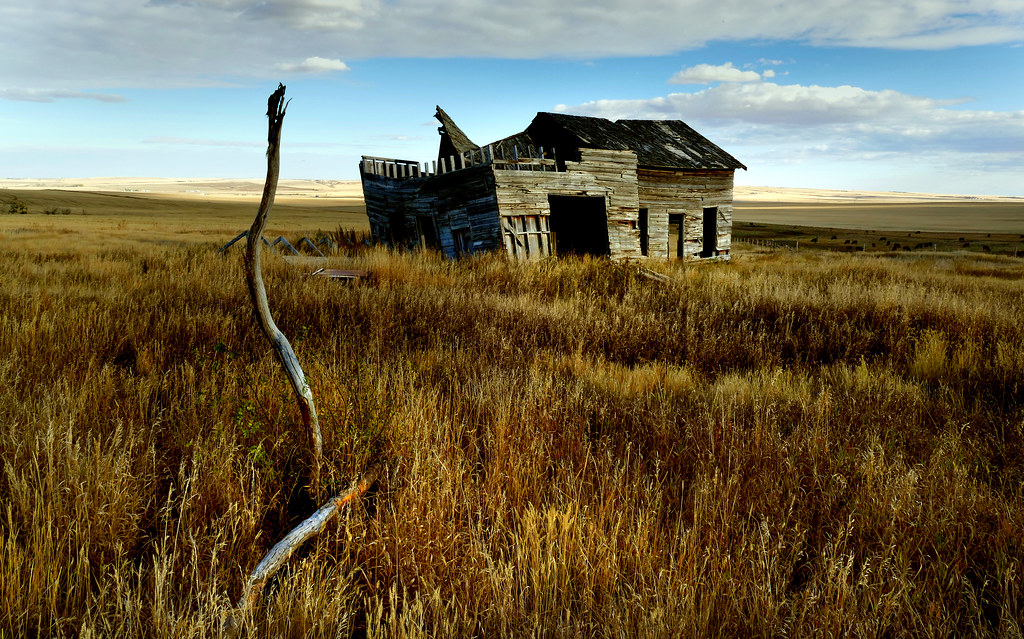
Alberta prairie landscape ahead of the Alberta independence referendum vote

What the Alberta Independence Referendum Vote Actually Asks

Premier Danielle Smith announced the question in May 2026. Supporters of staying branded it “Alberta Forever Canada.” It joined nine other questions already scheduled for the October vote. The referendum’s own text is clear: even a Leave result would not force the government to pursue separation outright. It would only open the door to a subsequent, binding referendum.

That two-step structure matters. Voters casting a Yes ballot are not voting Alberta out of Canada. They are voting to let a legal process begin, one that could eventually lead there.

How the Vote Got Here

Alberta has flirted with separatist sentiment for decades. The grievances are familiar: federal energy policy, equalization payments, pipeline approvals. Those tensions sharpened again through 2025 and 2026 as disputes over resource royalties resurfaced. Smith’s government folded the independence question into the broader referendum package instead of holding a standalone vote. Critics say that choice was designed to normalize the idea without forcing a single up-or-down moment on secession.

Supporters counter that bundling lets voters weigh in on several provincial issues at once, cutting the cost of a standalone vote. Opponents say the bundling buries a constitutionally significant question inside routine ballot business.

What the Polling Says About Alberta’s Mood

Public opinion has not swung toward Leave. In mid-August 2026, close to two-thirds of Albertans told pollsters they would vote to remain part of Canada. Under a third favored starting the separation process. That gap has held steady through the campaign. It suggests the vote is more likely to produce a symbolic rebuke of Ottawa than a real mandate for secession.

A Yes Vote Would Not Mean Alberta Leaves Canada

Even backers of the Leave option admit the practical hurdles ahead. Actual separation would require a second, binding referendum. It would need negotiations with the federal government. It would raise constitutional questions never tested at this scale in Canada. Legal scholars compare the path to Quebec’s earlier sovereignty referendums, both of which failed to produce separation.

Why This Matters Beyond Alberta

Other resource-rich provinces are watching closely. Saskatchewan politicians have floated similar grievances over federal energy and equalization policy. A strong Yes showing in Alberta, even on a symbolic question, could embolden similar pushes elsewhere. National unity researchers read the vote less as a genuine secession threat and more as pressure tactics aimed at Ottawa.

Federal officials have mostly avoided commenting on the referendum directly. Some Alberta politicians cite that silence as proof Ottawa does not take the threat seriously.

The Road From Referendum to Anything Binding

If Yes wins on October 19, Alberta’s government would begin the constitutional process for a further referendum, not declare independence. Ottawa has given no sign it would treat a Yes result as a trigger for talks. No timeline exists for a second vote. Most constitutional lawyers expect any binding referendum, if it happens at all, to be years away.

That long runway is part of why some analysts read the vote as symbolic rather than procedural. A strong Leave showing would hand Smith a stronger hand with Ottawa. A strong Remain showing would let federal officials argue the separatist movement lacks real public support.

What Turnout Could Signal

Turnout is one number analysts are watching almost as closely as the result. A low turnout on the independence question, even with a Leave majority, would let Ottawa and Remain supporters dismiss the result as unrepresentative. A high turnout in either direction would carry more weight in the political arguments likely to follow October 19, whichever side wins.

Provincial election officials have not released turnout projections ahead of the vote. Past Alberta referendums and provincial elections have shown turnout can swing sharply, depending on how contentious the ballot questions are seen to be.

Reader Questions on the Alberta Vote

When is the Alberta independence referendum vote?

October 19, 2026, alongside nine other referendum questions on the same ballot.

Does a Yes vote mean Alberta separates from Canada?

No. A Yes vote would only direct the provincial government to begin the legal process toward a future, binding referendum on separation.

Is the Alberta government bound to act on the result?

No. The government is not bound to abide by whichever option wins the most votes.

What do polls show?

In mid-August 2026, close to two-thirds of Albertans said they would vote to remain in Canada, against under a third who favored starting the separation process.

Who is Alberta’s premier?

Danielle Smith, who added the referendum question in May 2026 as part of a wider package of ten questions.

Sources

See also Tamara News coverage of the Global State of Democracy report and Trump’s Greenland deal with Denmark for more on this year’s territorial politics.

Ukraine Just Launched Its Biggest Drone Attack Ever — On Moscow

The Ukraine drone attack Moscow forces launched over the weekend was the largest single wave of drones Kyiv has sent at the Russian capital. It damaged one of the country’s biggest oil refineries. It killed at least three people.

Russia’s Ministry of Defense said its air defenses shot down more than 1,900 drones. They also downed eight guided aerial bombs, eight cruise missiles and four rockets overnight. The scale stood out, even in a war with near-nightly long-range strikes.

Fire and smoke rise from the Moscow oil refinery hit in the Ukraine drone attack Moscow

How Big the Ukraine Drone Attack Moscow Really Was

Ukraine’s General Staff named the main target as the Gazpromneft-Moscow Oil Refinery. It sits in the capital’s Kapotnya district. The facility ranks among Russia’s largest refineries by processing volume. Drones and debris also struck a residential building nearby, officials said.

Russian state media broadcast footage of fires burning through the night. Some Moscow-area airports faced temporary flight disruption as air defenses engaged the drones. That pattern has repeated through 2026 as both sides expand their long-range strike campaigns.

Casualties and Damage on the Ground

Regional officials confirmed at least three deaths linked to the strikes. Authorities have not released a full damage assessment for the refinery. Russian energy analysts say repeated strikes on refining capacity this year have already strained domestic fuel supply in several regions.

Ukraine has not detailed civilian casualties from the attack. Kyiv’s public statements instead focus on the strike’s military and economic significance.

The barrage’s scale also stands out against the war’s broader arc. Both militaries have steadily expanded their drone fleets over more than four years of full-scale fighting. Drones went from a niche weapon to the dominant feature of the war’s long-range campaigns. A single-night wave of 1,900 drones would have been unthinkable in the war’s early years, when strikes numbered in the dozens.

Why the Timing Looks Deliberate

The strike landed on the final day of Russia’s parliamentary elections. Voting included, for the first time, ballots cast in Ukrainian territory Moscow has illegally annexed. Moscow Mayor Sergei Sobyanin said the attack “was clearly planned with the aim of disrupting the elections.”

Ukrainian officials have not directly addressed that claim. They have long argued that refineries, not polling stations, are the real targets. Any overlap with the election calendar, they say, reflects operational timing rather than an attempt to interfere with the vote.

How Russia and Ukraine Are Each Framing It

Russian officials cast the strike as an attack on civilians and infrastructure, timed to embarrass the Kremlin during a national vote. Ukrainian officials frame it differently. They call it a legitimate strike on a facility that fuels Russian military logistics. Kyiv has hit dozens of refineries and depots since 2024.

Neither account has been independently verified by outside investigators as of publication.

The Broader Pattern of 2026’s Refinery War

This strike did not happen in isolation. Ukraine has spent much of 2026 targeting Russian refining capacity systematically. The goal: squeeze the fuel supply that keeps Russian military vehicles and aircraft running. Energy analysts say the cumulative effect has been real, even though any single strike rarely knocks a facility offline for long.

Russia has leaned harder on strikes against Ukraine’s power grid and gas network as winter approaches. That tit-for-tat dynamic has defined the war’s energy front since 2024. Each side appears to be betting that degrading the other’s infrastructure matters more than front-line gains alone. That calculation has held through multiple failed ceasefire attempts this year.

Western officials monitoring the war call the mutual infrastructure campaign a war of attrition on the home front. It is distinct from the static trench lines further south and east. Neither side has forced a decisive shift through infrastructure strikes alone. Yet both continue expanding the campaigns rather than scaling them back.

What Happens Next in the Drone War

Russian and Ukrainian long-range strikes have both intensified through September. Analysts tracking the war expect that pattern to continue. Russia has previously answered major Ukrainian refinery strikes with retaliatory barrages within days. Residents on both sides are watching for a response this week.

The attack also lands just as world leaders gather in New York for the United Nations General Assembly’s high-level week. The war is expected to feature heavily in floor speeches and side meetings there.

Common Questions About the Moscow Refinery Strike

How large was the Ukraine drone attack Moscow strike?

Russia’s defense ministry said it shot down more than 1,900 drones, eight guided bombs, eight cruise missiles and four rockets overnight, the largest single wave of the war aimed at the capital region.

What was the main target?

The Gazpromneft-Moscow Oil Refinery in the Kapotnya district, one of Russia’s largest refineries by volume, according to Ukraine’s General Staff.

Were there casualties?

Russian officials reported at least three deaths in the Moscow region and damage to a residential building near the refinery.

Why did the timing matter?

The strike landed on the final day of Russia’s parliamentary elections, which Moscow’s mayor said was no coincidence.

Has Russia announced retaliation?

Not yet tied specifically to this strike as of publication, though both sides continue near-daily long-range attacks.

Sources

For related coverage, see Tamara News on Tusk’s warning that Russia could stage “accidental” strikes to test NATO, the Russian State Duma election the attack coincided with, and Europe’s short-term Russia sanctions renewal.