• Mon - Fri 9.00 - 19.00

Author Archives: Francisca Samuel

Author: Francisca Samuel

Francisca Samuel is an editor at Tamara News, where she covers immigration, travel, business and technology news for readers across Africa and the Gulf.

The FTC Says Amazon Secretly Overcharged Advertisers by $20 Billion — Here’s How

The FTC Amazon advertiser overcharging case, filed Monday in Seattle federal court, accuses the company of secretly manipulating its ad auction system. Regulators say the scheme squeezed more than $20 billion out of advertisers since 2019. The Federal Trade Commission and 22 state attorneys general brought the suit together.

The complaint says Amazon misled roughly 1.2 million advertising customers about how pricing and terms worked for its sponsored listings. More than 500,000 small and medium businesses are among those affected. Sponsored listings are the ads that appear at the top of search results across Amazon’s marketplace.

What the FTC Amazon advertiser overcharging complaint alleges

According to the FTC, Amazon changed its ad auction rules in 2019 in a way that let it quietly raise the effective price advertisers paid. The company did not disclose the change, regulators allege. CNBC reports the complaint centers on sponsored product ads, brand ads, and display ads that run alongside search results. The hidden surcharges, the FTC argues, ultimately pushed up prices that consumers paid too.

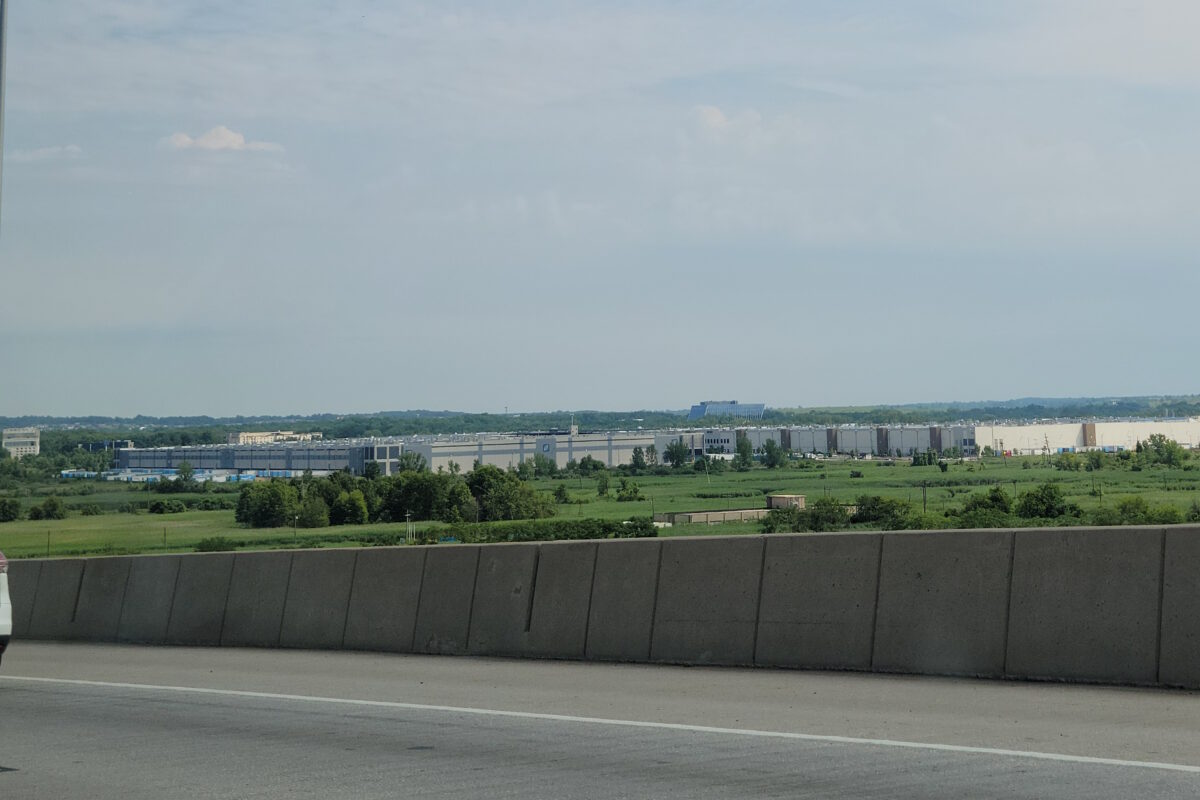
Amazon fulfillment center exterior linked to the FTC Amazon advertiser overcharging case

Amazon JFK8 fulfillment center photo: Tdorante10, CC BY-SA 4.0, via Wikimedia Commons.

How Amazon is responding

Amazon calls the lawsuit “misguided.” The company says it fundamentally misunderstands how its advertising auctions work and presents no evidence that shoppers were harmed. Amazon’s auction system prioritizes ad relevance to a shopper’s search terms before bid size, the company says, a design meant to keep prices lower for advertisers overall. Amazon also cites figures showing its auction changes saved advertisers roughly $8 billion between 2021 and 2025.

Amazon logistics warehouse building tied to the FTC Amazon advertiser overcharging lawsuit

Amazon JFK8 logistics park photo: Tdorante10, CC BY-SA 4.0, via Wikimedia Commons.

Why this case adds to Amazon’s legal exposure

The advertiser lawsuit lands on top of other pending FTC actions against Amazon. One separate case alleges the company enrolled consumers in Prime memberships without clear consent. Antitrust lawyers say a loss in the advertiser case could force changes to how Amazon structures ad pricing across its marketplace. A court order could require more transparency in how the auction sets prices. The case could also lead to civil penalties running into the billions of dollars if the FTC prevails.

How advertisers and sellers are reacting

Trade groups representing small online sellers say the case validates complaints they have raised for years about opaque ad pricing on Amazon’s platform. Some advertising agencies that manage Amazon campaigns for clients say they plan to review historical billing data to estimate their own potential exposure to the alleged surcharges. Amazon has not said whether it will offer any settlement fund to advertisers while the case proceeds through the courts.

State attorneys general have increasingly joined federal cases against large technology companies in recent years. They argue that coordinated action gives regulators more leverage than either level of government pursuing a case alone. The 22 states involved in this lawsuit span both major political parties. Legal observers say that detail signals broad, bipartisan concern about the underlying allegations rather than a partisan enforcement effort. Amazon’s outside counsel has signaled the company will contest both the federal and state claims together rather than seeking to settle with individual states separately.

What happens next in the Amazon case

Amazon is expected to file a motion to dismiss in the coming months. Discovery in a case this size typically stretches well over a year before trial. Advertisers who believe they were affected are watching closely. A favorable ruling for the FTC could open the door to private damages claims layered on top of any government penalty. For related coverage on major tech legal exposure, see our reporting on the Meta multistate settlement and the ongoing wave of tech layoffs.

This is not Amazon’s first brush with federal antitrust scrutiny. The company has faced separate government actions over its marketplace practices and subscription enrollment methods in recent years. Legal analysts say a pattern of parallel cases can add pressure on a company even when no single case is decisive. Courts and regulators sometimes reference findings from one matter when evaluating another. Amazon’s legal team has consistently argued that each case should be judged on its own facts rather than as part of a broader pattern.

Answering the obvious questions

How much did Amazon allegedly overcharge advertisers?
The FTC and state attorneys general allege Amazon extracted more than $20 billion in hidden surcharges from advertisers since 2019.

How many advertisers does the case cover?
The complaint says roughly 1.2 million advertising customers were affected, including more than 500,000 small and medium businesses.

What does Amazon say in response?
Amazon calls the lawsuit misguided and says its auction system saved advertisers billions of dollars rather than costing them money.

Who filed the lawsuit?
The Federal Trade Commission filed the case jointly with 22 state attorneys general in federal court in Seattle.

Could consumers be affected too?
The FTC argues the hidden ad surcharges fed into higher prices for shoppers. Amazon disputes that shoppers were harmed.

How long could the case take?
Cases of this size typically take well over a year to reach trial once motions and discovery are underway.

Consumer advocacy groups have welcomed the lawsuit, saying it validates years of complaints about opaque digital advertising markets generally, not just Amazon’s practices. Some economists who study online marketplaces say hidden auction mechanics are difficult for outside researchers to audit without regulatory subpoena power. That is part of why cases like this one often start with a government investigation rather than a private lawsuit.

Sources:

Two Oil Supertankers Just Got Hit in the Strait of Hormuz — Nobody Has Claimed It

A Strait of Hormuz tanker attack struck two supertankers with unidentified projectiles late Monday. It adds a fresh flashpoint to an already tense standoff between Iran and the United States over shipping rights through the waterway. No group has claimed responsibility, and Tehran has not acknowledged involvement.

The Saudi-operated very large crude carrier Sidr and the Sinokor-operated Senegal Prosperity were both hit by three projectiles each. The strikes hit vessels transiting waters roughly 17 nautical miles east of Khasab, Oman. Shipping insurers say neither vessel suffered casualties, injuries, or environmental damage, though both sustained hull damage.

What happened in the Strait of Hormuz tanker attack

Bloomberg reported that the strikes hit both vessels within a short window as they completed outbound transits of the strait. Arab News confirmed maritime security firms tracked the incident in real time. Analysts flagged it as part of a wider pattern of unclaimed attacks on commercial shipping in the corridor this year.

Oil tanker at sea representing vessels involved in the Strait of Hormuz tanker attack

Oil tanker photo: Jernej Furman, CC BY 2.0, via Wikimedia Commons.

Why responsibility remains unclear

Neither Iran nor any allied or proxy group has claimed the strikes. That fits a pattern seen throughout the current standoff. Attacks on commercial vessels tend to go unclaimed even as both sides accuse each other of destabilizing the waterway. The incident comes days after direct exchanges between Iranian and U.S. forces reopened. That followed a period when the conflict had shifted toward economic pressure rather than open strikes.

Iranian officials spoke at the Shanghai Cooperation Organisation summit in Kyrgyzstan. They said Tehran would reciprocate if Washington returns to the terms of a memorandum of understanding reached earlier this year. That would include guarantees of free navigation through Hormuz. The offer has not visibly slowed the pace of unclaimed incidents at sea.

How the shipping industry is reacting

Maritime insurers have already raised war-risk premiums for vessels transiting the strait. Several shipping lines are reviewing routing options, though no viable alternative avoids Hormuz entirely for Gulf crude exports. Brent crude rose roughly 2% in the immediate aftermath of the attack, touching its highest level in about a week. Traders priced in the risk of further disruption to a corridor that carries a large share of the world’s seaborne oil.

What the region’s governments are saying

Gulf state officials have called for restraint from all sides while stopping short of assigning blame for Monday’s strikes. Oman, whose coastal waters saw the attack, has increased naval patrols in the area. Qatar and the United Arab Emirates have both reiterated that freedom of navigation through Hormuz remains a shared regional priority regardless of who is behind individual incidents.

The Strait of Hormuz carries roughly a fifth of the world’s oil supply on any given day. That is why even a single unclaimed incident draws outsized attention from energy markets. Countries that rely heavily on Gulf oil imports, including several major Asian economies, have urged all parties to avoid further escalation. Diplomats from Gulf Cooperation Council states have offered to mediate between Washington and Tehran, though neither side has formally accepted an outside broker for the current standoff.

What happens if the attacks keep coming

Shipping security firms expect naval escorts and convoy-style transits through the strait to increase in the coming days. That mirrors responses to earlier waves of unclaimed attacks. A sustained pattern of strikes could push more insurers to raise premiums further or restrict coverage for certain routes. Those costs eventually show up in fuel and shipping prices well beyond the Gulf. For related coverage on the broader standoff, see our reporting on the direct Iran-US military exchanges and the Middle East travel advisory currently in effect.

This is not the first unclaimed strike on shipping in the strait this year. Maritime trackers say the pattern has grown more frequent since direct exchanges between Iranian and U.S. forces resumed. Vessel operators increasingly route additional security personnel aboard ships transiting the corridor. Some have begun sailing in tighter groups to reduce individual exposure. The lack of a clear culprit makes it harder for any single government to respond directly. Analysts say that ambiguity may be part of the appeal for whoever is behind the attacks.

Frequently asked: the Hormuz incident

Which ships were hit in the Strait of Hormuz tanker attack?
The Sidr, operated by Saudi Arabia’s Bahri, and the Senegal Prosperity, operated by South Korea’s Sinokor Group, were both struck by three projectiles each.

Were there any casualties?
No casualties, crew injuries, or environmental damage have been reported by either operator.

Who is responsible for the attack?
No group has claimed responsibility. Iran has not acknowledged involvement, consistent with the unclaimed pattern of recent incidents in the strait.

How has the oil market reacted?
Brent crude rose about 2% following the strikes, touching its highest level in roughly a week.

Is shipping through Hormuz still possible?
Yes. Vessels continue to transit the strait, though insurers have raised war-risk premiums and some operators are reviewing security measures.

Could this escalate further?
Officials on both sides have floated conditions for de-escalation. The pattern of unclaimed strikes has continued despite those diplomatic signals.

Naval analysts say identifying the source of these projectiles is technically difficult even with satellite tracking. Small fast boats or shore-based launchers can strike and withdraw within minutes. That technical difficulty is one reason attribution has lagged behind nearly every recent incident in the strait. Regional airlines have also adjusted some flight paths near the Gulf coast as a precaution, though commercial air traffic through the wider region continues largely as normal.

Sources:

Russia Just Hit Kyiv for a Sixth Straight Night — Six of the Dead Were Rail Workers

Russia Kyiv strikes September attacks killed at least 12 people on Tuesday. Dozens more were wounded as Moscow’s bombardment of the Ukrainian capital entered a sixth consecutive night. Ukrainian officials said the barrage mixed jet-powered drones with ballistic missiles. It hit a rail depot and an ordinary five-story apartment building in the same wave.

President Volodymyr Zelensky said six of the dead were railway workers caught at the depot. The toll underscores a shift: the strikes increasingly target infrastructure that keeps the country running, not only military sites.

Russia Kyiv strikes September: what was hit and who died

Bloomberg reported that Tuesday’s attack was the sixth straight night of bombardment against Kyiv and its suburbs. Air defense crews described an unusually dense mix of decoy drones and live warheads designed to overwhelm interceptors. The Kyiv Independent put the confirmed death toll at 12, including the six rail workers. The number of wounded kept climbing as rescue crews cleared rubble.

Kyiv skyline pictured during the period of Russia Kyiv strikes September escalation

Kyiv cityscape photo: Valerii Tkachenko, CC BY 2.0, via Wikimedia Commons.

Why the bombardment is escalating now

Russian President Vladimir Putin claimed his forces have seized roughly 270 square kilometers of territory in Donetsk in recent weeks. He said they have surrounded a large group of Ukrainian troops there. Kyiv disputes the scale of those claims. But the ground fighting in the east has coincided with a sharp rise in long-range strikes on the capital. Ukrainian officials read this as pressure meant to force concessions at the negotiating table rather than on the battlefield alone.

Ukraine’s air force says it intercepted most of the incoming drones and missiles. The sheer volume of the barrage let a portion through, including the warhead that struck the residential building. Kyiv has repeatedly asked Western partners for more Patriot interceptor batteries. Tuesday’s strikes renewed that appeal.

The human cost beyond the death toll

Rail workers make up an unusually large share of Tuesday’s victims. Russian missiles have repeatedly targeted freight and passenger rail infrastructure this year. The goal appears to be disrupting the movement of both military supplies and civilians. Local officials say several rail lines out of Kyiv remain suspended while crews inspect damaged track and signaling equipment.

City authorities have opened additional shelters for residents whose homes were damaged. Utility crews are working to restore power to blocks near the residential strike site. Ukrainian officials have not said whether the rail depot will be back in service within days or weeks.

How the war economy is absorbing the damage

Ukraine’s rail operator has diverted freight through alternate routes to keep grain and fuel shipments moving despite the damaged depot. Insurers covering Ukrainian infrastructure have flagged rising claims tied to repeated strikes on transport and energy sites this year. Reconstruction planners say each new wave of damage adds to a rebuilding bill that independent estimates already put well into the hundreds of billions of dollars. Kyiv’s city government has asked international donors for emergency generators and rail-repair equipment on top of existing aid packages.

The war has now stretched well past initial expectations on both sides. Repeated rounds of talks have failed to produce a lasting ceasefire. Ukrainian officials say they remain open to negotiations but will not accept terms that reward continued strikes on civilian infrastructure. Western governments have periodically floated new sanctions packages targeting Russia’s energy exports, though enforcement gaps mean Moscow has continued to find buyers for its oil. Kyiv’s allies say the current strikes make it harder to build political support at home for further sanctions relief discussions. Public attention keeps returning to civilian casualties rather than battlefield lines.

What comes next as the barrage continues

Ukrainian officials expect the current wave of strikes to continue as long as Russia keeps making battlefield claims in Donetsk it wants to reinforce politically. Diplomatic channels remain open, including discussions on the sidelines of recent multilateral meetings. Neither side has signaled a near-term ceasefire. Related coverage includes our reporting on the Ukraine weapons depot strike earlier this year and the opening of the UN General Assembly, where the war is expected to feature prominently.

Western allies have condemned the strikes on civilian infrastructure. Several governments have repeated calls for additional air-defense support to Kyiv. Ukraine’s rail network carries not just passengers but also grain exports that move through Black Sea ports. Repeated strikes on depots raise concerns about wider disruption to Ukraine’s agricultural trade. Officials in Kyiv say they are prioritizing repairs on lines that connect directly to export routes, even as strikes continue elsewhere in the network.

Common questions about the strikes

How many people died in the latest Kyiv attack?
At least 12 people were killed, including six railway workers, with dozens more wounded.

What did the strikes target?
Ukrainian officials say the barrage hit a rail depot and a residential apartment building among other sites across the capital region.

Why has Russia intensified strikes on Kyiv?
The escalation follows Russian claims of territorial gains in Donetsk. Ukrainian officials view it as an attempt to add battlefield leverage ahead of any negotiations.

Is Ukraine’s air defense holding up?
Ukraine says it intercepts most incoming drones and missiles. Large mixed barrages have let some warheads through, prompting fresh requests for more Patriot batteries.

Are rail services disrupted?
Yes. Several lines out of Kyiv remain suspended while crews repair damaged track and signaling equipment.

Is a ceasefire close?
No. Diplomatic contacts continue, but neither Kyiv nor Moscow has signaled a near-term halt to strikes or ground operations.

Sources:

Nepal’s Flood Death Toll Just Passed 1,000 — Nearly 4,000 People Are Still Missing

The Nepal flood death toll has passed 1,000. Nearly 4,000 people remain missing after a glacial collapse sent a wall of water down the Bhotekoshi and Trishuli river corridors in late August. The disaster also struck across the border in Tibet, where Chinese authorities have confirmed a smaller but significant toll.

A rock-and-ice avalanche broke loose from a glacier near the Nepal-Tibet border. It blocked a mountain river, then the buildup burst downstream without warning. The surge tore through settlements along roughly 72 kilometers of the Trishuli River. It destroyed the Gyirong border checkpoint and buried whole stretches of road and farmland under mud.

What the Nepal flood death toll looks like right now

Nepal’s disaster authorities have confirmed more than 1,050 deaths inside the country. Nearly 3,900 people are still missing, according to CNN. Tibetan authorities have logged 16 deaths and more than 500 missing across the border. Mass burials began over the weekend after morgues in the affected districts ran out of space. Rescue teams from India and China have joined Nepali army units, and crews are working the debris fields by hand.

Himalayan river valley near the region hit by the Nepal flood death toll disaster

Himalayan river valley photo: Vyacheslav Argenberg, CC BY 4.0, via Wikimedia Commons.

CBS News reports that at least 700 of the missing are foreign nationals. Many are trekkers and guides who were caught along popular Himalayan routes when the water hit. Crews have airlifted eight foreign nationals to hospitals in Kathmandu so far, and several governments have confirmed citizens among the missing.

Why a glacier triggered this flood

Nepali geologists say the Lhende Khola river system has flooded twice in fourteen months. Unstable ice above the valley triggered both events. This time, a chunk of glacier calved off and dammed the river. The blockage then let go all at once, sending a flash flood downstream with almost no warning time for villages below. Scientists studying the region link the rising frequency of these glacial dam failures to a warming climate that is destabilizing high-altitude ice across the Himalayas.

The rescue and recovery effort underway

Helicopters are running repeated sorties into the Bhotekoshi and Trishuli valleys. Landslides have cut the main roads in several places, so crews now carry supplies in on foot. Nepal’s government has declared the affected districts disaster zones and asked for international help with search equipment and temporary shelter. Tens of thousands of people have lost homes, farmland, or both.

Health officials are racing to prevent outbreaks of waterborne disease in crowded relief camps. Clean water and sanitation remain scarce a week after the flood hit. Aid groups expect the confirmed death toll to keep climbing for weeks, since search crews may never recover many bodies from the river system.

The economic toll beyond the missing-persons count

Local officials estimate thousands of hectares of farmland now sit under silt and debris, wiping out crops just weeks before the autumn harvest. Small hydropower stations along the Trishuli River have also gone offline, cutting electricity to towns that were not directly hit by the flood. Insurance analysts say the rebuilding bill will likely run into hundreds of millions of dollars once damaged roads, bridges, and irrigation channels are added up. Nepal’s tourism board has already logged a wave of trekking cancellations for the autumn season. That period normally accounts for a large share of annual visitor income.

What happens next for Nepal’s flood response

Nepal’s parliament is expected to debate emergency relief funding this week. Donor governments have begun pledging money and equipment. Rebuilding the destroyed Gyirong checkpoint and the roads feeding the valley will likely take months. That work will cut off a stretch of the China-Nepal trade and trekking route in the meantime. Meteorologists are also watching the wider Himalayan glacier belt, since similar unstable conditions exist in several other valleys.

Travelers with existing bookings in the affected trekking regions should check with tour operators directly. Several routes remain closed for safety inspections. Related coverage on natural hazards and travel safety is available in our report on the Grand Canyon flash flood and our rolling Middle East travel advisory.

Nepal’s mountainous terrain makes this kind of disaster especially hard to manage. Steep valleys limit vehicle access. The same slopes that funneled the floodwater downstream now block relief convoys with fresh landslides. Search teams say each new landslide can erase hours of progress toward reaching isolated villages. Additional rain could destabilize slopes that are already saturated. Regional trade has also slowed, since the Kathmandu-Kerung highway that normally carries goods between Nepal and Tibet runs directly through the damaged corridor. Local traders say they are rerouting shipments through longer, more expensive paths while repair crews assess the road.

Quick answers on the Nepal floods

How high is the confirmed Nepal flood death toll?
Nepali authorities have confirmed more than 1,050 deaths inside Nepal, plus 16 in Tibet. Officials expect the number to rise as search teams reach more debris fields.

How many people are still missing?
Close to 3,900 people are listed as missing in Nepal and more than 500 in Tibet. Officials caution some names may be duplicated across lists.

What caused the flooding?
A glacier near the Nepal-Tibet border partially collapsed. It temporarily dammed a river, and the blockage then failed, releasing a flash flood downstream.

Are foreign tourists affected?
Yes. At least 700 of the missing are believed to be foreign nationals, many caught on Himalayan trekking routes when the flood hit.

Is it safe to travel to the region now?
Several trekking routes and roads remain closed. Travelers should confirm current conditions with tour operators and local authorities before departure.

Could a similar flood happen again nearby?
Scientists say similar unstable glacier and ice-dam conditions exist elsewhere in the Himalayas. A repeat event in another valley has not been ruled out.

Sources:

The Grand Canyon Flood Nobody Saw Coming

A wall of water hit one of the Grand Canyon’s most popular backcountry areas without much warning. The Grand Canyon flash flood struck Bright Angel Creek at roughly 2:30 p.m. on August 29. It killed at least one person. The National Park Service airlifted 62 people to safety from the Phantom Ranch camping area and the lower North Kaibab Trail.

Severe monsoonal storms triggered the flood. Rain fell at up to one inch per hour in places. About half an inch to a full inch fell in just 30 minutes, in a steep, rocky stretch of the canyon, according to the National Park Service’s own incident report.

Grand Canyon flash flood

What caused the Grand Canyon flash flood

Arizona’s summer monsoon season regularly brings intense, short-lived storms to the Grand Canyon region. This one landed directly over Bright Angel Canyon’s drainage. The terrain amplified the danger. Steep walls funnel rainfall into narrow creek beds fast. Hikers and campers get little time to reach higher ground once a storm cell develops overhead.

The Park Service called the damage to water infrastructure “extensive.” Pipes and pumping systems serving the Phantom Ranch area took the brunt of it. Those systems supply drinking water to one of the canyon’s only backcountry lodges.

How the rescue operation unfolded

Park rangers and emergency crews moved quickly once the flood hit. Helicopters lifted 62 people out of Phantom Ranch and the lower North Kaibab Trail. Roughly 15 people went missing in the chaos that followed, per ABC News’s reporting on the search effort. Crews located all but one of them by the following Monday night, according to updated CBS News coverage.

The National Park Service closed Phantom Ranch and the North Kaibab Trail entirely. Crews needed the closure to assess damage and search the area safely. Both closures remained in effect as of early September. Officials have not announced a confirmed reopening date.

What happens next for canyon visitors

The Park Service has warned that additional thunderstorms remain possible through the rest of the monsoon season. Officials flagged ongoing risk of more flash flooding, debris flows and rockfall in the affected area. Trail and river conditions could keep changing with little notice.

Visitors with permits or reservations tied to Phantom Ranch or the North Kaibab corridor should check the park’s official alerts before traveling. Backcountry rangers are advising hikers canyon-wide to build extra buffer time into any trip through narrow drainages during the remaining monsoon weeks. This flood developed unusually fast, and rangers want that lesson to stick.

Why this flood was harder to predict than most

Monsoon flash floods are a known summer risk at the Grand Canyon. This one’s speed still stood out. Storm-to-flood timing in narrow slot terrain can run under an hour. That leaves a much smaller warning window than flooding on open ground. Hydrologists who study the region point to the canyon’s geology. Sheer walls funnel rain into narrow channels fast. That geology is exactly what makes the canyon so exposed to fast floods, even from storms that would cause only modest flooding elsewhere.

Search and rescue coordinators at Grand Canyon National Park say the same drainage pattern has produced dangerous flash floods before. This combination of rainfall intensity and visitor density in one place at one time is rare. Phantom Ranch sits at the bottom of the canyon along a popular corridor trail. A flood there can catch far more people at once than a flood in a less-visited side canyon. It is another reminder that US travel disruptions this season are not limited to airlines managing overseas security risk or regional travel advisories; domestic weather can ground a trip just as fast.

What backcountry travelers should know before their next trip

Grand Canyon rangers recommend checking the park’s flash flood potential rating before any hike into narrow canyon terrain during monsoon season, which typically runs from June through September. That rating updates daily and reflects current soil saturation and storm forecasts together, not just rainfall alone. Hikers already inside a narrow drainage when a storm builds should move to higher ground immediately. Don’t wait to see how heavy the rain gets. This flood’s warning window was measured in minutes, not hours. Park staff say that single habit, moving early rather than waiting to confirm danger, is the biggest factor separating close calls from tragedies in canyon terrain.

FAQ

When did the Grand Canyon flash flood happen?

On August 29, 2026, at approximately 2:30 p.m. MST.

Where did the flood strike?

Bright Angel Creek, near the Phantom Ranch camping area and the lower North Kaibab Trail.

How many people were evacuated?

Sixty-two people were airlifted to safety by the National Park Service.

Were there any deaths?

Yes, at least one person died. As of the following Monday night, all but one of the initially missing had been accounted for.

What caused the flood?

Severe monsoonal storms dropped up to an inch of rain per hour over a steep section of the canyon.

Is Phantom Ranch open to visitors now?

No. The National Park Service closed Phantom Ranch and the North Kaibab Trail, with no confirmed reopening date as of early September.