• Mon - Fri 9.00 - 19.00

Author Archives: Francisca Samuel

Author: Francisca Samuel

Francisca Samuel is an editor at Tamara News, where she covers immigration, travel, business and technology news for readers across Africa and the Gulf.

A UN Expert Says Zambia’s Post-Election Crackdown Is Getting Worse

The Zambia opposition crackdown has intensified in the roughly three weeks since the country’s contested presidential and parliamentary elections. A UN Human Rights Council-appointed special rapporteur issued a public statement urging Lusaka to reverse course. UN News and the Office of the High Commissioner for Human Rights both reported the warning. It describes systemic violence, mass arrests and detentions that extend beyond legally mandated limits without formal charges.

What the Zambia Opposition Crackdown Looks Like on the Ground

Security forces have arrested hundreds of opposition supporters since the election. Many were held past the timeframes Zambian law allows before charges must be filed, the UN statement said. Some detainees face what the rapporteur’s office called disproportionate or “concocted” charges. That group includes senior opposition alliance leader Brian Mundubile and his running mate Makebi Zulu, who face treason charges.

Zambian authorities have said the arrests connect to an alleged insurrection plot. Security forces reportedly seized weapons and arrested 11 people, including senior opposition figures, in a raid in the capital, Lusaka. Mundubile himself was found present at the scene, according to reporting compiled by People Daily. Tamara News has not independently verified the insurrection allegations. The government’s stated justification is reported here alongside the UN’s characterization of the crackdown as disproportionate.

The gap between the two accounts is stark. Government officials describe a security operation against an active plot. The UN’s rapporteur describes a pattern of mass detention without charge that extends well beyond anyone connected to the alleged raid. Both descriptions can be partly true at once. A genuine security concern does not, on its own, justify holding hundreds of people past legal time limits — the specific practice the rapporteur’s statement singles out.

A Pattern Beyond Individual Arrests

The rapporteur’s office also pointed to the government’s de facto cancellation of RightsCon, a summit on human rights and technology that had been expected to draw more than 5,000 attendees. Officials framed this as part of a broader pattern of closing space for civil society and independent scrutiny, not an isolated response to the election alone.

Why the Zambia Opposition Crackdown Is Drawing International Attention

UN special rapporteurs have no enforcement power. Their public statements still carry diplomatic weight, and they often precede more concrete responses from bodies like the UN Human Rights Council or individual governments considering aid conditions. The rapporteur has called for the immediate release of political detainees and protection of democratic freedoms. That framing turns the situation into a test of whether Zambia’s institutions can constrain executive power after a disputed vote.

Zambia’s situation echoes tensions playing out elsewhere on the continent this election season. Tamara News has also covered Morocco’s general election, part of a busier-than-usual African election calendar in September 2026.

What Comes Next for Zambia’s Opposition

Watch for whether the government responds to the UN rapporteur’s statement, or dismisses it as outside interference. That choice will likely shape whether the crackdown escalates or eases in the coming weeks. Mundubile and Zulu’s treason case is the one to watch most closely. How it proceeds through Zambia’s courts will be read internationally as a signal of whether due process survives a contested election, or whether it becomes a template for handling future opposition challenges. Regional bodies including the African Union and the Southern African Development Community have a track record here. Both have weighed in on post-election disputes elsewhere on the continent before. Pressure from those blocs, more than from the UN alone, has historically shifted outcomes in similar standoffs.

Neither body had issued a public statement on Zambia as of this report. Their silence so far stands in contrast to the UN rapporteur’s swift intervention. Diplomats watching the situation say regional bodies often move slower. They tend to prefer quiet pressure over public statements. That pattern could still shift if the crackdown escalates further.

Zambia’s own courts remain the most immediate venue where this plays out. Independent legal observers inside the country will be watching whether judges hearing the treason case face any political pressure of their own. A visibly fair trial process would do more to ease international concern than any diplomatic statement from Lusaka. A rushed or opaque one would likely deepen it instead, regardless of the eventual verdict. Zambia’s own bar association has historically been vocal on judicial independence issues, and its response to this specific case will be an early indicator worth watching in the weeks ahead.

UN Human Rights Council chamber addressing the Zambia opposition crackdown

A Few Common Questions

What triggered the Zambia opposition crackdown?
Zambia’s contested presidential and parliamentary elections, held roughly three weeks before the UN statement, which the opposition disputed.

Who are the main opposition figures facing charges?
Opposition alliance leader Brian Mundubile and his running mate Makebi Zulu, who face treason charges the UN rapporteur’s office described as disproportionate.

What does the Zambian government say about the arrests?
Authorities have linked the arrests to an alleged insurrection plot, saying weapons were seized and 11 people arrested in a raid in Lusaka.

What has the United Nations done in response?
A UN Human Rights Council-appointed special rapporteur issued a public statement calling for the immediate release of political detainees and an end to the crackdown.

Has any independent event been affected by the crackdown?
Yes. RightsCon, a human rights and technology summit expected to draw over 5,000 attendees, was effectively canceled by the government.

Featured image: “CGI Zambia Flag.png” by Aerra Carnicom (CC BY-SA 4.0), via Wikimedia Commons. In-content image: “UN Human Rights Council Chamber, Geneva” by U.S. Mission Geneva (CC BY 2.0), via Wikimedia Commons.

Related Guides

Xi Jinping Hadn’t Visited Egypt in a Decade. Here’s Why He Just Did

The Xi Jinping Egypt visit began on the evening of September 1, 2026. China’s president landed in Cairo for a state visit at the invitation of Egyptian President Abdel Fattah El-Sisi. It was Xi’s first trip to Egypt in ten years. The stop capped a longer swing through Central Asia. That trip also took Xi to Kyrgyzstan for the Shanghai Cooperation Organisation summit. The full itinerary ran from August 30 to September 3, 2026.

Xi and El-Sisi held formal talks on September 2. Xi visited the Grand Egyptian Museum near the pyramids of Giza during his three days in the country, according to Al Jazeera.

Why the Xi Jinping Egypt Visit Is Landing Now

The timing is not incidental. Xi’s visit comes as U.S. influence in the region has been strained by the ongoing military confrontation between the United States and Iran, which has flared again after a month-long lull. During his meeting with El-Sisi, Xi called on Middle Eastern countries to oppose external influence and to consider reshaping the region’s security order. Al Jazeera reported those remarks as a direct signal of Beijing’s ambition to position itself as an alternative security partner while Washington is preoccupied elsewhere.

ABC News described the visit as part of a broader pattern: “China seeking deeper influence across the Mideast” at a moment when traditional U.S. partners in the region are recalibrating their alliances.

Tamara News has covered the diplomatic backdrop to this moment in detail this week, including the opening of this year’s UN General Assembly session, where competing claims to global leadership are already a central theme. The Iran conflict has drawn most of Washington’s diplomatic bandwidth in recent weeks — exactly the gap Xi’s Cairo trip appears designed to exploit.

The Economic Relationship Behind the Xi Jinping Egypt Visit

China’s investment in Egypt already exceeds $10 billion. That includes stakes in Egypt’s New Administrative Capital east of Cairo and an electric rail line serving industrial zones in the Nile Delta. Egyptian exports to China nearly doubled in the first half of 2026, a trend that gives the diplomatic visit real economic weight rather than symbolic value alone.

Infrastructure financing of this kind has become China’s signature approach to expanding influence across Africa and the Middle East. Beijing trades capital and construction expertise for political goodwill and long-term economic ties, without the conditions typically attached to Western aid or loans.

Critics, including some Western officials, argue this model can leave recipient countries carrying debt tied to projects with uncertain returns. Egypt’s government has not raised that concern publicly about its own arrangements with Beijing. Nothing in the reporting around this visit suggests strain in the relationship — if anything, the near-doubling of Egyptian exports to China points the other direction.

How Egypt Is Positioned Between Two Powers

Egypt has long balanced two relationships. Washington provides significant military aid. Beijing has become an increasingly important economic partner. Hosting Xi for a rare state visit lets Cairo signal strategic flexibility. It does this without formally breaking from Washington, even while the U.S. stays consumed by the Iran conflict. Other regional governments are watching this hedging posture closely as they weigh their own positioning.

Egypt is not alone in this balancing act. Morocco’s own general election this month unfolds against a similar backdrop. Governments across the region are recalibrating alliances as global power dynamics shift. Both countries have deep, decades-old ties to Washington. Both have also deepened economic links with Beijing in recent years. That pattern is playing out across much of the region at once.

Analysts who track Chinese foreign policy note a consistent playbook. Beijing tends to lead with infrastructure and trade, then follow with security rhetoric once the economic relationship is established. Egypt fits that sequence closely. A decade of investment came first. Xi’s call for a new regional security order came only now, after the economic groundwork was already in place.

What Xi’s Visit Sets in Motion

Watch for concrete follow-through on the security framework Xi floated during talks with El-Sisi. Vague calls for a new regional order tend to either firm up into specific proposals within weeks or quietly disappear from official statements. Also worth tracking: whether Gulf states, several of which have their own extensive trade ties with China, echo Xi’s language about reduced external influence. They may instead keep their distance to avoid antagonizing Washington while the Iran conflict stays active.

Flag of Egypt, host of the Xi Jinping Egypt visit

Common Questions, Answered

When did Xi Jinping visit Egypt?
Xi arrived in Cairo on the evening of September 1, 2026, and held talks with President El-Sisi on September 2, staying three days.

Why was this visit significant?
It was Xi’s first trip to Egypt in a decade, and it came while U.S. attention and influence in the region are strained by the ongoing conflict with Iran.

What did Xi say during the visit?
He called on Middle Eastern nations to oppose external influence and consider a new regional security framework, according to Al Jazeera’s reporting on his remarks with El-Sisi.

How large is China’s economic relationship with Egypt?
Chinese investment in Egypt exceeds $10 billion, and Egyptian exports to China nearly doubled in the first half of 2026.

Did Xi visit other countries on this trip?
Yes. The same trip included a stop in Kyrgyzstan for the Shanghai Cooperation Organisation summit before Xi continued to Egypt.

Featured image: “Pyramids of Giza, Egypt – Cairo skyline in the background – panoramio.jpg” by David Broad (CC BY 3.0), via Wikimedia Commons. In-content image: “CGI Egypt Flag.png” by Aerra Carnicom (CC BY-SA 4.0), via Wikimedia Commons.

Germany Just Accused Russia of a Drone Plot — and Shut a Consulate Over It

Germany announced the Germany Russia consulate closure on September 1, 2026. German Interior Minister Alexander Dobrindt formally accused Russia of orchestrating a drone attack on Leipzig/Halle Airport the previous month. Germany ordered the Russian consulate in Bonn shut, effective September 18. It also closed the Russian House cultural center in Berlin and tightened entry controls on Russian nationals.

The accusation traces back to August 4 and 5, 2026. Two drone incidents occurred on airport grounds in Saxony that weekend. One device, found near a Ukrainian cargo aircraft, carried explosives; technicians defused it on site. The Washington Post and NBC News both reported the details.

The Evidence Behind the Germany Russia Consulate Closure

Dobrindt said investigators found drone components, explosives and a detonator configuration matching patterns “known to us from other Russian hybrid operations.” He told reporters the police investigations, the pattern and intelligence findings “prove a Russian responsibility for the attempted attack at Leipzig airport.” Germany’s government is standing behind that statement publicly. It has not released the underlying forensic evidence for independent review.

Russia has denied any involvement. Ambassador Sergey Nechayev called the accusations “unsubstantiated, absurd, and irrational,” per the same NBC News report. Tamara News has not independently verified either side’s account. This report treats both the German government’s stated evidence and Russia’s denial as competing claims from interested parties.

Leipzig/Halle Airport is a major cargo hub for European logistics. Its proximity to flights supporting Ukraine made it a plausible target for exactly the kind of hybrid interference Western intelligence agencies have warned about since Russia’s full-scale invasion began. A drone carrying explosives landing undetected on airport grounds raises pointed questions about perimeter security at facilities that handle both commercial and military-adjacent cargo.

What the Germany Russia Consulate Closure Includes

Beyond shutting the Bonn consulate and the Berlin cultural center, Germany is tightening entry screening for Russian nationals. The European Commission has separately signaled plans for additional sanctions tied to the incident, though it has not detailed specific targets yet. NATO Secretary General Mark Rutte welcomed Germany’s response, calling it a firm stance against what he described as hybrid aggression.

Consulate closures are a rare step for Germany to take against Russia. Berlin has historically reserved this move for the most serious accusations rather than routine friction. Bonn’s consulate has operated for decades, a legacy of the city’s status as former West Germany’s capital. Closing it signals Berlin views the Leipzig incident as a different order of threat than earlier hybrid incidents it chose not to escalate this far.

Part of a Wider Pattern of Hybrid Incidents

The Leipzig case is one of several drone and sabotage incidents across Europe that Western governments have linked to Russia over the past two years. NATO officials call this a hybrid warfare campaign short of open conflict. Tamara News has covered related developments this week, including Latvia’s import ban tied to Russia and Belarus and ongoing Russian strikes on Kyiv. Both are part of the same deteriorating security picture along the eastern edge of Europe.

What Berlin Does Next

The Bonn consulate closure takes effect September 18. That gives Russian diplomatic staff roughly two and a half weeks to wind down operations. Watch for whether the European Commission’s promised sanctions package produces specific targets. Watch too for whether other NATO members follow Germany’s lead with their own consulate or visa restrictions. Russia has given no sign of a reciprocal move against German diplomatic facilities so far. Retaliation of that kind would fit the pattern of prior disputes between the two countries. A tit-for-tat closure from Moscow would send the clearest early signal that this dispute is escalating rather than settling.

German lawmakers across the political spectrum have broadly backed Dobrindt’s response so far. That is a rare moment of consensus in a coalition that disagrees on most other foreign policy questions. That unity could fray quickly if Russia responds with a matching consulate closure of its own. Opposition parties would then face pressure to show they can match Moscow’s escalation without provoking a wider diplomatic break.

Other European governments are likely watching Berlin’s next moves closely too. Unexplained drone activity near military and transport sites has been reported in several parts of Europe over the past two years, generally without the kind of direct public attribution Germany has now made. A German precedent for naming Russia this explicitly could make it easier for other capitals to do the same in future incidents.

Airport runway tied to the Germany Russia consulate closure

Questions Readers Are Asking

What triggered the Germany Russia consulate closure?
Germany’s formal accusation, made September 1, 2026, that Russia was behind a drone plot targeting Leipzig/Halle Airport in early August.

Which Russian facilities did Germany close?
The Russian consulate in Bonn, effective September 18, 2026, and the Russian House cultural center in Berlin.

Has Russia responded to the accusation?
Yes. Russian Ambassador Sergey Nechayev called the claims “unsubstantiated, absurd, and irrational” and denied any involvement.

What was found at Leipzig airport?
Two drone incidents happened on August 4-5, 2026. One device, found near a Ukrainian cargo aircraft, carried explosives; technicians defused it on site.

Is the EU taking further action?
The European Commission has signaled plans for additional sanctions but has not yet detailed specific targets.

Featured image: “Berlin, Reichstagsgebäude — 2019 — 6310.jpg” by Dietmar Rabich (CC BY-SA 4.0), via Wikimedia Commons. In-content image: “Airport Frankfurt – Fraport – Flughafen Frankfurt – border between wood and runway 4.jpg” by Norbert Nagel, Mörfelden-Walldorf, Germany (CC BY-SA 3.0), via Wikimedia Commons.

Nvidia Just Bought the Company Every AI Developer Uses — for $12.9 Billion

The Nvidia Hugging Face acquisition became official on September 2, 2026. Nvidia Corporation signed a definitive agreement to buy Hugging Face for $12.93 billion. It is the chipmaker’s largest deal to date. Nvidia disclosed the transaction in a filing with the U.S. Securities and Exchange Commission. Axios and TechCrunch both confirmed the terms.

The price breaks down into two parts. Roughly $11.9 billion goes to Hugging Face’s investors. Up to $1 billion is set aside for employee retention, according to Nvidia’s own disclosure. The deal is expected to close in the first half of 2027, subject to regulatory approval.

What the Nvidia Hugging Face Acquisition Actually Buys

Hugging Face is not a chip company. It is not a model developer in the way OpenAI or Anthropic are. It runs a hosting and community platform where developers publish, share and download open-source AI models, datasets and applications. More than 18 million developers, researchers and creators use the platform. It hosts over 3 million models, 500,000 datasets and 1 million applications, per Nvidia’s own figures.

Hugging Face has become something close to neutral ground for the open-source AI world. A researcher can publish a model there regardless of which chip trained it. That neutrality made the acquisition sensitive the moment it was announced.

Why Nvidia Says It Will Keep the Platform Open

Nvidia has publicly committed to keeping Hugging Face’s platform open on the same terms it operates under today. That includes letting developers upload, download and support hardware from other vendors. AMD chips and rival silicon remain welcome on the platform, at least under the terms Nvidia has stated so far. VideoCardz reported that this openness commitment was central to how Nvidia framed the deal.

The promise matters because Hugging Face’s value depends on developer trust in its neutrality. If Nvidia steers the platform toward its own chips, developers have an incentive to migrate elsewhere. That would undercut the very asset Nvidia just paid $12.93 billion for.

Skeptics of the deal point out that a public commitment is not a binding structural guarantee. Nvidia will control Hugging Face’s roadmap, funding and leadership once the deal closes. A pledge to stay open can still get reshaped over years through small product decisions that never individually look like a reversal.

The Nvidia Hugging Face Acquisition Fits a Bigger Pattern

Nvidia’s move follows a wave of AI infrastructure consolidation across 2026. Rivals have raced to lock in their own compute and platform deals. Tamara News covered Anthropic’s separate compute agreement with Nvidia earlier this week. The industry has also spent the year debating bottlenecks in AI chip interconnects that shape how fast new models train at scale. Buying Hugging Face gives Nvidia a foothold in the software layer where developers decide which hardware to target — not in chips or interconnects themselves.

Where This Leaves the AI Industry

Regulators in the U.S., EU and elsewhere are expected to scrutinize the deal. Nvidia already dominates AI chips, and Hugging Face sits at the center of model distribution. The 2027 closing timeline gives antitrust authorities significant runway to review the transaction. Competing chipmakers and cloud providers that depend on Hugging Face’s neutrality will watch closely for any sign that Nvidia hardware starts getting favored on the platform.

The extended closing window also gives rival hardware makers time to build alternatives of their own. Some developers may start looking for a hosting platform with no ownership ties to any single chipmaker at all.

AMD, Intel and a handful of cloud-only providers all have reasons to want that alternative to exist. None of them has announced one yet. Building trust at Hugging Face’s scale takes years, not months. For now, most developers have little choice but to wait and watch how Nvidia actually behaves once it owns the platform outright.

Nvidia’s own hardware business gives some hint of its incentives. The company sells GPUs, not hosting services, so its profit motive does not obviously require steering Hugging Face traffic toward its own chips. Some analysts read that as a reason for cautious optimism about the openness pledge holding up in practice.

The deal also lands at a moment when Nvidia’s market power in AI chips is already a recurring subject of antitrust discussion. A high-profile acquisition of widely used, previously independent infrastructure gives that broader debate a fresh, concrete example to point to. How regulators respond may say as much about the future of AI oversight as it does about this one deal.

Developer coding after the Nvidia Hugging Face acquisition

Frequently Asked Questions About the Nvidia Hugging Face Acquisition

How much is Nvidia paying for Hugging Face?
$12.93 billion total — about $11.9 billion to investors and up to $1 billion in employee retention payments, according to Nvidia’s SEC filing.

When was the deal announced?
Nvidia signed the definitive agreement on September 2, 2026, and confirmed it publicly on September 3.

When will the acquisition close?
Nvidia expects the deal to close in the first half of 2027, pending regulatory approval.

Will Hugging Face still support non-Nvidia hardware?
Nvidia has committed to keeping the platform open to other silicon vendors, including AMD, consistent with Hugging Face’s current practices.

How many developers use Hugging Face?
More than 18 million, hosting over 3 million models, 500,000 datasets and 1 million applications, per figures Nvidia disclosed alongside the deal.

Featured image: “2026-02-12 NVIDIA Quadro 400 HOF6313 RAW-Export.png” by PantheraLeo1359531 (CC BY-SA 4.0), via Wikimedia Commons. In-content image: “2020-05-01 the-mediocre-programmer by-David-Revoy.jpg” by David Revoy (CC BY 4.0), via Wikimedia Commons.

ChatGPT, Claude and Grok All Went Dark at Once — Here’s Why

An AI chatbot outage knocked three of the world’s most-used AI tools offline within the same hour. It happened on September 3, 2026. OpenAI’s ChatGPT, Anthropic’s Claude and xAI’s Grok all began throwing errors around 7:43 a.m. Pacific time. Downdetector logged sharp spikes in error reports across all three services within minutes of each other.

Three competing AI labs rarely fail at once. Chatbots from different companies almost never share a single point of failure. The near-simultaneous timing pointed straight at the infrastructure underneath them, not at any one model.

How the AI Chatbot Outage Unfolded

ChatGPT’s disruption did not stop at the chat window. OpenAI confirmed that logins, file uploads, voice mode, search, Deep Research and image generation were all affected. Its Codex coding tool went down too, according to 9to5Mac. Anthropic said its newest Claude Opus 4.8 and Opus 5 models took the hardest hit. Older Claude models recovered to normal error rates faster. xAI’s Grok also went down, and the company acknowledged the problem publicly while it worked on a fix.

Secondary services built on top of these models felt it too. Developer tools including the coding agent Cursor confirmed downtime, since they depend on the same upstream AI infrastructure. The Register first reported that knock-on effect. All three chatbots returned to normal service by 12:38 p.m. Pacific time.

What Likely Caused the AI Chatbot Outage

Microsoft Azure was also experiencing its own outage at the same time. Several outlets, including Axios, said Microsoft’s cloud problems may have contributed to the AI outages. None of the three AI companies has published a full technical explanation yet. Tamara News has not independently verified a single root cause. This is what multiple outlets reported as the likely trigger, not a confirmed finding from OpenAI, Anthropic or xAI themselves.

The pattern fits a broader worry in the industry. Even rival AI companies often lean on the same handful of cloud providers, data center regions and networking backbones. When one shared layer stumbles, the outage rarely stays contained to a single brand.

This is not the first time a cloud provider’s problems have rippled outward into services that look unrelated on the surface. Streaming platforms, banking apps and airline booking systems have all gone dark in past incidents traced back to a single cloud region. AI chatbots are simply the newest category to join that list, and arguably the most visible one, since millions of people now open ChatGPT the way they once opened a search engine.

Why This AI Chatbot Outage Matters Beyond the Inconvenience

For casual users, an hour without ChatGPT is an annoyance. For businesses that wired these models into customer support, coding pipelines and internal workflows, it becomes a production incident. Companies that built single-vendor dependencies into critical systems had no working fallback during the window. The model they might have switched to was also down.

This is the second major cloud-linked disruption Tamara News has covered in three days. A separate Microsoft cloud outage hit a different set of services on September 2. Together, the two incidents raise the same question from different angles: how much of daily digital life now depends on a small number of cloud platforms staying up.

Enterprise customers with strict uptime requirements are the ones most exposed here. A five-hour gap in service can cascade into missed customer replies, stalled code deploys and delayed research work. Few companies have built real fallback plans for a scenario where every major AI vendor drops at once.

Some engineering teams responded by switching to open-weight models they can run on their own hardware, at least temporarily. Others simply waited it out. Either response points to the same underlying gap: most organizations that rely on AI chatbots day to day have not stress-tested what happens when none of them are reachable.

What Happens in the Days Ahead

Expect each company to publish, or decline to publish, a post-incident report in the coming days. OpenAI, Anthropic and xAI have varying track records on transparency after outages. Some post detailed timelines. Others post a short status update and move on. Enterprise customers with service-level agreements will likely ask pointed questions about compensation and redundancy planning. None of the three companies has said whether Wednesday’s incident will change how they architect around single points of failure.

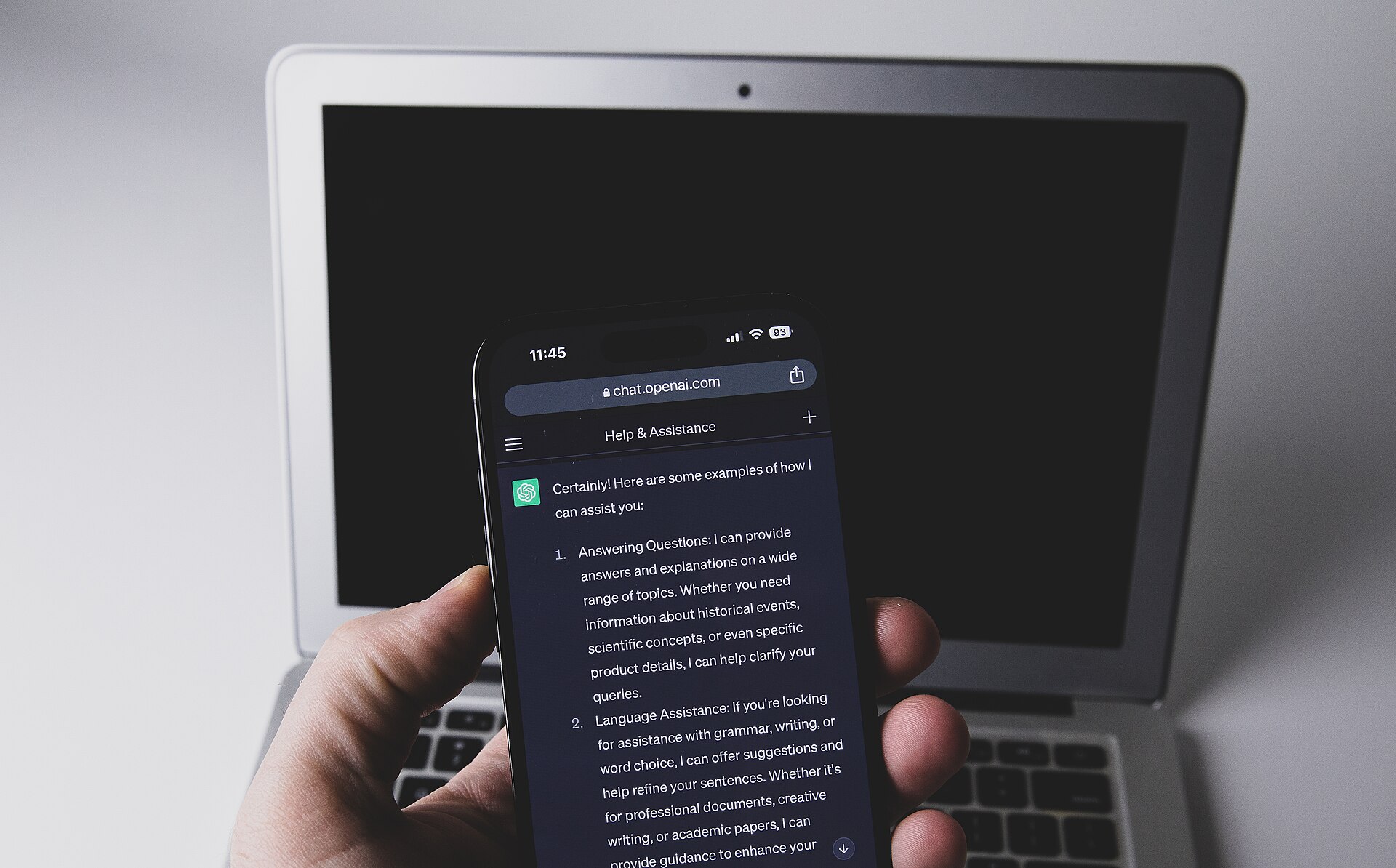
AI chatbot outage error screen on a smartphone

Frequently Asked Questions

What caused the AI chatbot outage on September 3, 2026?
No company has issued a confirmed root-cause statement. Multiple outlets, including Axios, reported that a concurrent Microsoft Azure disruption may have contributed. OpenAI, Anthropic and xAI have not confirmed this independently.

How long did ChatGPT, Claude and Grok stay down?
Reports place the start of the disruption around 7:43 a.m. Pacific time. All three services returned to normal by roughly 12:38 p.m. Pacific — just under five hours.

Were all ChatGPT features affected?
Yes. OpenAI confirmed that logins, uploads, voice mode, search, Deep Research, image generation and its Codex coding tool were all disrupted, not just the main chat interface.

Did the outage affect tools built on top of these chatbots?
Yes. Developer tools including the coding agent Cursor reported downtime because they depend on the same upstream AI infrastructure.

Is this connected to the Microsoft cloud outage from September 2?
The two incidents happened a day apart and both involve cloud infrastructure. Tamara News has not seen a confirmed technical link between them.

Featured image: “BalticServers data center.jpg” by BalticServers.com (CC BY-SA 3.0), via Wikimedia Commons. In-content image: “Smartphone with ChatGPT app (52917381673).jpg” by Jernej Furman from Slovenia (CC BY 2.0), via Wikimedia Commons.

Related Guides