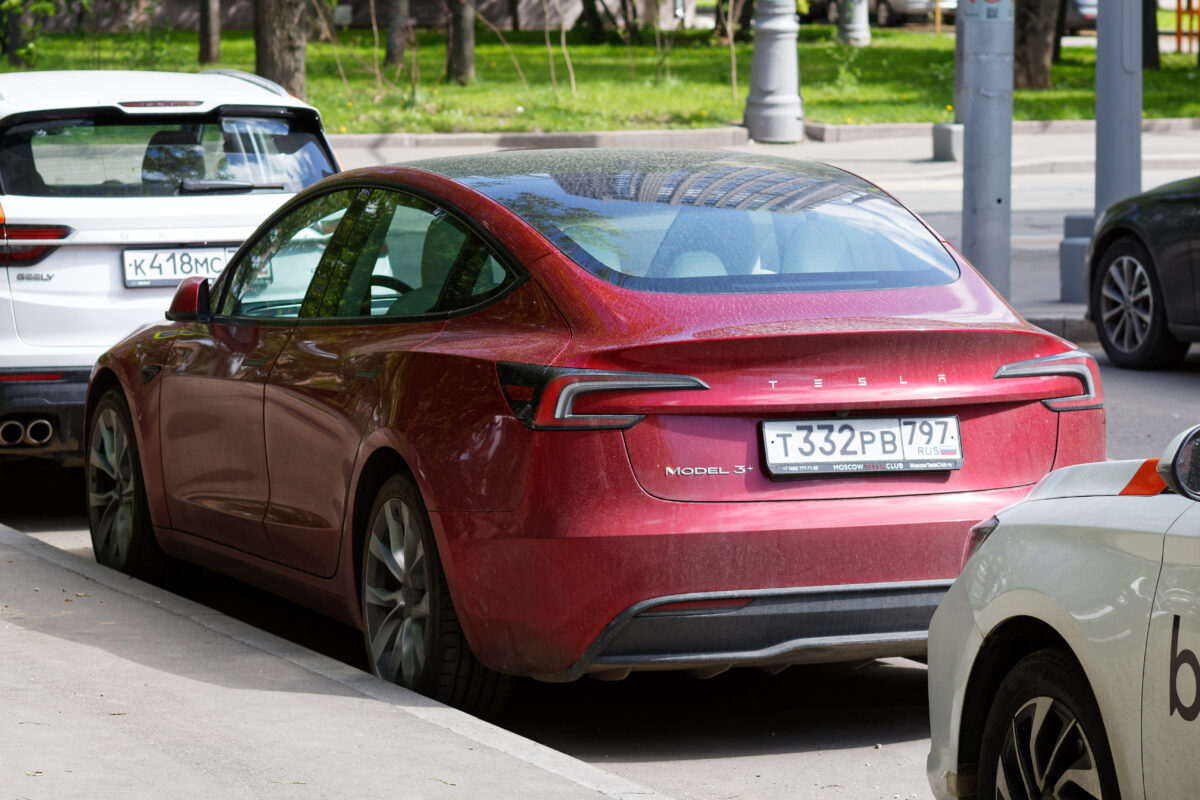
Tesla Just Beat Every Analyst’s Guess by 24,500 Cars. Here’s the Catch

Tesla Q3 2026 deliveries came in at 486,532 vehicles, beating the company-compiled analyst consensus of 461,974 by roughly 5.3 percent, Tesla said this week. Production for the quarter totaled 464,391 vehicles, and the company deployed 13.7 gigawatt-hours of energy storage products alongside its vehicle business. Model 3 and Model Y accounted for the overwhelming majority of deliveries, at 478,237 units, with Tesla’s other models — including the Cybertruck and Model S/X — making up the remaining 8,295.

The beat is real, but so is the context that makes it less dramatic than the headline number suggests: Q3 2026 deliveries were still about 2.1 percent below Tesla’s all-time record quarter, Q3 2025, when American buyers rushed to take delivery before the $7,500 federal EV tax credit expired on September 30, 2025.

What the Tesla Q3 2026 deliveries numbers actually show

Sequentially, Tesla grew modestly — up about 1.3 percent from Q2 2026’s 480,126 vehicles — which suggests steady, if unspectacular, demand through the back half of the year rather than a sharp rebound. The company’s own commentary pointed to an order backlog carried over from the prior quarter as a factor in the beat, rather than any single new catalyst like a price cut or a major product launch.

Energy storage deployments, by contrast, missed expectations: Tesla’s 13.7 GWh fell short of the 15.9 GWh analysts had projected, a reminder that the company’s energy division — while a growing share of the business — remains more volatile quarter to quarter than the core vehicle line.

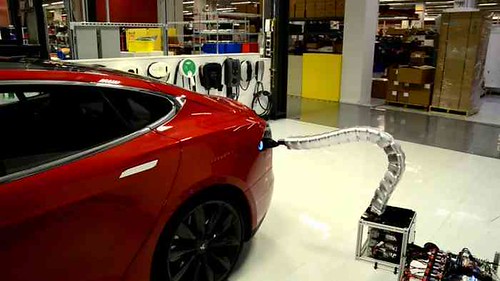
Tesla Q3 2026 deliveries: electric vehicle charging plug

Why this quarter looks different from last year’s record

The comparison to Q3 2025 is unavoidable and somewhat unfair to the current numbers. Last year’s quarter was inflated by a one-time rush: American buyers pulling forward purchases to beat the expiration of the $7,500 federal tax credit, which pushed deliveries to an all-time high of 497,099 vehicles. Measured against a normal quarter rather than that artificially boosted one, Q3 2026’s result looks like solid, incremental growth rather than a story about a post-incentive hangover.

What analysts will be watching next

Delivery numbers are only half the picture. Tesla will report its full Q3 2026 financial results on October 21, 2026, followed by a management question-and-answer webcast, and that release will show whether the delivery beat translated into margin improvement or whether it came at the cost of pricing and incentives. Investors have spent much of 2026 focused on how Tesla’s automotive margins hold up against increasing competition from both legacy automakers and Chinese EV makers expanding outside their home market.

What comes next for Tesla’s numbers

The October 21 earnings call will be the next real test, where Tesla management typically gives forward guidance on production capacity, new model timelines, and the energy storage business that missed this quarter’s target. Until then, the delivery beat gives Tesla a modestly positive headline heading into a quarter where broader market attention has increasingly shifted toward AI infrastructure spending rather than EV demand specifically.

That shift in investor focus matters for how Tesla’s own stock story gets told. Much of the bull case for Tesla over the past two years has leaned less on quarterly vehicle deliveries and more on the company’s robotaxi ambitions, its Optimus humanoid robot program, and its AI chip development — all of which investors will be listening for updates on during the October 21 call, likely more closely than they’ll parse the delivery mix between Model 3 and Model Y. A strong delivery number gives management a steady backdrop to make that pitch, but it is not, on its own, the metric moving the stock the way it once did.

Competition is also intensifying in exactly the markets Tesla most needs to defend. Chinese EV makers including BYD have continued expanding into Europe and parts of Asia with vehicles priced well below Tesla’s lineup, and legacy automakers in the US and Europe have narrowed the technology gap on range and charging that once set Tesla apart. None of that shows up directly in a single quarter’s delivery figure, but it shapes the pricing environment Tesla will likely need to navigate to keep growing deliveries at a similar pace in 2027.

Reader questions on this quarter’s numbers

How many vehicles did Tesla deliver in Q3 2026?
Tesla delivered 486,532 vehicles in Q3 2026, beating the analyst consensus estimate of 461,974.

Did Tesla beat its own delivery record?
No. Q3 2026 deliveries were about 2.1 percent below Tesla’s all-time record of 497,099 vehicles set in Q3 2025, when buyers rushed to beat the expiring federal EV tax credit.

What drove the Q3 2026 beat?
Tesla pointed to an order backlog carried over from Q2 2026 rather than any single new catalyst such as a price cut.

How did energy storage perform?
Tesla deployed 13.7 GWh of energy storage products, missing the 15.9 GWh analysts had expected.

When will Tesla report full Q3 2026 financial results?
Tesla is scheduled to report full financial results on October 21, 2026, with a management webcast to follow.

Further reading

For more on the broader EV market, see our report on the 2026 EV sales rebound across Tesla and Rivian, and our earlier coverage of Nvidia’s market value surge on AI chip demand. For the US rate backdrop shaping auto financing, see our piece on mortgage rates hitting a three-year high.

Sources

South Korea Exports Hit Record $120.9 Billion on AI Chips

South Korea’s record exports in September 2026 reached $120.9 billion, up 83.5 percent from a year earlier, driven by an AI-fuelled surge in chip shipments, Al Jazeera reports. The previous monthly record was $102.25 billion, set in June.

Key points

Chips drive the jump

Chip shipments hit $60.3 billion in September, an increase of more than 260 percent, and made up nearly half of all exports. Al Jazeera notes that SK Hynix and Samsung Electronics control about 80 percent of the global high-bandwidth memory market and 60 percent of DRAM.

The year so far

Exports for January to September totalled $814.5 billion, against $709.7 billion for all of 2025. The trade surplus for the period was $49.85 billion. Nominal GDP grew 26.4 percent year on year in April to June, and the forecast for 2026 real growth is 3 percent, the strongest since 2017 outside the pandemic years, per the same report. The Kospi has risen nearly 60 percent this year.

Risks the government names

Trade Minister Kim Jeong-kwan called the result “a valuable achievement” but said global protectionism and Middle East tensions remain major variables. For the demand side, see our report on the Nvidia market value surge.

Reading the numbers

The figures come from government-reported trade data via Al Jazeera, and are concentrated in one sector. More market context is in our pieces on European stocks and bond yields and the US jobs report; broader coverage is in the Al Jazeera economy section.

South Korea exports: quick answers

How big were South Korea’s September exports?

$120.9 billion, up 83.5 percent year on year, per Al Jazeera.

What drove the record?

Chip shipments of $60.3 billion, nearly half of all exports.

What was the previous record?

$102.25 billion in June 2026.

What risks did the trade minister cite?

Global protectionism and tensions in the Middle East.

Company setup abroad? See the company formation guide.

US Mortgage Rates Just Hit a Level Not Seen in Three Years

Anyone shopping for a home loan right now is facing the toughest borrowing conditions in years. The mortgage rates three-year high milestone arrived last Thursday, when the 30-year fixed rate hit 7.28%. That is up a full quarter point from the previous week alone. It is nearly a full percentage point higher than this time last year. Mortgage applications have responded exactly as you would expect. They fell 6% in a single week.

How we got to mortgage rates three-year high

Mortgage rates do not move in isolation. They track the 10-year Treasury yield closely. That yield has climbed more than 1.25 percentage points since February, when the Iran war broke out. War-driven uncertainty tends to push investors toward different assets and changes how markets price long-term risk. That shift has flowed straight through to what homebuyers pay.

The data comes from the Mortgage Bankers Association, which tracks application volume every week. For the period ending September 25, applications dropped 6% from the week before. That is not a one-off blip. It continues a pattern of softening demand that has built for weeks as rates climbed.

Borrowers are adapting, not disappearing

One clear shift shows up in loan type. Adjustable-rate mortgages made up 10.3% of applications, the highest share since October 2025. When fixed rates get too expensive, some borrowers switch to adjustable products instead. They are betting rates will fall before their initial fixed period ends. That bet carries real risk if rates stay elevated longer than expected.

Houses for sale as mortgage rates three-year high squeezes buyers

MBA chief executive Bob Broeksmit summed up the mood bluntly. “Affordability and borrower demand have weakened in recent weeks,” he said. “Higher rates continue pressuring homebuyers and refinancers.” Builders are feeling it too. KB Home has already adjusted pricing in response to softer demand and tighter affordability. That is a sign the pressure now reaches beyond individual buyers, into the construction industry itself.

Who feels the squeeze hardest

Higher rates hit first-time buyers especially hard. They typically have less equity to work with and tighter budgets overall. Every quarter-point increase adds meaningfully to a monthly payment on a typical home loan. That prices some buyers out of homes they could have afforded just months earlier. Refinancers face a different problem. Many locked in lower rates years ago. They have little incentive to refinance now, since that would mean trading a cheaper loan for a more expensive one.

Homebuilders sit somewhere in between. They need buyers to keep purchasing in order to keep building. That explains why a company like KB Home is cutting prices rather than waiting out the slowdown. That kind of price adjustment can ripple through local housing markets. It can affect resale values even for homeowners who are not currently buying or selling.

How this compares with the pandemic-era market

Borrowers who bought or refinanced during 2020 and 2021 locked in rates below 3%. Today’s 7.28% rate looks jarring by comparison, even though it remains below the peaks seen briefly in 2023. That history matters for refinancers in particular, since it explains why so many are choosing to sit tight rather than trade a historically cheap loan for a historically expensive one.

For first-time buyers with no existing mortgage to compare against, the calculation is different. They are weighing today’s rate against rents and against the risk that prices or rates climb even higher if they wait. That uncertainty is part of why application volume keeps falling even as some buyers remain eager to purchase.

What borrowers should watch for

Capital Economics, a research firm that tracks housing and rate trends, expects some relief eventually. The firm projects 30-year rates will average 6.25% by the end of 2027. That forecast assumes energy prices decline and the Federal Reserve eases its current tightening stance. Neither of those shifts looks imminent as of early October 2026. Until then, expect application volume to stay soft. Builders and sellers will likely keep adjusting prices to match what buyers can actually afford at today’s rates.

Questions people are asking

What is the current 30-year mortgage rate?
The 30-year fixed mortgage rate reached 7.28% as of the last Thursday in September 2026. That is its highest level in nearly three years.

Why are mortgage rates three-year high right now?
Rates track the 10-year Treasury yield. It has climbed more than 1.25 percentage points since the Iran war began in February 2026, pushing borrowing costs higher across the board.

How much have mortgage applications fallen?
Applications fell 6% for the week ending September 25, 2026, according to the Mortgage Bankers Association. That continues a pattern of weakening demand.

Are more borrowers choosing adjustable-rate mortgages?
Yes. Adjustable-rate mortgages made up 10.3% of applications, the highest share since October 2025. Some borrowers are chasing a cheaper initial rate.

Are homebuilders responding to the higher rates?
Yes. KB Home has already adjusted pricing due to softer demand and affordability pressure. Other builders are expected to follow similar strategies.

When might mortgage rates come back down?
Capital Economics projects 30-year rates could average 6.25% by the end of 2027. That assumes energy prices ease and the Federal Reserve moderates its current policy stance.

Cited reporting

  • Axios — Mortgage rates approach 3-year high as new applications plunge. axios.com
  • Mortgage Bankers Association — weekly mortgage applications survey. mba.org

For more business coverage, see our reporting on the September jobs report and the Fed’s rate decision. We also covered where Treasury yields ended September.

Why Tesla and Rivian Just Had Their Best Quarter in Years

Electric vehicles may be turning a corner, at least for now. The EV sales rebound 2026 shows up clearly in Tesla and Rivian’s latest delivery numbers. Tesla delivered 486,532 vehicles in the third quarter. That beat Wall Street’s expectation of roughly 462,000. Rivian delivered 19,248 vehicles, up sharply from 12,194 in the prior quarter and ahead of the 18,000 analysts expected. Both companies’ stocks rose on the news. The driver behind the rebound is an unlikely one: expensive gasoline.

What’s behind the EV sales rebound 2026

Gas prices have climbed well above $4 per gallon across much of the United States. The spike traces back to the Iran conflict that broke out in spring 2026. It disrupted oil markets and pushed fuel costs higher. Higher gas prices tend to push some drivers toward electric vehicles. This quarter’s numbers suggest that pattern is playing out again. “EVs had been down in the dumps for an extended period,” one analyst noted. “But with gas now far above $4 per gallon, some consumers appear to be giving them a second look.”

Tesla’s total still fell 2.1% compared with the same quarter last year. The sequential gain, up 1.3% from the second quarter, is the more telling number right now. It suggests demand is stabilizing after a rough stretch, not that Tesla has returned to its earlier growth rates.

Rivian’s bigger jump

Rivian’s growth was more dramatic in percentage terms. Deliveries jumped more than 50% from the second quarter to the third. The company’s newer R2 model has drawn strong early interest. That interest appears to be feeding through into real delivery numbers, not just preorder buzz. Rivian still delivers a fraction of Tesla’s volume. But the trajectory matters to investors watching whether the company can scale production without the stumbles that have hit other EV startups.

A charging EV reflecting the EV sales rebound 2026 trend

Not every part of the EV market is rebounding

The picture is not uniformly rosy. Electric vehicles made up 7.9% of US light-duty vehicle sales in the second quarter of 2026. That is up from 6.3% in the first quarter. That is real growth, but industry-wide EV sales were still down year-over-year in that same second-quarter period. General Motors has pared back its EV manufacturing plans. Sales of individual GM EV models declined again in the third quarter.

Hybrids, not pure electric vehicles, are having the stronger moment. Toyota’s “electrified” vehicle sales, which include hybrids and plug-in hybrids, surged 29.2% year-over-year. The RAV4 Hybrid saw sales jump 123%. The RAV4 Plug-In Hybrid did even better, up 184%. That split suggests many drivers reacting to high gas prices are choosing a middle option. They want better fuel economy without fully committing to an EV and its charging routine.

How this quarter compares with last year

A year ago, EV sentiment looked very different. Fuel prices sat closer to historic norms, and automakers were cutting prices to move slow-selling electric inventory off dealer lots. This quarter flips that story, at least for Tesla and Rivian specifically. The sequential gains at both companies suggest buyers who had paused on an EV purchase are now moving forward, even if sticker prices and interest rates have not changed much.

Analysts caution against reading too much into a single quarter. Fuel-price spikes have driven short bursts of EV interest before, only to fade once prices at the pump came back down. What will matter more is whether Tesla and Rivian can sustain these volumes once, or if, gas prices ease later this year.

What to watch next

Whether this rebound holds depends heavily on gas prices. Those prices are tied to how long the disruption from the Iran conflict lasts. If fuel costs ease, some of the renewed EV interest could fade with them. Tesla’s full third-quarter financial results are due after markets close on October 21, 2026. That report will include profit margins and guidance for the rest of the year. Rivian is expected to report its own detailed results in the weeks that follow. Watch both calls closely. They should show whether this quarter was a genuine turning point, or just a short-lived bump tied to a temporary spike at the pump.

Quick questions answered

How many vehicles did Tesla deliver in the third quarter of 2026?
Tesla delivered 486,532 vehicles, beating analyst expectations of around 462,000. The total was still down 2.1% from the same quarter a year earlier.

How many vehicles did Rivian deliver?
Rivian delivered 19,248 vehicles, up from 12,194 in the second quarter and above the roughly 18,000 analysts had forecast.

Why is the EV sales rebound 2026 happening now?
Gas prices have climbed above $4 per gallon following the Iran conflict in spring 2026. That has pushed some drivers to reconsider electric vehicles.

Does this mean the overall EV market is growing?
Not uniformly. EVs made up 7.9% of US light-duty sales in the second quarter, up from 6.3%. But industry-wide EV sales were still down year-over-year in that period, and GM has scaled back its EV plans.

Are hybrids doing better than pure EVs?
Yes. Toyota’s electrified vehicle sales rose 29.2% year-over-year, with the RAV4 Hybrid up 123% and the RAV4 Plug-In Hybrid up 184%.

When will Tesla report full third-quarter results?
Tesla’s full financial results are scheduled for after market close on October 21, 2026. A webcast follows the same day.

Where this is from

  • Axios — EV sales rebound as Tesla and Rivian top expectations. axios.com
  • U.S. Securities and Exchange Commission — Tesla Q3 2026 production and delivery filing. sec.gov

For more business coverage, see our reporting on Nvidia’s market value surge on AI chip demand. We also covered the September jobs report and the Fed’s rate decision.

Novartis Bets $7.8 Billion on a Chinese Biotech Nobody’s Heard Of

Novartis has struck a deal worth up to $7.8 billion with a Chinese biotech most people have never heard of. The Novartis China drug deal was announced Friday, October 2, 2026. It pairs the Swiss pharmaceutical giant with Abogen Biosciences, a China-based company. Abogen is backed by over $1 billion from investors including SoftBank and Lilly Asia Ventures. The agreement covers an experimental treatment for autoimmune disease. It is also the latest sign that China’s drug industry is no longer just a manufacturing hub.

Inside the Novartis China drug deal

The terms break down into two parts. Novartis will pay $575 million upfront. It could pay up to $7.2 billion more if the drug clears a series of development milestones. That second figure is not guaranteed money. It depends on results from clinical trials that have not finished yet.

The asset at the center of the deal is an mRNA-encoded T-cell engager. In plain terms, it is designed to direct the immune system’s T-cells toward specific targets in the body. Novartis plans to develop it as a treatment for autoimmune disease. That category includes conditions like lupus and rheumatoid arthritis. The technology builds on mRNA methods. Those methods became widely known through COVID-19 vaccines, but this applies them to a very different medical problem.

Why a Chinese biotech, and why now

Abogen Biosciences is not a household name, but it is well funded. The company has raised more than $1 billion. Its backers include SoftBank, 5Y Capital, Mirae Asset Management, Lilly Asia Ventures and Hillhouse. That roster signals serious institutional confidence in Chinese biotech, not just local government support.

Laboratory research tied to the Novartis China drug deal with Abogen

China has spent the past several years shifting away from its old role. For decades, it mainly made generic drugs and raw pharmaceutical ingredients. The government has pushed hard for home-grown drug discovery instead. Axios first reported the deal’s terms. It put the shift simply: “China has gotten really good at making new drugs.” Novartis is not the only Western company to notice. A string of similar licensing deals between Western pharma giants and Chinese biotechs has landed in 2025 and 2026. Industry watchers now describe it as a pattern, not a one-off.

What this means for the drug industry

For patients, deals like this one are mostly good news. They mean more experimental treatments moving toward clinical trials, funded by companies with the resources to run those trials properly. Novartis gets a promising early-stage asset without having to discover it from scratch. Abogen gets capital in return. It also gets Novartis’s global development and regulatory expertise, which matters enormously when seeking approval in multiple countries at once.

There is a bigger picture here too. As Chinese biotechs produce more of the world’s promising new drug candidates, Western governments are starting to ask harder questions. Some of those questions are economic, about where pharmaceutical innovation and manufacturing capacity will sit in the future. Others touch on national security, given growing scrutiny of technology transfers between the US, Europe and China in general. None of that has stopped this deal, or the ones like it. But it is shaping the environment these agreements get signed in.

How the Novartis China drug deal compares

This is not Novartis’s first move into Chinese biotech, and it will not be the last. The company has described its dealmaking approach as “geography-agnostic,” meaning it will license a promising drug candidate regardless of where the company behind it is based. Rivals have taken a similar view. Pfizer signed its own multi-billion-dollar China deal earlier in 2026. So did several other large pharmaceutical companies looking for new pipeline assets without the years of early-stage research that in-house discovery requires.

The scale of the upfront payment also tells its own story. A $575 million upfront commitment is substantial for a single early-stage asset. It signals that Novartis sees real promise in Abogen’s T-cell engager platform, not just a speculative bet on a trendy technology category.

What the deal sets in motion

The mRNA-encoded T-cell engager now moves toward early clinical development under Novartis’s direction. Investors will be watching whether the drug clears the milestones that trigger Abogen’s larger payments. Expect more deals of this shape in the months ahead. Pharma analysts already track a growing list of Western companies licensing assets from Chinese biotechs rather than developing everything in-house. Nothing about this deal suggests that trend is slowing down.

Questions and answers

What is the Novartis China drug deal worth?
Up to $7.8 billion in total. That includes $575 million paid upfront. Up to $7.2 billion more is tied to development milestones that have not yet been reached.

Who is Abogen Biosciences?
A China-based biotech company. It has raised more than $1 billion from investors including SoftBank, 5Y Capital, Mirae Asset Management, Lilly Asia Ventures and Hillhouse.

What does the drug actually do?
It is an mRNA-encoded T-cell engager candidate. Novartis intends to develop it as a treatment for autoimmune disease.

Is this part of a wider trend?
Yes. Yes. A growing number of Western pharmaceutical companies have signed licensing deals with Chinese biotechs over the past two years, as China’s drug-discovery sector has matured.

Does this deal guarantee Novartis pays the full $7.8 billion?
No. Most of that figure is contingent on the drug successfully clearing specific development milestones in the years ahead.

Why does this matter beyond the pharmaceutical industry?
It reflects a broader shift in where new drugs get discovered. That shift carries implications for global supply chains, and for how Western governments think about technology ties with China.

References

  • Axios — Novartis signs $7.8 billion drug deal with Chinese startup. axios.com
  • BioSpace — Novartis stays “geography-agnostic” in dealmaking amid flurry of China deals. biospace.com

For more business coverage, see our reporting on Nvidia’s market value surge on AI chip demand. We also covered European stocks and bond yields this year.