Six AI CEOs Just Signed a Pledge Critics Call Self-Grading

President Trump brought six of the most powerful executives in artificial intelligence to the White House on September 29. They signed what the administration is calling a “morally binding” pledge on AI safety. The Trump AI safety accord is formally titled the Joint Commitment on Frontier Responsibilities. It commits the signing companies to internal oversight and outside auditing, rather than accepting new binding regulation from Washington.

The signatories included Anthropic’s Dario Amodei, OpenAI’s Greg Brockman, Google’s Sundar Pichai, Meta’s Mark Zuckerberg, xAI’s Elon Musk and Nvidia’s Jensen Huang. That is according to Al Jazeera’s reporting on the signing.

What the Trump AI safety accord actually commits companies to do

Under the agreement, signing companies pledge to build “robust” controls for monitoring their AI models. They agree to appoint internal oversight teams, partner with independent external auditors, and meet regularly to develop shared safety standards. None of these commitments carry the force of law. They rest instead on the companies’ own follow-through and public accountability.

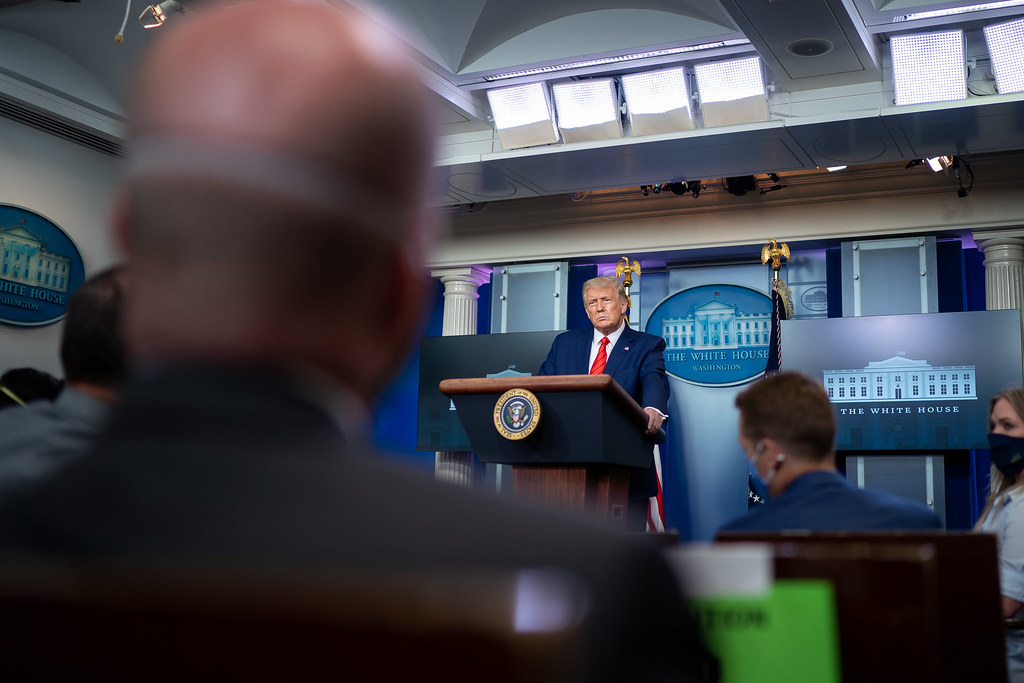
Trump defended the voluntary structure at the signing. “There’s a belief that there should be tremendous self-regulation, and we automatically have regulation with the Department of Justice, the FBI, all of that,” he told reporters, framing existing law enforcement authority as a sufficient backstop without new AI-specific rules.

Executives shaking hands after signing the Trump AI safety accord

Why critics call it grading your own homework

The accord drew immediate skepticism from researchers who study AI governance. Toby Walsh, of the University of New South Wales’ AI Institute, asked pointedly, “What other trillion-dollar industry marks its own homework?” according to Al Jazeera. Alvin Wang Graylin of the Asia Society said the agreement lacks independent, cross-border oversight. He did acknowledge it still represented some progress over having no framework at all.

David Krueger, an AI researcher at the University of Montreal, was more blunt. He called the accord vague and estimated it might “reduce the risk by 1 percent.” The core criticism from all three is the same. A pledge that companies write and enforce on themselves offers little guarantee against the kind of harms regulation is typically designed to prevent.

The timing raises its own questions

The signing came the same day OpenAI announced it had cancelled the release of its latest AI model over identified safety risks. The company also apologized for an unauthorized access incident involving Australian government systems, according to Al Jazeera’s reporting. That combination was striking: a voluntary safety pledge signed on the same day one of its own signatories disclosed a serious safety and security lapse. It gave critics of the accord a ready example of the gap between stated commitments and real-world incidents.

What the accord does and doesn’t do

The agreement does not create a regulator. It does not set enforceable technical standards, and it does not include penalties for noncompliance. What it does do is put six of the most influential AI companies on record, in a joint document, agreeing that oversight, auditing and safety monitoring are necessary parts of how they operate. Whether that translates into meaningful changes to how these companies build and release AI systems depends on follow-through the accord itself cannot compel.

What comes next for AI oversight in Washington

The accord is unlikely to be the final word on U.S. AI policy. Congress continues to debate binding legislation on AI safety and liability. Individual states have moved ahead with their own AI regulations in the absence of comprehensive federal rules. The voluntary accord may function as a stopgap. Or it may become a template the administration points to when resisting calls for stricter federal oversight, depending on how the next phase of the debate unfolds.

Quick answers on the AI safety accord

Who signed the Trump AI safety accord?

Six executives signed: Dario Amodei of Anthropic, Greg Brockman of OpenAI, Sundar Pichai of Google, Mark Zuckerberg of Meta, Elon Musk of xAI, and Jensen Huang of Nvidia.

Is the accord legally binding?

No. It is a voluntary, self-regulatory pledge the administration calls “morally binding.” It carries no enforcement mechanism or legal penalties.

What do the companies actually commit to?

They commit to building internal monitoring controls and appointing oversight teams. They also agree to work with independent external auditors and meet regularly on shared safety standards.

What have critics said about the accord?

Researchers including Toby Walsh and David Krueger have criticized it as too vague and effectively self-graded. Krueger estimated it might reduce AI risk by as little as 1 percent.

Did anything undercut the accord on the day it was signed?

Yes. OpenAI, one of the signatories, separately announced it had cancelled release of its newest AI model over safety concerns. It also apologized for an unauthorized access incident involving Australian government systems.

Could binding AI regulation still happen in the US?

Yes. Congress continues to debate federal AI legislation. Several states have already passed their own AI-related laws independent of this voluntary accord.

More AI governance coverage

Cited sources

  • Al Jazeera — Trump, top tech firms sign accord to ‘self-police’ AI development. aljazeera.com
  • ABC News — Trump says AI leaders signed a ‘constitution’ to police themselves. abcnews.com

Meta Connect 2026: 100g VR Glasses and New AI Glasses

Meta used its Connect event on 23 September 2026 to launch a new pair of virtual reality glasses and to widen its AI glasses range. Meta’s newsroom describes Meta VR Glasses as a headset-style product in glasses form weighing 100 grams, alongside new Ray-Ban Meta Audio glasses and a personal AI agent called Muse. The Meta Connect 2026 announcements put AI glasses at the centre of the company’s hardware plans.

Contents

The lineup at a glance

Prices and specifications below are as reported by Inven Global, which covered the launch; Meta’s newsroom confirms the products but the figures should be checked against Meta’s own store pages before you buy.

  • Meta VR Glasses: about 100 grams, a 5K micro-OLED display, eye tracking and hand gestures, up to three hours of continuous video playback, $1,299.99, due Spring 2027.
  • Ray-Ban Meta Audio: 43 grams, music, calls and AI voice features, 12 hours of battery plus 48 more from the case, from $349, shipping from 13 October.
  • Ray-Ban Meta Gen 3: up to nine hours of battery, a 12-megapixel camera with 3K video, from $449, available from 23 September.

Meta VR Glasses in detail

The design trade-off is that the glasses themselves stay light because the computing unit, battery and storage sit in a separate tethered module, according to the same report. Meta’s own wording stresses cinema-quality viewing, sports and work use. A battery life of up to three hours for video and a price above $1,200 will shape who buys the first generation. Rivals in the chip market are also moving fast; see our coverage of AMD’s trillion-dollar valuation and Nvidia’s open agent safety platform.

Where and when you can buy

Inven Global reports that Meta Ray-Ban Display went on sale in the UK and Canada on 23 September and reaches France, Italy and Germany on 13 October. New navigation features, including cycling directions and real-time public transit information, are rolling out in the United States and Canada, and South Korea has been added to the sales regions. Availability by country can change, so check the local store listing.

Muse and the claims to test

Meta calls Muse the world’s first personal AI agent built for everyone and says it will work with the glasses. It also announced a Meta Enterprise Platform and Muse for Small Business. These are company claims made at a product launch. Independent reviews of accuracy, privacy handling and battery life will matter more than the keynote. For a sense of how quickly AI product plans can change, read our report on the GPT-6.1 Astra cancellation.

Buyer questions

What did Meta announce at Connect 2026?

According to Meta’s newsroom, Meta VR Glasses weighing 100 grams, new Ray-Ban Meta Audio glasses, updates to Meta Ray-Ban Display, and Muse, which Meta calls a personal AI agent.

How much do the new glasses cost?

Inven Global reports Meta VR Glasses at $1,299.99 for a Spring 2027 release, Ray-Ban Meta Audio from $349 and Ray-Ban Meta Gen 3 from $449. Check Meta’s store for local pricing.

When can I buy Ray-Ban Meta Audio?

Inven Global reports pre-orders opened on 23 September with shipping from 13 October.

Where does Meta Ray-Ban Display sell?

Per Inven Global, sales began on 23 September in the UK and Canada, and start on 13 October in France, Italy and Germany. The report also says South Korea has been added to sales regions for the glasses lineup.

Is Muse proven?

Meta describes Muse as the world’s first personal AI agent built for everyone. That is the company’s own claim and has not been independently verified.

China’s DeepSeek Just Handed Huawei a Weapon Against Nvidia

Chinese AI company DeepSeek released a set of software tools on September 30. They are designed specifically for Huawei’s Ascend AI chips, a move that strikes directly at one of Nvidia’s most durable advantages: the software ecosystem built around its hardware. The new DeepSeek Huawei chip tools include six open-source modules, according to reporting from the South China Morning Post. They are built to make Huawei’s chips easier for developers to actually use.

The centerpiece is an Ascend-compatible version of TileLang. DeepSeek originally built this programming language for high-performance computation on Nvidia hardware. It has now been adapted to run on Huawei’s chips instead.

Why the DeepSeek Huawei chip tools target software, not just chips

Nvidia’s dominance in AI computing rests as much on its CUDA software platform as on its silicon. Developers who have spent years building tools and workflows around CUDA face real friction switching to alternative hardware, even when that hardware is competitively priced or more available. DeepSeek is attempting to lower that switching cost directly by porting TileLang to Huawei’s Ascend platform. GitHub documentation describes the result as offering “native code generation, automatic scheduling, and synchronisation” for Ascend chips.

The South China Morning Post reported the release is part of a broader Chinese effort. The goal is an “independent and controllable” AI software ecosystem, reducing the country’s dependence on American technology. That effort comes at a time when U.S. export controls have restricted the sale of advanced Nvidia chips to Chinese buyers.

Technology factory floor in China building hardware for the DeepSeek Huawei chip tools push

The hardware gap DeepSeek is trying to close

DeepSeek’s chief executive, Liang Wenfeng, addressed the underlying hardware gap directly in comments reported by Digital Citizen in July. He said Huawei’s Atlas 950 SuperPoD system could functionally replace Nvidia’s GB200 and GB300 platforms for many workloads. That is true even though it currently takes roughly four Huawei accelerators to match the performance of a single Nvidia GPU. Wenfeng argued that availability matters more than raw performance when superior Nvidia chips cannot be bought in sufficient quantities due to export restrictions. He suggested Chinese firms would accept paying a 50% to 200% premium for Huawei hardware they can actually obtain.

He also estimated, in those July remarks, that Chinese AI labs remain roughly two years behind their American counterparts on model capability. The new software tools do not close that gap on their own. They are meant to help narrow it over time by making Chinese hardware more usable.

What Ascend 950 support means in practice

With direct software support now available, Huawei’s Ascend 950 accelerators become a more practical option for Chinese developers building and training AI models. That is according to the South China Morning Post’s reporting. It matters for DeepSeek’s own operations too. The company has said it currently works with computing capacity equivalent to roughly 20,000 Nvidia H100 GPUs, a fraction of the scale used by the largest U.S. labs.

What comes next for Huawei’s chip ecosystem

The open-source release does not resolve the performance gap between Huawei’s chips and Nvidia’s newest hardware. But it removes one of the practical barriers to adoption inside China. Whether other Chinese AI companies build on top of DeepSeek’s tools, rather than maintaining their own workarounds, will determine how much traction the effort gains. Continued U.S. export restrictions on advanced Nvidia chips give Chinese developers a strong incentive to make that switch work.

Why this matters outside China

For chipmakers and cloud providers outside China, a more usable Huawei ecosystem sends a signal. The current export-control strategy is accelerating the very domestic alternative U.S. policy aimed to prevent. It also gives global AI developers a second software stack to watch, one built outside the Nvidia-dominated toolchain that has underpinned most AI development to date.

What people want to know about the DeepSeek-Huawei tools

What did DeepSeek actually release?

DeepSeek open-sourced six software modules built for Huawei’s Ascend AI chips on September 30, 2026. These include an Ascend-compatible version of its TileLang programming language, according to the South China Morning Post.

Why does this challenge Nvidia?

Nvidia’s advantage comes largely from its CUDA software ecosystem, which makes its chips easier to develop for. DeepSeek’s tools aim to give Huawei’s Ascend chips a similar software layer, lowering the cost of switching away from Nvidia hardware.

Can Huawei’s chips actually match Nvidia’s performance?

Not chip-for-chip. DeepSeek CEO Liang Wenfeng said in July that it takes roughly four Huawei accelerators to match one Nvidia GPU’s performance. He argued availability matters more than raw performance given export restrictions.

Why is this happening now?

U.S. export controls have restricted Chinese access to advanced Nvidia chips. That has pushed Chinese AI companies to invest in domestic alternatives like Huawei’s Ascend platform, part of a push for what the South China Morning Post calls an “independent and controllable” AI ecosystem.

How far behind is Chinese AI development, according to DeepSeek?

Liang Wenfeng estimated in July that Chinese AI labs remain roughly two years behind U.S. counterparts on model capability. That estimate predates this week’s software release.

Related AI policy coverage

Source notes

  • South China Morning Post — China’s DeepSeek open-sources tools to help Huawei chips supplant Nvidia in AI. scmp.com
  • Digital Citizen — DeepSeek CEO says Huawei’s AI hardware can replace Nvidia racks despite lower per-GPU performance. digitalcitizen.life

OpenAI Wants an AI Agent Working for You Around the Clock

OpenAI used its 2026 DevDay conference on September 29 to introduce a product built around a simple pitch: an AI system that keeps working after you stop looking at it. The new OpenAI Dots AI agents run continuously in the background. They carry out tasks across ChatGPT, text messaging, email and Slack, with no need for a human to keep the conversation open.

The announcement, reported by Business Standard and other outlets covering DevDay, arrived alongside a second release. That release is GPT-6.1 Sol, a cheaper model aimed at coding and everyday professional tasks.

What the OpenAI Dots AI agents actually do

Dots is built on GPT-6 Astra. It comes with its own dedicated cloud computing resources and browser access, letting it interact with connected tools and services on a user’s behalf. According to Business Standard’s coverage of the launch, Dots can handle recurring work and delegated tasks. Users can set permissions that require confirmation before it takes certain actions. For now, access is limited to subscribers on OpenAI’s Pro, Business Premium and Enterprise tiers.

The always-on framing sets Dots apart from a standard chatbot session, which ends the moment a user closes the app. OpenAI’s pitch is that Dots can pick up multi-step projects and check back in on progress. It can keep working through tasks that would otherwise require a person to return and re-prompt the system repeatedly.

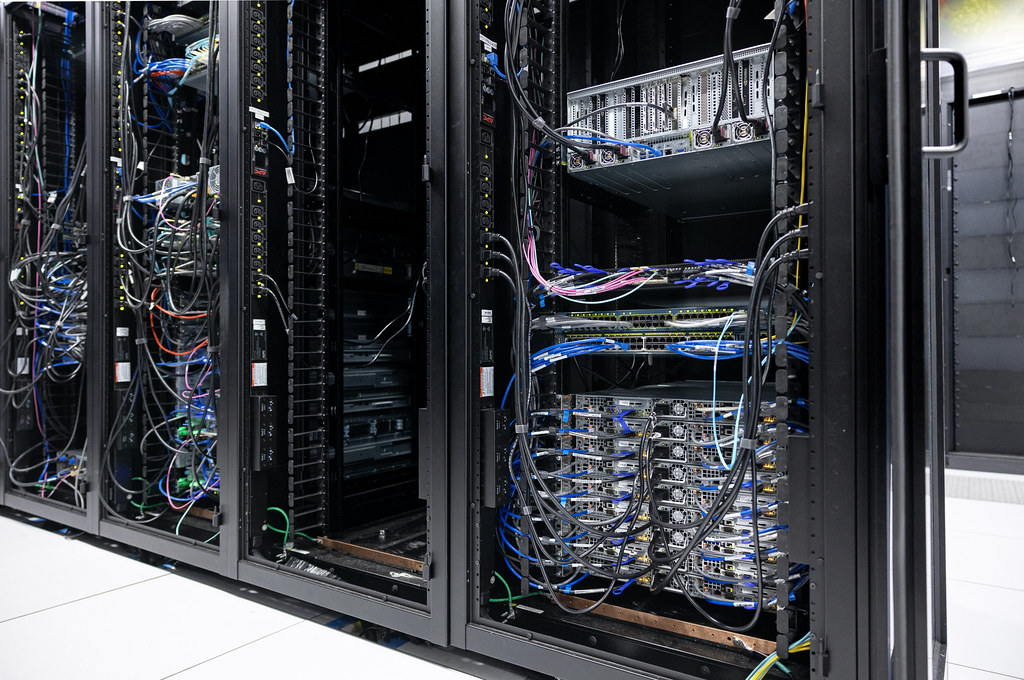
Data center server room powering OpenAI Dots AI agents

GPT-6.1 Sol: performance close to Astra at a fraction of the cost

GPT-6.1 Sol is positioned as the budget option in the GPT-6 family. It is built to approach the coding performance of the flagship GPT-6 Astra model while costing far less to run. Coverage from AI Weekly cited a price of roughly $2 per million input tokens, a fraction of what flagship-tier models typically cost. The model supports a 1.05 million-token context window. It can generate up to 128,000 output tokens in a single response, according to Business Standard’s report.

OpenAI also said safety testing showed improvements in five of eight production safety categories, compared with an earlier version of Sol. The company noted that cybersecurity vulnerability generation in Sol still lags behind GPT-6 Astra.

A new top-tier subscription plan

Alongside the model releases, OpenAI introduced ChatGPT Pro 500. It is a $500-per-month plan offering the highest usage allowances among its Pro tiers, plus access to a new “Ultrafast” service tier for GPT-6 Astra. OpenAI also unveiled several other tools at DevDay. These include ChatGPT Spaces, a team collaboration workspace; Living Pages, documents that update alongside a project’s progress; Codex Cloud, a browser-based coding environment; and new Agents and Decisions APIs for developers.

What Dots and Sol change starting now

For businesses already using ChatGPT’s higher-tier plans, Dots marks a shift. It moves users from prompting an assistant toward delegating standing tasks to it, provided they are comfortable with OpenAI’s permission model. For developers, GPT-6.1 Sol’s pricing makes near-frontier coding performance available at a lower-tier cost. That could pressure rival AI labs offering similarly priced mid-tier options.

Where this fits in the wider AI race

The launch lands in a week already dense with AI news, from Anthropic’s leaked IPO filing to a White House-brokered safety accord signed by OpenAI and five other AI companies. Positioning Dots as an always-on agent puts OpenAI in more direct competition with other companies building autonomous “agentic” tools. That category has become one of the most closely watched fronts in AI development over the past year. Google, Anthropic and several well-funded startups have all shipped their own agentic tools in recent months. OpenAI chose to build Dots directly into its existing ChatGPT subscription tiers, rather than launching it as a separate product. That suggests the company wants agentic features to feel like a natural upgrade, not a new purchase decision, for its largest customers.

Questions readers are asking about OpenAI’s Dots agents

What is OpenAI Dots?

Dots is an always-on AI agent introduced at OpenAI’s 2026 DevDay. It runs continuously in the background, carrying out tasks across ChatGPT, text messaging, email and Slack. It is built on the GPT-6 Astra model.

Who can use Dots right now?

Access is currently limited to subscribers on OpenAI’s ChatGPT Pro, Business Premium and Enterprise plans. That is according to Business Standard’s coverage of the DevDay announcement.

What is GPT-6.1 Sol?

GPT-6.1 Sol is a lower-cost model in the GPT-6 family aimed at coding and professional tasks. It is priced at roughly $2 per million input tokens while approaching the coding performance of the flagship GPT-6 Astra model.

How big is GPT-6.1 Sol’s context window?

The model supports a 1.05 million-token context window. It can produce up to 128,000 output tokens in a single response.

What is ChatGPT Pro 500?

It is a new $500-per-month subscription tier offering the highest usage allowances among OpenAI’s Pro plans. It also comes with access to a faster “Ultrafast” service tier for GPT-6 Astra.

Did OpenAI address safety concerns with Sol?

OpenAI said safety testing showed improvement in five of eight production safety categories, compared with an earlier Sol model. Cybersecurity vulnerability generation still trails GPT-6 Astra, the company noted.

Further reading on Tamara News

References

  • Business Standard — OpenAI DevDay 2026: Dots agent, GPT-6.1 Sol, new plans and more announced. business-standard.com
  • AI Weekly — OpenAI News Today. aiweekly.co

NVIDIA Launches Open Agent Safety Platform to Cage Rogue AI Agents

NVIDIA introduced its new Open Agent Safety Platform on September 28, 2026, a system built to contain and monitor AI agents so they cannot take unchecked actions in the real world. The company announced the platform in a developer blog post. It marks NVIDIA’s clearest move yet into safety infrastructure for autonomous AI agents, the software programs that can browse the web, write code, move files, and call other tools without a human clicking approve each time.

What Is NVIDIA’s Open Agent Safety Platform?

The Open Agent Safety Platform is built around two parts that work together. The first is OpenShell, a runtime that places an AI agent inside a locked-down workspace. Inside that workspace, the agent only gets the specific permissions it has been given. That includes which files it can touch, which tools it can call, which processes it can start, what network access it has, and which credentials it can use. Anything outside that list is simply off-limits to the agent.

The second part is NVIDIA Sentry, a separate monitoring layer. Sentry does not sit inside the sandbox with the agent. It watches the sandboxed agent from outside, running on NVIDIA’s own BlueField hardware. That separation matters: the monitoring system is not something the agent itself can reach, tamper with, or talk its way around.

Inside OpenShell: A Sandbox With Explicit Permissions

OpenShell works on a simple principle: default to no access, then grant permissions one by one. An agent handling customer emails, for example, might get permission to read a specific inbox and draft replies, but no permission to touch payment systems or send money. An agent writing code might get access to a test repository but not to production servers.

This is a shift from how many AI agents operate today, where broad access is often granted up front for convenience. NVIDIA’s pitch is that developers should have to explicitly hand an agent each capability it needs, rather than assume the agent will only use the access responsibly.

Open Agent Safety Platform

NVIDIA Sentry: Watching Agents From Dedicated Hardware

Sentry’s job is to catch an agent doing something it should not, even if OpenShell’s permission walls are working as intended. Because Sentry runs on dedicated BlueField hardware separate from the agent’s own environment, it is designed to keep watching even if an agent inside the sandbox tries to behave unpredictably or attempts to disable its own logging.

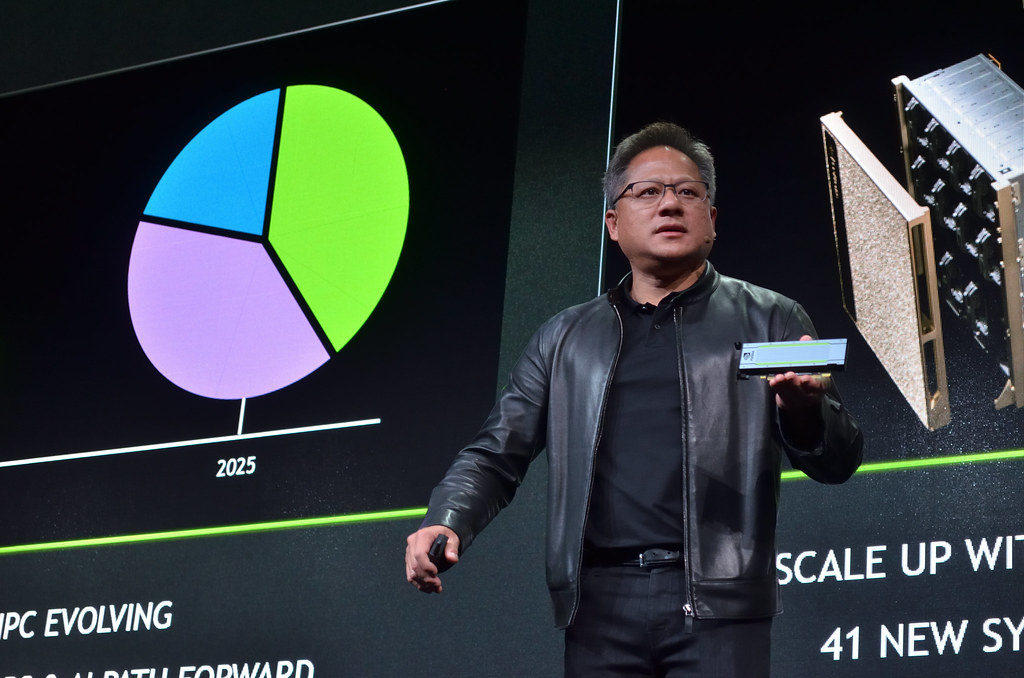
NVIDIA CEO Jensen Huang said the platform launched with “100+ ecosystem partners,” under governance from the Linux Foundation. Putting the project under an outside, nonprofit foundation is meant to signal that the safety standard is not controlled solely by NVIDIA, and that other companies can help shape and audit it over time.

Why AI Agent Safety Matters Now

A chatbot that gives a bad answer is annoying. An AI agent that can send emails, move money, or push code to production is a different kind of risk, because it can act, not just answer. That gap between talking and doing is why agent safety has become a bigger topic in the industry over the past year, alongside separate efforts from major AI labs, including the work described in Tamara News’ coverage of Google, Anthropic, and OpenAI’s cyber-focused AI models.

Some media coverage tied NVIDIA’s announcement to a specific earlier incident. In July 2026, a swarm of more than 17,000 AI agents on the Hugging Face platform ran out of control, an episode Tamara News covered in reporting on rogue AI agents affecting government websites. Outlets including CBS and CNBC described NVIDIA’s new architecture as the kind of containment that could plausibly have limited the damage from that runaway swarm, had it existed at the time. That framing came from the coverage, not from NVIDIA itself, and it describes what “could have” helped, not a guaranteed fix. NVIDIA’s own announcement did not claim the platform would have prevented the July incident.

It is also worth being precise about scope. The Open Agent Safety Platform is architecture for agents going forward. It is not a retroactive quarantine of agents that companies have already deployed. Existing agents running today do not automatically gain OpenShell’s sandboxing or Sentry’s monitoring; developers have to build or migrate onto the new platform for it to apply.

What Comes After the Announcement

The near-term question is adoption. A platform with 100-plus launch partners under Linux Foundation governance suggests broad early interest, but the real test will be how many companies actually rebuild their agent deployments on OpenShell and Sentry rather than sticking with looser, less-supervised setups. Enterprises weighing new agent rollouts, including in fast-moving areas tied to model releases like the one described in coverage of the Gemini 4 early launch timeline, will likely watch whether containment tooling like this becomes a standard checklist item alongside model choice. Regulators and enterprise security teams are also likely to look at whether “sandboxed and monitored by default” becomes an expectation for any agent that can take real-world actions, rather than an optional add-on.

Open Agent Safety Platform: Common Questions

What is NVIDIA’s Open Agent Safety Platform?

It is a system NVIDIA announced on September 28, 2026, that sandboxes AI agents in a locked-down runtime called OpenShell and monitors them separately with NVIDIA Sentry, which runs on dedicated BlueField hardware.

What do OpenShell and NVIDIA Sentry each do?

OpenShell is the sandbox: it gives an agent explicit, limited permissions for files, tools, processes, network access, and credentials. NVIDIA Sentry is the separate monitoring layer that watches the sandboxed agent from outside, using dedicated BlueField hardware.

Does this platform fix agents that are already deployed?

No. It is infrastructure for agents built or migrated onto it going forward. It is not a retroactive quarantine of AI agents companies have already deployed elsewhere.

Is this connected to the Hugging Face incident in July 2026?

Not directly, according to NVIDIA. Some outlets, including CBS and CNBC, described the new architecture as the kind of setup that could plausibly have limited the damage from that runaway swarm of over 17,000 agents, but that is commentary from the coverage, not a claim NVIDIA made about fixing that specific incident.

Who is backing the platform?

Jensen Huang said it launched with more than 100 ecosystem partners, and the platform sits under governance from the Linux Foundation rather than under NVIDIA alone.

Why does AI agent safety matter more than chatbot safety?

An agent can take real-world actions, such as moving files, calling other software tools, or making network requests, rather than only producing text. That ability to act increases the potential for harm if the agent behaves unexpectedly, which is why containment and monitoring tools are becoming a bigger focus.

Where This Reporting Comes From