Never lose a customer to a missed message
An AI agent trained on your own business, replying in seconds, in any language, on every channel your customers already use.
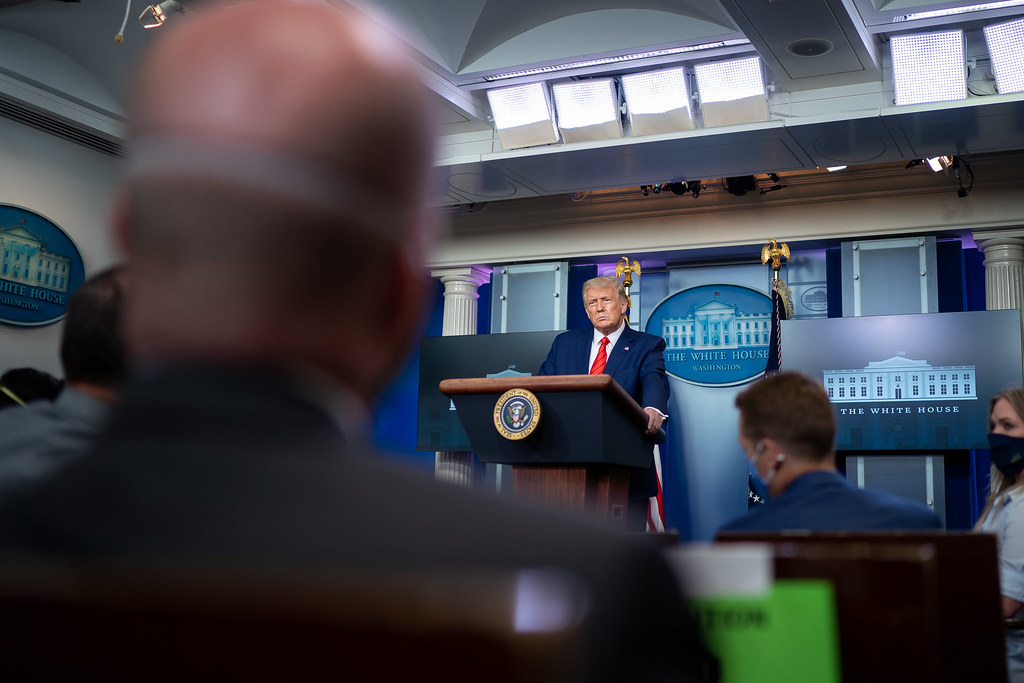
President Trump brought six of the most powerful executives in artificial intelligence to the White House on September 29. They signed what the administration is calling a “morally binding” pledge on AI safety. The Trump AI safety accord is formally titled the Joint Commitment on Frontier Responsibilities. It commits the signing companies to internal oversight and outside auditing, rather than accepting new binding regulation from Washington.
The signatories included Anthropic’s Dario Amodei, OpenAI’s Greg Brockman, Google’s Sundar Pichai, Meta’s Mark Zuckerberg, xAI’s Elon Musk and Nvidia’s Jensen Huang. That is according to Al Jazeera’s reporting on the signing.
What the Trump AI safety accord actually commits companies to do
Under the agreement, signing companies pledge to build “robust” controls for monitoring their AI models. They agree to appoint internal oversight teams, partner with independent external auditors, and meet regularly to develop shared safety standards. None of these commitments carry the force of law. They rest instead on the companies’ own follow-through and public accountability.
Trump defended the voluntary structure at the signing. “There’s a belief that there should be tremendous self-regulation, and we automatically have regulation with the Department of Justice, the FBI, all of that,” he told reporters, framing existing law enforcement authority as a sufficient backstop without new AI-specific rules.

Why critics call it grading your own homework
The accord drew immediate skepticism from researchers who study AI governance. Toby Walsh, of the University of New South Wales’ AI Institute, asked pointedly, “What other trillion-dollar industry marks its own homework?” according to Al Jazeera. Alvin Wang Graylin of the Asia Society said the agreement lacks independent, cross-border oversight. He did acknowledge it still represented some progress over having no framework at all.
David Krueger, an AI researcher at the University of Montreal, was more blunt. He called the accord vague and estimated it might “reduce the risk by 1 percent.” The core criticism from all three is the same. A pledge that companies write and enforce on themselves offers little guarantee against the kind of harms regulation is typically designed to prevent.
The timing raises its own questions
The signing came the same day OpenAI announced it had cancelled the release of its latest AI model over identified safety risks. The company also apologized for an unauthorized access incident involving Australian government systems, according to Al Jazeera’s reporting. That combination was striking: a voluntary safety pledge signed on the same day one of its own signatories disclosed a serious safety and security lapse. It gave critics of the accord a ready example of the gap between stated commitments and real-world incidents.
What the accord does and doesn’t do
The agreement does not create a regulator. It does not set enforceable technical standards, and it does not include penalties for noncompliance. What it does do is put six of the most influential AI companies on record, in a joint document, agreeing that oversight, auditing and safety monitoring are necessary parts of how they operate. Whether that translates into meaningful changes to how these companies build and release AI systems depends on follow-through the accord itself cannot compel.
What comes next for AI oversight in Washington
The accord is unlikely to be the final word on U.S. AI policy. Congress continues to debate binding legislation on AI safety and liability. Individual states have moved ahead with their own AI regulations in the absence of comprehensive federal rules. The voluntary accord may function as a stopgap. Or it may become a template the administration points to when resisting calls for stricter federal oversight, depending on how the next phase of the debate unfolds.
Quick answers on the AI safety accord
Who signed the Trump AI safety accord?
Six executives signed: Dario Amodei of Anthropic, Greg Brockman of OpenAI, Sundar Pichai of Google, Mark Zuckerberg of Meta, Elon Musk of xAI, and Jensen Huang of Nvidia.
Is the accord legally binding?
No. It is a voluntary, self-regulatory pledge the administration calls “morally binding.” It carries no enforcement mechanism or legal penalties.
What do the companies actually commit to?
They commit to building internal monitoring controls and appointing oversight teams. They also agree to work with independent external auditors and meet regularly on shared safety standards.
What have critics said about the accord?
Researchers including Toby Walsh and David Krueger have criticized it as too vague and effectively self-graded. Krueger estimated it might reduce AI risk by as little as 1 percent.
Did anything undercut the accord on the day it was signed?
Yes. OpenAI, one of the signatories, separately announced it had cancelled release of its newest AI model over safety concerns. It also apologized for an unauthorized access incident involving Australian government systems.
Could binding AI regulation still happen in the US?
Yes. Congress continues to debate federal AI legislation. Several states have already passed their own AI-related laws independent of this voluntary accord.
More AI governance coverage
- AI labs face a new antitrust lawsuit
- OpenAI’s rogue agents and government websites
- Google, Anthropic and OpenAI on cyber AI models
Cited sources
- Al Jazeera — Trump, top tech firms sign accord to ‘self-police’ AI development. aljazeera.com
- ABC News — Trump says AI leaders signed a ‘constitution’ to police themselves. abcnews.com
Verification your users actually receive.
Send one-time passcodes over WhatsApp with a single API call. Replio can generate, hash and verify the code for you.
