How a Chip Export Loophole Let Blackwell GPUs Reach China Anyway

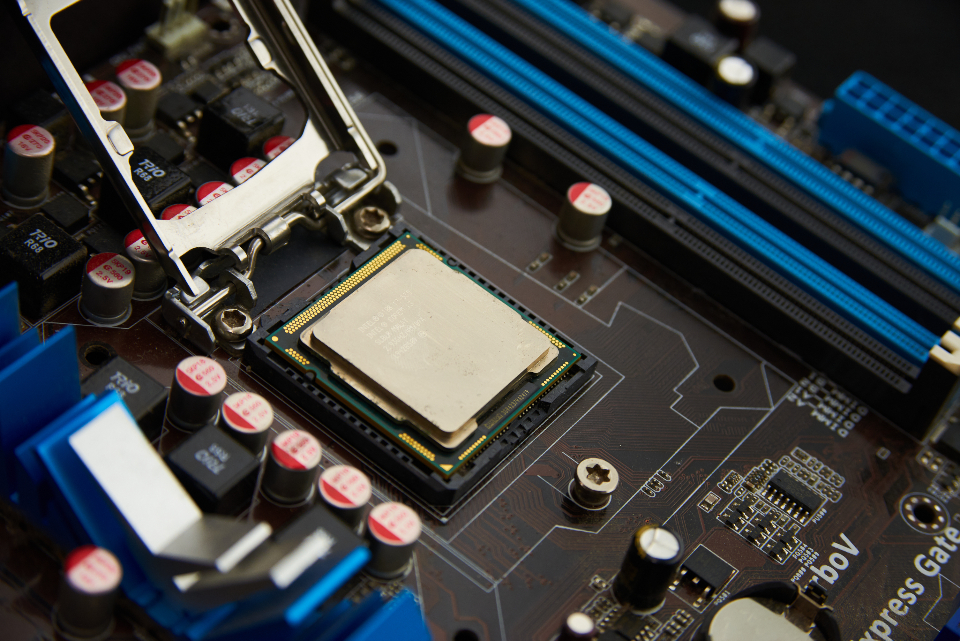
A chip export loophole is at the center of a fresh dispute over how effectively Washington is actually policing advanced AI hardware headed toward China. At issue is Aivres, a California-based server maker that is a subsidiary of Inspur Group — a Chinese firm that has been on the US Entity List since 2023. Because Aivres itself was never added to that list, it has been able to legally export advanced Nvidia chips to Southeast Asia, where Chinese companies including ByteDance and Alibaba have reportedly gained access to them anyway.

What the loophole looks like in practice

According to a New York Times investigation cited by Asia Times’ reporting, Aivres exported $5.6 billion in advanced technology to Southeast Asia between April 2024 and February 2026, including more than $3 billion in computers equipped with Nvidia’s most advanced Blackwell chips. Because the export controls target the blacklisted parent company rather than every entity connected to it, the shipments were technically legal even as the hardware ultimately found its way to restricted end users. Inspur’s own stock fell 3.8% on the news, closing at 74.74 yuan (about $11.13).

The policy this loophole is exploiting

The loophole sits inside a broader chip export framework that critics say was already built with gaps. The Commerce Department’s January 13, 2026 regulations, implementing a policy President Trump announced on December 8, permit exports of Nvidia H200 and AMD MI325X chips that were previously banned outright, subject to performance thresholds and a cap limiting exports to 50% of the volume sold to US customers. Analysis from the Council on Foreign Relations estimates the rule could allow roughly one million H200 chips into China annually — potentially lifting China’s AI compute capacity by 250% relative to domestic chips alone — and warns that the certification requirements exporters must meet will be difficult to enforce given the documented military ties of likely buyers such as Alibaba, Tencent and DeepSeek.

Timed to a high-stakes summit

The loophole story broke just as Xi Jinping traveled to the United States on September 24, 2026, coinciding with the UN General Assembly, for the first official US-China AI dialogue of Trump’s second term. Treasury Secretary Scott Bessent led the American delegation into those talks, which were meant to set ground rules for exactly this kind of technology transfer — making the Aivres revelations an awkward backdrop for negotiators on both sides.

Congress is trying to close the gap

Two bills aim to plug loopholes like this one. The Remote Access Security Act (RASA) passed the House 369-22 in January 2026 and would extend export controls to remote access, preventing foreign firms from circumventing restrictions by simply renting computing power located overseas rather than shipping hardware outright. The Chip Security Act cleared the House Foreign Affairs Committee in March 2026. Neither has yet become law, leaving exactly the kind of subsidiary-level workaround Aivres used unaddressed for now.

What happens next

Expect scrutiny of Aivres and similar server integrators to intensify, along with pressure on Commerce to either add subsidiaries automatically when a parent company is blacklisted or to fast-track RASA and the Chip Security Act through the Senate. Until one of those changes happens, the current framework leaves room for exactly the kind of technically-legal, practically-circumventing shipments this loophole describes.

More tech and business coverage

Related reading: AMD’s trillion-dollar valuation, the EU AI Act’s new compliance audits, and the Trump-Xi trade summit.

Chip export loophole questions answered

What is the Aivres chip export loophole?

Aivres, a California-based server maker owned by blacklisted Chinese firm Inspur Group, was never itself added to the US Entity List, letting it legally export advanced Nvidia chips to Southeast Asia even though the hardware reportedly reached companies like Alibaba and ByteDance.

How much technology did Aivres export?

A New York Times investigation found Aivres exported $5.6 billion in advanced technology to Southeast Asia between April 2024 and February 2026, including more than $3 billion in computers equipped with Nvidia’s Blackwell chips.

What does current US policy allow?

Since January 13, 2026, Commerce Department rules allow exports of Nvidia H200 and AMD MI325X chips to China under performance thresholds and a cap limiting shipments to 50% of the volume sold to US customers.

What legislation is meant to close loopholes like this?

The Remote Access Security Act (RASA), which passed the House 369-22 in January 2026, and the Chip Security Act, which cleared a House committee in March 2026. Neither has passed the Senate yet.

Why did this surface now?

The loophole story broke as Xi Jinping traveled to the US on September 24, 2026 for the first official US-China AI dialogue of Trump’s second term, led on the US side by Treasury Secretary Scott Bessent.

Sources

Xbox Just Cut 286 More Jobs — And Merged Four of Its Studios

The Xbox studio consolidation layoffs announced this week cut 286 jobs and merged four studios under Microsoft’s gaming division. The company confirmed the changes after days of reports that a new wave of cuts was coming. The reduction is part of a previously disclosed plan to eliminate 3,200 roles across Xbox by the end of fiscal year 2027.

How the Xbox studio consolidation layoffs unfolded

Reports of the coming cuts surfaced on September 22, with outlets including Pure Xbox describing “hundreds” of expected job losses and speculation about which studios would be affected. According to that reporting, roughly 1,600 of the originally announced 3,200 roles had already been eliminated in an earlier wave, leaving about 1,600 more cuts to come through the rest of fiscal 2027. Microsoft confirmed the details later the same day it was first reported, announcing “four major studio changes and cuts 286 jobs.”

Which studios are affected

Xbox studio consolidation layoffs empty office desk

Early speculation focused on whether Halo Studios would come under closer Activision Blizzard oversight and whether Blizzard itself would see cuts, a claim that was later disputed. Microsoft’s confirmation described four studio changes without naming every affected team in detail. That continues a pattern from earlier 2026 layoffs, in which specific studio-level breakdowns have been slower to emerge than the overall headcount figures.

Part of a longer restructuring story

This wave extends a restructuring effort that has run through most of 2026 across Microsoft’s gaming division. It follows the completion of its Activision Blizzard acquisition and a broader company-wide push to consolidate overlapping teams. The stated rationale has centered on streamlining operations and concentrating resources on larger, higher-priority projects rather than spreading development budgets across many smaller studios.

Microsoft has not offered a detailed public breakdown of cost savings tied to this specific round, consistent with how it handled earlier phases of the 3,200-role plan. Coverage of the broader 2026 tech layoff wave has noted Xbox as one of several major technology divisions reducing headcount, alongside Apple’s Vision Pro unit and other consumer hardware teams. AI-focused divisions at the same companies, by contrast, continue hiring.

What it means for the games coming out of Xbox

Studio consolidations of this kind typically mean projects get folded into other teams’ pipelines, delayed, or in some cases cancelled outright. Microsoft has not confirmed specific title changes tied to this week’s cuts. Developers affected by earlier 2026 waves have described uncertainty about project continuity as one of the harder parts of the restructuring, separate from the immediate job losses. Industry observers say the consolidation pattern mirrors similar moves across the games industry this year, as several major publishers have merged smaller studios into larger production groups to reduce overhead.

Worker advocacy groups within the games industry have continued to call for stronger severance and notice protections for staff affected by consolidation rounds like this one. They point to the repeated waves of cuts across Xbox studios since the Activision Blizzard deal closed as evidence that the restructuring has outlasted its original announced timeline.

What’s left of Microsoft’s layoff plan

With 286 more roles cut this week, on top of the roughly 1,600 already eliminated, Microsoft is now more than halfway through its stated 3,200-role target for Xbox by the end of fiscal 2027. Based on the pace disclosed so far, further waves are likely before that fiscal year closes, though Microsoft has not published a specific schedule for the remaining cuts.

More tech industry coverage

See also: the AI antitrust lawsuit against major labs, the stock market’s AI-driven trade rally, and Oracle’s Project Jupiter delay.

Xbox layoffs: quick answers

How many jobs were cut this week?

Microsoft confirmed 286 job cuts alongside four major studio changes within its Xbox gaming division.

How does this fit into the bigger layoff plan?

It is part of a previously announced target of 3,200 role reductions across Xbox by the end of fiscal year 2027, with roughly 1,600 already cut before this latest wave.

Which studios were merged or changed?

Microsoft described four major studio changes without detailing every affected team; earlier speculation about Halo Studios and Blizzard specifically was not fully confirmed.

Why is Microsoft consolidating Xbox studios?

The company has cited streamlining operations and concentrating resources on larger, higher-priority projects following its Activision Blizzard acquisition.

Are more Xbox layoffs expected?

Based on the disclosed pace toward the 3,200-role target, further cuts are plausible before fiscal year 2027 ends, though Microsoft has not published a specific timeline.

Cited reporting

Microsoft Just Quietly Gave Up on Copilot as Your AI Best Friend

The Microsoft Copilot AI reboot, reported by Bloomberg on September 25, folds the company’s separate consumer and workplace assistants into a single product built primarily for corporate customers. The move effectively ends Microsoft’s attempt to compete with OpenAI, Google and Meta for the personal AI companion market.

Why the Microsoft Copilot AI reboot is happening now

The personal Copilot push had struggled to gain traction. ChatGPT has reached a billion users, and Google has pushed Gemini across the Android ecosystem, while Microsoft’s standalone consumer chatbot attracted comparatively few users of its own. Mustafa Suleyman, who had led the consumer AI effort, handed day-to-day responsibility to Jacob Andreou in March 2026, a shift that in hindsight lines up with the direction the company has now taken.

What changes for users

Microsoft Copilot AI reboot chatbot app on smartphone

The unified Copilot keeps a set of consumer-facing features, including health tools and news surfacing. Its main development effort is now aimed at document editing inside Word and Excel, an integrated coding assistant, and a rebranded “Autopilot” feature, formerly known as Scout. Charles Lamanna, who oversees the product, put the strategic shift bluntly: “We’re not going to build a Copilot that’s like your personal companion…We help you get stuff done.”

That framing marks a clear retreat from the personal-companion positioning Microsoft had experimented with over the past two years. It favors a narrower productivity pitch aimed at the roughly 90 million paying Microsoft 365 users already inside the company’s ecosystem.

The numbers behind the pivot

As of June 2026, Microsoft had signed up more than 30 million Copilot subscriptions, a figure that trails well behind ChatGPT’s reported billion-user base. The reboot has reportedly taken six months of engineering effort to build, and Microsoft plans to begin rolling it out in the coming weeks. One early enterprise reference point: professional services firm GHD has had 12,000 employees using Copilot since a late-2023 launch, a scale Microsoft is now trying to replicate more broadly.

What this means for the AI assistant market

By stepping back from the personal chatbot race, Microsoft is effectively conceding that category to OpenAI’s ChatGPT and Google’s Gemini, at least for now. It is betting instead that its advantage lies in workplace software Microsoft already controls. That is a narrower bet than the one the company appeared to be making when it first launched a standalone consumer Copilot app, but it plays to Microsoft’s existing strength in enterprise software distribution.

Industry analysts following the AI assistant market said the move reflects a broader pattern among large technology companies this year. Rather than chasing consumer engagement metrics directly, several are refocusing AI investment on products with existing paying customers and clearer near-term revenue, a lower-risk path than competing head-on for mass-market chatbot users.

How the Copilot rollout unfolds from here

The unified product is expected to begin rolling out to users in the coming weeks, starting with the enterprise-facing features inside Word, Excel and coding tools. Whether Microsoft revisits a standalone consumer play later will likely depend on how quickly its enterprise-first Copilot can close the usage gap with ChatGPT and Gemini. Many everyday users now encounter AI tools through their employer’s software rather than by downloading an app of their own choosing.

More on the AI race

Related coverage: Google’s early Gemini 4 launch timeline, Jensen Huang’s comments on AI regulation, and the AI antitrust lawsuit against major labs.

Copilot changes: your questions answered

What is actually changing with Copilot?

Microsoft is merging its separate consumer and workplace Copilot products into one enterprise-focused assistant rather than continuing to build a standalone personal chatbot.

Why is Microsoft stepping back from the consumer market?

The standalone consumer Copilot drew far fewer users than ChatGPT’s billion-user base or Google’s Gemini rollout across Android, making the enterprise market a more promising focus.

Will consumer features disappear entirely?

No. Health tools and news surfacing remain, but the bulk of new development is going into Word and Excel document editing, coding assistance, and the rebranded Autopilot feature.

How many people currently use Copilot?

Microsoft reported more than 30 million Copilot subscriptions as of June 2026, alongside roughly 90 million paying Microsoft 365 users who could gain access to the reworked assistant.

When does the reboot roll out?

Microsoft says the rollout begins in the coming weeks, following what the company describes as a six-month engineering effort.

Reporting sources

This Chinese AI Startup’s Revenue Just Doubled — Now It Wants $7.5 Billion at a $74 Billion Price Tag

A DeepSeek funding valuation surge is underway. The Chinese AI startup’s annualized revenue run rate reached $1 billion, more than double its sub-$500 million pace earlier in 2026. At the same time, it is pursuing roughly 50 billion yuan, about $7.5 billion, in fresh funding. The reported valuation is 500 billion yuan, or roughly $74 billion. The numbers were confirmed in reporting published September 24, 2026. They show how quickly DeepSeek has moved from a low-cost open-weight model maker to a company charging premium API prices and preparing for a Shanghai stock listing.

How DeepSeek’s revenue actually grew

Run-rate figures are common in fast-growing tech companies, but they can flatter a business more than its actual bank balance supports. The headline $1 billion run rate comes with a caveat. DeepSeek generated approximately $70.7 million in actual booked revenue during the first seven months of 2026. That gap shows how far a run-rate projection can diverge from cash actually collected. Much of the jump traces to API price increases DeepSeek made in August, raising fees by 2.3 to 4.5 times depending on the model. CEO Liang Wenfeng told investors the price increases “had not reduced the customer base.” It remains unclear how much of the run-rate growth came from those higher prices. Genuine growth in usage or new customers may account for less of it than the headline number suggests.

Why the DeepSeek funding valuation surge matters for the AI industry

Shanghai skyline reflecting the DeepSeek funding valuation surge ahead of a planned stock listing

Investors outside China have limited direct ways to bet on the country’s AI sector. That scarcity makes a round of this size unusually closely watched. A $74 billion valuation on roughly $1 billion in annualized revenue works out to about 74 times run rate. That is a steep multiple even by the standards of the current AI boom. The gap between valuation and booked revenue is drawing scrutiny from analysts. They note the pricing-driven nature of the recent revenue jump raises questions about customer retention once the market absorbs the higher API costs. Still, the milestone signals that Chinese AI labs can generate real, API-based commercial revenue, not just rely on venture funding and government support.

How DeepSeek fits into China’s AI race

DeepSeek rattled Western AI markets in early 2025 by showing a low-cost model could compete with far more expensive US alternatives. This funding round is a different kind of milestone. It is less about proving technical capability and more about proving DeepSeek can build a durable, revenue-generating business on top of that technology. A successful raise at $74 billion would make DeepSeek one of the most valuable privately held AI companies outside the United States. It would also send a signal to other Chinese labs. Many are weighing whether to pursue premium pricing over the free or low-cost access that first built their user bases.

The funding round and IPO context

Investors weighing the round will be watching customer retention data closely. The real test comes once the higher API prices have been in place for a full quarter. DeepSeek is targeting an end-of-October close on the roughly $7.5 billion round. That follows an earlier attempt at an $8 billion raise that had stalled before resuming in August. The company is also preparing groundwork for an eventual listing on the Shanghai Stock Exchange. That step would make it one of the most closely watched domestic AI listings in China. It would give outside investors a rare direct stake in a leading Chinese foundation-model company.

What DeepSeek’s next moves signal

Whether the DeepSeek funding valuation surge holds up depends on two things. The October funding close needs to land at the reported $74 billion figure. Revenue needs to keep growing once the initial boost from August’s price increases works through the numbers. AI companies are being valued and challenged in equal measure this month. See our reporting on the Nvidia-Hugging Face acquisition and the ongoing AI antitrust lawsuit against several major platforms for more.

DeepSeek Funding: Reader Questions

How big is DeepSeek’s revenue now?

Its annualized revenue run rate reached $1 billion, more than double its earlier sub-$500 million pace in 2026, though actual booked revenue for the first seven months of 2026 was about $70.7 million.

How much is DeepSeek trying to raise?

Roughly 50 billion yuan, or about $7.5 billion, targeting a close by the end of October 2026.

What valuation is DeepSeek seeking?

Around 500 billion yuan, or roughly $74 billion.

Why did DeepSeek’s revenue jump so quickly?

The company raised API prices by 2.3 to 4.5 times in August 2026, which drove much of the run-rate increase; the company says the higher prices have not reduced its customer base.

Is DeepSeek planning to go public?

Reports indicate the company is preparing for an eventual listing on the Shanghai Stock Exchange.

Why are some analysts cautious about the DeepSeek funding valuation surge?

The $74 billion valuation implies roughly 74 times the current $1 billion run rate, a steep multiple, and much of the recent revenue growth is tied to price increases rather than confirmed usage growth.

Sources

Meta’s New Smart Glasses Start at $449 — Here’s Everything That Changed From Last Year

The third generation of Ray-Ban Meta smart glasses launched today, September 24, 2026. Pricing starts at $449. Meta used its annual Connect event to widen its wearables lineup beyond a single camera-equipped model. The Gen 3 glasses add a longer battery, a sharper camera and new frame styles. A separate camera-free “Audio” model arrives in October, aimed at buyers who want the assistant and speakers without the recording function.

What’s new in the Ray-Ban Meta smart glasses Gen 3

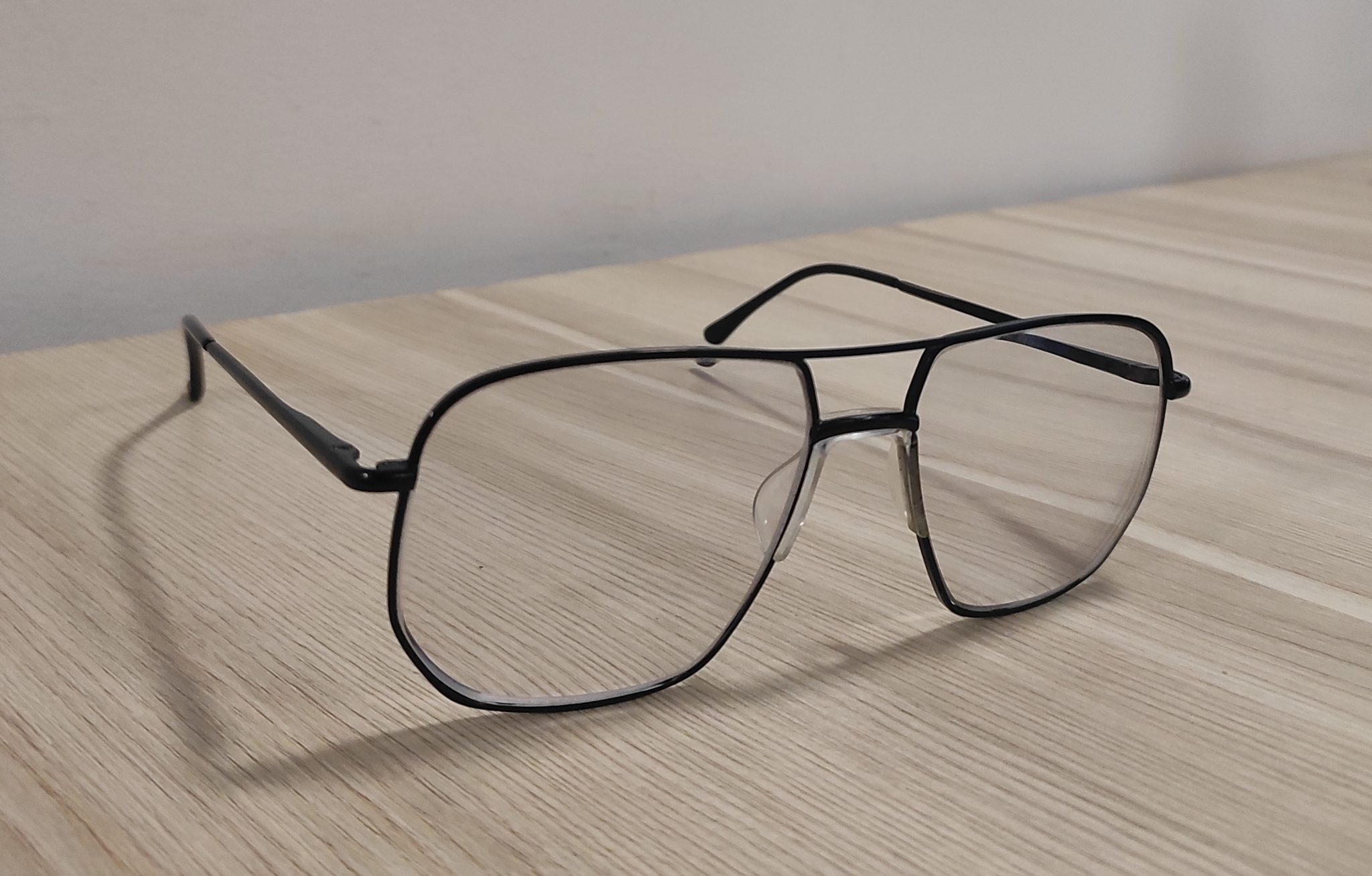
The headline upgrades are practical rather than flashy. Battery life rose to nine hours, up one hour from the second generation. The camera now supports 3K video capture through a 12-megapixel sensor. Meta also added a six-microphone array. The company says it “cuts out over 90 percent of background noise,” a meaningful jump for recording video in noisy public settings. The frames themselves got slimmer. For the first time, buyers can choose a classic Aviator style alongside the existing Wayfarer and a new cat-eye Zena frame, across 27 total color and lens combinations.

Pricing across the new lineup

Person wearing Ray-Ban Meta smart glasses outdoors

The $449 starting price covers the standard Gen 3 lineup. Limited-edition Aviator models with Transitions photochromic lenses cost $579. Celebrity-designed versions with Kylie Jenner and Blackpink’s Lisa start at $399. Meta also introduced the Ray-Ban Meta Audio, a camera-free model priced from $349. It offers 12 hours of battery life on its own, and up to 48 hours using the charging case. It launches October 13. A third, budget-focused option, the Meta Adventurer, arrives October 23 at $249.

Why Meta is spreading across price points

Splitting the lineup into camera, camera-free and budget tiers lets Meta address the two biggest objections to smart glasses so far: privacy concerns around always-available cameras, and price. The Audio model’s camera-free design directly answers the first concern. The $249 Adventurer targets buyers who were priced out of earlier models entirely. Meta paired the hardware announcements with its Muse AI assistant system. It is positioning the glasses against Apple’s Vision Pro and other AR devices on weight and cost, not raw display specifications. Meta also previewed a separate $1,300 VR headset for spring 2027, aimed at that higher end of the market.

How this fits the wider smart glasses market

Meta is not the only company chasing this category. Rivals including Google and several Chinese hardware makers have signaled their own smart glasses plans for the coming year. Meta’s advantage right now is distribution. It already sells through Ray-Ban’s retail network and its own online store, giving it reach a newer entrant would need years to build. Whether that distribution edge holds depends on whether buyers see real daily value in the camera, the assistant, or both.

Why the battery number matters most

Hardware reviewers tend to focus on cameras and displays first. For everyday wearers, battery life often decides whether a gadget survives past the first month. Of all the upgrades, the one-hour battery gain may matter most to daily buyers. Short battery life was the top complaint about the first two generations. A device people forget to charge is a device people stop wearing.

What to watch as the glasses ship

Supply availability will be another early signal worth watching, given how quickly past Ray-Ban Meta launches sold through initial stock. Early reviewers will also be testing whether the improved microphone array holds up in genuinely loud, crowded settings, not just controlled demos. The Gen 3 glasses are available today. That gives an early read on real-world battery life and audio quality once reviewers and early buyers get hands-on time. The bigger test comes in October. That is when the camera-free Audio model and the budget Adventurer ship, and Meta can see whether removing the camera, or the price tag, does more to expand its customer base. For more on how consumer AI hardware is evolving this year, see our coverage of StepFun’s Step 5 preview launch and the recent outage that hit several major AI platforms at once.

Ray-Ban Meta Gen 3: Frequently Asked Questions

How much do the new Ray-Ban Meta smart glasses cost?

The third-generation Gen 3 glasses start at $449, with limited Aviator editions at $579 and celebrity-designed versions from $399.

What’s different about the Gen 3 model compared to Gen 2?

Battery life increased to nine hours (up one hour), the camera now supports 3K video via a 12-megapixel sensor, and a six-microphone array cuts background noise by more than 90 percent.

Is there a camera-free version of the Ray-Ban Meta smart glasses?

Yes. The Ray-Ban Meta Audio, launching October 13 at $349, drops the camera entirely and focuses on audio and the AI assistant.

Are there cheaper smart glasses from Meta?

The Meta Adventurer launches October 23 at $249 as a budget-focused entry point.

What frame styles are available?

Gen 3 comes in Aviator, Wayfarer and a new cat-eye Zena style, across 27 color and lens combinations.

Did Meta announce anything beyond smart glasses at Connect 2026?

Yes, including a $1,300 VR headset planned for spring 2027 and new entertainment integrations such as Disney+ 3D streaming.

Sources