The Man Running Trump’s Gaza Plan Just Turned on Israel

The Gaza ceasefire plan criticism from the official running its implementation is rare. Nikolay Mladenov briefed the UN Security Council on Wednesday. He said Israel’s continued strikes are undercutting a fragile process. He also warned that failure leaves only one alternative: another war. Mladenov is the Board of Peace’s high representative. He insisted the broader plan has not stalled.

His comments land at a delicate moment. Hamas has agreed to the plan’s central demand. That means disarmament and a handover of civilian governance. But Israeli military action has continued. It is straining a ceasefire meant to hold since last October.

Gaza ceasefire plan criticism

Mladenov’s Gaza ceasefire plan criticism, explained

Mladenov briefed the council in person. He said Trump’s 20-point plan has “moved from the negotiating table to the engineering table.” That means the framework is now in the harder phase of actual implementation. He also directly criticized Israel’s ongoing strikes. He argued they clash with a process meant to be winding down.

The criticism is notable for one reason. Mladenov’s job is to implement the US-backed framework, not referee Israeli-Palestinian tensions on his own. His willingness to publicly fault Israel says something. It shows how much strain the ceasefire is under, even months after it took hold.

Hamas disarmament and the plan’s core bargain

The plan’s trade is simple on paper. Hamas gives up its weapons. It hands administrative control of Gaza to a transitional, internationally backed authority. In exchange, Israeli military operations end and reconstruction can begin. Hamas has agreed to that bargain, per Mladenov’s briefing. That is a major concession from a group that ran Gaza for nearly two decades.

What remains unresolved is the pace of disarmament. Verification is also unresolved. So is whether Israel will scale back operations to match. Strikes have continued since October, at reduced intensity, but they are still killing Palestinians. That gap is exactly what Mladenov flagged to the council.

Verification is the hardest part of any disarmament deal. Outside monitors need a way to confirm weapons are actually surrendered, not just hidden or redistributed within Gaza. Past ceasefire and disarmament efforts in other conflicts have stalled at exactly this stage, when the political agreement is signed but the technical process of verifying compliance drags on for months. The Board of Peace has not yet detailed how it plans to verify Hamas’s disarmament on the ground.

Why Gazans still don’t feel the war has ended

For residents of Gaza, periodic strikes do not read as peace. Reporting from the territory describes a population still living with intermittent violence. Diplomats describe the framework as on track. That gap between narrative and lived experience is one of the plan’s biggest weaknesses. If Gazans conclude the ceasefire is nominal, pressure on Hamas to fully disarm weakens. The whole timeline then slips.

What happens if the plan stalls from here

Mladenov’s warning was blunt about the stakes. The alternative to the US plan succeeding is not the status quo. It is another war. That framing is meant to pressure everyone involved. Israel, Hamas, and the plan’s regional backers all face the same message: keep implementation moving, or risk losing it.

The plan’s next visible milestone should be a Security Council resolution. It would formalize the transitional governance structure and an international stabilization force for Gaza. No confirmed date has been set yet. Diplomats will watch two things in the coming weeks: whether Israeli strikes keep declining, and whether Hamas starts visible, verifiable disarmament steps.

Regional backers of the plan, including several Gulf states, have publicly welcomed the framework but have offered few specifics about their own role in funding reconstruction or contributing to a stabilization force. Their level of commitment will likely shape how quickly the plan can move from paper to practice on the ground in Gaza.

Frequently asked questions

Who criticized Israel over the Gaza ceasefire plan?

Nikolay Mladenov, the Board of Peace high representative overseeing implementation of the US-backed plan, told the UN Security Council that Israeli strikes since October’s ceasefire were undermining the process.

Has Hamas agreed to disarm under the plan?

Yes. Hamas has agreed to the plan’s key provision to disarm and hand civilian governance of Gaza to a transitional authority, according to Mladenov’s briefing.

Is the ceasefire still holding?

A ceasefire has been in effect since October, but Israeli strikes have continued at a reduced pace, and Gazans quoted in reporting say they do not feel the conflict has actually ended.

What happens if the Gaza ceasefire plan collapses?

Mladenov warned the Security Council that the alternative to the US plan succeeding is another war, framing the current diplomatic track as the only realistic route to a lasting peace.

What is the Board of Peace?

It is the oversight body created to implement President Trump’s 20-point Gaza plan, tasked with coordinating the shift from a negotiated framework to on-the-ground implementation, or what Mladenov called moving ‘from the negotiating table to the engineering table.’

Does the plan include a path to a Palestinian state?

The plan references a ‘credible pathway to a political horizon’ and a two-state solution, though officials have not published a detailed timeline for that phase.

Related coverage on Tamara News

Sources

47 Dead, 50 Taken: Inside Haiti’s Worst Gang Attack in Years

The Haiti gang kidnapping attack on the Kenscoff hills above Port-au-Prince has left 47 people dead. More than 50 residents were taken hostage. United Nations officials call it one of the largest mass kidnappings the country has seen in years. Gunmen struck the once-peaceful community on August 24, 2026. The assault shattered months of hard-won security gains. It renewed fears that Haiti’s capital region is slipping further from government control.

Kenscoff had been held up as a rare success story in Haiti’s fight against gang expansion. That reputation did not survive the weekend.

Haiti gang kidnapping attack

What happened in the Haiti gang kidnapping attack

Armed men swept into Kenscoff on Monday. They killed 47 residents and seized more than 50 others, the United Nations said. The assault came with little warning. Residents had almost no time to flee. The community sits in the hills above the wealthier Pétion-Ville district. Local reporting places the death toll among the highest recorded in a single gang raid in greater Port-au-Prince this year.

Video posted afterward showed a gang leader addressing Haiti’s national police director, Vladimir Paraison, directly. The message was blunt. If police or allied forces kill gang members while trying to free hostages, the hostages die too. That threat has frozen the immediate response. Any rescue operation now risks triggering mass killings.

Why gangs are targeting this part of Haiti now

Kenscoff is not a random target. Gangs already dominate much of central Port-au-Prince. They want the roads running through Kenscoff because those roads connect the capital to Haiti’s southern peninsula. Controlling those routes lets armed groups tax or block the movement of people, food and fuel. It also lets them pressure Pétion-Ville, one of the last relatively stable, wealthier districts in the metro area.

The irony is that Kenscoff had been getting safer. Security operations cut violence there by roughly two-thirds between January and August 2026. That progress made the community a visible counter-example to gang expansion. Officials now fear it became a target for that exact reason.

The hostage standoff and Haiti’s police response

Haiti’s National Police face a narrow set of options. A multinational security support mission backs them. A forced entry risks the hostages’ lives given the gang’s explicit threat. Negotiation risks legitimizing the group. It could also invite future mass-kidnapping tactics elsewhere. Neither option is fast. Residents of Kenscoff who were not taken remain in a community that no longer feels secure, regardless of how the standoff ends.

Haiti’s transitional government has not detailed a public timeline for resolving the standoff. Outside security assistance, including the UN-backed multinational mission, has struggled throughout 2026. It has not expanded fast enough to match gang territorial gains nationwide.

Haiti has lacked an elected president since 2021. A transitional council has governed since 2024, working alongside the multinational mission to try to restore basic security. Gangs are estimated to control most of Port-au-Prince already. Kenscoff’s fall would extend that control into one of the few districts that had pushed back successfully. That is part of why this single attack carries weight well beyond its immediate death toll.

Where the standoff goes from here

Analysts tracking Haiti expect one priority to come first: securing the hostages’ release, not a military assault on Kenscoff. Past mass-kidnapping cases in Haiti, including the 2025 orphanage seizure, ended through negotiated releases rather than raids. If that pattern holds, expect a slow, quiet process rather than a dramatic breakthrough.

The longer-term question is different. Does Kenscoff’s fall change the security calculus for Pétion-Ville and the rest of the capital? If gangs can now move freely along routes Kenscoff once blocked, aid delivery and civilian movement between Port-au-Prince and southern Haiti could get harder for months, not days.

Frequently asked questions

What happened in the Kenscoff attack?

Armed gunmen stormed the Kenscoff area above Port-au-Prince on August 24, 2026, killing 47 people and taking more than 50 residents hostage, according to United Nations officials cited by NPR.

Is this the largest kidnapping in Haiti’s recent history?

Officials describe it as one of the largest mass kidnappings in Haiti in recent years, though Haiti has seen large-scale abductions before, including a 2025 orphanage kidnapping.

Why did the gang attack Kenscoff specifically?

Kenscoff sits above the upscale Pétion-Ville district and controls alternate routes linking Port-au-Prince to southern Haiti, making it strategically valuable to gangs seeking to encircle the capital.

What is the gang threatening to do to the hostages?

A gang leader posted a video warning Haiti’s police director, Vladimir Paraison, that hostages would be killed if security forces harmed any gang members during operations to retake the area.

Had security in Kenscoff been improving before the attack?

Yes. Security operations reportedly cut violence in Kenscoff by 66% between January and August 2026, which is part of why the scale of this attack alarmed officials.

Is it safe to travel to Haiti right now?

Multiple governments maintain do-not-travel advisories for Haiti given ongoing gang violence; travelers should check official advisories before any trip and avoid areas near active security operations.

Related coverage on Tamara News

Sources

Eleven Countries, One Warning: Inside August’s Middle East Alert

The Middle East travel advisory issued on August 1, 2026, remains a live concern for travelers nearly a month later. The standoff between the United States and Iran kept generating fresh incidents through late August. US embassies across eleven countries issued synchronized security alerts that day. They warned Americans to prepare for flight cancellations, airspace closures and broader travel disruption.

The alerts covered Israel, Lebanon, Iraq, Oman, the United Arab Emirates, Saudi Arabia, Bahrain, Qatar, Kuwait, Egypt and Jordan. That is an unusually wide and coordinated set of warnings for a single day. State Department officials called the regional security environment “extremely complex and fluid.” They pointed to an unpredictable standoff with Iran and the risk of sudden escalation.

What the Middle East travel advisory actually says

The advisory told Americans already in the region to consider departing, or to prepare to depart if tensions escalated further. It told Americans outside the region to seriously reconsider travel to and through the area altogether. Officials flagged diplomatic facilities, businesses and locations associated with Americans as potential targets tied to Iran or supportive proxy groups. That language goes further than a routine travel caution.

Middle East city skyline covered by the Middle East travel advisory

Which eleven countries are named and why

The list runs: Israel, Lebanon, Iraq, Oman, UAE, Saudi Arabia, Bahrain, Qatar, Kuwait, Egypt and Jordan. It spans nearly the entire Gulf and Levant region. That breadth shows how widely officials judged the risk of spillover from an Iran-linked escalation. The State Department issued the alerts simultaneously across that many missions, rather than country by country. That approach signaled how seriously officials treated the regional risk at the time.

How the Iran standoff kept the warning active

Tension tied to the advisory did not fade quickly. Reports surfaced later in August of attacks on vessels linked to the Abu Dhabi National Oil Company near the Strait of Hormuz, which the UAE has attributed to Iran. Separate reporting on the broader Iran standoff continued through August 24 and 25. Those developments kept the conditions behind the original August 1 advisory largely unchanged, even as the alert itself ages.

What changed for airlines and travelers since August 1

Airlines serving the region postponed the resumption of some previously paused routes as conditions shifted through August. Some carriers canceled routes outright, according to reporting at the time the advisory was issued. Travelers with existing bookings through affected hubs have faced repeated schedule changes. Airspace closures tied to the standoff have added further unpredictability beyond the advisory’s initial warning.

What happens next if tensions ease or escalate

The State Department has not issued a public update rescinding or softening the August 1 advisory. Continued incidents tied to the Iran standoff suggest officials still view the underlying risk as live. Further escalation, such as additional tanker attacks or direct military exchanges, would likely trigger updated guidance. A de-escalation could eventually lead officials to ease the advisory for some or all of the eleven countries.

Travel insurers and corporate security firms operating in the region tell clients to treat the advisory as a baseline, not a ceiling. Conditions on the ground can deteriorate faster than official guidance updates. Security advisers generally tell business travelers with recurring trips to Gulf hubs to build extra buffer time into itineraries and to register with their embassy’s traveler notification program before departure.

Middle East travel advisory: frequently asked questions

Which countries does the advisory cover? Israel, Lebanon, Iraq, Oman, UAE, Saudi Arabia, Bahrain, Qatar, Kuwait, Egypt and Jordan.

Why was it issued? Heightened tension in the US-Iran standoff, with officials warning of a fluid and unpredictable security environment.

What should Americans already in the region do? Consider departing, or be prepared to depart if tensions escalate.

What about Americans planning to travel there? They were told to seriously reconsider travel to and through the region.

Is the advisory still relevant? Yes, continued Iran-linked incidents through late August have kept the underlying risk active.

What should travelers with upcoming trips do? Check current State Department and airline guidance close to departure, since conditions have shifted repeatedly.

For related coverage, see our reporting on the tanker attacks near the Strait of Hormuz and the US economic pressure campaign against Iran.

Sources: US Embassy Abu Dhabi security alert, Al Jazeera.

Flying From Central Africa? The US Just Extended These Entry Rules

The CDC Ebola travel restrictions remain in force heading into September 2026. The agency renewed its entry order on August 12. The rules bar travelers who have recently been in the Democratic Republic of the Congo from boarding US-bound commercial flights. Travelers from Uganda and South Sudan get routed through designated screening airports instead.

The restrictions respond to an outbreak of Ebola disease caused by the Bundibugyo virus in remote parts of the Democratic Republic of the Congo and Uganda. CDC describes the outbreak as spreading substantially faster than previous Ebola outbreaks. Health officials now rank it as the second-largest Ebola outbreak on record. That scale explains why the US has kept the restrictions running for several months rather than lifting them quickly.

What the CDC Ebola travel restrictions actually require

Travelers, including US citizens and US nationals, cannot board US-bound commercial flights if they were physically present in the Democratic Republic of the Congo within 21 days before departure. CDC advises those travelers to plan on staying outside the United States for at least 21 days after leaving DRC. That advice creates a mandatory waiting period before US-bound travel becomes possible again.

Health worker at a clinic connected to the CDC Ebola travel restrictions response

Why Uganda and South Sudan face a lighter rule than DRC

Travelers who spent time in Uganda or South Sudan, but not in DRC, within the same 21-day window can still fly to the United States. Airlines route their travel through a designated set of US airports equipped for public health entry screening instead. That distinction reflects CDC’s assessment: the outbreak’s intensity and confirmed case counts concentrate in DRC, while Uganda and South Sudan face a lower but still monitored risk of cross-border spread.

Inside the outbreak driving the order

The Bundibugyo strain of Ebola is one of several known Ebola virus species. This outbreak’s spread through remote areas of DRC and Uganda has made containment difficult. CDC has kept its travel health notice for the region at a Level 3 designation. That level means CDC advises travelers to reconsider nonessential travel to the affected provinces.

How the restrictions were renewed in August

CDC originally issued its entry-suspension order on May 18, 2026. It renewed the order on August 12, 2026, continuing the same core restrictions for DRC, Uganda and South Sudan travelers. The renewal signals that the outbreak had not come under sufficient control by mid-August to justify lifting the order. CDC has not announced a firm end date for the restrictions.

What happens next if you’ve been in the region

Anyone who has recently traveled to DRC, Uganda or South Sudan and has upcoming US travel plans should check CDC’s Travelers’ Health site before booking or attempting to fly. The specific list of affected countries and screening airports can change with each renewal. Airlines operating routes through the region must enforce the boarding restrictions at check-in.

CDC Ebola travel rules: questions travelers are asking

Who can’t fly to the US right now? Travelers who have been in DRC within 21 days before their US-bound flight.

What happens if I’ve been in Uganda or South Sudan instead? You can still fly, but you’ll be routed through a designated US airport for screening.

When was this rule renewed? CDC renewed the order on August 12, 2026, after first issuing it on May 18, 2026.

What outbreak is behind this? A Bundibugyo virus Ebola outbreak in DRC and Uganda that CDC says is spreading faster than past outbreaks.

How long do I have to wait before flying to the US after being in DRC? CDC advises staying outside the US for at least 21 days after leaving DRC.

Where can I check the latest rules? CDC’s Travelers’ Health website publishes current notices for the affected countries.

For related coverage, see our reporting on the realignment of US visa services in Africa and re-entry rules for travel on advance parole.

Sources: CDC entry order, CDC travel health notice.

A Faulty AC Unit Killed 14 Newborns in One Pakistani Hospital

The Pakistan hospital nursery fire killed at least 14 newborn babies in Islamabad on August 26, 2026. An air-conditioning unit exploded inside a crowded maternity ward and set off the blaze. Flames tore through the nursery of the Mother and Child Centre at the Pakistan Institute of Medical Sciences, one of the country’s largest public hospitals, in a matter of minutes.

Officials say the fire began around 6:45 a.m. on the third floor. A compressor inside an air-conditioning unit exploded in the gynecology ward’s nursery. At least 15 newborns were in the unit at the time. Rescuers pulled only one baby out alive. The scale of the loss has triggered nationwide grief and an immediate government inquiry into how routine hospital equipment could kill so many infants so quickly.

How the Pakistan hospital nursery fire started

Hospital and district officials say the exploding compressor ignited nearby material inside the enclosed nursery space. Smoke and flames spread through the unit before staff could evacuate every infant. PIMS is a major referral hospital that serves patients from across Islamabad and the surrounding region. Its maternity and neonatal wards often run at or near capacity.

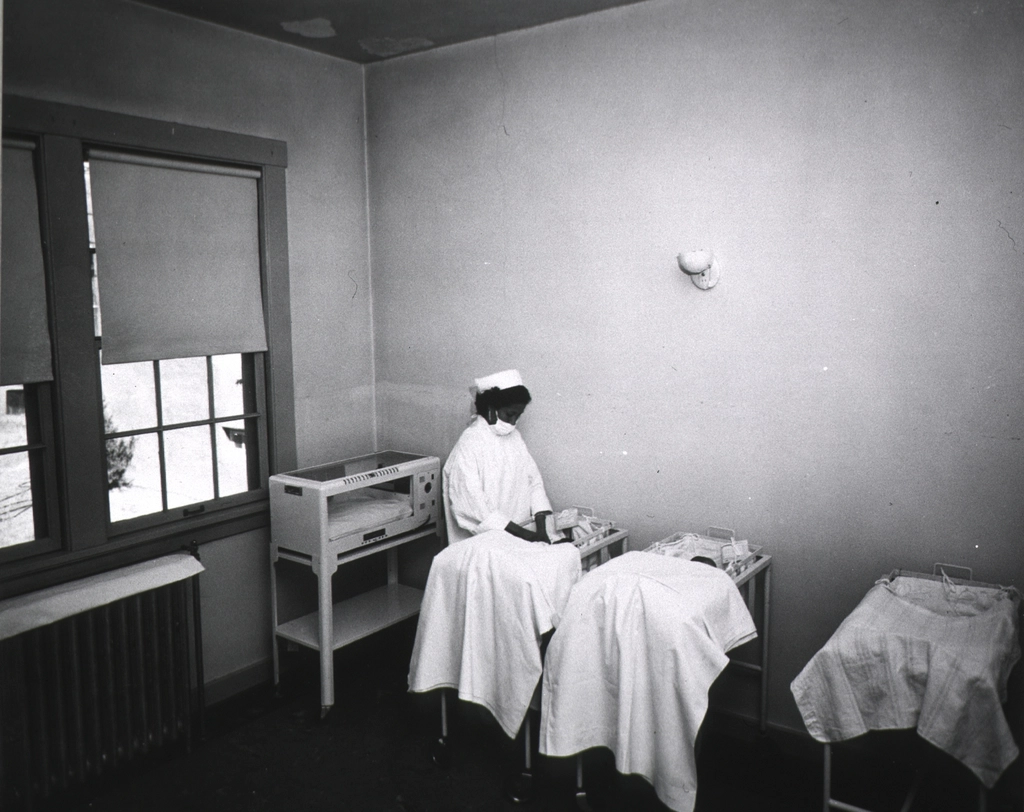
Hospital nursery ward similar to the one hit by the Pakistan hospital nursery fire

Early accounts from hospital staff and grieving relatives describe a chaotic scene. Some family members told reporters that staff locked them out of the ward during the response. That detail has added to public anger over how the emergency unfolded in the critical first minutes.

The scale of the loss at PIMS hospital

Hospital officials say the fire killed 14 of the 15 infants in the nursery at the time. Staff rescued the one surviving baby and moved the child to another part of the hospital for treatment. Newborns in a nursery ward depend entirely on staff for evacuation. That dependence is why the fire has renewed scrutiny of emergency protocols in maternity units where patients cannot move themselves to safety.

Government response and the inquiry underway

Islamabad’s district magistrate appointed a multiagency fact-finding committee within hours of the fire. The magistrate ordered the panel to submit findings within 24 hours, an unusually tight deadline meant to signal urgency. Prime Minister Shehbaz Sharif publicly voiced sorrow over the deaths and ordered an immediate investigation. The committee must establish how the fire started and spread, whether the ward’s fire-safety systems met standards, and how staff responded once the alarm sounded.

Questions about fire safety in Pakistan’s public hospitals

The fire has reopened a long-running debate in Pakistan over underinvestment in fire-safety infrastructure at public hospitals. Many of these hospitals run aging electrical and cooling systems under constant strain from high patient loads. Health workers’ unions and opposition politicians are now calling for an independent audit of fire-suppression equipment, sprinkler coverage and evacuation drills across government hospitals, not just at PIMS.

Pakistan has seen hospital fires before. This one stands out because the toll fell so heavily on newborns, which is part of why it has drawn such intense domestic and international coverage.

What happens next for the families and the investigation

The fact-finding committee’s report, once released, will likely shape two things: immediate accountability measures at PIMS and a broader review of fire-safety compliance across Pakistan’s public hospital network. Families of the newborns who died want answers about why the nursery lacked safeguards against this kind of equipment failure. Legal claims against the hospital administration look likely once the inquiry concludes.

Common questions about the Islamabad hospital fire

What caused the fire? Officials say an air-conditioning unit’s compressor exploded inside the nursery around 6:45 a.m., igniting the blaze.

How many babies died? At least 14 newborns were killed; one baby was rescued from the unit.

Where did it happen? On the third floor of the Mother and Child Centre at PIMS hospital in Islamabad.

Is there an investigation? Yes, a multiagency fact-finding committee was ordered to report within 24 hours, and the prime minister ordered an immediate inquiry.

What will the inquiry look at? The fire’s cause and spread, whether fire-safety measures were adequate, and how the emergency response was handled.

Has anyone been held responsible? Not as of August 27; the committee’s findings had not yet been made public.

For more on this week’s other major stories, read our coverage of the Nepal flash floods disaster and the measles outbreak in Pennsylvania.

Sources: NPR, Al Jazeera.