This Ukraine Weapons Depot Strike Is the War’s Deadliest Yet

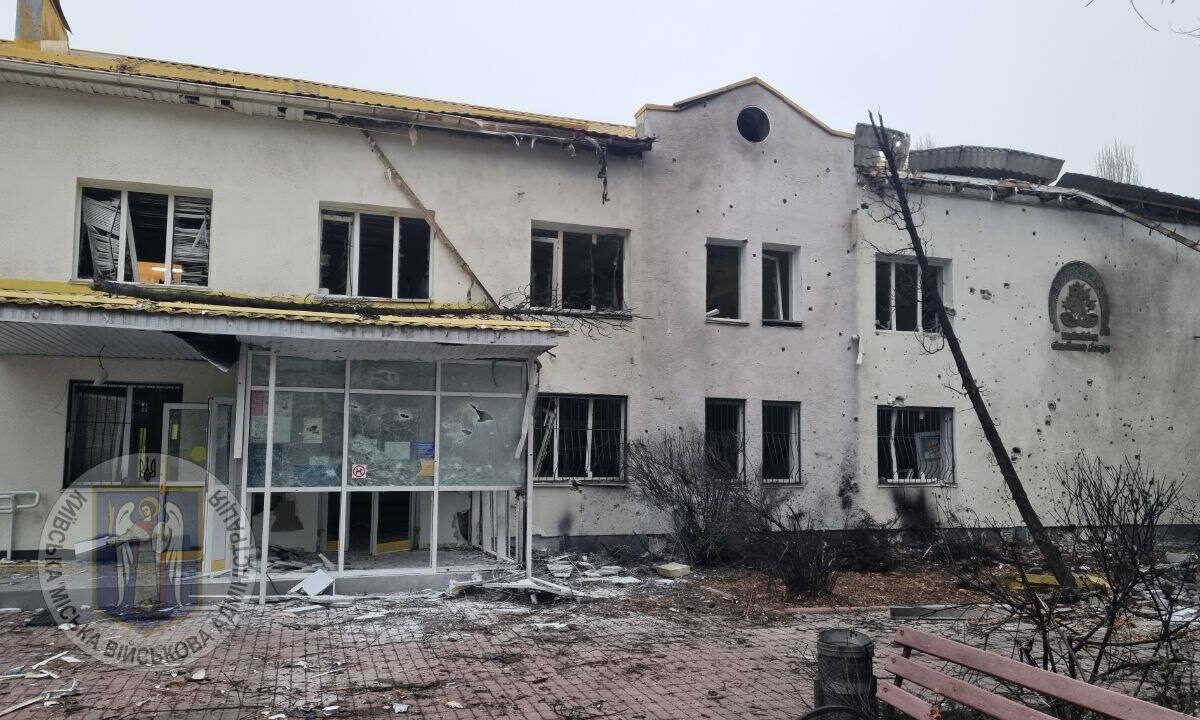
A Ukraine weapons depot strike in the village of Myla, just outside Kyiv, has killed at least 38 people. Ukrainian President Volodymyr Zelenskyy called it the deadliest single attack of the war so far this year. A Russian drone hit an ammunition depot late on 29 August 2026. The impact triggered a detonation that set off secondary explosions and fires. Emergency crews were still fighting those fires a day later.

What the Ukraine weapons depot strike destroyed

The blast injured dozens of people. Rescue teams evacuated hundreds more from the area around the depot as the fires spread. This was the second attack on a munitions storage site near Kyiv within two months. Ukrainian prosecutors have opened a criminal negligence investigation into how the depot was sited and secured. The strike landed as Russian air attacks on Kyiv stretched into a third consecutive day. Ukrainian officials say the intensification has accelerated since mid-August.

Ukraine weapons depot strike

Image credit: Ministry of Defence of Ukraine / Wikimedia Commons (CC BY 4.0)

Why this attack stands out from earlier strikes

Ukraine has absorbed thousands of drone and missile strikes since the war began. Attacks that detonate stored ordnance carry a distinct risk. Their blast radius and secondary fires can exceed what the original warhead alone would cause. That is part of why the death toll climbed so sharply. It rose from an initial count of 27 to 38 as rescue teams worked through the wreckage. Local officials said the scale of the secondary detonations made a final casualty figure hard to establish quickly.

How Kyiv and its allies are responding

Ukrainian authorities used the attack to press allies for faster delivery of air-defense systems. They argue that depots storing Western-supplied ammunition need better protection, given Russia’s apparent ability to track and target them. The strike also lands as the US Senate considers a fresh sanctions bill aimed at Russia’s energy exports. Kyiv has lobbied hard for that bill throughout the summer. European governments supply much of the ammunition stored at sites like the one hit in Myla. They now face renewed pressure to fund hardened storage facilities rather than rely on existing warehouses.

The human toll behind the casualty figures

Emergency responders described a chaotic scene in the hours after the strike. Secondary blasts made it too dangerous to enter parts of the site for several hours. Crews evacuated hundreds of residents in Myla and neighboring communities overnight. Some residents had already fled once before, after the earlier depot attack nearby two months ago. Local hospitals reported treating dozens of injuries, ranging from blast trauma to smoke inhalation. Officials cautioned that the toll could rise further as search teams finish clearing the wreckage.

Ukrainian officials have not released the nationalities or roles of all 38 confirmed dead. Early reports suggest the casualties include both military logistics personnel and civilian residents near the depot’s perimeter. That mix is part of why prosecutors opened a negligence investigation, rather than treating the deaths solely as a wartime casualty count.

How this fits the wider pattern of the war

Russia has shifted more of its strike campaign toward logistics and storage sites over the past year. Ukrainian military analysts attribute the change to diminishing returns from strikes on front-line positions alone. Targeting depots disrupts supply chains further back from the fighting. It also forces Ukraine to disperse storage across more, smaller sites, which is logistically harder and costlier to defend. The Myla strike fits that pattern closely. It hit a facility believed to store both Ukrainian-produced and allied-supplied ammunition, not a front-line position.

Western officials have previously raised concerns that consolidated storage sites make attractive targets. A single successful strike can destroy a disproportionate share of available ammunition. Ukraine’s own military has faced pressure to disperse stockpiles more aggressively. Doing so requires additional secure facilities and transport capacity, which take time to build even with allied funding.

What happens next

Kyiv’s criminal investigation into the depot’s security will likely take weeks. Its findings could shape how Ukraine and its allies store ammunition going forward. Ukrainian officials expect Russian strikes on logistics and storage sites to continue in the meantime. Moscow has increasingly targeted supply infrastructure, not just front-line positions, over the past year. Diplomats say the attack adds urgency to United Nations discussions expected once the General Assembly’s new session opens in September. Allied governments will likely announce specific air-defense pledges in the days ahead, since Kyiv has made that request the centerpiece of its public response.

Frequently Asked Questions

How many people died in the Ukraine weapons depot strike?

At least 38 people were killed, according to President Zelenskyy, after the death toll rose from an initial count of 27 as rescue crews worked through the site.

Where did the strike happen?

The depot was in the village of Myla, near Kyiv. It was the second attack on an ammunition storage site near the capital in two months.

What caused the high casualty count?

The drone strike triggered detonations of stored ammunition, which set off secondary explosions and fires that spread beyond the immediate impact zone.

Is this connected to the pending Russia sanctions bill?

Ukrainian officials have cited the strike while lobbying for a Russia sanctions bill moving through the US Senate, though the two are separate legislative and military developments.

Related Coverage

Sources

Iran US Military Strikes Escalate After Hormuz Attack

Iran US military strikes resumed on 31 August 2026. The clash ended a five-week pause in direct fighting between Washington and Tehran. Iran’s Islamic Revolutionary Guard Corps said it launched missiles and drones at the King Hussein and Al Azraq air bases in Jordan overnight. The attack came hours after the US military struck an Iranian-held position on Larak Island in the Strait of Hormuz. It marks the first confirmed clash between the two countries since a truce held through most of August.

What happened in the latest round of Iran US military strikes

Jordan’s military disputed Iran’s account of the damage. Officials in Amman said air defenses intercepted eight ballistic missiles before any could reach infrastructure or personnel. They reported no casualties. The United Arab Emirates’ Ministry of Defense separately said it shot down a drone launched from Iranian territory toward Emirati airspace. Iran’s state media claimed “heavy damage” to maintenance facilities and aircraft positions at the two Jordanian bases. Jordan rejected that claim outright.

Iran US military strikes

A senior Iranian source told Reuters that Tehran would respond to any American strike “dozens of times greater.” That language suggests further escalation, not a one-off retaliation. US President Trump said the United States was prepared to “hit them hard” if the attacks continued, CNBC reported.

Why the strikes restarted after a five-week lull

The renewed fighting follows a pattern set earlier in the summer. US and Saudi forces struck militia positions in Iraq. Iran responded with missiles aimed at American bases in the region. That July exchange ended with a Pakistan-mediated ceasefire and a memorandum of understanding. Both sides have since accused the other of violating that agreement. The weekend strike on Larak Island appears to have broken the truce entirely.

Energy markets are already pricing in the risk. Middle East hostilities keep pushing oil prices higher. Traders have pushed up expectations for a European Central Bank rate move later this month as a result. That dynamic ties this conflict directly to inflation readings far outside the region.

Who is bearing the direct risk from Iran US military strikes

Jordan and the UAE are absorbing the retaliatory fire. Both are US security partners, but neither is a direct party to the underlying dispute. Jordanian officials have repeatedly stressed that intercepting missiles over populated areas carries its own risk. Falling debris can still cause casualties even when interceptions succeed. Gulf carriers have also begun rerouting some flights away from Iranian and Iraqi airspace, echoing disruptions seen in July. Regional tourism boards have started fielding cancellation questions from travelers who booked trips for the coming weeks, even in countries well outside the immediate strike zones.

How markets are reading the new round of Iran US military strikes

Oil traders pushed benchmark prices higher within hours of the Larak Island strike becoming public. The move extends a rally that began with the June flare-up in hostilities. That earlier spike helped push the European Central Bank to raise its deposit rate for the first time in three years. Traders are now watching whether a second summer of Middle East volatility forces the Federal Reserve and the Bank of England to follow suit. Airlines flying between Europe and Asia have had to recost fuel-hedging positions twice in three months. That cost eventually shows up in ticket prices.

Insurance underwriters covering Gulf shipping routes raised war-risk premiums again after the weekend strikes. Higher premiums on tankers moving through the Strait of Hormuz tend to feed into fuel costs within weeks. That is one reason economists are treating this as more than a regional story.

What happens next

Diplomats involved in the earlier ceasefire talks are reportedly trying to reconvene. No date has been confirmed. Analysts widely expect at least one more exchange of strikes before either side agrees to de-escalate again, based on the pattern from July. Oil markets, Gulf aviation schedules, and the European Central Bank’s inflation outlook will likely move in step with whatever happens next. Regional carriers say they will keep reviewing flight paths daily rather than commit to a fixed routing until the situation stabilizes.

Frequently Asked Questions

Did the latest Iran US military strikes cause any confirmed casualties?

Jordan’s military reported no casualties from the intercepted missiles, and the UAE reported none from the drone it shot down. Iran’s own casualty figures, if any, have not been independently confirmed.

What triggered this round of fighting?

The US military struck an Iranian-held position on Larak Island in the Strait of Hormuz over the weekend of 29-30 August 2026. Iran responded with strikes on bases in Jordan and a drone toward the UAE.

Is this connected to the July 2026 ceasefire?

Yes. Both countries have accused each other of violating the Pakistan-mediated ceasefire and memorandum of understanding reached after the July exchange, and this weekend’s strikes appear to have ended that truce.

How is this affecting travel and energy markets?

Some Gulf carriers have rerouted flights away from Iranian and Iraqi airspace, and oil prices have risen on the renewed hostilities, feeding into inflation expectations at central banks including the European Central Bank.

Related Coverage

Sources

A New Executive Order Wants to Stop Visa Holders From Giving Birth on US Soil

President Trump signed a birth tourism executive order on August 6, 2026. It directs federal agencies to crack down on travelers who use tourist or business visas mainly to give birth in the United States. Executive Order 14419 does not touch birthright citizenship law itself. It aims instead to tighten how consular officers screen visa applicants before that question ever arises.

The order arrives alongside a broader run of USCIS and State Department policy changes in August 2026. It is part of a pattern: tightening discretion across multiple visa categories at once.

birth tourism executive order

What the birth tourism executive order actually targets

Executive Order 14419 sets policy to prevent misuse of nonimmigrant visas. That mostly means tourist and business visitor visas. It targets applicants whose main purpose for traveling to the US is to give birth so their child gains citizenship. The order does not try to change birthright citizenship itself. That status stays set by existing constitutional and statutory law, regardless of a parent’s visa status or intent.

Instead, the order works upstream, at the visa screening stage. It directs agencies to develop practices for identifying applicants likely traveling for this purpose. That happens before a visa is even issued. This distinction matters. It is a visa-enforcement action, not a citizenship-law change, even though public debate often conflates the two.

How consular screening could change under the new policy

The order directs agencies to develop screening criteria. Specific operational details were still being finalized as of publication. What questions will officers ask? What documentation will they request? How will pregnancy itself factor into a visa decision? Similar birth-tourism enforcement efforts have historically focused on a few signals. Officers look at visible pregnancy at the time of application. They also weigh limited stated ties to an applicant’s home country, and vague answers about a planned US stay.

Pregnant applicants for tourist visas should expect possible extra questions once agencies finalize implementation. Pregnancy alone has never been a legal bar to receiving a visitor visa.

Why birth tourism sits in a legal gray area

No single federal statute bans traveling to the US specifically to give birth. The legal exposure comes through visa fraud law instead. An applicant who misrepresents their trip’s purpose can face fraud consequences separate from the birth itself. This order leans into that enforcement angle. It aims to catch visa fraud tied to birth tourism before the applicant travels, not after the child is already born a citizen.

Past administrations have debated similar screening measures without fully implementing them, largely because pregnancy itself is not a valid legal basis to deny a visa on its own. This order tries to thread that needle by focusing enforcement on misrepresentation of travel intent rather than pregnancy status directly, though critics argue the two are difficult to separate in practice at the visa window.

What to expect as implementation moves forward

Expect the State Department and USCIS to publish more detailed operational guidance in the coming months. They still need to translate the order’s broad direction into specific consular screening procedures. This administration has moved fast on related visa policy in August 2026. That includes the public charge guidance and the RFE policy change. Further implementation details for the birth tourism order will likely follow on a similarly fast timeline.

Applicants who are pregnant and planning US travel for reasons unrelated to childbirth should keep documentation ready. Proof of return travel, ties to a home country, and a clear stated purpose for the trip can all help at a consular interview once new screening practices take effect. Officers weigh the whole picture an applicant presents, not one factor alone.

Frequently asked questions

What does the birth tourism executive order do?

Executive Order 14419, issued August 6, 2026, sets policy to prevent misuse of nonimmigrant visas. It targets people traveling to the US mainly to give birth so their child gains citizenship.

What is birth tourism?

It means traveling to a country specifically to give birth there so the child acquires that country’s citizenship. The practice is legal in the US under current rules but has drawn criticism for years.

Does the birth tourism executive order change birthright citizenship itself?

No. The order targets visa issuance and consular screening. It does not touch the constitutional citizenship status of children born in the US, which stays governed by existing law.

How will consular officers enforce the new policy?

The order directs agencies to develop screening practices. Officers would look for applicants whose main travel purpose appears to be giving birth in the US, though full procedures were still being finalized as of publication.

Who is most likely to be affected by stricter screening?

Pregnant applicants for tourist or business visitor visas face the most scrutiny. Those in later pregnancy or with limited ties to their home country are most likely to face extra questions.

Is birth tourism illegal under current US law?

No single federal law bans traveling to the US to give birth. The practice sits in a gray area where visa fraud statutes can apply if an applicant misrepresents their travel purpose.

Related coverage on Tamara News

Sources

USCIS Just Quietly Rewrote a Rule That Could Sink Your Green Card Case

US Citizenship and Immigration Services published new guidance on August 18, 2026. It updates how officers apply the USCIS public charge rule when deciding immigration benefit applications. This is the second major USCIS policy shift in two weeks. An August 5 change already lets officers deny incomplete applications without first requesting missing evidence.

Together, the two updates give USCIS adjudicators more discretion. They also face less obligation to let applicants fix problems before a case is denied. Immigration attorneys are watching the shift closely.

USCIS public charge rule

What the USCIS public charge rule guidance actually changes

Public charge determinations decide one thing. Is someone applying for a green card, or certain other benefits, likely to become primarily dependent on government support? The August 18 guidance instructs officers on how to weigh the standard factors. Those factors include age, health, financial resources, education, family status and any history of public benefit use. USCIS has revised its public charge guidance several times over the past decade. Different administrations recalibrated how strictly to apply the standard each time. This update continues that pattern.

The guidance changes officer discretion, not the underlying statute. Its practical impact will show up gradually. Individual case decisions will reveal the shift, not one dramatic announcement.

Public charge policy has swung significantly between administrations over the past ten years. One version expanded the list of benefits that count against an applicant. A later version narrowed it back to a more traditional cash-assistance standard. This latest guidance is best read against that back-and-forth history rather than as a permanent, final word on the subject.

How this connects to the August 5 RFE policy change

Two weeks before the public charge guidance, USCIS made another change. Officers can now deny applications and petitions outright if required initial evidence is missing. They no longer need to first issue a Request for Evidence or a Notice of Intent to Deny. That change removed a longstanding safety net. Applicants used to get a chance to supplement an incomplete filing before facing denial.

Viewed together, the two policies point the same direction. Officers now hold a revised standard for weighing public charge risk. They also carry less obligation to seek clarification before denying a case outright. Applicants filing incomplete evidence near a public charge determination face compounded risk from both changes at once.

Who the public charge rule affects most

The guidance carries the most weight for green card applicants and others in benefit categories where public charge is an explicit eligibility factor. It does not apply the same way across every visa type. Many nonimmigrant visa categories are not directly affected. One group faces the closest scrutiny: applicants with a history of public benefit use, limited financial resources, or health conditions requiring ongoing care.

What applicants should do before filing

Public charge guidance has shifted often across several administrations. Immigration attorneys generally advise applicants to review their financial documentation and benefit history carefully before filing. Do not assume an older approach to a public charge determination still applies. The RFE safety net has also narrowed. That makes a complete application on first submission more important than it was before August 2026. Expect USCIS to issue further procedural guidance as officers start applying both changes in practice over the coming months.

Community legal aid organizations often publish plain-language updates when USCIS guidance shifts like this. Checking a reputable, updated source close to the filing date is generally more reliable than relying on older articles or forum posts, given how often the underlying guidance has moved this year alone. A short consultation with an attorney before filing can catch issues an applicant might otherwise miss entirely.

Frequently asked questions

What did USCIS publish on August 18, 2026?

USCIS published new guidance for adjudicating officers. It covers how to assess whether an applicant for immigration benefits is likely to become a public charge.

What does ‘public charge’ mean in immigration law?

It is a legal ground of inadmissibility. It applies to people considered likely to become primarily dependent on the government, historically measured through cash assistance and long-term institutional care.

Does the new USCIS public charge rule affect all visa applicants?

No. The guidance mainly affects green card applicants and certain other benefit categories where public charge is an eligibility factor. It does not apply the same way to every visa type.

Is this related to the RFE policy change from earlier in August?

It is a separate action. On August 5, 2026, USCIS authorized officers to deny applications without first issuing a Request for Evidence, a distinct policy from the August 18 public charge guidance.

What factors do officers weigh under the public charge rule?

Adjudicators weigh an applicant’s age, health, family status, financial resources, education and skills. They also weigh past or current use of public benefits under the revised standard.

Should applicants get legal advice before applying?

Public charge guidance has changed often in recent years. Applicants with any history of public benefit use or financial uncertainty should consult a licensed immigration attorney before filing.

Related coverage on Tamara News

Sources

This Central Asian Nation Just Won a UN Security Council Seat for the First Time Ever

Kyrgyzstan is heading to the UN Security Council for the first time in its history. It is one of five winners from the UN Security Council election held in June 2026. Their terms begin in January 2027. The vote used a secret ballot at UN headquarters. It reshapes the council’s rotating membership at a busy moment. The body faces pressure over Gaza, Ukraine, Sudan and Haiti, all at once.

Four of the five races were formalities. The fifth went to four rounds of voting. Kyrgyzstan edged out the Philippines for the Asia-Pacific seat.

UN Security Council election

How the UN Security Council election played out

The UN General Assembly filled five non-permanent seats on June 3, 2026. Each carries a two-year mandate starting January 1, 2027. The seats are split by region. One goes to Africa. One goes to Asia-Pacific. One goes to Latin America and the Caribbean. Two go to the Western European and Others Group, known as WEOG.

The council’s composition matters well beyond ceremony. Non-permanent seats give smaller and mid-sized states a temporary voice on the body that authorizes peacekeeping missions, approves sanctions regimes, and refers cases to international courts. Regional blocs coordinate for months, sometimes years, before an election to agree on a single endorsed candidate per seat. When that coordination breaks down, as it did this year in Asia-Pacific, the result is a genuine multi-round contest rather than a formality.

Zimbabwe and Trinidad and Tobago ran unopposed for the African and Latin American/Caribbean seats. Both won comfortably in the first round. Austria and Portugal took the two WEOG seats over Germany, also in round one. The only real contest was Asia-Pacific. Kyrgyzstan needed three extra rounds of secret balloting to beat the Philippines and reach the two-thirds majority required to win.

Why Kyrgyzstan’s seat is the headline result

Kyrgyzstan has never held a Security Council seat before. That makes this a genuine milestone for Central Asian representation at the UN’s most powerful body. Small and mid-sized states often campaign for years to build support for a contested seat. The Philippines is a far larger, more internationally active state. Kyrgyzstan’s win over it reflects sustained regional lobbying, not a routine outcome.

For the Philippines, the loss means another two-year wait for a seat it has held before. Manila has been vocal on South China Sea disputes lately. It would have valued a council platform right now.

What changes on the council starting January 2027

Five incoming members will join the council: Austria, Portugal, Trinidad and Tobago, Zimbabwe and Kyrgyzstan. They sit alongside five permanent, veto-holding members: the US, UK, France, Russia and China. Five other non-permanent members are still serving the second year of their own terms. None of the incoming five hold veto power. But non-permanent members still shape which resolutions get drafted and voted on. They also chair subsidiary committees that influence sanctions enforcement and peacekeeping mandates.

Austria and Portugal add two more European voices. The council is already weighted toward Western positions on Ukraine and Russia sanctions. Zimbabwe and Trinidad and Tobago bring African and Caribbean perspectives instead. Expect them to weigh in on Haiti’s security crisis and African Union peacekeeping funding.

What to watch before the new term begins

Outgoing non-permanent members will spend the rest of 2026 finishing committee work. They will also hand over council presidencies, which rotate monthly among all fifteen members. Expect the incoming five to start shadowing council sessions in late 2026 as they prepare to take their seats. Their first full council votes will likely come within weeks of the new term starting on January 1, 2027.

The outgoing members completing their terms at the end of 2026 have spent two years working on files ranging from Ukraine sanctions enforcement to peacekeeping mandates in Africa. Handover briefings between outgoing and incoming delegations typically happen informally throughout December, giving new members a head start before they cast their first formal vote in January.

Frequently asked questions

Which countries won the 2026 UN Security Council election?

Austria, Portugal, Trinidad and Tobago, Zimbabwe and Kyrgyzstan won the five available non-permanent seats. Their term covers 2027-28, according to Security Council Report.

When do the new members take their seats?

The newly elected members begin their two-year mandates on January 1, 2027. They replace the five non-permanent members whose terms expire at the end of 2026.

Was every seat contested?

No. Trinidad and Tobago and Zimbabwe ran unopposed. Austria, Germany and Portugal contested two Western European seats, and Kyrgyzstan beat the Philippines for the Asia-Pacific seat.

How many rounds of voting did the UN Security Council election take?

Austria, Portugal, Trinidad and Tobago and Zimbabwe won in the first round on June 3. The Asia-Pacific contest between Kyrgyzstan and the Philippines needed three more rounds.

Why does Kyrgyzstan’s win matter?

It is the first time Kyrgyzstan has ever held a UN Security Council seat. That gives Central Asia direct representation on the council for the first time this cycle.

Does winning a non-permanent seat give a country veto power?

No. Only five permanent members hold veto power: the US, UK, France, Russia and China. Non-permanent members serve two-year terms without veto rights.

Related coverage on Tamara News

Sources