• Mon - Fri 9.00 - 19.00

Category Archives: World

Evergrande Founder Hui Ka Yan Sentenced to Life in Prison

The founder of what was once the world’s most indebted property developer has been sentenced to life in prison. A court in Shenzhen convicted Hui Ka Yan, also known as Xu Jiayin, on eight charges tied to the collapse of China Evergrande Group, closing out one of the most dramatic corporate falls in modern Chinese history. The Evergrande founder life sentence also came with a lifetime deprivation of political rights and more than $2.3 billion in fines against the companies involved.

What led to the Evergrande founder life sentence

Evergrande founder life sentence

Hui, 67, was convicted of misuse of funds, fundraising fraud, illegally taking public deposits, illegally extending loans, fraudulently issuing securities and bribery, according to Bloomberg. Prosecutors said Evergrande inflated its assets and concealed liabilities that ultimately exceeded $300 billion, deceiving investors, homebuyers and creditors for years before the company defaulted in 2021.

Once ranked among Asia’s wealthiest people, Hui built Evergrande into a symbol of China’s decades-long property boom, only to watch it become the poster child for the sector’s unraveling, according to CNN. The court in Shenzhen handed down the verdict after a multi-year investigation that traced how Evergrande’s books were manipulated for years before regulators and creditors caught up with the scale of the shortfall, and the case has been closely watched as a test of how far Beijing is willing to go in punishing executives at politically connected, systemically important firms.

What the ruling signals about China’s property crackdown

Beijing has used the Evergrande case to signal that it will hold developer executives personally accountable for the debt crisis that has weighed on China’s economy since 2021. The life sentence is among the harshest handed to a business figure in China in recent years and follows a broader pattern of regulators tightening oversight of corporate financial disclosures, echoing themes we’ve covered in the rise of AI infrastructure debt in bond markets, where analysts are already asking whether today’s financing booms carry similar risks.

What it means for creditors and homebuyers

The criminal case does not resolve Evergrande’s sprawling restructuring, which still leaves creditors and buyers of unfinished homes seeking recovery. Analysts say the sentencing may add pressure on remaining Evergrande-linked entities to settle outstanding claims, but the more than $300 billion liability gap means most creditors are unlikely to be made whole. Global investors have watched the case closely as a bellwether for how China treats corporate accountability during economic slowdowns, a factor that also shapes sentiment around interest-rate decisions such as the Federal Reserve’s recent rate hold. Homebuyers who paid deposits on unfinished Evergrande developments, many of whom have waited years for delivery, remain among the most exposed group, with local governments in China continuing to manage stalled projects on a case-by-case basis.

What comes next for Evergrande’s creditors

Hui is expected to appeal, though legal experts say reversing a sentence of this severity in China’s court system is rare. Evergrande’s remaining assets continue to be liquidated under court supervision, and regulators are expected to keep scrutinizing other major developers still working through their own debt restructurings. The case is likely to remain a reference point in China’s broader effort to stabilize its property sector.

Property analysts expect Beijing to continue pairing high-profile prosecutions with quieter support measures aimed at completing stalled housing projects, since the political risk of leaving hundreds of thousands of prepaid homebuyers without delivered apartments outweighs the benefit of purely punitive action. International investors holding Evergrande-linked offshore debt, much of which has traded at steep discounts since the 2021 default, are unlikely to see meaningful recovery from the criminal proceedings themselves, though some hope the case closure could finally unlock movement on long-stalled asset sales.

Evergrande sentencing: frequently asked questions

Who is Hui Ka Yan?
Hui Ka Yan, also known as Xu Jiayin, founded China Evergrande Group and was once one of Asia’s richest people before the company’s 2021 default.

What was the Evergrande founder life sentence based on?
Hui was convicted on eight charges including fundraising fraud, illegally taking public deposits, illegally extending loans and bribery.

How much did Evergrande owe when it collapsed?
Evergrande’s liabilities exceeded $300 billion at the time of its 2021 default.

Were fines issued alongside the prison sentence?
Yes, the companies involved were fined more than $2.3 billion for financial crimes including inflating assets and concealing liabilities.

Can Hui appeal the sentence?
He is expected to appeal, though legal experts consider it unlikely a sentence of this severity would be overturned.

Does the sentencing resolve Evergrande’s debt restructuring?
No. The criminal case is separate from the company’s ongoing liquidation and restructuring process, which continues to affect creditors and homebuyers.
Two UN Peacekeepers Killed in South Sudan Ambush

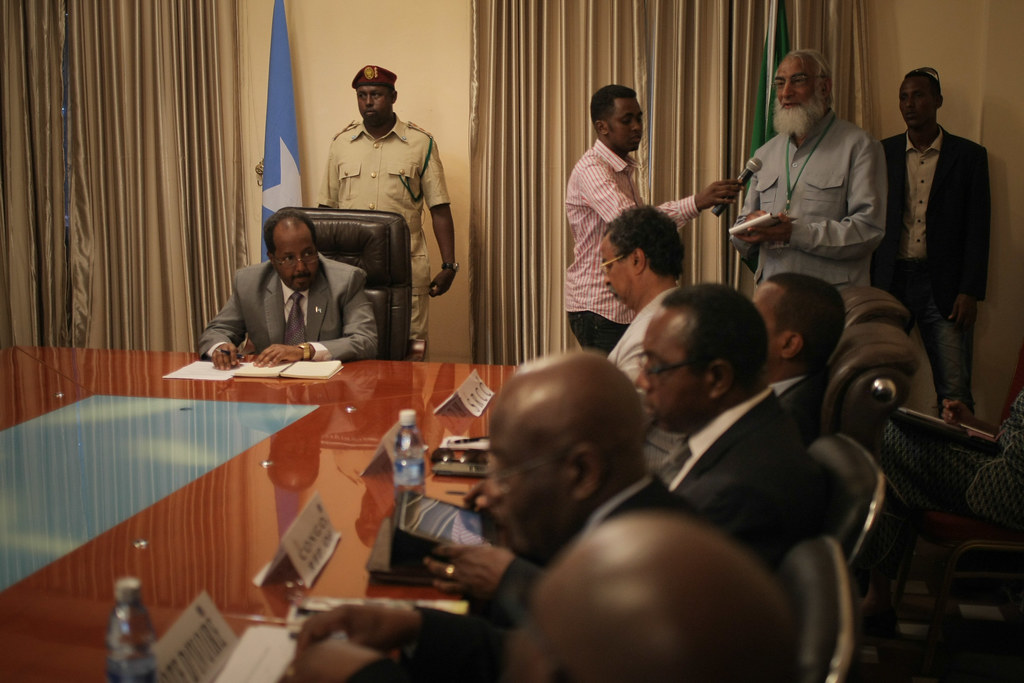
Two United Nations peacekeepers were killed and seven other people were wounded on August 24, 2026, after unidentified gunmen ambushed a patrol in South Sudan’s Jonglei state. The attack on UN peacekeepers South Sudan forces happened as the convoy travelled toward the town of Pajut, and the UN mission has called for a prompt investigation, warning that attacks on peacekeepers may amount to war crimes under international law.

The toll on UN peacekeepers South Sudan operations have taken this year

UN peacekeepers South Sudan

The two peacekeepers killed were from Ethiopia. Among the wounded were three additional peacekeepers, two South Sudan National Police Service officers and two civilian UN staff, according to Al Jazeera. The UN Mission in South Sudan, UNMISS, deployed a Quick Reaction Force to secure the area and support the emergency response. UN spokesperson Stephane Dujarric said the incident brings to nine the number of peacekeepers killed in malicious acts in South Sudan so far this year, according to UN News. That toll already exceeds the total recorded across several recent years combined, underscoring how much more dangerous protection-of-civilians patrols have become even as the broader ceasefire nominally holds.

Why Jonglei state remains dangerous

Jonglei has long been one of South Sudan’s most volatile regions, marked by intercommunal violence, cattle raiding disputes and a fragile security presence years after the country’s civil war formally ended. UNMISS patrols like the one attacked are typically tasked with protecting civilians and monitoring ceasefire compliance in areas where the government has limited reach. The identity of the attackers had not been confirmed at the time of writing, and UNMISS has not said whether the ambush was linked to a specific armed group or to broader intercommunal tension in the area. Aid workers operating in Jonglei describe a security environment where armed cattle-guard militias, remnants of opposition forces and criminal groups can all operate with limited accountability, making it difficult for investigators to quickly identify who was responsible.

How the UN is responding

UNMISS leadership, including mission chief Anita Kiki Gbeho, condemned the ambush and pressed for accountability. The mission’s response mirrors a broader pattern this year in which peacekeeping operations across fragile states have faced rising violence even as international attention has been drawn toward conflicts elsewhere, including the security arrangements Gulf states have been building through pacts like the Mecca Joint Defence Agreement. Diplomats note that peacekeeping missions in South Sudan, Mali and the Democratic Republic of Congo have all reported rising attack rates in 2026, feeding a broader debate at UN headquarters over whether current mandates and troop levels are adequate for the threat environment on the ground.

What comes next for UNMISS and Jonglei

UNMISS is expected to open a formal investigation into the ambush, and the UN Security Council could face pressure to address peacekeeper safety when it next reviews the mission’s mandate. South Sudan’s transitional government, which has struggled to fully implement its 2018 peace agreement, will also face renewed scrutiny over its ability to secure areas where UN forces operate. Humanitarian organizations warn that continued insecurity in Jonglei could further disrupt aid delivery to communities already facing displacement and food shortages, at a time when funding for South Sudan’s humanitarian response has already been shrinking. Ethiopia’s government, which lost two of its nationals in the attack, is likely to press for a fuller accounting of the security failures that allowed the patrol to be ambushed. The ambush also lands amid a broader stretch of global instability, from the Gulf tensions detailed in our coverage of the Strait of Hormuz tanker attacks to the fresh US sanctions push against Iran, all of which are straining diplomatic bandwidth that might otherwise go toward stabilizing fragile states like South Sudan.

South Sudan ambush: frequently asked questions

When did the attack on UN peacekeepers in South Sudan happen?
The ambush occurred on August 24, 2026, in South Sudan’s Jonglei state, as a patrol travelled toward Pajut.

How many people were killed or injured?
Two peacekeepers were killed and seven other people, including police officers and civilian staff, were wounded.

Who carried out the attack?
The attackers have not been identified. UNMISS has called for a prompt, independent investigation.

How many peacekeepers have died in South Sudan this year?
UN officials say this attack brings the total to nine peacekeepers killed in malicious acts since January 1, 2026.

Could this be classified as a war crime?
UNMISS says attacks deliberately targeting peacekeepers may constitute war crimes under international law, though that determination requires formal investigation.

What is UNMISS doing in response?
UNMISS deployed a Quick Reaction Force to the area and is pressing for accountability while continuing its civilian protection mandate.

Senate Passes Sweeping Russia Sanctions Bill in 86-11 Vote

The US Senate has passed one of the toughest Russia sanctions packages of the war. On August 7, 2026, senators voted 86-11 to approve the Russia sanctions bill Senate negotiators had been assembling for months, formally named the Lindsey O. Graham Sanctioning Russia and Iran Act of 2026 in honor of the late senator who championed it. The bill now heads to the House, which returns from recess in September.

What the Russia sanctions bill Senate vote approved

Russia sanctions bill Senate

The legislation gives President Trump authority to impose tariffs of up to 100% on countries that keep buying Russian oil and gas, singling out major purchasers such as China and India, according to NPR. It also places mandatory sanctions on senior Russian officials, including President Vladimir Putin, along with oligarchs, state-owned enterprises and foreign companies that support Russia’s defense industrial base. A separate provision extends sanctions against Iran, tying the bill to the broader pressure campaign Washington has been building against Tehran.

Why the bill carries Graham’s name

Senator Lindsey Graham had championed Russia sanctions legislation for years before his death, and colleagues moved to name the bill in his honor after he secured a late agreement with the White House on its scope, according to Al Jazeera. The bipartisan 86-11 margin reflects rare consensus in a chamber that has been split on other Ukraine-related spending questions.

What it means for global energy buyers

The threat of tariffs as high as 100% is aimed squarely at pressuring China and India, the two largest remaining buyers of discounted Russian crude, to scale back purchases. Energy traders are watching closely: any move to enforce the tariffs at full strength could reshape global oil flows in ways reminiscent of the disruption already rippling from Gulf tensions, covered in our report on the Strait of Hormuz tanker attacks. Central banks, including the Federal Reserve, are factoring renewed energy-price risk into their outlook, a theme we explored in our coverage of the Fed’s July rate hold.

Where the sanctions bill goes from here

The bill needs House approval before it can reach the president’s desk, and the House is not scheduled to return from recess until September. Even if it clears Congress, the White House retains discretion over how aggressively to enforce the tariff provisions, meaning implementation could move more slowly than the legislative text suggests. Diplomats will also be watching whether the bill affects ongoing, if strained, back-channel talks over Ukraine.

House leadership has signaled general support for the sanctions framework but has not committed to a floor vote timeline, and some members are expected to push for amendments narrowing or broadening specific provisions before final passage. Trade groups representing energy and shipping companies with exposure to Russian and Iranian markets are already lobbying for clearer guidance on compliance timelines, warning that ambiguity in how secondary sanctions will be enforced could disrupt legitimate transactions alongside the intended targets. Sanctions experts note that similar legislation in the past has taken months to move from Senate passage to full implementation, suggesting companies have some runway to adjust before the toughest provisions take effect.

Russia sanctions bill: frequently asked questions

What did the Senate vote on August 7 approve?
Senators voted 86-11 to pass a bill sanctioning Russian officials, oligarchs and energy buyers, and extending sanctions on Iran.

What is the Russia sanctions bill Senate margin significant for?
An 86-11 vote signals rare bipartisan agreement, increasing the odds the House will also act once it returns from recess.

Who does the bill target?
It targets senior Russian officials including Putin, Russian oligarchs, state-owned enterprises, defense-linked foreign firms, and countries that continue buying Russian energy.

Why is it named after Lindsey Graham?
Graham had long championed Russia sanctions legislation and reached a late deal with the White House on its scope shortly before his death.

Could tariffs on China and India actually reach 100%?
The bill grants the president that authority, but enforcement is discretionary, so the real-world tariff level will depend on White House decisions.

When could the bill become law?
It first needs House passage, which cannot happen before lawmakers return from recess in September, followed by presidential signature.

US Launches Global Economic Pressure Campaign on Iran

The United States has opened a new phase of financial pressure on Iran. On August 24, 2026, Treasury Secretary Scott Bessent unveiled what officials are calling “Operation Economic Outcast,” an Iran economic pressure campaign designed to cut off five of the country’s main revenue lifelines: oil, shipping, aviation, gold and digital assets. The announcement, delivered as Bessent described an “economic D-Day,” marks the most sweeping US Treasury action against Tehran since fighting between the two countries resumed earlier this year.

What the Iran economic pressure campaign targets

Iran economic pressure campaign

The Treasury imposed fresh sanctions on 60 entities, vessels and individuals spanning the United Arab Emirates, Hong Kong, China, Singapore and Switzerland, according to NPR. Officials said the goal is to make it functionally impossible for international buyers, shippers and financial institutions to keep doing business tied to Iranian oil, gold or crypto without risking exposure to secondary US sanctions. Unlike a single sanctions list, the campaign is structured as an ongoing pressure track: new designations are expected in waves rather than a single announcement.

Notably, the toughest measures have not yet been deployed. US officials told reporters the expanded “secondary” sanctions are likely to remain the primary tool at least until after the US midterm elections, holding the heaviest options in reserve.

Why Washington escalated now

The move follows months of renewed hostilities between the US and Iran and comes days after the United Arab Emirates accused Iran of orchestrating attacks on two tankers linked to the Abu Dhabi National Oil Company in the Strait of Hormuz — part of a broader pattern of regional escalation covered in our report on UAE halting Iran trade after the tanker attacks. Bessent said President Trump has personally been calling world leaders with “specific requests” to stop trading with Tehran, according to Al Jazeera, signaling that the campaign is as much diplomatic as financial.

How the region is reacting

Iran has warned it could respond by targeting shipping through the Strait of Hormuz, one of the world’s busiest oil corridors. Gulf states have moved to shore up their own security arrangements; the recently signed Mecca Joint Defence Agreement between Saudi Arabia, Turkey and Pakistan, detailed in our earlier coverage of the pact, reflects how regional governments are hedging against further escalation. Oil prices have already climbed on the uncertainty, trading near multi-month highs as traders price in supply risk.

What happens next in the Iran pressure campaign

Analysts expect the Treasury to roll out additional designations in the coming weeks rather than a single decisive strike, keeping pressure on shipping insurers, refiners and crypto exchanges that touch Iranian-linked funds. Whether the campaign changes Tehran’s calculus will depend largely on whether China, the largest buyer of Iranian oil, scales back purchases under the threat of secondary sanctions. Congress is separately weighing sanctions legislation that could harden these measures further once lawmakers return from recess in September.

Iran sanctions campaign: frequently asked questions

What is Operation Economic Outcast?
It is the US Treasury’s codename for a new sanctions campaign targeting Iran’s oil, shipping, aviation, gold and digital asset revenue, announced August 24, 2026.

Who does the Iran economic pressure campaign target?
It targets international entities, vessels and individuals in countries including the UAE, Hong Kong, China, Singapore and Switzerland that facilitate Iranian trade.

Has the US imposed its toughest sanctions yet?
No. Officials say the harshest secondary sanctions are being held in reserve, with the current wave expected to be the main tool at least until after the US midterm elections.

How has Iran responded?
Iran has warned of possible retaliation against shipping in the Strait of Hormuz, a route that carries a significant share of global oil trade.

Is this connected to the Strait of Hormuz tanker attacks?
The sanctions campaign follows a period of rising tension that included attacks on tankers linked to the UAE, though officials have not formally tied the two events together.

What should businesses with Iran-linked exposure watch for?
Firms in shipping, insurance, aviation and crypto with any Iran-linked counterparties should expect additional Treasury designations in the coming weeks and review compliance exposure accordingly.

Mecca Joint Defence Agreement Binds Saudi Arabia, Turkey, Pakistan

Saudi Arabia, Turkey and Pakistan have signed a trilateral security treaty committing each to treat an armed attack on any one of them as an attack on all three. The Mecca Joint Defence Agreement was signed on 7 August 2026 in the Saudi holy city by Crown Prince and Prime Minister Mohammed bin Salman, Turkish President Recep Tayyip Erdogan and Pakistani Prime Minister Shehbaz Sharif. All three governments describe the pact as defensive, aimed at no particular country, and open to others willing to join.

It is the first arrangement of its kind linking a NATO member, the world’s largest oil exporter and the only nuclear-armed Muslim-majority state.

What the Mecca Joint Defence Agreement actually says

The operative clause is short. According to statements released by the three governments and reported by the Associated Press, the pact stipulates “that any armed attack against any one of the three states shall be regarded as an attack against them all”. Pakistan’s foreign ministry said the deal was “guided by the longstanding historical ties among the three states, based on the enduring bonds of brotherhood and Islamic solidarity that unite them”, and reflected a “shared commitment to further strengthening their collective security”.

Two days after the signing, Pakistan’s foreign minister Ishaq Dar said on X that the agreement was “purely defensive in nature” and that other countries could join if they were willing to uphold its principles and settle differences peacefully. He said the collective-defence stipulation was consistent with the right of individual and collective self-defence under Article 51 of the UN Charter, and added that “the Makkah Accord does not abrogate or replace any existing bilateral or multilateral agreements between these countries, or with other countries or organizations”. His comments are set out in this Associated Press report.

Turkish foreign minister Hakan Fidan had said a day earlier that the agreement was not aimed at Iran or any other country, and a Turkish official told Reuters that it was defensive in nature, not directed at any specific actor, and open to other regional states. The treaty is rendered variously in official and press accounts as the Mecca Joint Defence Agreement, the Makkah Joint Defence Agreement and, in some Al Jazeera reporting, the Mecca Joint Deterrence Agreement.

How three very different militaries fit together

Soldiers on parade, illustrating the military commitments in the Mecca Joint Defence Agreement

The three signatories bring markedly different assets. Turkey has NATO’s second-largest military and a domestic defence industry that has expanded quickly over the past decade. Saudi Arabia is the world’s top oil exporter, with the financial depth and regional influence that follows. Pakistan has decades of operational experience and is the only Muslim-majority country with nuclear weapons.

Ozgur Unluhisarcikli, who runs the German Marshall Fund’s South and Wider Europe office, told Al Jazeera the partners bring complementary strengths, “including Turkey’s defence-industrial capabilities, Saudi financial muscle and influence, and Pakistan’s military experience and strategic deterrent”. He was blunt about the limits: “It should be noted that this is a framework for closer strategic, military, and defence-industrial coordination among three influential regional powers and not a mutual defence pact that can be compared to NATO.”

In Islamabad, the defence analyst Abdullah Khan likewise cautioned against reading the agreement as a NATO equivalent, or as being directed against Iran.

The road from Doha to Mecca

The agreement did not appear from nowhere. Al Jazeera reports that negotiations began after the Hamas attack on Israel of 7 October 2023 and the war in Gaza that followed, then accelerated during the US and Israeli campaign against Iran that began in February 2026.

The most direct precursor was bilateral. Pakistan and Saudi Arabia signed a mutual defence agreement in September 2025, in the immediate aftermath of an Israeli strike on the Qatari capital Doha on 9 September that year. On 19 March 2026, the foreign ministers of Turkey, Pakistan and Saudi Arabia met in Riyadh during an Islamic summit and discussed what a joint security arrangement might look like.

Sharif arrived in Saudi Arabia the day before the signing, accompanied by army chief Asim Munir, and performed the Umrah pilgrimage in Mecca. Reporting from Ankara, Al Jazeera’s Resul Serdar said Turkish officials pointed to converging pressures: “Post-October 7 has changed the region dramatically… And now there is the crisis in the Strait of Hormuz and ongoing attacks on Iran, as well as Iran’s response to the regional countries.”

Reaction in Tehran and Jerusalem

Iran’s leadership issued no official statement. An Iranian member of parliament, Ebrahim Rezaei, was sharply critical on X: “Saudis must know that a paper agreement with Turkiye and Pakistan will not bring them security, just as years of one-sided dependence on the Americans did not bring them security.” He added: “Reform your policies so that you do not need to beg for security from others.”

Neither Israeli Prime Minister Benjamin Netanyahu’s office nor the Israeli foreign ministry commented on the pact. Some Israeli and American commentators have cast the deepening security ties among Turkey, Saudi Arabia, Pakistan and Egypt as the formation of a hostile Sunni bloc. Yasmine Farouk of the International Crisis Group argued in a report published on 20 July that the four states had instead reached a hard-won conclusion that “security in their neighbourhood can no longer be left at the mercy of rivalry between the US and Israel, on one side, and Iran, on the other”. Al Jazeera’s explainer on the agreement sets out the wider context.

What to watch in the months ahead

The first test is membership. The three signatories say the pact is open to any state prepared to accept its principles, and the list of plausible candidates begins with Egypt, Qatar and Azerbaijan. Each addition would change what the treaty means in practice.

The second is institutional. Reporting from Doha, Al Jazeera’s Osama bin Javaid said the deal is intended to align the three on intelligence sharing and to widen cooperation on energy, defence spending and defence manufacturing. Whether a joint command, a standing planning staff or concrete industrial projects emerge will show how much of the agreement is operational rather than declaratory.

The third test is the one nobody wants: an actual attack on a signatory. Until that happens, the clause remains untested, and the analysts quoted above are careful to say that a collective-defence sentence is not the same thing as a functioning alliance.

The knock-on effects are visible in how people and capital move. Residency routes such as the UAE golden visa for business owners have drawn steady interest, while financial screening for travellers has tightened, as our guide to proof-of-funds rules in the UK, Canada and Australia explains.

Questions readers are asking

What is the Mecca Joint Defence Agreement?

It is a trilateral security treaty signed on 7 August 2026 in Mecca by Saudi Arabia, Turkey and Pakistan. According to statements released by the three sides, it stipulates that any armed attack against any one of the three states shall be regarded as an attack against them all.

Who signed it?

Saudi Crown Prince and Prime Minister Mohammed bin Salman, Turkish President Recep Tayyip Erdogan and Pakistani Prime Minister Shehbaz Sharif, accompanied by their foreign and defence ministers.

Is it aimed at Iran?

All three governments say no. Pakistan’s foreign minister Ishaq Dar called it purely defensive in nature, Turkish foreign minister Hakan Fidan said it was not aimed at Iran or any other country, and a Turkish official told Reuters it was not directed at any specific actor.

Is this a NATO for the Muslim world?

Analysts caution against the comparison. Ozgur Unluhisarcikli of the German Marshall Fund called it a framework for closer strategic, military and defence-industrial coordination rather than a mutual defence pact comparable to NATO.

Can other countries join?

Yes. Dar said other countries could join if they were willing to uphold its principles and resolve differences through peaceful means. A Turkish official said the pact was open to other regional countries.

Does it replace existing alliances?

No. Dar wrote that the agreement does not abrogate or replace any existing bilateral or multilateral agreements between the three countries, or with other countries or organisations, and said its collective-defence clause is consistent with Article 51 of the UN Charter.

Tamara News is tracking how the new security architecture reshapes travel, trade and investment across the region. Our related coverage is linked above.