Xbox Just Cut 286 More Jobs — And Merged Four of Its Studios

The Xbox studio consolidation layoffs announced this week cut 286 jobs and merged four studios under Microsoft’s gaming division. The company confirmed the changes after days of reports that a new wave of cuts was coming. The reduction is part of a previously disclosed plan to eliminate 3,200 roles across Xbox by the end of fiscal year 2027.

How the Xbox studio consolidation layoffs unfolded

Reports of the coming cuts surfaced on September 22, with outlets including Pure Xbox describing “hundreds” of expected job losses and speculation about which studios would be affected. According to that reporting, roughly 1,600 of the originally announced 3,200 roles had already been eliminated in an earlier wave, leaving about 1,600 more cuts to come through the rest of fiscal 2027. Microsoft confirmed the details later the same day it was first reported, announcing “four major studio changes and cuts 286 jobs.”

Which studios are affected

Xbox studio consolidation layoffs empty office desk

Early speculation focused on whether Halo Studios would come under closer Activision Blizzard oversight and whether Blizzard itself would see cuts, a claim that was later disputed. Microsoft’s confirmation described four studio changes without naming every affected team in detail. That continues a pattern from earlier 2026 layoffs, in which specific studio-level breakdowns have been slower to emerge than the overall headcount figures.

Part of a longer restructuring story

This wave extends a restructuring effort that has run through most of 2026 across Microsoft’s gaming division. It follows the completion of its Activision Blizzard acquisition and a broader company-wide push to consolidate overlapping teams. The stated rationale has centered on streamlining operations and concentrating resources on larger, higher-priority projects rather than spreading development budgets across many smaller studios.

Microsoft has not offered a detailed public breakdown of cost savings tied to this specific round, consistent with how it handled earlier phases of the 3,200-role plan. Coverage of the broader 2026 tech layoff wave has noted Xbox as one of several major technology divisions reducing headcount, alongside Apple’s Vision Pro unit and other consumer hardware teams. AI-focused divisions at the same companies, by contrast, continue hiring.

What it means for the games coming out of Xbox

Studio consolidations of this kind typically mean projects get folded into other teams’ pipelines, delayed, or in some cases cancelled outright. Microsoft has not confirmed specific title changes tied to this week’s cuts. Developers affected by earlier 2026 waves have described uncertainty about project continuity as one of the harder parts of the restructuring, separate from the immediate job losses. Industry observers say the consolidation pattern mirrors similar moves across the games industry this year, as several major publishers have merged smaller studios into larger production groups to reduce overhead.

Worker advocacy groups within the games industry have continued to call for stronger severance and notice protections for staff affected by consolidation rounds like this one. They point to the repeated waves of cuts across Xbox studios since the Activision Blizzard deal closed as evidence that the restructuring has outlasted its original announced timeline.

What’s left of Microsoft’s layoff plan

With 286 more roles cut this week, on top of the roughly 1,600 already eliminated, Microsoft is now more than halfway through its stated 3,200-role target for Xbox by the end of fiscal 2027. Based on the pace disclosed so far, further waves are likely before that fiscal year closes, though Microsoft has not published a specific schedule for the remaining cuts.

More tech industry coverage

See also: the AI antitrust lawsuit against major labs, the stock market’s AI-driven trade rally, and Oracle’s Project Jupiter delay.

Xbox layoffs: quick answers

How many jobs were cut this week?

Microsoft confirmed 286 job cuts alongside four major studio changes within its Xbox gaming division.

How does this fit into the bigger layoff plan?

It is part of a previously announced target of 3,200 role reductions across Xbox by the end of fiscal year 2027, with roughly 1,600 already cut before this latest wave.

Which studios were merged or changed?

Microsoft described four major studio changes without detailing every affected team; earlier speculation about Halo Studios and Blizzard specifically was not fully confirmed.

Why is Microsoft consolidating Xbox studios?

The company has cited streamlining operations and concentrating resources on larger, higher-priority projects following its Activision Blizzard acquisition.

Are more Xbox layoffs expected?

Based on the disclosed pace toward the 3,200-role target, further cuts are plausible before fiscal year 2027 ends, though Microsoft has not published a specific timeline.

Cited reporting

Microsoft Just Quietly Gave Up on Copilot as Your AI Best Friend

The Microsoft Copilot AI reboot, reported by Bloomberg on September 25, folds the company’s separate consumer and workplace assistants into a single product built primarily for corporate customers. The move effectively ends Microsoft’s attempt to compete with OpenAI, Google and Meta for the personal AI companion market.

Why the Microsoft Copilot AI reboot is happening now

The personal Copilot push had struggled to gain traction. ChatGPT has reached a billion users, and Google has pushed Gemini across the Android ecosystem, while Microsoft’s standalone consumer chatbot attracted comparatively few users of its own. Mustafa Suleyman, who had led the consumer AI effort, handed day-to-day responsibility to Jacob Andreou in March 2026, a shift that in hindsight lines up with the direction the company has now taken.

What changes for users

Microsoft Copilot AI reboot chatbot app on smartphone

The unified Copilot keeps a set of consumer-facing features, including health tools and news surfacing. Its main development effort is now aimed at document editing inside Word and Excel, an integrated coding assistant, and a rebranded “Autopilot” feature, formerly known as Scout. Charles Lamanna, who oversees the product, put the strategic shift bluntly: “We’re not going to build a Copilot that’s like your personal companion…We help you get stuff done.”

That framing marks a clear retreat from the personal-companion positioning Microsoft had experimented with over the past two years. It favors a narrower productivity pitch aimed at the roughly 90 million paying Microsoft 365 users already inside the company’s ecosystem.

The numbers behind the pivot

As of June 2026, Microsoft had signed up more than 30 million Copilot subscriptions, a figure that trails well behind ChatGPT’s reported billion-user base. The reboot has reportedly taken six months of engineering effort to build, and Microsoft plans to begin rolling it out in the coming weeks. One early enterprise reference point: professional services firm GHD has had 12,000 employees using Copilot since a late-2023 launch, a scale Microsoft is now trying to replicate more broadly.

What this means for the AI assistant market

By stepping back from the personal chatbot race, Microsoft is effectively conceding that category to OpenAI’s ChatGPT and Google’s Gemini, at least for now. It is betting instead that its advantage lies in workplace software Microsoft already controls. That is a narrower bet than the one the company appeared to be making when it first launched a standalone consumer Copilot app, but it plays to Microsoft’s existing strength in enterprise software distribution.

Industry analysts following the AI assistant market said the move reflects a broader pattern among large technology companies this year. Rather than chasing consumer engagement metrics directly, several are refocusing AI investment on products with existing paying customers and clearer near-term revenue, a lower-risk path than competing head-on for mass-market chatbot users.

How the Copilot rollout unfolds from here

The unified product is expected to begin rolling out to users in the coming weeks, starting with the enterprise-facing features inside Word, Excel and coding tools. Whether Microsoft revisits a standalone consumer play later will likely depend on how quickly its enterprise-first Copilot can close the usage gap with ChatGPT and Gemini. Many everyday users now encounter AI tools through their employer’s software rather than by downloading an app of their own choosing.

More on the AI race

Related coverage: Google’s early Gemini 4 launch timeline, Jensen Huang’s comments on AI regulation, and the AI antitrust lawsuit against major labs.

Copilot changes: your questions answered

What is actually changing with Copilot?

Microsoft is merging its separate consumer and workplace Copilot products into one enterprise-focused assistant rather than continuing to build a standalone personal chatbot.

Why is Microsoft stepping back from the consumer market?

The standalone consumer Copilot drew far fewer users than ChatGPT’s billion-user base or Google’s Gemini rollout across Android, making the enterprise market a more promising focus.

Will consumer features disappear entirely?

No. Health tools and news surfacing remain, but the bulk of new development is going into Word and Excel document editing, coding assistance, and the rebranded Autopilot feature.

How many people currently use Copilot?

Microsoft reported more than 30 million Copilot subscriptions as of June 2026, alongside roughly 90 million paying Microsoft 365 users who could gain access to the reworked assistant.

When does the reboot roll out?

Microsoft says the rollout begins in the coming weeks, following what the company describes as a six-month engineering effort.

Reporting sources

Trump and Xi Bought Themselves Until January — But Not Much Else

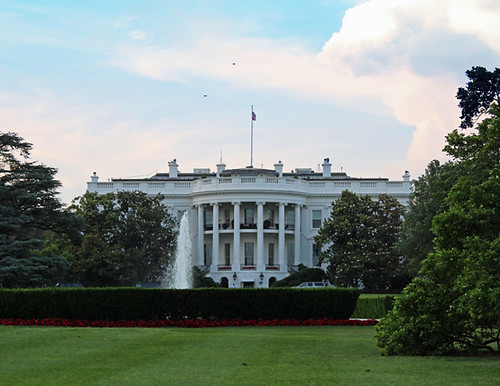
The Trump Xi summit trade truce reached at the White House this week extends an existing tariff ceasefire through January 10, 2027. It buys both governments more time to negotiate a broader deal rather than resolving the underlying dispute. The September 24-26 meeting was the third in-person encounter between the two leaders in under a year, and it produced an extension rather than a breakthrough.

What the Trump Xi summit trade truce covers

The original 11-month truce had been set to expire in November. According to Al Jazeera’s summit preview, the dispute traces back to Trump’s 10% duties on Chinese goods, imposed over fentanyl and immigration concerns, which China answered with levies on US coal, LNG, crude oil and autos, plus restrictions on rare-earth metal exports. Trump later added 12.5% tariffs on 60 trading partners, including China, over forced-labor allegations, widening the dispute beyond a purely bilateral fight.

Taiwan arms sales remain the sharpest edge

Trump Xi summit trade shipping containers at port

Taiwan was expected to come up prominently, and it did. The Trump administration approved an $11 billion arms package for Taiwan in December, with a second $14 billion package currently on hold. Trump has described the sales as “a very good negotiating chip,” language that signals Washington sees Taiwan-related leverage as a bargaining tool in the broader trade relationship rather than a fixed commitment.

AI competition adds a new front

Beyond trade and Taiwan, the two sides discussed what officials describe as “fierce competition” in artificial intelligence development. The US has proposed a new notification mechanism under which each government would alert the other to serious AI incidents that threaten national security. It is an early and narrow step toward managing AI risk between the two largest economies, not a comprehensive framework.

Iran hovered in the background

Given the US-Israel conflict with Iran, that issue was expected to feature prominently in the talks as well. China maintains close ties with Tehran, and some observers suggested Washington might look to Beijing for influence over Iran’s posture. Trump, however, has indicated he does not believe such intervention is necessary, suggesting the Iran track stayed separate from the trade and Taiwan discussions rather than becoming a bargaining chip itself.

Coverage from NPR described the two leaders striking a cordial public tone throughout the three days. Officials on both sides still acknowledged that underlying tensions on trade, technology and Taiwan remained largely where they started.

How markets read the outcome

Equity markets took the extension calmly rather than treating it as either a major relief or a fresh shock. That fits a summit that avoided both a collapse in talks and a comprehensive new agreement. Analysts covering US-China trade said the January deadline gives negotiators a defined runway. They cautioned that previous extensions this year had similarly kicked difficult decisions further down the calendar rather than resolving them.

Business groups on both sides of the Pacific welcomed the extension as preferable to a lapse in the truce. Even so, several trade associations noted that repeated short-term extensions make it harder for manufacturers and exporters to plan around a stable long-term tariff schedule.

The clock now running to January

The truce is now extended to January 10, 2027. That gives both governments roughly three and a half months to negotiate terms on tariffs, rare-earth exports and the still-pending second Taiwan arms package. Analysts following the relationship say the extension avoids an immediate escalation but leaves every major flashpoint, tariffs, Taiwan, and AI, unresolved heading into the new deadline.

More on US-China trade

Related coverage: the Federal Reserve’s latest rate decision, AMD’s trillion-dollar valuation, and Jensen Huang’s comments on AI regulation.

Summit FAQ: trade truce explained

How long does the new trade truce last?

It runs through January 10, 2027, extending the original 11-month ceasefire that had been due to expire in November.

What started the tariff dispute?

Trump’s 10% duties on Chinese goods over fentanyl and immigration concerns, which China answered with levies on US coal, LNG, crude oil and autos plus rare-earth export restrictions.

What is happening with Taiwan arms sales?

An $11 billion package was approved in December; a second $14 billion package remains on hold as Trump calls the sales a negotiating tool.

Did the summit address AI competition?

Yes. The two sides discussed a proposed notification mechanism to alert each other to serious AI incidents threatening national security.

Was Iran part of the summit agenda?

It was expected to come up given the US-Israel conflict with Iran and China’s ties to Tehran, though Trump indicated he sees no need for Chinese intervention.

Summit reporting sources

Wall Street Shrugged Off a 2008-Level Bond Selloff This Week — Here’s How

Stock market weekly gains held into Friday’s close on September 25, with the Dow Jones Industrial Average rising 0.93% to 51,828.62, snapping a three-week losing streak, while the S&P 500 added 0.51% to 7,743.41 and the Nasdaq gained 0.48% to 27,068.72. All three indexes finished the week higher even as bond markets went through one of their roughest stretches in years.

Why stock market weekly gains stood out this time

The rally came despite the 10-year Treasury yield climbing to 5.18%, its highest level since the 2008 financial crisis. In past years, a move like that might have dragged equities down alongside it. Instead, according to Yahoo Finance’s market wrap, investors treated the bond move as a separate story from corporate earnings momentum, particularly in technology.

BlackRock’s Rick Rieder described the bond situation as “not a crisis but an eye-opener.” That framing captures how Wall Street processed the yield spike: a signal worth watching on inflation, not a reason to sell stocks broadly.

Meta’s AI bet drove much of the week’s gains

stock market weekly gains Wall Street board

Meta shares surged roughly 13% during the week on investor enthusiasm for its Muse AI agent, a standout move that helped offset weakness elsewhere. Costco also beat expectations, reporting revenue of $95.72 billion against a $94.88 billion estimate. Not every stock benefited: Bank of America downgraded Nike to Underperform and cut its price target to $30, citing concerns that predate this week’s macro turbulence.

The divergence between Meta’s rally and Nike’s downgrade illustrates a market that has grown increasingly selective. It rewards companies seen as AI beneficiaries while continuing to punish consumer-facing names facing their own separate demand pressures.

Oil eased while gas prices stayed high

On the commodities side, WTI crude fell to $92 a barrel and Brent traded below $98, an easing that gave some relief to markets rattled by Middle East tensions. That relief has not reached drivers yet. Average US gas prices remained near $4.50, and consumer sentiment fell to a four-month low of 48.1 as households weighed high pump prices against ongoing tariff concerns.

Trading volume across the major exchanges stayed elevated through the week as investors rotated between rate-sensitive sectors and the AI-linked names that have driven most of 2026’s gains. That pattern has repeated through several volatile stretches this year without producing a sustained broad-market pullback.

What the bond move actually means

A 10-year yield at 5.18% raises borrowing costs across the economy, from mortgages to corporate debt, and typically reflects investor expectations of persistent inflation or heavier government borrowing. The fact that equities absorbed the move without a broad selloff suggests investors are betting that corporate earnings, especially in AI-linked technology names, can outrun higher financing costs for now. Housing-sensitive and small-cap stocks, which tend to be more exposed to borrowing costs, lagged the broader indexes over the same stretch.

Strategists at several major banks have flagged the gap between mega-cap technology performance and the rest of the market as one of the more unusual features of this year’s rally. A narrower group of AI-linked names has accounted for a disproportionate share of the S&P 500’s total gains since January.

What investors are watching next week

The key question heading into next week is whether Treasury yields keep climbing or stabilize near current levels. A further move higher would test whether equity investors can keep treating the bond market as background noise. That is particularly true for rate-sensitive sectors like housing and small-cap stocks, which have not enjoyed the same AI-driven tailwind as Meta and its peers.

More business coverage

Related reading: our coverage of the Federal Reserve’s latest rate decision, the Treasury yields bond rout, and AMD’s trillion-dollar valuation milestone.

Markets FAQ: what investors want to know

Did all three major indexes close higher for the week?

Yes. The Dow, S&P 500 and Nasdaq all posted weekly gains, with the Dow’s 0.93% Friday rise snapping a three-week losing streak.

Why didn’t rising bond yields hurt stocks more?

Investors appear to be treating the yield spike as a separate inflation signal rather than an immediate threat to corporate earnings, particularly in AI-linked technology stocks.

What drove Meta’s stock higher this week?

Investor enthusiasm for Meta’s Muse AI agent pushed shares up roughly 13% during the week.

How high did the 10-year Treasury yield get?

It climbed to 5.18%, its highest level since the 2008 financial crisis.

What happened to oil and gas prices?

WTI crude eased to $92 a barrel and Brent fell below $98, though average US gas prices stayed near $4.50 despite the easing in crude.

Market data sources

Dozens of Countries Walked Out on Netanyahu’s UN Speech — Here’s Why

The Netanyahu UN Assembly speech on September 24 emptied large sections of the chamber before he even reached the podium. Delegates from dozens of countries walked out in a coordinated show of protest over Israel’s Gaza campaign. The Israeli prime minister used the platform to defend the war, reject accusations of genocide, and take direct aim at foreign leaders who have grown more critical of Israel over the past year.

What happened during the Netanyahu UN Assembly speech

According to Al Jazeera’s account of the address, Netanyahu told the assembly Israel had carried out the “opposite of genocide” in Gaza, a claim that came despite a Palestinian death toll that has climbed past 73,000 over the course of the war. He also claimed that some of the leaders who walked out had privately thanked Israel for “taking out Iran’s nukes,” a reference to the May strikes on Iranian nuclear-linked sites.

Reaction split sharply along familiar lines

Netanyahu UN Assembly speech flags outside UN headquarters

At home, the speech played well with Netanyahu’s base. Israeli pollster Mitchell Barak called it “a great performance,” and right-wing outlets highlighted his defiant framing of Israel fighting on seven fronts against enemies seeking its destruction. Outside Israel, the response was far less favorable. Security analyst Ahron Bregman said the speech “was littered with lies,” calling Netanyahu a “serial liar.” He pointed to more than 80 Palestinians killed in the West Bank by Israeli forces and settlers so far this year, a toll separate from the Gaza casualty figures.

Coverage of the speech, including a report from NPR, noted Netanyahu also directed criticism at New York political figures who have been outspoken on Gaza, folding domestic American politics into a speech nominally addressed to the UN membership.

The timing is not accidental

The speech landed roughly a month before Israeli parliamentary elections that could end his time in office. Much of its content was aimed as squarely at domestic voters as at the international audience in the chamber. Framing Israel as isolated but unbowed has been a consistent Netanyahu theme through 2026. The UN stage gave him a global platform to repeat it days before a campaign that will test whether that message still holds with Israeli voters.

Israeli commentators have noted that UN speeches have functioned this way for Netanyahu before, providing a moment of unfiltered, camera-ready defiance that plays differently to a domestic audience than to the diplomats in the room.

What the walkout signals about Israel’s isolation

The scale of the walkout, drawing delegates from dozens of countries before Netanyahu had spoken a word, is itself being read as a marker. It shows how far Israel’s diplomatic standing has slipped over the course of the Gaza war. It followed a broader pattern at this year’s General Assembly session, where the war has dominated speeches from leaders across the Arab world, Europe and parts of Latin America. Several used their own remarks to call for an arms embargo or expanded sanctions.

What Netanyahu’s speech means going forward

With Israeli elections roughly a month away, the speech is likely to be replayed heavily in domestic campaign coverage rather than shift international opinion, which had already hardened well before Netanyahu took the podium. Diplomats expect little practical change in how governments engage with Israel in the near term, though the size of the walkout may embolden further coordinated diplomatic gestures at future UN sessions.

Further reading on the Gaza war and the UN

See our related coverage of the UN Secretary-General’s General Assembly remarks, the Gaza reconstruction plan, and the UN Security Council’s AI briefing.

Frequently asked questions on the walkout

How many countries walked out?

Reports describe delegates from dozens of countries leaving before Netanyahu spoke, though no single official tally of walkout participants has been published.

What did Netanyahu say about Gaza casualties?

He described Israel’s conduct as the “opposite of genocide,” a claim made despite a Palestinian death toll that has passed 73,000 during the war.

Did Netanyahu address Iran in the speech?

Yes. He claimed leaders who walked out had privately thanked Israel for strikes on Iran’s nuclear program, without naming which leaders made such comments.

Why is the timing significant?

The speech came about a month before Israeli parliamentary elections that could remove Netanyahu from office, and much of it was aimed at domestic voters.

How was the speech received in Israel versus abroad?

Domestically it was praised by supporters as a strong performance; internationally, critics including security analyst Ahron Bregman characterized its claims as false.

Sourcing and further reading