
On this page
The US-backed Board of Peace has put a price on the first step of rebuilding Gaza. On Wednesday,
23 September 2026, its governors unveiled a six-month, $2.45 billion Gaza reconstruction plan
covering 66 projects. The blueprint arrived at a meeting in New York on the sidelines of the UN General
Assembly. It came with no start date. Almost everything in it depends on steps that have not happened yet.
What the Gaza reconstruction plan contains
The first phase targets the most urgent gaps. Its 66 projects span infrastructure, education and health,
according to the Associated Press.
They are designed to support President Donald Trump’s 20-point plan to end the Israel-Hamas war.
The board framed the first phase as a down payment, not the whole bill. "The need is immense,"
it said. It estimates that repairing Gaza’s physical damage will cost about $35.2 billion over the medium
term. It adds another $71.4 billion over the next ten years.
Those figures come from the board itself. No independent audit of Gaza’s damage accompanied them.
Why no start date came with the money
The plan hinges on disarmament. Nikolay Mladenov, the board’s high representative, has said progress
depends largely on Hamas giving up its weapons. The group has so far refused.
In July, Hamas and other Palestinian factions agreed a document setting out a disarmament process,
Al Jazeera reported.
Implementation has not followed. Mladenov was blunt about timing. "We are not bound by a calendar,"
he said. "We want to make sure that this works."
Mladenov has also pressed Israel to scale back its military operation. That pressure matters, because the
ceasefire framework rests on both sides moving at once.
How far Gaza is from reconstruction today
The ceasefire took effect on 10 October. It was meant to open the way for Israeli withdrawals, an
international peacekeeping force and a new apolitical Palestinian administration. Most of that is still
waiting.
- The Israeli military has expanded its control and now occupies about 60% of the territory, the AP reports.
- The international force and the new government have not entered Gaza.
- Reconstruction has not begun.
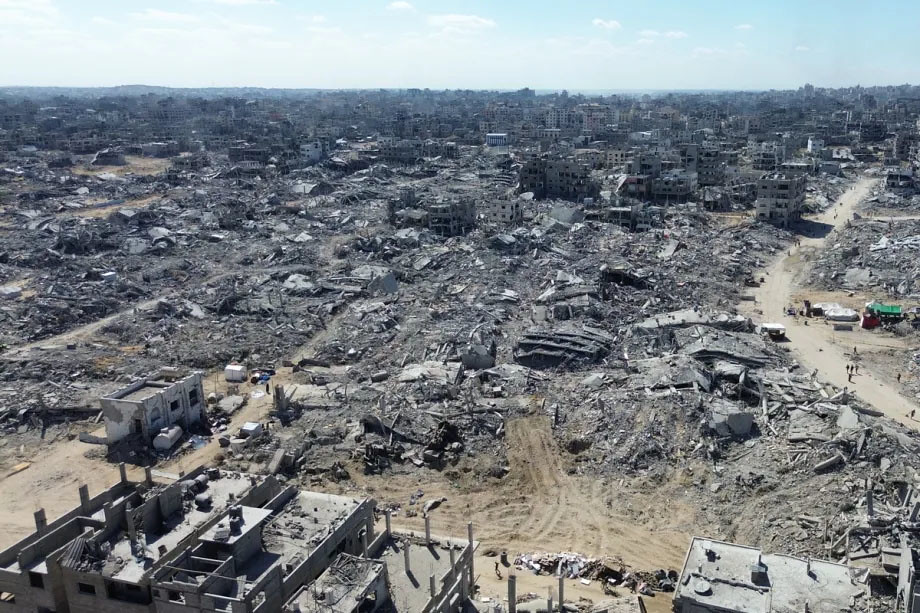
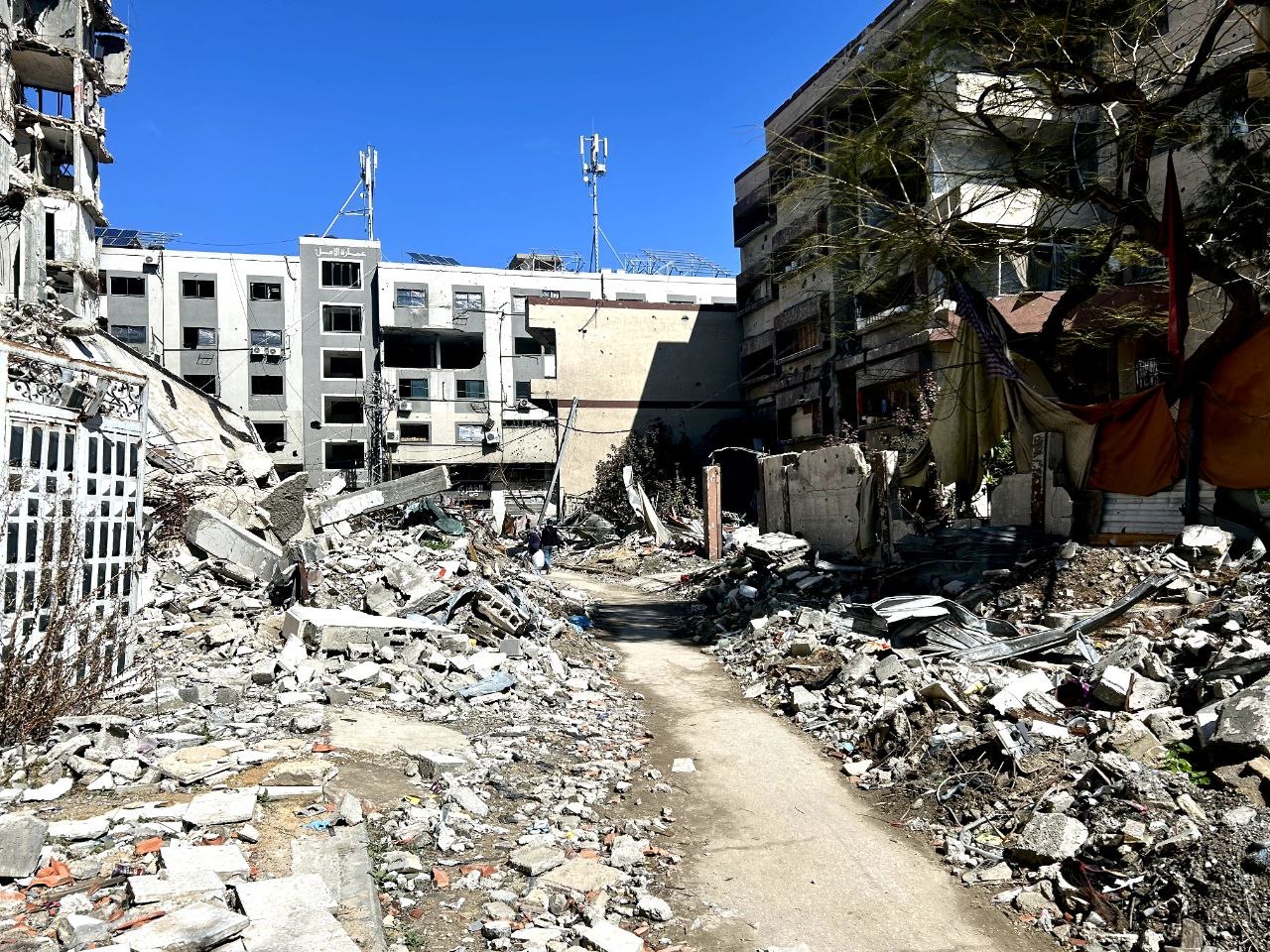
- Most Palestinians still live in tent camps or in the ruins of former homes.
Violence continues too. On the day the plan was unveiled, Israeli strikes killed seven Palestinians
across the enclave, according to Al Jazeera, citing local medics. Israel said one strike killed a senior
Hamas finance official. That claim comes from the Israeli prime minister’s office alone.
The scale of what the money must cover is hard to overstate. The board itself calls the need immense.
Its own estimate runs to $35.2 billion for medium-term repairs and $71.4 billion over a decade. Against
those figures, the $2.45 billion first phase is a start, not a solution. And even the first phase waits
on a political breakthrough that has not come.
The diplomatic pressure around the Gaza reconstruction plan
The plan landed in a week of sharp criticism of Israel at the General Assembly. Leaders of the United
Kingdom, France and Canada said Israeli settlement policy in the West Bank blocks a two-state solution.
UN Secretary-General António Guterres said the UN must be allowed to perform its mandates in Gaza. Our
report on Guterres’s warnings at this year’s Assembly
covers that speech in more detail.
Turkish President Recep Tayyip Erdogan, whose country signed the ceasefire, said rebuilding must start
"as soon as possible". Earlier doubts about the whole framework are set out in our analysis of
criticism of the Gaza ceasefire plan.
Three tests before any rebuilding starts
The board now has to answer harder questions than cost. Watch for three signals.
- A disarmament timetable. Without one, donors have little reason to release funds.
- Deployment of the stabilisation force. Uganda has approved sending troops. No force has yet crossed into Gaza.
- Building materials at the crossings. Cement, steel and machinery must enter at scale before any of the 66 projects can begin.
Regional security adds another layer of risk. Recent missile fire toward Saudi Arabia, covered in our report on the
Riyadh missile attack, shows how quickly
the wider Middle East picture can shift. For now, the $2.45 billion sits on paper.
Questions readers are asking
How much does the Gaza reconstruction plan cost?
The first phase costs about $2.45 billion and runs for six months. It covers 66 projects in infrastructure, education and health. The Board of Peace puts full physical reconstruction far higher: roughly $35.2 billion over the medium term and another $71.4 billion over ten years.
When will reconstruction start?
No start date has been set. The board’s high representative, Nikolay Mladenov, said the plan depends on Hamas disarming, and that the board is not bound by a calendar.
Who runs the Board of Peace?
The Board of Peace is the US-backed body created under President Donald Trump’s 20-point plan to end the Israel-Hamas war. Nikolay Mladenov serves as its high representative.
Has the ceasefire held?
The ceasefire that took effect on 10 October halted the heaviest fighting. Violence has not stopped. Al Jazeera reported that Israeli attacks killed seven Palestinians on the day the plan was unveiled.
Who controls Gaza on the ground?
According to the Associated Press, the Israeli military now occupies about 60% of the territory. The planned international force and the new Palestinian technocratic government have not entered Gaza.
What would unlock the money?
Three things sit on the critical path: Hamas disarmament, deployment of the international stabilisation force, and steady entry of building materials. None is in place yet.
Sources
- Associated Press via PBS News — Trump’s Board of Peace proposes $2.45 billion blueprint to begin Gaza reconstruction. pbs.org
- Al Jazeera — Board of Peace plans $2.4bn Gaza reconstruction as Israel kills seven. aljazeera.com
Images: featured photo by Felton Davis (public domain); in-article photo by Hla.bashbash, licensed CC BY.

