• Mon - Fri 9.00 - 19.00

Tag Archives: Treasury yields

US Stocks Slide as Yields Hit 20-Year High, Oil Swings

US stocks slid on Wednesday as Treasury yields climbed to their highest levels in more than 20 years and oil stayed volatile on renewed Iran war fears, according to Al Jazeera. Wall Street closed lower a day after the Nasdaq and S&P 500 both hit record highs.

What this covers

Why yields and stocks moved

Investors worried that high oil prices would push up inflation and interest rates, driving a selloff in bonds, Al Jazeera reports. The article does not give index levels or percentage moves for the session.

Oil: Brent above $100

Oil rose Wednesday on Middle East supply concerns, then fell after the International Energy Agency said members “stand ready to release additional oil from their reserves if necessary”, with diesel prioritised. By 01:16 GMT on Thursday, Brent was at $101.53 a barrel and US WTI at $89.39. G7 countries and the IEA agreed on 3 October to release 100 million barrels of diesel and crude.

Tanker attacks in the Gulf

The UK Maritime Trade Operations agency (UKMTO) said nine tankers were attacked in the Strait of Hormuz in October so far, half of September’s total for the strait and wider Gulf. On Wednesday it also reported a tanker struck by multiple projectiles about 94 km north of Madinat ash Shamal, in Qatar’s exclusive economic zone, with casualties reported but no numbers given, per Al Jazeera. Qatar had not commented. See the agency’s own notices at UKMTO.

Supply is not stopped

Kpler data cited by Al Jazeera shows Gulf oil flows, excluding Iran, recovered to over 81% of pre-war levels in September, and Middle East crude exports hit 18.3 million barrels a day on 30 September, above the 12-month pre-war average of roughly 18 million. US Secretary of State Marco Rubio has said Washington controls the strait and flows are near normal, a claim made by a party to the conflict.

Markets and oil: questions answered

Why did US stocks fall on Wednesday?

Al Jazeera links the fall to bond-market worries: high oil prices could lift inflation and interest rates, pushing yields to over-20-year highs.

What was the Brent price?

$101.53 a barrel at 01:16 GMT on Thursday 8 October; WTI was $89.39.

What are the G7 and IEA doing?

They agreed on 3 October to release 100 million barrels of diesel and crude, and the IEA says it can release more.

Is oil still flowing from the Gulf?

Yes, per Kpler data, though shipping attacks continue.

Related reading: Wall Street earnings season and mortgage rates at a three-year high.

Treasury Yields End September: 10-Year at 5.26%

U.S. Treasury yields ended September at levels that keep borrowing costs high around the world. The Treasury Department’s daily par yield curve shows the 10-year note at 5.26% on 29 September 2026, the 30-year at 5.59% and the 2-year at 4.89%, based on Treasury’s published rates. The day before, the 10-year closed at 5.24% and the 30-year at 5.56%. These Treasury yields matter because they act as a benchmark for dollar borrowing.

Contents

The numbers on the last trading days

According to Treasury’s table, the 2-year yield slipped from 4.92% on 28 September to 4.89% on 29 September, while the 10-year rose from 5.24% to 5.26% and the 30-year from 5.56% to 5.59%. Long-dated yields edged up as short-dated yields edged down, so the gap between the 2-year and 10-year widened slightly to 37 basis points.

Weekly market data compiled by TradingKey, a market-analysis site, says the 10-year yield touched 5.225% during the week of 21-27 September before closing near 5.17%, and that Brent crude fell below $98 a barrel. Treat those as a secondary-source snapshot; the Treasury table above is the primary record. For the stock-market side of the same week, see our note on S&P 500 record highs alongside rising yields.

The Fed’s September hike

The backdrop is the Federal Reserve’s 16 September decision. The Federal Open Market Committee voted 12-0 to raise its target range by a quarter point to 3.75%-4.00%. In its policy statement, the Committee said inflation “remains elevated” and that the move would support a timelier return to its 2 percent goal, while describing economic activity as expanding at a solid pace. CNBC had reported on 14 September that the 10-year yield hit 5% before reversing as traders awaited the meeting, so yields have moved higher since.

How it reaches borrowers abroad

Consider a hypothetical Brazilian founder who raised a dollar-denominated loan last year. This is an illustration, not a reported case. If that loan resets against a dollar benchmark, higher U.S. rates raise the interest bill, and converting reais into dollars to repay it adds currency risk on top. The same logic applies to governments and companies that issue dollar bonds, and to exporters whose customers finance purchases in dollars. The effect varies by contract, so anyone exposed should read their own loan terms rather than rely on the headline yield.

Data that could move yields next

The coming week is crowded with releases. Our week-ahead economic calendar sets out the scheduled reports, and our coverage of Micron’s results shows how technology earnings are feeding the equity side. Surprises in jobs or inflation data are the usual catalysts for sharp moves in the 10-year yield.

Quick answers

What was the 10-year Treasury yield on 29 September 2026?

The U.S. Treasury’s daily par yield curve shows 5.26%, up from 5.24% on 28 September. The 2-year was 4.89% and the 30-year 5.59%.

What did the Federal Reserve do on 16 September?

The FOMC voted 12-0 to raise the federal funds target range by 0.25 percentage points to 3.75%-4.00%, according to its statement.

Why do Treasury yields matter outside the United States?

Dollar yields are a benchmark for global borrowing. When they rise, dollar-denominated loans and bonds generally cost more to issue or refinance, including for companies and governments outside the U.S.

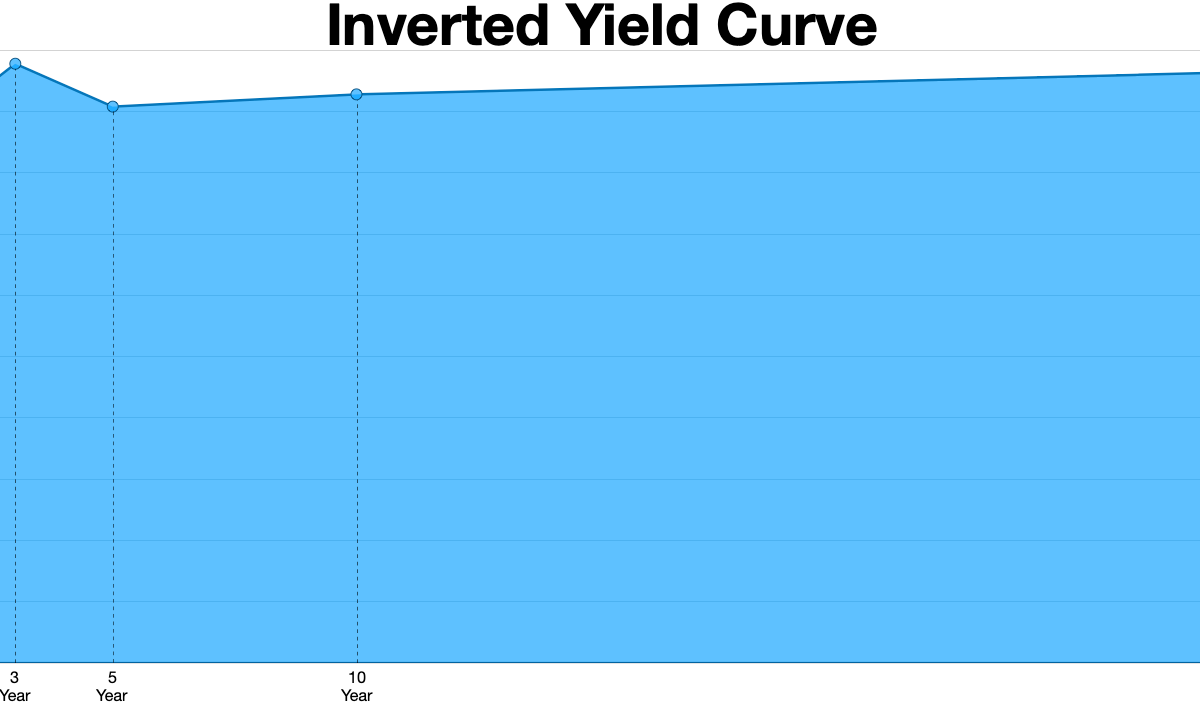
Is a yield curve with 10-year above 2-year inverted?

No. On 29 September the 10-year yield (5.26%) was above the 2-year yield (4.89%), which is a normal upward-sloping shape.

Where can I check the latest yields myself?

The U.S. Treasury publishes the daily par yield curve rates on its website, and the Federal Reserve publishes the H.15 selected interest rates release.

10-Year Treasury Yield Tops 5% for First Time Since 2007

The 10-year Treasury yield closed at roughly 5.01% on 16 September 2026, its highest level since 2007. The move came after the Federal Reserve raised its benchmark rate and signalled that at least one more increase was likely before the end of the year. Bonds sold off through the afternoon; the benchmark had traded as low as 4.94% earlier in the session.

Where the curve moved

The repricing was not confined to the long end. The 2-year note yield rose more than 7 basis points to about 4.738%, erasing an earlier decline, according to CNBC’s account of the session. Short-dated yields move most directly with policy expectations, so a jump there reflects the market accepting the Committee’s projection of further tightening rather than fading it.

The benchmark 10-year finished up about 2 basis points on the day at 5.016%. The headline number matters less than the threshold it crossed. Five per cent has been a psychological marker for two decades, and the last sustained visit was before the 2008 financial crisis.

The dollar’s best session in three months

Currency markets followed the yield. The Bloomberg Dollar Spot Index rose 0.5%, its largest single-day advance since 17 June 2026, which was the date of Chair Kevin Warsh’s first meeting in the role. Bloomberg attributed the gain to the prospect of continued tightening rather than the hike itself.

Metals moved the other way. Gold and silver both fell sharply on the session, extending a slide we covered when gold reached a six-week low. Higher real yields raise the opportunity cost of holding an asset that pays no income.

Why a 5% handle changes calculations

The 10-year is a reference rate far beyond the Treasury market. It anchors long-term mortgage pricing in several economies, sets the discount rate analysts apply to future corporate earnings, and shapes what governments pay to roll over debt. A great deal of debt issued between 2020 and 2022 was priced against yields closer to 1-2%. Refinancing that stock at 5% is a materially different exercise.

For equities, the arithmetic is blunt: a higher risk-free rate lowers the present value of distant cash flows, which weighs hardest on the longest-duration growth names. That tension runs straight into the earnings calendar we outlined in our preview of the big tech earnings week.

The policy backdrop

The Fed’s decision itself, including the unanimous vote and the projections showing 16 of 18 officials expecting another hike, is set out in our report on the September rate decision. Analysts at FXStreet described the hike as expected and the message as more hawkish — a reading consistent with a bond market that sold off on the guidance rather than the action.

The spillover beyond US markets

A US 10-year at 5% resets the global pricing floor. Sovereign borrowers who issue in dollars compete for the same capital as the Treasury, and when the risk-free benchmark rises, everything priced as a spread above it rises with it. That arithmetic falls hardest on emerging-market issuers, whose spreads tend to widen at the same moment the base rate climbs.

Currency effects compound it. A stronger dollar raises the local-currency cost of servicing dollar debt for any borrower earning revenue in something else. Importers of dollar-priced commodities face the same squeeze from the other direction.

There is also a portfolio effect that is easy to overlook. When a US government bond yields 5%, the case for holding riskier assets to reach a target return weakens considerably. Capital that flowed toward higher-yielding markets during the low-rate decade has a reason to come home, and flows of that kind tend to move faster than the fundamentals that supposedly drive them.

What to watch next

Whether 5% holds is the open question. A yield that touches a level and retreats tells you about positioning; one that settles there tells you about expectations. The next inflation release and the Treasury’s forthcoming auction sizes will both feed into that. So will any sign that the two officials who see rates staying put are gaining company. For now, the curve is priced for a Fed that is not finished.

Common questions about the move

How high did the 10-year Treasury yield go?

The 10-year Treasury yield closed at about 5.01% on 16 September 2026, its highest level since 2007. It had traded as low as 4.94% earlier in the session before the Fed decision.

Why do Treasury yields rise when the Fed raises rates?

A higher policy rate raises the return on holding cash, so investors demand more yield to hold longer-dated bonds instead. Expectations of further hikes push that repricing further out along the curve.

What happened to the 2-year yield?

The 2-year Treasury note yield rose more than 7 basis points to about 4.738%, erasing an earlier decline. Short-dated yields track policy expectations most directly.

How did the dollar react?

The Bloomberg Dollar Spot Index rose 0.5%, its biggest single-day gain since 17 June 2026. Higher yields on dollar assets tend to draw capital toward the currency.

What does a 5% 10-year yield mean for borrowers?

The 10-year is a reference point for long-term borrowing costs, including mortgages in several markets and corporate debt issuance. A sustained 5% level raises the cost of refinancing debt taken on when yields were far lower.

Is 5% unusual by historical standards?

Not historically, but it is unusual recently. The last time the 10-year sat at this level was 2007, before the financial crisis ushered in more than a decade of exceptionally low yields.

Wall Street Just Repriced the Fed’s Next Move — Here’s What Changed

Markets adjusted their bets on the Federal Reserve within a single trading session. The Federal Reserve rate outlook turned more hawkish late last week. Fed Chair Kevin Warsh said inflation “remains uncomfortably high” for policymakers. Traders read the remarks as a signal the central bank is in no hurry to cut rates. US equities closed lower Friday after opening with modest gains, reversing course as the comments spread through trading desks, per CNBC’s market coverage that day.

The bond market moved faster than stocks. The 2-year Treasury yield rose 0.12 percentage points to 4.35%. The 10-year climbed to 4.72%. Both moves are consistent with traders pricing in a longer stretch of elevated rates than they expected earlier in August.

Federal Reserve rate outlook

Why the Federal Reserve rate outlook shifted so quickly

The Fed left its policy rate unchanged at 3.50%-3.75% for a fifth consecutive meeting in July. That was broadly in line with expectations, even though three FOMC members dissented in favor of a 25-basis-point hike. That dissent already signaled internal disagreement about how much further tightening might be needed. Warsh’s comments added weight to the hawkish camp’s argument, days before markets head into the Fed’s next scheduled decision.

Energy prices are complicating the picture further. Oil price pressure tied to the ongoing Iran situation has strained the Trump administration’s inflation-fighting efforts. San Francisco Fed research published this week found that rising gas-price expectations pull broader inflation expectations up with them. The effect is strongest among lower-income households already squeezed by higher costs, a pattern also visible in recent retail earnings showing consumer strain.

How this compares to the ECB’s own rate dilemma

The Fed is not alone in facing an inflation-versus-growth tradeoff shaped by Middle East energy risk. The European Central Bank faces a similar bind. Traders anticipate a possible September hike after President Christine Lagarde warned, per CNBC’s reporting on her remarks, that renewed Middle East hostilities and rebounding oil prices pose upside risk to eurozone inflation, a dynamic detailed in our coverage of the ECB’s own September decision. Central banks on both sides of the Atlantic are effectively responding to the same geopolitical shock.

The Bank of England holds its own Monetary Policy Committee meeting September 17. Its last vote split six-to-three in favor of no change. That is a similar pattern of growing dissent toward tighter policy showing up across major central banks at once.

What happens next for rate-sensitive markets

Investors will parse every subsequent Fed official’s remarks for confirmation or pushback on Warsh’s hawkish framing before the next policy meeting. Equity strategists have flagged potential for near-term consolidation after a strong 2026 run. Higher short-term Treasury yields typically pressure growth stocks and rate-sensitive sectors like housing and small-cap equities first. Traders are also watching wage and employment data due before the meeting, which could reinforce or undercut the case for holding rates steady.

How traders are positioning ahead of the next meeting

Options markets showed a notable shift in positioning right after Warsh’s comments. Traders pared back bets on a near-term rate cut. They added exposure to scenarios where the Fed holds steady well into 2027. That repricing matters beyond bond desks. Mortgage rates, corporate borrowing costs and the dollar’s exchange rate all take cues from where the market expects the Fed’s rate to sit over the coming year, not just where it sits today.

Equity strategists draw a distinction between sectors likely to weather a higher-for-longer rate environment and those more exposed to it. Financials tend to benefit from a steeper yield curve and have held up better than growth-oriented technology names since Warsh’s remarks. That rotation is consistent with prior periods when markets recalibrated toward a more hawkish Fed stance mid-cycle.

The dollar has also firmed modestly against a basket of major currencies since the remarks. That fits a market that now expects US rates to stay elevated for longer than other major central banks’ rates. A stronger dollar cuts both ways for the US economy. It helps tame imported inflation at a moment when energy prices are already a concern. But it also makes American exports more expensive, at a time when trade tensions with Canada are already weighing on manufacturers. Currency strategists say the dollar’s path from here will hinge less on any single official’s remarks. It will hinge more on whether upcoming inflation and employment reports confirm or challenge the hawkish read markets have adopted since Warsh spoke. Those reports are due before the Fed’s next scheduled meeting. Any surprise in either direction could move Treasury yields again before policymakers even vote.

FAQ

What did the Fed Chair say that moved markets?

Kevin Warsh said inflation “remains uncomfortably high” for policymakers, which markets interpreted as a hawkish signal.

Where does the Fed’s policy rate currently stand?

3.50%-3.75%, unchanged for a fifth consecutive meeting as of July 2026.

How did Treasury yields react?

The 2-year yield rose to 4.35% and the 10-year rose to 4.72%.

Why did three FOMC members dissent in July?

They preferred a 25-basis-point rate hike rather than holding steady.

How are energy prices affecting the inflation outlook?

Oil price pressure linked to the Iran situation is pushing gas-price expectations higher, which research shows lifts broader inflation expectations, especially for lower-income households.

Are other central banks facing the same dilemma?

Yes. The ECB and Bank of England are both weighing similar inflation risks tied to Middle East energy prices ahead of their own September meetings.