Monthly Archives: September 2026

Cloudflare Just Cut Off a Whole Class of AI Bots

Cloudflare began blocking a category of AI web crawlers by default on September 15, 2026. The change could reshape how AI companies gather training and search data from millions of websites.

The Cloudflare AI crawler block targets what Cloudflare calls ‘mixed-use’ crawlers. These are bots that scrape content for both AI model training and live AI-powered search results. The new default applies to ad-supported pages across Cloudflare’s network.

What counts as a mixed-use crawler

Cloudflare draws a line between crawlers that index pages for traditional search, and those that feed scraped content into AI systems that answer questions directly, often without sending a visitor to the original site.

Mixed-use crawlers fall into the second group. They pull content for both purposes. Cloudflare argues that undercuts the traffic and ad revenue ad-supported publishers depend on.
Cloudflare AI crawler block

Why publishers have been pushing for this

News publishers have complained for more than a year that AI search summaries answer questions using scraped articles. Readers get the answer without clicking through, so publishers lose the traffic.

Cloudflare sits in front of a large share of the web’s traffic. That gives its default settings outsized influence over what AI companies can access, without individual publishers configuring blocking rules themselves.

How AI companies are likely to respond

Site owners can still opt back in and allow mixed-use crawlers. So the change works as a new default, not an outright ban.

AI companies that need continuously refreshed web content, for training and real-time answers alike, may need direct licensing deals with publishers instead of relying on open crawling.

What happens next for the Cloudflare AI crawler block

Cloudflare has rolled out similar publisher-friendly tools gradually before, watching adoption before widening scope. Other categories of crawlers could face new defaults in the months ahead.

Publishers and AI companies alike will watch whether other infrastructure providers follow Cloudflare’s lead. That would make opting out of AI scraping the norm, rather than something publishers configure themselves.

The bigger fight over who owns web content

This change is one piece of a wider dispute between AI companies and publishers. Their content trains and feeds AI models, and that fight has already produced lawsuits and licensing deals across the news industry.

Cloudflare positioning itself as a gatekeeper gives it new leverage in that negotiation. It can shift the default terms of access without any single publisher or AI company negotiating directly.

What site owners should check now

Publishers using Cloudflare should confirm their current crawler settings. Don’t assume the new default matches what you want. Sites that previously allowed all bots may now block traffic they intended to keep.

Sites that rely on AI-driven referral traffic for any part of their audience should weigh that tradeoff before deciding whether to opt back in.

Frequently asked questions

What did Cloudflare change on September 15, 2026?

Cloudflare began blocking ‘mixed-use’ AI crawlers by default on ad-supported pages across its network, a change aimed at AI bots that scrape content for both training and live search answers.

What is a mixed-use AI crawler?

It’s a bot that scrapes website content for two purposes at once: training AI models and powering AI search tools that answer user questions directly, often without driving traffic back to the source site.

Can website owners still allow these crawlers?

Yes. The new setting is a default, not a permanent block, so site owners can opt back in and allow mixed-use crawlers if they choose to.

Why does this matter for publishers?

Publishers have argued that AI search answers built from their content reduce the traffic and ad revenue their sites depend on, since readers get answers without clicking through.

Will other companies follow Cloudflare’s approach?

It’s too early to say, but Cloudflare’s scale means its default settings already influence a large share of AI companies’ ability to crawl the open web without individual publisher agreements.

Related coverage on Tamara News

Sources

UN General Assembly High-Level Week 2026: The Full Agenda

The UN General Assembly high-level week opens on 18 September 2026 and runs to 28 September, with heads of state and government gathering in New York for the 81st session under the theme “Restoring trust, managing transformation: A United Nations that delivers for all”. The calendar the UN has published is unusually front-loaded with formal outcomes rather than speeches alone.

Jump to a section

The dates that matter

The UN’s official high-level week page sets the window at 18 to 28 September. The week opens with the SDG Moment on 18 September, a three-hour session in the General Assembly Hall convened by the Secretary-General under General Assembly Resolution 74/4, which showcases national and community-level progress on the Sustainable Development Goals.

Two supporting platforms bracket the week. The SDG Media Zone, produced by the UN Department of Global Communications, runs 21 to 25 September. The Goals Lounge, convened by the Deputy Secretary-General and hosted by the UN Office for Partnerships, runs longer, from 14 to 25 September.

The General Debate

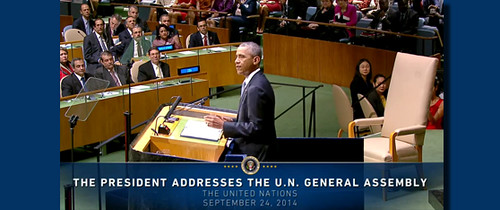
The General Debate runs 22 to 28 September in the General Assembly Hall. It is the annual meeting of heads of state and government at the opening of a session, where leaders set out national positions and priorities. Khalilur Rahman of Bangladesh presides over the 81st session.

The Secretary-General set the framing in June, returning to the Charter’s opening words. “The Charter of the United Nations begins with three simple words: ‘We the peoples,'” António Guterres said, adding that the phrase is not “we the powerful” or “we the victorious”. It is a deliberate signal ahead of a session in which several of the scheduled meetings turn on whether smaller states can get commitments from larger ones.

Climate action and the just transition

The Climate Summit on 23 September, convened by Guterres in the Trusteeship Council Chamber, is the week’s centrepiece on emissions. The UN’s own framing is notably blunt: ten years after the Paris Agreement, it says, the climate crisis has entered a new phase in which overshoot is now inevitable, even as the energy transition accelerates.

Leaders from major economies, developing and vulnerable countries, and major energy producers and consumers are being brought into the same room to set out how they will accelerate the transition, strengthen energy security and advance climate justice. The backdrop is a year of records — our report on the hottest August on record covers the temperature data leaders will be asked about.

Four high-level meetings

Beyond the debate and the climate event, four commemorative or negotiated meetings sit on the calendar.

On 23 September, a high-level meeting marks the 40th anniversary of the Declaration on the Right to Development, adopted in 1986. On 24 September, a high-level plenary addresses the existential threats posed by sea level rise, aimed at small island developing states and low-lying coastal areas.

On 25 September, the President of the General Assembly convenes a one-day meeting on pandemic prevention, preparedness and response, themed around a multilateral and intergenerational approach built on equity and solidarity. This is the one scheduled to produce a concise, action-oriented political declaration agreed by consensus through intergovernmental negotiations — the closest thing the week has to a binding output.

On 28 September, a high-level meeting marks the 25th anniversary of the Durban Declaration and Programme of Action on racial justice, followed on 29 September by the annual plenary for the International Day for the Total Elimination of Nuclear Weapons.

What to look for

Three tests are worth applying as the week runs. Whether the pandemic declaration survives consensus negotiation intact, or is thinned to language every delegation can accept. Whether the climate event produces named national commitments or restates existing pledges. And whether the sea level rise plenary moves from recognition to financing, which is the step small island states have pressed for across several sessions.

The geopolitical context is heavier than usual. Our coverage of the BRICS New Delhi declaration and of the EU’s renewal of Russia sanctions sets out the blocs that will be arguing past each other in the hall.

Where to follow it

All listed events are live-streamed on UN Web TV. Sessions in the General Assembly Hall and Trusteeship Council Chamber run on published times in New York, and the UN posts the speaker list for the General Debate as it firms up during the week.

Common questions about the session

When does the UN General Assembly high-level week run in 2026?

The UN lists high-level week as 18 to 28 September 2026, with the General Debate itself running from 22 to 28 September in the General Assembly Hall.

Who is presiding over the 81st session?

Khalilur Rahman of Bangladesh presides over the 81st session, under the theme “Restoring trust, managing transformation: A United Nations that delivers for all.”

What is the Climate Summit on 23 September?

It is a high-level event on climate action and the just transition convened by Secretary-General António Guterres, bringing together major economies, vulnerable states and large energy producers and consumers.

Is there a formal outcome document this year?

The high-level meeting on pandemic prevention, preparedness and response on 25 September is scheduled to conclude with a political declaration agreed by consensus through intergovernmental negotiation.

Where can the sessions be watched?

The UN streams the events on UN Web TV, and runs the SDG Media Zone from 21 to 25 September alongside the Goals Lounge from 14 to 25 September.

More world coverage

Bank of America Spooked Wall Street — One Analyst Says Don’t Panic

Bank of America shares slipped more than 5% on September 15, 2026. The bank issued a weaker-than-expected outlook for the third quarter.

The Bank of America forecast pointed to softer trading and lending income for the current quarter. Morgan Stanley told clients it expects a fourth-quarter rebound, and that the stock’s drop was overdone.

What the Bank of America forecast said

The bank flagged a weaker third quarter. It gave little detail on which business line is under the most pressure.

That lack of detail is part of why the reaction was sharp. Investors tend to punish vague guidance more than a specific, well-explained shortfall.

Bank of America forecast

Why Morgan Stanley says the drop is overdone

Morgan Stanley’s note argued the underlying business remains intact. It framed the third-quarter softness as a timing issue, not a structural problem.

That call matters for how other investors read the sell-off. A sharp price drop paired with a bullish analyst note can mark a buying opportunity, or simply reflect one firm’s more optimistic view.

The broader banking backdrop

Bank of America’s guidance landed the same week major central banks raised rates to fight Middle East-driven inflation. That cuts both ways for lenders.

Higher rates can widen the margin banks earn on loans. But they also raise the risk of a slowdown in borrowing and trading activity.

Investors will watch whether other major US banks flag similar softness when they report. That would point to an industry-wide pattern, not a Bank of America-specific issue.

What happens next for Bank of America

The bank’s full third-quarter results, expected in the coming weeks, will show whether the guidance was conservative or something more serious.

Until then, expect the stock to stay sensitive to any fresh commentary from bank executives or peer lenders on lending and trading conditions.

Why analyst calls like this matter to ordinary investors

One research note won’t settle the debate on its own. But it shapes how other traders and fund managers weigh the risk of holding the stock through the next earnings report.

For anyone holding shares directly, the takeaway is simple. The guidance was vague enough that the real answer only comes once the bank reports actual numbers.

What to watch when peer banks report

Other large US banks report their own results in the coming weeks. Similar commentary on softer trading or lending would suggest an industry-wide trend.

If peer banks report steady conditions instead, that would make Bank of America’s guidance look more like a company-specific issue worth closer scrutiny.

What this says about the health of consumer lending

Bank earnings guidance often serves as an early signal for the wider economy, since lenders see loan demand and repayment trends before those show up in broader data.

A vague warning from a bank this size is worth watching even if it turns out to be a false alarm, simply because of how much of the US lending market it touches.

What ordinary customers might notice

Bank of America customers are unlikely to see any immediate change from this guidance alone. Loan approval standards and account terms don’t shift based on a single earnings forecast.

The more relevant question for depositors and borrowers is how the broader rate environment evolves this month, not any one bank’s quarterly outlook.

Frequently asked questions

Why did Bank of America stock fall?

Shares dropped more than 5% on September 15, 2026, after the bank forecast a weaker third quarter than investors had expected.

Does Morgan Stanley agree with the market’s reaction?

No. Morgan Stanley told clients it expects a fourth-quarter rebound and views the stock’s reaction to the weak guidance as overdone.

What is driving the weaker Bank of America forecast?

The bank has not detailed exactly which business lines are softening, which analysts say is part of why investors reacted so sharply.

How does this relate to interest rate changes?

Higher interest rates from central banks like the ECB and a potential Fed hike can widen bank lending margins but also raise the risk of slower loan and trading activity.

When will Bank of America report actual Q3 results?

The bank’s full third-quarter results are expected in the coming weeks, which will show whether the guidance proves conservative or accurate.

Related coverage on Tamara News

Sources

DRC Ebola Travel Restrictions Block US-Bound Flights

Travellers who have been in the Democratic Republic of the Congo face a hard block on flights to the United States, under DRC Ebola travel restrictions that the US Centers for Disease Control and Prevention says are in force while the country fights what it now calls the second-largest Ebola outbreak on record. The restriction applies to everyone, US citizens included, who has been in DRC within 21 days of departure.

Contents at a glance

The restriction in plain terms

CDC’s current situation summary, last reviewed on 11 September 2026, states that US entry for travellers recently in DRC is temporarily restricted. Travellers who have been in the country within 21 days of their flight will not be allowed to board commercial flights with US destinations.

Three details matter for anyone planning a route. First, the bar covers US citizens and US nationals, not only foreign passport holders. Second, it captures transit: passengers with an intermediate stop in DRC, or on multi-stop itineraries routed through DRC, are covered whether or not they disembark. Third, the 21-day clock is a waiting period, not a formality — CDC tells US citizens and nationals to plan on remaining outside DRC for 21 days before entering the United States.

A softer rule applies to the neighbouring outbreak zone. US citizens and nationals who were in Uganda or South Sudan, and not in DRC, within 21 days of arrival must enter through designated airports for enhanced screening rather than any port of entry. All of this sits on top of a standing CDC order under 42 CFR 71.40, which continued temporary entry restrictions for certain categories of traveller present in DRC, Uganda or South Sudan.

How large the outbreak has become

The outbreak is caused by Bundibugyo virus, one of the orthoebolaviruses, and is DRC’s seventeenth Ebola outbreak. CDC says it is spreading substantially faster than previous ones and is now the second largest on record.

The speed comparison is the striking part. CDC notes the outbreak passed 1,000 confirmed cases within 40 days of response activation. The 2018 outbreak in DRC took roughly 235 days to reach the same mark. Confirmed cases have been recorded in Haut-Uele, Ituri, North Kivu, South Kivu, South Ubangi and Tshopo provinces, with South Kivu reporting no confirmed case since 29 May.

Uganda reported cases at the same time DRC declared its outbreak — 21 confirmed and probable cases and three deaths, with the last confirmed on 21 June. Cases linked to the DRC outbreak have also been reported in Kampala.

CDC has about 500 staff working on the response, including more than 120 deployed to the affected countries. The European Centre for Disease Prevention and Control is running its own assessment for European travellers and health systems.

Where CDC says not to go

CDC’s travel health notices split DRC into tiers. Ituri and North Kivu provinces sit at Level 4, avoid all travel. Haut-Uele and Tshopo sit at Level 3, reconsider non-essential travel. The rest of DRC and Uganda sit at Level 2, practise enhanced precautions — which in CDC’s framing means avoiding exposure and monitoring for symptoms while travelling and for 21 days after leaving.

For travellers, the practical read is that the notice tier and the boarding restriction are separate instruments. A Level 2 notice does not soften the 21-day flight bar, because the bar keys off presence in the country, not the province visited.

Why this one is harder to contain

CDC lists the constraints bluntly. Health infrastructure in the affected areas is limited, including access to diagnostics, laboratory services and infection prevention supplies. Ongoing conflict creates security problems and complicates contact tracing. Health workers are being infected while treating patients, with violence against them and shortages of protective equipment both cited. Frequent population movement across borders raises the risk of spread to Uganda, South Sudan and Rwanda. And mistrust of government, compounded by misinformation, makes public health communication harder.

Those are the same pressures that have shaped regional mobility policy elsewhere this year. Our reporting on China’s revised exit and entry regulations and on Australia’s shifting visa processing priorities shows how quickly health and security considerations move into ordinary immigration rules.

The decisions to watch

Three things will determine how long the boarding restriction stands. The first is case trajectory: CDC’s own comparison with 2018 suggests the response is measured against how fast the curve flattens, not the absolute count. The second is the standing order under 42 CFR 71.40, which has been extended in 30-day increments and is the legal instrument that would need to lapse. The third is whether Uganda’s run of no new confirmed cases since June holds, since cross-border spread is the pathway CDC flags most often.

Travellers with fixed dates should assume the rule stands until CDC says otherwise, and build the 21 days into itineraries rather than hoping for a waiver. Airlines enforce the boarding bar at check-in, so there is no practical appeal at the gate.

Reader questions

Who exactly is barred from flying to the United States?

Anyone who has been in the Democratic Republic of the Congo within 21 days of their flight, including US citizens and US nationals, cannot board a commercial flight bound for the United States.

Does a connection through Kinshasa count?

Yes. CDC says the restriction applies to passengers with an intermediate stop in DRC or on multi-stop itineraries via DRC, whether or not they leave the aircraft.

What about travellers coming from Uganda or South Sudan?

US citizens and nationals who were in Uganda or South Sudan, but not in DRC, in the previous 21 days are not barred from flying but must arrive through designated airports for enhanced screening.

How long must travellers wait before flying to the US?

CDC advises planning to remain outside DRC for 21 days before entering the United States, which matches the maximum incubation period for Ebola disease.

Which parts of DRC carry the highest travel notice?

Ituri and North Kivu provinces carry a Level 4 notice advising against all travel. Haut-Uele and Tshopo carry a Level 3 notice advising against non-essential travel.

Has the outbreak reached the United States?

No. CDC says no cases associated with this outbreak have been confirmed in the United States and rates the likelihood of spread there as very low.

Related on Tamara News

Dave & Buster’s Stock Just Fell Off a Cliff — Here’s Why

Shares in Dave & Buster’s Entertainment tumbled more than 12% on September 15, 2026. The arcade and restaurant chain badly missed Wall Street’s revenue and profit targets for the quarter.

The Dave & Buster’s earnings miss centers on a swing from an expected profit to an unexpected loss. Analysts had forecast a profit of 18 cents a share. The company instead posted an adjusted loss of 27 cents a share.

How far Dave & Buster’s missed its targets

The company reported quarterly revenue of $544.1 million. That’s below the $556.8 million analysts had expected. Adjusted EBITDA came in at $98.9 million, well short of the $120.4 million consensus estimate.

That combination points to more than soft sales. Costs are also squeezing margins on top of weaker customer traffic.

Dave & Buster's earnings miss

What’s behind the Dave & Buster’s earnings miss

Dave & Buster’s depends on discretionary spending. Families and young adults choose to spend on games, food and drinks rather than save it. That kind of spending is usually first to slow when consumers grow cautious.

The chain has leaned on remodeled locations and new game formats to draw repeat visits. This quarter’s numbers suggest that strategy hasn’t offset softer overall demand.

How investors reacted

The stock’s double-digit drop reflects how sharply results diverged from expectations. A 2% revenue miss alone wouldn’t normally move a stock this much. Combined with an unexpected loss, it changed the market’s read on the company’s trajectory.

The reaction also landed in a week when broader US markets were jittery over the Federal Reserve’s looming rate decision. That left little patience for consumer names that disappoint.

What happens next for Dave & Buster’s

Management will face pressure on its next earnings call. It will need to explain whether the shortfall reflects a temporary dip in foot traffic, or a deeper shift in consumer spending.

Investors will also watch whether the chain adjusts promotional pricing or slows new location openings after this weaker quarter.

How this fits the wider consumer picture

Dave & Buster’s results land alongside other early-September earnings misses from consumer-facing companies. That adds to a picture of households pulling back on nonessential spending, even as headline employment holds up.

Retail analysts will watch whether other leisure and entertainment chains report similar softness in the coming weeks. That would suggest the pullback goes beyond one company’s execution.

What this means for anyone holding the stock

A single bad quarter doesn’t automatically signal a longer decline. But it does raise the bar for the next report to show a clear turnaround.

Anyone holding shares through this drop should watch same-store sales closely. That metric strips out new store openings and gives a cleaner read on whether existing locations are recovering.

How rivals in the sector are faring

Other out-of-home entertainment chains have faced similar pressure this year, as households trim discretionary outings in favor of cheaper at-home options.

A pattern across the sector, rather than a single company’s stumble, would tell a different and arguably more worrying story about consumer confidence heading into the final months of the year.

What analysts will ask on the next earnings call

Expect pointed questions about foot traffic trends by region, and whether the loss came from one-time costs or an ongoing pricing problem.

How clearly the company answers those questions will likely matter more to the stock than the headline numbers themselves.

Frequently asked questions

Why did Dave & Buster’s stock drop?

Shares fell more than 12% on September 15, 2026, after the company reported revenue and earnings well below Wall Street’s expectations, including an unexpected quarterly loss.

How much revenue did Dave & Buster’s report?

The company reported $544.1 million in quarterly revenue, short of the $556.8 million analysts had forecast.

Did Dave & Buster’s turn a profit?

No. The company posted an adjusted loss of 27 cents per share, compared with analyst expectations of an 18-cent profit.

What does this say about consumer spending?

Discretionary entertainment spending, like arcade visits and out-of-home dining, is often among the first areas consumers cut back on when they grow more cautious, which may explain the softer traffic.

Is this the first earnings miss for the company this year?

This article covers the results reported on September 15, 2026; it does not compare against earlier quarters in detail.

Related coverage on Tamara News

Sources