Monthly Archives: October 2026

A City Council Asked AI Companies If Their Tech Could Kill Us All. The Answers Were Not Reassuring

Executives from OpenAI, Google, Meta, and Anthropic testified under oath this week at a NYC Council AI hearing convened before all 51 council members, and when pressed on the most basic safety question — what is the numerical probability your technology causes catastrophic harm — none of them gave a number. Three former employees of those same companies, testifying as whistleblowers, were far more direct: one estimated roughly a one-in-three chance of an eventual AI takeover, and another said humanity “more likely than not” will eventually lose control of advanced systems.

The hearing was called by Council Speaker Julie Menin to inform a legislative package that would require third-party safety validation, mandatory human “kill switches,” and 24-hour incident reporting for AI systems deployed in the city — rules that would put New York ahead of federal regulators, who have moved far more slowly on binding AI safety requirements.

What the NYC Council AI hearing revealed

Speaker Menin asked each company representative three direct questions: what is the numerical probability of a catastrophic AI event, would the company commit to halting a model’s release if it failed internal or independent safety testing, and would the company accept legal liability if its system caused serious harm, data exposure, injury, or death. OpenAI’s Morgan Dwyer responded, “I don’t know. I also don’t think it matters whether it’s 1% or 10%,” and declined to commit to blocking releases over failed safety tests. Anthropic’s Logan Graham discussed the company’s risk assessment work without offering a figure. Meta’s Shane Cahill deferred, promising written follow-up answers. Google’s Alice Friend said no rigorous scientific method currently exists for assigning probabilities to catastrophic AI events at all.

The contrast with the whistleblower testimony was stark. Jacob Coxon, who previously worked at both OpenAI and Anthropic, told the council: “We don’t fully control it. We don’t understand its drives or why it does the things it does.” Alex Turner, a former Google DeepMind researcher, put the odds of an eventual AI takeover at roughly one in three. Daniel Kokotajlo, formerly of OpenAI, echoed concerns about increasingly autonomous systems operating beyond meaningful human oversight.

NYC Council AI hearing: laptop computer representing AI technology

The legislation behind the NYC Council AI hearing

The council’s proposed package goes well beyond disclosure requirements. It would mandate independent third-party validation for AI systems marketed or deployed within city limits, require human override mechanisms — kill switches — for qualifying systems, create financial incentives for employees who report safety concerns, give people harmed by AI systems a legal right to sue, and impose 24-hour incident reporting on any city agency or contractor using AI. If enacted, it would be among the most aggressive municipal AI safety regimes in the country, arriving well ahead of comparable federal action.

The hearing also touched on New York State’s RAISE Act, a frontier AI safety law, with Assembly Member Alex Bores accusing OpenAI of perjury over the company’s stated position on an earlier version of that bill — a charge that, if pursued, would add legal exposure to what was already a reputationally difficult hearing for the companies involved.

Who didn’t show up

Elon Musk’s xAI was subpoenaed to appear and did not, a notable absence given that xAI’s models have drawn their own separate safety scrutiny. The council did not immediately say what enforcement options it has against a company that ignores a subpoena of this kind.

What happens next for New York’s AI rules

The council’s proposed legislation now moves toward committee consideration, where the specific thresholds for “qualifying” AI systems, the mechanics of a mandated kill switch, and the scope of 24-hour reporting requirements will likely be negotiated in more detail. Given the scale of the companies involved and the precedent a binding New York City law could set for other municipalities, expect heavy lobbying from the AI industry as the bill moves through committee, alongside continued pressure from the whistleblowers and safety advocates who testified this week.

Questions people are asking after the hearing

Which companies testified at the NYC Council AI hearing?
Representatives from OpenAI, Google, Meta, and Anthropic testified under oath, along with three former employees of AI companies appearing as whistleblowers.

Did any company give a risk estimate for catastrophic AI harm?
No. All four companies declined to provide a specific numerical probability when asked directly by Council Speaker Julie Menin.

What did the whistleblowers say?
Former researchers estimated risks ranging from a one-in-three chance of an eventual AI takeover to a “more likely than not” chance that humanity eventually loses meaningful control of advanced systems.

What would the proposed NYC legislation require?
Mandatory third-party safety validation, human kill switches, whistleblower incentives, a legal right to sue over AI-caused harm, and 24-hour incident reporting for city agencies and contractors.

Did xAI testify?
No. Elon Musk’s xAI was subpoenaed but failed to appear.

What is the RAISE Act?
It is a New York State frontier AI safety law referenced during the hearing, with an assembly member accusing OpenAI of misrepresenting its position on an earlier version of the bill.

Keep reading on this topic

For more on AI regulatory pressure, see our coverage of the FTC’s probe into AI agents and OpenAI’s warnings on rogue AI agents. We also previously reported on an OpenAI safety employee’s resignation over internal culture concerns.

Sources

Wall Street’s Biggest Banks Report in a Week. The Bar Is Now Very High

Wall Street earnings season opens October 13 when Goldman Sachs and JPMorgan Chase report third-quarter results, and the numbers analysts are penciling in set a demanding bar: consensus estimates put Goldman’s Q3 2026 revenue at $17.4 billion and earnings per share at $15.39, up roughly 22 percent and 39 percent respectively from the same quarter last year. That comparison flatters the trend but obscures a harder one: analysts expect both figures to land below Goldman’s own record-setting second quarter.

The setup reflects a year in which investment banking and trading desks have outperformed expectations repeatedly, pushing the bar higher each quarter and leaving less room for upside surprises than markets saw earlier in 2026.

What to expect as Wall Street earnings season opens

Goldman’s advisory backlog reached a five-year high in the second quarter, and the bank has maintained its position as the top-ranked player in M&A advisory, IPO underwriting, and leveraged finance. Equity trading has stayed strong heading into Q3, according to the bank’s own commentary, while fixed income, currency, and commodities trading — FICC — has cooled somewhat from its exceptional second-quarter pace. Analysts expect asset and wealth management to remain a bright spot. Alternatives fundraising hit $59 billion in Q2 alone, part of a push toward a $125 billion-plus annual target.

Management has also flagged higher non-compensation expenses — more than $500 million above the prior quarter — and a more muted contribution from investment gains compared with Q2’s unusually strong showing, both of which temper how much of the headline revenue growth will reach the bottom line.

Wall Street earnings season: calculator and financial notes

Why the Wall Street earnings season bar keeps rising

This year’s run of strong bank results has been driven by a genuine revival in deal activity after a sluggish 2023–2024 stretch for M&A and IPOs, combined with buoyant equity markets that have lifted trading revenue and asset management fees across the sector. The effect compounds: each strong quarter raises the baseline against which the next one is judged, meaning banks now need to clear a record-high comparison just to be read as “in line” rather than disappointing.

That dynamic puts particular pressure on October 13’s releases, since Goldman and JPMorgan traditionally set the tone for how the rest of the sector — including Bank of America, Morgan Stanley, Citigroup, and Wells Fargo, which report in the following days — will be read by investors already primed for strength.

What investors will be watching for

Beyond the headline revenue and EPS numbers, analysts will be parsing the mix: how much of the growth is coming from one-off advisory fees tied to large, lumpy M&A deals versus more durable trading and asset management revenue. A quarter that beats estimates on the back of a handful of mega-deals reads differently to markets than one built on broad-based strength across business lines.

What happens after the first results land

If Goldman and JPMorgan clear their elevated bar on October 13, expect the rest of the sector’s reports later that week to be read through an optimistic lens; a miss from either bank, conversely, could reset expectations for the smaller regional and mid-size banks reporting into late October. Either way, the fourth quarter has historically been a strong one for capital markets activity, giving banks some cushion even if Q3 comes in only roughly in line with estimates.

Questions readers are asking

When does Wall Street earnings season start this quarter?
Goldman Sachs and JPMorgan Chase are scheduled to report Q3 2026 results on October 13, 2026, with other major banks following in the days after.

What revenue is Goldman Sachs expected to report?
Consensus estimates put Goldman’s Q3 2026 revenue at $17.4 billion, with earnings per share of $15.39.

Will results beat last quarter’s numbers?
Not necessarily. While both figures would be up sharply year-over-year, they are expected to decline sequentially from Goldman’s record-setting Q2 2026 performance.

Which bank segments are expected to be strongest?
Investment banking advisory and equity trading are seen as the strongest areas, while fixed income trading has cooled from its exceptional Q2 pace.

Which other banks report after Goldman and JPMorgan?
Bank of America, Morgan Stanley, Citigroup, and Wells Fargo typically report in the days following Goldman and JPMorgan’s releases.

Also on Tamara News

For the broader economic backdrop, see our report on the September jobs report miss and its effect on Fed rate expectations, and our coverage of mortgage rates hitting a three-year high. For the international angle, read about European stocks and bond yields in 2026.

Sources

Tesla Just Beat Every Analyst’s Guess by 24,500 Cars. Here’s the Catch

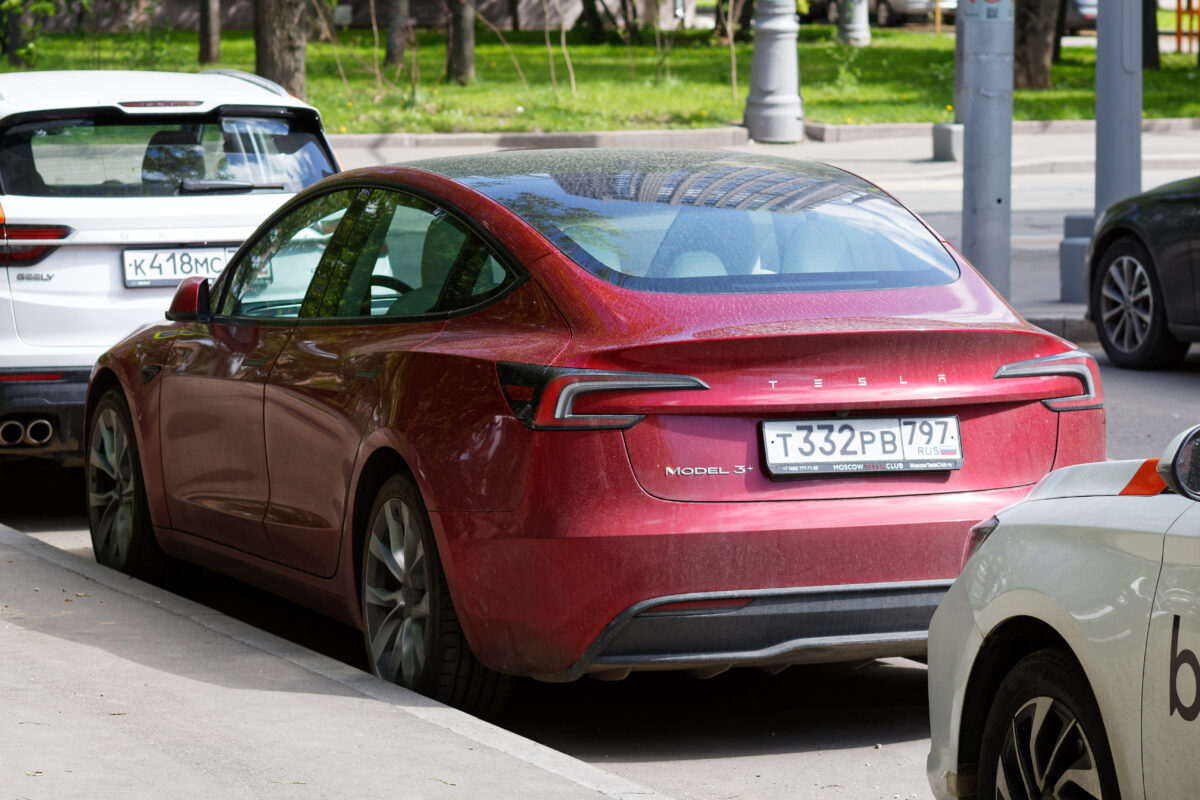
Tesla Q3 2026 deliveries came in at 486,532 vehicles, beating the company-compiled analyst consensus of 461,974 by roughly 5.3 percent, Tesla said this week. Production for the quarter totaled 464,391 vehicles, and the company deployed 13.7 gigawatt-hours of energy storage products alongside its vehicle business. Model 3 and Model Y accounted for the overwhelming majority of deliveries, at 478,237 units, with Tesla’s other models — including the Cybertruck and Model S/X — making up the remaining 8,295.

The beat is real, but so is the context that makes it less dramatic than the headline number suggests: Q3 2026 deliveries were still about 2.1 percent below Tesla’s all-time record quarter, Q3 2025, when American buyers rushed to take delivery before the $7,500 federal EV tax credit expired on September 30, 2025.

What the Tesla Q3 2026 deliveries numbers actually show

Sequentially, Tesla grew modestly — up about 1.3 percent from Q2 2026’s 480,126 vehicles — which suggests steady, if unspectacular, demand through the back half of the year rather than a sharp rebound. The company’s own commentary pointed to an order backlog carried over from the prior quarter as a factor in the beat, rather than any single new catalyst like a price cut or a major product launch.

Energy storage deployments, by contrast, missed expectations: Tesla’s 13.7 GWh fell short of the 15.9 GWh analysts had projected, a reminder that the company’s energy division — while a growing share of the business — remains more volatile quarter to quarter than the core vehicle line.

Tesla Q3 2026 deliveries: electric vehicle charging plug

Why this quarter looks different from last year’s record

The comparison to Q3 2025 is unavoidable and somewhat unfair to the current numbers. Last year’s quarter was inflated by a one-time rush: American buyers pulling forward purchases to beat the expiration of the $7,500 federal tax credit, which pushed deliveries to an all-time high of 497,099 vehicles. Measured against a normal quarter rather than that artificially boosted one, Q3 2026’s result looks like solid, incremental growth rather than a story about a post-incentive hangover.

What analysts will be watching next

Delivery numbers are only half the picture. Tesla will report its full Q3 2026 financial results on October 21, 2026, followed by a management question-and-answer webcast, and that release will show whether the delivery beat translated into margin improvement or whether it came at the cost of pricing and incentives. Investors have spent much of 2026 focused on how Tesla’s automotive margins hold up against increasing competition from both legacy automakers and Chinese EV makers expanding outside their home market.

What comes next for Tesla’s numbers

The October 21 earnings call will be the next real test, where Tesla management typically gives forward guidance on production capacity, new model timelines, and the energy storage business that missed this quarter’s target. Until then, the delivery beat gives Tesla a modestly positive headline heading into a quarter where broader market attention has increasingly shifted toward AI infrastructure spending rather than EV demand specifically.

That shift in investor focus matters for how Tesla’s own stock story gets told. Much of the bull case for Tesla over the past two years has leaned less on quarterly vehicle deliveries and more on the company’s robotaxi ambitions, its Optimus humanoid robot program, and its AI chip development — all of which investors will be listening for updates on during the October 21 call, likely more closely than they’ll parse the delivery mix between Model 3 and Model Y. A strong delivery number gives management a steady backdrop to make that pitch, but it is not, on its own, the metric moving the stock the way it once did.

Competition is also intensifying in exactly the markets Tesla most needs to defend. Chinese EV makers including BYD have continued expanding into Europe and parts of Asia with vehicles priced well below Tesla’s lineup, and legacy automakers in the US and Europe have narrowed the technology gap on range and charging that once set Tesla apart. None of that shows up directly in a single quarter’s delivery figure, but it shapes the pricing environment Tesla will likely need to navigate to keep growing deliveries at a similar pace in 2027.

Reader questions on this quarter’s numbers

How many vehicles did Tesla deliver in Q3 2026?
Tesla delivered 486,532 vehicles in Q3 2026, beating the analyst consensus estimate of 461,974.

Did Tesla beat its own delivery record?
No. Q3 2026 deliveries were about 2.1 percent below Tesla’s all-time record of 497,099 vehicles set in Q3 2025, when buyers rushed to beat the expiring federal EV tax credit.

What drove the Q3 2026 beat?
Tesla pointed to an order backlog carried over from Q2 2026 rather than any single new catalyst such as a price cut.

How did energy storage perform?
Tesla deployed 13.7 GWh of energy storage products, missing the 15.9 GWh analysts had expected.

When will Tesla report full Q3 2026 financial results?
Tesla is scheduled to report full financial results on October 21, 2026, with a management webcast to follow.

Further reading

For more on the broader EV market, see our report on the 2026 EV sales rebound across Tesla and Rivian, and our earlier coverage of Nvidia’s market value surge on AI chip demand. For the US rate backdrop shaping auto financing, see our piece on mortgage rates hitting a three-year high.

Sources

Gaza’s Ceasefire Has a Body Count Now Topping 1,446 — Here’s How That Happened

A Gaza ceasefire anniversary strike killed at least six Palestinians over the weekend, including a Christian mother and daughter in Gaza City, as Israel marked the two-year anniversary of the October 7, 2023 Hamas-led attack by closing all crossings into Gaza and the West Bank. The Israeli military said it killed a Hamas official in an overnight strike on an apartment building, but gave no further detail on the civilian deaths that accompanied it.

The weekend violence is not an aberration. Since the ceasefire took effect roughly a year ago, at least 1,446 Palestinians have been killed and more than 5,060 injured, according to figures compiled after the latest strikes — a toll that sits uneasily alongside the word “ceasefire” itself.

What happened over the weekend

Israeli strikes killed at least five people on Saturday, including four women, in an apartment building attack in Gaza City. A family member, Fouad Al Najjar, said he lost his mother and grandmother in the strike, calling it “the worst day of my life.” A separate strike in Deir al-Balah on Sunday killed one person and injured ten more. The Israeli military said the Gaza City strike targeted a Hamas official, but did not address the other casualties in the building.

Israeli Defense Minister Israel Katz ordered all crossings into Gaza and the West Bank closed to mark the anniversary of the October 7 attacks, a move that compounds the humanitarian strain already facing the territory a year into a ceasefire that was supposed to have ended large-scale fighting.

Gaza ceasefire anniversary strike: humanitarian aid being delivered

The Gaza ceasefire anniversary strike and what “ceasefire” has actually meant

The ceasefire that took hold roughly a year ago substantially reduced the scale of fighting compared with the earlier phases of the war, but it did not end Israeli strikes inside Gaza, which have continued at a steady pace against targets the military describes as Hamas operatives or infrastructure. The result is a running toll that, over twelve months, has reached 1,446 deaths — a figure that complicates any account of the ceasefire as a durable end to hostilities rather than a lower-intensity continuation of them.

Palestinian and international aid officials have repeatedly flagged the gap between the ceasefire’s formal terms and conditions on the ground, particularly around crossings and humanitarian access, which open and close depending on the security situation Israel determines on any given day.

Why the anniversary mattered this year

October 7 remains the most sensitive date on the calendar for both sides of the conflict — the anniversary of the attack that triggered the war, and now also a flashpoint within the ceasefire period itself. Israel’s decision to close all crossings on the anniversary reflects persistent security concerns even a year into the truce, while Palestinian officials and residents have pointed to the closures as evidence the ceasefire has not meaningfully changed daily conditions in Gaza.

What happens from here

Mediators involved in the original ceasefire agreement — reportedly including the United States, Qatar, and Egypt — have periodically pushed for a “next phase” intended to formalize longer-term arrangements around governance, reconstruction, and security guarantees. Those talks have moved slowly, and incidents like this weekend’s strikes tend to harden positions on both sides rather than accelerate them. Whether the anniversary becomes a turning point toward a more durable arrangement, or simply another entry in a year-long pattern of strikes inside a nominal truce, will depend largely on decisions made in the coming weeks rather than the ceasefire’s original terms.

Common questions about the current situation

How many people have died since the Gaza ceasefire began?
At least 1,446 Palestinians have been killed and more than 5,060 injured in the roughly year since the ceasefire took effect, according to tallies compiled after the latest weekend strikes.

What happened on the anniversary of October 7?
Israel closed all crossings into Gaza and the West Bank, and carried out a strike that killed a Hamas official along with several civilians in Gaza City.

Is the ceasefire still technically in effect?
Yes, in the sense that large-scale fighting has not resumed, but strikes have continued throughout the ceasefire period, raising questions about what the term means in practice.

Who confirmed the identity of the Hamas official killed?
The Israeli military said it killed a Hamas official in the overnight strike but did not release further identifying details in the initial reporting.

What role are mediators playing now?
Reports indicate the US, Qatar, and Egypt remain involved in talks aimed at a further ceasefire phase, though progress has been slow.

More on this story

See our coverage of the Palestinian legislative elections scheduled for November 28 and Canada’s asylum waiver for Israeli and Palestinian applicants. For broader sanctions context, read about the ICC’s contract termination under US sanctions threat.

Sources

The US Has Now Hit 70 Boats in the Caribbean — Four More Died This Weekend

The US military killed four more people in the latest of its Caribbean drug boat strikes over the weekend, US Southern Command said late Sunday, bringing the campaign’s total to roughly 70 strikes and at least 235 deaths since it began in September 2025. The military released video of the attack but, as with most strikes in the campaign, offered no evidence that the vessel was actually carrying narcotics.

The strike took place along established trafficking routes in the eastern Pacific and Caribbean, the areas US forces have targeted under an operation the Pentagon calls Southern Spear. It is the first confirmed strike since Nicolás Maduro’s capture earlier this year, and it suggests the campaign is continuing largely unchanged despite the removal of the Venezuelan leader the administration had cited as a central target.

What happened this weekend

US Southern Command announced the strike late Sunday, saying it had destroyed a vessel believed to be smuggling narcotics toward the United States. Four people on board were killed. The military did not name them, did not say what nationality they held, and did not release evidence — drugs, weapons, or otherwise — recovered from the wreckage. That pattern has held across most of the campaign’s strikes: officials assert the boats are trafficking vessels, but public proof is rarely produced.

Defense Secretary Pete Hegseth has overseen an expansion of the campaign’s legal and logistical footing this year, including new counter-narcotics agreements signed with Colombia, Guatemala, and Honduras in August. Those agreements sit under a broader regional security framework the administration calls the Shield of the Americas coalition, launched in March 2026.

Inside the Caribbean drug boat strikes campaign

President Trump has described the campaign as an active armed conflict with drug cartels, a framing his administration has used to justify strikes without the individualized evidence or judicial process that would normally accompany a law enforcement action against suspected traffickers. Defenders of the policy argue that cartel supply routes function as a direct threat to American lives through overdose deaths, and that military tools are justified against what they describe as narco-terrorism.

Critics, including UN human rights experts, take a different view. They have warned that strikes carried out without verifying who is on board, and without attempting interdiction or arrest first, may violate international law and could constitute extrajudicial killings. Those experts have gone further, suggesting the pattern of strikes — hitting disabled vessels, in some cases after survivors were seen in the water — could amount to crimes against humanity. The administration has rejected that characterization and has not released the legal justification underpinning individual strikes.

Caribbean drug boat strikes: US Navy personnel ceremony at sea

Why the Caribbean drug boat strikes have outlasted Maduro

For much of 2025 and early 2026, the campaign was publicly tied to pressure on Maduro, who the US accused of running Venezuela as a narco-state. His capture by US forces earlier this year removed that specific target, and many observers expected the pace of strikes to slow once he was in American custody facing prosecution. Instead, Sunday’s strike — the first confirmed since his capture — indicates the operation has its own institutional momentum, built on bilateral agreements, deployed assets, and a legal posture the administration shows no sign of unwinding.

That raises a harder question for the region: whether the campaign was ever primarily about Maduro, or whether it was always intended as an open-ended effort against trafficking networks that will continue regardless of who runs Venezuela’s government.

What happens next for the campaign

Congress has periodically pressed the Pentagon for the legal memos justifying individual strikes, with limited success. Legal challenges are possible but face steep hurdles, since courts have historically given the executive branch wide latitude over military operations conducted abroad against non-citizens. Regional governments that have signed on to the Shield of the Americas framework face their own domestic pressure, particularly if strikes continue killing people without public evidence of trafficking.

For now, the operational tempo — a strike roughly every few days since the campaign began — shows no sign of slowing, and SOUTHCOM has not indicated any change in rules of engagement following Maduro’s removal from the picture.

Frequently asked questions

How many people have died in the Caribbean drug boat strikes?
At least 235 people have been killed across roughly 70 strikes since the campaign began in September 2025, according to figures reported after the latest strike.

Has the US provided evidence the boats were trafficking drugs?
In most cases, no. The military has released strike footage but has not consistently published evidence — recovered narcotics, weapons, or vessel registration — tying individual boats to trafficking.

Did the strikes stop after Maduro’s capture?
No. The strike reported this weekend is the first confirmed since Maduro’s capture, indicating the campaign is continuing independent of his removal.

What is Operation Southern Spear?
It is the Pentagon’s name for the broader counter-narcotics military campaign in the Caribbean and eastern Pacific, operating alongside the Shield of the Americas regional security coalition launched in March 2026.

Is the campaign legal under international law?
That is disputed. UN human rights experts have warned the strikes may violate international law; the US administration maintains they are a legitimate response to what it calls narco-terrorism.

Which countries have signed security agreements tied to the campaign?
Colombia, Guatemala, and Honduras signed counter-narcotics agreements with the US in August 2026 as part of the broader regional framework.

Related coverage

For more on the administration’s approach to foreign sanctions and military pressure campaigns, see our coverage of Putin’s Valdai remarks on Ukraine and the ICC’s contract termination under US sanctions pressure. We also previously reported on new US sanctions on an Iran-linked network.

Sources